


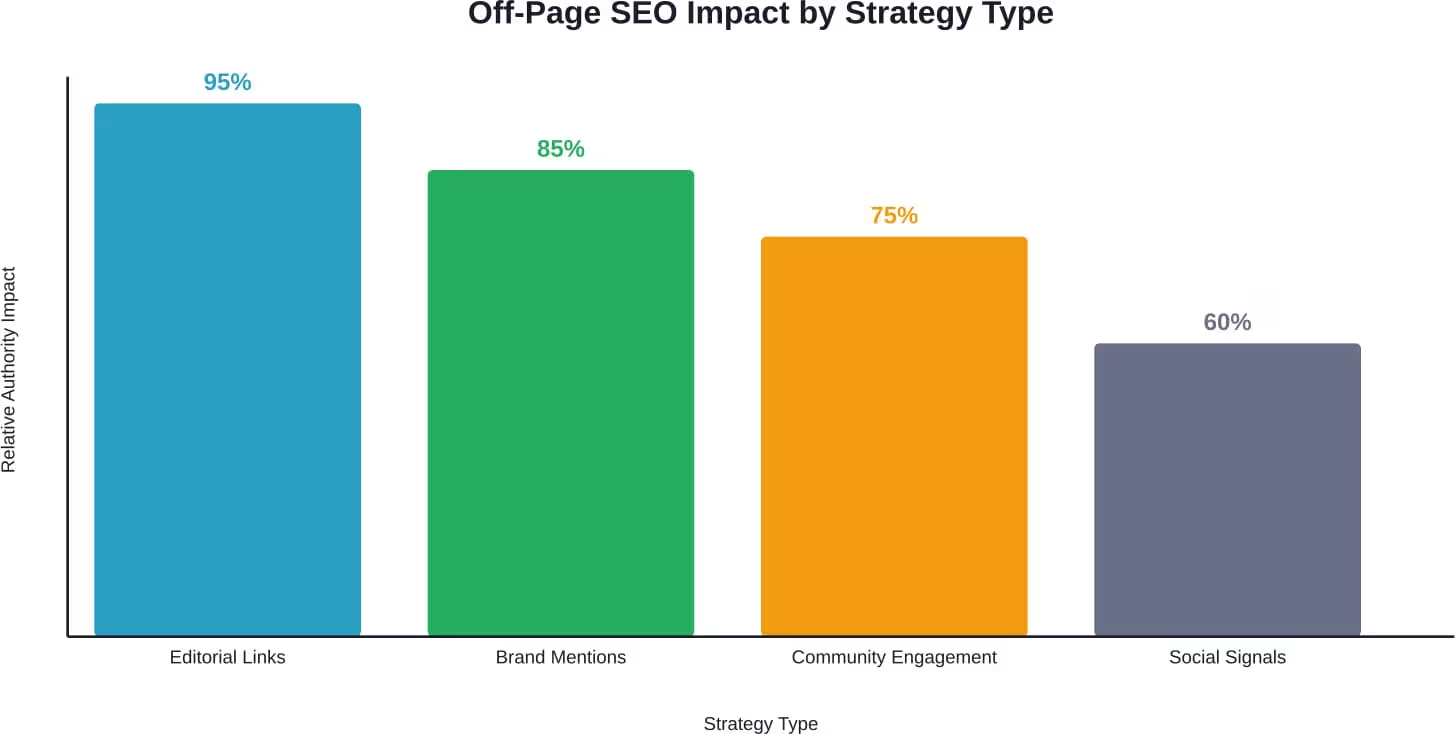
Quick Summary: Off-page SEO encompasses all optimization activities outside your website that improve search rankings, authority, and visibility. The most effective strategies in 2026 include earning high-quality backlinks through data-driven content, building brand mentions across digital platforms, and engaging in community discussions that AI tools reference. Combined with consistent brand signals and E-E-A-T improvements, these tactics help sites compete in both traditional SERPs and AI-generated answers.
Search has fundamentally changed. At least 60% of search queries now end without a click—Google and AI tools like ChatGPT answer questions directly in the SERPs or through curated results. This shift makes off-page SEO more critical than ever.
While on-page optimization controls what happens within the boundaries of a website, off-page SEO determines how the rest of the digital ecosystem perceives and references that site. Search engines use these external signals—backlinks, brand mentions, social engagement, and user-generated content—to evaluate authority, trustworthiness, and relevance.
The challenge? Traditional link-building playbooks no longer deliver consistent results. Google continues to value links as ranking signals, but the strategies that worked five years ago often trigger penalties today. Success in 2026 requires PR-grade content that people genuinely want to cite, combined with strategic outreach that earns visibility in the places where both humans and AI systems are looking.
What Off-Page SEO Actually Means in 2026
Off-page SEO includes actions taken outside a website to improve search rankings and influence how people discover and engage with content. According to Moz, when combined with on-page SEO and technical SEO, it helps increase visibility, indexing, traffic, and conversions.
The core components haven’t disappeared—backlinks remain important. But the ecosystem has expanded dramatically.
Modern off-page optimization encompasses:
- Earning backlinks from relevant, authoritative websites
- Building brand mentions across digital platforms
- Generating social signals through engagement and shares
- Participating in community discussions that AI references
- Establishing expertise, experience, authoritativeness, and trustworthiness (E-E-A-T)
- Creating content that gets cited in aggregated answers and AI summaries
Here’s the thing though—AI Overviews appear in more than 1 in 10 Google queries in the U.S., and 74% of problem-solving searches now surface AI-generated responses. If content isn’t optimized for how AI systems discover and reference information, it’s essentially invisible to a growing segment of search traffic.
Why Off-Page SEO Determines Visibility Beyond Website Boundaries
Search engines don’t trust websites simply because they claim expertise. External validation matters.
When authoritative sites link to content, when brands get mentioned in industry discussions, when users reference information in community forums—these signals tell search algorithms that the content has value beyond what the site itself claims.
A few reasons why off-page SEO remains essential:
- Links and mentions influence rankings: Backlinks act as votes of confidence. Quality matters far more than quantity.
- Authority builds over time: Sites with consistent external validation rank better for competitive terms.
- Brand signals matter to AI: AI systems trust sources that appear frequently in authoritative contexts.
- Visibility starts before the click: With zero-click searches dominating, getting cited in summaries and overviews drives awareness even when users never visit the site.
Real talk: on-page SEO can’t compensate for weak off-page signals. A perfectly optimized page with no external validation will lose to a decent page with strong authority every time.
Strengthen Off Page SEO and Authority
Off page SEO is essential for building authority and improving rankings through backlinks and external signals.
LENGREO develops structured off page strategies focused on quality links and long term authority growth.
- backlink strategy and acquisition
- outreach and digital PR
- authority building campaigns
If you want to strengthen your site authority, contact LENGREO to learn more.
Link Building Strategies That Still Work
Link building isn’t dead. But the old playbook is.
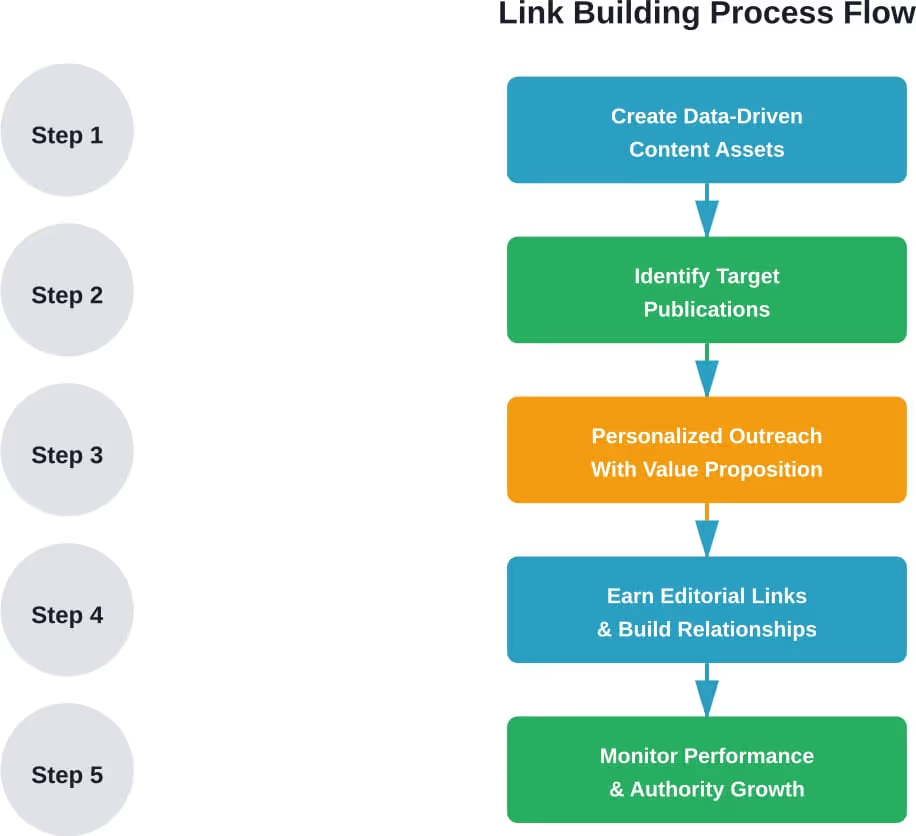
Google continues to value links as signals, but wins come from PR-grade content that people want to cite. The shift from chasing links to earning them requires a different approach entirely.
Create Data-Driven Content That Gets Cited
Research shows that people don’t link to pages just because they’re “high-quality content.” They link because the page contains specific, citable data.
Backlinko noticed something interesting when analyzing links to one of their pages: the vast majority cited a specific statistic—that long-tail keywords make up 70% of all searches. People linked to that data point, not to the page as a whole.
The strategy:
- Conduct original research, compile industry data, or analyze trends
- Present findings in easily quotable formats (statistics, percentages, specific numbers)
- Make it simple for others to cite: provide embed codes, clear attribution guidelines, and shareable assets
- Reach out to journalists, bloggers, and industry publications that cover related topics
When outreach focuses on providing value—offering data that makes their content better—response rates improve dramatically compared to generic link requests.
Strategic Guest Contributions on Relevant Platforms
Guest posting works when it’s genuinely strategic, not when it’s scaled link spam.
The difference lies in selectivity and quality. Contributing to a handful of highly relevant, authoritative sites in the niche builds credibility. Publishing thin content on hundreds of low-quality directories triggers penalties.
Effective guest contribution strategy:
- Target publications where the audience actually matches the business
- Pitch topics that provide unique insights, not rehashed basics
- Focus on establishing expertise, not just getting a backlink
- Build ongoing relationships with editors rather than one-off placements
Digital PR That Earns Editorial Links
Digital PR generates links through newsworthy content that journalists want to cover.
This might include:
- Industry studies and original research
- Expert commentary on breaking news or trends
- Unique datasets or tools that serve a professional audience
- Compelling human interest stories tied to the brand
The goal isn’t to trick publications into covering something insignificant. It’s to create genuinely newsworthy material that deserves coverage.
Local Link Building for Geographic Relevance
For businesses serving specific geographic areas, local links matter disproportionately.
According to Moz, local link building is the strategic process of acquiring backlinks from websites highly relevant to a specific geographical area. The primary goal is to enhance online visibility and attract more customers within the local community.
Effective local link tactics:
- Sponsor local events, sports teams, or community organizations
- Get listed in geographically-specific directories and chambers of commerce
- Partner with other local businesses for cross-promotion
- Engage with local subreddits and community forums
- Contribute to local news sites and community publications
These links signal geographic relevance to search engines, which improves rankings for location-specific queries.
Building Brand Mentions and Signals
Links aren’t the only external signals that matter. Brand mentions—even without hyperlinks—contribute to authority and visibility.
Search engines track where and how often brands get mentioned across the web. Consistent mentions in authoritative contexts signal legitimacy and relevance.
Unlinked Brand Mentions Still Build Authority
When industry publications, forums, or social platforms mention a brand without linking, it still contributes to overall authority. Search engines are sophisticated enough to connect these mentions to the brand entity.
Strategies to increase brand mentions:
- Create shareable research and industry insights that get discussed
- Engage actively in industry conversations on social platforms
- Contribute expert commentary to journalists (tools like HARO connect sources with reporters)
- Participate in podcasts, webinars, and industry events
- Publish thought leadership content on platforms like LinkedIn
Social Media Engagement as a Signal
While social media links are typically nofollow (they don’t pass direct link equity), social signals still matter for off-page SEO.
Strong social engagement indicates content resonance. When content gets widely shared, discussed, and amplified on social platforms, it:
- Increases brand visibility and awareness
- Drives referral traffic that search engines track
- Generates secondary links as others discover and reference the content
- Builds brand entity strength in search algorithms
The goal isn’t to game social algorithms. It’s to create content worth discussing.
Community Participation Where AI Systems Look
In 2026, Reddit and other high-authority community platforms account for over 35% of citations in Google’s AI Overviews following the deepening of data-sharing partnerships between Google and major social hubs. User-generated content now makes up 21.74% of all AI citations when generating answers.
This creates an opportunity: participating authentically in community discussions where target audiences congregate.
Effective community engagement:
- Join subreddits related to the industry and provide helpful answers
- Participate in Quora discussions with genuine expertise
- Contribute to industry-specific forums and communities
- Engage in LinkedIn groups and discussions
- Answer questions in niche Slack communities or Discord servers
The emphasis is on authentic participation. Spamming links or providing low-value responses backfires. But establishing expertise through consistent, helpful contributions builds both brand awareness and citations in AI-generated content.
Improving E-E-A-T Through Off-Page Signals
E-E-A-T—Experience, Expertise, Authoritativeness, and Trustworthiness—matters tremendously for search rankings, especially in competitive or sensitive topics.
While some E-E-A-T signals come from on-page elements (author bios, credentials, content quality), many come from external validation.
Building Recognized Expertise
Expertise gets established through external recognition, not self-proclamation.
Tactics that build recognized expertise:
- Publish research and insights that other experts cite
- Speak at industry conferences and events
- Get quoted in major industry publications
- Contribute to authoritative platforms in the niche
- Earn professional certifications and affiliations
- Build a Wikipedia presence (for sufficiently notable entities)
Establishing Trust Through Transparency
Trust signals often come from third-party validation:
- Reviews on independent platforms (Google Business Profile, industry-specific review sites)
- Better Business Bureau ratings and accreditations
- Industry awards and recognitions
- Case studies and testimonials from recognizable clients
- Press coverage from reputable news outlets
The pattern here? Trust comes from what others say about a brand, not what the brand says about itself.
Optimizing for AI-Generated Search Results
Traditional SEO focused on ranking in the top 10 blue links. Modern off-page optimization must also consider how content appears in AI-generated summaries and overviews.
Getting Cited in AI Overviews
AI systems pull from sources they deem authoritative and relevant. To increase chances of citation:
- Create content that directly answers specific questions
- Use clear, structured formatting that’s easy to parse
- Provide factual, well-sourced information
- Build authority through the off-page tactics already discussed
- Get mentioned in sources that AI systems already trust (major publications, academic sites, government resources)
The GEO Shift: From SEO to Generative Engine Optimization
Some practitioners now discuss GEO (Generative Engine Optimization) as a complement to traditional SEO. The concept acknowledges that optimization strategies must account for how large language models and AI systems discover and reference information.
Based on available data, effective GEO tactics include:
- Participating in platforms that AI systems frequently cite (Reddit, Quora, industry forums)
- Creating content with clear factual claims that can be extracted
- Building brand entity strength so AI systems recognize and reference the brand
- Earning mentions in authoritative sources that AI training data includes
This isn’t entirely separate from traditional off-page SEO—it’s an evolution that recognizes where information discovery is heading.
Common Off-Page SEO Mistakes to Avoid
Even well-intentioned off-page optimization efforts can backfire when executed poorly.
Buying Links or Using Link Schemes
Purchasing backlinks or participating in link exchange networks triggers penalties. Google’s algorithms detect unnatural link patterns.
The risk isn’t worth the temporary gain. Penalties can take months or years to recover from, if recovery is even possible.
Prioritizing Quantity Over Quality
A single link from a highly authoritative, relevant site matters more than hundreds of links from low-quality directories.
Focus on earning links that would drive actual referral traffic and brand awareness, not just links that exist for SEO purposes.
Ignoring Relevance
Links and mentions from completely unrelated industries provide minimal value. Relevance matters enormously—both for how search engines evaluate the links and for whether they drive qualified traffic.
Neglecting to Monitor Backlink Profile
Negative SEO attacks happen. Competitors sometimes build spammy links to damage rankings.
Regular backlink audits help identify problematic links that should be disavowed through Google Search Console. Tools like Moz, Ahrefs, and SEMrush provide backlink monitoring capabilities.
Measuring Off-Page SEO Performance
Off-page optimization requires consistent monitoring to understand what’s working.
Key Metrics to Track
| Metric | What It Measures | Tools |
|---|---|---|
| Domain Authority / Domain Rating | Overall site authority based on backlink profile | Moz, Ahrefs |
| Referring Domains | Number of unique websites linking to the site | Ahrefs, SEMrush, Google Search Console |
| Brand Mentions | Frequency of brand mentions across the web | Google Alerts, Brand24, Mention |
| Referral Traffic | Visitors arriving from external links | Google Analytics |
| Search Rankings | Position for target keywords | Google Search Console, Semrush, Ahrefs |
| Social Engagement | Shares, comments, and engagement on social platforms | Platform analytics, BuzzSumo |
Tracking Tools Worth Using
Several platforms provide comprehensive off-page SEO monitoring:
- Google Search Console: Free tool showing backlinks Google has discovered
- Ahrefs: Comprehensive backlink analysis and competitor research
- Moz: Domain authority metrics and link tracking
- SEMrush: Backlink audits and competitor analysis
- Google Analytics: Referral traffic and user behavior data
The specific tools matter less than consistent monitoring. Set up regular reporting to track progress over time.
Off-Page SEO vs On-Page SEO: How They Work Together
Off-page and on-page SEO aren’t competing priorities—they’re complementary.
On-page optimization ensures content is relevant, well-structured, and technically sound. It controls the signals within the website’s boundaries: content quality, keyword targeting, internal linking, page speed, mobile optimization, and technical implementation.
Off-page optimization builds the external validation that tells search engines the content deserves to rank. It establishes authority, generates awareness, and creates the ecosystem of references that algorithms use to evaluate trustworthiness.
Sites with strong on-page SEO but weak off-page signals struggle to rank for competitive terms. Sites with strong off-page signals but poor on-page optimization waste their authority on pages that don’t convert or provide value.
The most successful SEO strategies balance both.
Taking Action on Off-Page Optimization
Off-page SEO isn’t a one-time project—it’s an ongoing component of digital presence.
The most effective approach starts with creating genuinely valuable content worth citing. Build from there with strategic outreach, authentic community participation, and consistent brand-building across relevant platforms.
Track results consistently. Monitor backlink growth, brand mentions, referral traffic, and ranking improvements. Adjust strategy based on what’s working for the specific industry and competitive landscape.
But wait. Don’t try to implement every tactic simultaneously. Prioritize strategies that align with current resources and business goals. A few well-executed tactics will outperform a dozen half-implemented ones.
The search landscape continues evolving. AI-generated answers, zero-click searches, and new platforms create both challenges and opportunities. Sites that build genuine authority through valuable content and authentic engagement will continue ranking well, regardless of how search interfaces change.
Start with the fundamentals: create content worth linking to, build relationships with relevant publishers and communities, and focus on long-term authority rather than short-term ranking manipulation. The tactics may evolve, but these principles remain constant.