

Quick Summary: LinkedIn is the top platform for landing SEO clients through strategic profile optimization, value-driven content, targeted outreach, and relationship building. The most effective approach combines establishing thought leadership through consistent posting, using advanced search filters to identify decision-makers, sending personalized connection requests, and nurturing prospects with genuine engagement before pitching services.
Finding SEO clients is one of the toughest challenges facing freelancers and agencies. Cold emails get ignored. Networking events feel awkward. Referrals are unreliable.
But there’s one platform where decision-makers actively hang out, engage with professional content, and search for solutions to their exact problems: LinkedIn.
According to HubSpot data, 96% of marketers prefer LinkedIn for lead generation over Facebook or X (formerly Twitter) because decision-makers are actually present and paying attention. The platform isn’t just an online résumé anymore. It’s evolved into a legitimate client acquisition engine for service providers who understand how to work it properly.
LinkedIn’s 2026 B2B Marketing Insights report shows that quality now trumps quantity in demand generation. Research shows that 78% of B2B CMOs believe proving ROI has become more important in the past two years. Nearly half of B2B marketers are asked to justify their marketing spend to C-suite executives monthly. This shift creates massive opportunities for SEO professionals who can demonstrate clear value.
Here’s the thing though: most SEO specialists approach LinkedIn all wrong. They optimize their profile once, send generic connection requests, and wonder why nobody responds. Or they spam their feed with technical jargon that makes prospects’ eyes glaze over.
The strategies outlined below focus on what actually works in 2026—tactics tested by professionals who’ve built sustainable client pipelines without paid ads or aggressive sales tactics.
Why LinkedIn Works Better Than Other Platforms for SEO Client Acquisition
Social media generates 33% of the highest-quality leads for sales professionals, on par with referrals from existing customers, according to HubSpot’s 2024 State of Sales report. But not all platforms perform equally.
LinkedIn dominates B2B lead generation for three specific reasons:
- Decision-makers are actively present. The people who sign contracts and approve budgets—CMOs, marketing directors, business owners—spend time on LinkedIn. They don’t browse for entertainment. They’re looking for solutions, researching vendors, and evaluating expertise.
- Professional intent is built into the platform. When someone engages with business content on LinkedIn, they’re in work mode. Compare that to Facebook or Instagram, where people scroll to see vacation photos and memes. The mindset difference matters enormously for conversion rates.
- Content has staying power. A well-crafted LinkedIn post can generate engagement for weeks. The algorithm surfaces older content to new audiences based on relevance. This creates compounding returns that don’t exist on faster-moving platforms.
LinkedIn research shows that 55% of B2B marketers leverage influencer marketing and partner with creators, and the platform’s creator ecosystem continues growing rapidly. This shift toward people-powered thought leadership creates openings for individual SEO professionals to build authority without massive marketing budgets.
Find SEO Clients With a Predictable System
Getting SEO clients on LinkedIn requires more than outreach. It depends on positioning, messaging, and a structured lead generation process.
LENGREO builds systems that combine LinkedIn outreach, SEO, and funnel optimization to generate consistent leads.
- LinkedIn outreach and positioning strategy
- authority building through content
- lead generation and conversion systems
If you want to consistently attract SEO clients, contact LENGREO to get started.
Setting Up Your LinkedIn Profile to Attract SEO Clients
Before reaching out to anyone, the profile needs to work as a converting sales page. Most SEO professionals treat their LinkedIn profile like a boring CV. Wrong approach.
The profile should answer one question for prospects: “What’s in it for me?”
Headline Formula That Converts
The headline appears everywhere on LinkedIn—in search results, comments, connection requests. It’s the single most important piece of profile real estate.
Skip titles like “SEO Specialist” or “Digital Marketing Expert.” Those describe what someone is, not what they deliver.
Better formula: [Specific outcome] for [target client] through [method]
Examples that work:
- “Helping SaaS companies generate qualified demo requests through search visibility”
- “Technical SEO for enterprise e-commerce brands losing revenue to site performance issues”
- “Local SEO that gets service businesses consistent customer calls”
This immediately signals specialization and results, filtering out non-fit prospects while attracting ideal clients.
About Section Structure
The About section should follow a simple pattern:
- Hook: Start with the specific problem ideal clients face. “Most B2B SaaS companies invest heavily in content but see minimal organic traffic growth.”
- Bridge: Explain why that problem exists. “The issue isn’t content quality—it’s technical foundations, targeting strategy, and conversion optimization.”
- Solution: Describe the approach or methodology used. “Technical audits identify the high-impact fixes. Content gap analysis reveals what prospects actually search for. Conversion mapping ensures traffic turns into pipeline.”
- Proof: Share specific client results. “Clients typically see 40-60% organic traffic increases within 6 months, with measurable pipeline contribution.”
- Call-to-action: Tell prospects exactly what to do next. “Send a message to discuss your organic growth goals.”
Keep paragraphs short. Use line breaks generously. The About section gets read on mobile devices where dense text blocks become unreadable.
Featured Section Optimization
The Featured section sits prominently on profiles and showcases credibility-building content:
- Case studies showing specific client results
- Published articles demonstrating expertise
- Video explanations of common client problems
- Speaking engagements or podcast appearances
- Tools or resources created for the target market
This section provides social proof without explicitly bragging. Prospects can explore evidence of expertise at their own pace.
Creating Content That Attracts High-Value Prospects
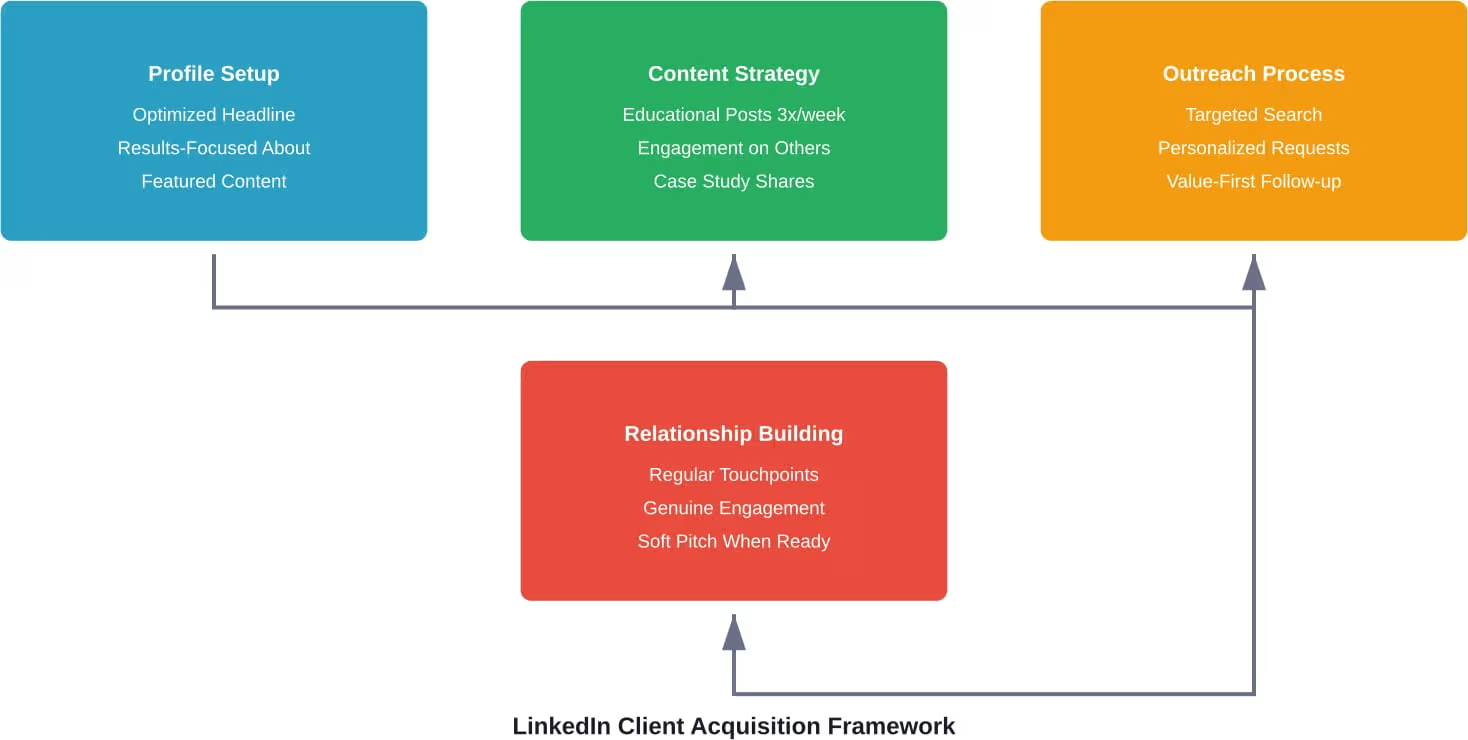
Content strategy makes or breaks LinkedIn client acquisition. But here’s what doesn’t work: posting about algorithm updates, sharing generic SEO tips, or celebrating personal achievements.
Prospects don’t care about meta descriptions or canonical tags. They care about revenue, efficiency, and competitive advantage.
The content needs to bridge that gap.
The Problem-Solution-Proof Framework
Every post should follow this structure:
- Identify a specific business problem. “Most e-commerce brands lose 40% of potential mobile customers during page load.”
- Explain why it happens. “Unoptimized images, render-blocking JavaScript, and bloated themes create friction.”
- Provide actionable guidance. “Three fixes that reduce load time: lazy loading for images below the fold, deferring non-critical scripts, minimizing third-party tags.”
- Show the business impact. “Clients see 15-25% conversion rate improvements after implementing these changes.”
This format demonstrates expertise while speaking the language of business outcomes, not technical jargon.
Content Types That Drive Engagement
LinkedIn’s algorithm favors native content that keeps users on the platform. Based on current engagement patterns, these formats perform best:
- Short-form educational posts (150-300 words) explaining one concept clearly. These get the most shares because they’re digestible and immediately valuable.
- Case study breakdowns showing before/after metrics with specific strategies used. Prospects want proof that methods actually work. Concrete numbers build credibility faster than testimonials.
- Contrarian takes challenging common industry advice. “Why blog post word count doesn’t matter as much as you think” or “The SEO metrics most agencies track are vanity numbers.” These spark discussions and expand reach through comments.
- Client lesson posts framed as “What I learned from [client situation].” These provide value while subtly demonstrating experience and client diversity.
Video content continues gaining traction. LinkedIn’s 2025 B2B Marketing Benchmark report emphasizes that video is not just another content fad but a cornerstone of modern B2B strategy, as the language of modern buyers. However, quality matters more than quantity. A well-scripted 60-second video explaining one concept outperforms rambling 10-minute monologues.
Posting Frequency and Timing
Consistency beats volume. Three high-quality posts per week outperform daily mediocre content.
Timing depends on when the target audience is active. For B2B decision-makers, Tuesday through Thursday mornings (7-9 AM) and lunch hours (12-1 PM) typically see highest engagement. But test different windows and track which posts gain traction.
The first hour after posting is critical. LinkedIn’s algorithm tests content with a small audience segment, then expands distribution based on initial engagement. Responding quickly to early comments and asking questions that encourage discussion signals to the algorithm that the post deserves wider reach.
Strategic Outreach: Finding and Connecting with Decision-Makers
Content builds visibility. Outreach converts it into conversations.
The goal isn’t accumulating connections. It’s building relationships with people who have budget authority and genuine need for SEO services.
Using Advanced Search Filters Effectively
LinkedIn’s search functionality is powerful but underutilized. Here’s how to find ideal prospects:
- Define the ideal client profile first. Industry, company size, role, geography. Getting specific prevents wasted outreach to non-fit prospects.
- Example: “Marketing Directors at B2B SaaS companies with 50-200 employees in the United States.”
- Use Sales Navigator if serious about LinkedIn prospecting. The advanced filters (company headcount growth, technologies used, seniority level, recent job changes) identify prospects with higher purchase intent.
- Look for trigger events. Company funding announcements, leadership changes, office expansions—these signal potential need for marketing services. Sales Navigator surfaces these signals automatically.
- Prioritize second-degree connections. Warm introductions convert significantly better than cold outreach. Check for mutual connections who might make introductions.
Connection Request Strategy
Generic connection requests get ignored. Personalization is non-negotiable.
LinkedIn limits connection request messages to 300 characters. Every word counts.
Effective template structure:
“[Name], saw your post about [specific topic]. [Relevant observation or insight]. Would value connecting to discuss [mutual interest area].”
Example: “Sarah, saw your post about marketing attribution challenges. The multi-touch problem you described impacts most SaaS companies. Would value connecting to discuss measurement strategies.”
This demonstrates actual profile research, provides context for the request, and suggests potential value without pitching services.
Avoid these connection request mistakes:
- Leading with a sales pitch
- Mentioning services or offerings
- Using obvious templates (“I help companies like yours…”)
- Asking for a call or meeting immediately
- Sending the same message to everyone
The connection request starts a relationship. It shouldn’t attempt to close a sale.
First Message After Connection
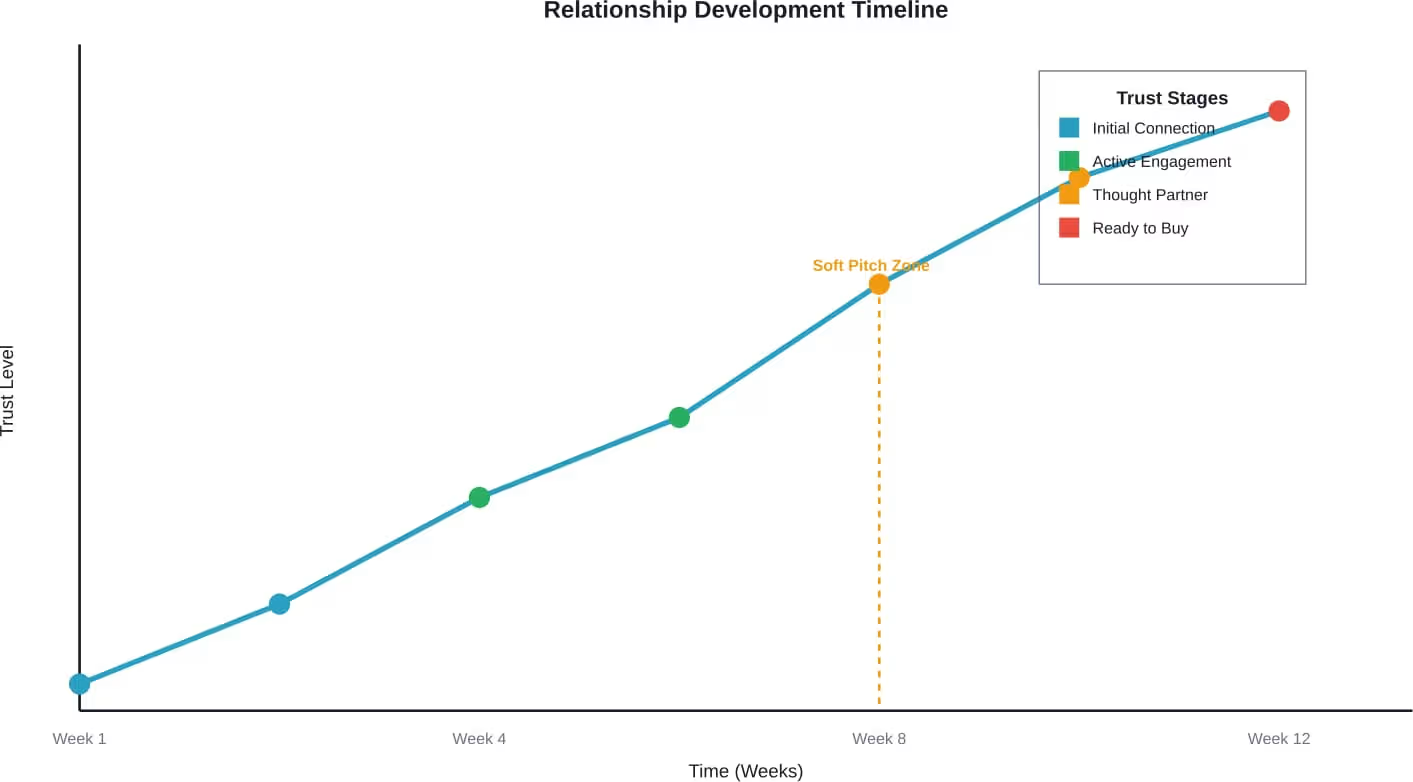
When someone accepts a connection request, wait 24-48 hours before sending a follow-up message. Immediate pitches feel transactional.
The first message should provide value without asking for anything:
“Thanks for connecting, [Name]. Given your focus on [their area], thought you might find this [resource/article/case study] useful. [Brief explanation of why it’s relevant]. No response needed—just wanted to share.”
This positions the sender as helpful rather than self-serving. Some prospects will respond with questions or thanks, creating natural conversation openings. Others won’t respond immediately, which is fine. The foundation is being built.
| Outreach Stage | Objective | Key Actions | Success Metric |
|---|---|---|---|
| Connection Request | Get accepted | Personalized note referencing specific content or mutual interest | 40-50% acceptance rate |
| First Message | Provide value | Share relevant resource with no ask | 15-20% response rate |
| Engagement Phase | Build relationship | Comment on posts, share insights, answer questions | Regular interaction over 2-4 weeks |
| Qualification | Identify fit and need | Ask discovery questions about challenges | Understand budget and timeline |
| Soft Pitch | Introduce services | Position as solution to discussed problem | 10-15% conversion to call |
Engagement Tactics That Build Trust Before Pitching
Social selling isn’t about selling. It’s about being genuinely social in ways that build professional trust.
HubSpot’s Social Selling Playbook data shows that sales professionals who actively engage on social media generate higher-quality leads. But the approach matters enormously.
Strategic Commenting
Commenting on prospects’ posts builds visibility and demonstrates expertise without being pushy.
The key is adding value rather than generic reactions:
- Bad comment: “Great post!” or “Thanks for sharing!”
- Better comment: “The point about [specific element] resonates. We’ve seen similar patterns with [related observation]. One additional factor that amplifies this is [insight].”
This shows actual engagement with the content and contributes meaningfully to the discussion. Other prospects in the thread see this expertise, creating compounding visibility.
Aim to leave 5-10 substantive comments daily on target prospects’ posts. This keeps the profile visible and positions the commenter as a thought partner rather than a vendor.
The Long Game Mindset
Most SEO professionals give up too early on LinkedIn prospecting. They send a connection request, maybe one follow-up message, then move on when they don’t get immediate response.
Decision-makers aren’t sitting around waiting to hire SEO services. The need emerges based on business triggers: traffic decline, competitive pressure, leadership changes, budget availability.
The goal is being top-of-mind when that need surfaces. This requires sustained, non-annoying presence:
- Regular engagement on their content
- Occasional sharing of relevant insights
- Congratulating them on company milestones
- Commenting when they ask questions or seek recommendations
This approach feels indirect but converts more reliably than aggressive pitching. When prospects finally need SEO services, they think of the person who’s been consistently helpful, not the one who sent a cold pitch six months ago.
Leveraging LinkedIn’s Algorithm for Visibility
LinkedIn’s algorithm prioritizes content that generates meaningful interaction. Understanding how to work with this creates outsized reach.
- The first 60 minutes matter most. Quick engagement signals quality to the algorithm. When publishing a post, notify key connections or engage with other content immediately afterward to increase likelihood of reciprocal engagement.
- Comments count more than likes. A post with 50 comments will reach more people than one with 200 likes. End posts with questions that encourage responses. Respond to every comment in the first few hours to keep the thread active.
- Profile views spike after viral posts. When a post performs exceptionally well, profile visits increase 5-10x. This is when outreach becomes most effective. Strike while visibility is high.
- Hashtag strategy has shifted. LinkedIn now recommends 3-5 highly relevant hashtags rather than the previous advice of 10+. Choose hashtags that the target audience follows, not just generic industry terms.
Converting Conversations into Discovery Calls
All the content and engagement eventually needs to convert into business conversations. But timing is everything.
The transition from helpful connection to service provider happens naturally when done correctly.
Recognizing Buying Signals
Certain behaviors indicate prospects are ready for deeper conversations:
- They ask specific questions about methodology or approach
- They mention current challenges or frustrations with existing solutions
- They reference budget availability or upcoming planning cycles
- They ask about pricing or service scope unprompted
- They engage consistently with content over several weeks
When these signals appear, the pitch becomes natural rather than forced.
The Soft Pitch Approach
Rather than “Would you like to hire me for SEO services?”, frame the conversation around helping them solve a specific problem they’ve mentioned:
“Based on the organic traffic challenges you mentioned last week, I put together some thoughts on what might be causing the stagnation and potential fixes. Would a quick 20-minute call to walk through the analysis be helpful?”
This positions the call as value delivery, not sales pressure. The prospect isn’t being asked to commit to anything except time.
During the call, lead with insights and questions rather than services:
- “What’s the current traffic trend over the past 6 months?”
- “Which channels are you prioritizing for growth?”
- “What’s been tried already that didn’t work?”
- “What would success look like 12 months from now?”
These discovery questions reveal whether the prospect is a good fit, what the scope might look like, and how to position services most effectively.
When to Walk Away
Not every conversation should become a client relationship. Red flags that indicate non-fit prospects:
- Unrealistic timeline expectations (“We need first-page rankings in 30 days”)
- Budget constraints that don’t align with service delivery costs
- Unwillingness to implement recommendations
- Looking for tactical execution without strategic input
- Multiple decision-makers without clear authority
According to Moz, service quality and client retention hinge on two key factors: delivering excellent customer service and meeting SEO expectations. If either seems unlikely from the start, declining the engagement prevents future headaches.
Walking away from poor-fit prospects protects time for better opportunities and maintains service quality for existing clients.
Scaling LinkedIn Prospecting Without Burning Out
Manual prospecting doesn’t scale infinitely. Smart systems prevent LinkedIn client acquisition from becoming a full-time job.
Batching Content Creation
Creating content daily feels overwhelming. Batching improves efficiency:
Set aside 2-3 hours weekly to draft all posts for the coming week. Use a content calendar to plan topics around business goals, not just random ideas.
Write posts in a draft document first, then schedule them using LinkedIn’s native scheduling feature or tools like Buffer. This separates creation from distribution and reduces daily time investment.
Template Systems for Outreach
Templates speed up outreach without sacrificing personalization. Create framework templates with blanks for customization:
“[Name], noticed [specific observation about their profile/content]. [Relevant insight or question]. Would value connecting to discuss [mutual interest].”
The structure stays consistent but each message includes genuine personalization based on profile research. This maintains authenticity while reducing time per outreach message.
Time Blocking for Engagement
Rather than checking LinkedIn randomly throughout the day, block specific times for platform activities:
- Morning: 15 minutes for commenting on target prospects’ posts
- Midday: 10 minutes responding to comments on own content
- Afternoon: 20 minutes for sending connection requests and follow-up messages
This contained approach prevents LinkedIn from consuming entire workdays while maintaining consistent presence.
Tracking What Actually Works
Without metrics, it’s impossible to know which activities drive results. Track these key data points:
| Metric | What It Measures | Target Benchmark |
|---|---|---|
| Profile Views | Overall visibility and reach | 50-100+ per week |
| Connection Acceptance Rate | Quality of outreach messaging | 40-50% |
| Post Engagement Rate | Content resonance with audience | 5-8% of connections |
| Message Response Rate | Relevance and timing of outreach | 15-25% |
| Discovery Call Conversion | Qualification and pitch effectiveness | 10-15% of active conversations |
| Client Close Rate | Overall process effectiveness | 20-30% of discovery calls |
Spreadsheet tracking works fine initially. As volume grows, CRM systems help manage the pipeline more effectively.
Common Mistakes That Kill LinkedIn Client Acquisition
Even SEO professionals who understand strategy make tactical errors that sabotage results.
Pitching Too Early
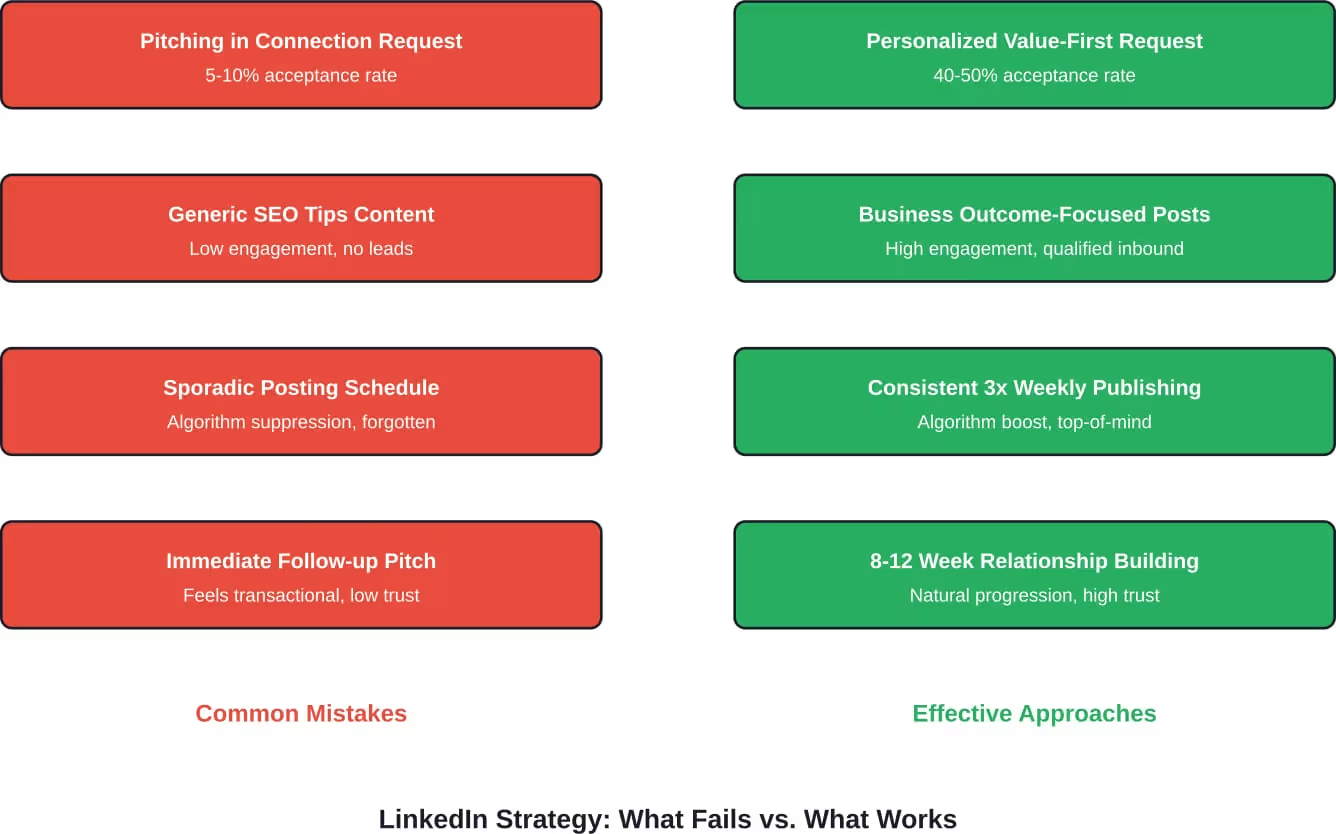
The biggest mistake is treating LinkedIn like a cold email platform. Connection request immediately followed by service pitch creates terrible conversion rates and damages reputation.
The relationship needs cultivation before any commercial discussion. Period.
Inconsistent Presence
Posting sporadically or going weeks without activity kills momentum. The algorithm favors consistent publishers, and prospects forget about inactive connections.
Better to commit to two posts weekly and maintain that schedule than to post daily for two weeks then disappear for a month.
Talking About SEO Instead of Business Outcomes
Prospects don’t care about technical SEO details. They care about revenue, customer acquisition costs, competitive positioning, and market share.
Content needs to speak their language. Instead of “How to optimize meta descriptions,” try “Why prospects bounce from your site before requesting demos.”
Search Engine Journal’s analysis of the SEO skills gap reveals this shift: the C-suite is less interested in technical metrics and more focused on commercial outcomes. Rankings don’t impress executives anymore. Revenue attribution does.
Ignoring Existing Network
Many SEO professionals obsess over new connections while ignoring existing ones. But warm leads from current connections convert significantly better than cold outreach.
Periodically review existing connections to identify:
- People who’ve changed roles into decision-making positions
- Companies that have recently raised funding
- Connections who regularly engage with content but haven’t been contacted directly
- Past clients who might need additional services
These warm prospects require less effort to convert than starting fresh with strangers.
Not Testing Different Approaches
What works varies by industry, company size, and target role. Testing different messaging, content formats, and outreach timing reveals what resonates with specific audiences.
Try different connection request messages and track acceptance rates. Test various content topics and measure engagement. Experiment with call-to-action phrasing in posts.
Data-driven iteration improves results faster than following generic best practices.
Advanced Strategies for Established LinkedIn Presences
Once basic tactics are working, these advanced approaches accelerate results.
LinkedIn Articles for Long-Form Authority
LinkedIn’s native article publishing feature enables longer-form content (1000-2000 words) that establishes deeper expertise.
Articles work best for:
- Comprehensive case studies with detailed methodology
- Original research or data analysis
- Industry trend analysis and predictions
- In-depth guides solving specific client problems
Unlike posts, articles stay accessible on profiles permanently and get indexed by search engines. They serve as evergreen credibility builders that prospects can discover months later.
Promote new articles with regular posts summarizing key takeaways and linking to the full piece.
Leveraging Employee Networks
For agencies or teams, employee networks multiply reach. When team members share company content or engage with the same prospects, visibility increases exponentially.
Create a simple employee advocacy program:
- Weekly content suggestions employees can share (not mandatory, but encouraged)
- Recognition for team members whose content performs well
- Training on effective LinkedIn engagement
LinkedIn’s 2026 insights on creators emphasize that thought leadership is increasingly people-powered. Brands partnering strategically with creators (including employees) see better engagement than corporate accounts alone.
LinkedIn Live and Events
LinkedIn Live broadcasts and Events create real-time engagement opportunities that build deeper connections than static posts.
Host monthly “office hours” where prospects can ask SEO questions. Run quarterly webinars on specific topics relevant to the target market. Create LinkedIn Events for these sessions to drive registrations.
Live formats demonstrate expertise in unedited environments, building trust faster than polished content. They also create repurposing opportunities—record sessions and share clips as regular posts.
Influencer Collaboration
Partnering with established LinkedIn influencers in complementary niches expands reach to relevant new audiences.
Approach influencers with specific collaboration ideas:
- Joint webinar on a topic both audiences care about
- Interview-style content where each promotes the other’s expertise
- Case study collaboration highlighting work done together
The key is mutual value. What does the influencer gain from collaborating? Access to expertise, content for their audience, or exposure to a different network?
Measuring ROI and Justifying Time Investment
LinkedIn prospecting requires consistent effort. Measuring return on that investment determines whether the strategy makes financial sense.
Time Tracking
Track hours spent on LinkedIn activities weekly: content creation, engagement, outreach, conversations. Multiply by hourly rate (or opportunity cost) to calculate investment.
Example: 8 hours weekly at $100/hour effective rate = $800 weekly investment, or $3,200 monthly.
Revenue Attribution
Track which clients originated from LinkedIn and their lifetime value. Compare to time investment.
If monthly LinkedIn effort ($3,200) generates one new client worth $6,000 in first-year revenue, that’s a positive return even before considering long-term value.
Some SEO professionals report building sustainable client pipelines through LinkedIn prospecting with consistent effort. The compounding effect of content and connections makes it increasingly efficient over time.
Leading Indicators
Revenue is a lagging indicator. Track leading metrics that predict future success:
- Profile view trend (growing weekly?)
- Connection growth rate (quality connections, not just quantity)
- Engagement rate on content (improving over time?)
- Discovery call booking rate (percentage of active conversations converting)
- Average time from first connection to discovery call (shortening as authority builds?)
These indicators show whether the strategy is working before revenue materializes.
Conclusion: Building a Sustainable LinkedIn Client Pipeline
LinkedIn has evolved from a static professional network into the most effective B2B lead generation platform available. For SEO professionals, it offers direct access to decision-makers, algorithms that reward consistent value creation, and relationship-building tools that no other platform matches.
But success requires patience and systematic approach. Profile optimization establishes credibility. Content demonstrates expertise in language prospects understand. Strategic engagement builds relationships before any commercial discussion. Measured outreach converts those relationships into discovery conversations. And consistent effort compounds over time as authority and network effects accelerate results.
The SEO professionals who win on LinkedIn aren’t necessarily the most technically skilled. They’re the ones who commit to showing up consistently, providing genuine value, and playing the long game. They understand that LinkedIn is infrastructure for growth, not a tactical shortcut.
Start with the fundamentals outlined above. Optimize the profile. Publish three valuable posts weekly. Send 20-25 personalized connection requests. Engage authentically with target prospects’ content. Track what works and iterate based on data.
Within 90 days, the pipeline will start filling. Within six months, LinkedIn will likely become the primary client source. The investment of time now creates compounding returns that make future client acquisition dramatically easier.
The clients are already on LinkedIn. The question is whether they’ll find the SEO expertise they need from someone else, or from the professional who invested in becoming visible, credible, and top-of-mind.