


Most businesses treat SEO like a numbers game. Get more traffic, hope some of it converts, and call it a day.
But here’s the thing: ranking for keywords that bring thousands of visitors means nothing if those visitors leave without taking action. Real SEO lead generation isn’t about traffic volume—it’s about attracting people who are actually looking for what businesses offer.
The difference between SEO that generates leads and SEO that generates vanity metrics comes down to intent alignment. When search optimization focuses on the specific problems prospects need solved, conversion rates climb naturally. When it chases high-volume keywords without regard for buyer readiness, budgets get wasted on visitors who were never going to convert anyway.
Google processes trillions of searches every year, and still, 15% of those queries have never been seen by Google before. That means fresh opportunities constantly emerge for businesses willing to target specific, high-intent queries rather than fighting over saturated head terms.
What Makes SEO Leads Different
SEO leads arrive through organic search results—the free listings that appear because they match what someone typed into a search engine. According to Google Ads Help, organic search results appear because they’re relevant to search terms, unlike paid advertisements marked with “Sponsored” labels.
These leads behave fundamentally different from outbound prospects. They’re actively searching for solutions, not interrupting their day to receive a cold pitch. That intent shift changes everything.
The quality difference shows up in conversion data. While specific benchmarks vary by industry, SEO leads consistently outperform interruption-based marketing because prospects have already identified their problem and started looking for answers.
Real talk: not all organic traffic qualifies as leads. Someone searching for definitions, free resources, or competitor information might visit a site without any purchase intent. Lead generation through SEO means attracting the subset of searchers who match the ideal customer profile and show buying signals.
The Foundation: Strategic Keyword Research
Keyword research for lead generation works backward from most SEO approaches. Instead of starting with search volume, it starts with revenue potential.
The process begins by mapping out the customer journey. What questions do prospects ask before they’re ready to buy? What pain points drive them to search for solutions? What specific features or capabilities do they need?
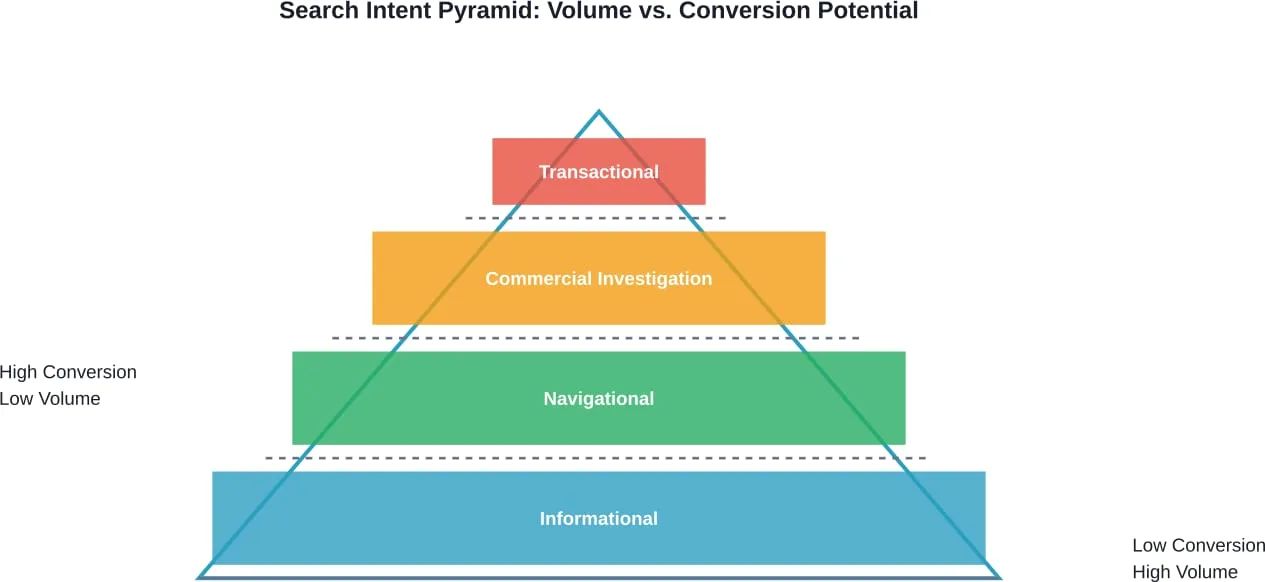
Intent Classification
Every keyword falls somewhere on the intent spectrum:
- Informational queries signal early-stage research. Someone searching “what is email marketing” probably isn’t ready to buy today.
- Navigational searches target specific brands or products. These matter for brand protection but rarely generate new leads.
- Commercial investigation shows mid-funnel interest. Terms like “best CRM for small business” or “email platform comparison” indicate active evaluation.
- Transactional keywords reveal high purchase intent. Searches containing “buy,” “pricing,” “demo,” or specific product names often convert quickly.
Lead generation focuses heavily on commercial and transactional intent. A case study from Moz showed how focusing on strategic topic clusters increased a client’s leads from 95 to 460 over six months, a 384% increase. The strategy prioritized depth over breadth, targeting specific high-intent queries rather than chasing traffic volume.
Long-Tail Opportunity
Long-tail keywords—specific phrases with lower search volume—often deliver better leads than generic head terms. They face less competition and attract more qualified prospects.
Someone searching “project management software for remote teams under 50 people” knows exactly what they need. That specificity makes them far more likely to convert than someone typing just “project management.”
According to Search Engine Land, long-tail keywords are typically less competitive than head terms, making it easier to rank for the average site. Combined with the constant emergence of new search queries, opportunities for niche content remain abundant.
Creating Content That Converts Visitors to Leads
Content creation for lead generation follows different rules than content for awareness. The goal isn’t just ranking—it’s persuading qualified visitors to take action.
Match Content to Search Intent
When someone searches “CRM pricing comparison,” they don’t want a blog post about the history of customer relationship management. They want pricing tables, feature breakdowns, and direct comparisons.
Content format should match what searchers expect. Google’s algorithms increasingly prioritize this alignment, which means pages that satisfy intent rank better and convert more effectively.
For commercial queries, that often means:
- Detailed comparison pages with side-by-side feature analysis
- Buying guides that address common decision criteria
- Case studies showing real implementation results
- Product pages with clear conversion paths
Answer Questions Prospects Actually Ask
The best lead-generating content addresses specific objections and questions that come up during the buying process. What concerns prevent prospects from moving forward? What information do they need to feel confident in a decision?
Customer reviews provide goldmine insights here. When people spend time writing detailed reviews, they reveal what mattered most in their decision process—both positive factors and concerns.
Sales teams offer another intelligence source. The questions they hear repeatedly in demos and calls should inform content topics. If prospects consistently ask about integration capabilities, that deserves dedicated content.
Demonstrate Expertise Through Depth
Surface-level content doesn’t generate leads from informed buyers. Prospects researching business solutions want evidence that a company actually understands their problems.
That means going deeper than generic advice. Specific frameworks, detailed processes, real examples, and technical accuracy signal expertise in ways that generic tips never will.
According to Moz, a focused approach to topic clusters—creating comprehensive, interconnected content around specific themes—can drive substantial results. One Moz case study showed clicks increasing from 4,503 to 23,013 (411% increase) and impressions growing from 856,683 to 2,033,355 (137% increase) over six months by concentrating on depth rather than breadth.
Technical SEO Elements That Impact Lead Generation
Technical optimization might seem disconnected from lead generation, but it directly impacts whether prospects can find, access, and engage with content.
Page Speed and User Experience
Slow-loading pages kill conversions. When prospects wait more than a few seconds for content to appear, many leave before seeing the offer.
Technical optimizations that matter for lead generation include:
- Image compression and lazy loading
- Minimized JavaScript and CSS
- Server response time optimization
- Mobile responsiveness across devices
Mobile experience deserves special attention. Search traffic increasingly comes from phones, and prospects researching on mobile expect seamless experiences. Forms that don’t work properly on small screens or content that requires constant zooming creates friction that costs leads.
Clear Conversion Paths
Even highly-qualified prospects won’t convert if they can’t figure out how. Every page targeting commercial or transactional keywords needs obvious next steps.
Effective conversion elements include:
- Prominent calls-to-action above the fold
- Multiple conversion opportunities throughout longer content
- Frictionless form designs that request only essential information
- Clear value propositions that explain what happens after submission
Testing different approaches reveals what works for specific audiences. Small changes to button text, form placement, or page layout can significantly impact conversion rates.
Crawlability and Indexing
Content can’t generate leads if search engines can’t find it. Technical issues that prevent proper crawling and indexing waste all the effort invested in content creation.
Common technical problems include:
- Blocked resources in robots.txt
- Broken internal linking structures
- Duplicate content issues
- Missing or poorly-configured XML sitemaps
According to Google Analytics documentation on traffic-source dimensions, properly configured tags and tracking enable businesses to understand where traffic originates and which sources drive the most valuable engagement.
Local SEO for Geographic Lead Generation
Businesses serving specific geographic areas need location-focused optimization. Local SEO generates leads from prospects searching for nearby solutions.
The foundation starts with consistent NAP (name, address, phone number) information across all online properties. Inconsistencies confuse search engines and prospects alike.
Google Business Profile optimization matters significantly for local visibility. Complete profiles with accurate categories, business hours, photos, and regular updates rank better in local pack results.
Location-specific content also drives local leads. Creating pages or blog posts targeting “[service] in [city]” helps capture searches with geographic intent. But these need genuine local relevance—not just generic content with city names inserted.
Local backlinks from area organizations, business directories, and community websites signal geographic relevance to search engines while potentially driving direct referral traffic.
Building Authority Through Link Acquisition
Backlinks remain a critical ranking factor, but their role in lead generation extends beyond SEO value. Links from authoritative sources in an industry build credibility with prospects who encounter a brand through multiple channels.
Earning Links Through Valuable Content
The most sustainable link building focuses on creating resources other sites want to reference.
That might include:
- Original research and data that becomes citeable
- Comprehensive guides that serve as definitive resources
- Tools or calculators that provide utility
- Expert analysis of industry trends
Content designed for linkability differs from content designed for conversion. Linkable assets often target informational queries and serve educational purposes, while conversion content targets commercial intent. Both play roles in a complete strategy.
Strategic Outreach
Even excellent content benefits from strategic promotion. Outreach to relevant websites, journalists, and industry publications can accelerate link acquisition and visibility.
Effective outreach focuses on mutual value. Rather than just requesting links, it offers something useful—exclusive data, expert quotes, or resources that genuinely help the recipient’s audience.
Conversion Rate Optimization for SEO Traffic
More traffic doesn’t automatically mean more leads. Conversion rate optimization focuses on getting more value from existing visitors.
Understanding Visitor Behavior
Analytics reveal how prospects interact with content. Which pages do they visit before converting? Where do they drop off? How long do they spend on key pages?
Heat mapping and session recording tools show where users click, how far they scroll, and what elements get ignored. These insights inform optimization priorities.
According to HubSpot’s testing data, small changes can produce significant results. In one example, HubSpot found that out of more than 55,000 page views, only 0.9% of users watched a homepage video, but almost 50% of those who started watching completed it—revealing that placement and presentation mattered more than video appeal.
Testing Conversion Elements
Systematic testing identifies what actually improves conversion rates rather than relying on assumptions. Common elements worth testing include:
- Headline variations that emphasize different value propositions
- Call-to-action button text and colors
- Form length and field requirements
- Social proof placement and format
- Page layout and visual hierarchy
Testing should focus on statistically significant results. Small sample sizes produce unreliable conclusions that lead to poor decisions.
Reducing Friction
Every unnecessary step in the conversion process costs leads.
Friction takes many forms:
- Forms requesting information prospects aren’t ready to share
- Unclear value propositions that don’t explain benefits
- Distracting page elements that compete with conversion goals
- Confusing navigation that makes next steps unclear
Reducing friction often improves conversion rates more than adding persuasive elements. Sometimes the best optimization is removing obstacles.
| Conversion Element | High-Friction Approach | Low-Friction Approach |
|---|---|---|
| Lead Form | 12 fields including company size, budget, timeline, role, and detailed needs | 3 fields: name, email, and company |
| CTA Button | “Submit Form” or “Send Request” | “Get Your Free Guide” or “Start Free Trial” |
| Next Steps | Unclear what happens after submission | Specific expectation: “Download begins immediately” |
| Value Proposition | Generic: “Learn more about our solution” | Specific: “Get the 15-point SEO audit checklist” |
Measuring and Tracking SEO Lead Generation
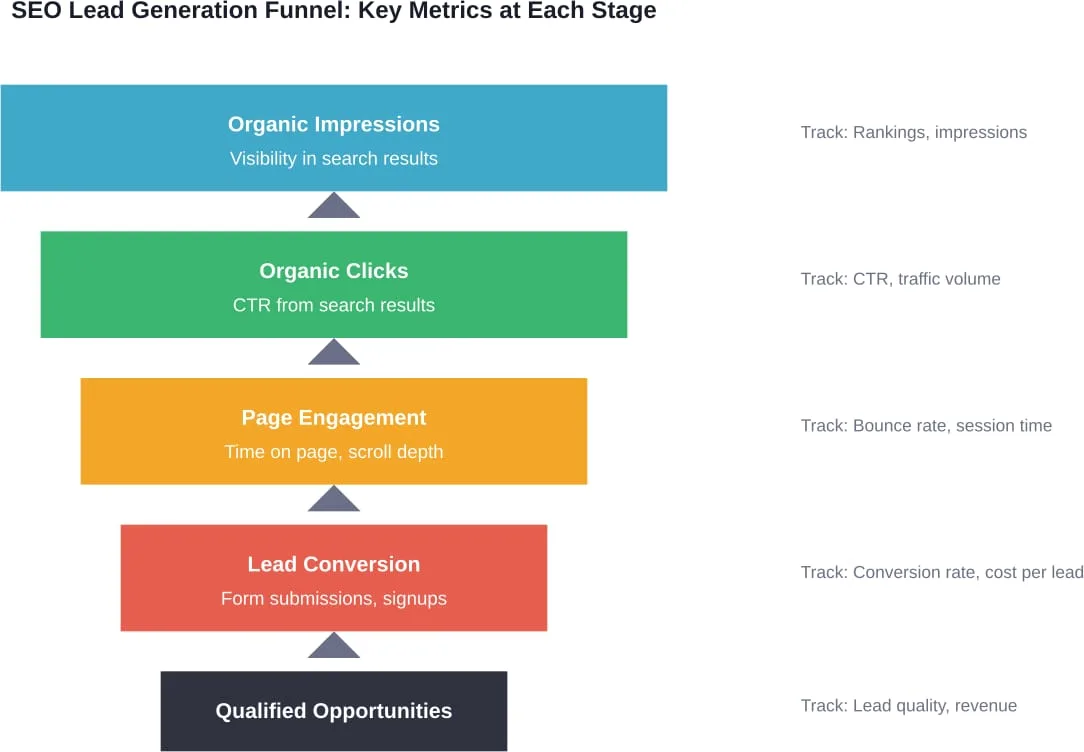
What gets measured gets managed. Effective lead generation requires tracking the right metrics and understanding what drives results.
Beyond Rankings and Traffic
Rankings and traffic matter, but they’re not the end goal. The metrics that actually indicate success include:
- Conversion rate from organic traffic
- Cost per lead from SEO compared to other channels
- Lead quality and sales qualification rates
- Revenue attributed to organic search
- Customer lifetime value of SEO-sourced leads
According to Search Engine Land, SEO strategy requires clear, measurable goals beyond traffic. One example suggests aiming to increase organic conversions of specific product categories by defined percentages (such as 15%) within specific timeframes (such as Q2 and Q3), with revenue targets (such as $500,000 in Q2) that matter to the business.
Attribution Challenges
SEO rarely works in isolation. Prospects might discover a business through organic search, then return via direct traffic or click a retargeting ad before converting.
Multi-touch attribution models provide more accurate pictures than last-click attribution. They recognize that multiple touchpoints contribute to conversions rather than crediting only the final interaction.
Google Analytics provides traffic-source data that helps understand where visitors originate and which channels drive valuable engagement. Properly configured tracking tags prevent issues with unassigned traffic or inaccurate source identification.
Lead Quality Metrics
Not all leads carry equal value. Tracking quality indicators helps optimize for revenue rather than just lead volume:
- Sales acceptance rate (percentage of leads sales teams consider worth pursuing)
- Opportunity conversion rate (leads that become real sales opportunities)
- Sales cycle length for SEO-sourced leads
- Average deal size by traffic source
These metrics reveal whether SEO attracts the right prospects or just generates activity without revenue impact.
Advanced Strategies for Competitive Markets
In crowded markets where top competitors already dominate major keywords, alternative approaches can still generate leads effectively.
Topic Cluster Strategy
Rather than targeting individual keywords in isolation, topic clusters organize content around central themes with interconnected supporting pieces.
The structure includes:
- A comprehensive pillar page covering a broad topic
- Multiple cluster pages addressing specific subtopics
- Strategic internal linking connecting related content
This architecture helps search engines understand topical authority while providing prospects with interconnected resources that address questions at different stages of research.
According to Moz, focusing intensively on one topic cluster rather than spreading efforts across multiple themes can produce substantial results. Their case study of an insolvency services client showed a 384% increase in leads over six months (from 95 to 460) by concentrating resources on deep coverage of a specific subject area.
Targeting Emerging Keywords
New keywords constantly emerge as industries evolve, products launch, and search behavior changes. Being early to target these queries creates opportunities before competition intensifies.
Identifying emerging keywords requires monitoring:
- Industry news and trend publications
- Customer questions and support tickets
- Social media discussions and communities
- Search query reports in analytics
Early content on emerging topics can establish authority before major competitors recognize the opportunity.
Answer Engine Optimization
Search engines increasingly surface direct answers rather than just links. Featured snippets, knowledge panels, and AI-generated responses change how prospects interact with search results.
According to Search Engine Land, ChatGPT and other LLMs are not replacing Google, and SEO is not being replaced by AI search. Brands that optimize for AI visibility alongside traditional rankings gain advantages.
Optimization for answer engines includes:
- Clear, concise answers to specific questions
- Structured data markup that helps algorithms understand content
- Well-organized content with descriptive headings
- Authoritative tone backed by credible sources
Content Formats That Generate Leads
Different content formats serve different purposes in lead generation. Understanding which formats work for specific goals helps allocate resources effectively.
| Content Format | Best Use Case | Lead Generation Approach |
|---|---|---|
| Comparison Pages | Prospects evaluating alternatives | Feature comparison tables with clear CTA to demo or trial |
| Ultimate Guides | Comprehensive topic coverage | Gated PDF download or email course signup |
| Case Studies | Demonstrating real results | Full case study access in exchange for contact information |
| Calculator Tools | Providing immediate value | Email delivery of calculated results |
| Templates | Offering ready-to-use resources | Download requires email address |
| Webinars | Education and relationship building | Registration collects lead information |
Gated vs. Ungated Content
The decision to gate content behind forms involves tradeoffs. Gated content generates leads directly but limits reach and SEO value. Ungated content ranks in search results and builds trust but requires different conversion mechanisms.
A balanced approach often works best:
- Use ungated content to attract organic traffic and demonstrate expertise
- Offer gated premium resources (templates, tools, detailed guides) for lead capture
- Include multiple conversion opportunities throughout ungated content
Segmentation and Personalization
Not all leads want the same information or respond to identical approaches. Segmentation allows more targeted messaging based on prospect characteristics.
Behavioral Segmentation
How prospects interact with content reveals intent and readiness. Someone who reads pricing pages and comparison content shows different signals than someone consuming educational blog posts.
Behavioral triggers can inform:
- Retargeting ad messaging based on pages visited
- Email nurture sequences aligned with content consumption
- Dynamic on-site content that adapts to visitor behavior
Firmographic Segmentation
For B2B lead generation, company characteristics matter. A small startup needs different solutions than an enterprise organization. Industry verticals face unique challenges.
Creating content and conversion paths for specific segments improves relevance and conversion rates. That might mean separate landing pages for different industries or company sizes, each addressing specific pain points.
According to HubSpot’s customer segmentation documentation, detailed segmentation can produce significant results. One example described dividing audiences by industry, then further segmenting by previous versus new clients before sending customized messages—an approach that resulted in closing a deal worth $1.5 million.
Common Mistakes That Waste SEO Lead Generation Efforts
Understanding what doesn’t work saves time and resources.
Targeting the Wrong Keywords
Chasing high-volume keywords without regard for intent wastes effort. A keyword might bring thousands of visitors, but if those visitors aren’t potential customers, traffic means nothing.
A 2025 Moz case study emphasized strategic battle selection—focusing on lower-friction opportunities rather than high-competition terms. This resulted in a 493% increase in market penetration by accumulating small wins across strategic keywords rather than fighting for saturated head terms.
Neglecting the Full Funnel
Focusing exclusively on bottom-funnel content limits reach. While transactional keywords generate immediate leads, top and middle-funnel content builds awareness and positions businesses in front of prospects earlier in their journey.
A complete strategy addresses all funnel stages:
- Awareness content introduces solutions to problems prospects might not know are solvable
- Consideration content helps prospects evaluate options and understand differences
- Decision content provides the specific information needed to choose and purchase
Ignoring User Experience
Great content can’t overcome terrible user experience. Slow sites, confusing navigation, poor mobile design, and broken functionality all drive prospects away before conversion happens.
Technical problems often hide in plain sight. Regular audits catch issues before they significantly impact lead generation performance.
Forgetting to Promote Content
Publishing content and waiting for organic traffic builds slowly.
Strategic promotion accelerates results through:
- Email marketing to existing contacts and subscribers
- Social media distribution to relevant audiences
- Outreach to industry publications and influencers
- Paid amplification for high-value content
Building a Sustainable Lead Generation System
One-off campaigns produce temporary results. Sustainable lead generation requires systems that consistently attract and convert prospects.
Content Operations
Regular content production at scale requires operational frameworks:
- Editorial calendars that align with business goals and seasonal factors
- Content briefs that ensure quality and SEO alignment
- Review and approval processes that maintain standards
- Performance monitoring that identifies what’s working
According to Content Marketing Institute, creating empathetic content that truly resonates requires shifting focus from transactional assumptions to deeper audience understanding—a process that benefits from structured approaches rather than ad-hoc efforts.
Continuous Optimization
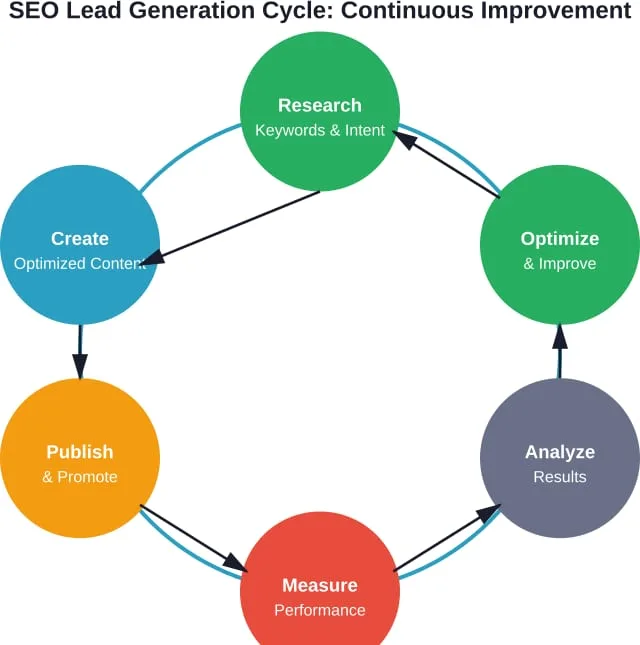
SEO lead generation improves through iteration. Regular optimization activities include:
- Updating existing content to maintain relevance and freshness
- Improving underperforming pages based on analytics insights
- Testing new conversion approaches on high-traffic pages
- Expanding successful content into comprehensive resources
Content doesn’t need to be perfect at launch. Publishing good content quickly and improving it based on performance often beats endless perfection before launch.
Cross-Functional Collaboration
Effective SEO lead generation requires input from across the organization:
- Sales teams provide insights on prospect questions and objections
- Product teams explain technical capabilities and differentiators
- Customer success teams share common implementation challenges
- Marketing teams coordinate messaging and positioning
Siloed SEO efforts miss opportunities that collaboration reveals. Regular communication ensures content addresses real business needs rather than just chasing rankings.
Scaling Results with Lengreo
Moving from traffic volume to actual revenue requires a partner who understands the bridge between visibility and conversion. Our team at Lengreo specializes in this transition, functioning as a complete marketing and tech partner for brands that need their digital presence to work harder. We don’t just chase rankings; we focus on the metrics that impact the bottom line, such as our work reducing the cost per lead by over 6X for a Dutch Event Technology firm.
By aligning technical optimization with high-intent content strategies, we’ve successfully boosted conversion rates by over 53% for our IT partners and increased annual client acquisition by 400% for software development companies. Whether you are looking to generate dozens of new business opportunities in a niche sector or scale a global tech brand, we apply a results-driven framework to ensure your SEO efforts result in qualified leads rather than just empty clicks.
Moving Forward with SEO Lead Generation
Generating qualified leads through SEO requires more than basic optimization tactics. It demands strategic alignment between what prospects search for and what businesses offer.
The businesses that succeed treat SEO as a complete system—not just content creation or link building or technical fixes, but an integrated approach where all elements support the goal of attracting and converting qualified prospects.
That means understanding buyer intent deeply enough to create content that genuinely helps. It means optimizing not just for rankings but for the specific actions that matter to the business. And it means continuously measuring, learning, and improving based on real performance data.
SEO lead generation works differently than paid advertising or outbound sales. It requires patience for organic visibility to build and consistency in content creation and optimization. But for businesses willing to invest in the foundation, it produces compound returns—content that continues generating leads months or years after publication.
Start with a clear understanding of who ideal customers are and what problems they’re trying to solve. Build content that addresses those needs at different stages of their journey. Optimize for both search engines and human visitors. Measure what matters. And keep improving based on results.
The opportunity is substantial. Most businesses still treat SEO as a side project rather than a core lead generation channel. Those that commit to strategic, systematic approaches gain advantages that compound over time as content accumulates, authority builds, and conversion paths improve.
Now’s the time to assess current SEO efforts: Are they genuinely aligned with lead generation goals, or just generating traffic without business impact? What changes would produce better results? Where should optimization efforts focus first?
The answers to those questions determine whether SEO becomes a meaningful lead source or remains an underutilized tactic.