Quick Summary: Finding SEO competitors involves identifying websites that rank for the same keywords as your site, not just business competitors. Use tools like Google Search, Semrush, Moz, or SpyFu to discover which domains compete for your target keywords, analyze their ranking patterns, and uncover opportunities where you can outperform them in search results.
Here’s something most businesses get wrong: your SEO competitors aren’t necessarily your business competitors.
That local bakery down the street? Probably not your search competitor if you’re ranking for “best chocolate cake recipe.” But that food blogger with 500 monthly posts? Absolutely.
Understanding who actually competes for your rankings changes everything about your search strategy. According to Moz, conducting proper competitor analysis helps identify areas of opportunity without guessing which tactics to test next. The challenge is knowing where to look.
This guide walks through proven methods to identify real SEO competitors, analyze their strategies, and find gaps where your content can win.
Understanding SEO Competitors vs Business Competitors
Business competitors sell similar products or services. SEO competitors rank for keywords you’re targeting.
Sometimes these overlap. Often they don’t.
A software company selling project management tools competes in business with Asana and Monday.com. But in search results for “how to organize tasks,” they’re competing with productivity blogs, YouTube channels, and how-to sites that don’t sell anything.
Moz Academy emphasizes the importance of distinguishing online competitors from offline, physical competition when conducting audience research. The SERPs tell the real story about who owns the visibility for topics that matter to your business.
Real talk: focusing only on business competitors blinds you to a significant portion of your actual search competition.
Find the Right SEO Competitors
Finding SEO competitors is only one part of building a strong strategy, and LENGREO supports this with full scale SEO services that combine research, content, and technical optimization. Real growth comes from understanding who drives traffic in your niche and how to outperform them.
- competitor and keyword analysis
- content and ranking strategy
- technical SEO improvements
If you want to turn insights into rankings, get a free consultation with LENGREO.
Method 1: Manual Google Search Analysis
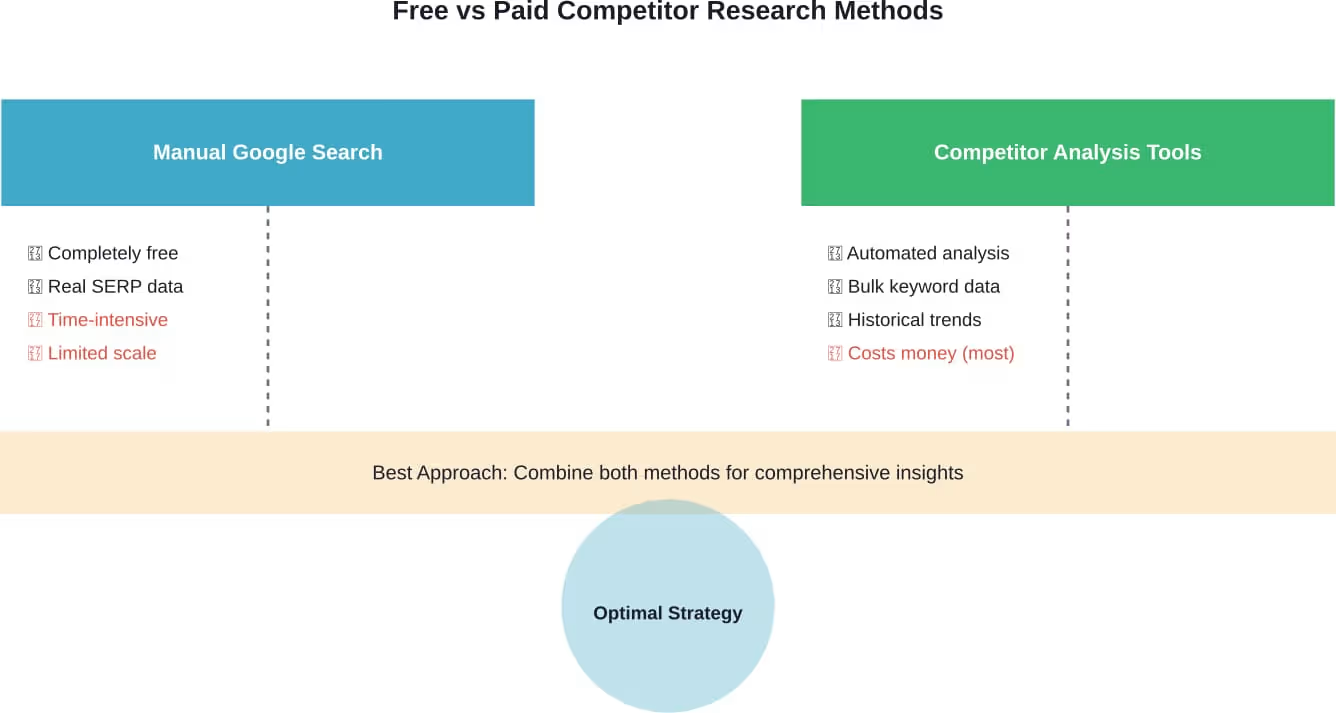
The simplest approach costs nothing and reveals immediate insights.
Start by searching your target keywords in Google. Not just one or two—compile a list of 10-20 keywords central to your business. Open an incognito window to avoid personalized results.
For each search, document which domains appear in the top 10 organic results. Ignore ads. Focus on the actual search results below paid placements.
What to Track During Manual Searches
Create a simple spreadsheet with these columns:
- Keyword searched
- Domains ranking positions 1-10
- Content type (blog post, product page, tool, video)
- Repeat appearances across multiple keywords
After checking 10-20 keywords, patterns emerge. Certain domains appear repeatedly. Those are your primary SEO competitors.
But here’s the thing—this method is time-consuming. Manual analysis works for small keyword sets but becomes impractical when dealing with hundreds of target terms.
Method 2: Using Free Competitor Discovery Tools
Several platforms offer free competitor analysis features without requiring payment.
Semrush provides a Competitor Finder tool that identifies websites competing for similar organic visibility. Enter your domain, select a location, and generate a report showing top competitors ranked by shared keywords.
The process takes seconds compared to hours of manual research.
Google Search Console offers another free resource. While it doesn’t explicitly identify competitors, the Performance report shows which queries drive traffic to your site. Search those queries manually or in competitor tools to see who else ranks.
Free Tools Worth Exploring
Check the official websites for current feature availability, but these platforms historically offered free competitor insights:
| Tool | Free Features | Best For |
|---|---|---|
| Semrush Competitor Finder | Basic competitor list by shared keywords | Quick identification |
| Google Search Console | Your own ranking data | Finding keyword overlap |
| Ubersuggest | Limited competitor domain analysis | Small sites starting out |
| SE Ranking (trial) | 14-day full access | Comprehensive testing |
Method 3: Premium Competitor Research Platforms
When serious about competitive analysis, dedicated tools provide depth that free options can’t match.
SpyFu specializes in revealing competitors’ keyword strategies. The platform shows keywords competitors rank for and ads they’ve tested. Users can download keyword lists and track performance changes.
Understanding what competitors offer helps explain why your product fits customer needs better. Premium tools accelerate this research dramatically.
Moz Pro offers competitor tracking features that identify, analyze, and monitor search competitors for better content strategy decisions. The platform emphasizes that competitor analysis ranks among the most important steps when creating SEO or marketing strategies.
Backlinko notes that analyzing competitors’ keyword targeting, backlink profiles, content strategies, and brand awareness helps reverse engineer their successes and identify gaps to exploit. In 2026, this extends to AI search engines and large language model visibility.
What Premium Tools Actually Show
Advanced platforms reveal data impossible to gather manually:
- Complete keyword portfolios (thousands of keywords per competitor)
- Historical ranking trends over months or years
- Estimated traffic volumes by keyword and page
- Backlink profiles showing who links to competitors
- Content gaps where competitors rank but you don’t
- Paid search strategies and ad copy variations
- AI search visibility in ChatGPT, Perplexity, and other LLMs
Pricing varies based on features and data access levels.
Analyzing Keyword Overlap to Identify True Competitors
Shared keywords determine competitive relationships in search.
Two websites might operate in completely different industries but compete intensely if they target identical keywords. A SaaS company and an educational blog both ranking for “project management tips” are SEO competitors for that query.
Moz defines competitor keywords as keywords that competitors target to improve rankings, drive traffic, and increase conversions. Analyzing these reveals new keyword opportunities through competitive keyword analysis.
Measuring Competitive Overlap
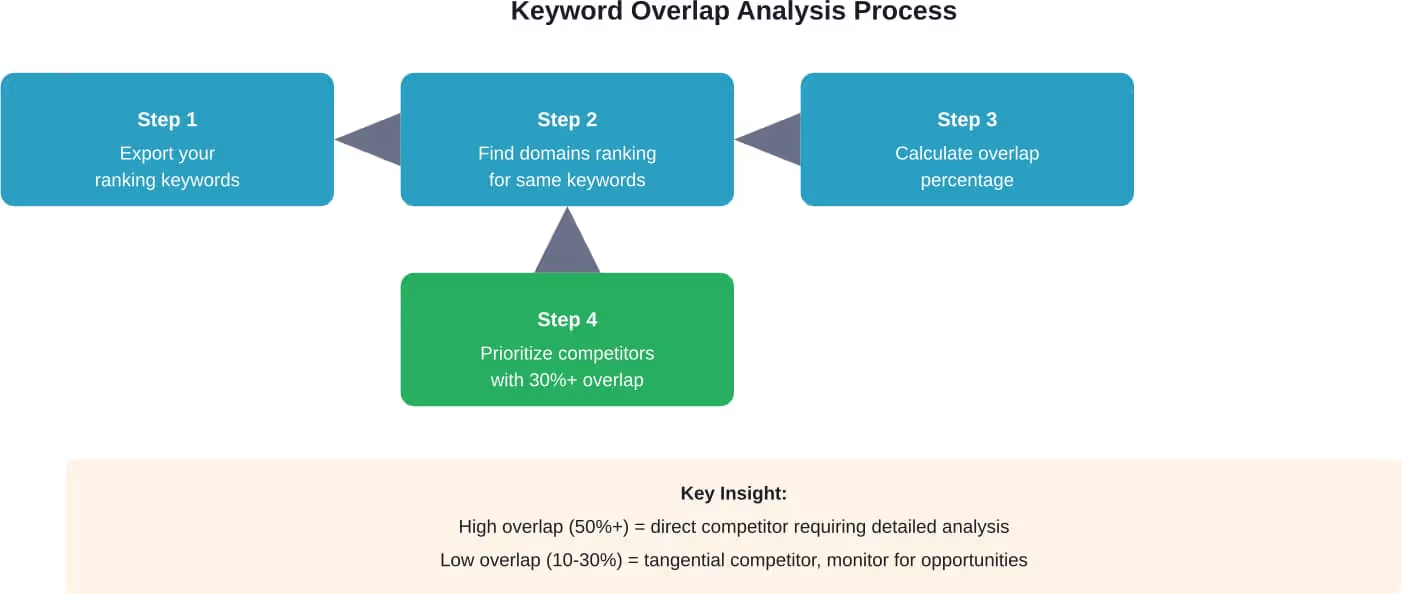
Most competitor tools calculate overlap as a percentage. If your site ranks for 1,000 keywords and a competitor ranks for 800 of the same ones, that’s 80% overlap—a major competitor.
Another domain ranking for only 50 shared keywords represents 5% overlap—minor competition or a different search niche entirely.
Focus analysis on competitors with 30%+ overlap. These domains fight for the same search visibility and audience.
SERP Feature Analysis for Competitive Intelligence
Rankings alone don’t tell the complete story. Search features change the competitive landscape.
Google displays various result types beyond standard blue links: featured snippets, local packs, knowledge panels, image carousels, video results, and People Also Ask boxes.
Analyzing SERP features helps identify why competitors rank and understand ranking factors. When conducting SERP analysis, evaluate which features appear for target keywords and who owns them.
A competitor ranking #3 organically but owning the featured snippet captures more visibility than the #1 position without it. That changes competitive dynamics entirely.
Tracking Feature Ownership
For priority keywords, document:
- Which SERP features appear (featured snippets, videos, images, local results)
- Which domains control those features
- Content formats that win features (lists, tables, definitions, videos)
- Opportunities where no one owns the feature yet
This reveals content format gaps. If every competitor writes long articles but video results dominate the SERP, creating video content offers an advantage.
Content Gap Analysis: Finding Competitor Weaknesses
The most valuable insights come from finding what competitors miss.
Content gap analysis identifies keywords competitors rank for but your site doesn’t. These represent immediate opportunities—proven topics with existing search demand where you lack presence.
Moz emphasizes analyzing competitors’ content to discover high-value topics and link-worthy pages. This helps create content that ranks by understanding what already performs.
Most competitor tools offer gap analysis features. Input your domain and 2-3 competitors. The tool shows keywords where all competitors rank but you don’t.
Prioritizing Gap Opportunities
Not all gaps deserve attention. Filter opportunities by:
| Filter Criteria | Why It Matters | Target Range |
|---|---|---|
| Search Volume | Ensures sufficient traffic potential | 100+ monthly searches |
| Keyword Difficulty | Indicates ranking feasibility | Below 60/100 for newer sites |
| Business Relevance | Aligns with products or services | High commercial intent |
| Content Type | Matches your content capabilities | Formats you can produce |
Focus on gaps where multiple strong competitors rank. If three authoritative sites all rank for a keyword, that validates the topic’s value.
Monitoring Competitor Backlink Strategies
Links remain a foundational ranking signal. Understanding where competitors acquire backlinks reveals relationship-building opportunities and content promotion strategies.
Backlink analysis answers critical questions: Which websites link to competitors? What content earns the most links? Are these links from authoritative sources or low-quality directories?
According to Google Search Central, incoming links are one of many ranking factors, and low-quality links may already be discounted by algorithms. Focus analysis on quality over quantity.
Extracting Actionable Link Insights
When analyzing competitor backlink profiles:
- Identify their highest-authority linking domains
- Find content pieces that attracted the most links
- Look for common link sources across multiple competitors
- Spot guest posting or partnership patterns
- Discover industry directories or resource pages linking to all competitors
Common linking domains across competitors represent scalable opportunities. If five competitors all have links from the same industry association, that association likely accepts new member listings or resource submissions.
Tracking Competitors Over Time
Competitor analysis isn’t a one-time task. Rankings shift, competitors publish new content, and algorithm updates change the landscape.
Set up monitoring systems to track:
- Ranking position changes for shared keywords
- New content competitors publish
- Backlink acquisition rates
- Traffic trend estimates
- New competitors entering your space
Most SEO platforms offer automated tracking and alerts. Configure weekly or monthly reports showing competitor movements without manual checking.
Moz Pro provides competitor tracking features designed to monitor true search competitors for better content strategy decisions. Tracking over time reveals patterns in competitor strategies—content publishing frequency, seasonal campaigns, or link building efforts.
AI Search and LLM Competitors in 2026
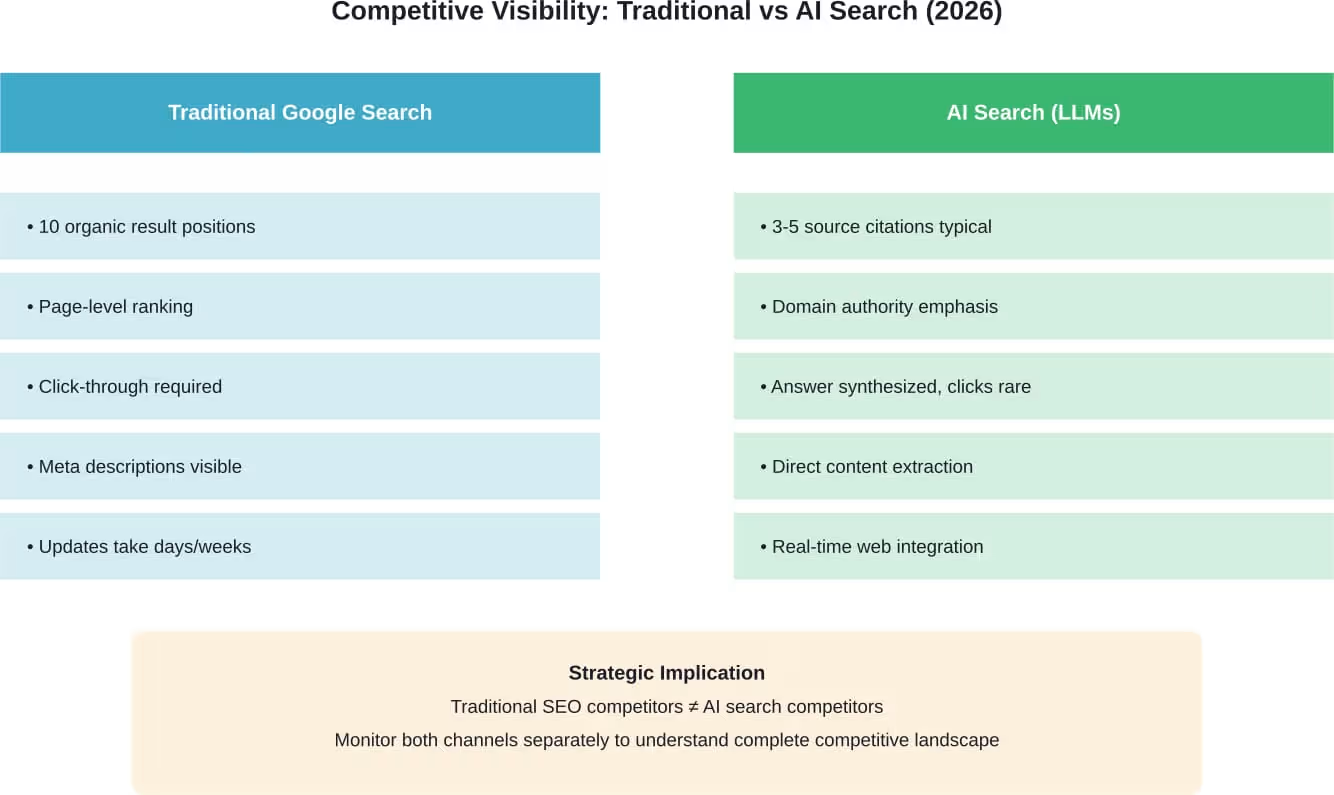
Traditional search isn’t the only visibility channel anymore. Large language models and AI search engines like ChatGPT, Perplexity, and Google’s AI Overviews surface different results.
Backlinko’s 2026 guidance on AI and SEO competitor analysis emphasizes tracking competitor visibility in LLMs alongside traditional search. These platforms cite sources differently, often favoring authoritative content and specific formats.
AI search visibility tracking has become important for competitive analysis in 2026. Some tools now offer features showing which domains get cited in AI responses and which source pages drive LLM visibility.
Analyzing AI Search Competitors
Test target queries in multiple AI platforms:
- ChatGPT (with web browsing enabled)
- Perplexity AI
- Google AI Overviews
- Microsoft Copilot
Document which sources these platforms cite. Domains appearing repeatedly across AI responses are AI search competitors—often different from traditional SERP competitors.
Check official documentation for current feature availability, but several platforms have introduced AI visibility tracking capabilities. These tools reveal competitors’ advantage in generative engine optimization.
Building a Sustainable Competitor Monitoring System
Ad-hoc competitor checks miss trends and changes. A systematic approach catches opportunities before competitors do.
Create a quarterly competitor review schedule:
Monthly: Check ranking positions for top 20 keywords. Review new content competitors published. Scan for major backlink wins.
Quarterly: Full keyword overlap analysis. Content gap refresh. Backlink profile comparison. Traffic trend review.
Annually: Complete competitive landscape assessment. Identify new competitors entering the space. Evaluate if current competitors remain relevant.
Document findings in a shared resource accessible to content, SEO, and marketing teams. Competitor insights should inform content calendars, link building outreach, and product positioning.
Common Mistakes When Identifying SEO Competitors
Several missteps derail competitive analysis efforts.
- Analyzing too many competitors: Tracking 20+ competitors dilutes focus. Start with the top 3-5 domains with highest keyword overlap. Add more only if needed.
- Ignoring smaller niche competitors: A site ranking for only 50 shared keywords might dominate high-value commercial terms. Don’t dismiss competitors based solely on domain authority or size.
- Copying competitor tactics blindly: Just because a competitor does something doesn’t mean it works or fits your strategy. Analyze, understand, then adapt—don’t copy.
- Focusing only on rankings: A competitor might rank lower but generate more conversions with better CTAs or user experience. Look beyond position to understand full competitive advantage.
- One-time analysis: The competitive landscape changes constantly. Quarterly reviews prevent working with outdated assumptions.
Taking Action on Competitive Insights
Data without action changes nothing.
After identifying SEO competitors and analyzing their strategies, create an action plan addressing specific gaps and weaknesses. Prioritize opportunities offering the highest impact relative to effort required.
Start with content gaps showing high search volume and moderate competition. These represent proven demand where competitors already rank, reducing risk compared to untested keywords.
Build relationships with sites linking to multiple competitors. If three competitors have links from an industry publication, that publication is open to covering your space—pitch them something newsworthy or valuable.
Track competitor content publication frequency and topics. If competitors publish daily but you post weekly, frequency might impact rankings. If they cover subtopics you’ve ignored, those represent content expansion opportunities.
Based on industry benchmarks, organic traffic varies by sector. Healthcare: 39%, Finance: 28%, Retail: 32%, Technology: 41%, Travel & Hospitality: 35%. Compare your organic percentage against competitors and industry benchmarks to identify performance gaps.
The goal isn’t matching everything competitors do. It’s understanding the competitive landscape well enough to make informed strategic decisions about where to compete, where to differentiate, and where to avoid wasting resources.
Ready to find your real SEO competitors? Start with manual searches for your top 5 keywords. See which domains appear repeatedly. Then explore free competitor tools to expand that initial list. Build from there based on what your analysis reveals about the competitive landscape in your specific niche.