Summary: YouTube channel SEO involves optimizing your channel and videos to rank higher in YouTube’s search results and recommendations. This includes strategic keyword research, crafting compelling titles and descriptions, creating custom thumbnails, adding captions, and analyzing performance metrics. With YouTube’s algorithm prioritizing watch time, engagement, and viewer satisfaction, proper optimization helps creators maximize visibility and grow their audience in 2026.
Over 2.5 billion people use YouTube every month. That’s a massive audience, but here’s the problem: more than 20 billion videos compete for their attention.
Standing out isn’t about luck. It’s about understanding how YouTube’s search and discovery system works and optimizing accordingly.
YouTube SEO determines whether your videos get buried on page twelve or whether they capture views, subscribers, and engagement. The difference between obscurity and growth often comes down to applying the right optimization tactics.
This guide walks through the essential strategies for ranking YouTube videos in 2026, from keyword research foundations to advanced channel optimization techniques. These aren’t theoretical concepts—they’re practical methods proven to improve visibility.
What Is YouTube SEO and Why Does It Matter?
YouTube SEO is the process of optimizing your channel and videos to rank higher in YouTube’s search results and recommendation feeds. According to YouTube’s official documentation, the platform operates as one of the largest search engines in the world, making optimization critical for discoverability.
The goal isn’t just ranking higher—it’s connecting with viewers who’ll actually watch, engage with, and subscribe based on your content.
Think about how viewers find videos. They either search for specific topics, browse their homepage recommendations, or follow suggested videos after watching something else. YouTube SEO influences all three discovery paths.
Without optimization, even brilliant content struggles to find an audience. The algorithm can’t recommend what it doesn’t understand, and viewers can’t watch videos they never discover.
The Business Case for YouTube Optimization
Channels that implement consistent SEO strategies see measurable growth in organic traffic. This matters because organic discovery compounds over time—a well-optimized video published today can continue attracting viewers months or years later.
For businesses, improved YouTube visibility translates to brand awareness, lead generation, and customer education at scale. For creators, it means sustainable growth without relying solely on external promotion.
The alternative? Creating content that disappears into the void, generating minimal views despite the effort invested in production.
Build a YouTube SEO Strategy That Brings Views
YouTube SEO requires keyword research, title structure, metadata optimization, and content alignment. Lengreo helps define search intent and optimize video content for discoverability. Their approach focuses on improving rankings inside YouTube and visibility in Google search. The result is structured channel growth.
Ready to Improve Your YouTube Channel SEO?
Talk with Lengreo to:
- research video keywords and topics
- optimize titles, descriptions, and tags
- build a consistent publishing and ranking strategy
👉 Start with a YouTube SEO consultation from Lengreo.
How YouTube’s Algorithm Works in 2026
Understanding the algorithm isn’t about gaming the system. It’s about aligning content with how YouTube evaluates and surfaces videos.
According to YouTube’s official performance documentation, the recommendation system prioritizes content that maximizes long-term viewer satisfaction. The algorithm narrows down billions of videos to offer each viewer a personalized set of recommendations.
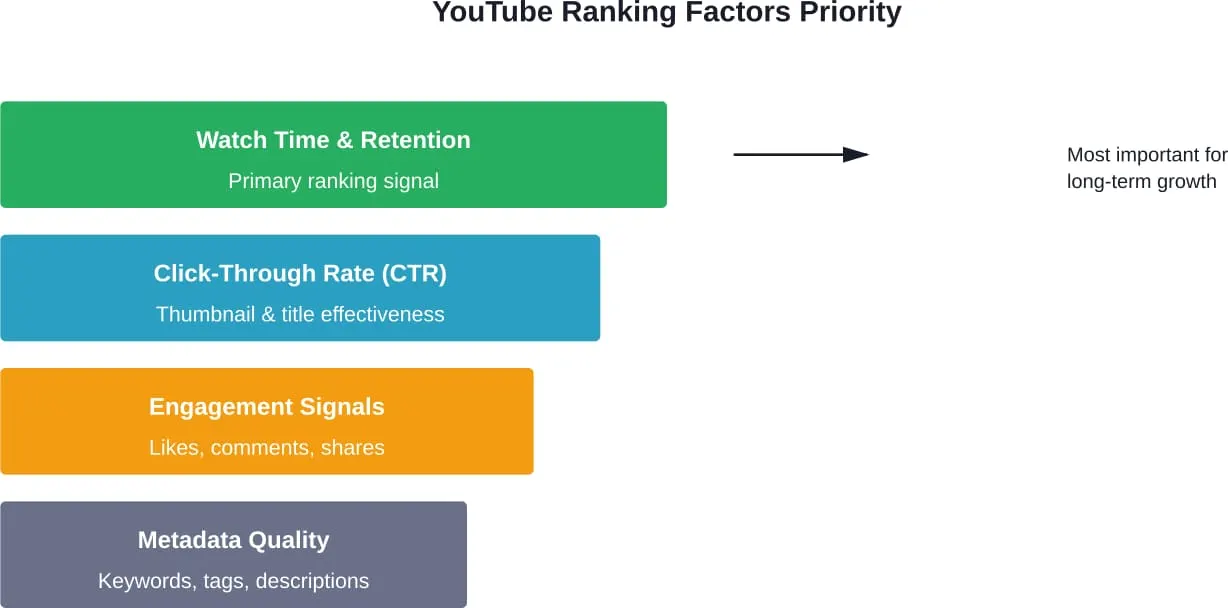
Several key signals influence these decisions:
- Watch time and retention: Videos that keep viewers engaged signal quality to the algorithm. A video with high watch time tells YouTube that people find the content valuable.
- Click-through rate (CTR): When viewers see a video in search results or recommendations and actually click it, that indicates relevance. Higher CTR suggests the title and thumbnail effectively communicate value.
- Engagement metrics: Likes, comments, shares, and subscriptions following a video view all signal viewer satisfaction. These interactions tell YouTube that content resonated with the audience.
- Metadata relevance: Titles, descriptions, tags, and captions help YouTube understand what a video covers. This contextual information determines when to surface content in search and recommendations.
The algorithm doesn’t just look at individual video performance. It evaluates channel authority, consistency, and audience loyalty. Channels that regularly publish content viewers want to watch build momentum over time.
What Changed in Recent Algorithm Updates
YouTube continually refines its recommendation system. Recent adjustments have emphasized viewer satisfaction over pure view counts, meaning a video with fewer views but higher engagement can outperform one with more views but poor retention.
Shorts can run up to three minutes and now play a larger role in channel discovery. Completion rates and replays for Shorts serve as strong engagement signals—a 30-second Short that 90 percent of viewers finish often outperforms longer content with lower completion rates.
Multi-language expansion has also become more important. Channels adding translated titles, descriptions, and captions can reach broader international audiences, with the algorithm surfacing content to viewers in their preferred languages.
Keyword Research: The Foundation of YouTube SEO
Everything starts with understanding what people search for. Keyword research reveals the exact terms and phrases potential viewers use when looking for content.
According to YouTube’s official help documentation, writing descriptions with keywords helps viewers find videos more easily through search. But effective keyword research goes deeper than guessing relevant terms.
Finding Keywords That Drive Views
Start with YouTube’s search suggestions. Type a broad topic into the search bar and note the autocomplete suggestions—these represent actual searches users perform frequently.
For example, searching “how to edit videos” reveals variations like “how to edit videos on phone,” “how to edit videos for YouTube,” and “how to edit videos for beginners.” Each variation represents a distinct search intent and content opportunity.
Check the search results for your target keywords. Look at what’s already ranking: video titles, view counts, and publication dates. This competitive intelligence shows what type of content performs well for specific queries.
YouTube’s autocomplete and related searches provide free keyword data directly from the platform. But dedicated SEO tools offer deeper insights.
Using SEO Tools for YouTube Research
Several platforms specialize in YouTube keyword research. These tools reveal search volume estimates, competition levels, and related keyword opportunities:
- TubeBuddy and VidIQ: Browser extensions that integrate directly with YouTube, showing keyword scores, search volume, and optimization recommendations as you work
- Ahrefs and SEMrush: Enterprise SEO platforms with YouTube-specific keyword databases and competitive analysis features
- Google Trends: Free tool showing search interest over time, useful for identifying seasonal trends and rising topics
Look beyond single keywords. Long-tail phrases (more specific, usually longer searches) often have less competition and more focused intent. “YouTube SEO” is broad and competitive. “How to optimize YouTube video descriptions for SEO” targets a more specific need.
Analyzing Search Intent
Not all keywords with high search volume are worth targeting. Search intent matters more than volume.
Someone searching “iPhone 15 review” wants to watch a product review. Someone searching “how to fix iPhone 15 screen” needs a tutorial. The content that satisfies each query differs completely.
Match content to intent. Create tutorials for how-to searches, reviews for product queries, and explanatory content for “what is” searches. Alignment between search intent and video content improves both rankings and viewer satisfaction.
Optimizing Video Titles for Maximum Clicks
Titles serve two masters: the algorithm and human viewers. A great title includes relevant keywords while compelling people to click.
YouTube allows up to 100 characters for video titles, but only about 70 display in most search results. Front-load important keywords and value propositions within the first 50-60 characters.
Title Optimization Best Practices
- Include target keywords naturally: Place primary keywords near the beginning of the title where they have maximum impact for both search and viewer scanning.
- Communicate clear value: Viewers should immediately understand what they’ll gain from watching. “7 Photoshop Shortcuts That Save Hours” is more compelling than “Photoshop Tips.”
- Use numbers and specificity: Titles with numbers often generate higher CTR. “15 SEO Mistakes” performs better than “Common SEO Mistakes” because it sets clear expectations.
- Create curiosity without clickbait: Titles should intrigue viewers while accurately representing content. Misleading titles might generate initial clicks but damage watch time and retention when viewers realize they’ve been misled.
- Test different formats: Questions (“How Does YouTube SEO Work?”), lists (“10 YouTube SEO Tips”), and how-to formats (“How to Rank YouTube Videos”) all have their place depending on content and audience.
| Title Type | Example | Best For |
|---|---|---|
| How-To | How to Optimize YouTube Descriptions | Tutorial content, educational videos |
| List/Number | 12 YouTube SEO Tools You Need | Roundups, tips collections, comparisons |
| Question | Does YouTube SEO Really Work? | Addressing viewer curiosity, debates |
| Ultimate Guide | Complete YouTube SEO Guide for 2026 | Comprehensive content, in-depth tutorials |
| Year-Specific | YouTube Algorithm Changes in 2026 | Current trends, timely topics |
Avoid all-caps titles or excessive punctuation. These tactics look spammy and can actually reduce CTR with certain audiences.
Crafting Descriptions That Boost Rankings
Video descriptions provide crucial context to both viewers and the algorithm. According to YouTube’s official tips, descriptions tell the algorithm what videos are about, making them essential for proper categorization and search ranking.
Video descriptions allow a maximum of 5,000 characters, but only the first 100-150 characters appear before the “Show more” button. Structure descriptions accordingly.
Description Structure That Works
- First 150 characters: Write a compelling summary with your primary keyword. This portion appears in search results and should encourage clicks while summarizing content value.
- Expanded description: After the fold, provide a more detailed overview. Include secondary keywords naturally, list timestamps for different video sections, and add relevant links.
- Calls to action: Encourage specific viewer actions—subscribing, checking related videos, visiting websites, or downloading resources.
- Links and resources: Include timestamps (YouTube automatically converts timestamps like 2:15 into clickable links), social media profiles, affiliate disclosures, and related content links.
- Hashtags: Add 3-5 relevant hashtags. YouTube displays the first three above the video title, creating additional discovery paths. Avoid hashtag stuffing—excessive hashtags can hurt rather than help.
Keyword placement matters, but descriptions should read naturally. Stuffing keywords makes content less useful to viewers and can trigger spam filters.
Creating Thumbnails That Demand Attention
Thumbnails might be the single most important factor in click-through rate. A great title gets ignored if the thumbnail doesn’t grab attention in a crowded feed.
YouTube’s current specifications haven’t changed: thumbnails should be 1280 x 720 pixels (minimum width 640px), maintaining a 16:9 aspect ratio. File size must stay under 2MB, with JPG, GIF, BMP, or PNG formats supported.
Thumbnail Design Principles
- Design for mobile first: Most YouTube viewing happens on mobile devices. Thumbnails must remain clear and readable on small screens.
- Use high contrast: Bold colors and high contrast help thumbnails stand out in feeds. Bright elements pop against darker backgrounds.
- Include readable text: If adding text overlays (recommended), use large, bold fonts with strong contrast. Limit text to 3-5 words maximum—viewers should grasp the message instantly.
- Show faces when relevant: Human faces with clear emotions often generate higher CTR. Eye contact with the camera creates connection with potential viewers.
- Maintain brand consistency: Develop a recognizable thumbnail style—consistent colors, fonts, or layouts help viewers identify channel content at a glance.
- Avoid misleading imagery: Thumbnails should accurately represent video content. Misleading thumbnails might generate clicks but destroy watch time when viewers realize they’ve been deceived.
- Test thumbnail variations to identify what resonates with your specific audience. Different niches respond to different visual styles.
Tags, Categories, and Video Metadata
While tags have become less influential than they once were, they still provide useful context to YouTube’s algorithm. Think of tags as secondary keyword signals that help categorize content.
Effective Tagging Strategy
- Primary tags: Start with exact-match versions of your focus keywords. If the video targets “YouTube SEO 2026,” that phrase should be the first tag.
- Secondary tags: Add related terms and long-tail variations. For a YouTube SEO video, include tags like “optimize YouTube videos,” “rank YouTube videos,” “YouTube algorithm,” and “video SEO tips.”
- Branded tags: Include channel name and other branded terms. This helps group channel content together and can improve suggested video placements.
| Tag Category | Purpose | Example |
|---|---|---|
| Exact-Match Primary | Main keyword target | youtube channel seo |
| Related Keywords | Semantic variations | optimize youtube videos, video seo |
| Long-Tail | Specific searches | how to rank videos on youtube 2026 |
| Category Terms | Broader classification | digital marketing, seo tutorial |
| Branded | Channel identification | your channel name, branded series |
Limit tags to 10-15 relevant terms. Tag stuffing with dozens of marginally related keywords doesn’t help and can appear spammy.
Selecting the Right Category
YouTube’s category system helps organize content broadly. Choose the category that most accurately reflects video content—this influences where videos appear in category-based browsing.
Most educational and tutorial content fits in “Education” or “Howto & Style.” Gaming content belongs in “Gaming.” Product coverage might fit “Science & Technology.” Accurate categorization improves discoverability within YouTube’s browsing features.
Captions, Transcripts, and Accessibility
Captions serve multiple purposes: accessibility for viewers with hearing impairments, improved SEO through text content, and better viewer experience in sound-off environments.
According to recent studies, 75% of people watch videos on mute, making captions essential for capturing and maintaining attention in silent viewing situations.
YouTube’s automatic captions have improved significantly, but human-edited transcripts remain more accurate. Automatic captions frequently miss industry terminology, proper nouns, and specialized vocabulary.
Caption Optimization Process
Review and edit auto-generated captions for accuracy. Fix terminology errors, proper nouns, and punctuation. These corrections improve both viewer experience and SEO value.
Upload subtitle files directly when possible. SRT files give precise control over timing and formatting while ensuring accuracy.
Consider multi-language captions for international reach. Translated captions help videos reach non-native speakers, expanding potential audience significantly.
Captions contribute to SEO because YouTube can index the spoken content. Keywords mentioned in videos become searchable elements when accurate captions exist.
Channel-Level SEO Optimization
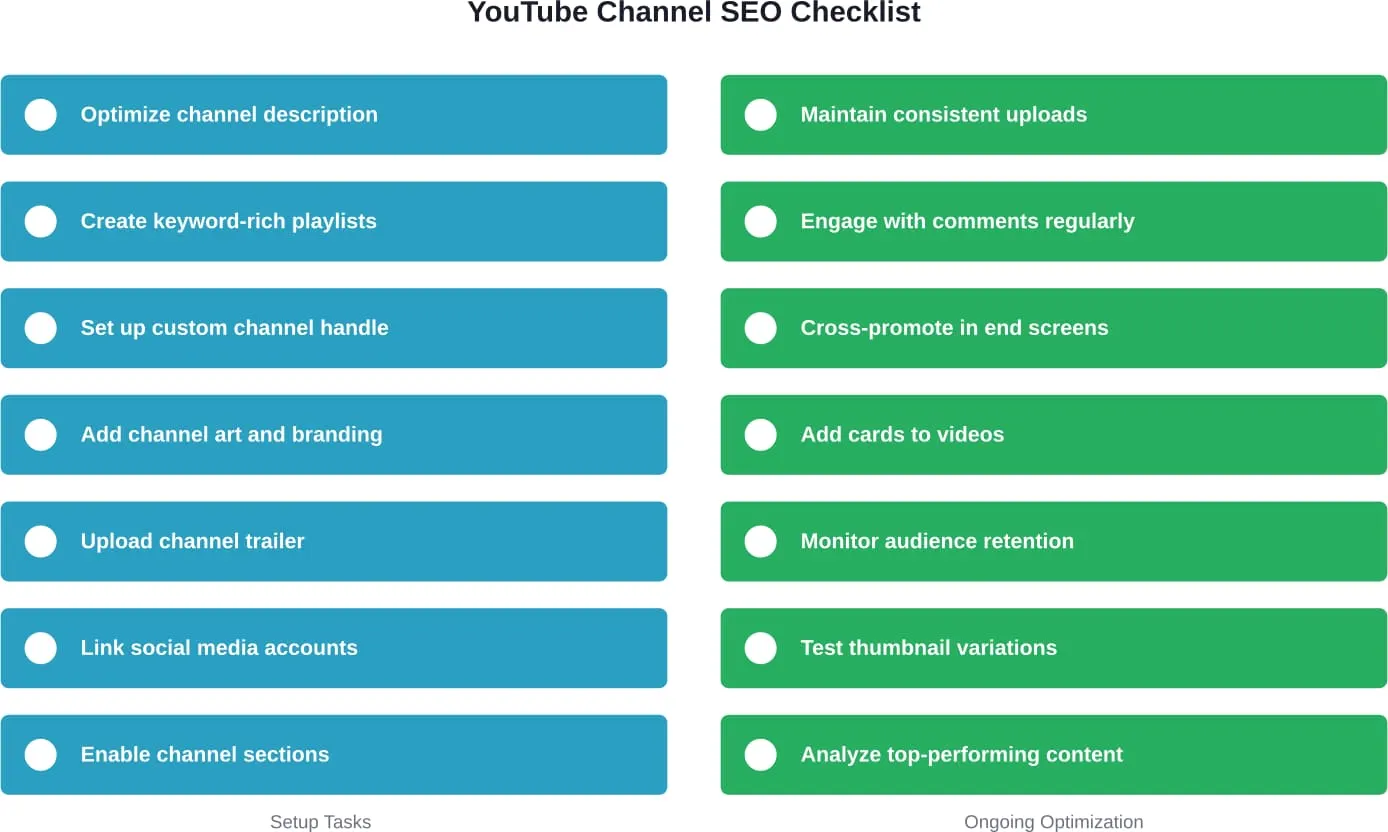
Individual video optimization matters, but channel-level SEO provides foundation for long-term growth. A well-optimized channel signals authority and helps all published content perform better.
Channel Name and Handle
Choose channel names that reflect content focus while remaining memorable. Include relevant keywords when natural, but prioritize brand recognition.
Custom handles (the @username format) should match channel branding and remain easy to remember and share.
Channel Description
Write a comprehensive channel description explaining what viewers can expect. Include relevant keywords naturally while communicating unique value proposition.
Add upload schedule information, content categories, and calls to action. Link to websites, social media, and other relevant resources.
Channel Art and Branding
Professional channel art (banner image) establishes credibility. Include channel value proposition, upload schedule, or key social links in banner design.
Ensure banner displays properly across devices—YouTube provides templates showing safe zones for different screen sizes.
Playlists for Content Organization
Create topical playlists grouping related content. Playlists serve multiple purposes:
- Increased watch time: Viewers who finish one video in a playlist automatically proceed to the next, boosting overall channel watch time.
- Improved organization: Playlists help viewers find specific content types easily, improving user experience.
- Additional ranking opportunities: Playlists themselves can rank in search results, providing extra discovery paths.
Optimize playlist titles and descriptions with relevant keywords. Use descriptive names that clearly communicate playlist content.
Channel Trailer and Featured Video
Set a channel trailer for non-subscribers—a short video (30-60 seconds) introducing channel value and encouraging subscriptions.
Feature a different video for returning subscribers, highlighting recent uploads or particularly valuable content.
Engagement Strategies That Signal Quality
The algorithm interprets engagement as a quality signal. Videos that prompt likes, comments, shares, and subscriptions get pushed to more viewers.
Encouraging Meaningful Engagement
- Ask questions: Pose specific questions in videos and request answers in comments. “Which strategy worked best for you?” generates more responses than generic “leave a comment” requests.
- Respond to comments: Active comment engagement creates community and encourages future participation. Early responses to initial comments can trigger engagement cascades as the algorithm promotes videos with active comment sections.
- Use community posts: Channels with over 500 subscribers gain access to the Community tab. Use polls, updates, and behind-the-scenes content to maintain audience connection between uploads.
- Create content series: Multi-part series encourage viewers to subscribe for upcoming episodes. Series also enable strategic cross-promotion through cards and end screens.
- Include clear calls to action: Request specific actions—subscribe, enable notifications, watch related videos. Viewers often need explicit prompts to take action.
But authenticity matters. Forced engagement tactics (“comment your favorite emoji!”) feel hollow and generate low-quality interactions. Focus on genuine conversation starters related to content value.
Using YouTube Analytics to Refine Strategy
Data transforms guesswork into strategy. YouTube Analytics provides detailed performance metrics revealing what works, what doesn’t, and where opportunities exist.
Key Metrics to Monitor
- Watch time: Total minutes viewers spend watching content. This cumulative metric heavily influences channel authority and recommendation eligibility.
- Average view duration: How long viewers typically watch before leaving. Compare this to video length to calculate retention percentage.
- Audience retention: Shows exactly when viewers drop off during videos. Identify patterns—do people leave after intros, during specific segments, or gradually throughout?
- Click-through rate (CTR): Percentage of impressions that result in views. Low CTR suggests title/thumbnail problems. High CTR with low retention indicates misleading packaging.
- Traffic sources: Where views originate—YouTube search, suggested videos, external websites, playlists, or other sources. This reveals which discovery mechanisms work best.
- Top performing videos: Identify content that generates disproportionate views, watch time, or engagement. Analyze what makes these videos successful and replicate those elements.
Check performance 24-48 hours after publishing. This window shows initial algorithm response and early viewer behavior patterns.
Using Data to Improve Content
Analytics reveal specific optimization opportunities:
If audience retention drops consistently at 30 seconds, intros are probably too long. Trim opening segments and get to value faster.
If CTR is low despite good retention, experiment with more compelling thumbnails and titles.
If suggested videos drive more traffic than search, the algorithm sees content as valuable but keywords might not align with search queries. Adjust metadata to improve search performance without sacrificing suggested video placement.
If certain video topics consistently outperform others, double down on successful content themes while phasing out underperforming formats.
YouTube Shorts Optimization
Shorts represent a distinct content format requiring specific optimization approaches. Shorts can run up to three minutes (as of 2025), though shorter durations often perform better.
Completion rates and replays are primary engagement signals for Shorts. A 30-second Short that 90% of viewers finish typically outperforms longer Shorts with lower completion rates.
Shorts SEO Best Practices
- Hook viewers immediately: The first two seconds determine whether viewers keep watching or swipe away. Start with the most compelling element—no lengthy intros.
- Optimize for vertical viewing: Shorts use vertical 9:16 aspect ratio. Design content specifically for this format rather than repurposing horizontal videos.
- Use #Shorts tag: Include #Shorts in titles or descriptions to ensure YouTube categorizes content as Shorts.
- Add text overlays: Many viewers watch without sound. On-screen text ensures message delivery regardless of audio.
- Focus on one idea: Shorts work best with single, clear concepts. Save complex topics for long-form content.
Shorts can drive subscribers and channel discovery, but they shouldn’t entirely replace long-form content. A balanced strategy incorporates both formats strategically.
Cross-Platform Promotion and Backlinks
While YouTube SEO focuses primarily on platform-specific optimization, external promotion amplifies reach and generates valuable signals.
Strategic Promotion Channels
- Social media: Share videos on relevant platforms where target audiences spend time. Tailor messaging to each platform’s culture and format.
- Email lists: Notify subscribers about new uploads. Engaged email audiences often provide strong initial engagement signals that boost algorithmic promotion.
- Blog content: Embed videos in relevant blog posts. This generates backlinks (valuable for SEO), provides context, and reaches audiences who prefer mixed-media content.
- Community forums: Share helpful videos in communities where members seek that information. Focus on genuine value, not spam—most communities punish blatant self-promotion.
- Collaborations: Partner with other creators for cross-promotion. Collaborations expose content to established audiences already interested in the topic.
External traffic sources signal content relevance beyond YouTube’s ecosystem. Videos that attract viewers from multiple sources often receive algorithmic favor.
Essential YouTube SEO Tools
Effective optimization requires the right tools. These platforms streamline research, analysis, and execution:
| Tool | Primary Function | Best For |
|---|---|---|
| TubeBuddy | Browser extension for optimization | Keyword research, tag suggestions, A/B testing |
| VidIQ | Analytics and optimization insights | Competitor analysis, trending topics, SEO scores |
| YouTube Studio | Official analytics platform | Performance tracking, audience insights, revenue |
| Canva | Graphic design platform | Thumbnail creation with templates |
| Google Trends | Search trend analysis | Identifying rising topics, seasonal trends |
| Ahrefs | Enterprise SEO platform | Deep keyword research, backlink analysis |
| SEMrush | Marketing analytics suite | Competitive research, keyword tracking |
Most creators don’t need every tool immediately. Start with YouTube Studio (free and essential) plus one keyword research tool. Expand toolset as channels grow and needs become more sophisticated.
Common YouTube SEO Mistakes to Avoid
Certain optimization errors actively hurt performance. Avoid these pitfalls:
- Keyword stuffing: Cramming excessive keywords into titles, descriptions, or tags looks spammy and damages user experience. YouTube’s algorithm has become sophisticated enough to recognize and penalize this behavior.
- Misleading metadata: Titles, thumbnails, or descriptions that misrepresent content generate clicks but destroy watch time when viewers realize they’ve been misled. The algorithm interprets this as poor quality.
- Ignoring audience retention: Obsessing over view counts while neglecting retention misses the algorithm’s primary ranking signal. Better to have 1,000 views with 80% retention than 10,000 views with 20% retention.
- Inconsistent uploads: Irregular publishing confuses the algorithm and fails to build audience habits. Consistent schedules improve channel authority even if upload frequency is modest.
- Neglecting older content: Past videos still generate views months or years later if properly optimized. Refresh metadata on older videos, add them to playlists, and reference them in new content.
- Copying competitors exactly: Successful channels provide templates, not blueprints. Direct imitation fails because audiences already have the original. Find unique angles within successful formats.
- Focusing solely on search: YouTube search matters, but suggested videos and homepage recommendations drive more views on most channels. Optimize for both discovery mechanisms.
Advanced Strategies for Competitive Niches
Highly competitive topics require more sophisticated approaches beyond basic optimization.
Targeting Low-Competition Keywords
In crowded niches, identify specific long-tail queries where established channels haven’t created comprehensive content. “Fitness tips” is saturated. “Knee rehabilitation exercises for runners over 50” targets a specific need with less competition.
Use keyword tools to find search terms with decent volume but fewer competing videos. Create the definitive resource for these specific queries.
Content Gap Analysis
Study top-ranking channels in your niche. What questions do they leave unanswered? What follow-up topics get mentioned but never explored deeply? These gaps represent content opportunities.
Comments on competitor videos reveal viewer needs. Questions that consistently go unanswered signal content demand.
Building Topic Clusters
Create interconnected video series around core topics. Main topic videos link to supporting detail videos, which link back to core content. This internal linking structure helps viewers navigate content while signaling topical authority to the algorithm.
For example: A “Complete YouTube SEO Guide” core video links to separate deep-dives on keyword research, thumbnail design, and analytics interpretation. Each supporting video links back to the main guide.
Seasonal Content Strategy
Certain topics trend seasonally. Publishing relevant content 2-3 months before peak interest allows time for algorithm momentum to build.
Tax advice content should publish in December or January, not March. Holiday shopping guides need September or October publication dates.
Use Google Trends to identify when specific topics typically peak, then publish accordingly.
Measuring SEO Success Beyond Views
View counts provide surface-level validation but don’t tell the complete story. More meaningful success metrics include:
- Watch time growth: Increasing cumulative watch hours indicates growing channel authority and content resonance.
- Subscriber conversion rate: What percentage of viewers subscribe? Higher conversion rates signal that content consistently delivers value.
- Average view duration trends: Is retention improving over time as optimization skills develop? Upward trends validate strategy refinements.
- Traffic source diversification: Channels overly dependent on one traffic source face risk. Healthy channels balance search, suggested videos, external sources, and direct traffic.
- Returning viewer percentage: High percentages of returning viewers indicate successful audience building and loyalty.
- Click-through rate improvements: As thumbnail and title skills improve, CTR should trend upward.
- Set specific, measurable goals: “Increase average view duration by 20% over six months” or “Grow search traffic to 30% of total views.” Track progress systematically and adjust strategy based on data.
Staying Current With Algorithm Changes
YouTube’s algorithm evolves continuously. Staying informed about changes helps maintain effective optimization strategies.
Follow official YouTube Creator channel updates for algorithm insights and best practice guidance directly from the platform. According to the authoritative channels identified, resources from Ahrefs, SEMrush, Backlinko, and other established SEO educators provide data-driven tutorials and experiments revealing what works.
Join creator communities where members share experiences and discoveries. Community discussions often surface algorithm behavior patterns before official announcements.
Test consistently. Algorithm changes affect channels differently based on niche, audience, and content type. Personal experimentation reveals what works for specific situations better than generalized advice.
Watch analytics for sudden unexplained changes—dramatic shifts in traffic sources, CTR, or retention might indicate algorithm adjustments affecting content visibility.
Turning YouTube SEO Into Sustainable Growth
SEO optimization provides the technical foundation, but sustainable growth requires more than tactics.
Audience-first thinking should guide all optimization decisions. The question isn’t “How do I trick the algorithm?” It’s “How do I create genuinely valuable content the algorithm will recognize as satisfying viewer needs?”
This mindset shift makes optimization efforts more effective because the algorithm’s ultimate goal is viewer satisfaction. When content genuinely serves audiences, SEO amplifies that value rather than masking mediocrity.
Build systems, not one-off optimizations. Develop repeatable workflows for keyword research, thumbnail creation, metadata writing, and performance analysis. Systematized processes maintain consistency as channels scale.
Invest in skills that compound. Improving thumbnail design, storytelling ability, or audience retention techniques pays dividends across every future video. Technical SEO knowledge becomes more valuable over time as expertise deepens.
Balance data with creativity. Analytics reveal what’s working, but innovation comes from creative risks. Use data to inform decisions while maintaining space for experimentation and unique approaches.
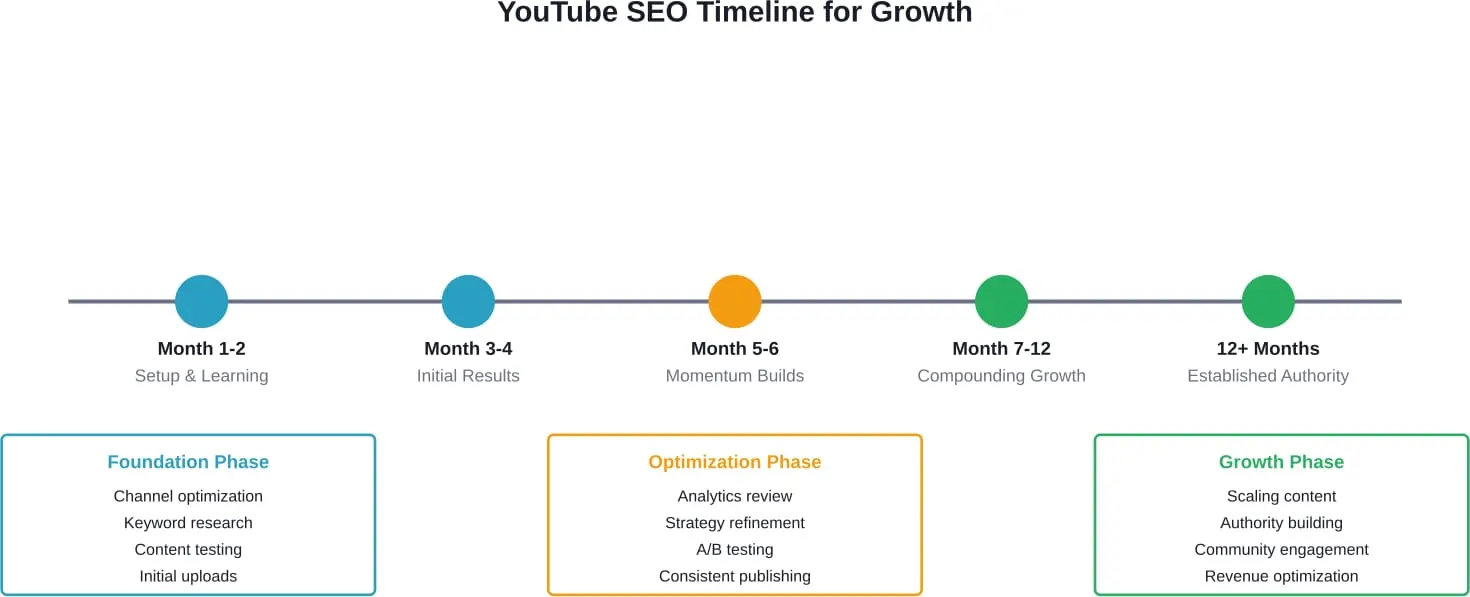
Most importantly, commit to the long game. YouTube success rarely happens overnight. Channels that invest consistently in quality content and strategic optimization eventually break through, while those chasing shortcuts typically stall.
Conclusion: Your YouTube SEO Action Plan
YouTube SEO isn’t a mystery or magic formula. It’s a systematic approach to helping both the algorithm and potential viewers understand what content offers and why it matters.
Start with the foundations: thorough keyword research, compelling titles and thumbnails, detailed descriptions, and accurate captions. These basics establish the infrastructure for discovery.
Build on fundamentals with channel-level optimization: organized playlists, professional branding, strategic content structure, and consistent uploading schedules.
Measure everything. YouTube Analytics provides the feedback loop necessary for continuous improvement. Data reveals what works, what doesn’t, and where opportunities exist.
Most importantly, remember that SEO serves content—not the reverse. Technical optimization amplifies valuable content but can’t compensate for videos viewers don’t want to watch.
The channels that win combine authentic value creation with strategic optimization. They understand their audiences deeply, create content solving real problems or fulfilling genuine entertainment needs, then optimize systematically to ensure target viewers discover that content.
YouTube rewards this approach with sustainable, compounding growth. Algorithmic favor goes to channels that consistently satisfy viewer needs because satisfied viewers keep returning to YouTube—which is exactly what the platform wants.
Start implementing these strategies today. Begin with one video: research keywords, optimize metadata, create a compelling thumbnail, and analyze the results. Learn from that experience, refine your approach, and apply those lessons to the next video.
Repeat this process consistently for six months. Track progress, celebrate improvements, learn from setbacks, and keep optimizing.
The path to YouTube success isn’t complicated—it just requires commitment to quality content, strategic optimization, and patient consistency. Channels willing to invest in this process eventually break through, building audiences that grow organically for years.
Your audience is searching for exactly what you create. YouTube SEO simply helps them find it.