


SEO isn’t just a marketing task; it’s the vital signs of a website’s health. Taking the DIY route gives owners a level of strategic agility that agencies often struggle to match, especially in the early stages of a project. While the “big picture” of organic search can feel overwhelming, success usually comes down to three things: a clean technical foundation, content that actually answers a question, and a obsession with the right data. It’s about building a site that search engines can trust and users actually want to stay on.
Understanding the Basics of SEO
At its heart, SEO is a translation exercise. You are taking your business value and translating it into a language that search engine crawlers can index and rank. It’s a mix of technical hygiene (can Google find you?), on-page clarity (do you make sense?), and authority (does the rest of the web trust you?). Algorithms evolve every week, but the core objective never changes: Google wants to reward the best possible answer to a user’s query. If you focus on being the “best answer,” the rankings tend to follow.
Pros and Cons of Handling SEO Independently
The biggest win for the independent approach is alignment. No one knows a business better than the person running it, and doing your own SEO ensures that every keyword and meta tag reflects the brand’s true voice. It’s also a massive budget-saver for startups where every dollar counts. On the flip side, there is a steep learning curve. SEO isn’t “set it and forget it”; it’s a moving target. In highly competitive niches, a DIY approach might eventually hit a ceiling where specialized tools or deep technical audits become a necessity rather than a luxury.
Independent SEO in Practice: Lengreo’s Approach
At Lengreo, we often guide clients on starting with SEO themselves before diving into full-scale agency support. Many businesses benefit from handling the basics independently, such as setting up core tools, researching keywords, and optimizing on-page elements. This hands-on start builds a strong foundation and helps understand what works for a specific site.
We see it regularly: site owners who apply these self-managed techniques gain better insight into their traffic and user behavior. It allows for direct adjustments without waiting on external teams. When the basics are in place, transitioning to more advanced strategies – like detailed link building or comprehensive audits – becomes smoother and more effective. This way, independent efforts complement professional input rather than starting from scratch.
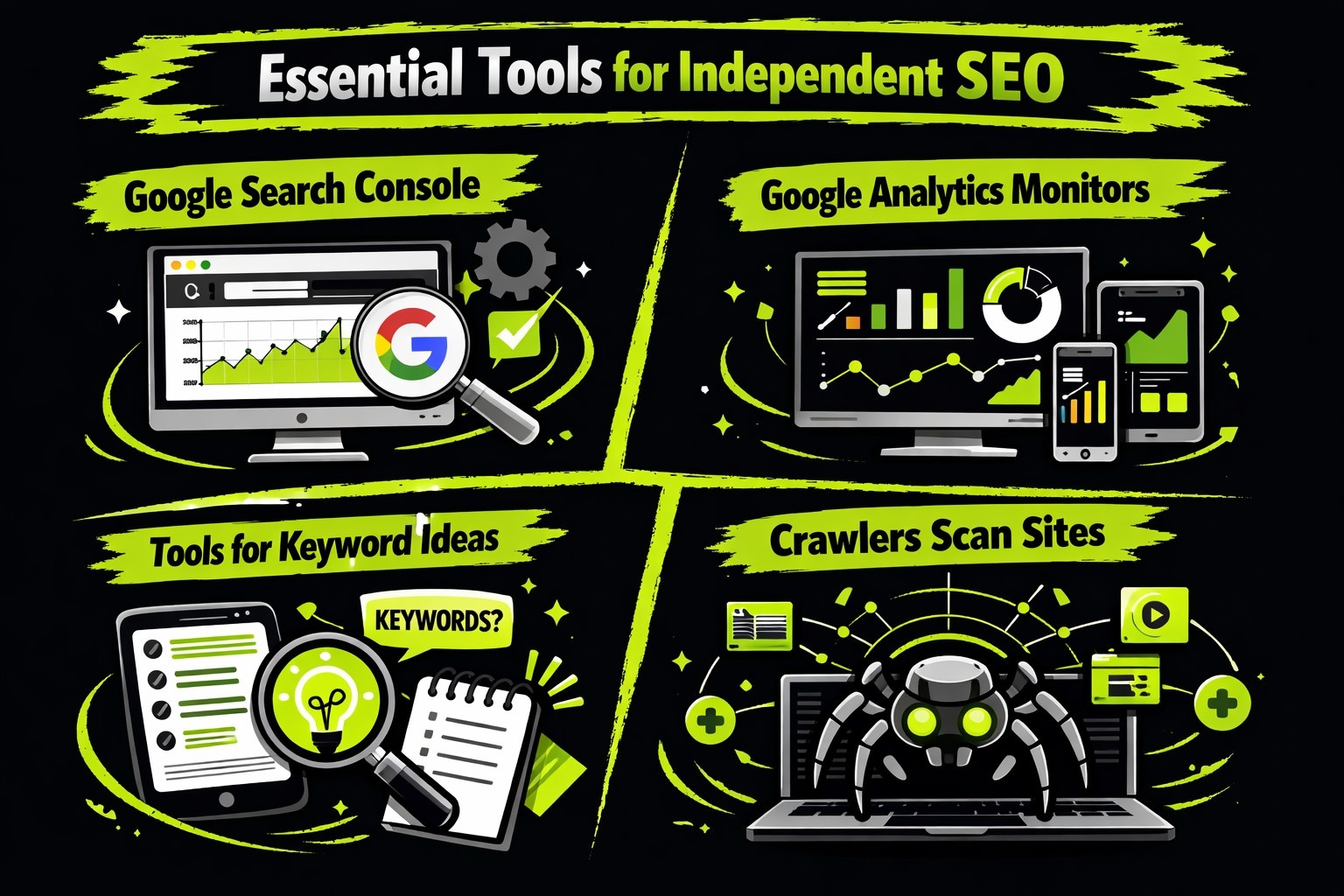
Essential Tools for Independent SEO
Certain tools provide critical insights without high expenses. Free options from search engines form the foundation.
- Google Search Console tracks indexing issues and reveals search queries driving traffic.
- Google Analytics monitors visitor behavior and traffic sources.
- Tools for keyword ideas help identify terms users enter.
- Crawlers scan sites to uncover technical problems like broken links or duplicate pages.
Paid options expand capabilities for deeper analysis, such as competitor tracking or advanced crawling. Starting with free versions covers most initial needs.
Setting Up Core Monitoring Tools
The first real step is claiming your territory. Verifying a site in Search Console is like turning on the lights in a dark room; suddenly, you can see the crawl errors and indexing issues that were holding you back. Pair that with a clean Analytics setup, and you have a complete feedback loop. For local businesses, a Google Business Profile is the most underutilized asset in the kit-regular updates there often move the needle faster than a year of blogging.
Conducting Keyword Research
Keyword research is essentially digital psychology. You’re trying to figure out exactly what your customer is typing when they have a problem at 2 AM. Instead of chasing high-volume “vanity” terms that are impossible to rank for, the smart move is to look for “intent.” Someone searching for a broad topic is just browsing; someone searching for a specific solution is ready to engage. Finding those specific, long-tail phrases is where the independent site owner can truly outperform big competitors.
Selecting Target Keywords
Prioritize terms relevant to offered services or topics. Review suggestions from autocomplete features in search bars. Analyze top-ranking pages for chosen terms to identify gaps.
Group related keywords into clusters for comprehensive coverage. This approach builds topical depth across the site.
Technical SEO Fundamentals
Think of technical SEO as the plumbing of your website. If the pipes are leaking (slow load speeds) or blocked (poor mobile optimization), it doesn’t matter how beautiful the house is. Google has moved to a mobile-first world, so if your site feels clunky on a smartphone, you’re already at a disadvantage. Security is also non-negotiable; an “unsecured” warning is the fastest way to kill a user’s trust before they’ve even read your first sentence.
Common Technical Checks
Crawl the site to find issues like blocked resources or slow-loading elements. Fix broken links and redirects that hinder crawling.
Compress images and minimize code to enhance load times. Structured data markup adds context for certain content types.
On-Page Optimization Techniques
On-page optimization refines individual pages to improve their relevance for specific search queries. Each element on the page contributes to how search engines interpret and rank the content. Proper implementation ensures that pages align closely with user intent while maintaining readability.
Title tags serve as the primary signal for page topic. They appear in search results and browser tabs, so they must accurately reflect the content and incorporate the main target term. Meta descriptions provide a brief summary that encourages clicks, even though they do not directly affect rankings. Headings create a clear hierarchy, making the material easier to scan for both users and search engines.
URLs should remain short, descriptive, and include relevant terms when possible. Clean structures help with indexing and user understanding. Image alt text describes visuals for accessibility purposes and gives search engines additional context about the page content.

Implementing On-Page Elements
Effective on-page work involves placing primary terms naturally within the opening sections of content. This establishes relevance early without forcing awkward phrasing. Variations of the main term prevent repetition and improve flow for readers.
Headings play a key role in organizing information. The main heading typically includes the primary target term, while subheadings break down supporting points logically. This structure guides visitors through the page and helps search engines grasp the overall topic.
Alt text for images should describe the visual accurately and incorporate related terms where they fit naturally. File names for images follow similar principles, using descriptive labels instead of generic strings.
Start optimization with existing pages rather than immediately creating new ones. Updating current content often yields faster improvements and builds on established assets. Regular reviews ensure that all elements remain aligned with current best practices and target queries. This systematic approach strengthens individual pages and contributes to overall site performance.
Creating and Optimizing Content
Content serves as the primary way to address user needs. Develop material that provides thorough coverage of topics.
Regular updates keep information current. Original insights differentiate from competitors.
Plan creation around researched terms. Answer common questions directly.
Content Planning and Structure
Outline topics based on frequent customer inquiries. Study higher-ranking pages to improve upon them.
Use bullet points and subheadings for readability.
- Focus on depth to cover subjects completely.
- Incorporate related terms naturally.
- Include visuals where they add value.
- Update older posts to maintain relevance.
Building Internal Links and Site Structure
Strong internal linking guides users and search engines through the site. Links spread authority among pages. A well-planned structure helps search engines understand the relationships between different sections and pages, which contributes to better indexing and ranking potential.
Internal links keep visitors engaged longer by directing them to relevant material. This reduces bounce rates and signals to search engines that the site provides value across multiple pages. Proper linking also distributes page authority from stronger sections to newer or less prominent ones.
Create a logical hierarchy starting from the homepage. Core categories branch out to subpages, and related content connects naturally. This setup mirrors how users navigate and expect information to flow.
Developing a Linking Strategy
Map out core pages and subpages before adding links. Review the site map to identify opportunities where one page can reference another logically. Place links in context, such as within body text where they add genuine value to the reader.
Add contextual links within text rather than relying solely on navigation menus. Use descriptive anchor text that clearly indicates what the linked page covers. Avoid generic phrases and opt for specific terms that include relevant keywords when appropriate.
This improves crawl efficiency and user flow. Search engines follow these paths more effectively, while visitors find additional useful information without effort. Regular reviews ensure the linking remains relevant as new content appears.
Off-Page Factors and Link Building
Off-page signals primarily come from external links. Quality matters more than quantity.
Earn links through valuable material that others reference. Local directories and industry listings provide starting points.
Promote content to relevant audiences. Avoid manipulative tactics that risk penalties.

Basic Link Earning Approaches
- Produce shareable resources like guides.
- Participate in community discussions.
- Seek mentions from related sites.
- Monitor existing links for quality.
Monitoring Performance and Making Adjustments
Monitoring performance provides clear evidence of what works and where improvements are required. Search Console delivers data on impressions, clicks, and average positions for specific queries. This information highlights which terms drive visibility and how users interact with listings.
Analytics tools offer deeper insights into traffic sources, user behavior, and engagement patterns. Tracking these elements over time reveals trends that guide future decisions. Regular reviews help spot pages that attract visitors but fail to retain them.
Data-driven adjustments form the core of ongoing optimization. For instance, pages with high impressions but low clicks may need better titles or descriptions. Content that receives traffic yet shows poor engagement often benefits from updates or restructuring.
Key Metrics to Watch
Several metrics serve as reliable indicators of site health. Organic traffic trends show overall growth or decline in search-derived visitors. Position changes for target terms indicate whether optimization efforts move pages higher in results.
Bounce rates on important pages reveal if content meets visitor expectations upon arrival. High rates suggest mismatches between search intent and page material. Time spent on site and pages per session provide additional context about user satisfaction.
Regular examination of these metrics allows for timely corrections. Small, consistent changes based on observed patterns compound into substantial improvements over time.
When to Consider Professional Assistance
Independent efforts effectively manage foundational SEO tasks and ongoing maintenance for many sites. However, certain situations benefit from external expertise. Growth plateaus despite consistent work often point to limitations in strategy or execution.
Complex technical issues, such as persistent indexing problems or advanced site migrations, frequently exceed basic troubleshooting capabilities. Competitive industries demand sophisticated approaches to link acquisition and content differentiation.
Scaling operations to handle large volumes of pages or aggressive expansion requires resources and experience that professionals provide. Bringing in specialized help at the right stage prevents wasted effort and accelerates progress in challenging environments.
Conclusion
Managing SEO independently builds a solid foundation for online visibility. Consistent application of technical checks, targeted content, and monitoring drives gradual improvements. Focus on providing value through clear, relevant material remains central. Over time, these practices compound to strengthen search presence without relying on external services.