

Quick Summary: SEO audit costs in 2026 typically range from $500 to $30,000 depending on website size, audit scope, and provider expertise. Small sites under 20 pages usually cost $500-$1,000, mid-sized sites run $2,000-$7,000, while large enterprise sites with 1,000+ pages can reach $10,000-$30,000. Pricing varies based on whether it’s a basic automated scan, comprehensive manual audit, or specialized deep-dive analysis.
Asking what an SEO audit costs is a bit like asking what a car costs. The answer? It depends.
Some audits run a few hundred dollars. Others hit five figures. And the difference isn’t always obvious until someone explains what’s under the hood.
Here’s the reality: search has fundamentally changed. AI Overviews now appear in Google results, and according to Search Engine Journal, when AI Overviews appear in results, the traffic loss is measurable, with only 8% of users clicking any link compared to 15% without AI summaries—that’s a 46.7% drop. Traditional SEO audits weren’t built for this landscape.
So what determines the price of an SEO audit in 2026? Let’s break down the numbers, the factors that drive costs, and what different price points actually get you.
What’s Actually Included in an SEO Audit?
Before talking price, it helps to understand what an SEO audit actually is.
An SEO audit examines how well a website performs in search engines. It identifies technical issues, content gaps, backlink problems, and opportunities to improve visibility. The goal is simple: find what’s holding the site back and create a roadmap to fix it.
But not all audits look at the same things.
Some focus purely on technical elements—crawl errors, site speed, mobile usability, indexing issues. Others dive into content quality, keyword targeting, and competitive positioning. The most comprehensive audits examine everything: technical infrastructure, on-page optimization, content strategy, backlink profiles, and increasingly, visibility in AI-powered search experiences.
According to Semrush, a complete SEO audit should cover 17 distinct steps, from analyzing site architecture to benchmarking against competitors. That level of thoroughness takes time and expertise—which naturally affects cost.
Get an SEO Audit That Drives Real Results
Understanding SEO audit costs is useful, but LENGREO focuses on audits that connect directly to growth and performance improvements. The goal is not just analysis, but clear next steps.
- technical SEO analysis
- content and structure review
- prioritized action plan
If you want an SEO audit that leads to measurable improvements, get a free consultation with LENGREO.
SEO Audit Pricing Ranges in 2026
According to AgencyAnalytics data, audit costs scale with page count and complexity. Here’s what the market looks like:
| Audit Type | Price Range | Best For |
|---|---|---|
| Basic Automated Audit | $300–$800 | Small sites under 20 pages, straightforward issues |
| Standard Manual Audit | $1,000–$3,000 | Small to mid-sized sites (20-500 pages) |
| Comprehensive Audit | $3,000–$10,000 | Mid-sized sites (500-1,000 pages) with moderate complexity |
| Enterprise-Level Audit | $10,000–$30,000+ | Large sites (1,000+ pages), multiple domains, complex technical infrastructure |
That’s the general landscape. But the actual cost for any specific project depends on several key factors.
Key Factors That Determine SEO Audit Cost
Website Size and Page Count
The most obvious factor is how big the site is.
A 15-page brochure site takes a few hours to audit thoroughly. A 5,000-page e-commerce platform can take weeks. According to available pricing data, a site under 20 pages typically costs $500-$1,000 to audit, while a site with over 1,000 pages can easily run $10,000-$15,000 or more.
More pages mean more URLs to crawl, more content to evaluate, more internal linking structures to map, and more potential issues to identify and prioritize.
Audit Scope and Depth
What’s included matters just as much as site size.
A technical-only audit focuses on crawlability, site speed, mobile optimization, structured data, and indexing. According to pricing data from multiple sources, technical audits alone can range from $3,000 to $30,000 depending on complexity.
Content audits evaluate existing content quality, keyword targeting, content gaps, and optimization opportunities. These typically run $5,000-$30,000 for comprehensive analysis.
Link audits specifically examine backlink profiles to identify toxic links, missed opportunities, and competitive link gaps. These often start around $2,000-$5,000.
A full-spectrum audit combines all three areas plus competitive analysis and strategic recommendations. That’s when costs climb into the $10,000-$30,000+ range.
Provider Type and Experience Level
Who does the audit dramatically affects pricing.
Automated tools provide instant reports for free or under $100. They’re fast but limited—they catch obvious technical issues but miss nuanced strategic problems.
SEO specialists typically charge $150-$300 per hour according to available pricing data. A thorough audit might take 10-40 hours depending on scope, putting total costs at $1,500-$12,000.
SEO agencies generally charge more—their rates reflect team expertise, established processes, and often more comprehensive deliverables. Agency audits typically start at $2,500 and can exceed $30,000 for enterprise work.
Specialized consultants with deep expertise in specific areas (technical SEO, international SEO, e-commerce optimization) often command premium rates but deliver targeted insights automated tools and generalists miss.
Industry and Site Complexity
Not all websites are created equal.
An e-commerce site with dynamic filtering, faceted navigation, and thousands of product pages presents unique technical challenges. Healthcare and finance sites have strict compliance requirements. International sites with multiple languages and regional targeting require specialized knowledge.
Complex site architectures, custom CMS platforms, and unique technical implementations all increase audit time and cost. According to Search Engine Journal research, three CMS platforms control a significant portion of the web’s technical SEO implementation. Sites built on these platforms have well-documented best practices, which can streamline audits. Custom-built platforms often require more investigative work.
Deliverable Format and Strategic Guidance
Some audits deliver a simple checklist of issues. Others provide comprehensive reports with prioritized recommendations, implementation timelines, and strategic roadmaps.
The difference matters.
A basic audit might list 200 broken links and 47 missing meta descriptions. A strategic audit explains which issues impact revenue most, what to fix first, and how to allocate resources for maximum ROI.
According to Search Engine Journal, trust matters immensely in search rankings—especially after core updates. Audits that connect technical issues to business outcomes and competitive positioning deliver more value than simple issue lists.
What Different Price Points Actually Get You
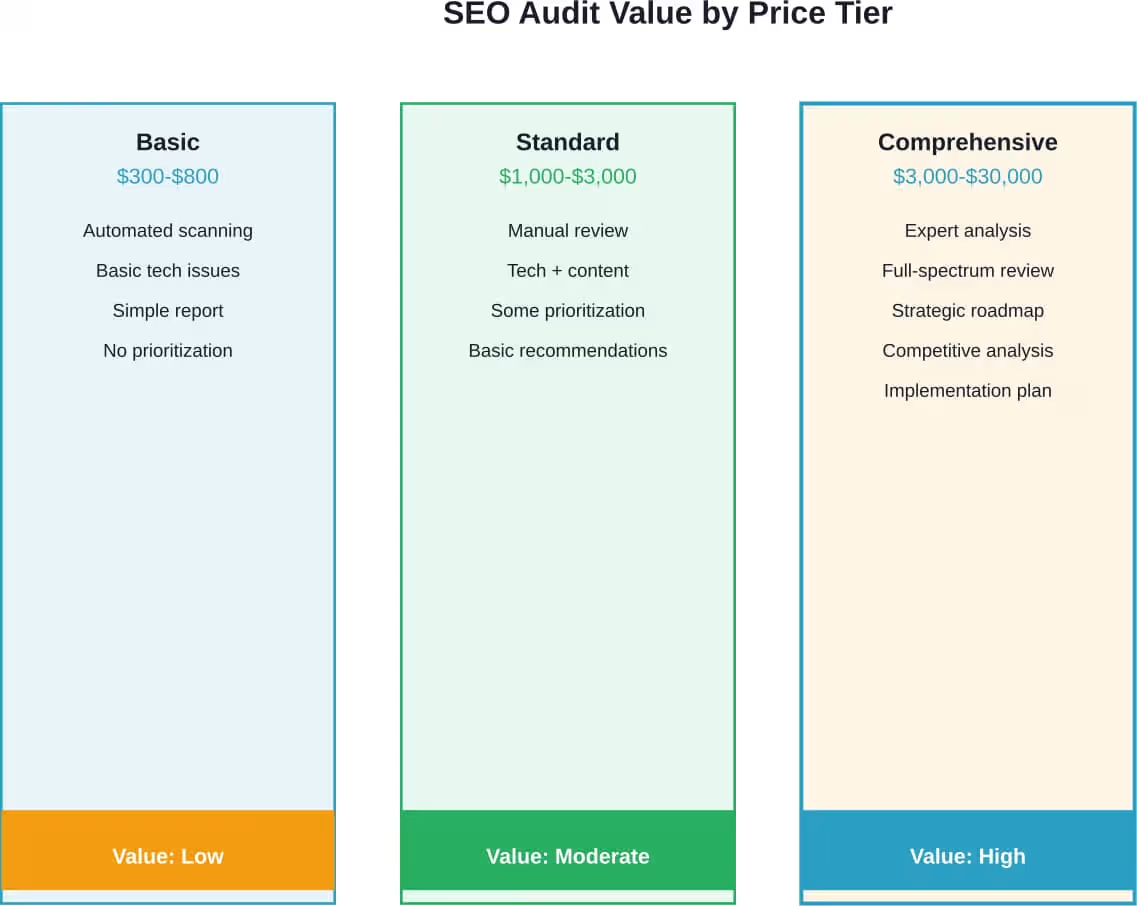
Basic Tier: $300-$800
Basic audits rely heavily on automated tools. They’ll catch obvious problems—broken links, missing title tags, slow-loading pages, basic mobile issues.
What’s typically included:
- Automated crawl of the site
- Technical issue identification
- Basic on-page SEO check
- Simple report (often PDF)
- Limited or no strategic guidance
What’s missing? Context. Prioritization. Strategy.
Basic audits generate long lists of issues but don’t explain which ones actually matter for business goals. They don’t account for competitive landscape or industry-specific challenges.
Best for: Very small sites with straightforward goals, or as a preliminary scan before deciding on deeper analysis.
Standard Tier: $1,000-$3,000
Standard audits combine automated tools with human expertise. An SEO specialist reviews the data, identifies patterns, and provides contextualized recommendations.
What’s typically included:
- Technical SEO analysis (crawlability, indexing, site speed, mobile optimization)
- On-page SEO review (title tags, meta descriptions, heading structure, content optimization)
- Basic content evaluation
- Some competitive benchmarking
- Prioritized recommendations
- Summary report with action items
According to Shopify’s pricing breakdown, technical SEO audits at this level typically cost $1,000-$2,000 monthly or $2,500-$15,000 as a one-time project.
Best for: Small to mid-sized businesses with 20-500 pages, straightforward site architecture, and clear goals.
Comprehensive Tier: $3,000-$10,000
Comprehensive audits provide deep analysis across multiple dimensions. Experienced specialists spend significant time understanding the business, competitive landscape, and strategic context.
What’s typically included:
- Complete technical infrastructure review
- In-depth content audit and gap analysis
- Backlink profile analysis and toxic link identification
- Competitive SEO benchmarking
- Keyword opportunity analysis
- User experience and conversion optimization insights
- Detailed strategic roadmap with timeline and resource requirements
- Often includes stakeholder presentation
Content audits at this level can run $5,000-$30,000 according to available pricing data, while technical audits of complex sites also reach the $3,000-$30,000 range.
Best for: Mid-sized businesses with complex sites, multiple stakeholders, and significant organic traffic goals.
Enterprise Tier: $10,000-$30,000+
Enterprise audits handle massive scale and complexity. They’re performed by senior consultants or specialized teams with deep expertise.
What’s typically included:
- Multi-site or international SEO analysis
- Advanced technical infrastructure review (JavaScript rendering, complex site architecture, API-driven content)
- Comprehensive content strategy development
- Detailed competitive intelligence across multiple markets
- Custom data analysis and reporting
- Integration with business analytics and revenue data
- Executive-level strategic planning
- Often includes ongoing advisory support
For sites with over 1,000 pages, costs easily reach $10,000-$15,000 or more according to AgencyAnalytics data.
Best for: Large enterprises, complex e-commerce platforms, international brands, organizations with substantial SEO budgets and high-stakes visibility needs.
Hidden Factors That Impact Final Cost
Current Site Health
A well-maintained site with minor issues takes less time to audit than a broken site with fundamental problems. If the site hasn’t been touched in years, has major technical debt, or is built on outdated technology, expect audit costs to climb.
According to Search Engine Journal, technical SEO debt has become especially problematic in the AI search era. Issues that seemed minor before—like poor structured data or thin content—now directly impact visibility in AI Overviews and AI-generated responses.
AI Search Visibility Analysis
Traditional SEO audits don’t account for AI-powered search experiences. But according to Search Engine Journal, AI platforms now shape buying decisions before customers even visit websites.
Some advanced audits now include analysis of brand mentions in AI Overviews, ChatGPT responses, and other AI-generated content. Semrush offers tools to benchmark brand mentions in AI answers—but this specialized analysis isn’t standard in most audits and can add to costs.
Access and Cooperation Challenges
Audits go faster when the SEO team has immediate access to Google Search Console, Google Analytics, server logs, CMS admin panels, and development documentation.
When access is restricted, when multiple stakeholders need to approve requests, or when technical information is scattered or missing, audit time increases—and so does cost.
Implementation Support
Some audits just deliver recommendations. Others include implementation support—helping developers understand technical fixes, training content teams, or providing ongoing consultation as issues are resolved.
Implementation support significantly increases value but also increases cost. According to available pricing data, ongoing SEO services typically start at $15 per month for basic plans and scale to $500+ per month for professional plans with robust feature sets.
How to Choose the Right Audit for Your Budget
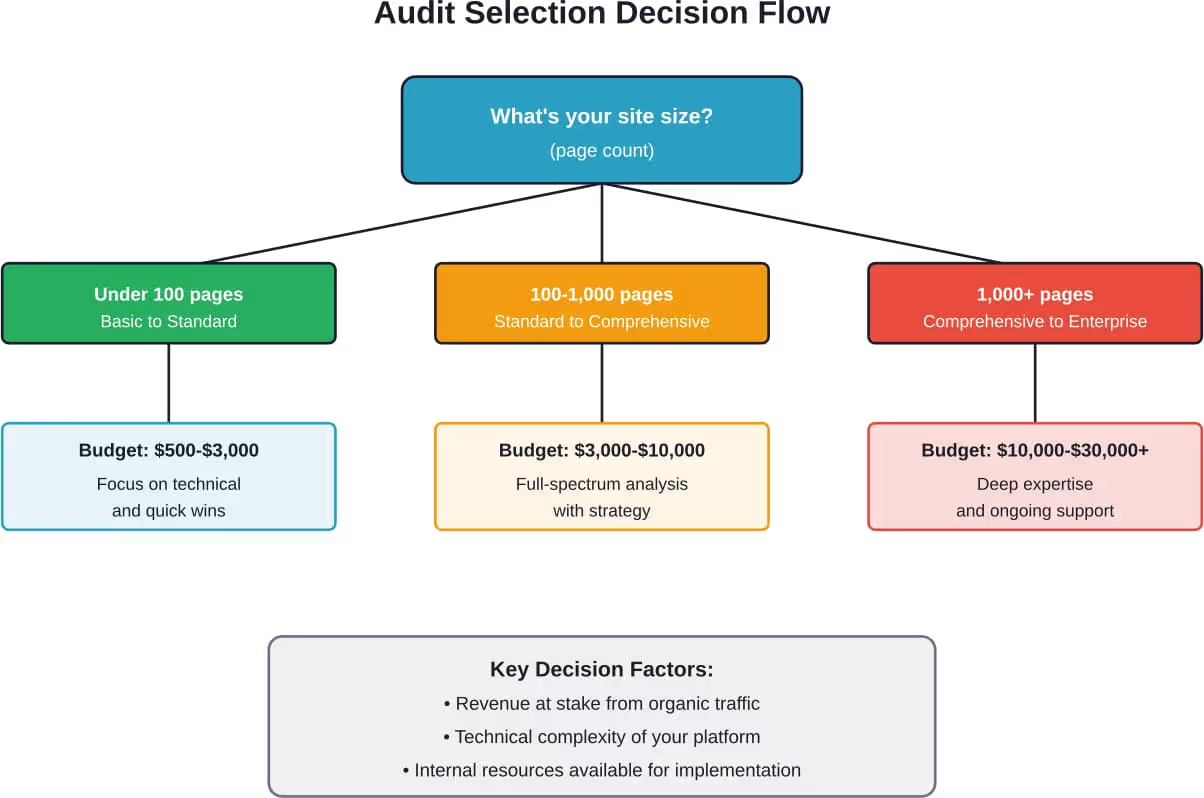
Start With Your Goals
What’s the audit supposed to accomplish?
If the goal is simply identifying obvious technical problems before a site relaunch, a basic audit might suffice. If the goal is building a 12-month SEO strategy to compete in a crowded market, comprehensive analysis becomes essential.
Match the audit scope to the actual business need.
Consider Revenue at Stake
How much does organic search traffic currently generate? How much could it generate with better optimization?
If organic traffic drives $50,000 in monthly revenue, investing $5,000-$10,000 in a thorough audit makes economic sense. If organic generates $500 monthly, a $300 basic scan is probably appropriate.
Assess Internal Capabilities
Can the internal team implement recommendations? If the audit identifies 200 technical issues but there’s no developer capacity to fix them, the audit has limited value.
Some organizations benefit more from lighter audits with implementation support than comprehensive audits that sit unexecuted.
Check Provider Credentials
Not all SEO auditors are created equal. Look for:
- Specific experience in the relevant industry
- Technical depth (can they explain how JavaScript rendering impacts crawlability?)
- Portfolio of successful audit projects
- Clear methodology and deliverable examples
- Transparency about what’s included and what’s extra
According to Search Engine Journal, individual SEOs have “minimal” web-wide impact compared to CMS platform defaults, with platform engineering teams holding more combined sway over technical SEO than the consulting world. The best auditors understand platform-specific optimization opportunities and constraints.
Request Audit Samples
Most reputable providers can share anonymized sample reports. Review them carefully.
Do they just list issues, or do they explain business impact? Are recommendations prioritized? Is the report actionable, or just overwhelming?
Common Audit Pricing Models
Providers structure pricing in different ways. Understanding the models helps in comparing quotes.
Fixed-Price Projects
Most common for one-time audits. The provider quotes a set price based on estimated scope. Clear and predictable, but scope creep can cause problems if the site turns out more complex than initially assessed.
Hourly Rates
According to Shopify, SEO specialists typically charge $150-$300 per hour. Hourly pricing offers flexibility but less cost predictability. Best when scope is genuinely uncertain.
Tiered Packages
Some agencies offer standardized packages—Basic ($1,500), Standard ($5,000), Premium ($15,000). Packages simplify decision-making but may include features that aren’t needed or exclude critical elements.
Retainer-Based Auditing
Rather than one-time audits, ongoing monitoring and periodic reviews. Monthly retainers typically range from $1,000 to $10,000+ depending on site complexity and support level. Best for sites that change frequently or face ongoing competitive pressure.
Red Flags: When an Audit Is Overpriced or Underdelivering
Warning Signs of Low-Value Audits
Not all expensive audits deliver value. Watch for:
- Pure automation: If you’re paying $5,000 for what’s essentially a Screaming Frog export with minimal human analysis, that’s overpriced.
- No prioritization: A 200-page report listing every minor issue with no guidance on what matters most is worse than useless—it’s paralyzing.
- Generic recommendations: If the recommendations could apply to any website in any industry, they’re probably not worth much.
- No competitive context: SEO is inherently competitive. Audits that don’t consider what competitors are doing miss half the picture.
- Outdated practices: In 2026, audits should address AI search visibility, not just traditional organic rankings. Providers still focused purely on keyword density and exact-match domains are behind the curve.
Too-Good-To-Be-True Pricing
A comprehensive enterprise audit for $200 isn’t a bargain—it’s a scam or a loss leader for upselling services.
Thorough SEO audits require significant time from experienced specialists. The economics don’t support rock-bottom pricing for genuine comprehensive work.
Is an SEO Audit Worth the Investment?
That depends entirely on the site’s current state and business goals.
For a brand-new site with 10 pages and no existing traffic, an expensive audit probably isn’t justified. Starting with free or low-cost tools makes more sense.
For an established site generating significant revenue from organic search, especially one that’s seen traffic decline or faces increased competition, a professional audit often pays for itself quickly.
According to Search Engine Journal, traffic drops when AI Overviews appear have reached 46.7%. Sites that don’t adapt their SEO strategy to this new reality risk becoming invisible. A comprehensive audit that identifies how to maintain visibility in both traditional and AI-powered search can be genuinely invaluable.
The key question isn’t whether audits are worth it in general—it’s whether a specific audit at a specific price point makes sense for a specific business situation.
DIY vs. Professional Audits: The Real Trade-Off
Free and low-cost SEO tools have improved dramatically. Google Search Console, Screaming Frog (free for up to 500 URLs), and various online checkers can identify many common issues.
So why pay for professional audits?
Expertise and context.
Tools identify what’s wrong. Experienced auditors explain why it matters, what to prioritize, and how to fix it efficiently. They spot patterns and strategic issues that automated scans miss.
According to HubSpot, auditing tools surface clear, actionable recommendations—but only when wielded by someone who understands what the data means in business context.
For technically sophisticated teams with strong SEO knowledge, DIY audits using tools can work well. For most organizations, the time investment and knowledge gaps make professional audits more cost-effective.
What High-Value Audit Reports Include
Regardless of price tier, valuable audit reports share common characteristics:
| Component | What It Provides | Why It Matters |
|---|---|---|
| Executive Summary | High-level findings and priorities | Stakeholder alignment and buy-in |
| Current Performance Baseline | Traffic, rankings, visibility metrics | Establishes starting point for measuring improvement |
| Technical Issues Inventory | Crawl errors, speed problems, mobile issues | Identifies barriers to search engine access |
| Content Analysis | Quality assessment, gap identification | Reveals optimization and expansion opportunities |
| Competitive Benchmarking | How site compares to key competitors | Contextualizes performance and sets realistic goals |
| Prioritized Recommendations | What to fix first, second, third | Makes audit actionable rather than overwhelming |
| Implementation Roadmap | Timeline, resource requirements, dependencies | Enables realistic planning and execution |
The best audits don’t just identify problems—they create a clear path forward.
How SEO Audits Are Evolving for AI Search
Traditional SEO audits focused on ranking in traditional search results. That’s no longer sufficient.
According to Search Engine Journal, AI platforms now shape buying decisions before customers visit websites. Traditional SEO audits weren’t designed for this landscape.
Modern audits should address:
- Structured data implementation: AI systems rely heavily on structured data to understand content. Sites without proper schema markup become invisible to AI answers.
- Entity optimization: AI platforms work with entities (people, places, things, concepts) rather than just keywords. Content needs to establish clear entity relationships.
- Authority signals: According to Search Engine Journal data on the December 2025 core update, trust matters immensely. AI systems preferentially cite authoritative sources.
- Answer-focused content: Traditional content optimization targeted keyword rankings. Answer Engine Optimization (AEO) targets being cited in AI-generated responses.
HubSpot now offers AEO tools specifically designed to track and improve brand visibility in ChatGPT, Perplexity, and Google AI Overviews. Forward-thinking audits incorporate this analysis.
Audits that ignore AI search visibility are already outdated—and will become increasingly less valuable as AI-powered search continues gaining market share.
Questions to Ask Before Hiring an SEO Auditor
Before committing to any audit provider, ask:
- What specific deliverables are included? Get clarity on report format, depth of analysis, and whether any implementation support is included.
- Who will actually perform the audit? Will it be a senior strategist or a junior analyst? What’s their specific experience?
- What tools and data sources will be used? Enterprise tools like Semrush, Ahrefs, and Screaming Frog provide deeper insights than free alternatives.
- How are recommendations prioritized? What framework determines what’s urgent versus nice-to-have?
- Does the audit address AI search visibility? In 2026, this should be standard, not optional.
- What’s the timeline? Rushed audits miss nuances. But audits that take months delay value realization.
- What happens after delivery? Is there a presentation? Follow-up support? Revision if questions arise?
- Can you provide client references or case studies? Proof of previous successful audits matters more than marketing claims.
Making the Investment Decision
SEO audit costs vary wildly—from a few hundred dollars to tens of thousands. There’s no universally “right” price.
The right investment depends on site size, business goals, competitive intensity, internal capabilities, and current SEO health.
What matters most isn’t finding the cheapest audit or the most expensive one. It’s finding the audit that delivers actionable insights proportional to the revenue opportunity at stake.
For small sites with limited budgets, starting with free tools and a basic professional audit makes sense. For established sites generating significant revenue from organic traffic, comprehensive professional audits typically deliver strong ROI.
The search landscape continues evolving rapidly. According to Search Engine Journal, AI search has fundamentally changed how users discover information and make decisions. Sites that don’t adapt risk becoming invisible.
A well-executed SEO audit doesn’t just identify what’s broken. It creates a roadmap for staying competitive as search technology evolves.
That’s worth paying for—when you find the right provider at the right price for your specific situation.
Before investing in any audit, clarify goals, understand what’s included, verify provider expertise, and ensure internal capacity exists to act on recommendations. An audit that sits unimplemented delivers zero value regardless of price.
Ready to improve your site’s search visibility? Start by assessing your current performance with free tools, then determine whether professional audit investment makes strategic sense for your business.