


There’s no shortage of opinions on keywords in SEO. Some folks still swear by exact counts. Others say Google’s smarter than that now. And if you’ve ever sat there wondering if you’ve used a term too many times or not enough – you’re not alone.
In this guide, we’ll break it down like a normal person would. No jargon. No awkward advice like “use the word five times exactly.” Just real talk about how keywords work today, how many you actually need, and how to use them without sounding like a robot. Let’s get into it.
Keywords Are Not Magic Words
First, let’s clear something up: keywords don’t automatically rank your content. They’re just signals. You still need to build something useful, relevant, and readable. But keywords do help search engines figure out what your content is about, and how to match it to what people are looking for.
Think of them as ingredients in a recipe. Use the right ones, in the right amount, and everything comes together. Go overboard and the whole thing tastes off.
How We Approach Keywords at Lengreo
When we build SEO strategies for our clients at Lengreo, we don’t just look at how many keywords to use per page. We zoom out. The real power comes from aligning every touchpoint of your digital presence around a clear, structured keyword plan.
We treat each keyword like a signal in a broader system. It’s not just about ranking for “CRM software” or “cloud hosting” – it’s about making sure your core landing pages, your blog content, your paid ads, and even your outreach emails speak the same language as your audience. That includes primary keywords, long-tail opportunities, and conversion-driven search terms that often get overlooked.
Over the years, we’ve worked with SaaS platforms, biotech companies, and cybersecurity brands, and the consistent lesson across all of them is this: keywords only work when they’re used in the right context, on the right page, with the right intent. That’s what we focus on. Not just ranking, but connecting. And yeah, sometimes that means cutting back on keywords, not adding more.
One Page, One Focus: Why One Primary Keyword is Enough
This might surprise you if you’ve been stuffing five different phrases into a single page, hoping to cast a wider net. But the truth is, every page should have one main job. That means one primary keyword that reflects the exact topic you’re covering.
Why just one?
Because Google prefers clarity. If your page is trying to rank for “email marketing strategy,” “best email tools,” and “writing cold emails,” all at once, it’s sending mixed signals. Instead of ranking well for one thing, it ends up ranking poorly for all three.
Having one primary keyword keeps things sharp. It aligns your URL, your H1, your meta title, and the core message of the content. And that gives both users and search engines a better experience.
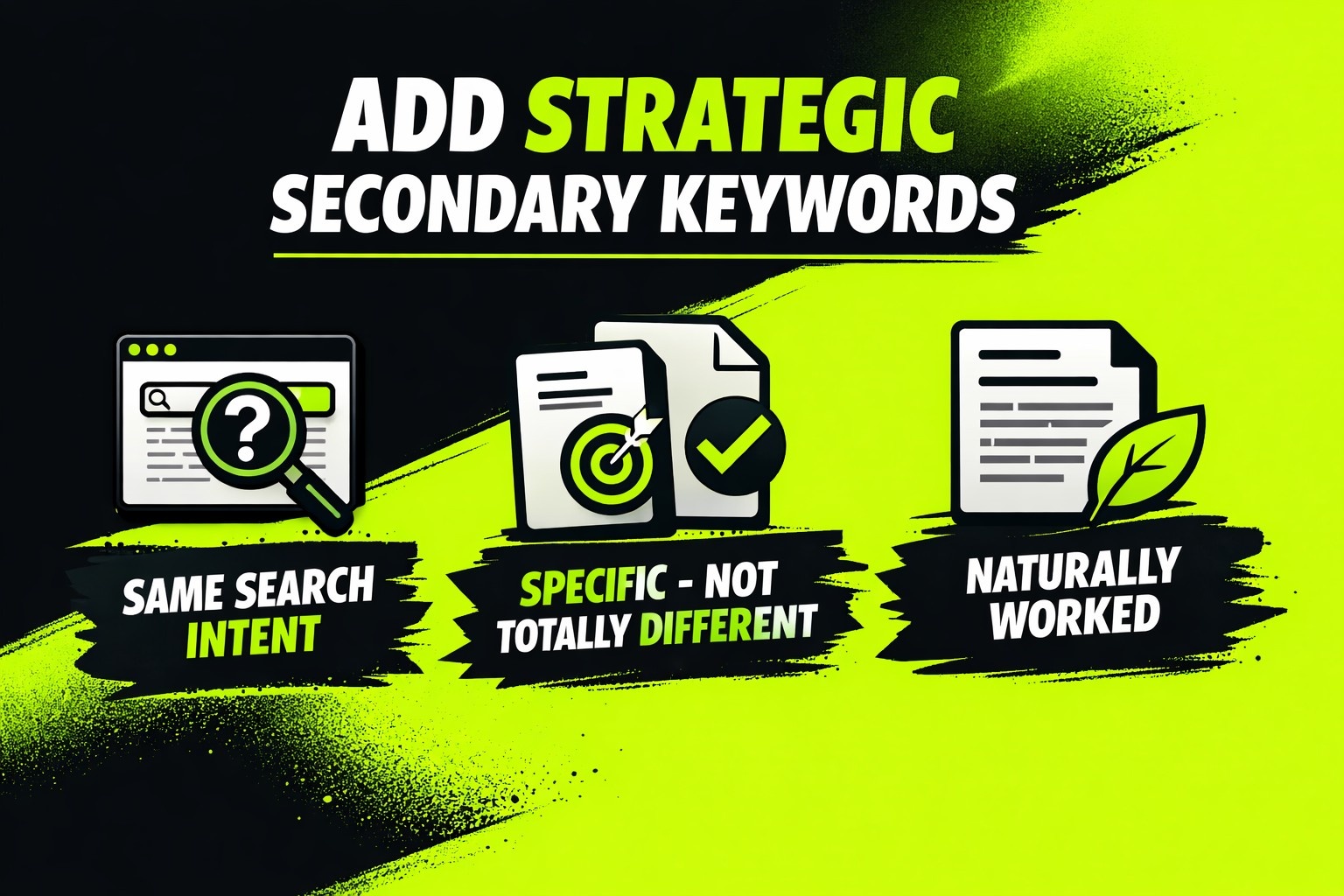
But Don’t Stop There: Add Strategic Secondary Keywords
While your main keyword carries the weight, you shouldn’t ignore related terms. This is where secondary keywords come in.
These aren’t random synonyms. They’re phrases that support your main topic or add useful context. Let’s say your primary keyword is “laptop bags.” Secondary keywords might be “best laptop bags for work”, “waterproof laptop bag”, or “leather laptop sleeves”.
All of those are relevant. They enrich your content without changing its focus.
What makes a good secondary keyword:
- It shares the same search intent as the primary keyword.
- It’s specific but not totally different (don’t mix “gaming backpack” with “laptop bag” unless you’re tying them together).
- It can be naturally worked into subheadings or paragraph content.
The Long-Tail Advantage (and Why You Should Care)
A big trap in SEO is chasing high-volume, short keywords like “insurance” or “marketing.” These are brutally competitive and don’t always bring the right kind of traffic.
Long-tail keywords, on the other hand, are your best friend. They’re longer, more specific search phrases that are easier to rank for and often match what real users are actually typing.
Examples are “how to write better meta descriptions”, “affordable CRM tools for real estate agents”, and “best running shoes for flat feet in 2026”.
They may have lower search volume, but they convert better and bring in users who are closer to making a decision.
What About Keyword Density? Should You Even Care?
Short answer: not really. Long answer: there’s no official keyword density rule that matters anymore.
Search engines don’t count keywords like a schoolteacher grading a paper. They look at relevance, readability, and how naturally your content flows. That said, if your keyword only shows up once in a 2,000-word article, that’s probably not ideal either.
A practical approach?
- Use your primary keyword once in the URL (if possible).
- Include it in the title tag, meta description, and H1.
- Mention it naturally in the first 100 words.
- Sprinkle it a few more times throughout the piece without forcing it.
There’s no magic percentage. Just make sure your main keyword appears naturally throughout the content, especially in the title, intro, and key sections.

Keyword Placement Matters More Than Quantity
Instead of counting keyword repetitions, focus on putting them where they’ll have the most impact. Here’s where keyword placement truly counts.
Put the Keyword in the URL
Including the keyword in your URL can add a bit of clarity, although it’s not a major ranking factor anymore. No need to overthink it – just keep it short, readable, and aligned with your topic. Something like /on-page-seo-guide works far better than a jumbled string of IDs or filler words.
Use the Keyword in the Meta Title and Description
Search engines use your meta title and description to generate the snippet shown in search results. Including your main keyword in both helps with relevance, but more importantly, it aligns with what the searcher is expecting. A strong meta title that includes your keyword naturally (and doesn’t sound robotic) improves click-throughs. The meta description should do the same – it’s your pitch to the reader, not just an SEO box to tick.
Reinforce the Topic with the H1
Your H1 should clearly match the main topic of the page. Including your keyword here tells both users and search engines, “This is what this page is about.” Don’t try to be too clever or abstract. A direct, keyword-rich H1 usually outperforms anything vague or off-topic.
Get to the Point in the Intro Paragraph
You don’t need to open with a keyword bomb, but your primary term should show up early – ideally within the first 100 words. This helps confirm to search engines (and readers) that your content is relevant to their query. It’s also just a better user experience. Nobody wants to scroll through fluff before they know they’re in the right place.
Weave Keywords into Image Alt Text
Alt text isn’t just about SEO – it’s also about accessibility. That said, when you’re using visuals that directly support your content, a relevant keyword in the alt description can add subtle reinforcement. Keep it descriptive and honest. If it fits, include the keyword. If not, skip it. This one’s about context, not stuffing.
Use Subheadings for Secondary Keywords
Subheadings (H2s and H3s) are great places to work in related terms or secondary keywords. They help search engines understand how your content is structured and show that you’re covering the topic thoroughly. Plus, they improve scanability for real users. Just make sure the keywords feel like they belong there – don’t wedge them in just for the sake of it.
Anchor Internal Links with Natural Keyword Variations
When linking to other pages on your site, try using anchor text that includes the target page’s main keyword or a close variation. It helps distribute keyword relevance across your site and reinforces topical connections. Instead of saying “read more,” you might link with something like “our guide to email automation.” It’s clearer, and more useful, both for bots and people.
How Many Keywords Per Page Is Too Many?
Now we’re getting to the core question.
Let’s say you’re writing a 1,000-word article. What’s reasonable?
- 1 primary keyword.
- 2 to 4 secondary keywords.
- 3 to 6 long-tail or LSI-related phrases (which often occur naturally).
That’s it.
More than that, and you risk confusing your message or spreading your page too thin. If you find yourself wanting to rank for 10 different things, you probably need 2 or 3 separate pages instead.
Related Terms: Helpful, But Don’t Obsess
Some marketers refer to “LSI keywords” when they mean related terms or contextually relevant phrases. While Google doesn’t use actual Latent Semantic Indexing, writing naturally and using semantically connected words still helps.
Let’s say your topic is “remote work software.” LSI keywords might include: “team collaboration tools”, “video conferencing platforms”, or “project management apps”.
You don’t have to go hunting for these with a microscope. If you’re writing naturally and covering the topic in depth, chances are you’re already using them.
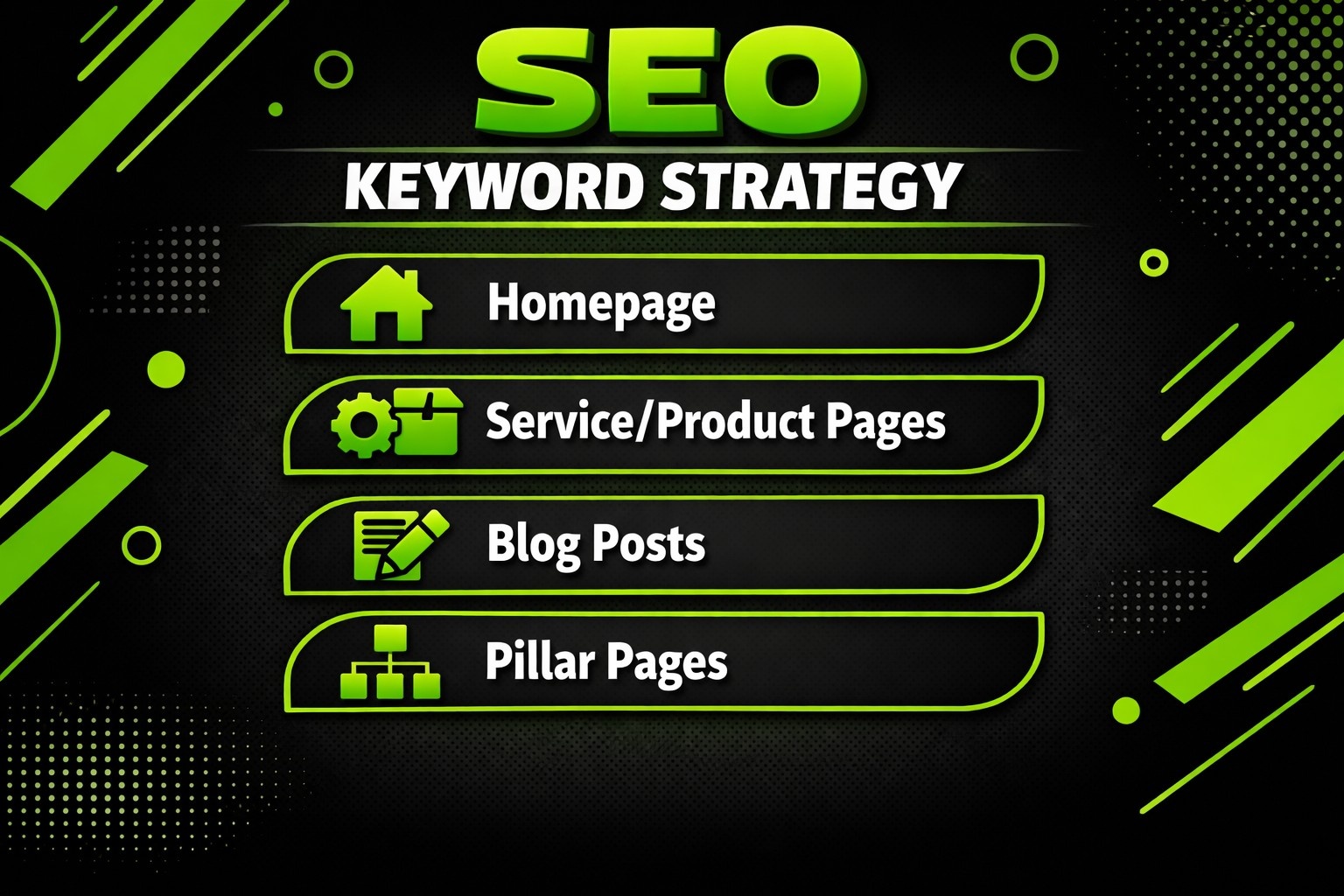
SEO Keyword Strategy: It’s a Whole Site Thing
Keywords aren’t just about individual pages. A strong strategy connects all your pages into a keyword ecosystem.
Here’s how to think about it:
- Homepage: Broad, brand-level keyword.
- Service/product pages: One focused keyword each.
- Blog posts: Long-tail and topic-supporting terms.
- Pillar pages: In-depth, long-form content built around a central keyword, with internal links to supporting articles.
When done right, this setup helps search engines understand how your site is organized. It also helps users find what they need faster.
How Many Keywords Should Your Whole Site Target?
There’s no magic number here either. It depends on how many products or services you offer, the size of your blog or content plan, your audience, and what they search for.
As a ballpark, small businesses might target 50 to 200 core keywords. Larger sites might be going after thousands. The key is to stay focused and not dilute your efforts by chasing irrelevant or low-converting terms.
Don’t Forget About Search Intent
If you’ve skimmed everything else, read this part.
Ranking isn’t just about having the right keywords. It’s about matching what someone actually wants when they type that keyword.
That’s search intent. It comes in four main flavors:
- Informational: The user wants to learn something (“how to write a sales email”).
- Navigational: They’re looking for a specific site or brand (“website login”).
- Commercial: The user is researching options (“best laptops under $1000”).
- Transactional: They’re ready to complete a purchase (“buy laptop online”).
If your content doesn’t match the intent behind the keyword, it won’t rank. Or worse, it might rank but bounce like crazy because it’s not what the person wanted.
Always ask: what would someone expect to find if they searched this?
When in Doubt, Write First. Optimize After.
A common mistake is trying to cram keywords in before the writing even begins. That leads to clunky, robotic paragraphs and overused phrases.
A better approach: write your piece naturally, then go back and check for keyword alignment. Ask yourself:
- Does the piece clearly support my primary keyword?
- Have I touched on the subtopics (secondary keywords) that matter?
- Can I tighten up a few phrases or headers to include useful terms without forcing it?
This method keeps the flow human and readable while still satisfying the search gods.
Wrapping It Up
Here’s the bottom line: focus each page on one clear keyword. Don’t try to cover everything in one shot. Supporting terms are fine if they add value, but don’t cram them in just to hit a quota.
Forget about keyword density – it’s outdated. What matters is using keywords where they make sense and keeping the flow natural. Variations help, but only if they sound human.
More importantly, make sure your content matches what people are actually searching for. And build your site with a clear keyword structure so everything connects.
Write like a human first. Optimize second. That’s the real formula.
And if you’re unsure whether you’ve used too many keywords? You probably have.