


When we talk about SEO, we’re usually thinking about keywords, content, and maybe technical performance. But link building quietly powers much of what works behind the scenes. Done right, it’s one of the most reliable ways to help a site earn visibility, trust, and organic traffic.
This guide takes a practical look at how link building actually helps SEO. Not the vague stuff, but the real mechanics and benefits. Whether you’re a marketer, business owner, or writer trying to make sense of it all, here’s what you need to know.
Why Links Still Matter in 2026
Despite the rise of AI-generated content and ever-changing search algorithms, backlinks haven’t lost their influence. In fact, search engines continue to treat quality inbound links as a signal of relevance and authority.
Think of links like votes. But not all votes are equal. A link from a trusted site in your industry carries more weight than five from random directories. Google and other search engines look at the who, where, and why of each backlink.
So while stuffing pages with exact-match keywords has fallen out of favor, earning high-quality links is still one of the clearest paths to better rankings.
A Broader Look at SEO Growth: Our Approach at Lengreo
While link building is an important piece of the SEO puzzle, it’s never the full picture. At Lengreo, we help companies grow by focusing on the bigger system that surrounds SEO. That includes everything from defining the right positioning to building an outreach strategy that actually gets seen by the right people.
We don’t focus on link building as a main approach, but we do know how much weight links carry when it comes to trust and visibility. That’s why our work often touches the areas where link building and outreach overlap – like multichannel campaigns, strategic partnerships, and content that earns mentions naturally. The goal isn’t to chase links, but to build authority and recognition that lasts.
In our view, SEO works best when it supports the business model, not just the traffic chart. That’s why our consulting often focuses on aligning digital strategy with revenue, and our SEO efforts sit alongside CRO, paid media, and pipeline optimization. Because in the end, links don’t matter unless they lead to real growth.

How Link Building Supports SEO
Links aren’t just about boosting rankings. They play a bigger role behind the scenes, from helping search engines discover new pages to shaping how your site is perceived in your industry. Whether you’re building internal links or earning backlinks from other websites, each one adds structure, trust, and visibility to your online presence.
Helping Search Engines Discover and Index Your Pages
One of the core functions of links is helping search engines find your content. Crawlers use links to move from one page to another. If a new blog post or product page is linked from an already indexed site, it’s likely to be discovered and added to search results faster.
Internal linking plays a role too. Connecting pages within your own site helps search engines understand your site structure. It allows stronger pages to pass value to newer ones and makes it easier for users and crawlers to navigate your content.
Building Authority and Trust Through Backlinks
Search engines consider backlinks as signals of credibility. When respected websites link to your content, it suggests that your information is reliable and worth referencing. For example, a link from a university or government site to your guide adds weight to your content’s trustworthiness.
A strong backlink profile can improve your perceived authority based on third-party tools, help new pages gain traction faster, and increase your chances of ranking for competitive keywords. This is especially important in industries like healthcare, finance, or education, where trust is critical.
Driving Referral Traffic
Backlinks aren’t just for search engines. They also bring people directly to your site. A link placed on a relevant blog, news article, or forum can drive consistent, targeted traffic from people who are already interested in your topic.
This type of referral traffic often converts better than random visits from search. It comes with context and intent, which can make a measurable difference even before rankings are considered.
Supporting Topical Authority
When multiple sites within your niche link to your content, it reinforces your position as a trusted source on that subject. This can help establish topical relevance, which some SEOs refer to as “topical authority.
For instance, if you run a site focused on eco-friendly home products, and sustainability blogs frequently link to your content, search engines begin to associate your domain with that topic. As a result, your future content in that space may rank more quickly and consistently.
Contributing to Long-Term SEO Growth
Link building isn’t about instant results. It’s a long-term strategy that strengthens your site’s foundation. As your backlink profile grows, so does your site’s visibility and resilience in search results.
Good backlinks improve crawlability, support more stable rankings, and help new content get indexed faster. Over time, they contribute to domain-level authority and a stronger overall presence in search.
Not All Links Are Created Equal
There’s a big difference between a relevant editorial mention and a spammy blog comment link. Search engines know this. They evaluate link quality based on a few key factors:
- Domain authority of the linking site.
- Relevance to your topic or niche.
- Placement within the content (contextual links work better than footers or sidebars).
- Anchor text used to describe your page.
Earning one link from a respected publication or partner site in your space often does more than dozens of weak or unrelated backlinks.
Natural vs. Manual Link Building
There’s a lot of debate about how much manual outreach is worth it these days. Ideally, you’d earn links naturally because your content is useful or newsworthy. But in reality, especially for newer sites, some proactive effort is needed.
Here’s how the two approaches break down:
Natural (earned) links:
- Typically come from journalists, bloggers, or site owners.
- Often result from strong content, effective PR, or organic visibility.
- Generally seen as more trustworthy.
- Can support long-term SEO.
Manual links:
- Result from outreach, guest posts, partnerships, or citations.
- Give you more control over anchor text and placement.
- Work well for building early momentum.
The best strategy often blends both. Build something worth linking to, and then make sure people know about it.
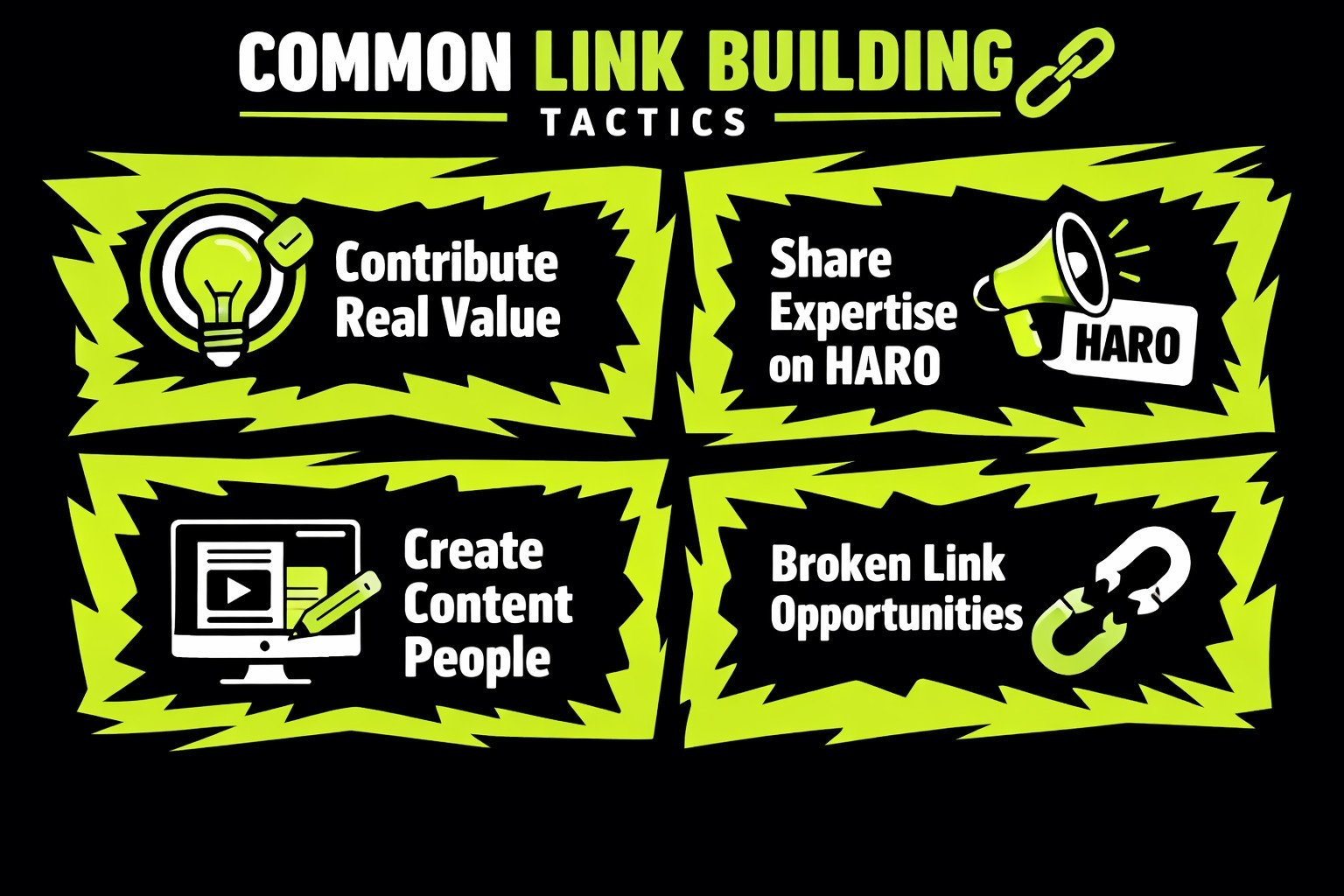
Common Link Building Tactics (That Still Work)
Not all strategies are worth your time. But a few continue to deliver results when done thoughtfully:
1. Contribute Real Value Through Guest Posts
Writing for blogs in your niche still works – as long as you’re not doing it just to drop a link. When you focus on delivering something genuinely helpful to their audience, the backlink becomes a byproduct of real collaboration.
2. Share Expertise on HARO and Similar Platforms
Platforms like HARO (Help a Reporter Out) connect journalists with expert sources. Contributing thoughtful answers can land you mentions and backlinks from high-authority sites, especially in news or research-driven content.
3. Create Content People Actually Want to Link To
Useful tools, original research, long-form explainers – these are the kinds of assets people naturally want to reference. You’re not begging for links; you’re earning them by offering something others don’t have.
4. Use Broken Link Opportunities
The internet is full of outdated or dead links. If you find one in a relevant article, reach out and suggest your own content as a replacement. It’s a win-win: they fix a broken resource, and you get a backlink.
5. Turn Brand Mentions Into Backlinks
Sometimes people mention your company without linking to it. That’s a missed opportunity. A quick, friendly email asking for a link can often turn those mentions into valuable backlinks with minimal effort.
If you’re doing outreach, avoid templates and write like a human. Personalized messages have a much higher success rate.
Internal Links Deserve More Respect
Most people associate link building with earning links from other sites. But internal linking plays a major role too. It helps distribute ranking power across your site and guides both users and bots to your most important pages.
Some tips for better internal linking:
- Use descriptive anchor text (but don’t over-optimize).
- Prioritize linking from high-authority to newer pages.
- Keep navigation natural and helpful.
- Link to content hubs or pillar pages for SEO depth.
It’s not glamorous, but internal linking is one of the easiest SEO wins you can control.
What to Avoid: Link Schemes and Shortcuts
It’s tempting to chase quick wins. Buying links, participating in link exchanges, or spamming forums might offer short-term gains, but they come with long-term risks.
Search engines are smarter than ever at detecting manipulation. Penalties for link spam can tank your visibility overnight. Stick to white-hat methods and focus on quality over quantity.
If you’re unsure about a link opportunity, ask: “Would this link still be valuable if it didn’t affect rankings?” If the answer is yes, you’re probably on the right track.
Final Thoughts
At its core, link building is about connection. The best links come from real relationships, shared value, and mutual relevance. If you focus on creating useful content, reaching out to the right people, and staying consistent, the SEO results will follow.
Link building isn’t dead. It’s just evolved. Less about chasing metrics, more about earning trust.
And that shift? It’s actually a good thing.