


Green marketing has shifted from optional branding element to core business requirement. Companies now face pressure from consumers, regulators, and investors to demonstrate real environmental responsibility. The strategies that work best combine authentic sustainability practices with clear communication that avoids exaggeration.
What Green Marketing Actually Means
Green marketing is the practice of developing, pricing, distributing, and promoting products or services based on their proven environmental benefits while being completely transparent about what those benefits are and how they were achieved. It is no longer enough to slap a leaf icon on packaging or claim “we care about the planet.” Today it means measurable reductions in carbon footprint, waste, water use, or toxic materials, backed by data, third-party audits, and clear communication at every customer touchpoint.
At its core, genuine green marketing treats sustainability as a hard business discipline rather than a feel-good story. Companies must redesign products, clean up supply chains, and change operations long before they ever write a single marketing line. Only then does promotion become credible – and only credible green marketing survives regulatory scrutiny, customer skepticism, and competitor attacks in the current market.
How We Help Companies Execute Green Marketing Strategies at Lengreo
At Lengreo we work daily with businesses that want to turn their sustainability efforts into real market advantage. Most of them already have solid environmental practices – recycled materials, lower emissions, responsible sourcing – but they struggle to communicate it without sounding generic or wasting budget. That’s where we step in.
We treat green marketing the same way we treat any B2B growth project: first we audit what actually exists, then we build a promotion system that highlights verifiable achievements and reaches decision-makers who value them. No fluffy slogans, no greenwashing, just targeted SEO, LinkedIn outreach, and content that positions our clients as the credible choice in their niche.
Over the years we’ve run campaigns for cleantech, sustainable materials, and circular-economy brands. The pattern is always the same – once the messaging is built on real data and third-party certifications, and once we put it in front of procurement managers and sustainability officers through precise channels, conversion rates and deal sizes go up noticeably. The environmental story becomes the commercial differentiator instead of a side note.
If your company already invests in lower impact but the market still doesn’t see it, we can map the gap and close it with the same tools we use for any high-value B2B sector. That’s green marketing done properly – measurable, cost-efficient, and built on facts rather than hope.
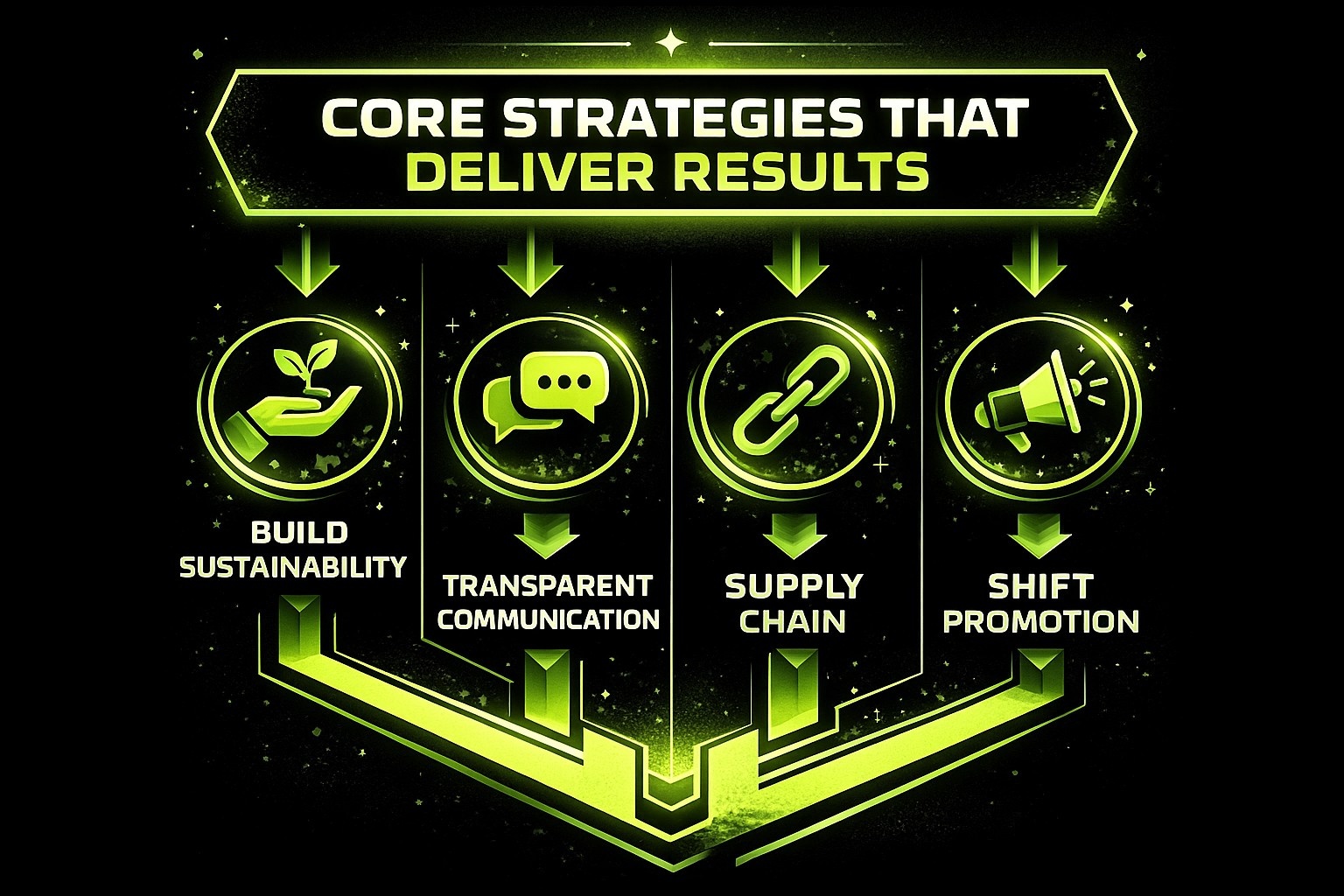
Core Strategies That Deliver Results
The strategies below have been repeatedly validated across industries and company sizes. They work because they address the areas where environmental impact and customer perception actually intersect, rather than staying in theoretical territory. When executed consistently, these five approaches create measurable reductions in resource use while strengthening market position.
Strategy 1: Build Sustainability into Product Design from the Start
Companies that treat sustainability as an afterthought struggle. The effective approach integrates environmental criteria during the initial design phase. Teams evaluate materials, manufacturing methods, and end-of-life disposal before production begins. This prevents costly changes later and creates products that genuinely reduce impact throughout their lifecycle.
Key Design Principles
Product teams apply lifecycle thinking from day one. They map every stage from raw material extraction to disposal and set clear reduction targets for energy, water, and waste.
Practical Applications
Refillable containers, modular electronics that allow part replacement, and clothing made from regenerated fibers show how design choices cut waste throughout the product lifecycle. Even small changes like reducing component count or selecting single-polymer plastics improve recyclability.
Common starting points include:
- Material substitution with recycled or bio-based alternatives
- Design for disassembly using snap-fits instead of adhesives
- Elimination of hazardous substances early in formulation
- Built-in durability testing beyond standard requirements
Strategy 2: Implement Transparent Communication and Credible Certification
Consumers distrust broad claims like “eco-friendly” without proof. Successful organizations provide specific details about their practices and obtain recognized third-party certifications. This documentation becomes the foundation for all marketing messages.
Building Verification Systems
Companies establish internal tracking for every environmental claim. Regular sustainability reports further strengthen credibility by showing progress and areas still under improvement.
Trusted certification categories include:
- Material origin and recycled content verification
- Energy efficiency and carbon footprint measurement
- Labor conditions and ethical sourcing standards
- End-of-life recyclability or compostability confirmation
Communication Framework
Messages focus on verified achievements rather than aspirations. Companies display certification marks prominently and link to verification documents directly from product pages and packaging.
Strategy 3: Optimize the Supply Chain for Lower Impact
Environmental impact extends far beyond the final product. Leading companies audit suppliers, require sustainability standards, and collaborate to reduce emissions across the entire chain. The goal is systematic improvement rather than isolated gestures.
Supplier Selection and Development
Organizations create tiered supplier requirements that increase over time. Regular audits and joint improvement projects help partners meet standards without sudden exclusion.
Actions include consolidating orders to decrease transport frequency, switching to rail or sea instead of air freight when speed allows, and choosing partners located closer to production facilities. Technology platforms now track supplier performance and carbon output in real time.
Typical supply chain optimizations:
- Mapping and reducing transport distances
- Implementing shared warehousing with aligned brands
- Requiring annual emissions reporting from key suppliers
- Developing closed-loop material flows with existing partners
Strategy 4: Shift Promotion to Low-Impact Digital Channels
Digital marketing naturally aligns with green objectives because it eliminates printed materials. Companies focus on search optimization for sustainability-related terms, targeted social media campaigns, and content that educates rather than sells aggressively.
Content That Performs
Video explanations of manufacturing processes, behind-the-scenes looks at material sourcing, and customer stories about product reuse perform better than traditional advertisements while reinforcing environmental commitment.
Effective digital approaches include:
- Educational content about material choices and impact
- Transparent tracking tools showing shipment carbon costs
- User-generated content featuring real reuse practices
- Search campaigns targeting specific sustainability concerns
Strategy 5: Create Partnerships That Extend Reach and Credibility
Collaborations with established environmental organizations provide instant trustworthiness. Joint projects range from product lines made with recycled ocean plastic to tree-planting programs funded by portion of sales.
Partnership Selection Criteria
These partnerships work best when both sides share similar values and the connection feels logical to consumers. Clear explanation of how the partnership reduces specific environmental problems prevents perception of mere publicity stunts.
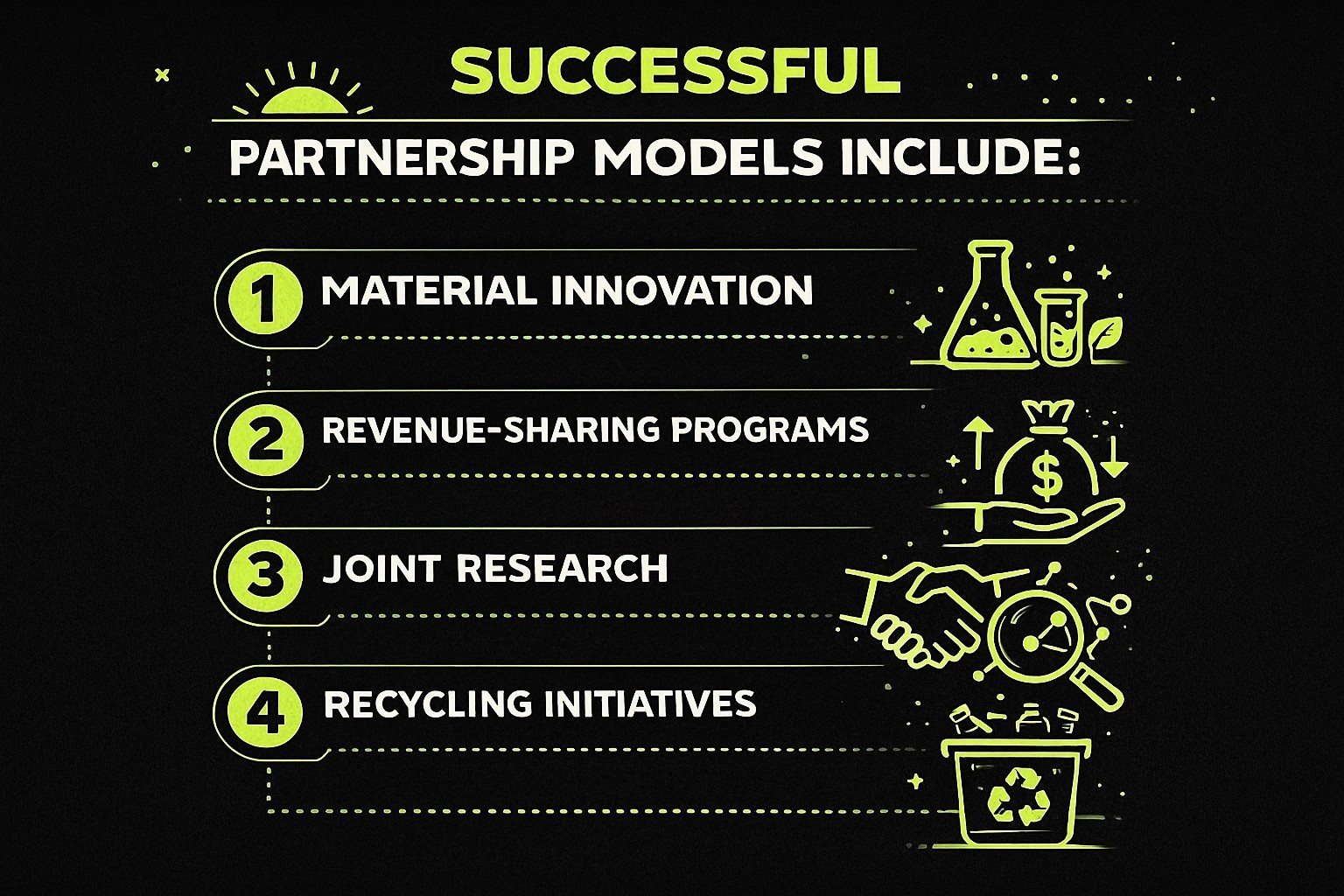
Successful partnership models include:
- Material innovation with specialized environmental NGOs
- Revenue-sharing programs for habitat restoration
- Joint research into lower-impact production methods
- Co-branded take-back and recycling initiatives
Conclusion
Green marketing strategies succeed when sustainability becomes part of core operations rather than surface-level messaging. The most effective approaches combine genuine environmental improvements with honest communication supported by evidence. Companies that implement these strategies across product design, supply chain, promotion, and daily operations position themselves for long-term relevance in a market that increasingly demands accountability.