


Linking to other websites has always made people uneasy. On one side, it feels natural to reference good sources. On the other, there’s that lingering fear of “sending SEO value away” or helping competitors instead of yourself.
The reality in 2026 sits somewhere in the middle. Outbound links don’t magically improve rankings, and they don’t sabotage them either. What they do affect is how your content is understood, trusted, and placed within a broader topic. And that matters more than most people think.
This article breaks down what linking to other sites really does for SEO today, what Google actually cares about, and how to use outbound links without overthinking them or turning them into a checkbox exercise.
What Linking to Other Sites Really Means in SEO Terms
When people talk about linking to other sites, they usually mean outbound or external links. These are links from your page to a different domain. That sounds simple, but the intent behind the link is what matters.
An outbound link is an editorial decision. You are telling the reader, and the search engine, that another page helps explain, support, or expand the point you are making. In practice, that can mean citing research, pointing to documentation, referencing a tool, or directing someone to a deeper explanation you chose not to recreate yourself.
Search engines do not treat outbound links as isolated ranking signals. They are read as part of the broader content context. In other words, Google does not ask, “Does this page link out?” It asks, “Does this page behave like a well researched, trustworthy piece of content?”
Outbound links help answer that second question.
How Lengreo Approaches Outbound Linking in Real SEO Work
At Lengreo, linking to other sites is never a box-ticking exercise. We treat outbound links the same way we treat strategy, content, and demand generation as deliberate choices tied to real outcomes. If a link helps clarify intent, support a claim, or guide a reader toward something genuinely useful, it earns its place. If it does not, it stays out. Simple as that.
This approach comes from how we work across SEO, content, and lead generation. We operate in competitive industries like SaaS, cybersecurity, biotech, and even highly regulated or sensitive niches where credibility matters. In those environments, poorly chosen links can do more harm than good. That is why we focus on relevance first, context second, and trust always. Outbound links are there to strengthen the narrative, not to decorate it.
The same thinking applies across everything we do, from SEO and content strategy to paid ads and demand generation. We do not rely on templates or pre-packaged tactics. We listen, map the landscape, and choose tools and references that support real growth. The results speak for themselves: stronger visibility, better-qualified leads, and measurable performance improvements that clients can actually track.
Why the Old Fear of “Losing SEO Value” Still Exists
The idea that linking out hurts SEO comes from very early interpretations of PageRank. Back when SEO was more mechanical, links were seen as pipes carrying authority from one page to another. If you linked out, you were assumed to be giving something away.
That model no longer reflects how modern search works. Google has said repeatedly that outbound links are not a negative ranking factor. Link equity is not drained from a page just because it points elsewhere. Authority is not something you hoard by refusing to link.
What still trips people up is scale and intent. A page with hundreds of low quality outbound links looks spammy. A page that links aggressively for manipulative reasons raises flags. That is not about linking out. It is about editorial quality.
The fear persists mostly because it is easier to believe a simple rule than to evaluate content quality honestly.
Do Outbound Links Directly Improve Rankings?
No. Outbound links are not a direct ranking factor.
Google representatives have been clear about this for years. Linking to Wikipedia, CNN, or a government site does not cause your page to rank higher simply because those sites are authoritative. There is no bonus for name dropping.
That said, stopping the analysis there misses the point. SEO is no longer about individual ranking switches. It is about signals that compound over time.
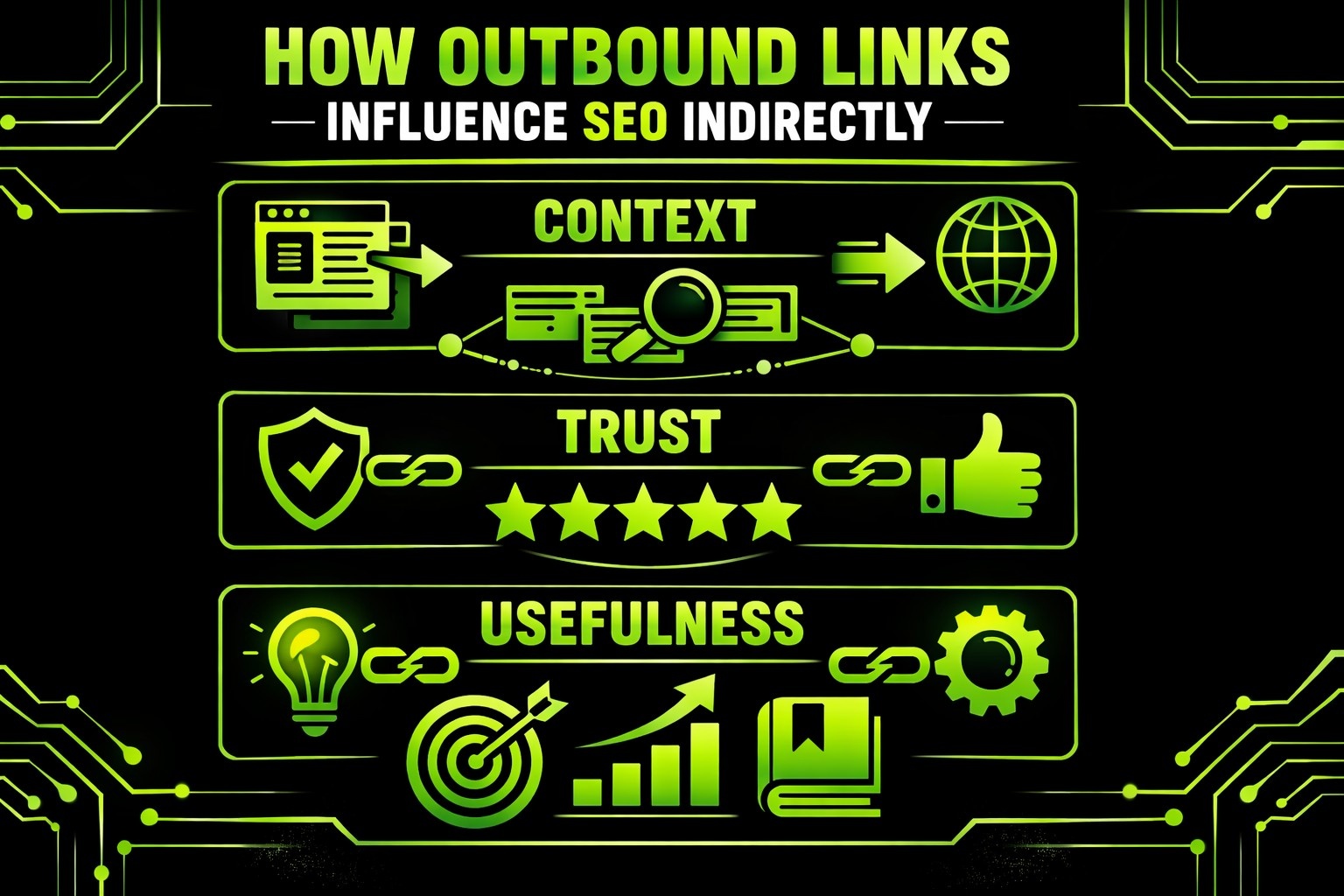
How Outbound Links Influence SEO Indirectly
Outbound links contribute indirectly by reinforcing factors Google does care about when evaluating content quality.
Context
Links help search engines understand what your content is about and how it fits within a broader topic. Referencing relevant external sources clarifies intent and strengthens topical alignment.
Trust
Citing credible, well maintained sources signals that your content is grounded in research rather than opinion alone. This improves perceived reliability for both users and search engines.
Usefulness
Thoughtful outbound links improve the reader experience by pointing to additional explanations, data, or tools that add value beyond your own page.
Pages that perform well tend to demonstrate these qualities consistently. When used with intent, outbound links help reinforce them without becoming the focus of the content.
How Outbound Links Help Google Understand Context
Search engines rely heavily on relationships between topics and entities. When you link to relevant external pages, you help define the neighborhood your content belongs in.
For example, an article about technical SEO that links to Google Search Central documentation, industry research, and respected analysis sends clear signals about subject matter and intent. It tells Google that the page is part of a serious conversation about SEO, not a thin opinion piece.
This is especially important in competitive niches where many pages target similar keywords. Contextual clarity helps search engines differentiate between content that merely mentions a topic and content that actually understands it.
Outbound links do not create that understanding on their own, but they support it when the content itself is solid.
The Relationship Between Outbound Links and Trust
Trust is not a single metric. It shows up in how content behaves over time. Well sourced pages tend to earn stronger engagement, more citations, and more backlinks. Outbound links play a role in that broader trust ecosystem.
How Outbound Links Contribute to Credibility
When you link to reputable sources, you show readers that you are willing to back up claims or point them elsewhere when it adds value. That transparency improves credibility. Content that feels researched and open is easier to trust than content that tries to stand alone at all costs.
Alignment With Google’s Quality Evaluation
From Google’s perspective, this behavior aligns with quality evaluation frameworks like E-E-A-T. Outbound links are not a checklist item, but citing reliable sources supports signals of experience, expertise, and trustworthiness when the content itself is solid.
When Outbound Links Undermine Trust
The same mechanism works in reverse. Linking to low quality, outdated, or misleading sites damages trust quickly.
The Risk of Poor Source Selection
A single bad link can undermine an otherwise strong page by signaling weak editorial judgment. Over time, patterns of careless outbound linking can erode both user confidence and search engine trust.
Relevance Matters More Than Authority
One of the most common mistakes is assuming that authority alone makes a link valuable. It does not.
A highly relevant niche source often provides more value than a generic high authority site. Linking to a page that directly supports your topic strengthens clarity. Linking to a famous site just because it is famous does not.
Search engines look at topical alignment, not brand recognition. Readers do the same. A precise, well chosen reference builds confidence. A forced authority link feels artificial.
This is why relevance should always come before domain metrics when deciding whether to link out.
Dofollow, Nofollow, Sponsored, and UGC Explained Simply
Most editorial outbound links should remain dofollow. That is the default, and it reflects how the web naturally works. When you cite a source because it is useful and trustworthy, there is usually no reason to restrict that link.
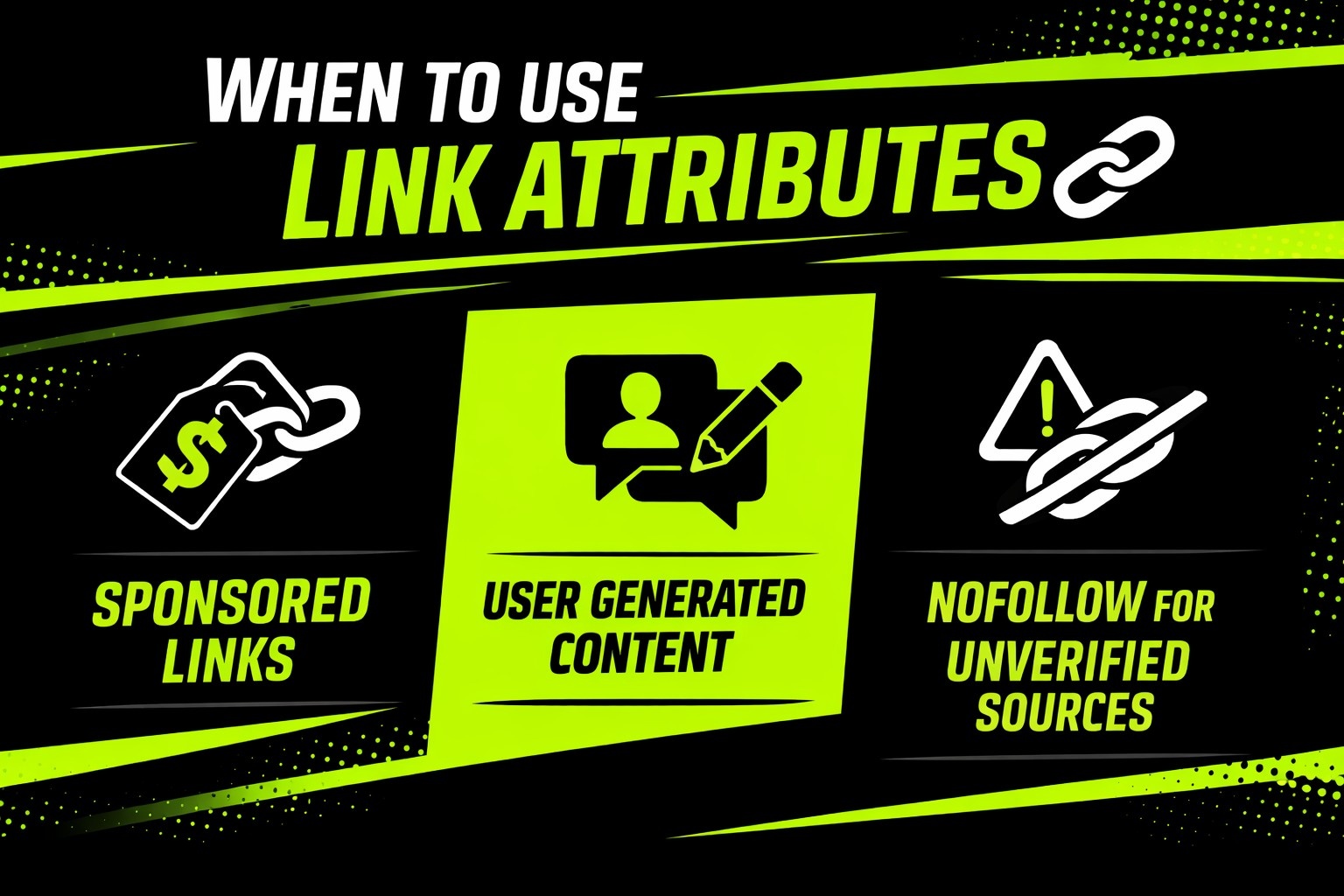
When to Use Link Attributes
Nofollow and related attributes exist for specific situations where transparency matters more than endorsement.
Sponsored Links
Use the sponsored attribute for paid placements, affiliate links, or any situation where money or compensation is involved. This makes the relationship clear to both users and search engines.
User Generated Content (UGC)
The UGC attribute is designed for links added by users, such as comments or forum posts. It signals that the link was not placed editorially and should not be treated as an endorsement.
Nofollow for Unverified Sources
Use nofollow when you cannot fully vouch for the destination but still want to reference it for context or completeness.
Why Blanket Nofollow Policies Do Not Work
Using these attributes correctly is about transparency, not manipulation. Blanket nofollow policies are unnecessary and often counterproductive. They can make content appear overly cautious without improving trust or usability.
The goal is clarity about intent, not control over link equity.
Can Outbound Links Hurt SEO?
Yes, but not in the way most people think.
Outbound links hurt SEO when they signal poor editorial judgment. That includes:
- Linking to spammy or deceptive sites
- Sending users to broken or outdated pages
- Overloading thin content with excessive links
- Failing to disclose paid relationships
These issues harm user experience first. SEO damage follows naturally from that.
Search engines are good at recognizing patterns of low quality linking. A few bad links can weaken trust across a site if they suggest negligence or manipulation.
Regular link audits matter for this reason. Not to remove links arbitrarily, but to ensure they still serve users.
How to Use Outbound Links Without Overdoing It
There is no formula for outbound linking that works in every situation. The right approach depends on what you are writing, who it is for, and what the reader needs at that moment. Instead of counting links or following rigid rules, it is more effective to focus on intent, placement, and context.
How Many Outbound Links Make Sense
There is no fixed number of outbound links that a page should have. A long, research driven article may need several references to support its points, while a short opinion piece may not need any at all.
What matters is whether each link earns its place. If a link does not clarify, support, or extend the content in a meaningful way, it likely does not belong there.
The Problem With Overlinking
Overlinking often happens when links are added for SEO rather than for readers. This usually leads to cluttered pages that are harder to read and less persuasive. Too many links can dilute focus and pull attention away from the main message.
Placement and Timing Matter
Where a link appears is just as important as whether it exists.
Links placed naturally within relevant paragraphs tend to carry more weight than links pushed into footers or side sections. Context gives a link meaning, helping both users and search engines understand why it is there.
Why Early Links Can Be a Problem
Opening paragraphs deserve extra care. Introducing outbound links too early can pull readers away before you establish your own value. In many cases, it is better to build context first and add links once the reader understands why they matter.
Early outbound links can:
- Interrupt the reader before the main idea is clear
- Reduce time spent engaging with your content
- Shift attention away from your perspective too quickly
- Make the page feel like a collection of references rather than a cohesive argument
This is not a strict rule, but a usability principle. Engagement comes before references.
Linking to Competitors Requires Judgment
Linking to competitors is not automatically wrong, but it should always be intentional.
If a competitor hosts the best research or explanation available, linking to it can still serve the reader. In those cases, accuracy and usefulness outweigh the risk of sending traffic elsewhere.
When an Unlinked Mention Is Enough
Direct links to competing service or product pages rarely make sense. An unlinked mention usually provides transparency without encouraging readers to leave your site.
This is a judgment call, not a policy decision. Context and reader value should guide it.
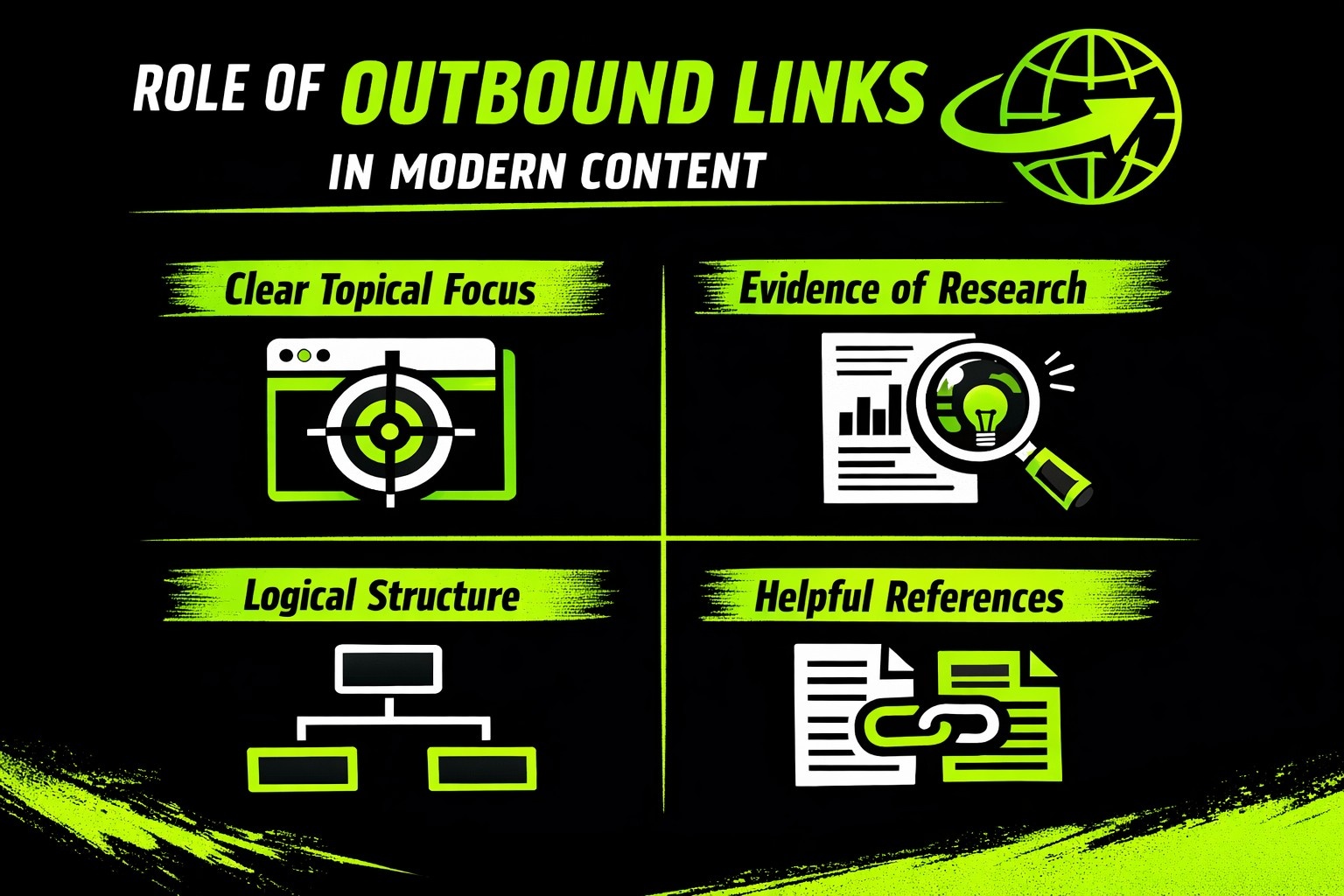
The Role of Outbound Links in Modern Content Quality
Search engines increasingly evaluate content holistically. They look at structure, depth, accuracy, and user satisfaction. Outbound links fit into that evaluation as part of editorial quality.
High performing content tends to share certain traits:
- Clear topical focus
- Evidence of research
- Logical structure
- Helpful references
Outbound links support these traits when used thoughtfully. They do not replace strong writing or original insight. They reinforce it.
This is why linking out should never be treated as a tactic in isolation. It works only when the content itself is worth linking from.
When You Should Avoid Linking Out
There are times when not linking out is the right choice:
- When no credible source exists
- When linking would distract from the main point
- When the destination is unstable or unreliable
- When the information is already fully explained
Not every statement needs a link. Over citation can feel defensive or artificial. Trust your judgment as a writer.
The absence of outbound links is not a problem if the content stands on its own.
Practical Guidelines That Actually Hold Up
Instead of rigid rules or arbitrary limits, it makes more sense to follow principles that reflect how people read and how search engines evaluate quality.
- Link when it helps the reader understand something better. If a link adds clarity, context, or depth to the point you are making, it belongs there. If the reader would be just as well off without clicking it, the link is probably unnecessary.
- Prioritize relevance over authority metrics. A highly relevant niche source is often more useful than a well known site that only loosely connects to the topic. Topical fit matters more than domain scores.
- Avoid linking just to look credible. Name dropping well known sites without a clear reason does not build trust. Readers can usually tell when a link exists for appearances rather than value.
- Keep links editorial, not decorative. Links should support the narrative, not interrupt it. Place them naturally within the content where they reinforce the idea being discussed.
- Review links periodically for accuracy and relevance. Pages change, studies get updated, and resources disappear. Checking outbound links from time to time helps keep your content reliable and prevents small issues from undermining trust.
These guidelines reflect how strong content is actually written and evaluated. When links serve the reader first, SEO benefits tend to follow naturally.
Final Thoughts
Linking to other sites does not help SEO in the simplistic way many guides suggest. It does not boost rankings by itself. It does not drain authority either.
What it does is contribute to how your content is perceived. It helps define context, reinforce trust, and support usefulness. Those factors matter more now than any isolated ranking signal ever did.
If you approach outbound links as part of good writing rather than a technical SEO trick, you are already doing it right.