

Quick Summary: Digital transformation in utilities involves adopting advanced technologies like IoT sensors, AI-powered analytics, smart grids, and cloud platforms to modernize aging infrastructure, improve operational efficiency, and deliver better customer experiences. According to the U.S. Department of Energy, America’s electric grid consists of more than 11,000 utility-scale power plants and approximately 470,000 to 485,000 miles of high-voltage transmission lines, according to 2024-2025 DOE and EIA data. ABI Research forecasts utilities will invest $713 billion in grid digitalization over the next six years to address challenges ranging from renewable energy integration to cybersecurity threats.
The utility sector stands at a critical crossroads. Aging infrastructure, exploding power demands from AI and data centers, climate change pressures, and evolving customer expectations are forcing energy providers to rethink everything about how they operate.
And here’s the thing: utilities haven’t exactly been quick adopters of new technology. But that’s changing fast.
Digital transformation isn’t just about swapping paper bills for email anymore. It’s about fundamentally reimagining how electricity gets generated, transmitted, and consumed across networks that were built decades ago.
What Digital Transformation Actually Means for Utilities
Digital transformation in the utility sector refers to the comprehensive adoption of digital technologies to modernize operations, infrastructure, and customer interactions. This goes well beyond basic digitization of records.
The U.S. Department of Energy describes the grid as an engineering marvel with more than 1 million megawatts of generating capacity. But that infrastructure dates back to the early 1900s. Grid modernization through digital technology represents the pathway to bringing these systems into the 21st century.
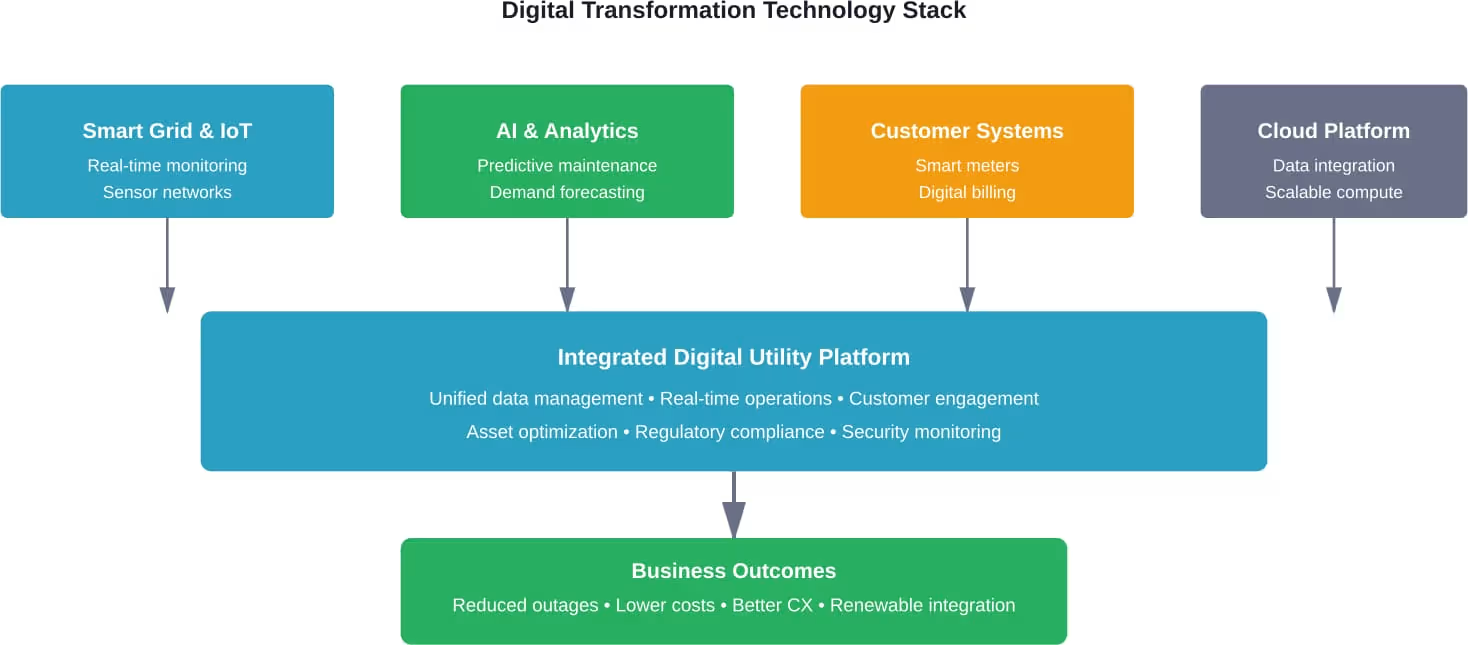
Real transformation happens when utilities integrate smart meters, IoT sensors, predictive analytics, and AI-driven decision systems into their core operations. These technologies work together to create responsive, efficient networks that can handle distributed energy resources, renewable integration, and real-time demand fluctuations.
According to ABI Research data, energy companies are projected to spend $713 billion on grid digitalization over the next six years. That’s not maintenance spending. That’s transformation investment.
Drive Digital Transformation in Utilities With LENGREO
Digital transformation in utilities focuses on modernizing infrastructure, improving efficiency, and adapting to new technologies. Companies also need consistent demand generation to support growth.
LENGREO helps utilities companies connect transformation efforts with measurable business outcomes through structured marketing strategies.
Support includes:
- SEO and content for complex services
- targeted outreach and appointment setting
- paid acquisition campaigns
- full funnel demand generation
If you want to build a predictable pipeline alongside your transformation efforts, get a free consultation with LENGREO.
Key Technologies Driving Utility Transformation
Several technology categories are reshaping how utilities operate. Each addresses specific challenges while contributing to broader modernization goals.
Smart Grid Infrastructure and IoT Sensors
Smart grid technology forms the foundation of digital utilities. The Department of Energy’s Grid Modernization Initiative works across national laboratories to develop technologies that make the grid more responsive and resilient.
IoT sensors deployed across transmission lines, substations, and distribution networks collect real-time data on equipment performance, power flow, and potential failures. This continuous monitoring replaces periodic manual inspections with constant awareness.
IEEE Standards, particularly the IEEE 2030 series, advance sustainability through reliable aggregation of diverse energy sources in microgrids and virtual power plants. These technical frameworks enable renewable energy integration while reducing harmful emissions.
Artificial Intelligence and Predictive Analytics
AI applications in the power sector deliver measurable results. Machine learning algorithms analyzing sensor data from wind turbines can adjust blade pitch and yaw for maximum efficiency, leading to an impressive 20% increase in output capacity.
Predictive maintenance algorithms analyze equipment data to forecast failures before they occur. This shifts utilities from reactive repairs to proactive asset management, reducing downtime and extending equipment lifespan.
Pattern recognition systems detect anomalies that indicate theft, equipment degradation, or network health issues. These systems process data at rates impossible for human operators.
Advanced Metering and Customer Systems
Smart meters represent the most visible aspect of utility digitalization. But their value extends beyond remote reading.
Research from a U.S. power provider showed customers receiving e-bills were about 20% more likely to make an on-time payment and about 60% less likely to call a customer service agent than those receiving paper bills.
Advanced metering infrastructure enables time-of-use pricing, demand response programs, and granular consumption analytics that help customers understand and manage their energy use.
Real Benefits Driving Adoption
Utilities aren’t investing billions in digital transformation for abstract reasons. The benefits show up in operational metrics and bottom-line results.
Operational Efficiency and Cost Reduction
Digital systems reduce manual processes, optimize resource deployment, and minimize truck rolls for routine tasks. Remote monitoring and control mean field crews respond only when necessary and arrive with complete diagnostic information.
Automated meter reading eliminates thousands of person-hours spent driving routes and recording readings manually. That labor shifts to higher-value activities.
Predictive maintenance prevents catastrophic failures that cost far more to repair than scheduled component replacement. Equipment lifespan extends when problems get addressed before they cascade.
Grid Reliability and Resilience
Real-time monitoring enables faster fault detection and isolation. Automated systems can reroute power around problem areas before customers experience outages.
The Department of Energy notes that America’s economy, national security, and public safety depend on reliable electricity delivery. Digital technologies strengthen that reliability against both routine failures and extreme weather events.
Distributed energy resource management becomes possible when digital systems can coordinate thousands of solar installations, battery storage units, and demand response participants.
Enhanced Customer Experience
Digital transformation shifts customer interactions from transactional to informational. Customers access real-time usage data, receive outage notifications, and manage accounts through mobile apps.
The 60% reduction in customer service calls among electronic billing users represents both cost savings and improved satisfaction. Customers get information when they want it without waiting on hold.
Personalized energy insights help customers understand consumption patterns and identify savings opportunities. This educational aspect builds trust and engagement.
Challenges Slowing Digital Adoption
Despite clear benefits, utilities face significant obstacles to digital transformation. Understanding these barriers helps organizations plan realistic implementation strategies.
Legacy Infrastructure and Technical Debt
Existing systems often lack the connectivity and data standards needed for integration. Proprietary protocols from multiple vendors create compatibility nightmares.
Equipment designed for 30-year lifespans can’t simply be replaced overnight. Utilities must run hybrid operations where digital systems interface with analog infrastructure.
The IEC 61968 standard addresses interoperability and data standardization challenges, providing frameworks for integrating legacy equipment with modern platforms. But implementation requires substantial engineering effort.
Cybersecurity Concerns
Connecting critical infrastructure to networks creates attack surfaces. The National Institute of Standards and Technology provides cybersecurity frameworks specifically for utilities managing these risks.
Every sensor, meter, and control system becomes a potential entry point. Security can’t be an afterthought bolted onto digital systems.
Utilities must balance accessibility for legitimate users with protection against sophisticated threats targeting energy infrastructure.
Organizational and Cultural Resistance
Research on water utilities noted that digital transformation occurs much slower than in other sectors like energy. Risk-conservative cultures resist innovation when reliability is paramount.
Workforce transitions challenge organizations where technical expertise spans decades. Training existing staff while recruiting digital talent creates capacity constraints.
Lack of internal capacity to develop, operate, and integrate smart applications forces reliance on vendors and consultants. This dependency can slow adoption and increase costs.
| Challenge Category | Specific Issues | Mitigation Approaches |
|---|---|---|
| Technical | Legacy systems, interoperability gaps, data silos | Standards adoption, phased integration, middleware platforms |
| Financial | High capital costs, uncertain ROI timelines, funding constraints | Pilot programs, regulatory rate recovery, performance-based incentives |
| Security | Expanded attack surface, compliance requirements | NIST frameworks, zero-trust architectures, continuous monitoring |
| Human | Skills gaps, change resistance, workforce transitions | Training programs, partnerships with universities, change management |
Strategic Approaches for Successful Transformation
Organizations that navigate digital transformation successfully follow common patterns. These strategies reduce risk while accelerating value realization.
Start with Clear Business Objectives
Technology for its own sake delivers no value. Transformation initiatives must align with specific business outcomes: reducing outage duration, lowering operational costs, improving customer satisfaction, or enabling renewable integration.
Measurable goals create accountability and allow course correction. Vague aspirations about “becoming digital” lead to scattered investments without coherent strategy.
Prioritize Interoperability and Standards
The IEEE 2030 series and IEC 61968 standards provide proven frameworks for grid modernization. Following established standards prevents vendor lock-in and eases future integration.
Open architectures that accommodate multiple vendors and technologies create flexibility. Proprietary ecosystems may seem simpler initially but constrain options later.
Pilot Before Scaling
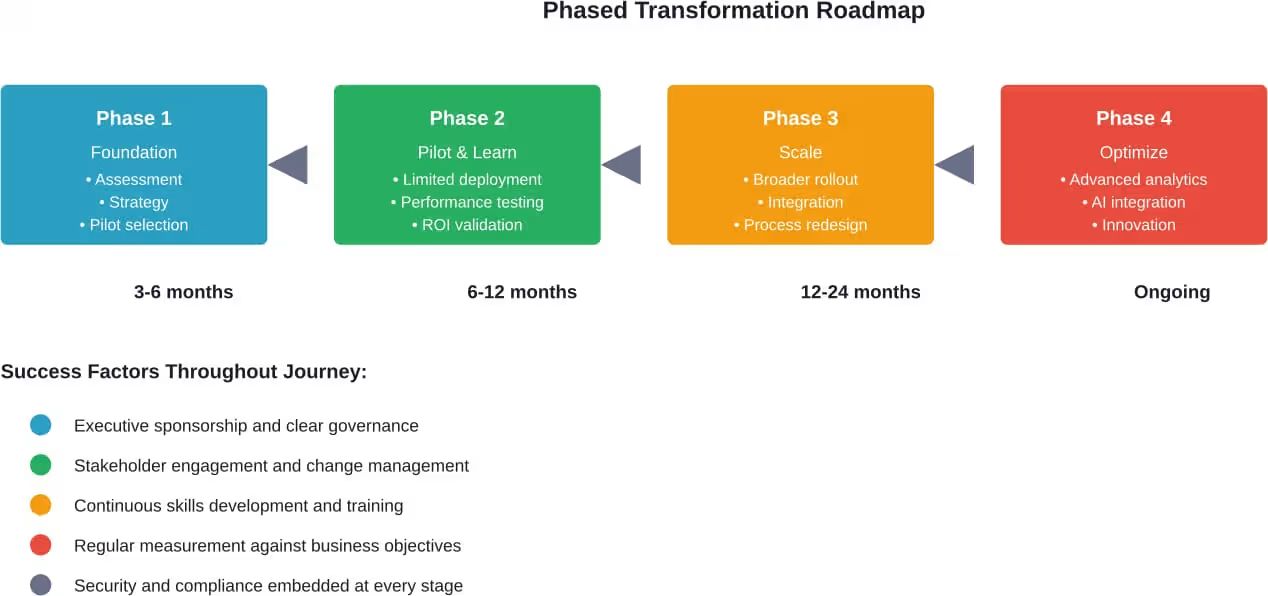
Small-scale deployments test assumptions, reveal integration challenges, and build organizational confidence. Pilots also generate data proving value to stakeholders skeptical of large investments.
A water utility implementing smart meter infrastructure in one district learns operational lessons before system-wide rollout. This approach contains risk while demonstrating benefits.
Build Internal Capabilities
While vendors and consultants provide expertise, utilities must develop internal capacity to operate and optimize digital systems. Perpetual dependency limits agility and increases costs.
Investments in training, hiring digital talent, and partnerships with research institutions build sustainable capabilities. Academic collaborations also access cutting-edge research.
Looking Ahead: Emerging Trends
Digital transformation in utilities continues evolving. Several trends will shape the next phase of modernization.
Distributed energy resources require sophisticated coordination systems. As solar installations, battery storage, and electric vehicles proliferate, utilities need platforms managing bidirectional power flow and dynamic grid conditions.
Digital twins—virtual replicas of physical infrastructure—enable simulation and testing without risking actual equipment. Utilities can model scenarios, test upgrades, and optimize operations in software before implementing changes.
Generative AI applications are emerging for customer service, engineering support, and operational decision-making. These systems augment human expertise rather than replacing it.
Edge computing brings processing power closer to sensors and devices, enabling real-time responses without cloud latency. This architecture supports applications requiring millisecond decision times.
Moving Forward with Digital Transformation
Digital transformation represents both necessity and opportunity for utilities. Aging infrastructure must modernize to meet contemporary demands. Customer expectations continue rising. Climate commitments require renewable integration. Cybersecurity threats grow more sophisticated.
But transformation also unlocks capabilities impossible with analog systems. Real-time visibility enables proactive management. Predictive analytics prevent failures before they occur. Automated systems optimize operations continuously. Customers gain control and insight.
The utilities successfully navigating this transition share common characteristics: clear strategic vision aligned with business outcomes, phased implementation that manages risk while proving value, commitment to standards and interoperability, investment in organizational capabilities alongside technology, and persistent focus on security throughout the journey.
Organizations still planning their digital transformation should start with honest assessment of current capabilities, identification of highest-priority business challenges, and pilot projects that deliver quick wins while building momentum. The $713 billion investment forecast reflects industry-wide recognition that digital transformation isn’t optional.
The grid that powered the 20th century won’t power the 21st. Digital transformation provides the pathway forward.