


Quick Summary: Digital transformation in supply chain integrates technologies like AI, IoT, blockchain, and big data analytics to fundamentally reshape how organizations manage end-to-end operations, from procurement to delivery. Academic research analyzing 124 peer-reviewed articles published between 2018 and 2024 shows this transformation drives resilience, sustainability, and significant performance gains—including up to 50% cost reductions and 20% revenue increases—while enabling real-time visibility and data-driven decision-making across supply networks.
Supply chain operations are undergoing their most dramatic shift in decades. What started as simple inventory tracking has evolved into sophisticated ecosystems where algorithms predict disruptions, autonomous systems manage warehouses, and blockchain networks verify every transaction.
But here’s the thing: digital transformation isn’t just about adopting new tools. It’s a fundamental rethinking of how materials, information, and value flow through business networks.
According to IDG’s Foundry unit survey in 2023, 93% of organizations surveyed had already adopted or planned to adopt digital transformation initiatives. The stakes are clear—adapt or fall behind competitors who are already leveraging these technologies.
What Digital Transformation Actually Means for Supply Chains
Digital transformation represents the integration of digital technologies across all supply chain functions to change how operations deliver value. This goes beyond simply automating existing processes.
Traditional supply chains relied on spreadsheets, paper documentation, legacy software, and phone calls to coordinate activities. Modern digital supply chains operate through cloud-based platforms that connect every stakeholder in real time.
The transformation touches three core dimensions:
- Technological infrastructure – Moving from fragmented legacy systems to integrated cloud platforms
- Operational processes – Shifting from reactive management to predictive, automated workflows
- Organizational culture – Embracing data-driven decision-making at every level
Research from the MIT Center for Transportation & Logistics identifies digital supply chain transformation as “the strategic imperative for competitive advantage in today’s volatile landscape.” Their data shows organizations can achieve up to 50% process cost reductions and up to 20% new revenue gains through strategic digital initiatives.
| Traditional Supply Chains | Digitally Transformed Supply Chains |
|---|---|
| Paper-based documentation | Cloud-based collaboration platforms |
| Manual inventory tracking | Real-time IoT sensor monitoring |
| Reactive problem-solving | AI-powered predictive analytics |
| Siloed departmental data | Integrated end-to-end visibility |
| Phone and email coordination | Automated system-to-system communication |
Strengthen Supply Chain Transformation With LENGREO
Digital transformation in supply chain focuses on visibility and automation. Companies also need effective ways to generate leads and build partnerships.
LENGREO helps businesses build structured marketing strategies that support pipeline growth.
Services include:
- SEO and content marketing
- outreach campaigns
- paid media strategies
- full funnel optimization
If you want to support transformation with predictable growth, get a free consultation with LENGREO.
Core Technologies Driving Supply Chain Transformation
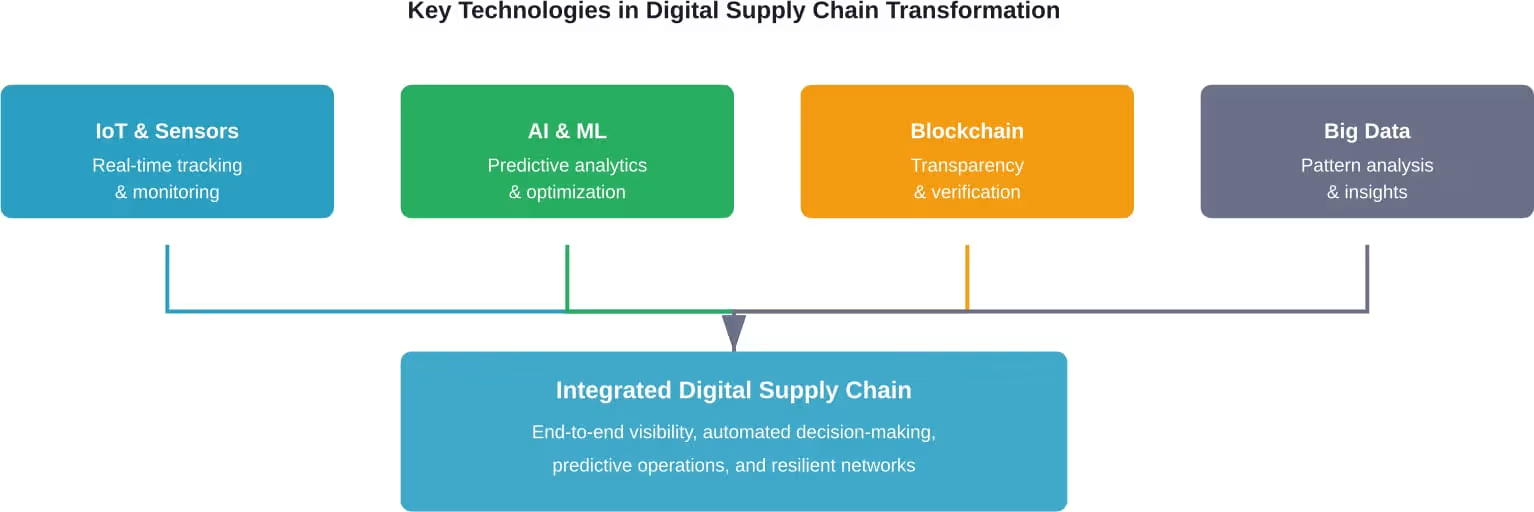
Several emerging technologies are converging to reshape supply chain operations. Each plays a distinct role in building more resilient, efficient networks.
Internet of Things and Sensor Networks
IoT devices embedded throughout supply chains generate continuous streams of operational data. Temperature sensors monitor perishable goods during transport. RFID tags track inventory movement across warehouses. GPS trackers provide real-time shipment visibility.
IEEE research on blockchain and IoT integration highlights how these sensor networks create unprecedented transparency. Every product movement, every environmental condition, every quality checkpoint becomes documented and verifiable.
Artificial Intelligence and Machine Learning
AI algorithms analyze historical patterns and current conditions to forecast demand, optimize routes, and predict disruptions before they occur. Machine learning models improve continuously as they process more supply chain data.
Organizations use AI for demand forecasting, inventory optimization, supplier performance analysis, and autonomous decision-making in routine operational scenarios.
Blockchain for Transparency and Trust
Blockchain technology creates immutable records of transactions and product movements. IEEE technical standards work on blockchain in logistics demonstrates how distributed ledgers solve longstanding challenges in multi-party supply networks.
Smart contracts automate payment releases when shipment conditions are met. Provenance tracking verifies product authenticity and ethical sourcing. The technology is particularly valuable in industries requiring strict compliance documentation.
Big Data Analytics Platforms
The volume of supply chain data has exploded. Big data analytics platforms process information from ERP systems, IoT sensors, market feeds, weather services, and social media to generate actionable insights.
These platforms identify patterns invisible to human analysis—correlations between supplier performance metrics, seasonal demand fluctuations across regions, or early warning signals of potential disruptions.
Business Impact and Performance Outcomes
Academic research analyzing 124 peer-reviewed articles published between 2018 and 2024 reveals consistent positive impacts on both resilience and sustainability outcomes.
The research, which focused on manufacturing contexts including Saudi Arabian industries, found that digital transformation positively influences operational performance through three key mechanisms:
- Enhanced resilience capabilities. Digital technologies enable supply chains to withstand disruptions through better visibility, faster response times, and alternative scenario modeling. When disruptions occur, digitally transformed networks recover faster and maintain service levels.
- Improved sustainability metrics. Real-time monitoring reduces waste, optimizes transportation routes to cut emissions, and provides transparency for ethical sourcing verification. The integration of innovative technologies serves as a critical mediating mechanism that translates digital initiatives into tangible sustainability improvements.
- Cost and revenue optimization. Automation reduces manual processing costs. Predictive analytics minimize inventory carrying costs while preventing stockouts. Better demand forecasting captures revenue opportunities that traditional methods miss.
Research from the Rochester Institute of Technology analyzing digitalization technologies in the service industry found positive correlations between digital technologies and supply chain performance across multiple metrics including order entry efficiency, lead time reduction, total cost optimization, and customer relationship quality.
Strategic Planning for Digital Transformation
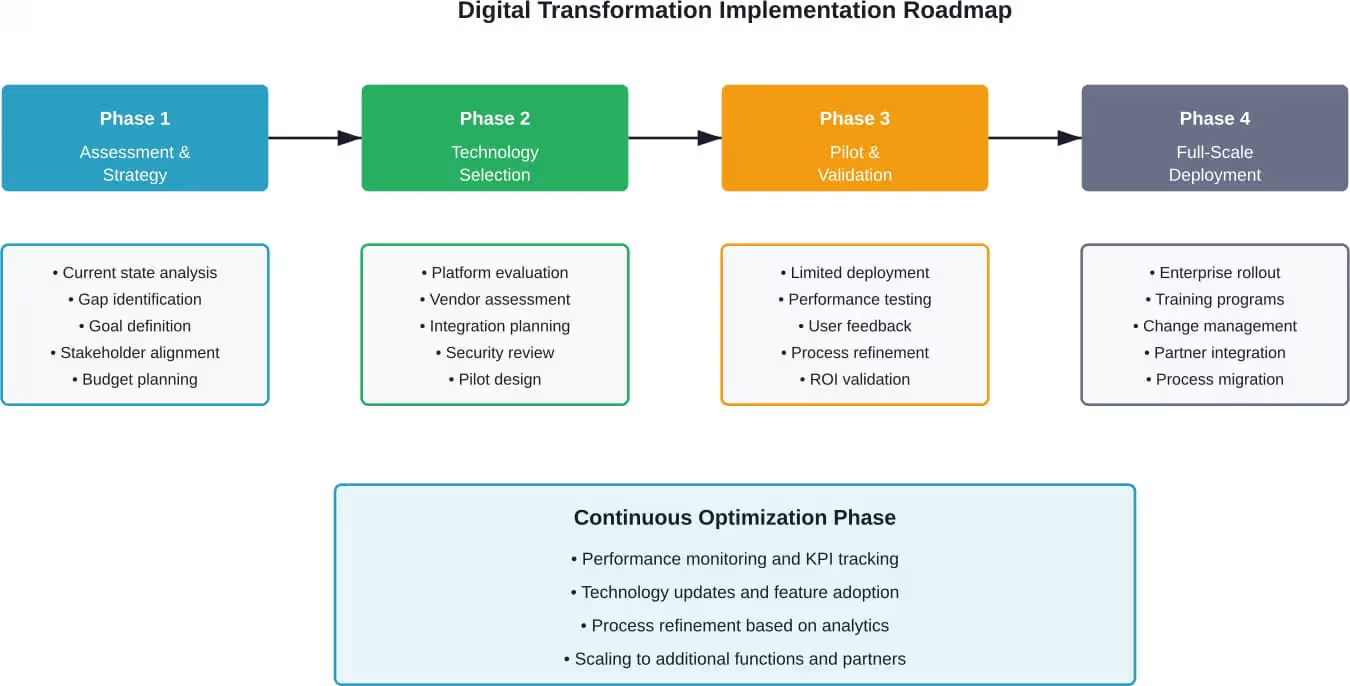
Successful digital transformation requires structured planning, not just technology purchases. Organizations need a clear roadmap that addresses technology, processes, and people simultaneously.
Assessment and Goal Setting
Start by evaluating current capabilities and identifying specific performance gaps. What problems need solving? Where do bottlenecks occur? Which processes consume the most resources with the least value?
Define measurable goals tied to business outcomes—not technology implementation. “Reduce order-to-delivery cycle time by 30%” is more meaningful than “implement IoT sensors.”
Technology Selection and Integration
Choose technologies that address identified gaps and integrate with existing systems. Avoid the temptation to adopt every trending technology without clear use cases.
Cloud-based platforms offer advantages in scalability, integration capability, and reduced infrastructure management burden compared to on-premise solutions. Most modern supply chain management systems are built for cloud deployment.
Change Management and Culture
Digital transformation fails when organizations focus solely on technology while ignoring the human element. Employees need training, clear communication about how changes benefit them, and involvement in the transformation process.
Leaders must champion data-driven decision-making and demonstrate commitment through resource allocation and accountability structures.
Critical Success Factors and Moderating Variables
Research on digital transformation reveals that outcomes are significantly moderated by three key factors that either amplify or diminish the benefits of technology adoption.
- Supply chain dynamism. High supply chain dynamism—characterized by rapid changes in demand patterns, supplier networks, or market conditions—actually amplifies the positive effects of digital technologies on resilience. Dynamic environments benefit more from predictive capabilities and real-time visibility.
- Regulatory uncertainty. Unclear or frequently changing regulations create implementation barriers that can diminish the benefits of digital transformation. Organizations operating in heavily regulated industries or multiple jurisdictions face additional complexity in standardizing digital processes.
- Integration capability. The successful integration of innovative technologies across existing systems and partner networks serves as a critical factor. Technology that remains siloed delivers limited value compared to fully integrated implementations.
Industry-Specific Applications
Different industries face unique supply chain challenges that digital transformation addresses in distinct ways.
Manufacturing operations benefit from digital twins—virtual replicas of physical production lines that enable scenario testing and optimization without disrupting actual operations. IoT sensors monitor equipment health to enable predictive maintenance.
Retail supply chains leverage AI-powered demand forecasting to optimize inventory across distribution networks. Real-time point-of-sale data flows directly into replenishment algorithms.
Healthcare supply chains use blockchain for pharmaceutical provenance tracking and temperature monitoring for biologics. The stakes of supply chain failure in healthcare demand exceptional reliability.
Food and beverage industries implement end-to-end traceability for food safety compliance and recall management. Consumers increasingly demand transparency about product origins and handling.
Security and Risk Management Considerations
The National Institute of Standards and Technology (NIST) has developed frameworks specifically addressing cybersecurity supply chain risk management. As supply chains become more digitally interconnected, they create new attack surfaces for cyber threats.
NIST’s Cybersecurity Framework helps organizations better understand and improve their management of cybersecurity risk across supply chain operations. The framework provides structured approaches to identifying, protecting, detecting, responding to, and recovering from cyber incidents.
Digital transformation increases data sharing across partners, which requires robust data governance and access control policies. Who can access what information? How is sensitive data protected in transit and at rest? What happens when a partner’s systems are compromised?
Organizations need comprehensive risk management strategies that address both cyber and operational risks inherent in digitally transformed supply chains.
Measuring Success and ROI
Effective measurement starts with baseline metrics before transformation begins. Common performance indicators include:
- Order-to-delivery cycle time
- Inventory turnover rates
- Forecast accuracy
- On-time delivery percentage
- Cost per transaction
- Supply chain visibility score
- Supplier performance metrics
- Sustainability indicators (emissions, waste, energy consumption)
Track these metrics continuously post-implementation. Digital transformation benefits often accrue gradually as processes mature and adoption deepens.
Calculate ROI by comparing total investment costs (technology, implementation, training, change management) against quantifiable benefits (cost reductions, revenue increases, risk mitigation value).
| Metric Category | Traditional Performance | Post-Transformation Target |
|---|---|---|
| Forecast Accuracy | 60-70% | 85-95% |
| Order Cycle Time | 5-7 days | 2-3 days |
| Inventory Carrying Cost | 20-25% of value | 12-15% of value |
| On-Time Delivery | 85-90% | 95-98% |
| Manual Processing Time | 100% baseline | 30-50% of baseline |
Common Challenges and How to Overcome Them
Digital transformation efforts frequently encounter predictable obstacles. Awareness helps organizations prepare solutions.
- Legacy system integration. Existing technology infrastructure wasn’t designed for integration. Modern APIs and middleware platforms can bridge legacy systems with new digital tools without requiring complete replacement.
- Data quality issues. Digital systems amplify the impact of poor data quality. Before transformation, invest in data cleansing and establish ongoing data governance practices.
- Resistance to change. Employees comfortable with current processes may resist new workflows. Address concerns transparently, provide adequate training, and demonstrate quick wins that build confidence.
- Partner coordination. Supply chain transformation requires coordination across multiple organizations with different technology maturity levels. Start with willing partners and demonstrate value that encourages broader adoption.
- Budget constraints. Comprehensive transformation requires significant investment. Phased approaches allow organizations to fund initiatives incrementally while demonstrating ROI that justifies continued investment.
Future Trends and Emerging Technologies
The evolution of supply chain digitalization continues accelerating. Several trends are gaining momentum for 2026 and beyond.
Autonomous supply chain orchestration uses AI to manage routine decision-making with minimal human intervention. Systems automatically adjust to demand fluctuations, reroute shipments around disruptions, and optimize inventory allocation.
Advanced 6G networks will enable even denser IoT deployments with ultra-low latency communication between devices. This supports real-time coordination of autonomous vehicles, robots, and smart warehouses.
Collaborative robots (cobots) work alongside humans in warehouses and distribution centers, handling repetitive physical tasks while humans focus on exception management and strategic activities.
Digital twin technology is expanding from individual assets to entire supply chain networks. Organizations can test “what-if” scenarios on digital replicas before implementing changes in physical operations.
Sustainability analytics platforms quantify the environmental impact of supply chain decisions, enabling organizations to balance cost, service, and environmental objectives systematically.
Taking the Next Step
Digital transformation has moved from competitive advantage to competitive necessity. Organizations that delay risk falling permanently behind competitors already leveraging these capabilities.
The path forward starts with honest assessment. Where do current supply chain processes create friction, waste resources, or limit responsiveness? What specific business outcomes would move the needle most—cost reduction, revenue growth, customer satisfaction, sustainability?
Technology alone won’t deliver transformation. Success requires aligned strategy, committed leadership, engaged employees, and patient execution. But the potential rewards—dramatic cost savings, revenue growth, enhanced resilience, and sustainability progress—make the journey worthwhile.
Start small if needed. Pilot projects in limited areas can demonstrate value and build organizational capability before scaling enterprise-wide. Learn from each phase and adjust the approach based on real-world results.
The digital supply chain future is already here. The question isn’t whether to transform, but how quickly and effectively organizations can navigate the transition.