


Quick Summary: Digital transformation in retail involves integrating advanced technologies like AI, cloud computing, and data analytics to revolutionize operations, customer experiences, and business models. According to the National Retail Federation, 40% of enterprise applications will include AI agents by the end of 2026, while U.S. Census Bureau data shows e-commerce grew 5.3% in Q4 2025. Successful transformation requires strategic technology adoption, robust data infrastructure, and a customer-centric approach.
The retail industry just crossed a watershed moment. For the first time in 2024, online transactions during the holiday season exceeded in-store purchases. Yet physical retail still accounts for over 80% of all transactions.
Sound contradictory? It’s not. This paradox perfectly captures the complexity facing retailers today.
Digital transformation isn’t about choosing between online and offline anymore. It’s about creating seamless, connected experiences across every touchpoint. The retailers winning in 2026 are those embracing technology not as a replacement for traditional retail, but as the foundation for something entirely new.
What Is Retail Digital Transformation?
Retail digital transformation is the process of integrating digital technologies, strategies, and practices into every aspect of retail operations. It fundamentally changes how retailers operate, deliver value to customers, and compete in the marketplace.
But here’s the thing—it’s not just about implementing new technology. Real transformation involves rethinking business models, reengineering processes, and reshaping organizational culture around digital-first principles.
The global market for retail digital transformation reached $305 billion in recent estimates, and that number continues climbing. Retailers are investing heavily because the stakes have never been higher.
According to the National Retail Federation’s Center for Digital Risk & Innovation, strong data governance practices around collection, cleaning, labeling, and storage have become baseline requirements. Investment in data infrastructure and security measures is now table stakes for entering the digital retail space and maintaining customer trust.
Why Digital Transformation Matters in 2026
The retail sector is operating at the frontier of technological innovation. More than just enhancing operations, retailers are using advanced technologies to fundamentally transform them.
Here’s what the data shows: U.S. Census Bureau figures indicate that total retail sales for Q4 2025 reached $1,900.5 billion, up 0.4% from Q3. Meanwhile, e-commerce sales jumped 5.3% year-over-year in the same quarter, outpacing total retail sales growth of 2.7%.
The gap between digital and traditional growth rates tells the story. Customers increasingly expect digital experiences that were unimaginable a decade ago.
The Kaleidoscope Effect
The National Retail Federation describes the current retail environment like a kaleidoscope—constantly shifting patterns, some more appealing than others. Consumer behavior, technology innovation, supply chain dynamics, workforce trends, and policy changes all interact in complex ways.
Retailers must understand their customers and their priorities to create journeys that resonate. Generic approaches won’t cut it anymore.
Accelerate Retail Transformation With LENGREO
Digital transformation in retail involves improving customer experience, optimizing online channels, and adapting to changing buyer behavior. Sustainable growth requires a clear acquisition strategy.
LENGREO helps retail businesses build data driven marketing systems that attract customers and improve conversions.
Core services:
- SEO and content strategy
- performance marketing campaigns
- customer acquisition and funnel optimization
- demand generation planning
If you want to turn retail transformation into measurable growth, contact LENGREO to get started.
Key Technologies Driving Retail Transformation
Several core technologies are reshaping the retail landscape. Understanding these isn’t optional—it’s essential for survival.
Artificial Intelligence and Machine Learning
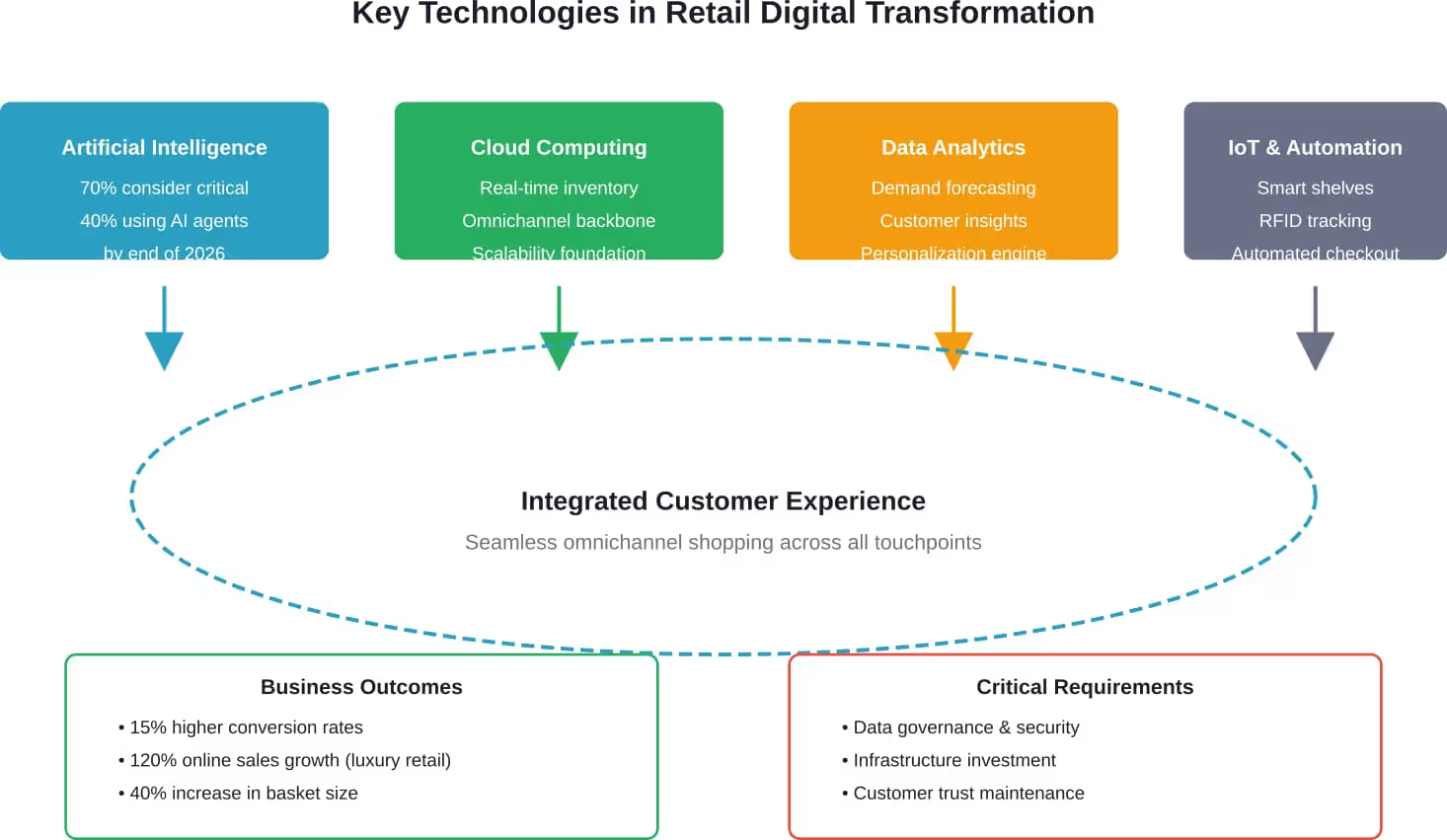
AI is transforming how retailers connect with customers, powering recommendation engines, chatbots, and demand forecasting systems. The numbers are striking: 70% of retail organizations consider AI critical to their operations, with 65% viewing generative AI as essential for e-commerce success.
The National Retail Federation projects that by the end of 2026, 40% of enterprise applications will include task-specific AI agents. In a best-case scenario, agentic AI could generate nearly 30% of enterprise application software revenue by 2035.
Real-world impact? Personalized promotions and dynamic pricing lifted Black Friday conversion rates by 15% in 2024. One luxury retailer increased online sales by 120% through conversational AI-powered shopping experiences.
Cloud Computing and Data Infrastructure
Cloud technology provides the backbone for modern retail operations. It enables real-time inventory management, seamless omnichannel experiences, and the scalability needed to handle traffic spikes during peak shopping periods.
Strong data infrastructure isn’t glamorous, but it’s fundamental. Retailers need robust systems for collecting, storing, and analyzing customer data while maintaining security and privacy standards.
Demand Forecasting and Inventory Optimization
Advanced analytics help retailers predict customer demand with unprecedented accuracy. This reduces waste, minimizes stockouts, and ensures the right products are in the right places at the right times.
Demand forecasting systems analyze historical sales data, market trends, weather patterns, and countless other variables to optimize inventory levels across physical and digital channels.
Benefits of Retail Digital Transformation
The advantages of digital transformation extend across every aspect of retail operations. But the benefits aren’t automatic—they require thoughtful implementation and continuous optimization.
Enhanced Customer Experience
Personalized shopping experiences can increase basket size by up to 40%. That’s not just a nice-to-have—it’s a competitive imperative.
Digital transformation enables retailers to understand individual customer preferences, predict needs, and deliver relevant recommendations at exactly the right moment. This shift from transactional to relationship-based business models directly impacts financial performance.
Operational Efficiency
One specialty retailer improved agent productivity by 20% by shifting from phone calls to digital channels. Automation reduces manual tasks, minimizes errors, and frees employees to focus on higher-value activities.
Real-time inventory visibility across channels prevents stockouts and overstock situations. Automated replenishment systems ensure popular items stay available without tying up excessive capital in slow-moving inventory.
Competitive Advantage
Retailers quick to embrace innovation and digital-first approaches gain significant advantages over slower-moving competitors. In an increasingly competitive marketplace, the ability to adapt quickly separates winners from those struggling to survive.
Digital transformation enables retailers to test new concepts rapidly, measure results precisely, and scale what works while abandoning what doesn’t.
Challenges in Retail Digital Transformation
Digital transformation isn’t easy. Retailers face significant obstacles on the journey from traditional operations to digital-first organizations.
Legacy Systems and Technical Debt
Many retailers operate on decades-old technology infrastructure. These legacy systems weren’t designed for modern digital experiences, creating integration challenges and limiting agility.
Replacing or modernizing these systems requires substantial investment and carries significant risk. Yet continuing to operate on outdated technology becomes increasingly untenable as customer expectations evolve.
Data Quality and Governance
According to the National Retail Federation, strong data governance practices have never been more important. Poor data quality undermines AI systems, analytics initiatives, and personalization efforts.
Retailers need comprehensive frameworks for data collection, cleaning, labeling, storage, and security. This requires both technology investments and organizational discipline.
Change Management and Culture
Technology is often the easy part. The harder challenge is getting people to change how they work.
Successful digital transformation requires cultural shifts throughout the organization. Employees need training, support, and clear communication about why changes are necessary and how they benefit everyone involved.
| Challenge | Impact | Solution Approach |
|---|---|---|
| Legacy Systems | Integration difficulties, limited agility | Phased modernization, API-first architecture |
| Data Governance | Poor AI performance, compliance risks | Comprehensive data frameworks, quality controls |
| Change Management | Employee resistance, low adoption | Training programs, clear communication, leadership support |
| Budget Constraints | Delayed initiatives, partial implementations | Prioritize high-impact projects, measure ROI rigorously |
| Security Concerns | Customer trust erosion, regulatory penalties | Investment in cybersecurity, regular audits, transparent practices |
Real-World Examples of Retail Transformation
Looking at how leading retailers have approached digital transformation provides valuable lessons.
Home Depot: Website Reimagination
Home Depot reimagined its website to improve usability and enhance customer experience. The focus wasn’t just on aesthetics—it was about making it easier for customers to find products, access information, and complete purchases.
This transformation integrated online and offline experiences, allowing customers to check in-store inventory, schedule services, and access DIY content seamlessly.
Target: Data Science and Seamless Shopping
Target leveraged a dedicated data science and engineering team to create more seamless online and in-person shopping experiences. The retailer focused on understanding customer behavior across channels and optimizing every touchpoint.
The result? Customers can order online and pick up in-store, use the mobile app while shopping in physical locations, and receive personalized recommendations based on their complete shopping history.
Magazine Luiza: Brazilian Digital Pioneer
Brazilian retailer Magazine Luiza’s CEO became convinced that the company could significantly grow sales through digital transformation. The retailer focused on mobile commerce and social selling, recognizing that Brazilian consumers increasingly shop via smartphones and social media platforms.
This approach required rethinking traditional retail models and embracing channels that didn’t even exist when the company was founded.
Key Success Factors for Digital Transformation
What separates successful retail transformations from expensive failures? Several critical factors emerge from case studies and research.
Customer-Centric Strategy
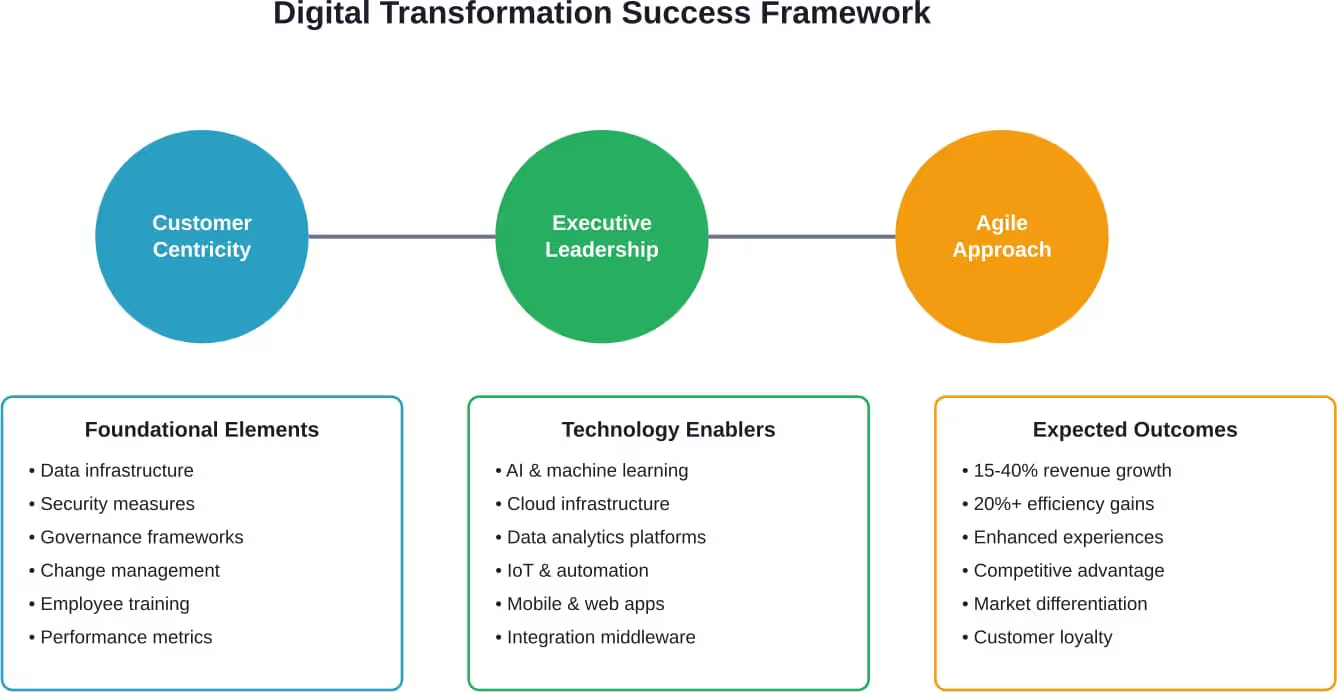
Transformation initiatives must start with customer needs, not technology capabilities. Understanding what customers want and how they prefer to interact with retailers should drive every decision.
Investment in AI tools for hyper-personalization pays dividends when it’s focused on predicting customer needs and personalizing interactions in meaningful ways.
Executive Leadership and Vision
Digital transformation requires sustained commitment from top leadership. When executives treat digital initiatives as optional side projects rather than core business imperatives, transformation efforts stall.
Leaders must communicate clear vision, allocate necessary resources, and hold organizations accountable for progress.
Agile Implementation Approach
Rather than massive multi-year transformation programs, successful retailers take iterative approaches. They launch pilots, measure results, learn quickly, and scale what works.
This agility allows course corrections before substantial resources are committed to approaches that won’t deliver expected returns.
Where to Start With Retail Digital Transformation
Starting a transformation journey can feel overwhelming. Where should retailers focus first?
Assess Current State
Begin with an honest assessment of existing capabilities, technology infrastructure, and organizational readiness. Understand gaps between current state and where the business needs to be.
This assessment should cover technology systems, data quality, employee skills, and customer experience across all channels.
Define Clear Objectives
What specific business outcomes does transformation need to achieve? Vague goals like “become more digital” won’t drive meaningful change.
Instead, set measurable targets: increase online conversion rates by X%, reduce inventory carrying costs by Y%, or improve customer satisfaction scores by Z points.
Start Small, Scale Fast
Rather than attempting to transform everything at once, identify high-impact pilot projects that can deliver quick wins. Success with initial projects builds momentum and proves the value of continued investment.
Measure results rigorously, learn from both successes and failures, and scale approaches that demonstrate clear ROI.
Invest in Foundations
Don’t skip the unglamorous work of building solid foundations. Data infrastructure, security measures, and governance frameworks aren’t exciting, but they’re essential for everything else to work.
According to the National Retail Federation, these investments are baseline requirements for maintaining customer trust and enabling advanced capabilities like AI.
The Role of Partners and Expertise
Few retailers have all the necessary expertise in-house. Successful transformation often involves partnerships with technology providers, consultants, and specialists.
Look for partners with proven retail experience who understand industry-specific challenges. Generic technology solutions rarely translate effectively to retail contexts without significant customization.
The National Retail Federation’s Center for Digital Risk & Innovation engages with retailers, industry partners, and stakeholders to develop guidelines and best practices on technology issues. These resources help retailers navigate complex decisions and avoid common pitfalls.
Looking Ahead: Retail in 2026 and Beyond
As we move through 2026, several trends are reshaping retail’s future.
The National Retail Federation forecasts that by year-end, 40% of enterprise applications will include AI agents—autonomous systems that can complete tasks without human intervention. In a best-case scenario, agentic AI could generate nearly 30% of enterprise application software revenue by 2035.
But understanding just how much retailers will invest in AI and how they’ll allocate capital remains uncertain. What’s clear is that AI adoption is accelerating, not slowing down.
E-commerce continues growing faster than traditional retail. U.S. Census Bureau data shows e-commerce sales increasing 5.3% year-over-year in Q4 2025, nearly double the 2.7% growth rate for total retail sales.
Yet physical retail remains dominant, accounting for over 80% of transactions. The future isn’t purely digital—it’s intelligently integrated across channels.
Conclusion
Digital transformation in retail isn’t a destination—it’s an ongoing journey of adaptation and innovation. The retailers thriving in 2026 aren’t those with the most advanced technology. They’re the ones who’ve successfully integrated digital capabilities into their operations while keeping customer needs at the center of every decision.
The data is clear: e-commerce is growing faster than traditional retail, AI adoption is accelerating across the industry, and customer expectations continue rising. Yet physical retail remains vital, accounting for the vast majority of transactions.
Success requires balancing digital innovation with the enduring strengths of physical retail. It demands investment in unglamorous foundations like data infrastructure and security alongside exciting customer-facing technologies. And it needs sustained executive commitment, organizational agility, and a willingness to learn from both successes and failures.
The $305 billion global market for retail digital transformation represents enormous opportunity. But that opportunity belongs to retailers who approach transformation strategically, execute thoughtfully, and remain relentlessly focused on delivering value to customers.
The kaleidoscope keeps turning. Patterns keep shifting. The retailers who’ll thrive are those equipped to adapt to whatever comes next.