


Quick Summary: Digital transformation in oil and gas combines AI, automation, big data, and cloud technologies to enhance operational efficiency, reduce downtime, and navigate market volatility. This transformation amplifies human expertise rather than replacing it, enabling companies to cut costs, optimize production, and remain competitive in an evolving energy landscape.
Oil and gas professionals face a complex reality. Price volatility, regulatory shifts, and the push toward lower carbon emissions create constant pressure. But here’s the thing—digital transformation isn’t just another buzzword thrown around in boardrooms. It’s becoming the difference between companies that thrive and those that struggle to keep pace.
The petroleum industry stood on traditional approaches for decades. Those methods worked. But the chance to reimagine operations through digital technologies represents something operators can’t afford to dismiss lightly.
According to industry sources, digital transformation presents a crucial opportunity to cut costs across business domains. The automation market in this sector was valued at $17 billion in 2020 and is projected to reach $24.9 billion by 2026. Companies that delay adoption risk losing competitive ground.
What Digital Transformation Actually Means for Oil and Gas
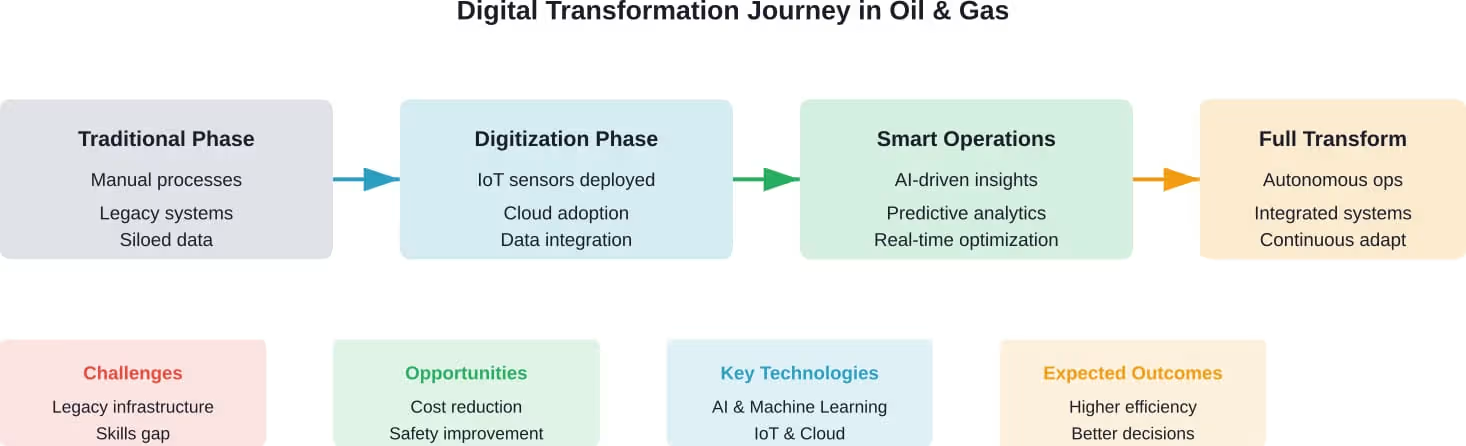
Digital transformation in the petroleum sector goes beyond installing new software. It’s a fundamental shift in how companies collect data, make decisions, and optimize operations from upstream exploration to downstream distribution.
At its core, this transformation integrates advanced technologies—artificial intelligence, machine learning, Internet of Things (IIoT) sensors, cloud computing, and automation—into daily operations. The goal? Enhanced efficiency, reduced downtime, better safety outcomes, and improved decision-making speed.
Real talk: this isn’t about replacing human expertise. As the Journal of Petroleum Technology noted in March 2025, the path forward is about augmentation. AI amplifies human capabilities rather than eliminating the need for skilled professionals. Those who master this balance will define the industry’s future.
The Shift From Evolution to Shockwave
For years, digitalization in oil and gas evolved gradually. Companies tested technologies cautiously, implemented pilot programs, and moved at a measured pace. That’s changed.
Market pressures accelerated adoption timelines. Operators demanding control of their future position in global energy production are forging ahead into new territory. They’ve recognized that while traditional approaches served well for many decades, the opportunity to reimagine operations deserves serious attention.
Scale Oil and Gas Transformation With LENGREO
Digital transformation in oil and gas focuses on efficiency, automation, and data driven decision making. Growth also depends on generating a steady flow of opportunities.
LENGREO helps oil and gas companies build integrated marketing systems that support long term business development.
Capabilities include:
- B2B SEO and content marketing
- targeted outreach and appointment setting
- performance marketing campaigns
- demand generation strategies
If you want to support transformation with reliable lead generation, contact LENGREO to learn more.
Core Technologies Driving the Transformation
Several key technologies form the foundation of digital transformation efforts across the oil and gas sector. Understanding these components helps companies prioritize investments and build realistic implementation roadmaps.
Artificial Intelligence and Machine Learning
AI applications in petroleum operations range from predictive maintenance to reservoir optimization. Machine learning algorithms analyze vast datasets from sensors, historical records, and real-time operations to identify patterns humans might miss.
Upstream companies using advanced analytics see measurable benefits. McKinsey research shows that these technologies improve productivity and operational efficiency while reducing unplanned downtime.
But AI doesn’t work in isolation. It requires quality data, proper integration, and personnel who understand both the technology and the operational context. The oil and gas industry’s shift to smart fields—driven by automation, AI, and real-time data—requires petroleum engineers to master digital technologies alongside traditional skills.
Internet of Things and Smart Sensors
IoT devices placed throughout operations collect continuous streams of data. Temperature readings, pressure measurements, flow rates, equipment vibrations—all monitored in real-time.
This constant monitoring enables proactive maintenance. Instead of waiting for equipment failure, operators receive alerts about developing issues before they cause shutdowns. Before digital transformation, operators at one manufacturing facility walked an average of 62 miles annually to locate supervisors, costing 370 hours of productivity annually.
Cloud Computing and Data Analytics
Cloud platforms provide the infrastructure needed to store and process enormous volumes of operational data. They enable collaboration across geographic locations and provide scalable computing power for complex simulations and analyses.
Big data analytics transforms raw information into actionable insights. Drilling decisions increasingly rely on artificial intelligence recommendations. Algorithms adjust pipeline flow in real-time. Machines learn to detect equipment faults before they happen.
Automation and Robotics
Automation handles repetitive tasks, improves consistency, and removes personnel from hazardous environments. Robotic systems inspect pipelines, drones survey facilities, and automated systems control routine operations.
The technology market reflects this shift. The automation sector was valued at $17 billion in 2020 with projections reaching $24.9 billion by 2026. These aren’t theoretical investments—they’re becoming essential to maintaining performance and controlling costs.
Operational Benefits and Business Impact
Digital transformation delivers tangible results when implemented properly. Companies report specific improvements across multiple operational dimensions.
| Benefit Area | Impact Type | Key Metrics |
|---|---|---|
| Operational Efficiency | Processing speed, resource utilization | 145% improvement in processing speeds reported in key projects |
| Cost Reduction | Maintenance, downtime, labor optimization | Significant cuts across business domains through automation |
| Safety Enhancement | Risk reduction, incident prevention | Remote monitoring reduces personnel exposure |
| Decision Speed | Real-time analytics, predictive insights | Faster response to operational changes |
| Asset Performance | Equipment lifespan, uptime | Predictive maintenance reduces unplanned shutdowns |
Cost Management in Volatile Markets
Market volatility remains a constant challenge. Digital technologies help companies navigate price swings by optimizing operations and identifying cost-saving opportunities quickly.
Prosci research demonstrates that companies emphasizing technology adoption alongside change management see measurable operational benefits. One organization achieved a 145% improvement in processing speeds on key projects, proving that transformation delivers concrete results.
Safety and Risk Mitigation
Remote monitoring and automated systems keep personnel away from dangerous situations. Predictive analytics identify potential safety issues before incidents occur. Digital twins—virtual replicas of physical assets—allow testing scenarios without real-world risk.
These capabilities matter in an industry where safety isn’t negotiable.
Overcoming Implementation Challenges
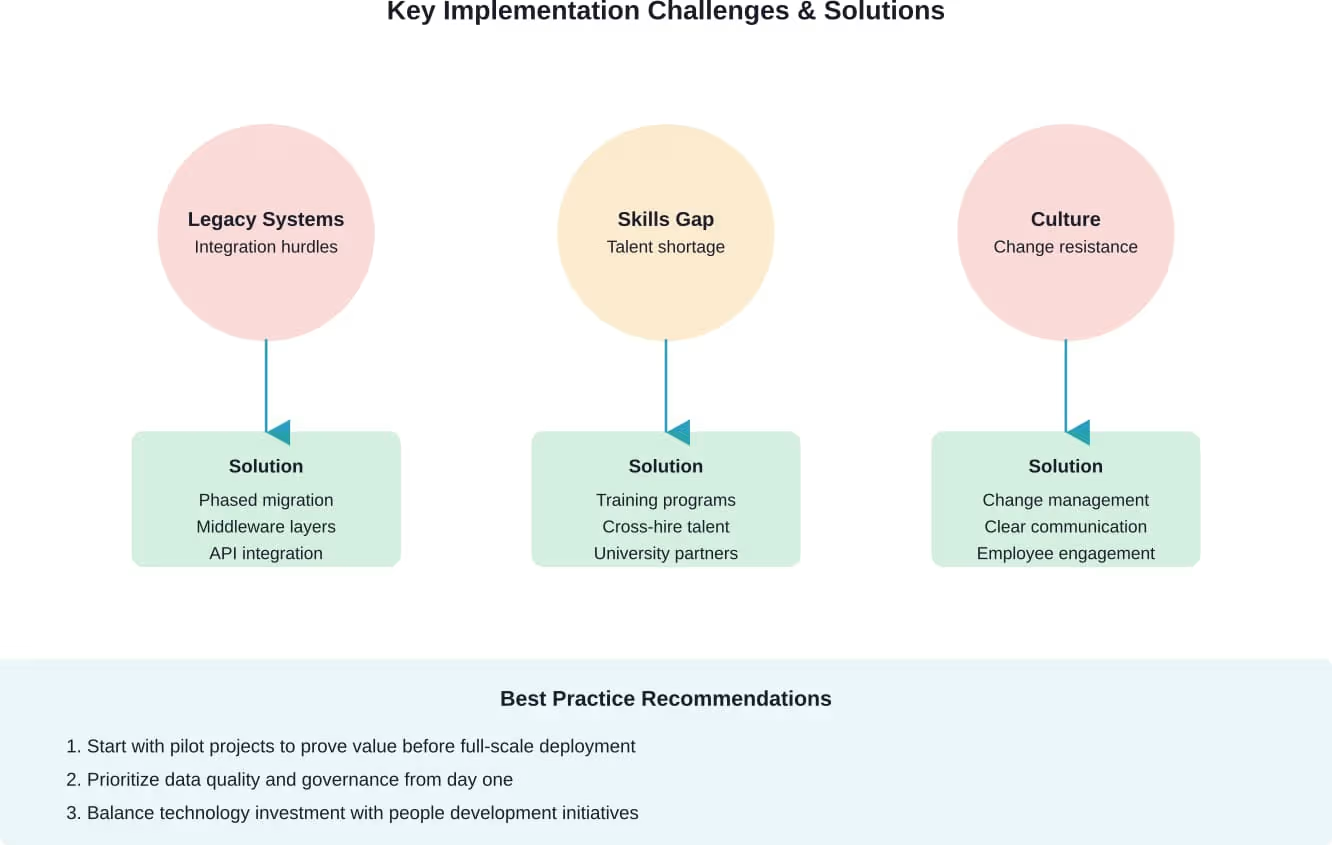
Digital transformation sounds promising on paper. Implementation reality proves more complex. Companies face several obstacles that require strategic approaches to overcome.
Legacy Infrastructure Integration
Many oil and gas operations run on infrastructure installed decades ago. Integrating modern digital systems with legacy equipment presents technical challenges and requires careful planning.
The solution isn’t always replacing everything at once. Successful operators often adopt phased approaches, connecting legacy systems through middleware solutions while gradually upgrading critical components.
Skills Gap and Workforce Development
According to the Journal of Petroleum Technology, building future-proof skills represents a critical challenge. The shift to smart fields requires petroleum engineers to master digital technologies alongside traditional expertise.
Companies addressing this challenge invest in training programs, hire talent with cross-functional skills, and create partnerships with educational institutions. The goal? Workforces capable of operating in digitally transformed environments.
Cultural Resistance to Change
Technology alone doesn’t guarantee transformation success. Cultural shifts toward agility and digital adoption prove equally important.
Change management practices help organizations navigate this human dimension. Employee engagement, clear communication about transformation benefits, and addressing concerns directly make the difference between projects that succeed and those that stall.
Data Quality and Governance
Digital systems rely on quality data. Garbage in, garbage out applies especially in complex operational environments.
Establishing data governance frameworks, implementing validation processes, and maintaining consistent data standards require upfront investment. But these foundations determine whether advanced analytics deliver meaningful insights or misleading noise.
Best Practices for Successful Digital Transformation
Companies achieving transformation success share common approaches. These practices increase the likelihood of positive outcomes while minimizing wasted resources.
Start With Clear Business Objectives
Technology for technology’s sake rarely delivers value. Successful transformations begin with specific business goals: reduce unplanned downtime by X%, improve production efficiency by Y%, cut operational costs by Z%.
Clear objectives guide technology selection, prioritize investments, and provide measurable success criteria. They also help maintain focus when shiny new technologies create distractions.
Adopt a Phased Approach
Attempting to transform everything simultaneously overwhelms resources and increases failure risk. Phased implementations allow learning from early projects before expanding scope.
Pilot programs test technologies in controlled environments. Successful pilots scale gradually. Lessons learned inform subsequent phases. This iterative approach reduces risk while building organizational confidence.
Prioritize Integration and Interoperability
Digital transformation creates value through connected systems that share data seamlessly. Siloed technologies limit potential benefits.
Planning for integration from the start—selecting platforms with open APIs, adopting industry standards, building interoperability requirements into vendor contracts—prevents painful integration challenges later.
Invest in Change Management
Technical implementation represents only part of transformation success. Change management practices address the human dimensions that determine whether new technologies get adopted or ignored.
Focus on employee engagement and communication helps personnel understand transformation benefits and their roles in the new environment. Addressing operational changes proactively reduces friction during transitions.
| Best Practice | Key Actions | Expected Outcome |
|---|---|---|
| Clear Objectives | Define measurable goals, align stakeholders | Focused investments with trackable ROI |
| Phased Rollout | Pilot projects, iterative expansion | Risk reduction, organizational learning |
| Data Governance | Quality standards, validation processes | Reliable analytics and insights |
| Skills Development | Training programs, talent acquisition | Capable workforce for digital operations |
| Change Management | Communication, engagement, support | Smooth adoption, reduced resistance |
Looking Ahead: The Future of Digital Oil and Gas
Digital transformation continues evolving. Technologies mature, new capabilities emerge, and industry applications expand.
Autonomous Operations
The trajectory points toward increasingly autonomous systems. Drilling operations with minimal human intervention. Refineries that optimize themselves continuously. Transportation networks that route products dynamically based on real-time demand.
Full autonomy remains years away. But progress accelerates as AI capabilities improve and companies gain confidence in automated decision-making.
Digital Twins and Simulation
Digital twins—virtual replicas of physical assets—enable sophisticated testing without operational risk. Companies simulate equipment modifications, test operational scenarios, and optimize parameters in virtual environments before implementing changes.
As modeling accuracy improves and computing power increases, digital twins become more valuable for planning, optimization, and training.
Sustainability and Emissions Reduction
Digital technologies support sustainability goals. Real-time monitoring detects methane leaks faster. Optimization algorithms reduce energy consumption. Analytics identify opportunities to minimize environmental impact.
The push toward lower carbon operations aligns with digital transformation capabilities. Companies addressing both priorities simultaneously gain competitive advantages in an evolving energy landscape.
Edge Computing for Remote Operations
Many oil and gas operations occur in remote locations with limited connectivity. Edge computing processes data locally, enabling real-time responses without constant cloud communication.
This architecture supports intelligent operations in challenging environments while reducing bandwidth requirements and latency issues.
Measuring Digital Transformation Success
Quantifying transformation impact helps justify investments and guide future priorities. Several metrics provide meaningful insights into progress and outcomes.
Operational Efficiency Metrics
Production uptime, processing speeds, resource utilization rates, and downtime frequency all measure operational improvements. Comparing these metrics before and after digital implementations reveals concrete impact.
Financial Performance Indicators
Cost per barrel, maintenance expenses, operational costs, and profitability metrics demonstrate financial benefits. These numbers matter to executives and investors evaluating transformation ROI.
Safety and Environmental Measures
Incident rates, near-miss frequencies, environmental compliance, and emissions levels reflect safety and sustainability impacts. Improvements in these areas create value beyond direct financial returns.
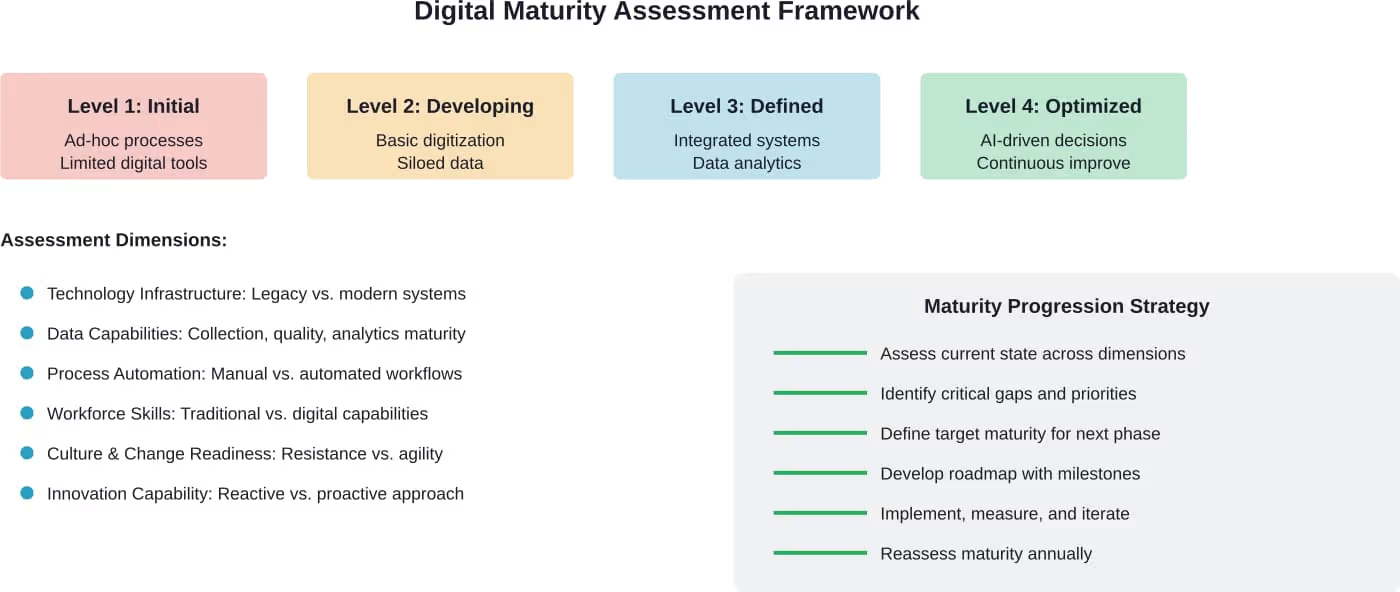
Digital Maturity Assessment
Assessing where organizations stand on digital maturity scales helps identify gaps and prioritize improvement areas. Various frameworks exist for evaluating maturity across dimensions like technology adoption, data capabilities, workforce skills, and cultural readiness.
Regular maturity assessments track progress over time and highlight areas needing attention.
Conclusion
Digital transformation in oil and gas represents more than technological upgrades. It’s a fundamental reimagining of how the industry operates, makes decisions, and creates value.
The path forward balances automation with augmentation. Technology amplifies human expertise rather than replacing it. Companies mastering this balance position themselves for success in a rapidly evolving energy landscape.
Success requires clear objectives, phased implementations, proper change management, and realistic expectations. Technology investments must align with business goals and be supported by workforce development.
The industry’s trajectory points toward smarter fields, autonomous operations, and data-driven decision-making. Those who embrace transformation now—while conditions still feel relatively comfortable—will control their position in future energy markets.
But waiting carries risk. As Deputy Secretary Brouillette noted at a 2018 conference on digitalization and automation, the challenges and opportunities demand attention. The $17 billion automation market growing to $24.9 billion by 2026 shows momentum building rapidly.
The question isn’t whether digital transformation will reshape oil and gas. It’s whether individual companies will lead the change or struggle to catch up.