

Quick Summary: Digital transformation in manufacturing integrates advanced technologies like IoT, AI, automation, and digital twins into production processes to boost efficiency, reduce costs, and enhance quality. According to NIST, digital twins enable manufacturers to represent, diagnose, predict, and optimize their operations and serve as a foundation for digital transformation. Manufacturers adopting these technologies report up to 50% reduction in machine downtime and 30% improvement in labor productivity.
The manufacturing sector stands at a crossroads. Traditional production methods can’t keep pace with market demands anymore. Competition intensifies daily while customer expectations soar.
Digital transformation offers a way forward. But what does that actually mean for manufacturers?
Here’s the thing: this isn’t just about installing new software or buying robots. Digital transformation fundamentally reshapes how manufacturing operations work, from the shop floor to the supply chain.
This guide breaks down what manufacturers need to know. The technologies driving change. Real benefits backed by data. And practical steps to get started.
What Is Digital Transformation in Manufacturing?
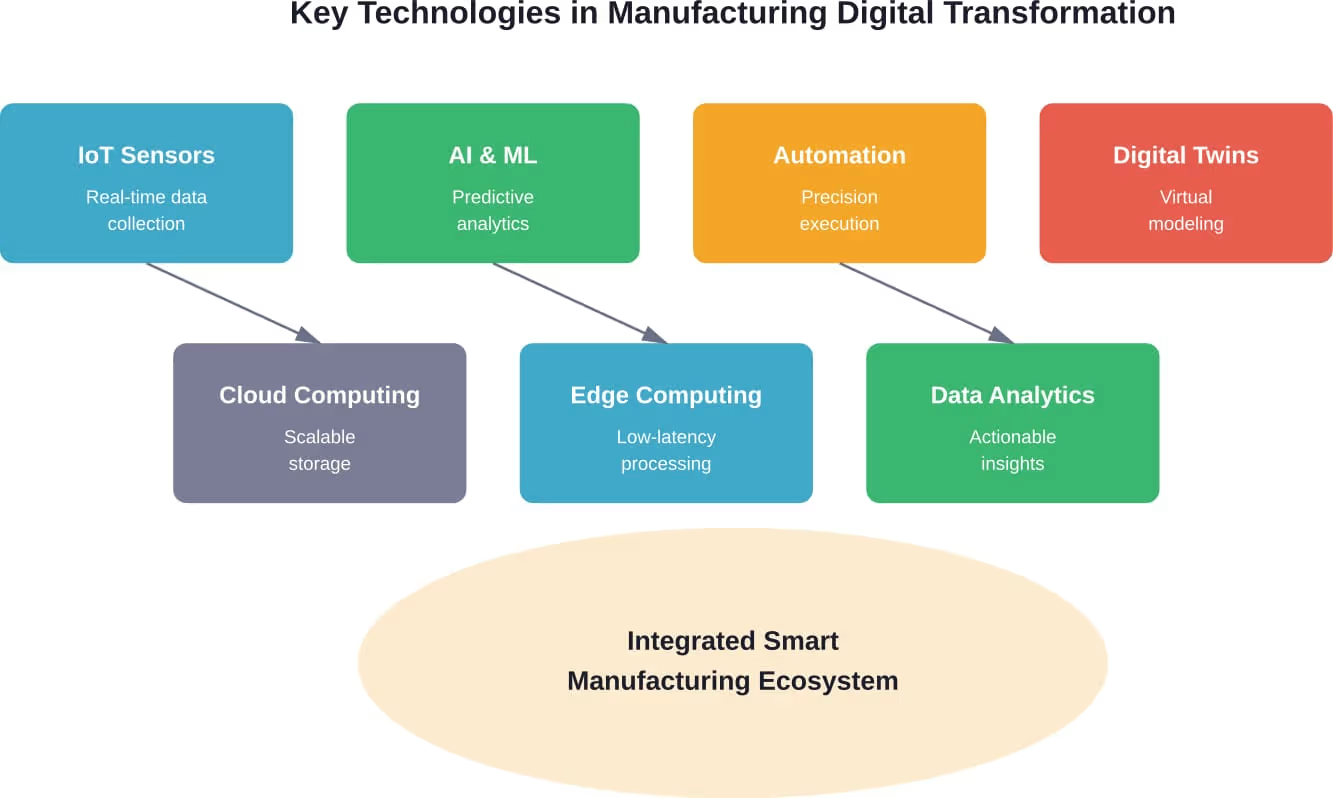
Digital transformation in manufacturing means integrating digital technologies throughout the entire production ecosystem. It connects machines, processes, and people through data-driven systems.
The goal? Create smarter, more responsive manufacturing operations.
According to NIST, digital twins enable manufacturers to represent, diagnose, predict, and optimize their operations and serve as a foundation for digital transformation. These virtual replicas of physical systems enable manufacturers to monitor, analyze, and optimize operations in real time.
But digital transformation extends beyond any single technology. It encompasses automation systems, data analytics, cloud computing, and intelligent software working together. The result changes how manufacturers design products, manage operations, and serve customers.
The Shift From Traditional to Smart Manufacturing
Traditional manufacturing relied on isolated systems. Production lines operated independently. Quality checks happened after the fact. Maintenance occurred on fixed schedules, regardless of actual equipment condition.
Smart manufacturing flips this model. Sensors collect data continuously. Systems communicate across the factory floor. Analytics predict problems before they occur.
NIST’s Infrastructure for Agile Manufacturing Data Standards program develops measurement science, methods, and tools to enable faster integration of manufacturing services and improve manufacturing systems agility. This agility becomes essential as production requirements shift faster than ever.
Core Technologies Powering Manufacturing’s Digital Shift
Several technologies drive digital transformation in manufacturing. Understanding each one matters for planning implementation strategies.
Internet of Things (IoT) and Industrial IoT
IoT connects machines, sensors, and devices across the factory floor. These connected systems generate streams of operational data.
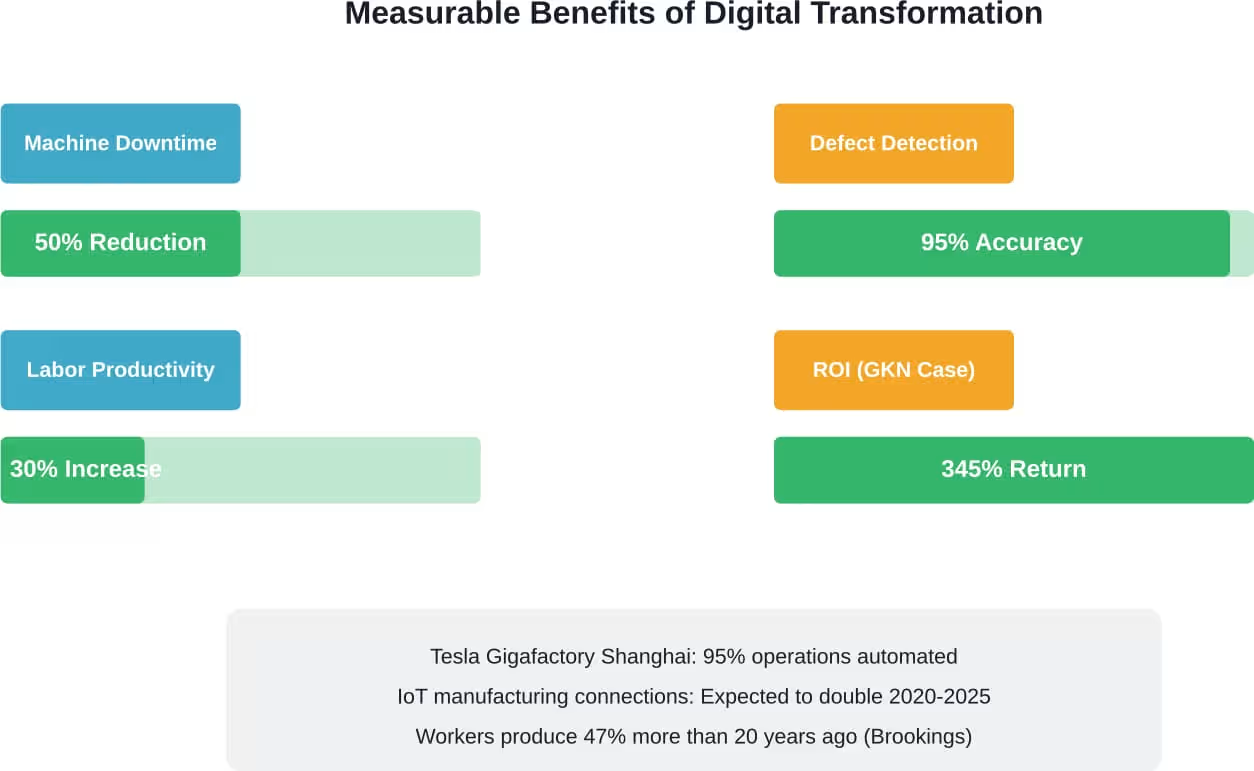
According to ManufacturingUSA, the number of manufacturing IoT connections is expected to more than double from 2020 to 2025. This expansion enables unprecedented visibility into production processes.
Sensors track equipment performance, environmental conditions, product quality, and workflow efficiency. This data feeds into analytics platforms that identify optimization opportunities.
Artificial Intelligence and Machine Learning
AI and machine learning analyze manufacturing data to identify patterns humans might miss. These technologies excel at predictive maintenance, quality control, and process optimization.
IEEE conference publications on Industry 4.0 address machine learning methods for predictive maintenance in smart manufacturing systems. Algorithms learn from historical data to forecast equipment failures before they happen.
The result? Fewer unexpected breakdowns and more efficient maintenance scheduling.
Automation and Robotics
Automation handles repetitive tasks with precision and speed. Modern robotics work alongside human operators, taking over dangerous or monotonous work.
At Tesla’s Gigafactory in Shanghai, 95% of operations are automated, allowing the company to reach remarkably short cycle times for vehicle production. This level of automation represents the cutting edge of manufacturing capability.
But automation doesn’t mean eliminating workers. It shifts human effort toward higher-value activities like problem-solving, quality oversight, and continuous improvement.
Digital Twins
Digital twins create virtual models of physical assets, processes, or entire production lines. These models update in real time based on sensor data.
NIST’s Digital Twins for Advanced Manufacturing program addresses challenges in implementing digital twin applications correctly and effectively, with standards development for digital twins including vocabulary, concept, reference architecture, interoperability, and trustworthiness.
ISO 23247-1:2021 provides an overview and general principles of a digital twin framework for manufacturing, with additional parts under development including digital thread (Part 5) and digital twin composition (Part 6). This standardization helps ensure interoperability and consistency across different systems and vendors.
Manufacturers use digital twins to test process changes virtually before implementing them physically. This reduces risk and accelerates innovation.
Cloud Computing and Edge Computing
Cloud platforms provide scalable storage and computing power for manufacturing data. Edge computing processes data locally at the source, reducing latency for time-sensitive decisions.
Together, these architectures enable manufacturers to handle massive data volumes while maintaining real-time responsiveness where it matters most.
Benefits of Digital Transformation for Manufacturers
Why invest in digital transformation? The benefits span operational efficiency, cost reduction, and competitive advantage.
Increased Operational Efficiency
Digitally enabled factories are reducing machine downtime by as much as 50 percent while realizing labor productivity improvements up to 30 percent. These aren’t marginal gains.
Real-time visibility into production processes enables faster decision-making. Automated workflows eliminate bottlenecks. Data-driven optimization identifies inefficiencies that previously went unnoticed.
Improved Quality Control
The ‘Automated Defect Inspection for Complex Metallic Parts’ project yielded detection rates above 95%, according to ManufacturingUSA. This far exceeds typical human inspection accuracy.
Continuous monitoring catches quality issues immediately rather than discovering them after production runs complete. This reduces waste and rework costs substantially.
Reduced Operational Costs
Predictive maintenance cuts unnecessary service while preventing expensive breakdowns. Energy monitoring optimizes consumption. Inventory management systems reduce carrying costs.
GKN Aerospace’s adoption of the automated defect inspection technology shows an expected 345% return on investment if deployed at one site. These financial returns make digital transformation investments compelling.
Enhanced Supply Chain Visibility
Digital systems connect manufacturers with suppliers and customers. This transparency enables better demand forecasting, inventory management, and logistics coordination.
When disruptions occur, connected systems allow faster response and adaptation.
Greater Flexibility and Agility
Digital manufacturing systems adapt to changing requirements faster than traditional setups. Reprogramming software beats reconfiguring physical equipment.
This agility matters as product lifecycles shorten and customization demands increase. Manufacturers that respond quickly to market shifts gain competitive advantage.
Better Decision-Making Through Data
As one industry expert noted, “Information is the oil of the 21st century, and analytics is the combustion engine.” Manufacturing generates enormous data volumes, but raw data alone creates no value.
Analytics platforms transform this data into actionable insights. Managers make decisions based on evidence rather than intuition or experience alone.
Accelerate Manufacturing Transformation With LENGREO
Digital transformation in manufacturing focuses on improving efficiency, optimizing processes, and connecting digital systems with operations. However, many companies struggle to generate consistent demand and pipeline growth.
LENGREO works with manufacturing businesses to create integrated marketing and lead generation strategies that support long term growth.
They help with:
- B2B SEO and content marketing
- targeted outreach and appointment setting
- performance marketing campaigns
- demand generation strategies
If you want to support your transformation with a predictable flow of leads and opportunities, LENGREO can help you build a scalable growth engine.
Real-World Digital Transformation Examples
Abstract benefits mean little without concrete examples. Several manufacturers demonstrate what digital transformation achieves in practice.
Tesla’s Automated Gigafactory
Tesla’s Shanghai facility operates at 95% automation. This extreme automation level enables rapid production scaling while maintaining quality standards.
The approach demonstrates how automation and robotics create competitive advantage in high-volume manufacturing.
GKN Aerospace’s Defect Inspection System
GKN Aerospace implemented automated defect inspection for complex metallic parts. The system achieves detection rates above 95 percent with an expected 345% ROI if deployed at one site.
This technology addresses a critical manufacturing challenge: identifying defects in intricate components where human inspection struggles.
CESMII Smart Manufacturing Platform
The Clean Energy Smart Manufacturing Innovation Institute (CESMII) works with manufacturers to develop processes for collecting operational data from diverse manufacturing systems.
ManufacturingUSA notes that one of the main promises of Industry 4.0 is using digital technology to harness data for unlocking business value from machines. CESMII’s platform aims to make this accessible even for manufacturers with legacy equipment.
Increased Manufacturing Output
According to Brookings Institution research, workers now produce 47 percent more than 20 years ago, with manufacturing output achieving record highs in recent quarters. Automation, robotics, and advanced manufacturing contribute significantly to these productivity gains.
Common Challenges in Manufacturing Digital Transformation
Digital transformation delivers results, but implementation presents obstacles. Understanding these challenges helps manufacturers prepare appropriately.
Legacy System Integration
Most manufacturers operate equipment and systems purchased over decades. These legacy components weren’t designed for digital connectivity.
NIST research on supporting digital transformation with legacy components addresses this reality. Manufacturers need strategies for incorporating older equipment into modern digital ecosystems without wholesale replacement.
Solutions include retrofit sensors, middleware platforms, and gradual migration approaches.
Data Management and Standardization
Manufacturing generates massive data volumes from diverse sources. Different systems use incompatible formats and protocols.
NIST’s Infrastructure for Agile Manufacturing Data Standards program develops measurement science, methods, and tools to enable faster and leaner integration of manufacturing services. These standards enable manufacturers to improve manufacturing systems integration agility.
Without standardization, data silos prevent the integrated visibility that digital transformation promises.
Cybersecurity Concerns
Connected systems create new vulnerability points. Operational technology (OT) environments face threats previously limited to information technology (IT) systems.
NIST experts focus on cybersecurity for industrial control systems and their operating environments. Manufacturers must implement security measures appropriate for increasingly connected production environments.
Skills Gap and Workforce Adaptation
Digital technologies require different skills than traditional manufacturing operations. The workforce needs training in data analysis, system management, and digital tool operation.
Change management becomes essential. Prosci research emphasizes that manufacturing digital transformation initiatives must address the human side of change alongside technology implementation.
Implementation Costs and ROI Uncertainty
Digital transformation requires significant upfront investment. Equipment, software, integration services, and training all carry costs.
Many manufacturers struggle to quantify expected returns accurately. This uncertainty makes investment decisions difficult, especially for smaller manufacturers with limited capital.
Accessibility for Small and Mid-Sized Manufacturers
The democratization of Industry 4.0 – making it more accessible – is identified as key for harnessing collaborative innovation, as noted in ManufacturingUSA materials. Large enterprises can afford dedicated digital transformation teams and expensive systems.
Smaller manufacturers need solutions that deliver value without enterprise-scale investment. Open-source approaches and shared platforms help bridge this gap.
| Challenge | Impact | Mitigation Approach |
|---|---|---|
| Legacy System Integration | Connectivity limitations with older equipment | Retrofit sensors, middleware platforms, gradual migration |
| Data Standardization | Incompatible formats prevent integration | Adopt industry standards (NIST, ISO), use translation layers |
| Cybersecurity Risks | Increased vulnerability from connectivity | Implement ICS security frameworks, network segmentation |
| Skills Gap | Workforce lacks digital competencies | Training programs, change management, partnerships |
| High Implementation Costs | Budget constraints limit adoption | Phased rollout, ROI modeling, shared platforms |
| SME Accessibility | Smaller manufacturers lack resources | Open-source tools, consortium approaches, subsidies |
Best Practices for Successful Digital Transformation
So how do manufacturers navigate digital transformation effectively? Several practices increase success probability.
Start With Clear Business Objectives
Technology for its own sake creates no value. Successful digital transformation starts with specific business goals: reduce downtime by X percent, improve quality by Y percent, cut inventory costs by Z dollars.
These objectives guide technology selection and implementation priorities.
Take a Phased Approach
Attempting enterprise-wide transformation simultaneously overwhelms organizations. A phased approach reduces risk and allows learning between stages.
Start with pilot projects in limited scope. Prove value. Refine the approach. Then expand gradually.
Prioritize Data Infrastructure
Advanced analytics and AI depend on quality data. Manufacturers should invest in data collection, storage, and management infrastructure before deploying sophisticated applications.
Clean, standardized, accessible data provides the foundation for all digital capabilities.
Invest in Change Management
Technology changes fail when people resist adoption. Prosci research shows that change management significantly impacts digital transformation success in manufacturing.
Engage employees early. Communicate benefits clearly. Provide adequate training. Address concerns proactively.
Adopt Open Standards
Proprietary systems create vendor lock-in and integration headaches. ISO 23247 provides a standardized framework for digital twins in manufacturing. NIST develops open standards for manufacturing data and systems integration.
Following established standards improves interoperability and reduces long-term costs.
Partner With Experts
Most manufacturers lack in-house expertise for every aspect of digital transformation. Strategic partnerships with technology providers, consultants, and research institutions fill knowledge gaps.
ManufacturingUSA institutes facilitate collaboration between manufacturers and technology developers. These partnerships accelerate adoption and reduce implementation risks.
Focus on Cybersecurity From the Start
Security cannot be an afterthought. Design systems with cybersecurity principles integrated from the beginning.
Follow frameworks like NIST’s guidance for industrial control systems security. Implement network segmentation, access controls, and continuous monitoring.
The Future of Digital Manufacturing
Digital transformation isn’t a destination but a continuous journey. Several trends will shape manufacturing’s digital future.
Increased AI Adoption
Artificial intelligence will move beyond predictive maintenance into autonomous decision-making for production optimization, supply chain management, and quality control.
Advanced Digital Twin Capabilities
Digital twin technology will become more sophisticated. NIST continues developing standards through ISO 23247, with Part 5 addressing digital threads and Part 6 addressing digital twin composition, both currently under development.
Future digital twins will simulate entire supply chains and product lifecycles, not just individual assets or processes.
Sustainable Manufacturing
IEEE conference publications address Industry 4.0 and sustainability in smart manufacturing contexts. Digital technologies enable more efficient resource utilization, waste reduction, and energy optimization.
Environmental pressures will drive manufacturers toward digital solutions that support sustainability goals.
Human-Machine Collaboration
Rather than replacing workers, future manufacturing will emphasize collaboration between humans and intelligent systems. Each contributes unique strengths.
Machines handle data processing, precision tasks, and dangerous work. Humans provide creativity, judgment, and complex problem-solving.
Getting Started With Digital Transformation
For manufacturers ready to begin their digital transformation journey, the path forward involves several key steps.
First, assess the current state honestly. Where do bottlenecks exist? What data is already being collected? Which systems require replacement versus upgrade?
Second, define clear objectives aligned with business strategy. What specific outcomes matter most? Cost reduction? Quality improvement? Faster time-to-market?
Third, identify quick wins that demonstrate value without massive investment. Pilot projects build momentum and organizational buy-in.
Fourth, develop a realistic roadmap that sequences initiatives logically. Some capabilities must precede others.
Fifth, secure executive sponsorship and adequate budget. Digital transformation requires sustained commitment.
Finally, build the team. Whether internal hires, external consultants, or partnerships, successful implementation requires the right expertise.
Moving Forward With Confidence
Digital transformation reshapes manufacturing fundamentally. The technologies exist. The benefits are documented. The standards are emerging.
Manufacturers that embrace this shift gain competitive advantage through improved efficiency, reduced costs, higher quality, and greater agility. Those that delay risk falling behind competitors already operating at digital speeds.
But success requires more than technology purchases. It demands clear strategy, adequate investment, proper expertise, and organizational commitment to change.
Start where you are. Assess capabilities honestly. Define specific objectives. Begin with manageable pilots that prove value. Learn and adapt.
The journey toward smart manufacturing continues. The question isn’t whether to pursue digital transformation, but how quickly and effectively your organization can implement it.
Ready to modernize your manufacturing operations? The time to begin is now.