


Quick Summary: Digital transformation in logistics uses AI, IoT, automation, and real-time data analytics to optimize supply chains, reduce costs, and improve delivery speeds. The global digital logistics market is predicted to grow from $37.64 billion in 2025 to $120.33 billion by 2032, with 70% of enterprise logistics companies already investing in transformation initiatives.
The logistics industry stands at a critical junction. Traditional methods that worked for decades now struggle to meet modern demands for speed, transparency, and efficiency.
International trade now represents 25 percent of U.S. gross domestic product and continues expanding, according to the Federal Highway Administration. This growth puts enormous pressure on logistics operations.
But here’s what’s changing: digital technologies are fundamentally reshaping how goods move from origin to destination. Not through incremental improvements—through complete operational overhauls.
The numbers tell a compelling story. The global digital logistics market is predicted to grow from $37.64 billion in 2025 to $120.33 billion by 2032. That’s explosive growth driven by necessity, not hype.
Yet 70% of enterprise logistics companies have already undergone some degree of digital transformation, and many still struggle with adoption and sustainability. The technology isn’t the problem—implementation is.
What Is Digital Transformation in Logistics?
Digital transformation in logistics means replacing manual, paper-based processes with interconnected digital systems that enable real-time visibility, automated decision-making, and predictive analytics.
This isn’t just about scanning barcodes instead of writing on clipboards.
True digital transformation integrates AI, machine learning, automation, and Big Data Analytics across the entire supply chain. These technologies work together to streamline operations and improve customer experience in ways that weren’t possible even five years ago.
The shift involves three core components:
- Connected systems that share data seamlessly across warehouses, transportation networks, and customer touchpoints
- Intelligent automation that handles routine decisions without human intervention
- Predictive capabilities that anticipate disruptions before they cascade through the supply chain
Smart systems, artificial intelligence, and internet of things devices now handle tasks that previously required teams of specialists. These technologies don’t just speed up existing processes—they enable entirely new operating models.
Widespread digital documentation facilitates better standards of consistency across global operations. When every stakeholder accesses the same real-time data, coordination improves dramatically.
Why Digital Transformation Matters for Logistics Operations
The competitive landscape has fundamentally shifted. Tech-driven startups leveraging automation and AI-powered solutions are disrupting traditional logistics companies that built their reputations on reliability but not innovation.
Customers now expect Amazon-level transparency and speed from every logistics provider. Delayed trucks spiral into late fees and stock-outs, creating ripple effects that every stakeholder notices immediately.
Technology leaders carry the responsibility for smoothing those disruptions. And the stakes keep rising.
Supply chains run on time, yet many delivery schedules still feel stuck in traffic. That gap between expectation and reality drives transformation initiatives.
The Economic Imperative
Economic forecasts indicate continued growth in international trade, which means logistics networks must handle exponentially more complexity. Manual systems simply can’t scale to meet this demand.
Digital transformation plays a central role in the longevity of logistics companies. Organizations that fail to modernize risk becoming obsolete as competitors gain speed and cost advantages through technology adoption.
Optimize Logistics Transformation With LENGREO
Digital transformation in logistics focuses on efficiency, visibility, and coordination. Growth also depends on generating new business opportunities.
LENGREO helps logistics companies build integrated marketing systems that support lead generation and client acquisition.
Support includes:
- B2B SEO and content marketing
- targeted outreach campaigns
- performance marketing
- demand generation strategies
If you want to support transformation with consistent deal flow, contact LENGREO to learn more.
Key Technologies Driving Logistics Transformation
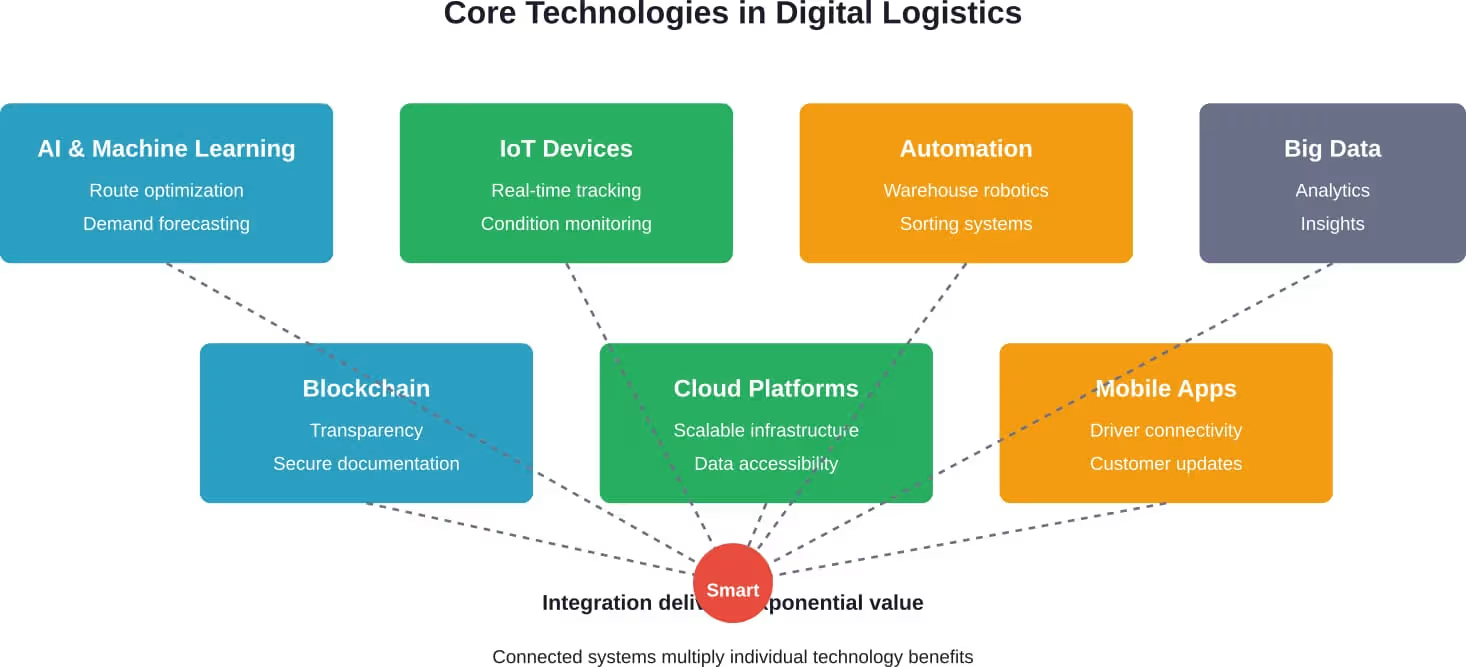
Several emerging technologies are converging to reshape logistics operations. Each brings distinct capabilities that amplify when integrated together.
Artificial Intelligence and Machine Learning
AI-driven route optimization can lower emissions while simultaneously reducing fuel costs and delivery times. Machine learning algorithms analyze historical patterns to predict demand spikes before they occur.
These systems get smarter over time. Each delivery, each delay, each successful route feeds the algorithm, improving future performance.
Internet of Things Connectivity
IoT devices provide real-time visibility into shipment location, temperature, humidity, shock events, and other critical conditions. This data flows continuously to central systems where analytics detect anomalies instantly.
Approximately 68 percent of American adults currently own a smartphone, and the number is expected to exponentially increase as the years go by. This widespread mobile connectivity enables travelers and logistics professionals to experience uninterrupted access to operational data.
Virtual 3G/4G cellular networks and prevalent open WiFi networks enable the always-connected logistics ecosystem that modern operations require.
Blockchain for Transparency
Blockchain technology improves transparency in regulatory reporting and creates immutable records of chain-of-custody for sensitive shipments. This matters especially for pharmaceuticals, high-value goods, and products requiring strict compliance documentation.
Automation Systems
Warehouse robotics, automated sorting systems, and autonomous vehicles reduce processing time by up to 50% in facilities that fully embrace automation. These systems handle repetitive tasks with consistency that human workers can’t match over extended periods.
Measurable Benefits of Digital Transformation
Digital transformation delivers quantifiable improvements across multiple operational dimensions. These aren’t theoretical advantages—logistics companies already implementing these technologies report concrete results.
| Benefit Category | Impact Area | Typical Improvement |
|---|---|---|
| Operational Efficiency | Processing time | Up to 50% reduction |
| Cost Reduction | Fuel and routing | 15-25% decrease |
| Customer Experience | Delivery accuracy | Significant improvement |
| Workforce | Staff turnover | Measurable reduction |
| Visibility | Real-time tracking | Near 100% coverage |
| Sustainability | Carbon emissions | Substantial decrease |
Speed and Efficiency Gains
Digital processes dramatically accelerate operations. Automated systems don’t take breaks, don’t misread labels, and process information orders of magnitude faster than manual methods.
This speed compounds throughout the supply chain. Faster warehouse processing means faster truck loading. Optimized routes mean faster delivery. Real-time visibility means faster exception handling.
Cost Optimization
Technology investments pay for themselves through operational savings. Reduced fuel consumption, lower labor costs for routine tasks, fewer errors requiring expensive corrections—these savings accumulate quickly.
Smart routing alone can cut transportation costs substantially. When combined with predictive maintenance that prevents vehicle breakdowns and optimized warehouse layouts that minimize handling time, the financial impact becomes transformative.
Enhanced Customer Experience
Real-time tracking gives customers unprecedented visibility into their shipments. They know exactly where goods are, when they’ll arrive, and receive immediate notification of any delays.
This transparency builds trust and reduces customer service inquiries. When customers can self-serve delivery information, support teams handle fewer routine questions and focus on complex issues.
Workforce Benefits
One surprising benefit of digital transformation in logistics is reduced staff turnover. By leveraging new technologies to improve working conditions and provide better tools, organizations create more satisfying work environments.
Frontline workers equipped with mobile apps and automated systems spend less time on frustrating manual tasks and more time on meaningful problem-solving. This shift improves job satisfaction and retention.
Implementation Challenges Logistics Companies Face
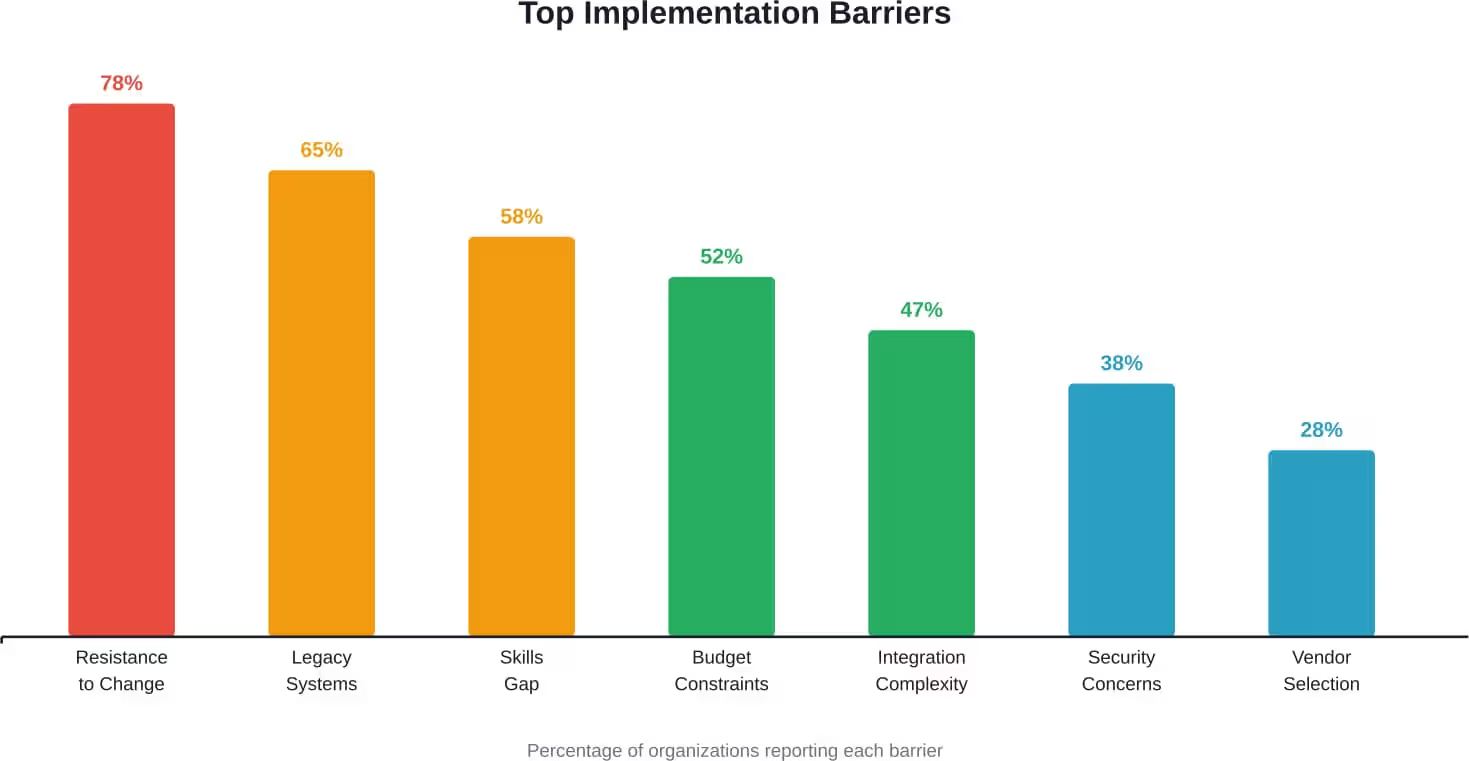
Despite clear benefits, digital transformation initiatives frequently stumble. The majority of companies struggle with adoption and sustainability—not because of the technology itself, but because of how transformation is managed.
Change Resistance and Cultural Barriers
People naturally resist changes to familiar workflows. Warehouse workers who’ve operated the same way for years view new systems skeptically. Drivers comfortable with paper logs resist digital tracking.
This resistance intensifies when organizations fail to explain why transformation matters or how it benefits frontline employees. Without clear communication and involvement, workers perceive technology as a threat rather than an enabler.
Legacy System Integration
Decades-old enterprise systems don’t communicate easily with modern cloud platforms. These legacy systems often contain critical historical data and business logic that can’t simply be discarded.
Integration becomes a complex technical challenge requiring significant development work. Many organizations underestimate the effort required to bridge old and new systems.
Skills and Expertise Gaps
Digital transformation requires new capabilities. Data analysts, IoT specialists, automation engineers—roles that traditional logistics companies may lack entirely.
Building these capabilities takes time. Hiring faces competition from tech companies offering higher compensation. Training existing staff requires investment and patience.
Budget Limitations
Transformation initiatives require substantial upfront investment before delivering returns. Executive teams accustomed to capital expenditures on physical assets like trucks and warehouses sometimes struggle to justify large software and technology budgets.
The business case must be compelling and well-documented to secure necessary funding.
Best Practices for Successful Digital Transformation
Organizations that successfully navigate digital transformation follow common patterns. These approaches consistently deliver better outcomes than technology-first strategies.
Start With People, Not Technology
Change management serves as a catalyst for digital transformation in logistics. The most sophisticated technology fails without user adoption.
Successful initiatives prioritize helping people understand, embrace, and effectively use new systems. This requires structured change management from project inception through post-implementation support.
Take a Phased Approach
Attempting comprehensive transformation overnight overwhelms organizations. Breaking initiatives into manageable phases allows teams to learn, adjust, and build momentum gradually.
Start with high-impact, lower-risk projects that demonstrate value quickly. Early wins build credibility and support for subsequent phases.
Ensure Leadership Alignment
Transformation requires sustained commitment from senior leadership. When executives waver or shift priorities, initiatives lose momentum and resources.
Leadership must consistently communicate the strategic importance of transformation and model the behaviors they expect from the organization.
Measure and Communicate Progress
Track meaningful metrics that demonstrate transformation impact. Processing times, error rates, cost savings, customer satisfaction scores—quantifiable improvements validate the investment.
Regularly communicate these results throughout the organization. Celebrating progress maintains enthusiasm and reinforces that transformation delivers real value.
Invest in Training and Support
Comprehensive training programs ensure users understand new systems and feel confident using them. But training alone isn’t enough—ongoing support helps people overcome challenges as they arise.
Designate super-users or champions within teams who can provide peer support and serve as transformation advocates.
Real-World Applications of Digital Logistics
Several practical applications demonstrate how logistics companies apply digital transformation principles to solve specific operational challenges.
Predictive Maintenance Systems
IoT sensors monitor vehicle condition continuously, detecting developing issues before they cause breakdowns. Predictive algorithms schedule maintenance during planned downtime rather than waiting for emergency repairs.
This approach reduces unplanned downtime, extends vehicle life, and prevents the cascade of delays that breakdowns trigger.
Dynamic Route Optimization
AI systems analyze real-time traffic data, weather conditions, delivery priorities, and vehicle capacity to continuously optimize routes. As conditions change throughout the day, systems automatically adjust routes to maintain efficiency.
Drivers receive updated instructions through mobile apps, eliminating the need to return to dispatch for new assignments.
Automated Warehouse Operations
Robotic picking systems, automated guided vehicles, and intelligent sorting equipment transform warehouse operations. These systems handle routine material movement while human workers focus on exception handling and quality control.
The combination of human judgment and automated execution delivers efficiency that neither achieves alone.
Customer Self-Service Portals
Digital platforms give customers direct access to shipment information, documentation, and delivery scheduling. This transparency reduces customer service calls while improving satisfaction.
Customers can track shipments, receive proactive notifications, request delivery changes, and access proof of delivery documentation without human intervention.
The Future of Digital Logistics
Emerging technologies continue reshaping what’s possible in logistics operations. Several trends will define the next phase of transformation.
Autonomous Vehicles
Self-driving trucks promise to address driver shortages while enabling continuous operation. Though regulatory and technical challenges remain, pilot programs demonstrate viability for certain routes and applications.
Advanced Analytics and AI
Machine learning models grow increasingly sophisticated, predicting disruptions with greater accuracy and recommending optimal responses. These systems will move from reactive to truly proactive supply chain management.
Extended Reality Applications
Augmented reality assists warehouse workers with pick-and-pack operations, overlaying digital information on physical environments. Virtual reality enables remote training and facility planning.
Sustainability Integration
Digital systems increasingly incorporate environmental impact as a core optimization parameter. Route planning balances speed, cost, and carbon emissions. Visibility systems track and report sustainability metrics to meet regulatory requirements and customer expectations.
Moving Forward With Digital Transformation
Digital transformation in logistics isn’t optional anymore—it’s essential for competitive survival. The gap between digitally mature organizations and those clinging to legacy approaches widens every year.
But transformation success depends less on choosing the right technologies and more on managing change effectively. The most powerful systems fail without user adoption. The most sophisticated algorithms deliver no value if teams don’t trust their recommendations.
Organizations should approach transformation as a people challenge with a technology component, not the reverse. Starting with clear communication about why transformation matters, involving frontline workers in solution design, providing comprehensive training and support, and celebrating progress along the journey.
The global digital logistics market will reach $120.33 billion by 2032 because organizations that transform successfully gain decisive competitive advantages. They move goods faster, more reliably, and more cost-effectively than competitors using manual processes.
The question isn’t whether to pursue digital transformation—it’s how quickly and effectively each organization can navigate the journey. Those who act decisively while managing change thoughtfully will define the industry’s future. Those who hesitate risk becoming case studies in disruption.
Start with a clear assessment of current capabilities, identify high-value opportunities for improvement, and build a phased roadmap that balances ambition with realism. Most importantly, put people at the center of the transformation strategy. Technology enables change, but people make it real.