


Quick Summary: Digital transformation in healthcare represents the comprehensive integration of digital technologies—including AI, telemedicine, electronic health records, and data analytics—to fundamentally improve patient care delivery, operational efficiency, and health outcomes. According to U.S. government data, 99% of hospitals now enable patients to electronically view health information, while 65% use AI-assisted predictive tools embedded in EHR systems. This transformation drives better patient experiences, reduces costs, and enables real-time decision-making across health systems.
The healthcare industry is experiencing unprecedented technological change. What started as basic digitization of patient records has evolved into a comprehensive reimagining of how care gets delivered, managed, and experienced.
Digital transformation isn’t just about adopting new technology. It’s about fundamentally rethinking healthcare operations to leverage data, connectivity, and automation for better patient outcomes.
The COVID-19 pandemic accelerated this shift dramatically. Global investments in digital health increased by 103% from 2019 to 2020—from $10.6 billion to $21.6 billion, according to WHO data. Healthcare systems that had been hesitant about digital adoption suddenly had no choice.
Here’s what that transformation looks like in practice.
Understanding Digital Transformation in Healthcare
Digital transformation in healthcare means integrating digital technologies across all aspects of healthcare delivery and operations. This changes how healthcare organizations function and deliver value to patients.
But what does that actually mean?
It’s the difference between a hospital that stores records electronically and one that uses those records to predict patient deterioration before it happens. Between a clinic that offers video appointments and one that integrates telemedicine data seamlessly into treatment plans.
The transformation touches everything: clinical care, administrative processes, patient engagement, research, and public health initiatives.
Core Components of Healthcare Digital Transformation
Several interconnected technologies drive this transformation:
- Electronic Health Records that enable seamless data sharing
- Telemedicine platforms connecting patients and providers remotely
- Artificial intelligence for diagnostics and predictive analytics
- Remote patient monitoring systems for chronic disease management
- Mobile health applications empowering patient self-management
- Cloud computing infrastructure supporting scalable operations
- Internet of Medical Things devices collecting real-time health data
These technologies don’t work in isolation. The real power comes from integration—when EHR data feeds AI algorithms that inform remote monitoring interventions coordinated through telemedicine platforms.
Current State of Digital Adoption
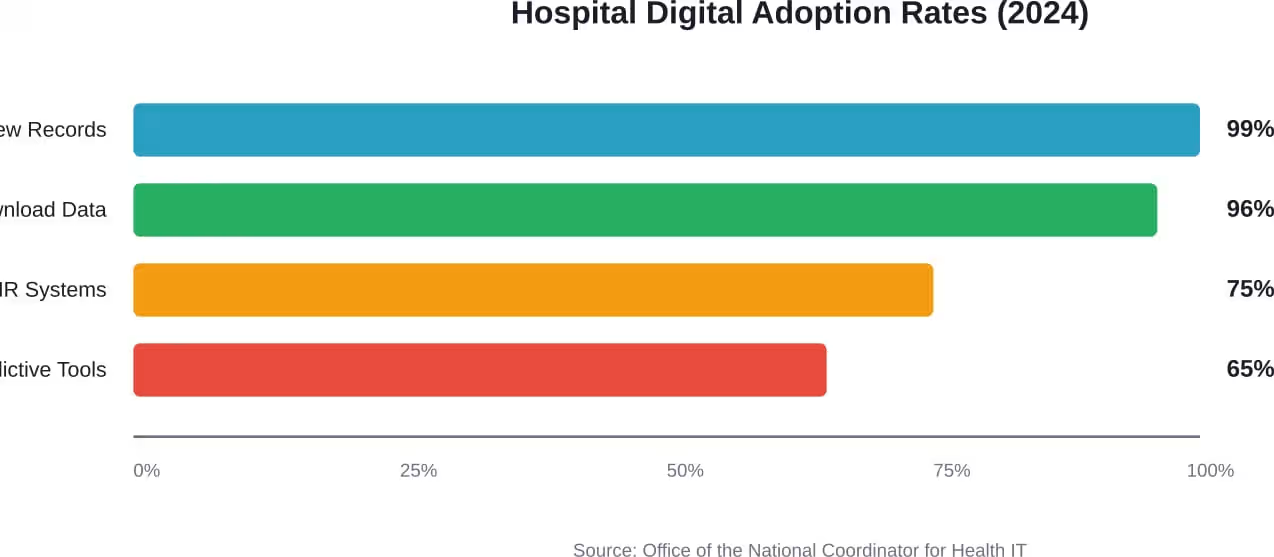
Healthcare has made remarkable progress. According to the Office of the National Coordinator for Health IT, nearly all U.S. hospitals had adopted patient engagement capabilities by 2024.
The numbers tell the story:
- 99% of hospitals enable patients to electronically view health information
- 96% allow patients to download their health data
- 75% of U.S. hospitals use electronic health record systems
- 65% of hospitals use AI-assisted predictive tools embedded in EHR systems
Interoperability—the ability of different systems to exchange and use health information—has improved significantly. Since 2015, hospitals’ engagement in interoperability improved by more than 50% in eight major U.S. cities.
More than 70% of hospitals in Cleveland, Miami, and Detroit reported interoperable exchange capabilities, according to government health IT data.
But adoption rates vary globally. Research from the MENA region reveals that while stakeholders recognize the clinical benefits, ethical concerns and infrastructure challenges still create barriers.
Key Technologies Driving Healthcare Transformation
Several specific technologies are reshaping how healthcare operates. Each brings distinct benefits and challenges.
Electronic Health Records and Interoperability
EHR systems form the foundation of digital healthcare. They’ve moved beyond simple digital filing cabinets to become integrated platforms that support clinical decision-making.
The real breakthrough came with interoperability. When hospitals can seamlessly exchange patient information—sending, receiving, finding, and integrating data across systems—care coordination improves dramatically.
Since 2014, the Office of the National Coordinator for Health IT has tracked hospitals’ engagement across these four domains of interoperable exchange. The results show consistent improvement driven by federal policy and industry collaboration.
But challenges remain. Different EHR vendors use varying data standards. Legacy systems can’t always communicate with newer platforms. And privacy regulations add complexity to data sharing.
Artificial Intelligence and Predictive Analytics
AI is changing clinical practice in measurable ways. The technology excels at pattern recognition—spotting subtle indicators in imaging studies, predicting patient deterioration, and identifying optimal treatment protocols.
Real-time data access combined with AI-driven analytics enables faster, more informed decision-making. Medical research demonstrates these systems can reduce hospital readmissions for conditions like heart failure and support early intervention.
The adoption is significant. With 65% of U.S. hospitals now using AI-assisted predictive tools embedded in their EHR systems, the technology has moved from experimental to mainstream.
Machine learning algorithms can analyze thousands of patient records to identify risk factors invisible to human clinicians. They flag potential medication interactions, suggest evidence-based treatment protocols, and predict which patients need closer monitoring.
Telemedicine and Remote Care
The pandemic turned telemedicine from a convenience into a necessity. What emerged was proof that remote care delivery works for many conditions.
Telemedicine platforms now integrate video consultations with EHR systems, remote monitoring devices, and digital prescription services. Patients can receive care without traveling, reducing costs and improving access for rural and underserved populations.
Remote patient monitoring systems enable continuous collection of physiological parameters from patients with chronic diseases. Medical research demonstrates these systems can reduce hospital readmissions for conditions like heart failure and support early intervention.
For chronic disease management—diabetes, heart failure, hypertension—remote monitoring has shown clear benefits in patient outcomes and healthcare costs.
Wearables and Internet of Medical Things
Connected devices are generating unprecedented amounts of real-world health data. Wearable fitness trackers, continuous glucose monitors, smart watches with ECG capabilities, and connected inhalers all feed information back to healthcare providers.
This creates opportunities for personalized medicine based on individual patient data rather than population averages. Research analyzing digitally derived biomarkers from connected devices found that only 12.4% of users actually have a 28-day menstrual cycle—contrary to what medical textbooks suggested.
Real-world insights like these are transforming medical understanding and enabling more individualized treatment approaches.
Benefits Driving Digital Investment
Healthcare organizations aren’t pursuing digital transformation for its own sake. The technology delivers concrete benefits that justify the investment and disruption.
Improved Patient Experience and Outcomes
Survey research indicates that 92% of health systems hope to achieve better patient experience as the top desired outcome from digital transformation, according to Deloitte data.
And the technology delivers. Patients can:
- Access their health records anytime, anywhere
- Schedule appointments through mobile apps
- Receive care via telemedicine without travel
- Get medication reminders and health coaching
- Track health metrics through connected devices
- Communicate with care teams between visits
This convenience translates to better health outcomes. When patients can easily access information and connect with providers, they engage more actively in their care. Adherence to treatment plans improves. Problems get addressed earlier.
Operational Efficiency and Cost Reduction
Digital transformation increases employee productivity and improves the efficiency and effectiveness of health unit operations while reducing operating costs.
Administrative tasks that once required hours of manual work get automated. Appointment scheduling, billing, insurance verification, and record retrieval all happen faster with less staff time.
Clinical workflows become more efficient. Electronic prescribing eliminates handwriting errors and speeds pharmacy processing. Digital imaging removes film processing delays. Automated alerts prevent missed follow-ups.
The cost savings add up quickly when multiplied across thousands of patient encounters.
Data-Driven Decision Making
Healthcare organizations are becoming data-driven enterprises. Instead of relying solely on clinical intuition and experience, providers can analyze vast datasets to identify optimal approaches.
Population health management becomes possible when systems can analyze data across thousands of patients. Healthcare organizations can identify at-risk populations, target interventions, and measure outcomes at scale.
Real-time dashboards give administrators visibility into operations—bed capacity, emergency department wait times, staffing levels, and quality metrics—enabling proactive management.
| Benefit Category | Key Improvements | Impact |
|---|---|---|
| Patient Experience | 24/7 access to records, remote consultations, mobile engagement | 92% of health systems prioritize this outcome |
| Clinical Outcomes | AI-assisted diagnostics, predictive analytics, early intervention | Reduced readmissions, better chronic disease management |
| Operational Efficiency | Automated workflows, reduced manual tasks, optimized scheduling | Lower costs, increased productivity, faster processing |
| Data Utilization | Real-time analytics, population health insights, evidence-based protocols | Informed decision-making, targeted interventions |
Drive Digital Transformation in Healthcare With LENGREO
Digital transformation in healthcare often involves improving patient experience, streamlining operations, and integrating modern technologies across systems. Many organizations struggle to align strategy with execution and see measurable results.
LENGREO helps healthcare companies build and execute data driven strategies that connect marketing, lead generation, and revenue growth.
Their team supports:
- SEO and content strategy for healthcare services
- lead generation and outreach campaigns
- paid acquisition and funnel optimization
- end to end digital growth planning
If you want to move beyond fragmented initiatives and build a scalable healthcare growth strategy, partner with LENGREO to start driving measurable results.
Implementation Challenges and Barriers
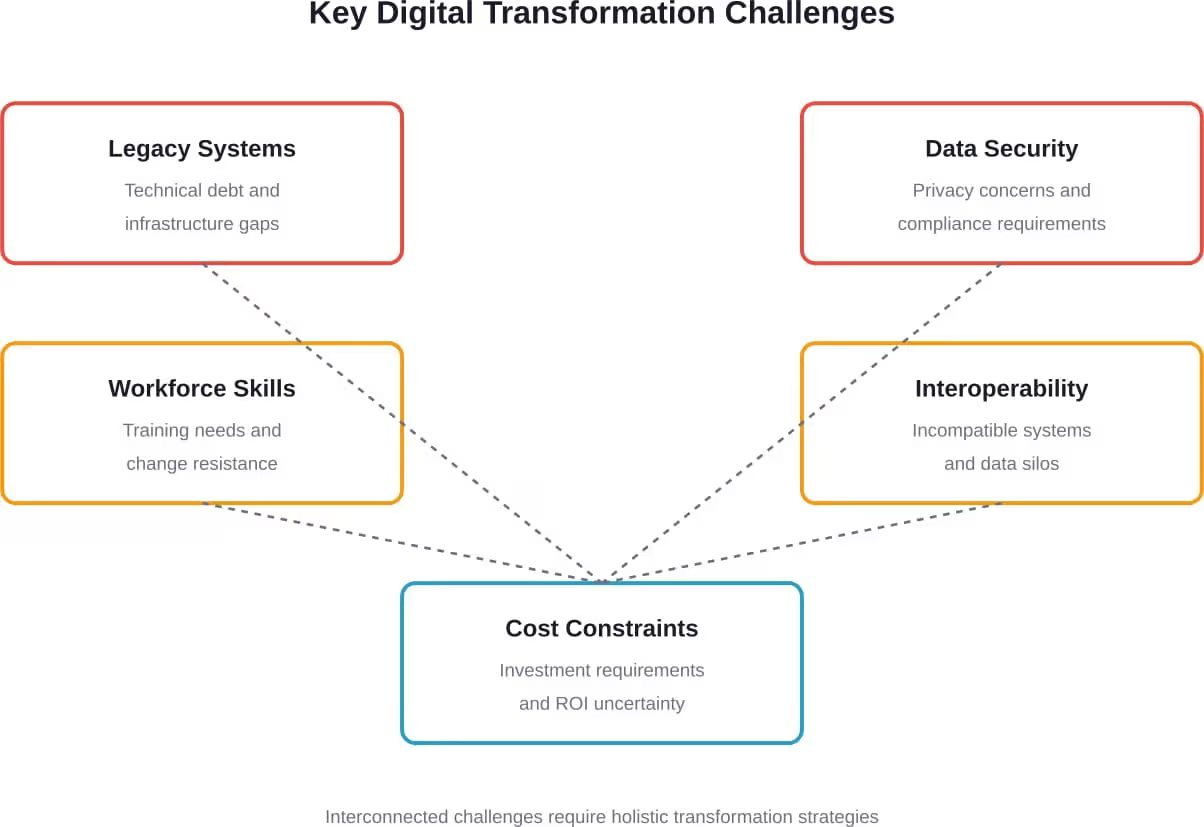
Despite clear benefits, digital transformation faces significant obstacles. Understanding these challenges is essential for successful implementation.
Infrastructure and Technical Debt
Many healthcare organizations operate legacy systems that can’t easily integrate with modern technologies. Upgrading infrastructure while maintaining continuity of care creates complexity.
Technical debt accumulates when quick fixes and workarounds replace proper system architecture. Eventually, the accumulated patches and incompatibilities make further innovation difficult.
Cloud computing offers solutions, but migrating sensitive health data to cloud platforms raises security and compliance questions that require careful planning.
Data Privacy and Security Concerns
Healthcare data is among the most sensitive personal information. Breaches can have serious consequences for patients and organizations.
Research from the MENA region found that ethical considerations around digital health adoption create barriers, particularly in fragile healthcare systems. Stakeholders worry about data misuse, unauthorized access, and patient privacy violations.
Regulations like HIPAA in the United States set strict requirements for health data handling. Ensuring digital systems meet these requirements—and proving compliance—adds complexity to technology implementation.
Workforce Training and Change Management
Technology is only as effective as the people using it. Healthcare professionals need training not just on how to operate systems, but on integrating digital tools into clinical workflows.
Research published in BMC Health Services Research emphasizes that healthcare professionals are fundamental to digital health transformation. Yet barriers still affect adoption, suggesting that development processes need improvement.
Resistance to change is natural. Clinicians who’ve practiced medicine certain ways for decades may struggle to adapt to new digital workflows. Change management strategies must address both technical skills and cultural attitudes.
Interoperability and Standards
Getting different systems to communicate remains difficult. While interoperability has improved, gaps persist.
WHO has developed SMART Guidelines—a systematic approach to translating health recommendations into digital health systems in a software-neutral manner. The Fast Healthcare Interoperability Resources standard offers a framework for health data exchange.
But adoption of common standards happens slowly. Healthcare organizations use different EHR vendors, each with proprietary systems. Creating seamless data flow across these platforms requires ongoing coordination and investment.
Strategies for Successful Digital Transformation
Organizations that successfully navigate digital transformation follow certain patterns. These strategies help overcome obstacles and maximize benefits.
Develop a Comprehensive Digital Strategy
Random technology adoption doesn’t work. Successful organizations start with a clear vision of what they want to achieve and how technology enables those goals.
WHO’s Digital Implementation Investment Guide provides frameworks for integrating digital interventions into health programs. The approach emphasizes alignment between technology choices and healthcare objectives.
A comprehensive strategy addresses:
- Current state assessment of existing systems and capabilities
- Clear objectives tied to patient care and operational goals
- Technology roadmap with phased implementation
- Budget and resource allocation plans
- Risk mitigation for security and privacy concerns
- Change management and training programs
- Metrics for measuring success and ROI
The strategy shouldn’t be static. Healthcare needs and technologies evolve, requiring regular reassessment and adjustment.
Prioritize Interoperability and Standards
Choosing technologies that support open standards and interoperability prevents vendor lock-in and enables future flexibility.
FHIR-based approaches allow different systems to exchange data regardless of vendor. WHO’s work on enabling FHIR-based SMART guidelines natively on Android devices demonstrates how standards can extend digital health capabilities to resource-limited settings.
When evaluating technology vendors, organizations should prioritize those committed to interoperability and data portability.
Invest in Workforce Development
Technology implementation succeeds or fails based on user adoption. Healthcare professionals need comprehensive training and ongoing support.
International consensus research recommends validation approaches for digital health transformation, with stakeholder agreement exceeding 75% for key recommendations.
Training should cover:
- Technical operation of new systems
- Integration into clinical workflows
- Data privacy and security best practices
- Troubleshooting common issues
- Maximizing benefits for patient care
Beyond initial training, organizations need champions—enthusiastic early adopters who help colleagues navigate change and demonstrate value.
Start Small and Scale
Attempting organization-wide transformation simultaneously creates chaos. Successful implementations often start with pilot programs in specific departments or use cases.
Pilots allow organizations to:
- Test technologies in controlled environments
- Identify and resolve issues before wider rollout
- Demonstrate value to skeptical stakeholders
- Refine training and change management approaches
- Build internal expertise and confidence
Once pilots prove successful, scaling becomes easier because the organization has evidence, experience, and trained advocates.
Real-World Applications and Use Cases
Digital transformation manifests differently across healthcare settings. Looking at specific applications helps understand the practical impact.
Chronic Disease Management
Remote patient monitoring systems have transformed chronic disease care. Patients with conditions like diabetes, heart failure, and hypertension benefit from continuous monitoring and proactive intervention.
Connected devices transmit physiological data—weight, blood pressure, glucose levels—to clinical teams who can intervene before hospitalization becomes necessary, enabling early detection of deterioration.
The technology also empowers patients. Real-time feedback helps them understand how lifestyle choices affect their conditions, improving self-management and adherence.
Women’s Health Research
Digital health technologies are expanding research capabilities, particularly in historically underserved areas like women’s health.
Research analyzing digitally derived biomarkers from connected devices provides real-world insights previously impossible to gather. Analysis of 75,981 anonymized menstrual cycles found that only 12.4% of users had a 28-day cycle, with 87% having cycles of different lengths.
This kind of large-scale, real-world data challenges textbook assumptions and enables more personalized approaches to women’s health care.
Supply Chain Optimization
WHO has developed guidance for digital transformation of health supply chains, recognizing that medication and equipment availability directly impacts patient care.
Digital supply chain systems provide real-time visibility into inventory levels, expiration dates, and usage patterns. Automated alerts prevent stockouts of critical medications. Data analytics identify inefficiencies and opportunities for cost reduction.
The handbook provides stepwise guidance for countries to develop scalable and sustainable digital health supply chain architecture aligned with WHO SMART Guidelines.
Public Health Surveillance
Digital technologies enable faster detection and response to disease outbreaks. Electronic health records can flag unusual symptom patterns. Lab systems can automatically report notifiable diseases. Contact tracing apps can accelerate outbreak investigation.
The COVID-19 pandemic demonstrated both the potential and limitations of digital public health infrastructure. Countries with robust health IT systems could track cases, allocate resources, and monitor vaccine distribution more effectively.
| Application Area | Key Technologies | Primary Benefits |
|---|---|---|
| Chronic Disease Management | Remote monitoring, wearables, AI analytics | Reduced readmissions, better outcomes, patient empowerment |
| Telemedicine | Video platforms, mobile apps, EHR integration | Improved access, reduced costs, convenience |
| Diagnostic Support | AI imaging analysis, predictive algorithms, clinical decision support | Earlier detection, reduced errors, evidence-based protocols |
| Supply Chain | Real-time tracking, automated alerts, predictive analytics | Prevented stockouts, reduced waste, optimized costs |
| Research | Large-scale data collection, digital biomarkers, connected devices | Real-world insights, personalized medicine, faster discovery |
The Role of Policy and Regulation
Government policy significantly influences digital transformation pace and direction. Regulations create frameworks that either enable or constrain innovation.
Federal Health IT Policy Impact
The Office of the National Coordinator for Health IT has tracked interoperability progress since 2014, measuring the effects of federal policy on industry trends.
Policy initiatives like meaningful use requirements drove initial EHR adoption. Subsequent regulations focused on interoperability, patient access, and information blocking prevention.
These policies created both incentives for compliance and penalties for failing to meet standards. The result: systematic improvement in hospitals’ engagement with interoperable exchange across send, receive, find, and integrate domains.
Ethical Frameworks and Guidelines
WHO has developed ethical principles guidance for digital health that informs implementation approaches. The framework addresses concerns about data privacy, algorithmic bias, equity of access, and patient autonomy.
Research examining ethical considerations in digital transformation surveyed stakeholders using WHO’s six ethical principles as a foundation. The findings emphasize that ethical frameworks must inform technology choices, not just respond to problems after they arise.
International Standards and Coordination
Healthcare increasingly crosses borders. Patients travel for treatment. Research collaborates internationally. Disease surveillance requires global coordination.
WHO’s SMART Guidelines initiative represents a systematic approach to translating health recommendations into digital systems that work across contexts and platforms. The software-neutral methodology enables countries to implement guidelines using whatever technology infrastructure they have available.
This kind of international coordination prevents duplication of effort and enables shared learning about what works.
Future Trends and Emerging Technologies
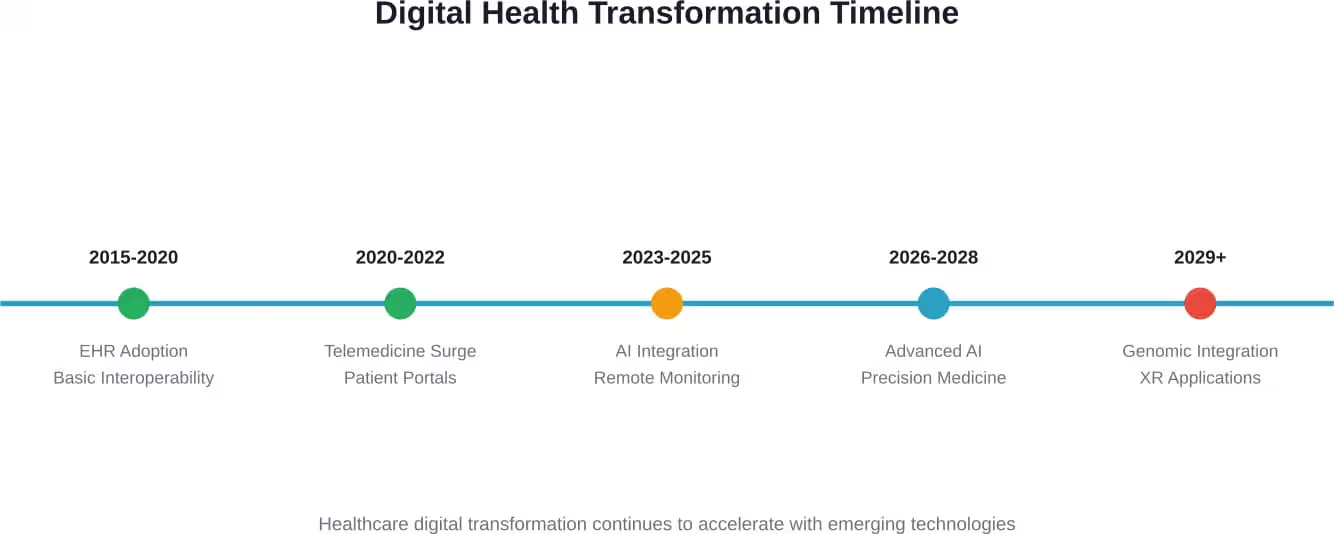
Digital transformation continues to accelerate. Several emerging technologies promise to reshape healthcare further in coming years.
Advanced AI and Machine Learning
AI capabilities are expanding rapidly. Beyond current applications in imaging and prediction, emerging approaches include:
- Natural language processing that extracts insights from clinical notes
- Generative AI that assists with documentation and patient communication
- Reinforcement learning that optimizes treatment protocols
- Multimodal AI that integrates imaging, lab, and clinical data
As algorithms become more sophisticated and datasets grow larger, AI performance will continue improving.
Genomic Medicine and Precision Health
Declining sequencing costs make genomic data increasingly accessible. Integrating genetic information with EHR systems enables precision medicine approaches tailored to individual genetic profiles.
Digital platforms can match patients with clinical trials based on genetic markers. Pharmacogenomic data can guide medication selection to maximize efficacy and minimize adverse reactions.
Extended Reality in Healthcare
Virtual reality and augmented reality applications are emerging for medical education, surgical planning, pain management, and rehabilitation.
Surgeons can practice complex procedures in VR environments. Patients can use VR for distraction during painful treatments. AR can overlay digital information onto physical environments during procedures.
Blockchain for Health Data
Blockchain technology offers potential solutions for secure, decentralized health data management. Patients could control access to their records while maintaining a tamper-proof audit trail.
Challenges around scalability and standardization remain, but pilot projects are testing blockchain applications for consent management, supply chain tracking, and clinical trial data integrity.
Making Digital Transformation Work
Success requires more than just implementing technology. Organizations need to think holistically about how digital capabilities integrate with their healthcare mission.
Patient-Centered Design
Technology should serve patients, not complicate their lives. User experience design principles matter as much for health apps as for consumer products.
Systems need to be accessible to diverse populations with varying levels of digital literacy. Language support, simplified interfaces, and alternative access methods ensure no one gets left behind.
Patient feedback should inform ongoing refinement. What works in theory may frustrate users in practice.
Balancing Innovation and Reliability
Healthcare can’t afford system failures. Lives depend on technology working consistently.
This creates tension between innovation and stability. Organizations need processes that allow testing new approaches while maintaining reliable core systems.
Sandbox environments, phased rollouts, and robust testing protocols enable innovation without compromising patient safety.
Measuring What Matters
Digital transformation initiatives need clear success metrics. But choosing the right metrics matters.
Technology adoption rates don’t necessarily correlate with improved patient outcomes. System uptime matters less than whether clinicians find tools useful. Cost savings mean little if quality suffers.
Meaningful metrics focus on:
- Patient outcomes and satisfaction scores
- Clinical quality measures and safety indicators
- Provider efficiency and workflow improvements
- Total cost of care, not just IT costs
- Health equity and access improvements
Conclusion
Digital transformation in healthcare has moved from aspirational concept to operational reality. The data shows remarkable progress—nearly universal patient portal adoption, majority deployment of AI-assisted tools, and significant interoperability improvements.
But the transformation remains incomplete.
Technology capabilities continue advancing faster than healthcare organizations can adopt them. Gaps persist in interoperability, workforce readiness, and equitable access. Ethical questions about data privacy, algorithmic bias, and patient autonomy require ongoing attention.
The organizations succeeding in this transformation share common characteristics. They develop comprehensive strategies aligned with patient care objectives. They prioritize interoperability and standards. They invest in workforce development and change management. They start with pilots and scale based on evidence.
Most importantly, they remember that digital transformation serves a higher purpose: better health outcomes for the people they care for.
Healthcare will continue evolving as technologies mature and new innovations emerge. Genomic medicine, advanced AI, extended reality, and other emerging technologies promise additional capabilities. But the fundamental goal remains constant—using digital tools to deliver more effective, efficient, and compassionate care.
For healthcare organizations beginning or continuing their digital transformation journey, the path forward requires balancing innovation with reliability, embracing change while managing risk, and maintaining focus on what truly matters: improving health and saving lives.
The transformation isn’t easy. But the benefits—for patients, providers, and health systems—make it essential.