


Quick Summary: Digital transformation in government modernizes public sector operations through technology adoption, improving citizen services, operational efficiency, and data-driven decision-making. Recent federal initiatives in AI procurement, permitting technology, and digital financial systems demonstrate government commitment to 21st-century service delivery. Successful transformation requires strategic planning, cross-department collaboration, and modern infrastructure investments.
Government agencies worldwide face mounting pressure to modernize. Citizens expect the same seamless digital experiences from public services that they receive from private companies. And the gap keeps widening.
But here’s the thing—digital transformation in government isn’t just about building better websites or mobile apps. It’s a fundamental shift in how agencies operate, deliver services, and interact with the people they serve.
Recent federal initiatives show this momentum. In January 2025, the White House released policies strengthening American leadership in digital financial technology, recognizing the crucial role digital assets play in innovation and economic growth. By April 2025, new directives aimed to leverage modern technologies for environmental permitting, addressing decades of inefficiency.
The public sector’s digital journey has accelerated dramatically. Let’s explore what’s driving this change and how agencies can successfully navigate it.
What Digital Transformation Means for the Public Sector
Digital transformation in government represents the integration of modern technology into all areas of public sector operations. It fundamentally changes how agencies deliver services, manage data, and interact with citizens.
This isn’t about digitizing existing paper processes. Real transformation redesigns workflows entirely, breaking down information silos that have existed for generations.
According to the White House Office of Management and Budget, agencies must remove barriers to American leadership in emerging technologies. In April 2025, OMB released revised policies on Federal Agency Use of AI and Federal Procurement, directly addressing the need to modernize government technology adoption.
The difference between digitization and transformation matters. Digitization converts analog information to digital formats. Transformation reimagines the entire service delivery model using technology as an enabler.
Accelerate Government Digital Transformation With LENGREO
Digital transformation in government involves modernizing services and improving accessibility. Clear communication and outreach are critical for success.
LENGREO helps organizations build structured marketing and outreach strategies that improve visibility and engagement.
Support includes:
- content and SEO strategies
- targeted outreach campaigns
- digital campaign management
- demand generation planning
If you want to make digital initiatives more effective and measurable, get a free consultation with LENGREO.
Why Government Digital Transformation Became Critical
Several forces have converged to make digital transformation essential for modern government operations.
Rising Citizen Expectations
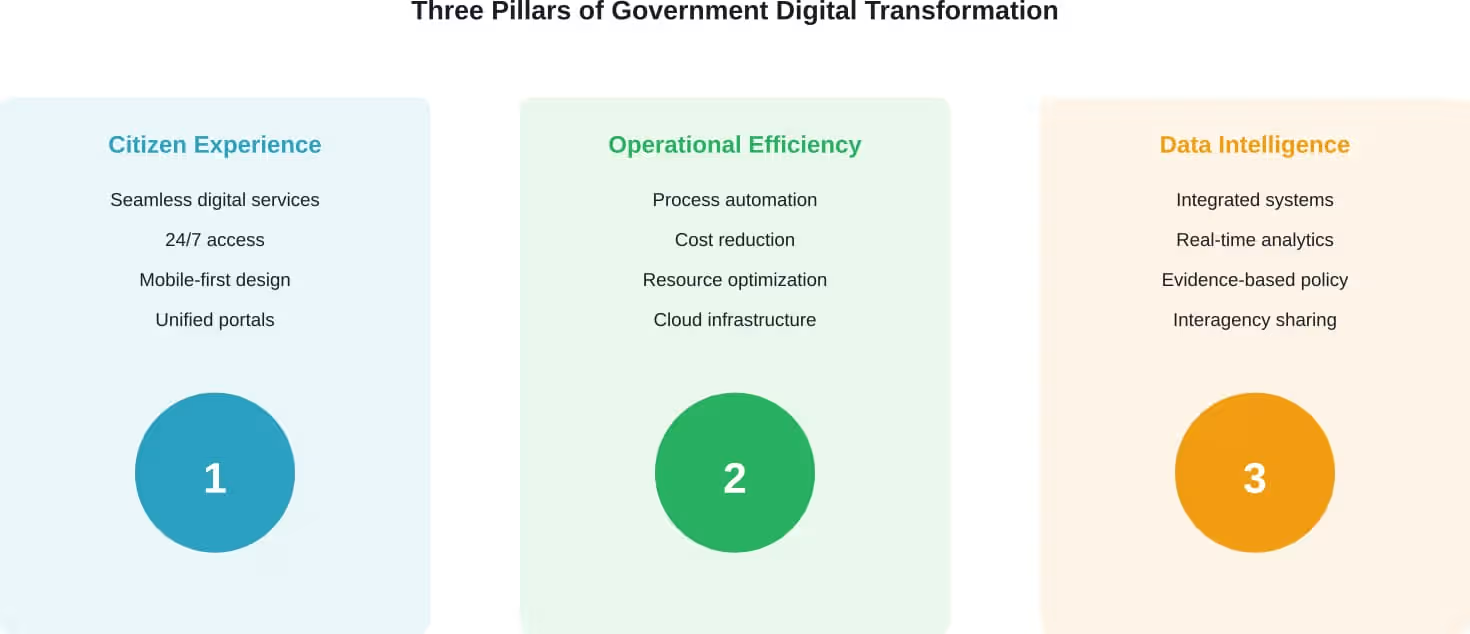
People expect government services to match private sector convenience. When someone can order groceries with two clicks but needs to visit three offices to renew a permit, frustration builds quickly.
The gap between citizen expectations and government delivery continues to widen. Digital-native generations now comprise the majority of the workforce and voting population. They’ve never known a world without smartphones and instant information access.
Operational Efficiency Demands
Budget constraints force agencies to do more with less. Digital transformation offers a path forward.
One municipality saw dramatic results from shifting citizen requests online. The change identified over $308,000 in annual savings, a figure expected to rise with continued adoption. Manual processes drain resources that could serve citizens more effectively.
Data-Driven Decision Making
Modern governance requires real-time insights. Legacy systems trap valuable data in isolated databases, making comprehensive analysis nearly impossible.
Digital transformation breaks down these barriers. When information flows freely between systems and agencies, better decisions follow naturally.
Federal Initiatives Driving Digital Modernization
The federal government has launched several major initiatives demonstrating commitment to digital transformation.
AI Integration and Procurement Reform
In April 2025, the White House Office of Management and Budget delivered on executive directives to remove barriers to American AI leadership. The revised policies on Federal Agency AI Use and Federal Procurement fundamentally changed how agencies can adopt and deploy artificial intelligence.
These changes address longstanding procurement challenges that slowed technology adoption. Agencies can now move faster while maintaining necessary oversight and security standards.
Permitting Technology Modernization
The Council on Environmental Quality issued a Permitting Technology Action Plan in May 2025. This plan modernizes federal environmental review and permitting processes for infrastructure projects including roads, bridges, mines, factories, and power plants.
According to the White House, government doesn’t properly leverage technology to evaluate environmental permits effectively, causing significant delays to critical infrastructure projects. Modern technologies now address these longstanding problems at 21st-century speeds.
Digital Financial Technology Leadership
The digital asset industry plays a crucial role in innovation and economic growth. Presidential actions in January 2025 promoted United States leadership in digital assets and financial technology while protecting economic liberty.
These initiatives recognize that government must keep pace with private sector innovation in emerging financial technologies.
Key Components of Successful Government Transformation
What separates successful digital transformation from failed attempts? Several critical elements consistently appear in agencies that achieve meaningful change.
Leadership Commitment
Transformation requires support from the top. Elected officials and agency heads must champion digital initiatives and allocate necessary resources.
Many government digital transformation programs succeed only through partnership between technologists and non-technologists. Strategic decision-makers need to understand both the possibilities and limitations of technology.
Cross-Department Collaboration
Information doesn’t respect organizational boundaries. Citizens don’t care which department handles their request—they want solutions.
Successful transformation breaks down silos. When agencies share data and coordinate services, the citizen experience improves dramatically.
Modern Infrastructure
Legacy systems create bottlenecks. Mainframes running decades-old code can’t deliver modern digital experiences.
Cloud infrastructure enables flexibility and scalability. Agencies can provision resources as needed rather than maintaining expensive on-premise data centers.
Security and Privacy Foundations
NIST provides critical guidance for government cybersecurity. The Federal Information Security Modernization Act and E-Government Act establish baseline requirements for protecting citizen data.
Executive Order 14028 on Improving the Nation’s Cybersecurity, issued in 2021, continues to shape government security practices. NIST Special Publication 800-63-4 provides current digital identity guidelines, having superseded NIST SP 800-63-3 as of August 1, 2025.
| Transformation Component | Traditional Approach | Modern Approach |
|---|---|---|
| Infrastructure | On-premise data centers | Cloud-based scalable systems |
| Development | Waterfall, multi-year cycles | Agile, iterative releases |
| User Research | Minimal or none | Continuous citizen feedback |
| Data Management | Siloed departmental systems | Integrated interagency platforms |
| Procurement | Lengthy RFP processes | Streamlined vendor evaluation |
Implementation Challenges and Solutions
Real talk: government digital transformation faces obstacles that don’t exist in the private sector.
Budget and Procurement Constraints
Government procurement processes weren’t designed for modern software development. Traditional contracting assumes fixed requirements and long timelines.
The solution involves adapting procurement and budgeting approaches. Modular contracting, agile procurement, and updated evaluation criteria allow agencies to work with modern technology vendors.
Legacy System Integration
Agencies can’t simply abandon existing systems overnight. Critical data lives in mainframes that have run for decades.
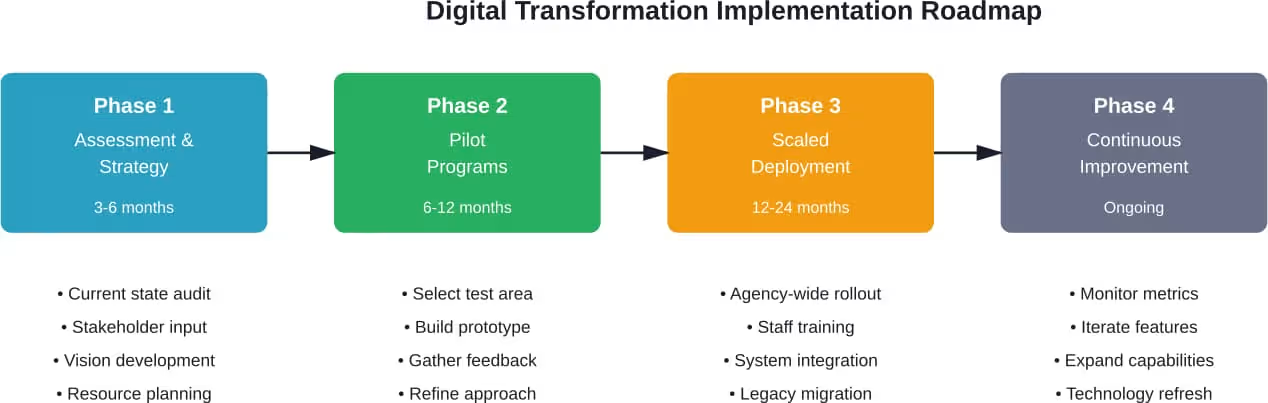
Successful approaches involve gradual migration strategies. APIs and middleware connect old and new systems during transition periods. Cloud platforms provide bridges between legacy infrastructure and modern applications.
Workforce Skills Gap
Many government employees lack training in modern technologies. The skills needed for digital transformation differ significantly from traditional IT management.
Training programs and strategic hiring address this gap. Agencies need technologists who understand government operations and public servants who understand technology possibilities.
Cultural Resistance
Change threatens established workflows and power structures. Employees comfortable with existing processes may resist new approaches.
Leadership must communicate why transformation matters. When staff understand how digital tools make their work easier and more impactful, resistance decreases. Involving employees in design and implementation builds ownership.
Emerging Trends Shaping Government Digital Services
Several technology trends will define the next phase of government digital transformation.
Artificial Intelligence and Automation
AI offers tremendous potential for improving government operations. From chatbots handling routine citizen inquiries to predictive analytics identifying service needs, AI applications multiply rapidly.
The April 2025 OMB policies on Federal Agency AI Use establish frameworks for responsible deployment. Agencies must balance innovation with appropriate oversight.
Mobile-First Service Design
Mobile devices now represent the primary way many citizens access information. Government services designed for desktop computers create unnecessary barriers.
Leading agencies design for mobile devices first, then adapt for larger screens. This approach ensures accessibility for citizens regardless of their primary device.
Data Integration and Analytics
Better data leads to better decisions. When agencies integrate information across systems, patterns emerge that weren’t visible in isolated databases.
Real-time analytics enable proactive service delivery. Instead of reacting to problems, agencies can identify and address issues before citizens even notice them.
Cybersecurity Evolution
Digital transformation expands the attack surface. More connected systems create more potential vulnerabilities.
Recent research finds that companies with high cybersecurity exposure significantly underperform in the stock market, with roughly 0.33% lower return per month. These digital vulnerabilities impose real economic costs that don’t appear neatly in traditional metrics.
Government agencies must build security into transformation initiatives from the beginning. Retrofit security approaches consistently fail.
Measuring Digital Transformation Success
How do agencies know if transformation efforts deliver value? Clear metrics matter.
Traditional government metrics often focus on activities rather than outcomes. Digital transformation requires different measurement approaches.
Citizen-Focused Metrics
Service completion rates show how many people successfully accomplish their goals online versus giving up. Time to resolution measures how quickly citizens receive services. Satisfaction scores provide direct feedback on digital experiences.
Operational Metrics
Cost per transaction reveals efficiency gains. Processing time tracks how quickly agencies handle requests. Error rates identify areas needing improvement.
Employee Metrics
Staff satisfaction with digital tools indicates whether technology helps or hinders work. Productivity improvements and better work-life balance suggest successful transformation.
Digital transformation promotes a healthy work-life balance and makes it easier to work with external private sector organizations and partners.
The Path Forward for Government Agencies
Digital transformation isn’t a destination—it’s an ongoing journey. Technology continues evolving, and citizen expectations keep rising.
Agencies that embrace continuous improvement will thrive. Those clinging to outdated approaches will fall further behind.
The federal government’s recent initiatives demonstrate clear commitment to modernization. Presidential actions, OMB policies, and agency-level programs all point toward accelerated digital transformation.
But policy alone doesn’t create change. Agencies must translate high-level directives into practical implementation. That requires resources, expertise, and persistence.
Look, the challenges are real. Budget constraints, legacy systems, and organizational inertia won’t disappear overnight. But the benefits of successful digital transformation far outweigh the difficulties.
Better citizen services. Lower operational costs. Improved employee satisfaction. Data-driven policymaking. These outcomes justify the investment and effort.
Conclusion: Time to Transform
Government digital transformation represents one of the most significant shifts in public sector operations in generations. The technology exists. The frameworks are in place. Federal leadership demonstrates clear commitment.
What remains is execution. Agencies must move from planning to action, from pilots to scaled deployment, from one-time projects to continuous improvement.
Citizens deserve government services that match the digital experiences they receive everywhere else. Public servants deserve tools that make their work easier and more impactful. Taxpayers deserve efficient operations that maximize the value of every dollar spent.
Digital transformation delivers on all these fronts. The question isn’t whether to transform—it’s how quickly agencies can make it happen. The time for incremental change has passed. Bold action on digital transformation defines government excellence in 2026 and beyond.