Quick Summary: Digital transformation in finance and accounting refers to the integration of advanced technologies like AI, cloud computing, and automation into financial operations. This shift enables organizations to move beyond traditional reporting and compliance tasks toward strategic value creation, with data showing that 65% of finance team outputs still focus on hindsight reporting despite growing demands for predictive analytics.
Finance and accounting departments are experiencing a fundamental shift. Traditional methods that relied on manual data entry, spreadsheet management, and retrospective reporting no longer meet the demands of modern business environments.
The pressure is mounting. Organizations expect their finance teams to transition from cost centers to strategic value centers. But here’s the thing—most finance departments haven’t adapted their operations to match this evolution.
According to research from the AICPA and CIMA’s 18-month study of over 5,500 finance professionals across 2,000 organisations in 150 countries, hindsight reporting through descriptive and diagnostic methods still comprises 65% of finance team outputs. Meanwhile, predictive and prescriptive analytics are being used by only 25% of finance teams.
That gap represents both a challenge and an opportunity. Digital transformation offers the tools to bridge it.
What Digital Transformation Means for Finance and Accounting
Digital transformation in finance goes beyond simply adopting new software. It represents a complete reimagining of how financial operations function within an organization.
At its core, this transformation involves integrating information technology into all aspects of financial management. The goal? Fundamentally changing how finance teams operate and deliver value to stakeholders.
This isn’t about replacing accountants with machines. Real talk: it’s about equipping finance professionals with technologies that eliminate tedious manual tasks so they can focus on analysis, strategy, and guidance.
The shift moves finance teams from transaction processors to business advisors. From number crunchers to insight generators. From backward-looking reporters to forward-thinking strategists.
The Core Components
Several key elements define what digital transformation looks like in practice:
- Process automation: Eliminating manual, repetitive tasks through intelligent software
- Cloud-based systems: Moving from on-premise solutions to flexible, accessible platforms
- Data analytics capabilities: Transforming raw financial data into actionable business intelligence
- Real-time reporting: Replacing monthly closes with continuous financial visibility
- Integration ecosystems: Connecting disparate systems for seamless data flow
Each component works together to create a modern financial operation that’s agile, efficient, and strategically valuable.
Modernize Finance and Accounting With LENGREO
Digital transformation in finance and accounting involves automation, improved workflows, and better data management. Growth requires consistent client acquisition.
LENGREO helps firms build structured marketing systems that support business development and lead generation.
Support includes:
- SEO and content strategies
- LinkedIn and email outreach
- paid media campaigns
- full funnel demand generation
If you want to turn transformation into consistent client acquisition, get a free consultation with LENGREO.
Key Technologies Driving Finance Transformation
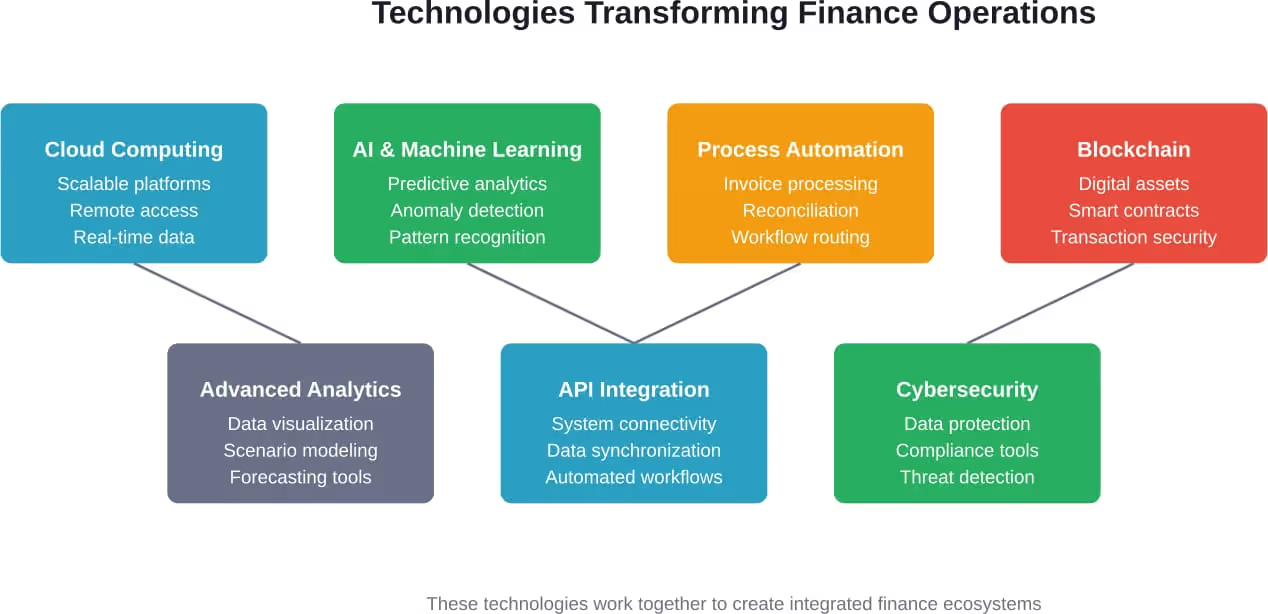
Several emerging technologies are fundamentally reshaping financial operations. Understanding these tools helps organizations prioritize their transformation efforts.
Cloud Computing Platforms
Cloud technology has become the foundation for modern financial systems. These platforms provide scalable, accessible infrastructure that supports remote work and real-time collaboration.
Finance teams can access data and applications from anywhere, enabling distributed operations and faster decision-making. Updates happen automatically, reducing IT burden and ensuring everyone works with current tools.
Artificial Intelligence and Machine Learning
AI capabilities are transforming how finance teams analyze data and identify trends. Machine learning algorithms can detect anomalies in transactions, predict cash flow patterns, and identify optimization opportunities that humans might miss.
These technologies excel at processing vast amounts of data quickly, uncovering insights that inform strategic planning and risk management.
Robotic Process Automation
RPA handles repetitive, rule-based tasks with speed and accuracy. Invoice processing, account reconciliation, and data entry—tasks that once consumed hours of human effort—now happen automatically.
At Plaid, digital transformation initiatives spearheaded by finance leaders resulted in reducing manual billing by over 50%, freeing finance professionals for higher-value work.
Blockchain and Digital Assets
Blockchain technology is gaining traction in financial operations, particularly for transaction security and digital asset management. The AICPA provides resources on Digital Assets and Blockchain as these technologies develop.
Smart contracts enable automated execution of financial agreements, reducing processing time and eliminating intermediaries.
The Business Case for Financial Digital Transformation
Organizations pursuing digital transformation in finance aren’t doing it for the sake of technology. They’re solving real business problems.
| Business Challenge | Traditional Approach | Digital Transformation Solution |
|---|---|---|
| Month-end close takes 10+ days | Manual consolidation across spreadsheets | Automated consolidation with continuous close processes |
| Limited visibility into cash position | Weekly or monthly cash reports | Real-time dashboards with predictive analytics |
| High error rates in data entry | Manual review and correction cycles | Automated data capture with validation rules |
| Difficulty scaling finance operations | Hiring more staff as volume grows | Scalable cloud platforms that grow with the business |
| Compliance and audit complexity | Manual documentation and evidence gathering | Automated audit trails and compliance reporting |
From Cost Center to Value Creator
Finance leaders from Johannesburg to London to Boston express the same frustration, according to roundtables hosted by AICPA leadership. They recognize the gap between the old world of reporting and compliance and the new world of guidance and driving the business.
Digital transformation helps bridge that gap. When technology handles routine tasks, finance professionals can redirect their expertise toward activities that directly impact business outcomes.
Strategic planning. Risk assessment. Investment analysis. Operational optimization. These value-creating activities become possible when teams aren’t buried in transaction processing.
Operational Efficiency Gains
The efficiency benefits of digital transformation are substantial. Automated processes complete in minutes what once took days. Errors decrease dramatically when systems handle data validation and reconciliation.
Cloud platforms eliminate the need for costly on-premise infrastructure. Organizations reduce IT overhead while gaining better performance and reliability.
Real-time data access enables faster month-end closes, accelerated reporting cycles, and more agile response to business needs.
Overcoming Implementation Challenges
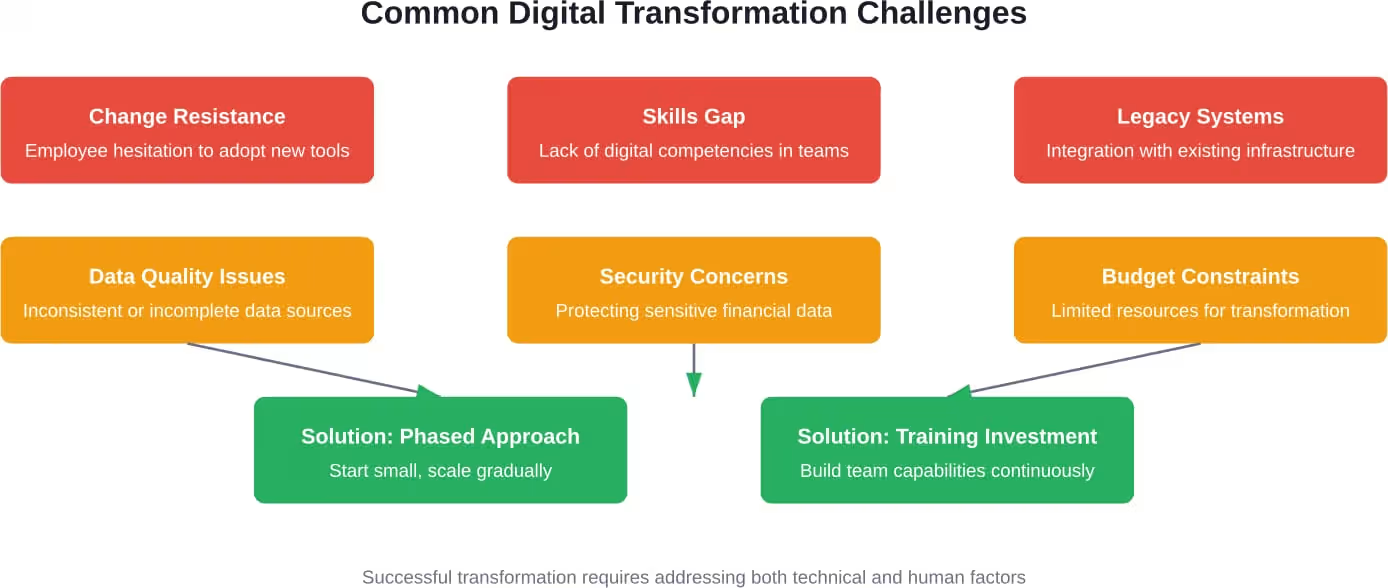
Digital transformation sounds compelling in theory. But implementation presents real obstacles that organizations must address strategically.
Managing Change and Building Skills
Technology creates capacity in the finance function, but capitalizing on that capacity requires the right skills and competencies, as AICPA research emphasizes.
Organizations must invest in training programs that help finance professionals develop digital literacy. Understanding how to work with AI tools, interpret advanced analytics, and leverage automation requires intentional skill development.
Change management becomes critical. When teams understand why transformation matters and how it benefits their work, resistance decreases and adoption accelerates.
Data Security and Compliance
Moving financial data to cloud platforms and implementing connected systems raises legitimate security concerns. Organizations must implement robust cybersecurity frameworks to protect sensitive information.
The NIST Cybersecurity Framework provides comprehensive guidance for managing cybersecurity risk in critical infrastructure, including financial services. Following established frameworks helps organizations build security into their transformation initiatives from the start.
Compliance requirements add complexity. Financial reporting standards, SEC regulations, and industry-specific requirements all continue to apply regardless of technology choices. Digital systems must maintain audit trails, support compliance reporting, and meet regulatory expectations.
Integration and Legacy Systems
Few organizations have the luxury of starting fresh. Most must integrate new digital solutions with existing legacy systems that contain years of critical financial data.
API-based integration approaches help bridge old and new technologies, enabling data flow between systems without requiring complete replacement of functional legacy platforms.
A phased implementation strategy reduces risk. Organizations can pilot new technologies in specific areas, learn from the experience, and gradually expand successful implementations.
The Evolving Role of Finance Professionals
Digital transformation isn’t replacing accountants and finance professionals. It’s redefining what they do and how they add value.
Tasks that once consumed most of an accountant’s time—data entry, transaction processing, reconciliation—increasingly happen automatically. That shift frees professionals to focus on interpretation, analysis, and strategic advisory work.
The role evolves from bookkeeper to business partner. From processor to analyst. From scorekeeper to strategist.
New Skills for a Digital Finance Function
This evolution requires new competencies. Finance professionals need to develop:
- Data analytics skills to extract insights from large datasets
- Technology fluency to work effectively with digital tools
- Strategic thinking to connect financial data with business outcomes
- Communication abilities to translate complex financial information for non-finance stakeholders
- Continuous learning mindset to adapt as technologies evolve
Organizations that invest in developing these capabilities position their finance teams for long-term success in the digital era.
Digital Transformation Trends Shaping Finance in 2026
Several key trends are defining how digital transformation continues to evolve in finance and accounting.
Continuous Close and Real-Time Reporting
The traditional month-end close process, with its tight deadlines and manual effort, is giving way to continuous close approaches. Automated systems process transactions in real-time, maintaining up-to-date financial records throughout the month.
This shift enables faster reporting cycles and provides leadership with current financial visibility when they need it, not weeks after the period ends.
Predictive Analytics and Forecasting
Finance teams are moving beyond descriptive reporting to embrace predictive capabilities. Machine learning models analyze historical patterns to forecast future outcomes, supporting proactive decision-making.
Cash flow forecasting, revenue projections, and risk assessment all benefit from predictive analytics that help organizations anticipate and prepare rather than simply react.
Embedded Finance and API Ecosystems
Financial capabilities are increasingly embedded into operational systems through API connectivity. Purchase orders automatically trigger payment workflows. Sales transactions immediately update revenue recognition systems. Inventory movements instantly impact financial records.
This integration eliminates data silos and reduces the lag between business events and financial reporting.
Enhanced Focus on Data Governance
As finance operations become more data-driven, data governance grows in importance. Organizations need clear policies for data quality, access controls, and lifecycle management.
Strong governance ensures that automated systems work with accurate, consistent data—and that the insights they generate are trustworthy.
Building a Transformation Roadmap
Successful digital transformation requires strategic planning. Organizations need a clear roadmap that balances ambition with practical implementation.
| Phase | Focus Areas | Key Outcomes |
|---|---|---|
| Assessment | Current state analysis, pain point identification, capability gaps | Clear understanding of starting position and priorities |
| Strategy | Vision definition, technology selection, business case development | Approved transformation plan with executive support |
| Foundation | Core platform implementation, data migration, basic automation | Stable technical foundation for future capabilities |
| Acceleration | Advanced analytics, process optimization, integration expansion | Measurable efficiency gains and enhanced insights |
| Optimization | Continuous improvement, emerging technology adoption, capability maturity | Sustainable competitive advantage through finance excellence |
Start with high-impact, lower-risk initiatives that demonstrate value quickly. Success builds momentum and stakeholder confidence for more ambitious next steps.
Prioritize changes that directly address the most significant pain points. If month-end close consumes excessive resources, focus automation efforts there first. If cash visibility is the critical issue, prioritize real-time reporting capabilities.
Moving Finance Forward
Digital transformation in finance and accounting represents more than a technology upgrade. It’s a fundamental shift in how financial operations create value for organizations.
The gap between traditional retrospective reporting and the strategic guidance that businesses need continues to widen. According to research from the AICPA and CIMA’s 18-month study of over 5,500 finance professionals across 2,000 organisations in 150 countries, 65% of finance outputs still focus on hindsight analysis while only 25% of finance teams use predictive and prescriptive analytics.
Technology provides the tools to close that gap. Cloud platforms, automation, AI, and advanced analytics enable finance teams to redirect their expertise from transaction processing to strategic contribution.
But technology alone isn’t sufficient. Successful transformation requires investing in people, managing change effectively, building new capabilities, and maintaining focus on business outcomes rather than just technical implementation.
Organizations that approach digital transformation strategically—with clear roadmaps, phased implementation, and attention to both technical and human factors—position themselves to thrive as financial operations continue evolving.
The finance function of 2026 looks fundamentally different from its predecessor. The question isn’t whether to transform, but how to do it effectively. Start with your most pressing pain points, choose technologies that address real business needs, invest in developing team capabilities, and build momentum through early wins.
The future of finance belongs to organizations that embrace digital transformation thoughtfully and execute it effectively.