

Quick Summary: Digital transformation in energy refers to the integration of advanced technologies like AI, IoT, smart grids, and data analytics into power generation, distribution, and consumption systems. This shift enables utilities to optimize operations, reduce costs, integrate renewable sources, and deliver customer-centric services while addressing the challenges of aging infrastructure and rising demand.
The energy sector stands at a crossroads. Aging infrastructure, surging electricity demand, and the urgent transition to renewable sources have created pressures that traditional operational models simply can’t handle. And here’s the thing—digital transformation isn’t just another industry buzzword. It’s becoming the difference between utilities that thrive and those that struggle to keep the lights on.
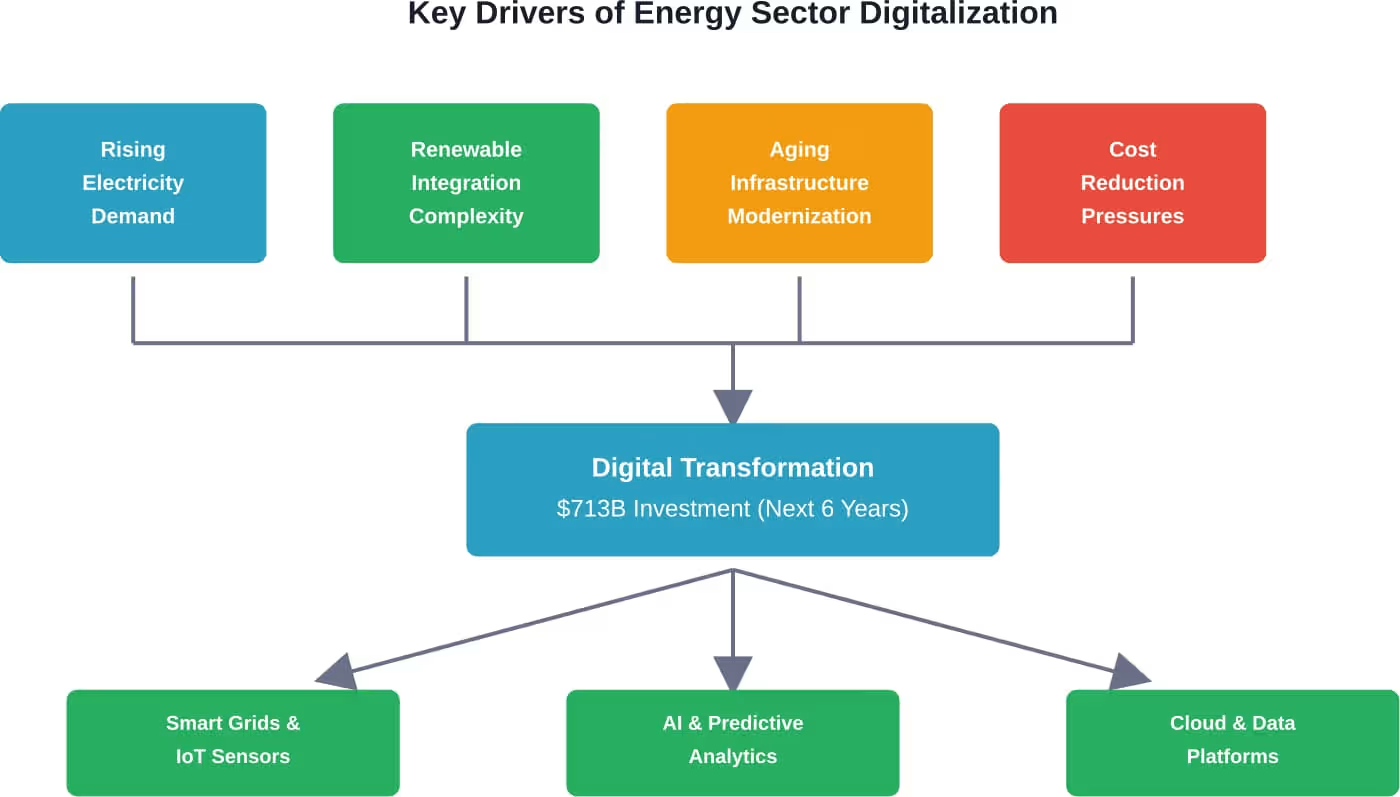
According to ABI Research, energy companies will spend US$713 billion on grid digitalization over the next six years. That’s not a minor upgrade. That’s a fundamental reimagining of how power systems operate, from generation to the customer’s doorstep.
But what does digital transformation actually mean for the energy industry? How are utilities deploying these technologies? And what roadblocks stand in the way?
What Digital Transformation Means for the Energy Sector
Digital transformation in energy represents more than swapping paper records for spreadsheets. It’s a fundamental shift in how energy companies operate, make decisions, and serve customers.
Traditional energy operations relied on rule-based decision models—if X happens, do Y. Digital transformation introduces data-driven decision models that analyze vast amounts of real-time information to predict outcomes and optimize responses. Predictive maintenance replaces reactive repairs. Platform ecosystems replace isolated systems. Customer-centric digital services replace utility-centric billing.
According to the Department of Energy, the American electric grid comprises more than 9,200 electric generating units with over 1 million megawatts of generating capacity, connected to more than 600,000 miles of transmission lines. Managing this massive infrastructure with outdated tools becomes increasingly untenable as demand grows and renewable integration accelerates.
From Automation to True Transformation
There’s a critical distinction worth noting here. Installing automated turbine controls counts as automation. Building an integrated platform that uses sensor data, weather forecasts, and demand patterns to optimize turbine performance across an entire wind farm—that’s transformation.
Real transformation touches three core elements simultaneously: people, processes, and technology. According to IEEE Standard 2023-2025, effective digital transformation requires a comprehensive plan addressing leadership, workforce management, operational workflows, and the digital technologies themselves.
Why Energy Companies Are Racing to Digitalize
Several converging forces are pushing utilities toward rapid digitalization. None of them are going away.
Rising Electricity Demand
Peak load management has become a critical challenge. Utility companies must address growing demand while reducing unexpected outages. The implementation of smart meters has allowed Duke Energy (now Brookfield) to optimize energy consumption management by 25%, demonstrating how digital tools can help balance supply and demand more effectively.
Renewable Integration Complexity
Solar and wind generation create inherent intermittency challenges. Unlike coal or natural gas plants that produce steady, predictable output, renewable sources fluctuate with weather conditions. Managing this variability requires sophisticated forecasting, real-time grid balancing, and energy storage coordination—all of which depend on digital infrastructure.
Infrastructure Aging and Modernization
Much of the existing grid infrastructure was built decades ago. According to the Department of Energy, grid modernization efforts aim to bring utility electricity delivery systems into the 21st century using smart grid technology that enhances reliability, efficiency, and resilience across the nation’s electric infrastructure.
Operational Efficiency Pressures
Cost reduction remains a constant pressure. BP managed to reduce IT infrastructure costs by 30% after migrating to the cloud, enabling more efficient resource allocation for managing renewable energy projects. Cloud migration, automation, and AI-driven optimization all contribute to leaner operations.
Environmental and Regulatory Requirements
The IT sector may account for around 14% of the global CO₂ footprint by 2040 if current trends continue. Digital transformation in energy must address efficiency not just in power generation and distribution, but in the digital infrastructure itself.
Drive Digital Transformation in Energy With LENGREO
Digital transformation in energy focuses on efficiency, new technologies, and adapting to market changes. Companies also need scalable marketing to support growth.
LENGREO helps energy companies align transformation initiatives with measurable business outcomes.
Services include:
- SEO and content for complex services
- targeted outreach and appointment setting
- paid acquisition campaigns
- full funnel demand generation
If you want to build a predictable growth system alongside transformation efforts, contact LENGREO to discuss your strategy.
Core Technologies Powering Energy Sector Transformation
Digital transformation in energy isn’t built on a single technology. It’s an ecosystem of interconnected systems working together.
Smart Grids and IoT Sensors
Smart grid technology represents the foundation of modern energy distribution. According to the Department of Energy, smart grids use advanced technology to bring utility electricity delivery systems into the 21st century, improving reliability, efficiency, and resilience.
IoT sensors deployed throughout the grid collect real-time data on voltage levels, current flow, equipment temperature, and dozens of other parameters. This continuous monitoring enables utilities to detect anomalies before they cause failures, optimize power flow dynamically, and respond to changing conditions in milliseconds rather than hours.
Artificial Intelligence and Machine Learning
AI serves as the brain behind smarter energy grids. Machine learning algorithms analyze historical and real-time data to forecast demand, predict equipment failures, optimize renewable energy dispatch, and identify efficiency opportunities that human analysts would miss.
Intelligent forecasting transforms how utilities plan operations. Instead of relying on simple historical averages, AI models incorporate weather patterns, economic indicators, seasonal variations, and even social events to predict demand with unprecedented accuracy.
Digital Twins for Grid Simulation
Digital twins create virtual replicas of physical grid infrastructure. Engineers can test changes, simulate failure scenarios, and optimize configurations in the digital environment before implementing anything in the real world. This reduces risk, accelerates innovation, and helps utilities visualize how evolving energy networks will perform under various conditions.
Cloud Computing and Data Platforms
The sheer volume of data generated by modern grid operations exceeds what traditional on-premises systems can handle. Cloud platforms provide scalable storage, processing power, and analytics capabilities that adapt to utility needs.
Cloud migration also enables collaboration. Engineers in different locations can access the same data, run simulations simultaneously, and share insights in real time. The cost benefits are substantial—BP’s 30% reduction in IT infrastructure costs demonstrates how cloud adoption frees up resources for strategic initiatives.
Blockchain and Distributed Ledger Technology
While still emerging, blockchain technology offers intriguing possibilities for energy trading, renewable energy certificates, and peer-to-peer power sharing. Distributed ledgers can create transparent, tamper-proof records of energy transactions, enabling new business models and market structures.
That said, energy consumption from certain blockchain applications remains a concern. According to the Energy Information Administration, proof of work cryptocurrencies use significantly more computing power and electricity than proof of stake alternatives. Energy companies exploring blockchain must consider the environmental implications carefully.
Practical Applications Transforming Energy Operations
Theory matters less than results. Here’s where digital transformation delivers tangible value.
Smart Meter Deployment and Demand Response
Smart meters empower the grid edge. These devices provide granular visibility into consumption patterns, enable time-of-use pricing, and facilitate demand response programs that reduce peak loads.
The Duke Energy example illustrates the potential—a 25% optimization in energy consumption management through smart meter implementation. That’s not a marginal improvement. That’s a fundamental shift in how utilities balance supply and demand.
Predictive Maintenance Programs
Equipment failures cost utilities millions in emergency repairs, customer compensation, and lost revenue. Predictive maintenance uses sensor data and machine learning to identify components likely to fail before they actually do.
Instead of following fixed maintenance schedules or waiting for breakdowns, utilities can intervene at the optimal moment—early enough to prevent failure, late enough to maximize component lifespan. This approach reduces maintenance costs while improving reliability.
Renewable Energy Integration and Storage Management
Managing intermittent renewable sources requires sophisticated coordination. Digital platforms integrate weather forecasts, generation data, storage capacity, and demand predictions to optimize when renewable energy flows to the grid versus when it charges battery systems.
This optimization becomes crucial as renewable penetration increases. Without intelligent management, grid stability suffers. With it, utilities can handle much higher renewable percentages while maintaining reliability.
Virtual Substations and Automation
Virtual substations automate processes that previously required manual intervention. Remote monitoring, automated switching, and self-healing grid capabilities reduce operational costs while improving response times to disruptions.
When a fault occurs, traditional grids require crews to locate the problem, isolate the affected section, and manually reroute power. Automated systems can do this in seconds, dramatically reducing outage duration and affected customer counts.
Customer-Facing Digital Services
Digital transformation extends beyond operations to customer experience. Mobile apps provide real-time consumption data, outage notifications, and energy-saving recommendations. Online portals enable customers to manage accounts, compare usage patterns, and enroll in demand response programs without phone calls or office visits.
This shift toward customer-centric services represents a fundamental change in utility business models. Energy companies are evolving from commodity providers to service platforms.
| Technology | Primary Application | Key Benefits |
|---|---|---|
| Smart Meters | Consumption monitoring and demand response | 25% consumption optimization, time-of-use pricing |
| AI/Machine Learning | Demand forecasting and predictive maintenance | Reduced failures, optimized operations |
| Digital Twins | Grid simulation and planning | Risk-free testing, faster innovation |
| Cloud Platforms | Data storage and processing | 30% infrastructure cost reduction, scalability |
| IoT Sensors | Real-time grid monitoring | Anomaly detection, dynamic optimization |
Challenges Blocking Widespread Energy Digitalization
If digital transformation offers so many benefits, why hasn’t every utility already made the leap? The obstacles are significant.
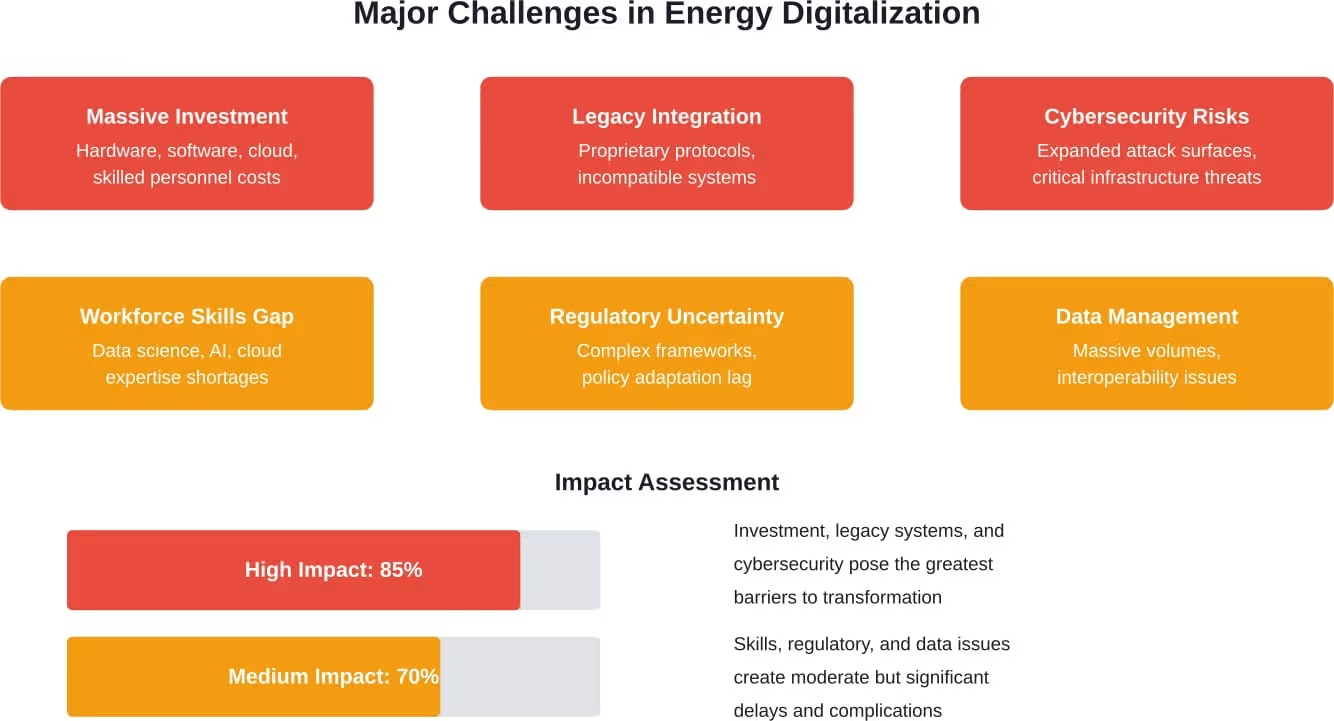
Massive Investment Requirements
The $713 billion spending forecast over six years sounds impressive—and it is. But that’s spread across thousands of utilities globally. For individual companies, especially smaller municipal utilities or those in developing markets, the upfront investment can seem insurmountable.
Grid digitalization requires new hardware (sensors, smart meters, communication infrastructure), software platforms, cloud services, and skilled personnel. Building a business case that justifies these costs while delivering acceptable payback periods remains challenging.
Legacy Infrastructure Integration
Most utilities operate equipment installed decades ago. Integrating modern digital systems with legacy infrastructure creates technical complexity. Proprietary protocols, incompatible data formats, and outdated communication standards all complicate integration efforts.
Ripping out functional equipment to install digital alternatives rarely makes economic sense. Utilities must find ways to bridge old and new, creating hybrid systems that leverage existing assets while adding digital capabilities incrementally.
Cybersecurity and Critical Infrastructure Protection
Digitalization expands attack surfaces. Every connected device, every cloud platform, every API endpoint represents a potential vulnerability. Energy grids qualify as critical infrastructure—attacks can cause widespread disruption, economic damage, and even loss of life.
Implementing robust cybersecurity requires specialized expertise, continuous monitoring, regular updates, and defense-in-depth strategies. The costs and complexity multiply when dealing with thousands of distributed devices across vast geographic areas.
Workforce Skills Gaps
Traditional utility workforces excel at electrical engineering, grid operations, and power generation. Digital transformation demands new skills—data science, software development, cloud architecture, cybersecurity, and AI expertise.
According to IEEE standards, effective digital transformation requires addressing workforce management as a core element. Utilities must recruit new talent, retrain existing employees, and create cultures that embrace technological change. None of this happens quickly or easily.
Regulatory and Policy Uncertainty
Energy markets operate under complex regulatory frameworks that vary by region and jurisdiction. Rate structures, investment recovery mechanisms, data privacy rules, and market participation requirements all impact digitalization decisions.
When regulatory environments remain uncertain or slow to adapt, utilities face risk in making major digital investments. What happens if regulations change and render new systems incompatible or uneconomic?
Data Management and Interoperability
Smart grids generate massive data volumes. Managing this data—storing it, securing it, analyzing it, and extracting value from it—presents ongoing challenges. Data interoperability issues arise when different vendors’ systems use incompatible formats or protocols.
Creating unified data platforms that can integrate information from diverse sources while maintaining data quality, security, and accessibility requires careful architecture and ongoing governance.
How Utilities Can Accelerate Digital Transformation
Despite the challenges, successful pathways exist. Utilities that approach transformation strategically can navigate obstacles and capture value.
Start With Clear Business Objectives
Technology for technology’s sake rarely succeeds. Effective transformation begins with clear business objectives—reduce outages by X%, cut maintenance costs by Y%, integrate Z% renewable capacity, improve customer satisfaction scores.
These objectives guide technology selection, prioritize initiatives, and provide metrics for measuring success. They also help build internal support by connecting digital investments to tangible business outcomes.
Adopt a Phased Implementation Approach
Attempting to transform everything simultaneously invites disaster. Successful utilities phase their initiatives, starting with pilot projects that prove value before scaling across the organization.
A phased approach also allows time for workforce adaptation, reduces financial strain, and creates opportunities to learn from early mistakes before they become catastrophic.
Prioritize Interoperability and Open Standards
Vendor lock-in amplifies long-term costs and limits flexibility. Prioritizing open standards and interoperable systems from the start creates options for future technology changes and prevents proprietary systems from becoming strategic liabilities.
This doesn’t mean avoiding proprietary solutions entirely. But it does mean carefully evaluating integration capabilities, data portability, and long-term vendor viability before making major commitments.
Invest in Cybersecurity From Day One
Bolting security onto digital systems after deployment creates vulnerabilities. Security must be designed into systems from the beginning—secure authentication, encrypted communications, network segmentation, continuous monitoring, and incident response capabilities.
Given the critical nature of energy infrastructure, cybersecurity investments aren’t optional. They’re foundational requirements.
Build Internal Capabilities While Leveraging Partners
Utilities can’t develop all required capabilities internally overnight. Strategic partnerships with technology vendors, system integrators, and specialized consultants accelerate transformation while internal teams build expertise.
The key is maintaining enough internal knowledge to make informed decisions, manage partners effectively, and avoid complete dependence on external resources.
Create Data Governance Frameworks Early
Data management challenges compound over time. Establishing data governance frameworks early—defining data ownership, quality standards, access controls, retention policies, and privacy protections—prevents problems before they become unmanageable.
Good data governance also ensures digital systems deliver reliable insights rather than garbage-in-garbage-out analytics.
Future Trends Shaping Energy Digitalization
The transformation journey continues evolving. Several emerging trends will shape the next phase.
Edge Computing for Real-Time Grid Operations
As grids become more dynamic, processing data at the edge—near where it’s generated rather than in centralized cloud platforms—becomes crucial. Edge computing reduces latency, enabling split-second decisions that centralized systems can’t match.
This matters particularly for grid stability, renewable integration, and autonomous response to anomalies.
Advanced AI and Generative Models
Current AI applications in energy focus largely on pattern recognition and prediction. Generative AI opens new possibilities—automatically generating optimized grid configurations, creating synthetic training data for rare scenarios, and assisting with complex planning tasks.
The technology remains early stage, but its potential impact on energy operations could be substantial.
Decentralized Energy Resources and Microgrids
Traditional centralized generation is giving way to distributed resources—rooftop solar, local battery storage, small wind installations, and vehicle-to-grid systems. Managing these distributed resources requires sophisticated orchestration platforms that coordinate millions of small assets.
Microgrids that can operate independently or connected to the main grid add another layer of complexity and opportunity.
Energy as a Service Models
Business models are evolving beyond commodity electricity sales. Energy-as-a-service offerings bundle generation, efficiency services, storage, and optimization into comprehensive packages. These models shift focus from kilowatt-hour sales to customer outcomes.
Digital platforms enable these new models by providing the data, analytics, and customer interfaces required to deliver and manage complex service offerings.
Hydrogen Economy Integration
As hydrogen gains traction as an energy carrier and storage medium, digital systems must expand to manage hydrogen production, distribution, and consumption alongside traditional electricity operations. This adds new layers of complexity to already intricate energy management systems.
Real-World Success Examples
Theory matters less than proven results. Several companies demonstrate what successful transformation looks like.
Duke Energy’s Smart Meter Deployment
Duke Energy’s implementation of smart meters achieved 25% optimization in energy consumption management. This wasn’t just a technology deployment—it required customer engagement programs, rate structure changes, and operational process redesigns to capture the full value.
BP’s Cloud Migration Results
BP’s 30% reduction in IT infrastructure costs through cloud migration freed up substantial resources for renewable energy project management. The company demonstrated that digital transformation can deliver immediate cost savings while enabling strategic initiatives.
Grid Modernization Initiatives
According to the Department of Energy, grid modernization efforts aim to bring utility electricity delivery systems into the 21st century using smart grid technology that enhances reliability, efficiency, and resilience across the nation’s electric infrastructure. These efforts improve reliability and resilience while supporting renewable integration.
Choosing Technology Partners and Vendors
Selecting the right partners can make or break transformation initiatives. Several factors deserve careful consideration.
Energy Industry Experience
Generic technology vendors often underestimate energy sector complexities. Partners with proven energy industry experience understand regulatory requirements, operational constraints, and domain-specific challenges that generalist vendors miss.
Integration Capabilities
Vendors must demonstrate ability to integrate with existing systems, support open standards, and work within complex heterogeneous environments. Reference implementations in similar environments provide valuable validation.
Security and Compliance Track Record
Given cybersecurity criticality, vendors must show robust security practices, compliance certifications, and incident response capabilities. Security breaches in partner systems can compromise utility infrastructure.
Long-Term Viability
Energy infrastructure operates for decades. Technology partners must demonstrate financial stability and strategic commitment to the energy sector. Startups with innovative solutions but uncertain futures create risk.
Local Support and Service
When grid systems fail, response time matters. Partners with local support presence, service level agreements, and 24/7 availability provide critical backup when issues arise.
| Partner Selection Criteria | Why It Matters | Evaluation Method |
|---|---|---|
| Energy Industry Experience | Understanding of sector-specific constraints and regulations | Reference projects, case studies, domain expertise |
| Integration Capabilities | Ability to work with legacy systems and diverse platforms | Technical demonstrations, integration architecture review |
| Security Track Record | Protecting critical infrastructure from cyber threats | Certifications, security audits, incident history |
| Financial Stability | Long-term support for multi-decade infrastructure | Financial statements, market position, investor backing |
| Local Support | Rapid response to operational issues | Service level agreements, support infrastructure, response times |
Measuring Digital Transformation Success
What gets measured gets managed. Utilities need clear metrics to track transformation progress and demonstrate value.
Operational Efficiency Metrics
Track metrics like maintenance costs, equipment failure rates, mean time to repair, crew utilization, and operational expense ratios. Digital transformation should move these numbers in favorable directions.
Reliability and Quality Indicators
Monitor system average interruption duration index (SAIDI), system average interruption frequency index (SAIFI), and customer average interruption duration index (CAIDI). Improved grid reliability represents a core transformation objective.
Financial Performance
Measure return on digital investments through cost reductions, revenue growth, capital efficiency improvements, and overall profitability impacts. Transformation must deliver business value, not just technological advancement.
Customer Satisfaction
Track net promoter scores, customer satisfaction ratings, complaint volumes, and digital service adoption rates. Customer-centric transformation should improve these metrics.
Renewable Integration Progress
Monitor renewable energy penetration percentages, curtailment rates, storage utilization, and grid stability metrics. Successful transformation enables higher renewable integration without compromising reliability.
Workforce Development
Measure digital skills acquisition, training completion rates, employee engagement, and retention of key technical talent. Transformation requires people development alongside technology deployment.
The Path Forward for Energy Utilities
Digital transformation in energy isn’t optional anymore. The convergence of rising demand, renewable integration requirements, aging infrastructure, and customer expectations makes transformation inevitable. The only question is whether utilities will lead the change or be forced into reactive responses.
The $713 billion investment over the next six years signals industry recognition of transformation’s critical importance. But money alone doesn’t guarantee success. Utilities must approach digitalization strategically, addressing technology, processes, and people simultaneously.
Real talk: transformation is messy. Legacy systems resist integration. Cybersecurity threats evolve faster than defenses. Workforce skills take years to develop. Regulatory frameworks lag behind technological capabilities. But utilities that navigate these challenges methodically—setting clear objectives, phasing implementations, prioritizing interoperability, investing in security, and building capabilities—will emerge stronger, more efficient, and better positioned for the energy future.
The evidence already exists. Duke Energy’s 25% consumption optimization. BP’s 30% infrastructure cost reduction. Department of Energy grid modernization initiatives bringing over 600,000 miles of transmission lines into the 21st century. These aren’t theoretical possibilities. They’re proven results.
For utilities still early in their transformation journeys, the key is starting now. Pilot a smart meter deployment in one service territory. Implement predictive maintenance for critical substations. Deploy a digital twin for a key grid segment. Small wins build momentum, prove value, and develop the organizational capabilities needed for larger initiatives.
The energy sector stands at a pivotal moment. Digital transformation offers the tools to meet unprecedented challenges while creating new value for customers, shareholders, and society. The utilities that recognize this opportunity and act decisively will shape the energy landscape for decades to come.
Ready to explore how digital transformation can strengthen your energy operations? Start by assessing current capabilities, identifying high-impact opportunities, and building a phased roadmap that aligns technology investments with strategic business objectives. The transformation journey requires commitment, but the destination—a more efficient, reliable, sustainable energy future—is worth the effort.