


Quick Summary: Digital transformation in education represents the systematic integration of technology into teaching, learning, and administration to enhance educational outcomes and accessibility. UNESCO reports that 60% of primary schools globally lack internet connectivity, creating significant equity challenges. Successful transformation requires infrastructure investment, teacher training, policy frameworks, and a human-centered approach that prioritizes learning outcomes over technology adoption.
Education is undergoing a fundamental shift. Technology isn’t just supplementing traditional teaching anymore—it’s reshaping how students learn, how teachers instruct, and how institutions operate.
But here’s the thing: digital transformation goes far beyond simply installing computers in classrooms. It’s about rethinking educational models entirely, addressing equity gaps, and preparing students for a world where digital literacy is non-negotiable.
And the stakes couldn’t be higher. According to UNESCO, 2.6 billion people—32% of the global population—still lack internet access, with 1.8 billion living in rural areas. In education specifically, 60% of primary schools, half of lower secondary schools, and a third of upper secondary schools globally aren’t connected to the internet.
What Digital Transformation in Education Actually Means
Digital transformation in education encompasses the comprehensive integration of technology into all aspects of learning and institutional operations. This goes beyond digitizing existing processes.
It’s about fundamentally changing how educational institutions deliver value to students. Schools and universities are moving from traditional four-year programs to flexible, personalized learning experiences that accommodate diverse student needs.
Research shows that 40% of college students work full-time while enrolled in classes. That reality demands educational models that adapt to learners, not the other way around.
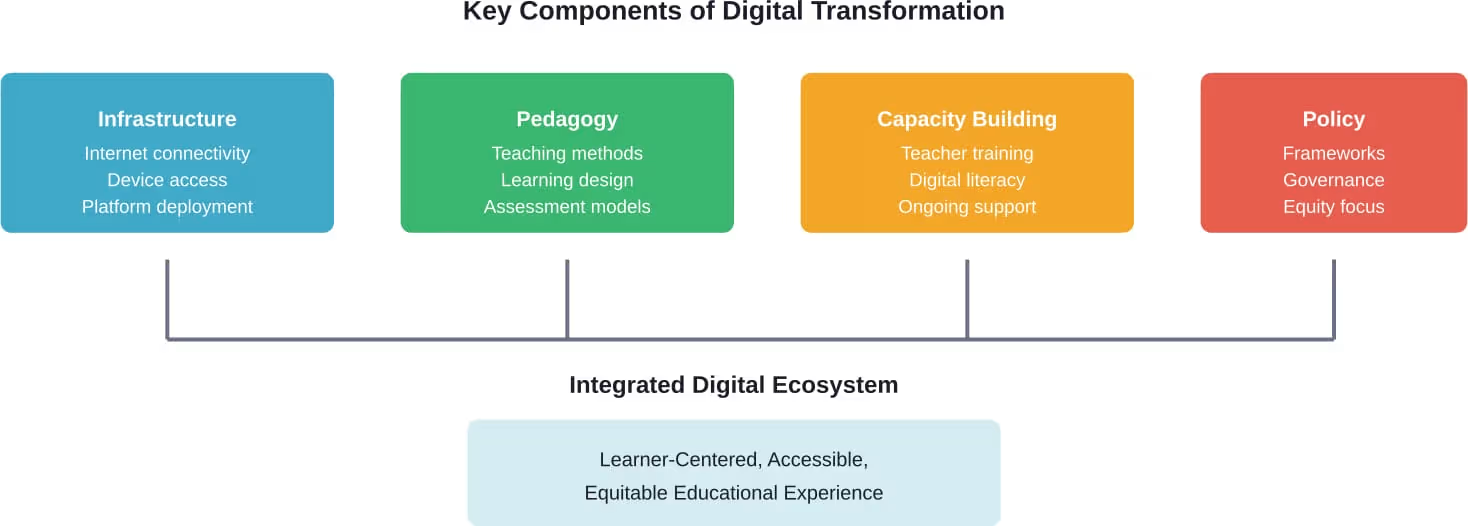
Major Trends Reshaping Educational Technology
Several transformative trends are accelerating across the education sector. Understanding these helps institutions prioritize investments and prepare for what’s coming.
Artificial Intelligence and Adaptive Learning
AI systems are increasingly capturing classrooms worldwide. These technologies personalize learning paths, automate administrative tasks, and provide real-time feedback to students and teachers.
But as UNESCO notes, this rapid evolution is increasingly shaped by commercial interests, creating a need for guidance on ethical implementation and educational equity.
Video-Based Learning Platforms
Video has become central to next-generation campuses. Institutions use video platforms to support asynchronous learning, enable lecture capture, and create flexible educational experiences that fit students’ schedules.
This shift proved critical during disruptions to in-person learning and continues to expand access for non-traditional students.
Virtual and Augmented Reality
Immersive technologies are moving from experimental to practical applications. Virtual reality simulations allow students to practice complex procedures safely, while augmented reality overlays digital information onto physical environments for enhanced learning.
The Global Digital Divide Challenge
Here’s where things get complicated. Digital transformation promises to democratize education, but it’s actually widening existing inequalities in many contexts.
The numbers tell a stark story. While urban schools in developed nations implement AI-powered learning platforms, 60% of primary schools globally can’t access basic internet connectivity.
Rural students face particular barriers. According to the National Center for Education Statistics, in 2019, 76% of rural students had fixed broadband internet access at home, compared to 79% in towns, 80% in cities, and 87% in suburban areas, directly impacting students’ ability to participate in digital learning.
| Context | Primary Challenge | UNESCO Recommendation |
|---|---|---|
| Low-resource settings | Lack of infrastructure and connectivity | Policy support and capacity building |
| Crisis-affected regions | Disrupted learning continuity | Emergency digital platforms and teacher training |
| Rural communities | Limited internet access | Hybrid analog-digital approaches |
| Urban disadvantaged | Device and data costs | Public access programs and subsidies |
UNESCO’s Framework for Human-Centered Transformation
On September 24, 2024, UNESCO and partners launched a common framework to ensure human-centered, sustainable digital transformation of education for all. This framework supports the Global Digital Compact adopted during the UN Summit of the Future.
The framework emphasizes that technology should serve educational goals, not drive them. It prioritizes equity, inclusion, and pedagogical effectiveness over technological sophistication.
At the sixth Annual Meeting of the Global Education Coalition on March 24, 2026, UNESCO gathered member states and education leaders under the theme “Turning vision into value: Transforming education together.”
Real-World Implementation: Lessons From Crisis Response
Sometimes the most valuable insights come from challenging circumstances. In Southern Lebanon, ongoing crises forced schools and vocational institutions to rapidly adopt digital platforms.
Teachers received training to use new platforms effectively with students. As Elias Nemer, a teacher at Qlaiaa Public School, shared: “The training equipped us with the technical and cognitive skills to use new platforms effectively with our students. This has transformed our teaching approach.”
Another teacher noted that methods evolved significantly, achieving around 80% clarity in digital communication with students. Not perfect, but transformative compared to complete learning disruption.
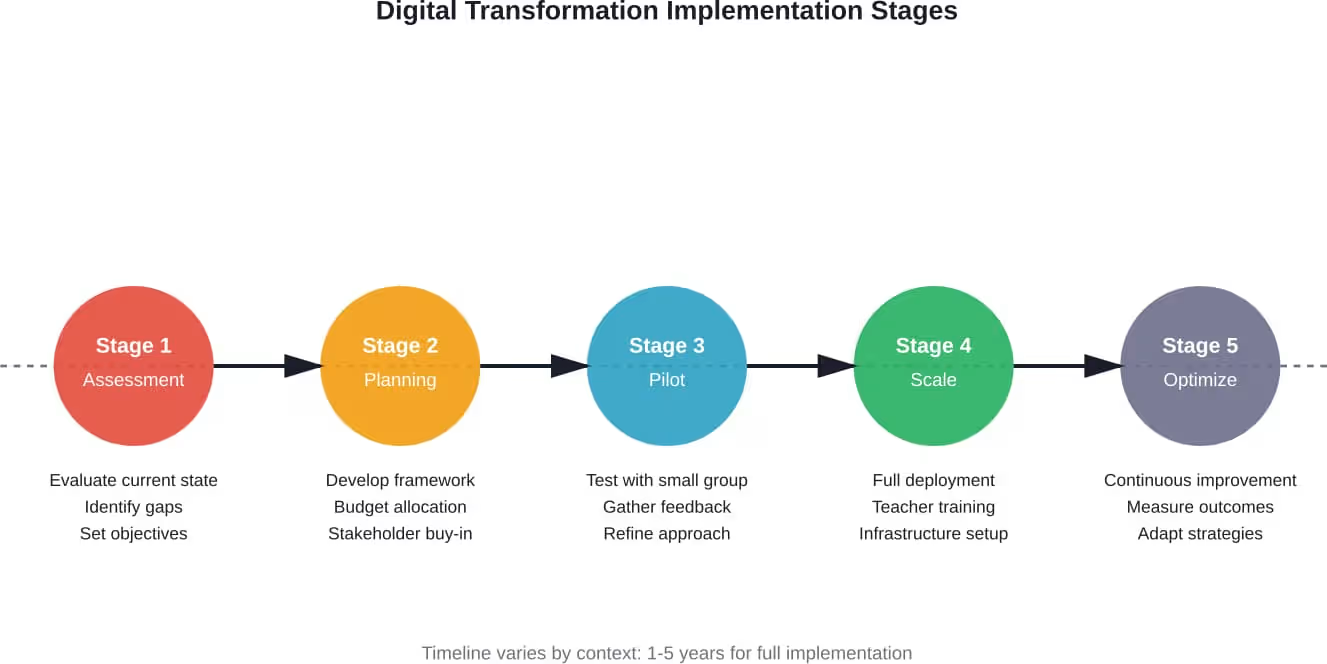
Advantages and Challenges of Digital Transformation
Digital transformation offers compelling benefits. Flexibility allows students to learn on their schedules. Personalization adapts content to individual learning styles and paces. Accessibility breaks down geographic and physical barriers to education.
Data analytics provide insights into student progress, enabling earlier intervention when students struggle. And institutions can scale quality education to larger populations without proportionally increasing costs.
But challenges persist. The infrastructure gap remains massive, particularly in low-resource contexts. Teacher preparation often lags behind technology deployment. Privacy and data security concerns grow as educational institutions collect more student information.
And there’s the fundamental question: does technology actually improve learning outcomes, or just change how we deliver content? The answer depends entirely on implementation quality.
Transform Education Growth With LENGREO
Digital transformation in education focuses on improving access and adapting to digital learning. Growth depends on attracting and converting the right audience.
LENGREO supports education providers with marketing strategies designed to increase visibility and drive enrollment.
Services include:
- SEO and content strategy
- outreach and lead generation
- paid acquisition campaigns
- funnel optimization
If you want to support transformation with consistent enrollment growth, contact LENGREO to get started.
What Comes Next
Digital transformation in education isn’t optional anymore. It’s happening whether institutions actively manage it or not. The question is whether the transformation will be intentional, equitable, and pedagogically sound.
UNESCO’s Digital Transformation Collaborative is working to advance system-wide change that prioritizes human needs over technological capability. The focus is shifting from “what technology can we adopt?” to “what educational problems need solving, and how might technology help?”
That’s the right question. Technology serves education, not the other way around.
For institutions beginning this journey, start with pedagogy. Define learning objectives clearly, then identify where technology genuinely adds value. Invest heavily in teacher training—technology is only as effective as the people implementing it. And build with equity in mind from day one.
The future of education is undoubtedly digital. But it must also remain deeply human.