


Quick Summary: Digital transformation in capital markets refers to the integration of advanced technologies like AI, blockchain, cloud computing, and big data analytics into trading, clearing, settlement, and regulatory processes. According to industry research, leading capital markets firms are rapidly pulling ahead on digitalization, with 35% of firms now classified as digital leaders. This shift enhances market transparency, operational efficiency, and investor protection while presenting cultural and technical challenges that require strategic change management.
Capital markets are experiencing a profound technological shift. Digital assets are reshaping global finance, driving innovation across market infrastructure, clearing, and settlement systems. But what does this transformation actually look like in practice?
The financial services industry can’t afford to lag behind. According to Broadridge’s fourth-annual Digital Transformation and Next-Gen Technology Study, which synthesized interviews with 500 senior-level executives globally, leading companies are rapidly pulling ahead on the digitalization journey.
These leading firms make up 35% of the sample and represent the organizations investing heavily in next-generation technologies. The gap between leaders and laggards isn’t just about technology—it’s about culture, strategy, and execution.
The Two Routes to Digital Success
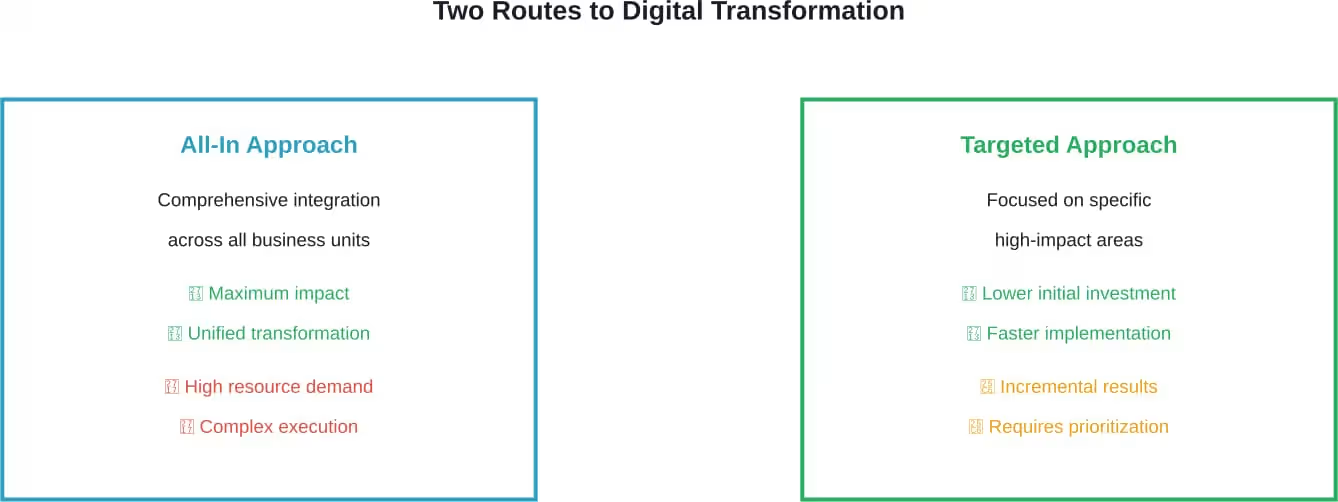
McKinsey’s 2015 working paper on corporate and investment banking laid out two distinct routes for capital markets firms pursuing digital transformation. Neither is inherently better—each suits different organizational contexts.
The all-in approach incorporates digital technologies into every aspect of the business model. This comprehensive strategy requires substantial investment and organizational commitment. It’s not recommended sparingly.
The targeted approach focuses on specific areas where digital capabilities can deliver maximum impact. Many firms choose this path initially, building digital competencies incrementally rather than attempting wholesale transformation overnight.
Which Path Works Best?
Here’s the thing though—success depends less on the chosen route and more on execution quality. Firms that clearly define their digital vision, secure executive buy-in, and allocate sufficient resources tend to succeed regardless of approach.
Grow Capital Markets With LENGREO
Digital transformation in capital markets involves automation and adapting to digital environments. Companies also need efficient client acquisition strategies.
LENGREO supports firms with marketing systems focused on lead generation and revenue growth.
Services include:
- SEO and content strategies
- LinkedIn and email outreach
- paid campaigns
- funnel optimization
If you want to connect transformation with business growth, get a free consultation with LENGREO.
Digital Assets and Market Infrastructure
Digital assets are fundamentally reshaping how capital markets operate. SIFMA emphasizes that as technology evolves, so too must the frameworks that support investor protection, financial stability, and fair competition.
ISDA has responded to this evolution by publishing new standard documentation for digital asset derivatives. These standard definitions provide critical infrastructure for the trading and settlement of digital asset instruments.
But wait. Investor protections can’t be an afterthought. According to SIFMA’s September 2025 publication on protecting investors in tokenized securities, robust investor protections remain the foundation of successful U.S. securities markets. While modernization and tailoring of existing rules will be necessary to accommodate new technologies, existing investor protections must be preserved.
Key Technology Drivers
Several technologies are driving transformation across capital markets:
- Artificial Intelligence: At the 2025 SIFMA Annual Meeting, Bank of America’s Chief Technology and Information Officer Hari Gopalkrishnan discussed the future of AI and strategic decisions driving Bank of America’s $13 billion annual technology investment
- Blockchain and Distributed Ledger Technology: Enabling transparent, immutable transaction records and smart contract execution
- Big Data Analytics: Enhancing market information efficiency and decision-making capabilities
- Cloud Computing: Providing scalable infrastructure and reducing operational costs
The Human Side of Transformation
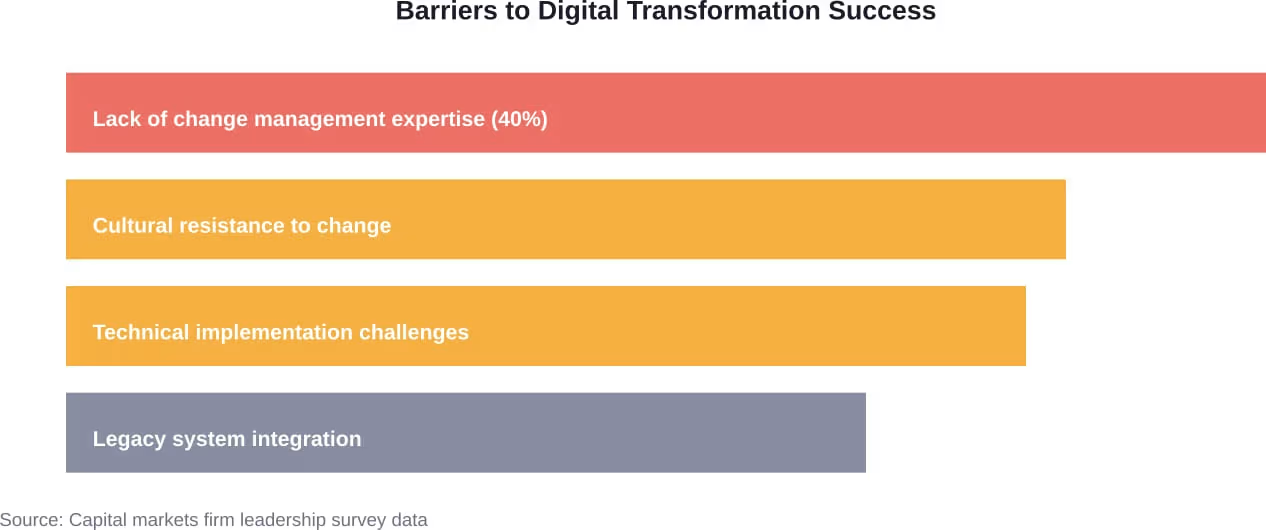
Technology alone doesn’t guarantee success. When asked about the greatest barriers to achieving results from technology, leaders at capital markets firms ranked cultural barriers similarly as high as technical concerns.
Lack of change management expertise topped the list at 40%. This finding reveals a critical gap—firms invest heavily in technology but underinvest in the organizational capabilities needed to deploy it effectively.
Real talk: you can’t transform markets without transforming people. Digital transformation requires new skills, new processes, and new ways of thinking about business problems.
Enhancing Market Transparency and Efficiency
Digital transformation significantly improves transparency in capital markets. Research published in PLoS One assessed the impact of digital transformation on capital market information efficiency in China, where the digital economy has experienced robust and rapid growth.
In 2019, the scale of China’s digital economy reached 35.8 trillion yuan, accounting for 36% of GDP through digitalization. This massive digital expansion generates enormous wealth of big data that can be leveraged for market analysis and decision-making.
The study found that digital transformation significantly affects market information efficiency. Better data availability, faster processing, and improved analytical capabilities enable market participants to make more informed decisions.
Transparency Benefits
| Dimension | Pre-Digital | Post-Digital Transformation |
|---|---|---|
| Trade Reporting | T+1 or delayed | Real-time or near real-time |
| Price Discovery | Fragmented across venues | Aggregated, transparent data |
| Regulatory Compliance | Manual reporting processes | Automated supervisory technology |
| Risk Assessment | Periodic, backward-looking | Continuous, predictive analytics |
| Investor Access | Limited to professionals | Democratized through platforms |
Regulatory Evolution and SupTech
Financial regulators face their own digital transformation challenges. An academic paper published in the Harvard Data Science Review examined the ability of financial regulators to supervise the fast-evolving and technologically enabled world of financial services.
Scars from the 2007–2008 crisis remain. With novel technological approaches being deployed at an unprecedented rate, the question of regulatory ability is often overlooked. How can financial regulators meet the challenges of this growing ecosystem and prevent harmful outcomes for consumers and markets?
Supervisory technologies—known as SupTech—represent a potential solution. These technologies enable regulators to monitor markets more effectively, detect anomalies faster, and respond to emerging risks more efficiently.
At the 2025 SIFMA Annual Meeting, SEC Chair Paul Atkins discussed the Commission’s agenda and priorities in the evolving market environment. The conversation highlighted the SEC’s focus on protecting investors, promoting efficient markets, and supporting innovation that fuels U.S. economic growth.
Sustainable Technology Adoption
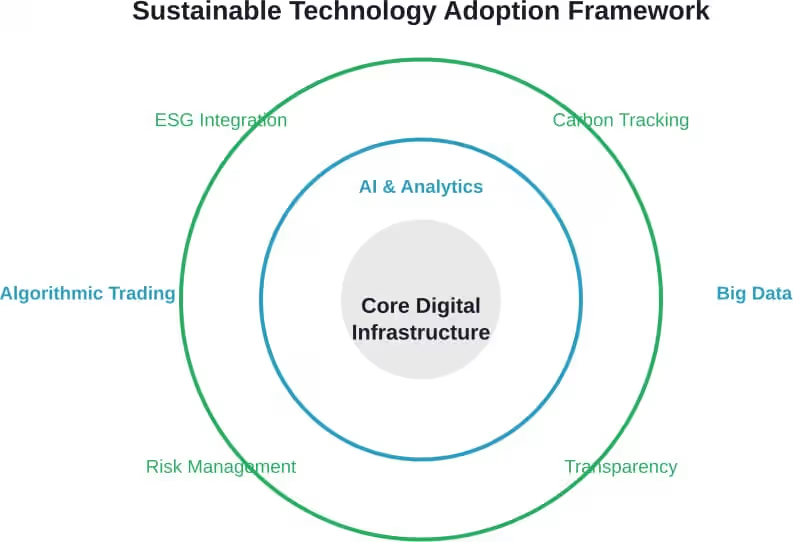
Sustainability has become a critical consideration in capital markets digitalization. Recent research employs structural equation modeling to explore the role of Sustainable Technology Adoption—including AI adoption, algorithmic trading, and big data analytics—in shaping sustainable financial ecosystems.
The rapid advancement of digital technologies has significantly transformed capital markets, fostering not just efficiency and transparency, but sustainability as well. This represents an evolution beyond pure profit optimization toward broader stakeholder value creation.
Strategic Considerations for 2026
Capital markets firms navigating digital transformation in 2026 face several strategic decisions. At the 2026 Asset Management Derivatives Forum, senior leaders across the derivatives ecosystem examined the market structure, regulatory, and technological forces reshaping derivatives markets.
Industry experts shared perspectives on policy priorities and operational challenges, including treasury clearing, liquidity management, private markets access, and evolving derivatives market structure.
So what priorities should firms focus on? Consider these strategic imperatives:
- Build vs. Buy vs. Partner: Determine which capabilities to develop internally versus acquire through partnerships or vendors
- Data Strategy: Establish robust data governance, quality controls, and analytics capabilities
- Talent Development: Invest in upskilling existing workforce and recruiting digital-native talent
- Regulatory Engagement: Participate actively in shaping regulatory frameworks for digital assets and market infrastructure
- Customer Experience: Leverage technology to enhance service delivery and accessibility
Conclusion
Digital transformation in capital markets isn’t optional anymore. It’s a competitive necessity that determines which firms will lead and which will struggle to keep pace.
The evidence is clear: leading firms are rapidly pulling ahead, leveraging AI, blockchain, and data analytics to enhance transparency, efficiency, and sustainability. But technology alone won’t deliver these outcomes. Success requires addressing cultural barriers, investing in change management capabilities, and maintaining focus on investor protection.
As regulatory frameworks evolve and digital assets become mainstream, capital markets firms must make strategic choices about how to transform. Whether pursuing comprehensive or targeted approaches, the key is decisive action backed by clear vision and organizational commitment. The future of capital markets is digital—and that future is now.