Quick Summary: Digital transformation is the integration of digital technology across all areas of a business, fundamentally changing how organizations operate, deliver value to customers, and compete in modern markets. It’s not just about adopting new tools—it’s a strategic shift that requires cultural change, process reimagining, and continuous adaptation to stay relevant in an increasingly digital economy.
The term “digital transformation” gets thrown around in boardrooms and strategy sessions constantly. But what does it actually mean?
Here’s the thing: digital transformation isn’t about buying the latest software or migrating everything to the cloud. Those are tactics. Real digital transformation involves fundamentally rethinking how a business operates, competes, and creates value in an increasingly digital world.
And the stakes couldn’t be higher. According to McKinsey research, between 2018 and 2022, digital leaders achieved approximately 65% greater annual total shareholder returns compared to companies lagging behind in their digital efforts.
Yet many organizations struggle to execute these transformations effectively. MIT CISR research suggests that digital business transformations may be stalling—in 2020, companies reported their transformations were 50% complete, but by 2022, they had only progressed to 55% complete.
So what’s going on? Why do some organizations thrive while others stumble?
What Digital Transformation Really Means
Digital transformation represents the integration of digital technology into all areas of a business, fundamentally changing how operations run and how value gets delivered to customers. But that definition doesn’t capture the full picture.
It’s also a cultural shift. Organizations must continually challenge established practices, experiment with new approaches, and develop comfort with failure as part of the learning process.
The concept goes beyond simply digitizing existing processes. That’s digitization—taking analog processes and making them digital. Real transformation involves rethinking business models, customer experiences, and operational frameworks from the ground up.
The Two Faces of Digital Transformation
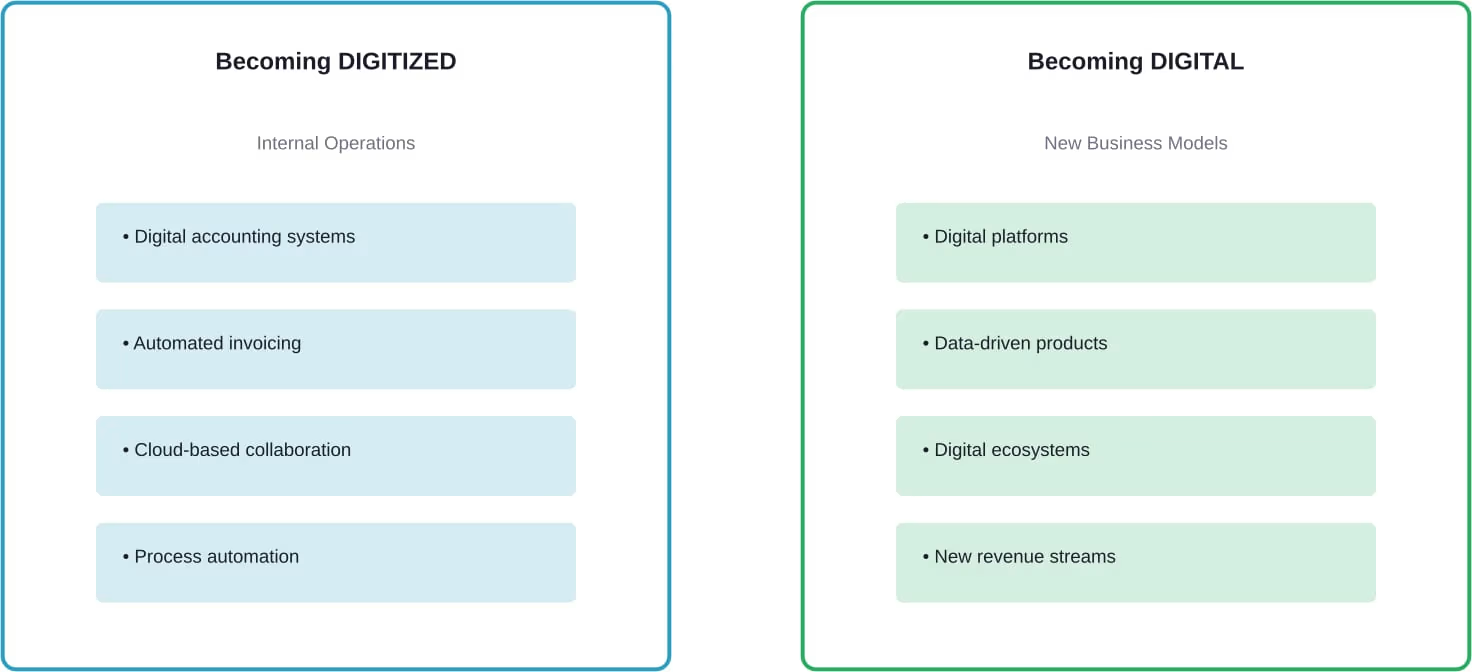
According to research from MIT Sloan, companies must undergo two distinct digital transformations to thrive in the digital age. They need to become digitized and digital—and these aren’t the same thing.
Becoming digitized means incorporating digital technology into core operations like accounting, invoicing, inventory management, and internal communications. This improves efficiency in existing processes.
Becoming digital involves developing a digital platform for the company’s offerings—new products, services, and business models that wouldn’t exist without digital technology.
Both transformations rely on similar technologies like analytics, artificial intelligence, and cloud computing. But they serve different strategic purposes and require different implementation approaches.
Why Strategy Matters More Than Technology
Here’s where many organizations get it wrong. They focus on the technology first.
According to MIT Sloan Management Review and Deloitte research, only 15% of respondents from companies at early stages of digital maturity say their organizations have a clear and coherent digital strategy.
Among digitally maturing organizations? More than half report having that clarity.
The difference between success and struggle often comes down to this: maturing digital businesses focus on integrating digital technologies in service of transforming how their businesses work. Less mature organizations solve discrete business problems with individual digital technologies.
Strategy, not technology, drives successful transformation.
The Digital Dexterity Factor
Research from MIT Sloan Review, based on global roundtables with over 240 leaders and surveys of over 8,300 leaders, reveals an important finding: leaders who frame transformation as developing a digitally capable workforce make more progress than those who don’t.
This concept—called digital dexterity—represents the ability and ambition to use technology for better business outcomes. Organizations that prioritize building workforce capabilities alongside technology implementation see better results.
Real talk: technology is the easy part. The hard part? Getting people to change how they work.
Scale Business Transformation With LENGREO
Digital transformation in business involves improving processes and adopting new technologies. Growth requires a strong marketing and lead generation system.
LENGREO helps companies align strategy with execution to drive measurable results.
Support includes:
- SEO and content strategy
- outreach and lead generation
- paid acquisition
- demand generation planning
If you want to turn transformation into consistent revenue growth, contact LENGREO to discuss your goals.
Core Components of Digital Transformation
Digital transformation touches virtually every aspect of how a business operates. But certain domains consistently emerge as transformation focal points.
Customer Experience and Engagement
Customer expectations have fundamentally shifted. According to Salesforce’s “State of the Connected Customer” report (first edition), over half of customers say technology has significantly changed their expectations of how companies should interact with them.
More specifically, 73% of customers prefer to do business with brands that personalize their experience. And CommerceNext’s “Year of the Customer” report found that 2020 saw a 10% increase (39% to 49%) in businesses prioritizing personalization tactics.
Organizations transform customer experience by leveraging data analytics, AI-powered personalization, omnichannel engagement platforms, and real-time interaction capabilities.
Operations and Process Automation
Operational transformation involves reimagining how work gets done. This includes automating repetitive tasks, using analytics to optimize workflows, and implementing cloud-based systems that enable flexibility and scalability.
As commonly stated in digital transformation literature, information has become “the oil of the 21st century, and analytics is the combustion engine.”
Organizations must figure out how to extract value from data while often maintaining legacy systems that can’t simply be replaced overnight.
Business Models and Revenue Streams
Digital transformation often requires rethinking fundamental business models. According to SAP’s research, only 11% believe their current business models will be economically viable through 2023, while 64% say their companies need to build new digital businesses.
This might involve shifting from product sales to subscription services, creating platform-based ecosystems, developing data-driven offerings, or building entirely new digital revenue streams.
Data and Analytics Capabilities
Data sits at the heart of digital transformation. Organizations need infrastructure to collect, store, analyze, and act on data at scale.
This involves cloud data platforms, analytics tools, machine learning capabilities, and importantly—the governance frameworks to manage data responsibly and securely.
Technology Infrastructure
Modern infrastructure provides the foundation for transformation. Cloud computing enables scalability and flexibility. APIs facilitate integration across systems. Mobile platforms extend capabilities to employees and customers wherever they are.
But as Beth Devin, Managing Director and Head of Innovation Network & Emerging Technology at Citi Ventures, explained, legacy technology can become a costly barrier. When 70-80% of the IT budget goes to operating and maintaining legacy systems, there’s not much left to seize new opportunities.
| Transformation Domain | Key Technologies | Primary Impact |
|---|---|---|
| Customer Experience | CRM, AI personalization, omnichannel platforms | Increased loyalty and satisfaction |
| Operations | Automation tools, process mining, cloud systems | Efficiency gains and cost reduction |
| Business Models | Platforms, APIs, digital products | New revenue streams |
| Data & Analytics | Data lakes, ML/AI, visualization tools | Better decision-making |
| Infrastructure | Cloud computing, containers, microservices | Agility and scalability |
The Culture Challenge Nobody Talks About
Technology problems are solvable. Culture problems? Much harder.
Digital transformation requires organizations to continually challenge the status quo, experiment, and get comfortable with failure. That’s a fundamentally different mindset from traditional corporate culture built on predictability and risk avoidance.
Organizations face what MIT CISR researchers call “organizational inertia”—resistance to change that slows or stalls transformation efforts. Three sources of inertia consistently appear:
Established routines and processes: People know how to do their current jobs. New systems and processes require learning and adjustment. The path of least resistance is sticking with what works.
Vested interests: Transformation threatens existing power structures, roles, and departments. Those who benefit from current arrangements may resist change consciously or unconsciously.
Cognitive frames: How people understand and interpret their work environment shapes what seems possible or impossible. If leadership views digital as an IT problem rather than a business strategy, transformation stalls.
Generating Momentum
So how do organizations overcome inertia? MIT CISR research identifies three actions that generate momentum in digital business transformations:
First, create shared understanding through clear communication about why transformation matters and what success looks like. Ambiguity breeds resistance.
Second, build coalitions across the organization rather than trying to drive change from a single department. Digital transformation isn’t an IT initiative—it’s a business initiative that requires cross-functional commitment.
Third, demonstrate quick wins that show tangible value. Nothing builds momentum like visible success.
Implementation Framework and Approach
Organizations need structured approaches to navigate transformation complexity. While every company’s journey differs, successful implementations share common patterns.
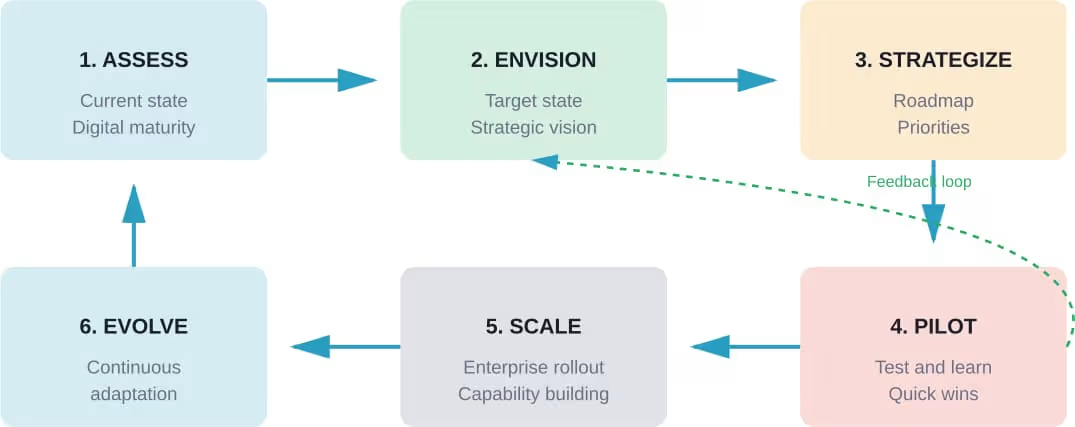
Assessment and Vision Setting
Transformation starts with understanding the current state. Where does the organization sit on the digital maturity curve? What capabilities exist? What gaps need addressing?
Equally important: defining the target state. What does success look like? How will digital capabilities enable the business strategy?
This isn’t a technology exercise. Leadership must articulate a clear vision for how digital transformation serves business objectives.
Strategy Development
With vision established, organizations develop strategies addressing specific transformation domains. This includes prioritizing initiatives, allocating resources, defining success metrics, and establishing governance structures.
The strategy should address both becoming digitized (operational efficiency) and becoming digital (new business models and offerings).
Pilot and Scale
Rather than attempting enterprise-wide transformation all at once, successful organizations often start with pilot initiatives that test approaches and build capabilities in contained environments.
Pilots generate learnings, demonstrate value, and build organizational confidence. Once proven, successful pilots can scale across the organization.
Continuous Evolution
Digital transformation isn’t a project with an end date. It’s an ongoing capability.
Markets evolve. Technologies advance. Customer expectations shift. Organizations must build muscles for continuous adaptation and improvement.
Measuring Success and ROI
How do organizations know if transformation efforts are working?
This represents one of the biggest challenges leaders face. Digital transformation involves long time horizons, significant investments, and outcomes that don’t always map neatly to traditional ROI calculations.
Financial Metrics
Bottom-line impact matters. Organizations track metrics like revenue growth from new digital offerings, cost reductions from operational improvements, and overall return on transformation investments.
The McKinsey research mentioned earlier found that digital leaders achieved significantly higher total shareholder returns—demonstrating that transformation does translate to financial performance.
Operational Metrics
Efficiency gains provide concrete evidence of transformation impact. Time to market for new products, process cycle times, error rates, and resource utilization all offer measurable indicators.
Automation levels, system uptime, and integration completeness also signal progress.
Customer Metrics
Customer-facing improvements show up in satisfaction scores, Net Promoter Scores, customer lifetime value, retention rates, and digital engagement levels.
These metrics connect transformation efforts directly to customer value delivery.
Capability Metrics
Some transformation outcomes involve building organizational capabilities that enable future innovation. Digital skill levels across the workforce, speed of innovation, and ability to adapt to market changes represent important but harder-to-quantify measures.
| Metric Category | Example Measures | What It Reveals |
|---|---|---|
| Financial | Revenue growth, cost savings, ROI | Bottom-line business impact |
| Operational | Cycle time, automation %, error rates | Efficiency improvements |
| Customer | NPS, satisfaction, digital adoption | Value delivery to customers |
| Capability | Digital skills, innovation speed | Future readiness |
Common Pitfalls and How to Avoid Them
Most organizations stumble in predictable ways. Awareness helps avoid these traps.
Technology-First Thinking
Starting with technology rather than strategy leads to expensive tool collections that don’t solve real problems. Technology should serve strategy, not drive it.
Organizations succeed when they start with business objectives and work backward to determine what technology enables those objectives.
Underestimating Culture Change
Transformation requires people to work differently. Without addressing culture, change management, and skills development, even the best technology implementations fail.
Leadership must actively work on the human side of transformation—not as an afterthought but as a core component.
Lack of Executive Alignment
When leadership teams don’t share a common vision and commitment to transformation, efforts fragment. Different executives pursue conflicting priorities. Resources get spread too thin.
Successful transformation requires executive alignment and sustained leadership commitment.
Trying to Do Everything at Once
Digital transformation touches so many areas that organizations often try to tackle everything simultaneously. This dilutes focus and resources.
Better approach: prioritize ruthlessly. Identify the highest-impact initiatives. Build momentum through focused execution.
Ignoring Legacy Constraints
Organizations often operate with significant legacy technology and process constraints. Transformation plans that ignore these realities fail when they collide with actual implementation challenges.
Successful transformations acknowledge constraints and develop pragmatic approaches to work within them while gradually modernizing.
The Cybersecurity Imperative
Digital transformation expands attack surfaces and creates new security challenges. As organizations connect more systems, collect more data, and enable more digital touchpoints, cybersecurity becomes critical.
The National Institute of Standards and Technology (NIST) provides frameworks to help organizations better understand and improve their management of cybersecurity risk. These frameworks prove particularly important as organizations navigate transformation while maintaining cybersecurity for both IT environments and operational technology systems.
Security can’t be an afterthought. Organizations must build security into transformation initiatives from the beginning—what’s commonly called “security by design.”
This includes identity and access management, data encryption, network segmentation, threat monitoring, incident response capabilities, and importantly—security awareness and training for employees.
Real-World Impact and Examples
Digital transformation plays out differently across industries, but common patterns emerge.
Manufacturing and Industrial Sectors
Manufacturing organizations increasingly focus on smart manufacturing initiatives—using sensors, data analytics, and automation to optimize production processes.
According to NIST research on cybersecurity for smart manufacturing, organizations must balance innovation with security, particularly for industrial control systems operating in production environments.
Digital twins—virtual representations of physical assets—enable manufacturers to simulate changes before implementation. Predictive maintenance reduces downtime by identifying equipment issues before failure.
Retail and Consumer Business
Retail transformation centers on omnichannel customer experience, personalization, and supply chain optimization. Customers expect seamless experiences whether shopping online, via mobile, or in physical stores.
Data analytics enable personalized recommendations and targeted marketing. As noted earlier, nearly half of businesses now prioritize personalization tactics—up from 39% just a few years ago.
Financial Services
Banks and financial institutions face unique transformation challenges. According to McKinsey’s Finalta benchmark tracking 80 global banks from 2018 to 2022, digital leaders in banking create substantially more shareholder value than laggards.
Transformation in financial services involves digital channels for customer interaction, automated processes for efficiency, advanced analytics for risk management and fraud detection, and increasingly, exploring new business models through fintech partnerships.
Public Sector Innovation
Government organizations and public sector entities increasingly pursue digital transformation to improve citizen services and operational efficiency.
According to IEEE Digital Reality research on digital transformation’s societal impacts, the province of Trentino in northern Italy created a digital platform aggregating over 120 databases with information about societal, economic, and operational aspects of life in the region. All stakeholders can access information about traffic patterns, agriculture, healthcare, and other community aspects.
This demonstrates how digital transformation can serve public good while improving government efficiency.
Industry Disruption Effects
Digital transformation doesn’t just improve existing businesses—it can fundamentally disrupt industries. According to IEEE research, the music industry provides a stark example. In 1995, based on sales of CDs, cassette tapes, and vinyl records, the music industry was valued at $21.5 billion. Since then, the industry’s value has dropped more than 50% as digital distribution transformed business models.
Mature markets face particular vulnerability to digital disruption when new entrants leverage digital capabilities to compete differently.
Looking Ahead: Transformation in 2026 and Beyond
Digital transformation continues evolving as technologies mature and new capabilities emerge.
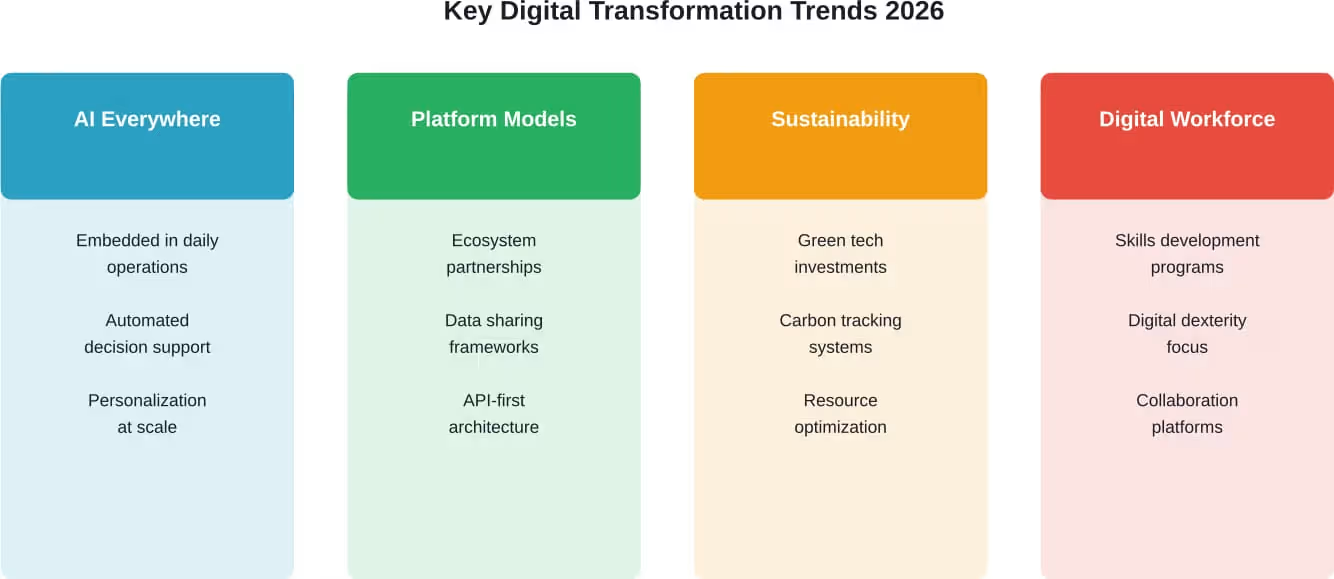
Artificial Intelligence Integration
AI and machine learning move from experimental to mainstream. Organizations increasingly embed AI into operations, customer interactions, and decision-making processes.
The focus shifts from “Can we use AI?” to “Where does AI create the most value?”
Data Ecosystems and Platforms
Platform-based business models become more prevalent. Organizations build ecosystems connecting suppliers, partners, and customers through digital platforms.
Data sharing and interoperability emerge as competitive advantages.
Sustainability and Digital
Digital transformation increasingly connects to sustainability objectives. Technology enables better resource management, reduced waste, optimized logistics, and improved environmental monitoring.
Organizations recognize digital capabilities as essential to meeting sustainability commitments.
Workforce Evolution
The nature of work continues changing. Remote and hybrid models become permanent features. Digital collaboration tools evolve beyond simple replacements for in-person interaction.
Organizations focus on building digital dexterity across the workforce—not just among technical specialists but throughout the organization.
Getting Started: Practical Next Steps
So where does an organization begin?
First, assess honestly. Where does the organization stand in its digital maturity? What capabilities exist? What gaps create the biggest constraints?
Second, define the “why.” Digital transformation for its own sake wastes resources. What business outcomes matter most? How can digital capabilities enable those outcomes?
Third, build coalitions. Identify champions across the organization. Transformation can’t succeed as a top-down decree—it requires engagement and commitment across functions.
Fourth, start focused. Pick one or two high-impact areas. Demonstrate value. Build momentum. Scale from there.
Fifth, invest in people. Technology is useless without people who can leverage it effectively. Skills development, change management, and culture work matter as much as technology implementation.
Sixth, measure and learn. Define success metrics. Track progress. When things don’t work, figure out why and adjust. Transformation is iterative.
And finally, commit for the long term. Digital transformation isn’t a project—it’s a journey. Organizations that treat it as such outperform those looking for quick fixes.
Conclusion: Transformation as Competitive Necessity
Digital transformation has moved from competitive advantage to competitive necessity.
Organizations that successfully integrate digital technology across operations, reimagine business models, and build digitally capable workforces are achieving substantially better financial performance. McKinsey research found 65% greater annual shareholder returns for digital leaders compared to laggards.
But success requires more than buying technology. It demands clear strategy, executive alignment, cultural change, workforce development, and sustained commitment. Organizations must become both digitized (efficient operations) and digital (new business models).
The challenges are real. Organizational inertia, legacy constraints, and the sheer complexity of enterprise-wide change create significant obstacles. Many transformations stall or fail to deliver expected value.
Yet the organizations that get it right—those that prioritize strategy over technology, invest in people alongside systems, and commit to continuous evolution—are building sustainable competitive advantages.
The question isn’t whether to pursue digital transformation. Markets and customer expectations have already answered that question. The question is how to do it effectively.
Start with strategy. Focus on business outcomes. Build coalitions. Demonstrate value. Invest in capabilities. Measure progress. Learn and adapt.
Digital transformation is a journey, not a destination. Organizations that embrace that mindset and commit to the long-term work are positioning themselves to thrive in an increasingly digital world.
The time to start—or accelerate—that journey is now.