


Let’s be honest – guesswork doesn’t cut it anymore. Marketing’s not about who shouts the loudest; it’s about who understands their audience better. That’s where data steps in. Real insights. Real patterns. Real signals you can act on. Whether you’re refining your email strategy or rethinking your ad spend, data-driven marketing isn’t just a buzzword – it’s how smart brands move forward.
In this article, we’ll dig into strategies that put your numbers to work without turning your message into a spreadsheet.
Why Data-Driven Marketing Matters Now More Than Ever
Marketing has always been about understanding people – what they need, what they value, and what makes them act. The difference now is that we finally have the tools to move beyond guesswork. With every click, scroll, purchase, or unsubscribe, customers leave behind a trail of data. The real question is: are you doing anything with it?
Data-driven marketing isn’t just a trend or a shiny tactic for big brands. It’s a shift in mindset. Instead of relying on intuition or gut feeling, marketers are now using real data to inform decisions, predict behavior, and personalize experiences in ways that feel relevant, not robotic.
But this isn’t about drowning in spreadsheets. It’s about being smart with the data you already have, starting with what matters most to your customers, and using that to build better experiences and better results.
How We Put Data at the Center of Everything We Do
At Lengreo, data isn’t something we check after a campaign – it’s what we build everything around from the start. When we create marketing strategies for our clients, whether it’s SEO, paid ads, or lead generation, we always begin with one question: what does the data tell us? That means we’re not relying on gut instinct or industry cliches. We’re looking at actual performance, real user behavior, and hard numbers to guide every step.
This approach has helped us deliver serious results for clients in software, fintech, IT, and beyond. We’ve boosted conversion rates, scaled qualified outreach into thousands of prospects, and optimized lead generation funnels – all by making data part of the decision-making process, not an afterthought. Every tactic we recommend, from content strategy to LinkedIn outreach, is shaped by evidence, tested, and optimized for impact.
Best Data-Driven Marketing Strategies You Can Use Today
The strategies below are practical, proven, and adaptable. Whether you’re running a lean startup or leading a growing marketing team, these are the tactics that move the needle. Each one is grounded in real-world results, not theory. Think of this as your playbook for making smarter, faster, more informed marketing decisions – without overcomplicating the process.
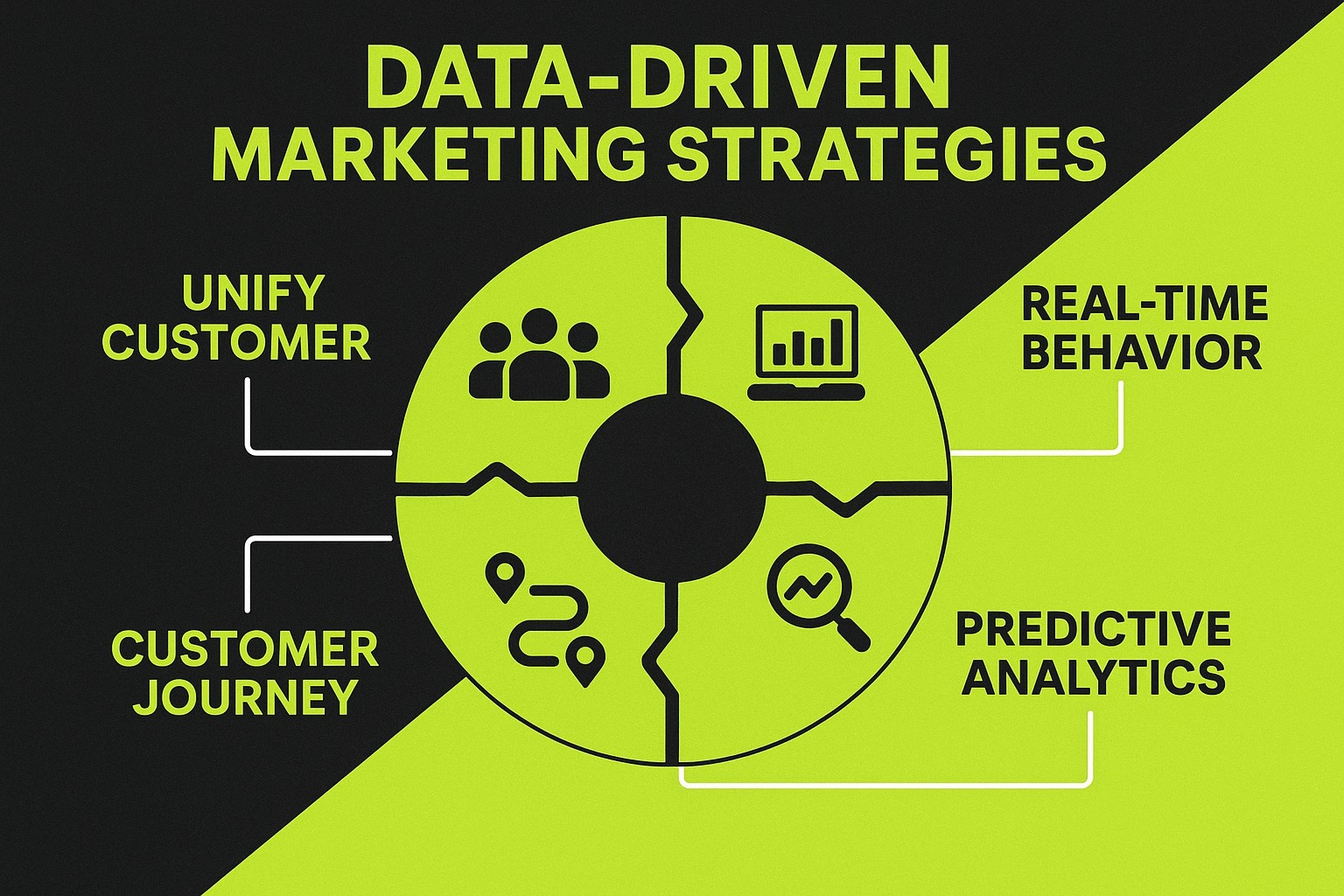
1. Unify Your Customer Data Across Channels
Before you start analyzing or optimizing anything, you need a complete picture of your customers. Most businesses still store their data in silos – email behavior in one tool, purchase history in another, and website traffic somewhere else entirely.
Unifying this data means pulling it all into one place so you can see the full story. This is usually done with a marketing data platform or a customer data platform (CDP). It’s what allows you to stop looking at touchpoints in isolation and start understanding how your customers interact with your brand across the entire journey.
What this unlocks:
- Consistent personalization across email, ads, and web.
- Cleaner segments based on full behavior, not partial data.
- Better campaign performance tracking and optimization.
After centralizing your customer data, you may improve signups by several times and create a more cohesive, personalized experience across email, web, and in-store touchpoints.
2. Segment Your Audience Based on Real Behavior
Forget broad demographic buckets like age or zip code. The most useful segmentation comes from how people behave. Data-driven segmentation looks at what people actually do – like how often they buy, what content they engage with, or when they tend to convert.
This kind of segmentation helps you create more relevant campaigns that feel tailored without being intrusive.
Effective behavior-based segments might include:
- Customers who only buy during sales.
- Visitors who viewed a product multiple times but didn’t buy.
- Users who haven’t opened emails in 90 days.
- Subscribers who always click but never convert.
Research shows that the majority of marketing ROI comes from campaigns that are properly segmented and targeted. It’s not a minor improvement either. It’s one of the biggest drivers of real growth.
3. Use Predictive Analytics to Anticipate What Comes Next
Imagine knowing which customers are most likely to buy again, or who’s on the verge of churning, or what product someone might need next. That’s what predictive analytics makes possible.
By analyzing past behaviors and feeding that data into predictive models, you can identify patterns and forecast future actions. It’s not about reading minds – it’s about using math to make smarter bets.
Predictive models come in handy when you want to go beyond reacting and start anticipating what your customers are likely to do next. For instance, they can help you spot high-value leads early, so your team knows where to focus. They’re also great for flagging users who might be about to churn, giving you time to send the right message or offer before it’s too late.
Based on past purchases, you can use predictions to suggest relevant upsells or cross-sells that actually make sense to the customer. And when it comes to ad spend, predictive insights let you prioritize audiences who are more likely to convert, so your budget goes further.
4. Map the Customer Journey from Start to Finish
The path to conversion isn’t linear. Customers jump between devices, browse anonymously, revisit later, or buy through a different channel entirely. Mapping the customer journey helps you understand how those paths actually unfold.
Instead of looking at isolated touchpoints, you start seeing patterns: where people fall off, where they hesitate, and what pushes them toward a decision.
Key steps in customer journey mapping:
- Identify your core customer types or use cases.
- Track key touchpoints (ads, emails, site visits, support chats, etc.).
- Look for common drop-off points or delays.
- Use the insights to simplify, streamline, and personalize.
A business with a scattered customer experience is able to restructure its approach by building a lifecycle-based strategy. By introducing personalized, automated messages at key stages of the journey, it can create a smoother, more relevant experience for users, which can lead to a lift in revenue from those engaged in the updated flow.
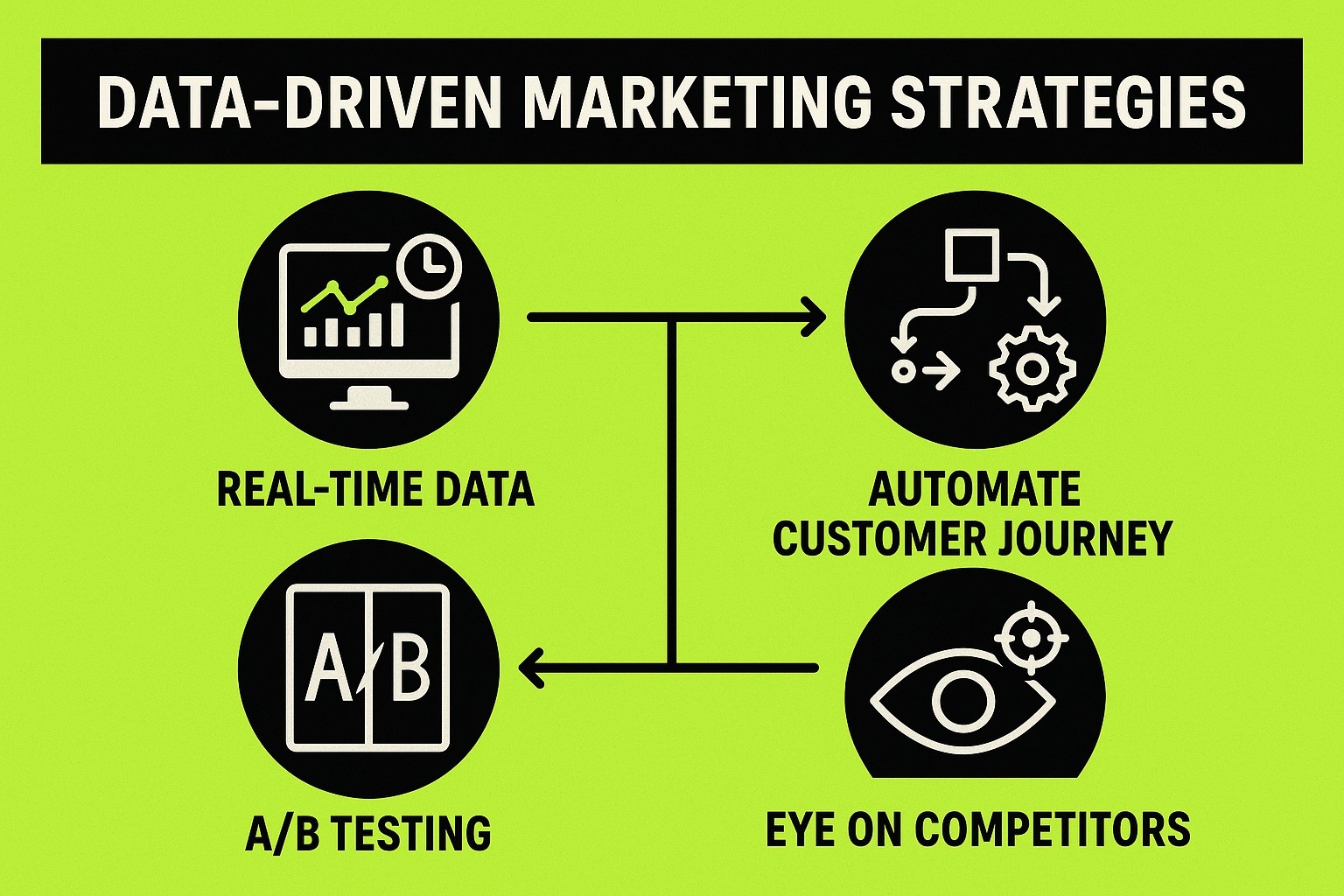
5. Lean into Real-Time Data for Faster Decision-Making
Marketing doesn’t have to wait for monthly reports. With real-time data, you can spot trends, fix issues, and double down on what’s working while campaigns are still live.
Real-time dashboards and alerts let your team make fast, confident decisions without waiting for a postmortem. If a campaign is underperforming, pull the plug early. If a product is taking off, ramp up the push while momentum is high.
Start by building dashboards that highlight key KPIs in real time. Set up alerts for sudden changes, like traffic spikes or conversion drops. Pair automation with human oversight to make quick, informed decisions when it counts.
6. Automate the Customer Journey (Without Losing the Human Touch)
Once your data is flowing and your segments are in place, automation makes it all scalable. But the goal here isn’t to automate for the sake of it. It’s to deliver timely, helpful communication without feeling robotic.
Think of automation as your silent partner – doing the heavy lifting in the background so your team can focus on strategy and creativity.
Examples of smart marketing automation:
- Welcome emails that adapt based on signup source.
- Abandoned cart flows with personalized product reminders.
- Birthday or milestone campaigns that feel thoughtful.
- Win-back sequences for inactive subscribers.
A switch from manual email sends to automated, personalized campaigns can make a big difference. When messages are timed to match where someone is in their journey, engagement tends to improve, and so does the consistency of your results.
7. Make A/B Testing Part of the Culture
You can’t optimize what you don’t test. A/B testing should be baked into every stage of your marketing, from subject lines and ad creatives to landing pages and call-to-action buttons.
The trick is to treat testing not as a one-time project, but as an ongoing learning loop.
Smart testing practices:
- Always define a clear hypothesis (e.g., “Changing the CTA will improve clicks”).
- Choose a primary metric to measure (clicks, signups, purchases).
- Run tests long enough to get statistically valid results.
- Document what worked and apply the learning to other campaigns.
This is one of the easiest strategies to implement, but also one of the most overlooked. A single successful test can unlock meaningful gains across channels.
8. Keep an Eye on Competitors (Without Playing Copycat)
Competitive intelligence isn’t about chasing what others are doing – it’s about staying informed so you can make smarter moves. Watching how others operate in your space gives you valuable context: what topics they’re leaning into, how their pricing or messaging is evolving, and where they might be gaining traction or falling short.
You start to notice patterns – like shifts in tone, sudden spikes in content output, or changes in how they promote new offerings. That awareness helps you stay ahead of trends instead of reacting late.
It’s not about copying tactics. It’s about understanding the broader landscape so you can position your own brand with purpose. When you know what’s already crowding the space, you can avoid blending in and instead find openings where your voice, product, or strategy can actually stand out.
Looking Ahead: Make Your Data Work, One Step at a Time
It’s easy to feel buried in data, but the goal isn’t to master it all at once. The real value comes from using what you already have to make smarter, more focused decisions – then building from there. Data-driven marketing isn’t about chasing perfection or trying to automate everything overnight. It’s about steady progress, testing ideas with purpose, and learning as you go.
When you take that first step, whether it’s organizing your data, refining your audience, or simply running one meaningful experiment, you begin to create a system that adjusts with you. Over time, things start to click. Insights surface. Your campaigns get sharper. And instead of guessing what might work, you’re moving with clarity and intention. That’s when the real momentum kicks in.