Quick Summary: Automotive SEO in 2026 demands a complete strategic overhaul. AI-driven search changes, zero-click results, and evolving consumer behavior mean dealerships and repair shops must own their data, optimize for conversational search, and build trust through structured content that serves both search engines and AI platforms.
The automotive industry faces a visibility crisis. Strong inventory, competitive pricing, and decades of expertise mean nothing if potential customers cannot find the business in search results. Many dealerships and repair shops have watched organic traffic decline while competitors appear in AI-generated answers and local map packs.
But here’s the thing—the rules changed. Traditional automotive SEO tactics from even two years ago no longer deliver results. Google’s search algorithms prioritize different signals now. AI platforms cite sources differently. And consumer search behavior has shifted toward conversational queries and zero-click answers.
This guide breaks down what actually works in automotive SEO for 2026. No generic advice. Just strategies built specifically for how car dealerships, repair shops, and parts sellers compete in search today.
Understanding Automotive Search Intent in 2026
Search intent determines everything in automotive SEO. Someone searching “brake pads” has completely different expectations than someone typing “why does my car pull to the left when braking.” The automotive customer journey involves multiple search types across different stages.
Part-specific searches represent high commercial intent. Queries like “2019 Honda Civic brake pads” or specific OEM part numbers indicate ready-to-purchase customers. These searches demand product pages with detailed fitment data and clear inventory availability.
Symptom-based searches signal the diagnostic phase. “Car making grinding noise when turning” or “check engine light flashing” come from customers trying to understand their problem before committing to a solution. Content that accurately diagnoses issues and explains solutions builds trust that converts later.
Comparison queries show active decision-making. “Best brake pads for daily driving” or “ceramic vs metallic brake pads” indicate customers weighing options. These searches reward comprehensive buying guides that link to specific recommended products.
Local intent searches combine service needs with geographic proximity. “Brake repair near me” or “Honda dealership open Sunday” require optimized Google Business Profiles and location-specific content to capture.
Why Data Ownership Matters for Automotive Businesses
Data represents one of the most valuable assets dealerships and repair shops control. Yet according to NADA Analytics, 80% of dealers don’t own their digital metrics. Third-party vendors control analytics, customer data, and attribution reporting.
This creates fundamental problems. Marketing decisions rely on incomplete information. Campaign performance remains difficult to measure accurately. Historical data vanishes when switching vendors. And competitive intelligence stays locked inside proprietary platforms.
The solution starts with Google Analytics ownership. Dealerships should establish their own Google Analytics 4 properties rather than relying on vendor-controlled accounts. This preserves historical data and enables meaningful year-over-year comparisons regardless of which marketing partners come and go.
According to a March 3, 2026 NADA podcast episode on data ownership, dealers must also scrutinize DMS and CRM contracts for data portability clauses. Customer information, service histories, and transaction records should remain accessible even after contract termination.
Real talk: vendors resist this. Many business models depend on data lock-in. But dealerships that insist on data ownership gain strategic flexibility and accurate performance measurement that directly improves marketing ROI.
Get SEO Support From Lengreo
Automotive SEO usually needs more than rankings on their own. Lengreo does not position itself only around rankings. The company also offers lead generation, appointment setting, demand generation, paid ads, and broader B2B digital marketing strategy. Its SEO services sit inside that wider setup, alongside keyword research, competitor analysis, audits, link building, and content planning. For businesses where search needs to connect more directly to pipeline and enquiries, that broader structure can be useful.
Need SEO Support Along With Lead Generation?
Lengreo can help with:
- SEO
- lead generation and appointment setting
- demand generation
- paid ads
- keyword research and competitor analysis
- link building
👉 Contact Lengreo to discuss the mix of SEO and lead generation support your business needs.
Local SEO Mastery for Automotive Businesses
Local SEO determines whether a dealership or repair shop appears when customers search for nearby automotive services. Geographic proximity signals matter more than ever in 2026, particularly as mobile searches continue dominating automotive queries.
Google Business Profile Optimization
The Google Business Profile functions as the foundation of local automotive SEO. Complete profiles with accurate NAP (name, address, phone) information, current business hours, and detailed service listings rank higher in local pack results.
Categories matter significantly. Primary categories should precisely match the core business—”Car Dealer” for dealerships, “Auto Repair Shop” for service centers. Additional categories can include specific services like “Brake Shop,” “Oil Change Service,” or “Transmission Repair.”
Photos impact local rankings and click-through rates. Profiles with regularly updated photos of the facility, staff, and completed work generate more engagement. Vehicle inventory photos help dealerships, while before-and-after repair documentation builds credibility for service shops.
Local Citation Consistency
Business information must match exactly across all online directories, review platforms, and social profiles. Inconsistent NAP data confuses search engines and dilutes local ranking signals.
Key citation sources for automotive businesses include Yelp, Yellow Pages, MapQuest, BBB, and automotive-specific directories like CarGurus and Edmunds. Manual citation building remains tedious but pays off through improved local search visibility.
Location-Specific Content Strategy
Multi-location automotive businesses need dedicated pages for each physical location. Generic location pages with only address information waste ranking potential. Instead, create substantive content covering:
- Location-specific service areas and neighborhoods served
- Local team members and their automotive expertise
- Community involvement and local partnerships
- Location-specific inventory or service specializations
- Customer reviews and testimonials from that specific location
These pages should target location-modified keywords like “brake repair in [city]” or “[brand] dealership in [neighborhood].”
Technical SEO Foundations for Automotive Websites
Technical SEO creates the infrastructure that allows search engines to properly crawl, index, and rank automotive websites. Sites with technical issues struggle regardless of content quality.
Site Architecture for Inventory-Based Businesses
Dealership websites face unique technical challenges due to constantly changing inventory. Vehicle detail pages (VDPs) and search results pages (SRPs) require careful handling to avoid indexation problems.
Out-of-stock or sold vehicles should return 301 redirects to relevant category pages rather than 404 errors. This preserves any link equity and prevents the crawl budget waste that occurs when search engines repeatedly encounter dead inventory pages.
Faceted navigation on SRPs creates potential duplicate content issues. Parameter handling in Google Search Console helps by telling Google which URL parameters (like sorting options or filters) create unique content versus just reorder existing content.
Mobile Performance Optimization
Mobile searches dominate automotive queries, particularly for repair services and local dealership information. Sites must load quickly and function perfectly on mobile devices.
Core Web Vitals—Largest Contentful Paint, First Input Delay, and Cumulative Layout Shift—directly impact rankings. Automotive websites often struggle with LCP due to large hero images and vehicle photography. Image optimization through compression and next-gen formats like WebP significantly improves load times.
Schema Markup for Automotive Businesses
Structured data helps search engines understand automotive content and enables rich results in search listings. Key schema types for automotive businesses include:
- LocalBusiness schema for dealership and repair shop information
- Product schema for parts and vehicle inventory
- Review schema to display star ratings in search results
- FAQ schema for common automotive questions
- Article schema for blog content and buying guides
Properly implemented schema doesn’t guarantee rich snippets, but missing schema effectively removes the opportunity.
Content Marketing Strategies That Drive Automotive Sales
Content marketing in automotive SEO serves two purposes: attracting organic search traffic and building trust that converts browsers into buyers. Generic content fails at both.
Diagnostic and Symptom-Based Content
Repair shops and service departments should create comprehensive content addressing common vehicle symptoms. “Why does my car vibrate at highway speeds” or “what causes transmission slipping” attract high-traffic searches from customers in the diagnostic phase.
These articles should explain possible causes, diagnostic steps, and solution options. Including approximate repair costs and timeframes builds transparency that increases service booking rates.
Buying Guides and Comparison Content
Dealerships benefit from creating detailed buying guides that target comparison searches. “Best SUVs for families under $40,000” or “sedan vs crossover for commuters” rank for high-traffic keywords and position the dealership as an advisory resource rather than just a seller.
These guides should genuinely compare options, including competitors when appropriate. The goal is building trust and expertise, not pushing specific inventory.
Parts Fitment and Application Content
Parts sellers need extensive fitment data and application guides. Content targeting specific make-model-year combinations like “parts for 2019 Honda Civic” captures high-intent search traffic.
Year-make-model (YMM) pages should include comprehensive parts catalogs with OEM part numbers, pricing, and compatibility information. Adding installation guides and maintenance schedules increases page value and time-on-site metrics.
| Content Type | Primary Search Intent | Best For | Conversion Path |
|---|---|---|---|
| Symptom diagnosis | Informational/problem-solving | Repair shops | Builds trust → service booking |
| Buying guides | Commercial research | Dealerships | Advisory content → inventory browse |
| Parts fitment | Transactional | Parts sellers | Direct product pages → purchase |
| Maintenance schedules | Informational | Service departments | Education → service scheduling |
Optimizing for AI Search and Zero-Click Results
Search behavior shifted dramatically as AI platforms like ChatGPT, Perplexity, and Google’s AI Overviews change how people find information. Many automotive queries now result in zero-click searches where AI provides answers directly without users visiting websites.
According to SEMrush research, Webflow’s site received an estimated 64.3K visits from AI platforms in August, representing about 0.7% of the site’s overall traffic. Still, the trend accelerates.
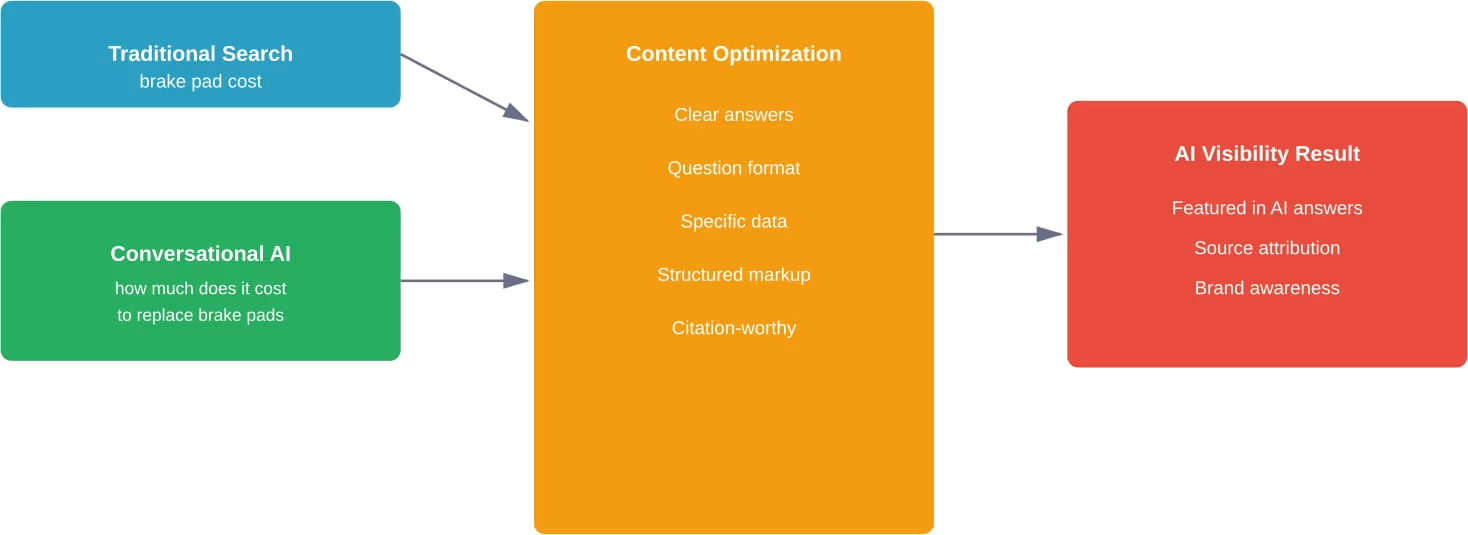
Optimizing for AI visibility requires structured, citation-worthy content. AI platforms prefer authoritative sources that clearly state facts, provide specific data, and use organized formatting.
Creating AI-Citation-Worthy Content
Content that earns AI citations typically shares characteristics:
- Clear, definitive answers to specific questions
- Well-structured content with descriptive headings
- Specific data points and statistics with sources
- Step-by-step processes and procedures
- Comprehensive coverage without fluff
Automotive businesses should create dedicated FAQ pages, detailed how-to guides, and comprehensive resource articles that AI platforms can reference confidently.
Conversational Keyword Optimization
Voice search and AI queries use more natural, conversational language than traditional typed searches. Instead of “brake pad replacement cost,” users ask “how much does it cost to replace brake pads on a Honda Civic.”
Content should target these longer, question-based queries while maintaining natural readability. FAQ sections naturally accommodate this shift by directly answering common customer questions in conversational formats.
Reputation Management and Review Optimization
Online reviews directly impact both search rankings and customer decision-making. Google considers review quantity, quality, and recency as local ranking factors. Potential customers read reviews before visiting dealerships or booking service appointments.
Active review generation should be systematic, not sporadic. Post-purchase follow-up emails, text messages after service appointments, and in-person requests all contribute to steady review flow.
Review responses matter as much as the reviews themselves. Responding to every review—positive and negative—demonstrates engagement and customer service commitment. Negative review responses offer opportunities to show problem-resolution skills to future customers reading reviews.
Specific review content helps SEO. Reviews mentioning specific services, vehicle makes, or staff names add keyword-rich content to Google Business Profiles that enhances local search relevance.
Measuring Automotive SEO Success
Tracking the right metrics determines whether automotive SEO efforts actually drive business results. Vanity metrics like total traffic matter less than conversions and revenue attribution.
Key Performance Indicators for Automotive SEO
Different automotive businesses should track different KPIs based on their business model:
| Business Type | Primary KPIs | Secondary Metrics |
|---|---|---|
| Dealerships | Phone calls, direction requests, finance applications | Inventory page views, time on VDPs |
| Repair shops | Service bookings, quote requests, phone calls | Symptom content engagement, return visitors |
| Parts sellers | Product page visits, add-to-cart rate, revenue | Fitment search usage, catalog depth engagement |
| Multi-location brands | Location page traffic, location-specific conversions | Brand vs non-brand traffic, cross-location comparisons |
Attribution and Conversion Tracking
Proper conversion tracking requires integrating analytics with CRM systems and call tracking platforms. Phone calls represent significant conversion actions for automotive businesses but often go unmeasured without dedicated call tracking.
Form submissions, chat interactions, and service scheduler usage should all trigger conversion events in Google Analytics 4. This data enables accurate ROI calculation and budget optimization.
Multi-touch attribution provides more accurate performance insights than last-click attribution. Customers typically interact with automotive businesses multiple times across several channels before converting. Understanding the full journey improves marketing allocation decisions.
2026 SEO Trends Impacting Automotive Marketing
Several emerging trends are reshaping automotive SEO strategy beyond general algorithm updates.
AI-Generated Content Going Mainstream
AI writing tools now help create content at scale. But this creates both opportunity and risk for automotive businesses. The opportunity: producing comprehensive fitment data, inventory descriptions, and service content faster than manual writing allows.
The risk: flooding search results with generic, low-value content that fails to build trust or expertise. Search engines increasingly distinguish between helpful, experience-based content and generic AI output.
According to CoSchedule’s 2025 State of AI in Marketing report, nearly 85% of marketers report that AI has improved the speed of delivering high-quality content. However, quality and actual expertise still determine rankings. Automotive businesses should use AI as a tool for efficiency, not a replacement for genuine expertise.
Platform Diversity Beyond Google
Reddit is one of the most frequently cited sources in AI tools. Community discussions and user experiences carry weight with AI platforms seeking authentic information.
Automotive businesses should consider strategic participation in relevant Reddit communities, automotive forums, and social platforms where target customers discuss vehicle ownership, maintenance, and purchasing decisions. Helpful, non-promotional participation builds brand awareness and creates citation opportunities.
Privacy-First Marketing Strategies
Cookie deprecation and privacy regulations continue reshaping digital marketing. First-party data collection becomes increasingly important as third-party tracking capabilities decline.
Dealerships and repair shops should prioritize building owned customer databases through newsletter signups, service accounts, and loyalty programs. This first-party data enables personalized marketing independent of external tracking technologies.
Automotive SEO Implementation Roadmap
Implementing comprehensive automotive SEO requires prioritization. Start with foundations before advanced tactics.
Month 1-2: Technical Foundation and Local Optimization
Fix critical technical issues first. Conduct comprehensive site audits identifying crawl errors, broken links, slow pages, and mobile usability problems. Resolve these before investing in content creation.
Claim and optimize all Google Business Profiles. Ensure NAP consistency across directories. Set up proper analytics and conversion tracking.
Month 3-4: Content Strategy and Creation
Develop keyword research mapping search intent to specific content types. Create editorial calendars balancing symptom-based, comparison, and transactional content based on business priorities.
Begin systematic content production focusing on high-value topics with clear conversion paths. Prioritize quality over quantity.
Month 5-6: Review Generation and Reputation Management
Implement systematic review generation processes. Train staff on review request best practices. Establish response protocols for both positive and negative reviews.
Create dedicated reputation management workflows ensuring timely responses and issue resolution tracking.
Ongoing: Measurement, Optimization, and Adaptation
Monthly performance reviews should compare actual results against KPI targets. Identify underperforming content for optimization or removal. Double down on what works.
Quarterly strategy reviews should assess broader trends, competitive movements, and algorithm changes requiring tactical adjustments.
Common Automotive SEO Mistakes to Avoid
Several mistakes consistently undermine automotive SEO efforts. Avoiding these saves time and money.
- Neglecting mobile optimization remains surprisingly common despite mobile-first indexing. Sites that load slowly or function poorly on mobile devices cannot rank well regardless of content quality.
- Ignoring sold inventory management creates ongoing indexation problems. Dealerships must implement proper redirects for sold vehicles rather than leaving broken pages.
- Generic, thin content wastes resources. Publishing dozens of shallow pages targeting slight keyword variations doesn’t work anymore. Focus on comprehensive, genuinely helpful content.
- Inconsistent NAP information across directories confuses search engines and weakens local rankings. Regular citation audits catch and correct discrepancies.
- Failing to track conversions makes ROI measurement impossible. Analytics setup should happen before other SEO work begins.
Final Thoughts on Automotive SEO in 2026
Automotive SEO fundamentally changed. Businesses relying on outdated tactics watch competitors capture search visibility while their traffic declines. AI search, zero-click results, and evolving consumer behavior demand new approaches.
The winning strategy prioritizes data ownership, local optimization, comprehensive content, and adaptation to AI-driven search. Technical foundations matter more than ever. Review generation and reputation management directly impact rankings and conversions.
But here’s what really matters—implementation. Reading guides doesn’t improve rankings. Systematic execution of technical fixes, local optimization, content creation, and measurement drives results.
Start with the basics. Fix technical issues. Optimize local presence. Create genuinely helpful content. Track conversions accurately. Measure results. Optimize based on data.
The automotive businesses that dominate search in 2026 don’t use shortcuts or tricks. They build comprehensive strategies addressing every aspect of modern SEO while maintaining focus on the metrics that actually drive revenue.
Ready to transform automotive SEO from cost center to profit driver? Start with the technical foundation, prioritize local visibility, and create content that serves both search engines and actual customers. The visibility crisis has a solution—strategic, systematic SEO implementation that adapts to 2026 realities.