

Marketing a car in 2025 is no small task. Buyers do most of their research before they ever talk to a salesperson, competition is tougher than ever, and the rise of electric vehicles has reshaped buyer expectations in ways the industry is still adjusting to. The dealerships and automotive brands that stand out today are the ones that understand how people shop, what they value, and how to reach them across both digital and offline touchpoints.
This article breaks down the strategies that actually make a difference right now. No fluff, no recycled advice. Just practical guidance based on what buyers are doing today and what the most effective automotive marketers are already putting into practice.
The New Reality of Automotive Marketing
If you talk to any dealer or automotive marketer, they will probably tell you the same thing: customers show up already knowing most of what they want. They have watched videos, read reviews, compared prices, and looked at multiple dealerships online. By the time someone asks for a test drive, the marketing has already done 80 percent of the job.
In other words, the modern buyer is self directed. They prefer to learn at their own pace, compare options quietly, and only reach out when they feel confident. This shift means automotive marketing is no longer about getting attention for the sake of visibility. It is about supporting the buyer through each micro step of the journey, from curiosity to comparison to decision.
The strategies below reflect this new reality.
Our Approach to Modern Automotive Marketing at Lengreo
At Lengreo, we’ve seen how quickly the automotive landscape has shifted, and we’ve adapted our approach to match the way people actually buy cars today. Buyers come in informed, cautious, and already halfway through their decision process, so our work always begins with understanding those behaviors instead of forcing outdated tactics. We take time to learn what makes each dealership or automotive brand different, then build a strategy that fits their real context rather than a generic marketing template.
From there, we focus on the parts of the journey that matter most. Sometimes that means tightening local SEO or improving paid search efficiency so you show up at the exact moment someone is ready to take the next step. Other times it involves refining lead generation systems, creating content that explains complex features in plain language, or nurturing warm prospects who are still comparing options. We blend data with real conversations so every action feels intentional, not random.
What we’ve learned over the years is that automotive marketing works best when we operate like a true extension of the client’s team. We take ownership, communicate clearly, and stay close to the numbers so you always know what is happening and why. When we combine strategy, consistency, and genuine partnership, results follow naturally.
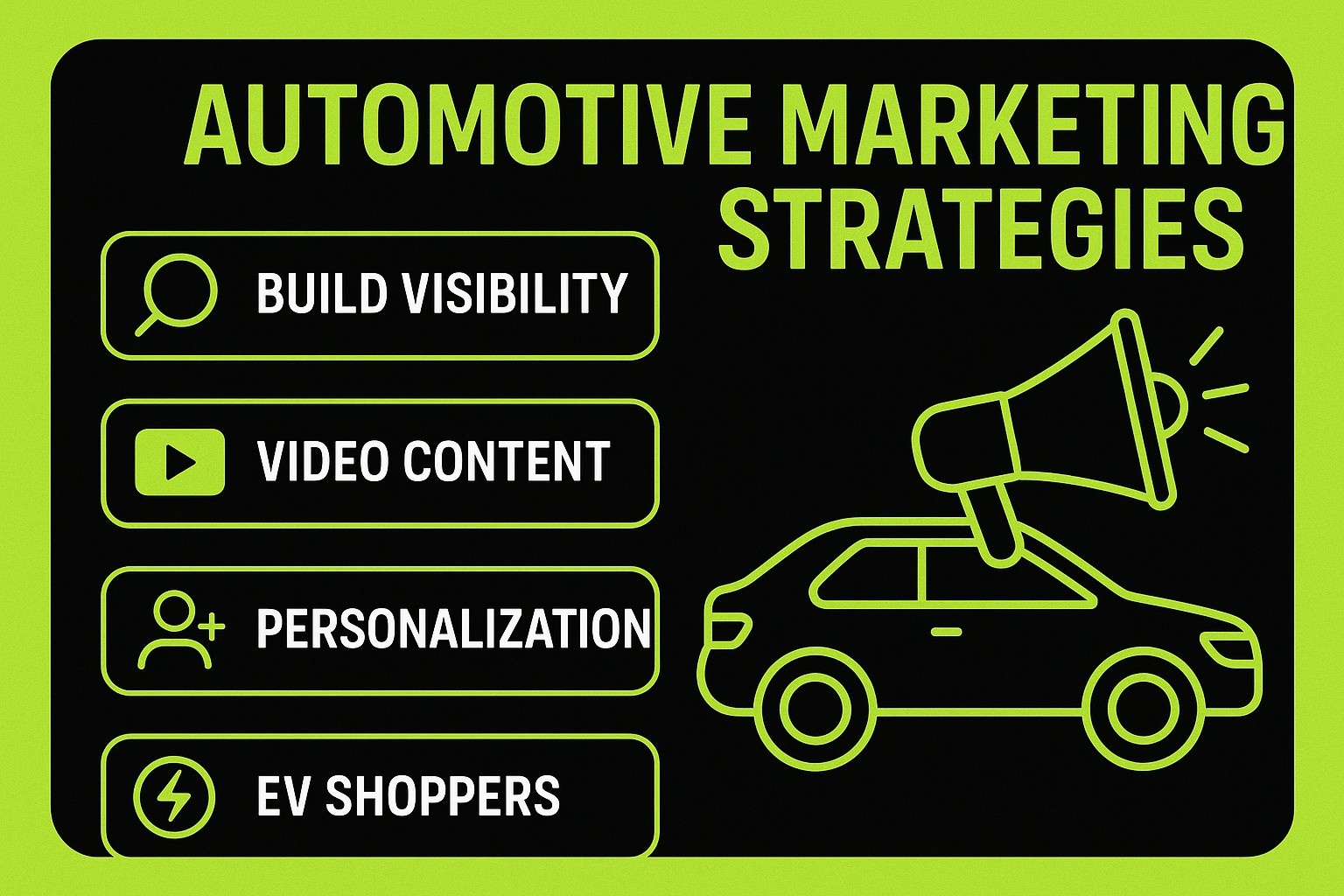
1. Build Visibility Where Local Buyers Start Their Search
Local SEO has become one of the most important pillars of automotive marketing. When someone searches for a dealership in their area, you either show up in the map results or you lose that opportunity without even knowing it.
To build strong local visibility, dealerships need more than a website. They need consistency across listings, accurate location signals, and an active Google Business Profile. Even small updates matter. New photos, seasonal hours, and verified information tell search engines you are reliable and current.
Local search is where high intent buyers start. If you ignore it, you end up invisible during the moments that count most.
2. Create Video Content That Feels Real, Helpful, and Fast to Consume
The automotive world lends itself naturally to video. Buyers want to see cars in motion, interiors up close, and features explained clearly. Video gives them that first impression long before they show up on the lot.
The most effective videos in this space are not always the glossy, cinematic ones. In fact, people respond surprisingly well to simple, honest videos that feel like someone is showing them the car without the hard sell. Short walkarounds, quick demos, and feature explanations perform extremely well on platforms like Instagram Reels, YouTube Shorts, and TikTok.
A dealership or brand can experiment with videos such as:
- 30 second test drive highlights
- A quick tour of a model’s interior
- Side by side model comparisons
- Explanations of new tech features
- Maintenance tips from the service team
The key is consistency. One video will not change your marketing. But a steady stream of helpful content creates trust and positions you as a local expert.
3. Use Personalization To Guide Buyers Toward Their Final Decision
The days of generic marketing blasts are long gone. Personalization is now a strategic advantage. When a buyer interacts with your website or ads, they tell you what they care about. Maybe they viewed a specific SUV multiple times, or bookmarked a financing page, or looked at EV models exclusively.
Those signals make it possible to guide them with communication that feels relevant rather than forced. Personalized reminders, tailored landing pages, targeted ads, and follow up messages aligned to their interests help shorten the decision process.
It is not about chasing customers. It is about meeting them with the right information at the right moment.
4. Understand How EV Shoppers Think and What They Worry About
Electric vehicle shoppers think very differently from traditional car buyers. They have different worries, different incentives, and different questions. For many buyers, this is their first time considering an EV, which means they need clarity more than persuasion.
What EV Shoppers Want To Understand
Most EV buyers look for simple explanations about:
- how far they can drive
- where to charge
- battery life and long term maintenance
- expected savings over time
- available incentives
These answers need to be easy to understand. Buyers who are new to EVs can become overwhelmed quickly, so the role of the marketer is to demystify, not overwhelm.
Content That Helps EV Buyers
Guides, short videos, live Q&A sessions, and interactive tools are incredibly effective. EV marketing rewards education, patience, and transparency.
5. Strengthen Trust With Customer Reviews and Real Stories
Trust is everything in the automotive world. Reviews influence dealership choice more than almost any other factor. Buyers want to feel comfortable before they commit, and one genuine customer story can do more than a dozen polished ads.
Reviews also support several marketing channels at once. They help with local SEO. They assist with paid ad performance. They give social proof to landing pages. They reassure hesitant buyers during remarketing.
Strong automotive brands collect reviews consistently and respond thoughtfully. Even negative reviews, when handled well, can build trust.
6. Meet People Where They Spend Their Time on Social Media
Car shoppers engage with social platforms constantly, even when they are not actively looking for a vehicle. This creates a huge window for building recognition and sparking interest.
Finding the Right Platform
Different platforms serve different roles:
- YouTube is ideal for deep comparisons and video reviews.
- Instagram and TikTok work well for quick highlights and lifestyle centered content.
- Facebook supports older demographics and local engagement.
The goal is not to be everywhere. It is to show up consistently where your audience naturally spends time.
Content That Works Best
Authentic content usually wins. Quick model tours, new arrivals, behind the scenes moments, and real customer interactions tend to outperform overly polished posts.
7. Offer Events and Experiences That Bring People Closer to the Car
Even though most buyers begin their journey online, the in person experience still carries a lot of weight. A test drive, a walkaround with a knowledgeable team member, or even a relaxed open house can make the decision feel more real. These moments help people get a sense of the car in a way that no video or photo truly can.
Events also tend to create an emotional connection. Someone might attend a weekend test drive event out of curiosity and walk away feeling surprisingly confident about their next step. Others appreciate having a chance to ask questions during a workshop or talk directly with service technicians during an informal Q&A session. Launch nights and guided tours can also build excitement around new models and help buyers see themselves in the driver’s seat.
People remember experiences far longer than they remember ads, and that memory often becomes the deciding factor when they are ready to choose a dealership.
8. Combine Online and Offline Channels To Reach More Local Buyers
Offline marketing has evolved significantly in recent years. It is no longer about placing flyers everywhere and hoping something sticks. New technologies make offline campaigns measurable, targeted, and surprisingly effective.
Many potential buyers block or ignore digital ads. A well designed postcard or flyer often feels more personal and tangible. When paired with trackable QR codes or campaign URLs, offline marketing becomes a clear source of leads.
This approach works especially well for local events, promotions, and test drive incentives.
9. Use Paid Ads Strategically Instead of Trying To Cover Everything
Paid advertising is powerful, but it only delivers real returns when it is focused. Automotive brands waste enormous budgets trying to cover every keyword or audience. A smarter approach is to target moments of intent.
Focus on High Value Searches
People who search for terms like “buy [model] near me” or “best price on [brand]” are close to making a decision. That is where paid search performs best.
Build Lean, Tightly Grouped Campaigns
When ad groups contain related keywords and clear messaging, search engines reward them with lower costs and higher positions.
Protect Your Budget
Negative keywords help prevent wasted spend on irrelevant searches. This matters more in automotive than almost any other industry.
10. Keep a Remarketing Plan Running at All Times
Car shoppers take their time. They compare models across weeks or even months. They visit multiple dealership websites, read articles, and watch dozens of videos. Remarketing keeps your brand in their field of view so they do not drift toward a competitor.
A buyer who visited your inventory page or started configuring a car has real intent. Showing relevant ads afterward nudges them back into the process. It is a gentle reminder rather than a push.
Most dealerships see some of their highest ROI from remarketing alone.
11. Invest in Content That Helps People Answer Real Buying Questions
Content marketing only works in the automotive space when it solves specific problems. Shoppers need information, not filler.
Topics That Matter
Some of the most useful content covers:
- comparisons between similar models
- real world ownership costs
- financing breakdowns
- EV charging instructions
- seasonal preparation checklists
Good content makes the buyer feel more confident and informed. Confidence speeds up the decision.
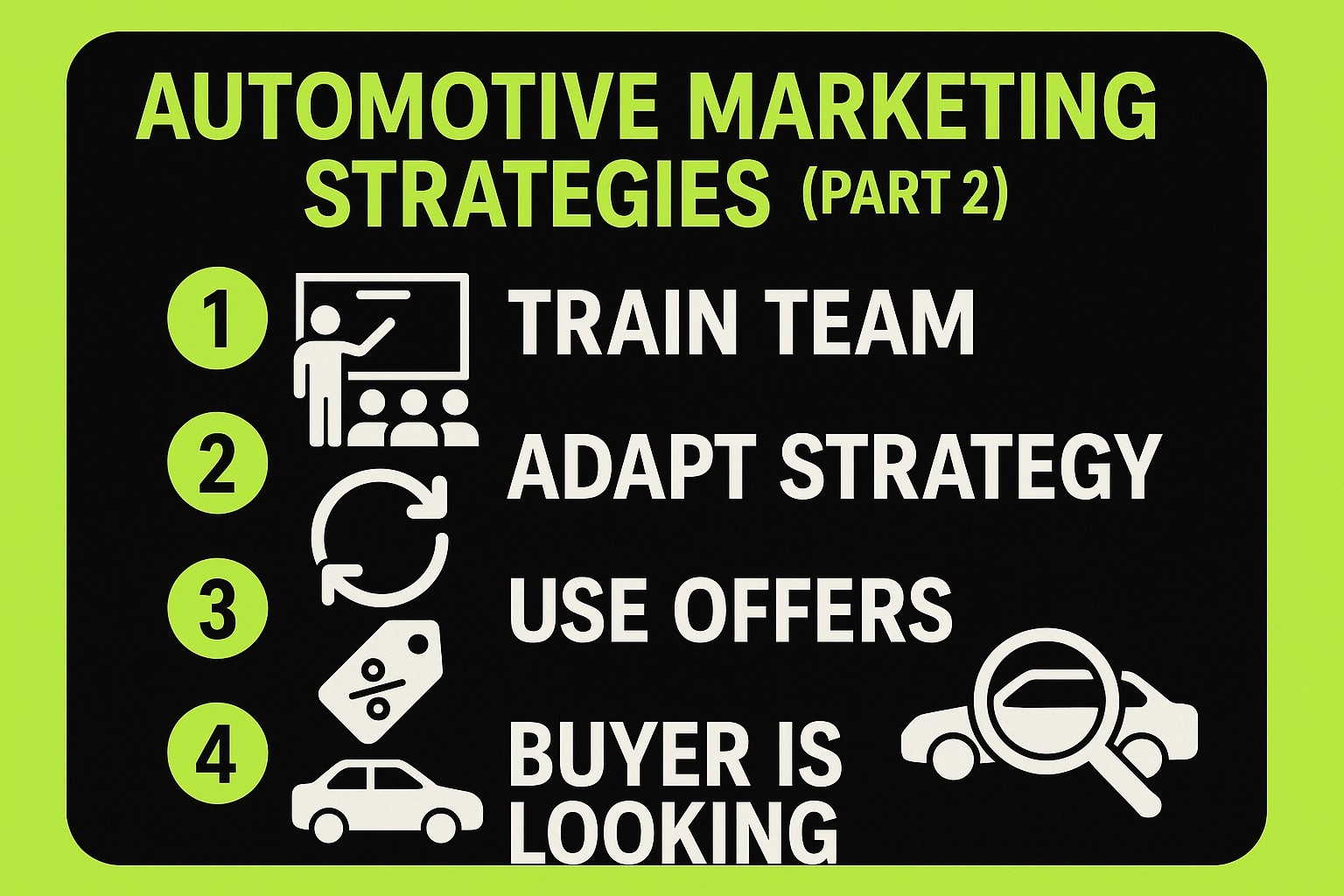
12. Train Your Team To Use Data, Not Guesswork
Data is becoming a cornerstone of successful automotive marketing. The brands that win are the ones that track, interpret, and adjust based on real numbers, not assumptions.
Data reveals which campaigns generate leads, what pages persuade people to book test drives, which models attract the most attention, and what demographics convert at the highest rates. With this information, you can stop doing what does not work and double down on what does.
Even small improvements in optimization compound over time.
13. Adapt Your Strategy for Seasonal Buyer Behavior
Automotive demand fluctuates throughout the year. Instead of applying a flat marketing budget, smart marketers adjust their spend based on expected behavior.
Many shoppers peak around:
- Late spring
- Summer road trip season
- End of the year when incentives appear
- Holiday weekends
- New model release periods
You do not need to chase every surge, but adjusting budgets and messaging during high traffic periods can significantly improve ROI.
14. Use Offers and Incentives That Feel Relevant, Not Generic
Incentives only work when they feel relevant. Most shoppers ignore broad discounts because they assume there is a catch or that every dealership is offering something similar. What gets attention are incentives that genuinely address what the buyer cares about.
For example, a customer considering their first EV might be more motivated by charging credits than a small price reduction. A family with a tight budget may appreciate flexible financing far more than a flashy add on. Students or first time buyers often respond well to simple, approachable offers that make the process feel less intimidating. Even something as straightforward as complimentary maintenance for a limited period can create a sense of security and tip the decision in your favor.
When incentives align with real needs, they feel less like promotions and more like support. That shift alone can make a meaningful difference in how people respond.
15. Remember That Every Buyer Is Looking for Reassurance
At the end of the day, marketing a car is about building enough trust for someone to make a major financial decision. No strategy works if the buyer does not feel understood or respected.
The strongest automotive brands keep their message simple. They explain clearly, show honestly, and guide without pressure. When a shopper feels reassured, your marketing becomes far more powerful.
Conclusion
Automotive marketing in 2025 is not about choosing between online and offline, or picking one platform over another. It is about creating a system that supports the way people actually shop. They research quietly, compare options, check reviews, ask friends, and only reach out when they feel prepared.
If your marketing shows up across all those small moments with clarity, helpfulness, and consistency, you give buyers a reason to pick you over someone else.
The strategies in this guide are not theoretical. They reflect what dealerships, EV makers, and automotive marketers are actually using to drive real results. Start with the ones that match your goals, experiment with the rest, and keep refining as buyer behavior continues to evolve.