


Every single day, more than 1,000 new apps hit the stores. Most disappear without a trace within a week. The ones that survive and actually grow don’t have bigger budgets or secret hacks – they just execute the fundamentals better than everyone else.
This isn’t another fluffy checklist. These are the exact plays that still drive thousands of organic installs in 2026, pulled from apps currently sitting in the top charts across a dozen categories. No theory, no recycled 2019 advice. Just what’s working right now. Let’s dive in.
What Is App Store Optimization (ASO) in 2026?
App Store Optimization is the art and science of getting your app found in the chaos of the App Store and Google Play, then convincing people to install it – all organically. It’s basically SEO for apps, but with higher stakes: one good ranking can send thousands of free users your way every single day.
In 2026, ASO controls two numbers that decide if your app lives or dies: how often it shows up (visibility) and how many people who see it actually tap download (conversion). Nail both and you get the holy grail – compounding organic growth. Ignore them and you’ll be stuck buying every month begging for budget to run more ads just to stay afloat.
The game has shifted hard in the last 18 months. Raw download counts still matter, but velocity, engagement signals, in-app events, and how fast you update now carry way more weight than they used to. That’s why old blog posts from 2022 feel useless – the stuff that works today is very different.
Lengreo: Your Complete Marketing & Tech Partner
At Lengreo, we’re more than just a digital agency – we’re the full-stack partner ambitious businesses turn to when they need real growth in a crowded online world. Founded in 2020 and based between Amsterdam, Netherlands, and Kyiv, Ukraine, we’ve built our reputation on listening first and delivering results that stick. No cookie-cutter packages here; we dive into your unique challenges, craft strategies around your strengths, and integrate seamlessly with your team to lead the charge on digital marketing and tech development. We set the tone with a hands-on approach that prioritizes transparency and productivity – whether that’s through weekly check-ins or in-person meetings in Central Europe to keep things moving fast.
What drives us? Helping B2B companies in high-stakes industries generate qualified leads, optimize their online presence, and scale without the usual headaches. We’ve worked with everyone from software developers in the US to biotech innovators in the UK, always tailoring our tactics to fit. It’s not about quick wins; it’s about sustainable momentum that turns prospects into loyal clients.
Top Strategies That Still Move the Needle
These aren’t theories. Every tactic below was pulled from apps currently sitting in the overall top 100 or crushing their category in December 2026. Some are indie, some have nine-figure revenue, but they all use the same playbook.
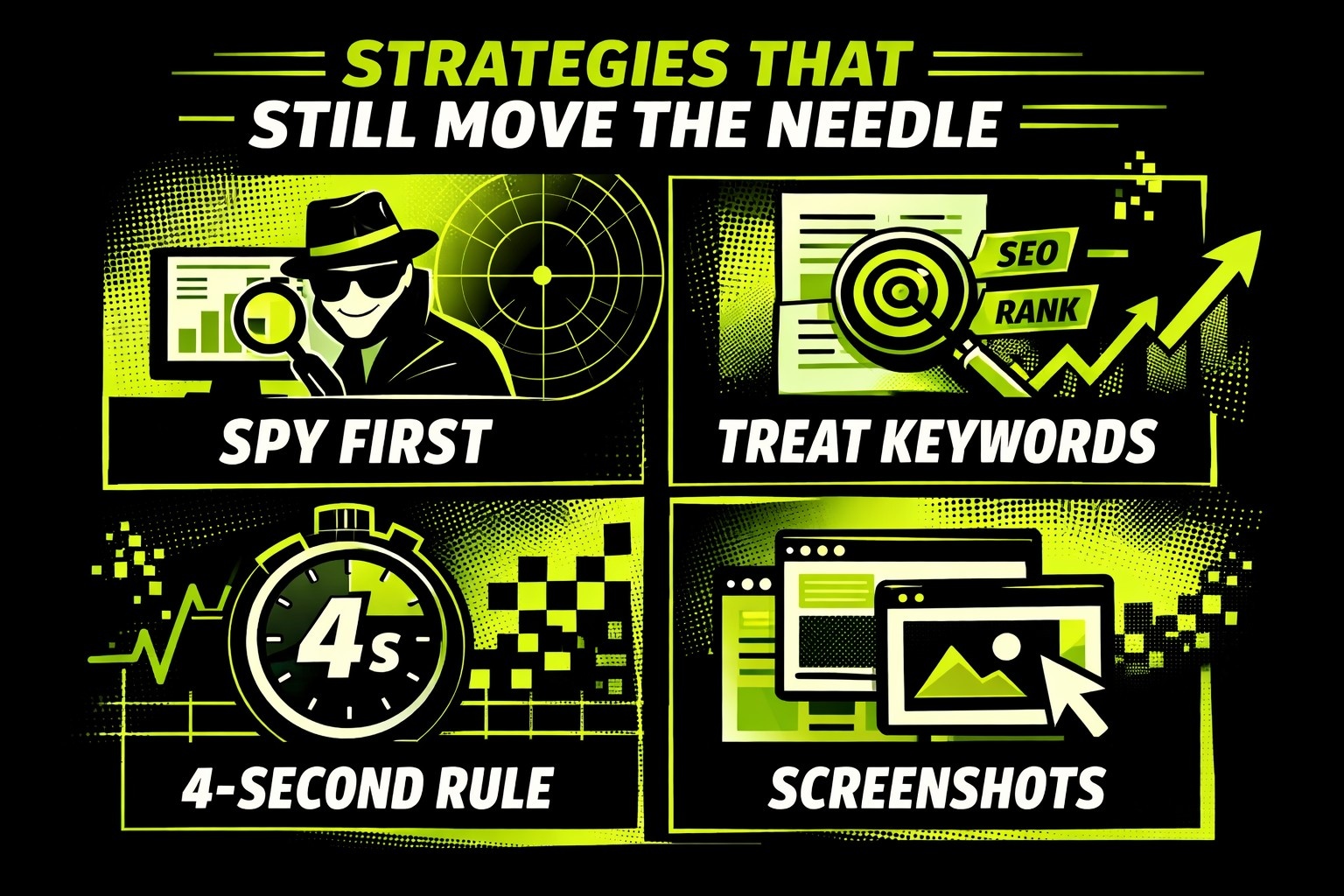
1. Stop Guessing Your Market – Spy First
Before touching a single keyword, spend two days living inside your category like a stalker.
Open the top 7 apps that consistently rank above you. Screenshot every single screen of their store listing. Note which features they push hardest in screenshots 1-3. Read the last 200 reviews for each app – not for sentiment, but for language. Users will literally hand you the exact phrases they search for.
One productivity app discovered the phrase “focus timer with spotify” appeared in 40 % of competitor reviews but nowhere in any metadata. They added it to subtitle + first screenshot caption and jumped from #87 to #9 in two weeks.
2. Treat Keywords Like Real Estate
The game changed in late 2024 when Apple started giving massive weight to subtitle and promotional text for ranking. Google quietly followed.
Current sweet spot that actually works:
- Title: brand name + 1 power keyword (max 30 characters total)
- Subtitle (iOS) / Short description (Android): 2-3 high-intent long-tail phrases
- Keyword field (iOS only): stuff the remaining characters with medium-volume terms you can’t fit elsewhere
- Promotional text (iOS): rotate seasonal or feature-specific keywords every 2-4 weeks without submitting new build
Never keyword-stuff the long description anymore. Both stores penalise it heavily now.
3. The 4-Second Rule for Icons
Users decide to tap in under four seconds. Your icon has to win in that window at 112×112 pixels on a scrolling page.
What beats everything else in 2026:
- One single focal point (face, object, symbol)
- Zero text or tiny text only if it’s part of the logo
- Bright background or heavy outline so it pops on white App Store background
- Test at least five radically different directions – minimal, skeuomorphic, mascot, gradient, monochrome
One meditation app switched from a generic lotus to a simple white silhouette on electric blue and saw tap-through rate jump 41 % overnight.
4. Screenshots Are Your Silent Sales Team
Most developers still treat screenshots like a feature tour. Wrong. They’re advertisements.
Current winning formula:
- Screenshot 1: instant benefit or result (show the “after” state)
- Screenshot 2-4: one clear use case per screen with bold caption overlay
- Screenshot 5: social proof (ratings, testimonials, “as seen in”)
- Portrait only: landscape is basically ignored on modern phones
Add short, benefit-focused captions in the screenshot itself. Apple and Google both index that text now.
5. Preview Videos Became Mandatory
If you’re still skipping the 15-25 second portrait preview video, you’re throwing away 20-35 % conversion. Every single top-50 app in competitive categories has one.
Three-second problem, ten-second solution, three-second happy user. No voice-over needed – just punchy music and burned-in captions. Apps that added a proper video in the last year saw an average 28 % lift.
6. Custom Product Pages & Custom Store Listings Are the New Cheat Code
Apple gives you 35 custom product pages. Google gives unlimited custom store listings. Most teams use zero.
Smart teams build one per persona, one per major ad platform, and one per seasonal moment. A TikTok campaign about “study timer for ADHD students” sends traffic to a page built exactly for that audience and converts two to three times better than the default listing.
7. In-App Events & In-Store Promotions Actually Rank You
Both stores now surface in-app events on the homepage and in search results.
A fitness app running a “30-day abs challenge” event in January gained 180 k organic impressions with zero ad spend just because the event card ranked for “abs workout”.
Create at least one event every 4-6 weeks. Even something tiny like “new meditation pack released” works.
8. Localization Done Right Can 3x Your Downloads
Roughly 72 % of revenue now comes from non-English markets. Yet most indie devs still only have English listings.
Start with these five markets first (highest ROI):
- Japanese
- Korean
- German
- French
- Spanish (Spain + Mexico separately)
Translate title, subtitle, screenshots captions, and first three screenshots. Do not just run metadata through Google Translate – hire native speakers. The conversion difference is massive.
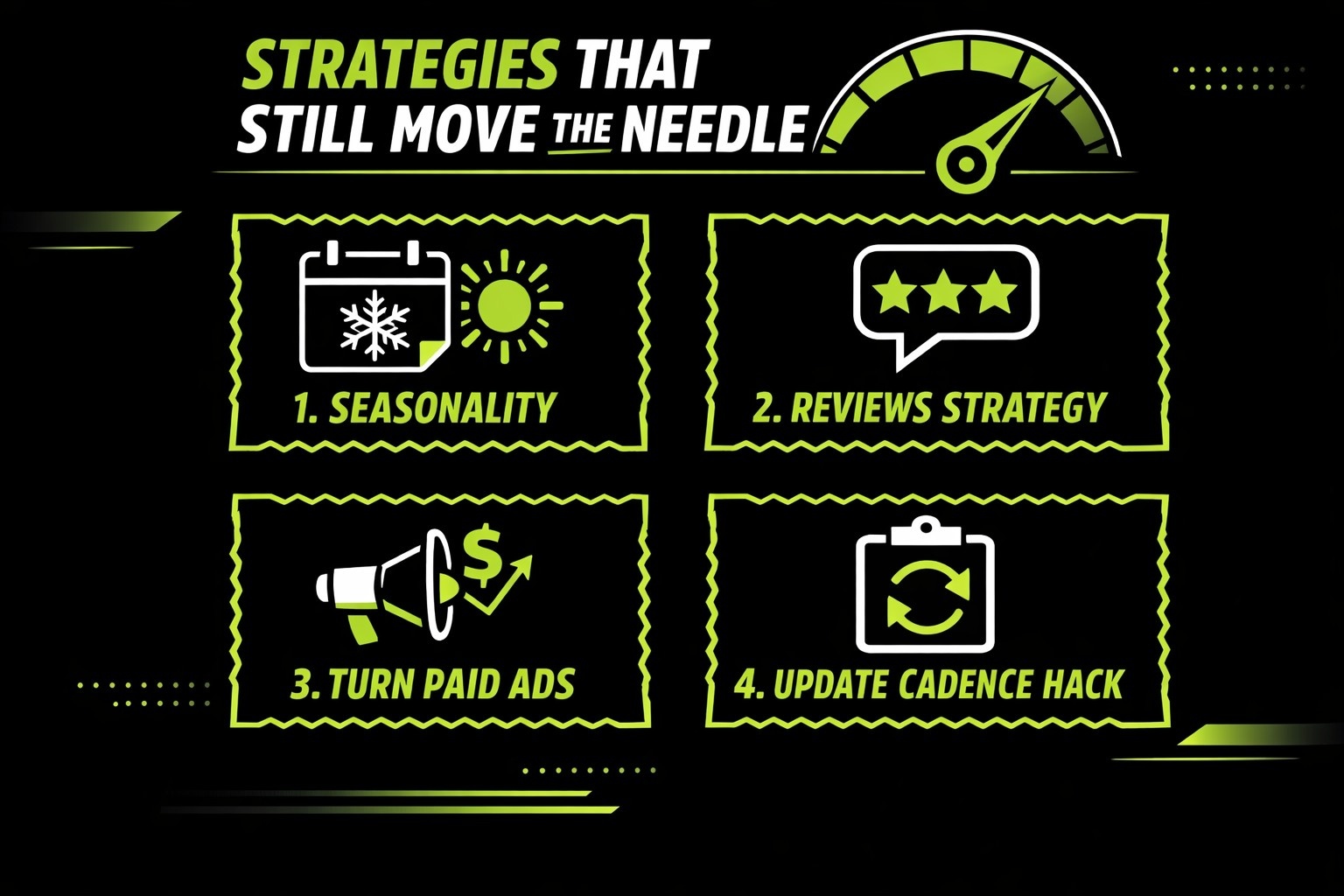
9. Seasonality Is the Easiest Free Traffic You’ll Ever Get
Every year the same keywords explode at the same time and everybody forgets.
January: habit tracker, fitness challenge, quit smoking
April: tax calculator, expense tracker
September: study timer, focus music
November-December: gift list, budget christmas
Plan your metadata updates three months ahead. Swap subtitle and promotional text, update first two screenshots, launch an in-app event. One habit tracker gained 400 k downloads in January 2026 just from this.
10. Reviews Strategy That Actually Moves Ratings Up
Asking for reviews still works, but timing is everything.
Best moment: right after a user completes a desired action (finished workout, saved first expense, matched on dating app). Show native rating prompt immediately – not a pre-prompt.
For negative feedback: reply within 24 hours, apologise, explain fix, invite them to update review when fixed. 30-40 % of 1-3 star reviews turn into 5 stars with this flow.
11. Turn Paid Ads Into Organic Rocket Fuel
The biggest mistake is running Apple Search Ads and Google App Campaigns on the same keywords you already rank top 5 for. That’s just burning money.
Smart play:
- Use paid to discover new keywords fast
- Once you hit top 5 organically for a keyword, pause paid on that exact match
- Keep paid running on brand terms and competitor terms to block others
One finance app cut CPA by 60 % in 2026 doing exactly this.
12. The Update Cadence Hack
Apps that update every 3-5 weeks rank higher than apps that update once a year. It’s that simple.
Even tiny updates count:
- New wallpapers pack
- Bug fixes + performance improvements
- Added 5 new sounds
Write the changelog like a human. “We heard you – dark mode is finally here!” beats “minor bug fixes” every time.
13. Steal Keywords From User Reviews (Ethically)
Your own users are the best keyword researchers you’ll ever hire.
Sort reviews by most recent, copy the last 100 into a text file, run through any word cloud tool. The biggest phrases that aren’t always obvious.
A language learning app found users constantly saying “practice speaking with AI”. They added it to subtitle and jumped from #42 to #6 in their subcategory.
14. The Hidden Ranking Factor Nobody Measures
Download velocity over the last 7-14 days now matters more than total downloads. A 30-year-old app with 5 million downloads can rank below a new app that just did 50 k downloads in a week.
That’s why burst campaigns (paid + influencer + product hunt launch) still work so well for new apps trying to break into top charts.
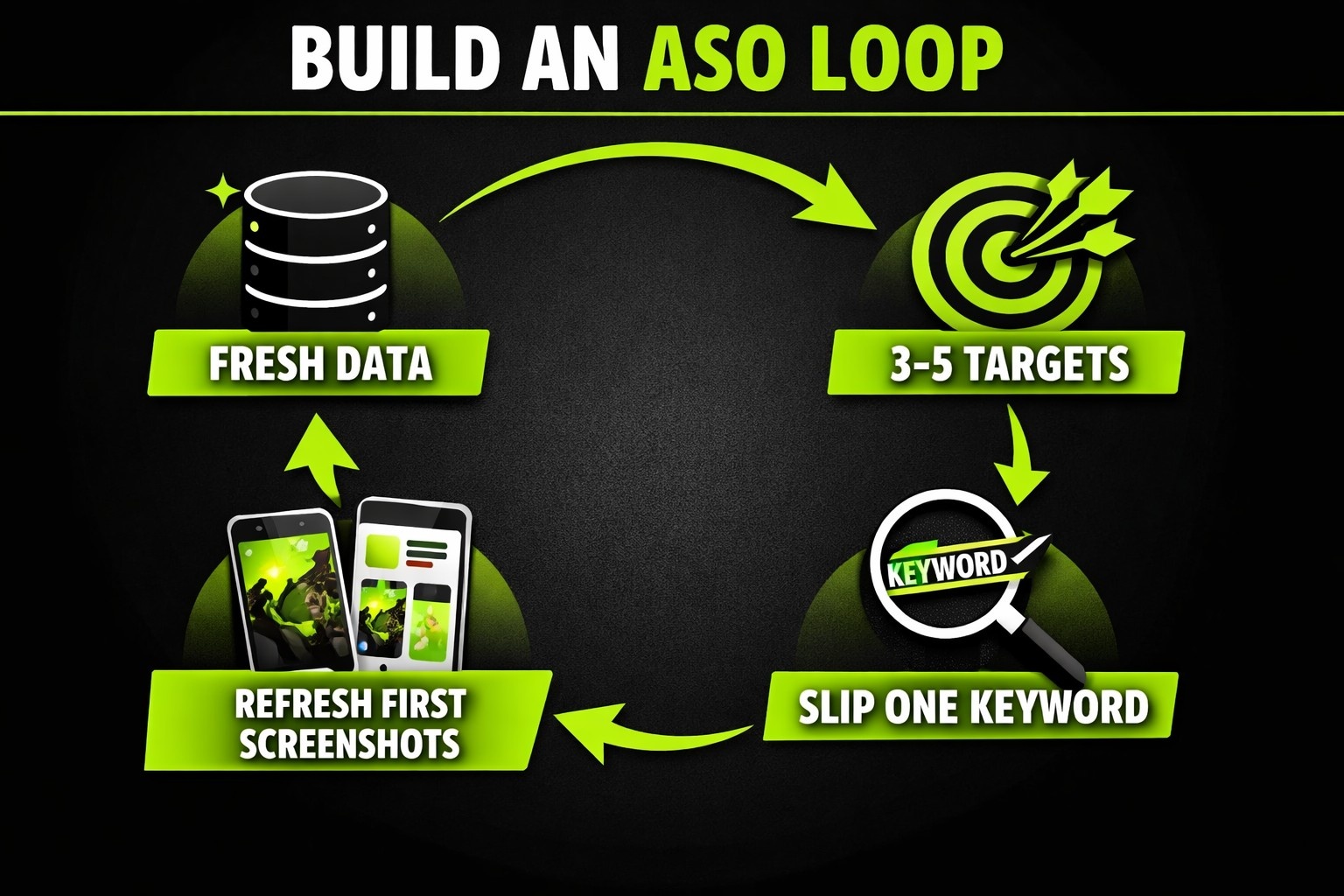
15. Build an ASO Loop, Not a One-Time Project
The biggest difference between apps that slowly dying at #87 and the ones that quietly climb into the top 10 isn’t budget or some magical tool. It’s that the winners treat ASO like a living system they feed every single month instead of a one-time setup they did two years ago.
Here’s the exact flywheel almost every fast-growing app in 2026 is running right now – broken down step by step.
Step 1: Pull Fresh Data Every 30 Days
First week of the month, download your latest keyword rankings and impression-share reports from App Store Connect, Google Play Console, or whatever ASO tool you use (AppTweak, App Radar, Sensor Tower – doesn’t matter).
Look specifically for keywords where you sit between position 6 and 15. Those are the low-hanging fruit: close enough that a small push can shoot you into the top 5, far enough that you’re currently invisible to most searchers.
Step 2: Pick Your 3-5 Targets
From that list, choose three to five keywords that have decent search volume and actually match what your app does. Ignore vanity terms. If you’re a meditation app and “sleep story” is sitting at #11, that’s a winner. If “crypto trading bot” is #9 but you don’t have trading, skip it.
Step 3: Slip One Keyword Into Prime Real Estate
Take the strongest of those keywords and rotate it into either the subtitle (iOS), short description (Android), or promotional text (iOS only – no review needed).
Do not stuff all five at once. One new term is enough to trigger the algorithm without looking spammy.
Step 4: Refresh the First Two Screenshots
Update the captions or overlay text on screenshots one and two to include the same keyword naturally. Example: change “Relax in minutes” to “Fall asleep fast with sleep stories”.
Takes 20 minutes in Figma or Canva, uploads instantly, and both stores re-index the text inside the images within hours.
Step 5: Fire a Tiny In-App Event
Create a quick in-app event that mentions the keyword in the title (“New Sleep Stories Added This Week” or “Focus Timer Challenge – 7 Days”).
These events show up in search results and on the Today tab or Games/Apps tab, giving you thousands of extra organic impressions for almost zero effort.
Step 6: Give It a 7-10 Day Paid Burst
Run a short, aggressive Apple Search Ads or Google App Campaigns burst exactly on the keywords you just boosted. Bid high enough to dominate the top slot for a week.
The sudden spike in downloads from paid tells the algorithm “this app is hot right now” and pushes your organic ranking forward.
Step 7: Let Organic Take the Wheel
After the burst, pause the paid ads on those exact terms. Nine times out of ten your organic ranking will keep climbing for another two to four weeks on momentum alone. You just bought yourself a permanent position without ongoing spend.
Step 8: Repeat Forever
Thirty to forty-five days later do the whole thing again with the next batch of keywords that are now sitting in positions 6-15.
Teams that run this loop religiously see organic downloads compound 20-40 % month after month with almost no extra work after the first cycle. It’s boring, it’s repetitive, and it works better than any “secret hack” floating around Reddit. The top charts are full of apps that simply never stop doing this.
Wrapping It Up
ASO in 2026 isn’t magic and it definitely isn’t harder than before. It just rewards consistency and attention to detail. The apps dominating the charts today aren’t the ones with the biggest ad budgets – they’re the ones that treat their store listing like the most important screen in the entire product.
Pick any three tactics from this list, execute them perfectly this month, measure, then add three more. That’s literally how every single top-grossing indie and mid-size app grew in the last 12 months.
Now go make your app the one people can’t scroll past.