

Quick Summary: Event planners can drive registrations and attendance through strategic marketing that spans digital, social, and experiential channels. Successful campaigns combine early-bird pricing, influencer partnerships, email nurture sequences, and user-generated content to build buzz before, during, and after events. Measuring ROI through engagement metrics and post-event follow-up ensures continuous improvement and stronger client relationships.
Picture this: the venue is booked, the speakers are confirmed, the catering is locked in. Everything is perfect—except the registration page sits silent. Empty.
Sound familiar? Event planners face this nightmare regularly. The difference between a packed venue and a ghost town rarely comes down to the quality of the event itself. It comes down to marketing.
The challenge is real. According to Les Roches, 90% of customers expect personalization in their interactions with brands in their interactions with brands. That expectation extends to events. Generic blast emails and dusty flyers don’t cut it anymore.
But here’s the thing—event marketing in 2026 isn’t rocket science. It’s a mix of strategic timing, creative tactics, and consistent execution across channels. This guide breaks down the marketing ideas that actually fill seats, drive engagement, and turn attendees into advocates.
What Makes Event Marketing Actually Work in 2026
Event marketing is the process of promoting an event to the right audience through strategic channels—before, during, and after the event itself. The goal is simple: fill seats, create buzz, and maximize return on investment.
But what separates campaigns that convert from those that flop?
Timing and Momentum
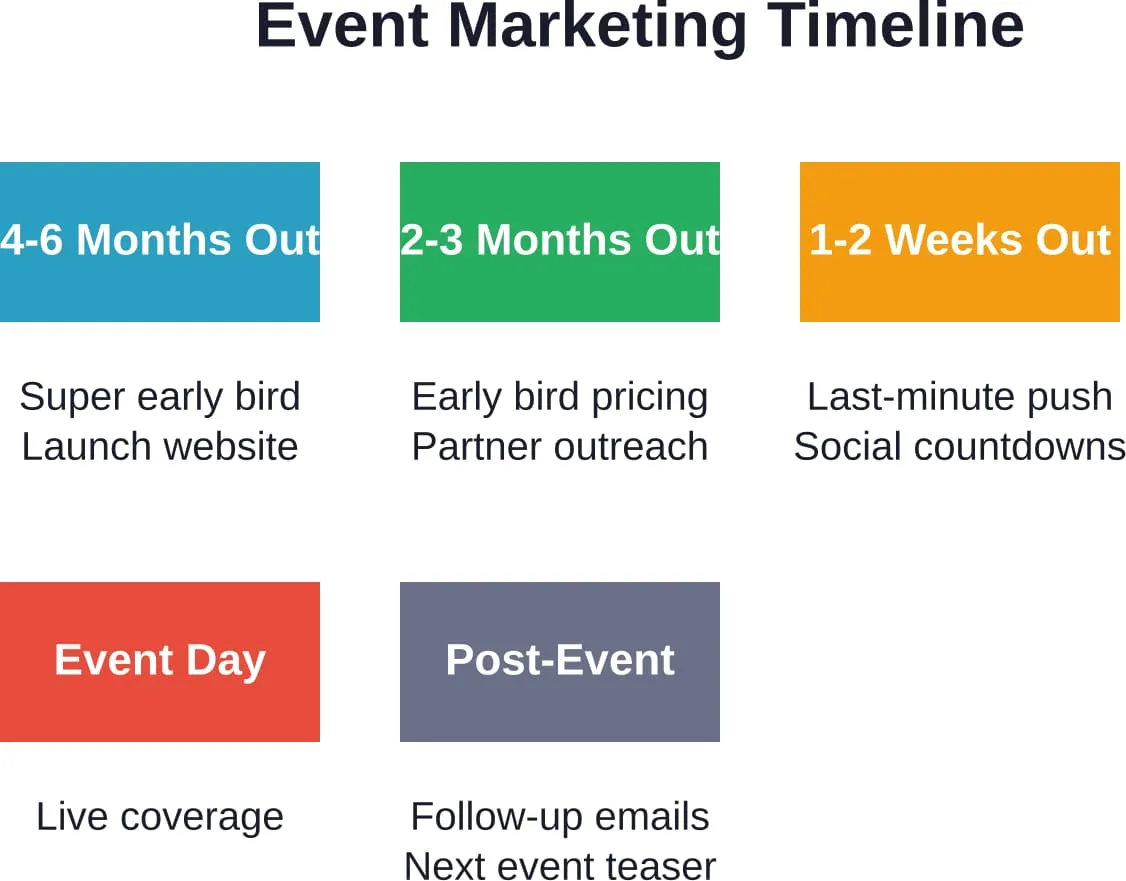
Marketing timelines matter. A solid campaign starts 4-6 months before the event with super early-bird pricing, builds momentum through tiered registration deadlines, and maintains engagement through event day and beyond.
Each tier should offer meaningful savings, typically 10-30% off the regular price for the earliest registrants. This creates urgency without devaluing the event.
Multi-Channel Consistency
Relying on a single channel is a recipe for mediocre results. Successful event promotion integrates email, social media, partnerships, content marketing, and sometimes traditional channels like direct mail or local media.
The U.S. Small Business Administration emphasizes that market research helps find customers for a business, while competitive analysis helps make that business unique. The same principle applies to events—knowing where the target audience consumes information determines which channels deserve budget and attention.
Personalization at Scale
Generic messaging doesn’t work anymore. Segmented email lists, customized landing pages for different audience personas, and personalized outreach to VIP attendees create the connection that drives registrations.
Event planners who treat every potential attendee the same leave money on the table.
Drive Event Planner Marketing With Lengreo
Event planners need marketing that clearly presents services, packages, past events, and contact steps. Lengreo connects website development, SEO, paid ads, content, lead generation, appointment setting, and tracking into a cohesive setup.
This makes it easier to attract clients and measure which campaigns produce real inquiries.
Need More Client Inquiries?
Lengreo can help with:
- refining service, package, and contact pages
- setting up SEO and paid traffic campaigns
- tracking calls, forms, and lead sources
- supporting content and lead generation workflows
👉 Contact Lengreo to discuss your marketing setup.
Pre-Event Marketing Ideas That Build Momentum
The months leading up to an event determine whether it sells out or struggles. Early marketing lays the foundation for everything that follows.
Tiered Pricing Strategy
Structure pricing in clear tiers: super early bird (4-6 months out), early bird (2-3 months), regular pricing, and late registration. The savings should be meaningful—between 10% and 30% off the regular price for the earliest registrants.
This approach does two things. First, it generates early cash flow and commitment. Second, it creates natural urgency points throughout the campaign.
Launch a Dedicated Event Website
A standalone event website or landing page gives potential attendees a single destination for all event information. Include speaker bios, agenda details, venue information, pricing tiers, and a clear registration call-to-action.
The website also serves as the hub for all marketing channels—every email, social post, and partnership drives traffic back to this conversion point.
Email Marketing Campaigns
Email remains one of the highest-ROI channels for event promotion. Build segmented lists based on past attendees, industry contacts, partner databases, and lead magnets.
The email sequence should include:
- Save-the-date announcement (5-6 months out)
- Early-bird launch with pricing details (4 months out)
- Speaker spotlight emails (monthly leading up to event)
- Countdown reminders tied to pricing deadlines
- Last-chance emails (1-2 weeks before)
Personalization matters. Address recipients by name, reference their industry or past attendance, and tailor the value proposition to their specific needs.
Create a Unique Event Hashtag
A branded hashtag unifies all social media conversation around the event. Keep it short, memorable, and specific. Encourage attendees, speakers, and sponsors to use it in every post.
According to Whova, a nonprofit conference used #ImpactSummit2025 to unify posts across Twitter, Instagram, and LinkedIn, resulting in a 40% increase in social media engagement compared to their previous event.
The hashtag creates a searchable archive of content and amplifies organic reach as participants share their excitement.
Partner with Influencers and Industry Leaders
Influencer partnerships extend reach beyond existing networks. Identify thought leaders, bloggers, podcasters, or social media personalities in the target audience’s space.
Offer them complimentary tickets, speaking slots, or affiliate commission in exchange for promotion. A single mention from the right influencer can drive dozens or hundreds of registrations.
Launch a Referral Program
Turn registered attendees into brand ambassadors. Offer discounts, free upgrades, or exclusive perks to attendees who refer colleagues or friends.
Make it easy with shareable referral links tracked through the registration platform. Gamify it by offering tiered rewards—refer three people and get a free VIP pass, for example.
Digital and Social Media Promotion Strategies
Social platforms are where conversations happen. Event planners who show up consistently and creatively win mindshare.
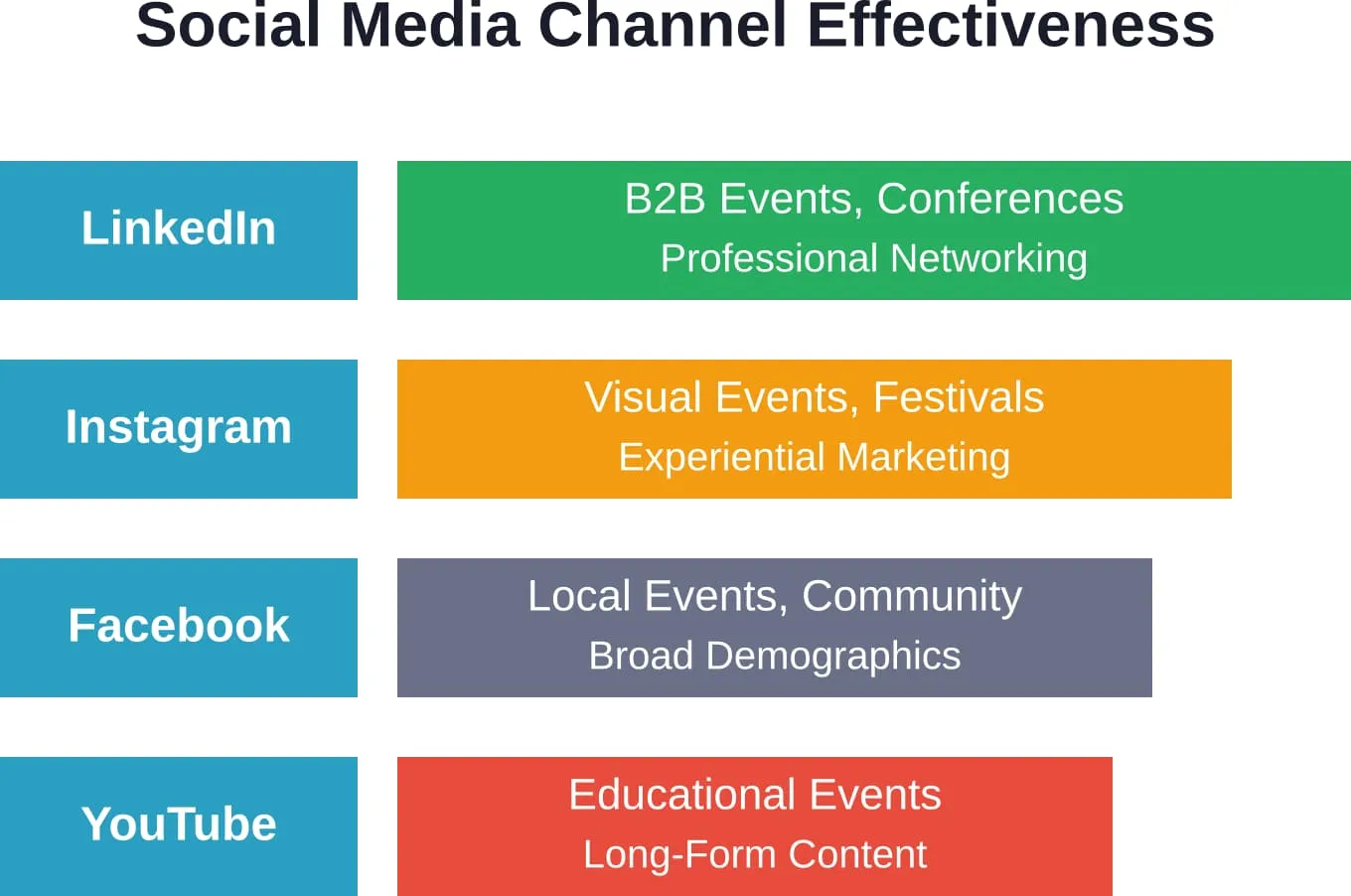
LinkedIn Content for B2B Events
For corporate conferences, trade shows, and professional development events, LinkedIn is the primary channel. Post speaker announcements, behind-the-scenes planning updates, and industry insights that position the event as a must-attend.
Encourage speakers and sponsors to share event content with their networks. Tag them in posts to increase visibility.
Instagram Stories and Reels for Visual Events
Festivals, galas, and experiential events thrive on visual storytelling. Use Instagram Stories for countdown timers, sneak peeks, and attendee spotlights. Reels work well for quick tips, speaker teasers, or recap montages from past events.
User-generated content is gold. Create a branded frame or filter attendees can use in their own Stories, expanding reach organically.
Facebook Events and Community Groups
Facebook Events still drive discoverability, especially for local or community-focused gatherings. Create the event page early, populate it with rich details, and invite the target audience.
Join relevant Facebook groups and share the event (within group rules). Engage authentically—answer questions, share value, and avoid spammy promotion.
Paid Social Advertising
Organic reach has limits. Paid ads on Facebook, Instagram, LinkedIn, and even TikTok allow precise targeting by industry, job title, interests, and behavior.
Start with small budgets to test creative and messaging. Scale what converts. Use retargeting pixels to reach people who visited the event website but didn’t register.
YouTube and Video Content
Video builds trust and communicates value faster than text. Publish speaker interviews, past event highlight reels, or educational content that previews the event experience.
Even a simple 60-second teaser video shared across social platforms can significantly boost engagement.
Partnerships and Collaborations That Amplify Reach
Strategic partnerships multiply marketing impact without multiplying budget. The right allies bring credibility, audience access, and promotional firepower.
Co-Marketing with Sponsors
Sponsors want exposure. Require them to promote the event to their audiences as part of the sponsorship package. Provide pre-written social posts, email templates, and branded graphics to make it easy.
The more skin sponsors have in the game, the harder they’ll push to fill seats.
Media Partnerships
Industry publications, local news outlets, and niche blogs often partner with events in exchange for exclusive content access, speaking opportunities, or brand visibility.
A media partner’s endorsement carries weight. Their audience trusts their recommendations, which translates to higher-quality registrations.
Professional Associations and Membership Organizations
Associations exist to serve their members. Partner with relevant organizations to offer member discounts, exclusive registration windows, or continuing education credits.
In exchange, the association promotes the event through their newsletter, website, and social channels—direct access to a pre-qualified audience.
Speaker and Performer Promotion
Speakers have their own audiences. Make speaker promotion effortless by providing:
- Custom landing pages with their unique tracking link
- Pre-written social posts and graphics featuring them
- Email copy they can send to their list
- Video clips or interview snippets they can share
Incentivize participation with affiliate commissions or tiered rewards based on registrations driven.
Traditional Marketing Channels That Still Deliver
Digital dominates, but traditional channels still perform for certain audiences and event types.
Direct Mail for High-Value Events
For executive conferences, luxury galas, or high-ticket workshops, a beautifully designed direct mail piece stands out in a world of digital noise.
Include a personalized letter, event details, and a clear call-to-action. Follow up with an email or phone call to those who received the mailer.
Local Media Coverage
Press releases to local TV stations, newspapers, and radio can generate free publicity for community events or conferences with a local angle.
Pitch a story—don’t just blast a generic release. Explain why the event matters to the outlet’s audience.
Print Advertising in Industry Publications
Trade magazines and journals still reach decision-makers in specific industries. A well-placed ad in a publication the target audience reads regularly can drive awareness and registrations.
Negotiate for bonus placement in digital editions or inclusion in the publication’s event calendar.
Flyers and Posters for Local Events
Physical promotion works for neighborhood festivals, markets, and community gatherings. Post flyers in coffee shops, libraries, community centers, and local businesses.
Make them visually striking with a clear QR code linking directly to registration.
Creative and Experiential Marketing Ideas
Standing out requires creativity. Experiential tactics create memorable touchpoints that drive word-of-mouth.
Pop-Up Activations
Bring a taste of the event experience to high-traffic locations. Set up a branded booth at a related conference, farmers market, or community event.
Offer interactive demos, free swag, or exclusive early registration for people who sign up on the spot.
Guerrilla Marketing Stunts
Bold, unexpected stunts generate buzz and media coverage. Think flash mobs, chalk art installations, or clever street marketing tied to the event theme.
Document everything and amplify it across social channels.
Virtual Event Previews
Host free webinars or live Q&A sessions with speakers as a preview of the main event. Attendees get value upfront and a taste of what’s coming.
These previews also serve as lead magnets—capturing contact information for follow-up nurture campaigns.
Limited-Edition Merchandise
Create exclusive event swag—t-shirts, tote bags, pins—and offer it as a bonus for early registrants or VIP ticket holders.
People love exclusivity. Limited-edition merch becomes a walking advertisement when attendees wear or use it.
Day-of Event Marketing Tactics
Marketing doesn’t stop when the event starts. Day-of tactics keep energy high and extend reach beyond the venue.
Live Social Media Coverage
Assign a team member to capture and share live content—photos, videos, quotes from speakers, attendee reactions. Post frequently across all active platforms.
Use the event hashtag consistently and encourage attendees to do the same.
Live Streaming
Stream key sessions, performances, or moments to virtual audiences. This extends reach and creates urgency—people watching remotely may decide to attend the next event in person.
Platforms like YouTube Live, Facebook Live, or LinkedIn Live make streaming accessible.
Interactive Social Media Contests
Run contests during the event—best photo using the event hashtag, most creative Instagram Story, trivia challenges. Offer prizes like free tickets to the next event or exclusive merch.
Contests boost engagement and generate user-generated content.
On-Site Content Capture
Set up photo booths, branded backdrops, or video interview stations where attendees can record testimonials or share their experience.
This content becomes marketing gold for promoting the next event.
Post-Event Marketing and Follow-Up
The event may be over, but the marketing opportunity isn’t. Post-event tactics turn attendees into repeat customers and amplify reach for future events.
Thank-You Emails
Send personalized thank-you emails within 24-48 hours. Include event highlights, photos, and a survey to gather feedback.
This keeps the relationship warm and shows appreciation.
Share Recap Content
Publish a blog post, video montage, or photo gallery recapping the event. Highlight key moments, speaker insights, and attendee reactions.
Tag speakers, sponsors, and attendees in social posts to maximize reach.
Leverage Testimonials and Case Studies
Collect testimonials from satisfied attendees and turn them into social proof for the next event. Video testimonials are especially powerful.
Create case studies showing measurable outcomes—connections made, deals closed, knowledge gained.
Nurture Future Attendance
Add attendees to a segmented email list for future events. Send them exclusive early access to next year’s event or VIP pricing.
Keep them engaged with valuable content between events—industry insights, speaker interviews, or community highlights.
Tease the Next Event
End the post-event communication with a teaser for the next event. Announce the date, theme, or a marquee speaker to generate early excitement.
Offer a super early-bird discount for attendees who commit immediately.
| Marketing Stage | Key Tactics | Timing | Primary Goal |
|---|---|---|---|
| Pre-Event | Tiered pricing, email campaigns, partnerships | 4-6 months out | Drive early registrations |
| Mid-Campaign | Social ads, influencer promotion, content marketing | 2-3 months out | Build momentum and awareness |
| Last Push | Countdown posts, urgency messaging, retargeting | 1-2 weeks out | Convert hesitant prospects |
| Event Day | Live coverage, streaming, interactive contests | During event | Maximize engagement and reach |
| Post-Event | Thank-you emails, recap content, testimonials | 1-4 weeks after | Nurture future attendance |
Measuring Event Marketing Success
Data separates guesswork from strategy. Tracking the right metrics reveals what works and what wastes budget.
Registration Metrics
Monitor total registrations, conversion rate from website visits to completed sign-ups, and cost per registration by channel.
Compare performance across pricing tiers to identify which deadlines drive the most urgency.
Engagement Metrics
Track email open rates, click-through rates, social media engagement (likes, shares, comments), and website traffic sources.
High engagement signals strong messaging and audience fit.
Revenue and ROI
Calculate total event revenue, marketing spend by channel, and overall return on investment. Break down ROI by tactic to prioritize budget allocation for the next event.
The U.S. Small Business Administration notes that most non-manufacturing businesses with average annual receipts under $7.5 million will qualify as a small business—for event planning firms, tracking profitability on each event determines long-term viability.
Attendance Rate
Not everyone who registers shows up. Calculate the percentage of registrants who actually attend. Low attendance rates indicate issues with perceived value or communication.
Post-Event Satisfaction
Survey attendees about their experience. Net Promoter Score (NPS) is a simple metric—how likely are they to recommend the event to a colleague?
High satisfaction scores predict repeat attendance and organic word-of-mouth.
Social Media Reach and Impressions
Measure total reach (unique users who saw event content) and impressions (total times content was displayed). Track hashtag usage and user-generated content volume.
These metrics quantify brand awareness and buzz.
Common Event Marketing Mistakes to Avoid
Even experienced planners make preventable errors that tank results. Here’s what to watch out for:
- Starting Marketing Too Late: Waiting until 4–6 weeks before the event leaves no time to build momentum. Begin marketing 4–6 months ahead to capture early-bird registrations and generate buzz.
- Ignoring Audience Segmentation: Sending the same message to everyone is ineffective. Segment by industry, role, past attendance, or engagement level, and tailor messaging and offers to each segment’s needs.
- Overlooking Mobile Optimization: Most people check email and social media on mobile devices. If your event website or registration form isn’t mobile-friendly, conversions plummet. Test every touchpoint on multiple devices.
- Failing to Follow Up Post-Event: The relationship doesn’t end when attendees leave. Post-event nurture campaigns convert one-time attendees into loyal advocates.
- Not Leveraging User-Generated Content: Attendees naturally create photos, posts, and testimonials. Provide hashtags, photo opportunities, and incentives to encourage sharing and amplify reach.
- Skipping the Data Review: Running campaigns without analyzing results repeats mistakes. Review what worked, what flopped, and why to refine future campaigns.
Building a Sustainable Event Marketing System
One-off campaigns produce one-off results. A repeatable system scales success.
Document the Playbook
Create a marketing playbook that documents timelines, templates, checklists, and workflows. This becomes institutional knowledge that survives team changes.
The U.S. Small Business Administration emphasizes the importance of business planning for structure and growth—the same principle applies to event marketing systems.
Build an Evergreen Content Library
Develop reusable assets—email templates, social media graphics, ad copy frameworks—that can be customized for each event.
This reduces workload and ensures consistency across campaigns.
Invest in Marketing Automation
Automation platforms handle repetitive tasks—email sequences, social media scheduling, lead nurturing—freeing up time for strategic work.
Look for tools that integrate with registration platforms for seamless data flow.
Cultivate Community Year-Round
Stay engaged with past attendees between events. Share valuable content, host virtual meetups, or create an online community.
An engaged community makes marketing the next event easier—they’re already warmed up and eager to return.
Conclusion
Marketing separates packed venues from empty rooms. The difference isn’t luck—it’s strategy, timing, and execution across channels.
The ideas in this guide work because they’re grounded in how people actually make decisions. Early-bird pricing creates urgency. Partnerships extend reach. Personalization builds connection. Post-event follow-up turns attendees into advocates.
Start with the fundamentals: tiered pricing, a dedicated event website, segmented email campaigns, and a unique hashtag. Layer in partnerships, social media promotion, and creative tactics that fit the event’s personality and audience.
Measure everything. Track which channels drive registrations, which messages resonate, and which tactics deliver the best ROI. Use those insights to refine the next campaign.
The event planning business requires more than logistics and vendor management. Marketing determines whether all that planning pays off. Build a repeatable system, invest in relationships, and stay consistent across the event lifecycle.
Ready to fill seats and create buzz for the next event? Start with one new tactic from this guide. Test it, measure the results, and build from there. The packed venue is waiting.