Quick Summary: Aircraft repair shops face unique marketing challenges in a specialized industry with long sales cycles and high-trust requirements. Effective strategies combine technical authority building, digital presence optimization, and relationship-based marketing that speaks directly to fleet managers, MRO decision-makers, and aircraft operators while demonstrating FAA compliance and proven reliability.
Marketing an aircraft repair business isn’t like promoting a consumer product. The audience is smaller, more technical, and makes decisions worth hundreds of thousands of dollars. Trust matters more than flashy campaigns.
Boeing estimates that globally, some 710,000 new technicians will be needed over the next 20 years to meet demand. That creates both opportunity and competition for repair stations. Standing out requires marketing that demonstrates competence, builds relationships, and reaches decision-makers where they actually look for service providers.
Here’s the thing though—most aircraft repair shops either don’t market at all, or they throw money at generic digital agencies that don’t understand Part 145 regulations, AOG situations, or how fleet managers evaluate vendors.
Understanding the Aircraft Repair Market
The aircraft maintenance sector operates differently than almost any other service industry. Decision cycles stretch months. Relationships span decades. Regulatory compliance isn’t optional—it’s the baseline.
According to the Bureau of Labor Statistics, the median annual wage for aircraft mechanics and service technicians reached $78,680 as of May 2024. For avionics technicians, the median annual wage was $77,080 as of May 2023. These aren’t impulse buyers—they’re trained professionals who know exactly what quality maintenance looks like.
Your marketing needs to speak to three distinct audiences: aircraft owners, fleet managers, and procurement departments. Each evaluates vendors through a different lens.
The Trust Factor
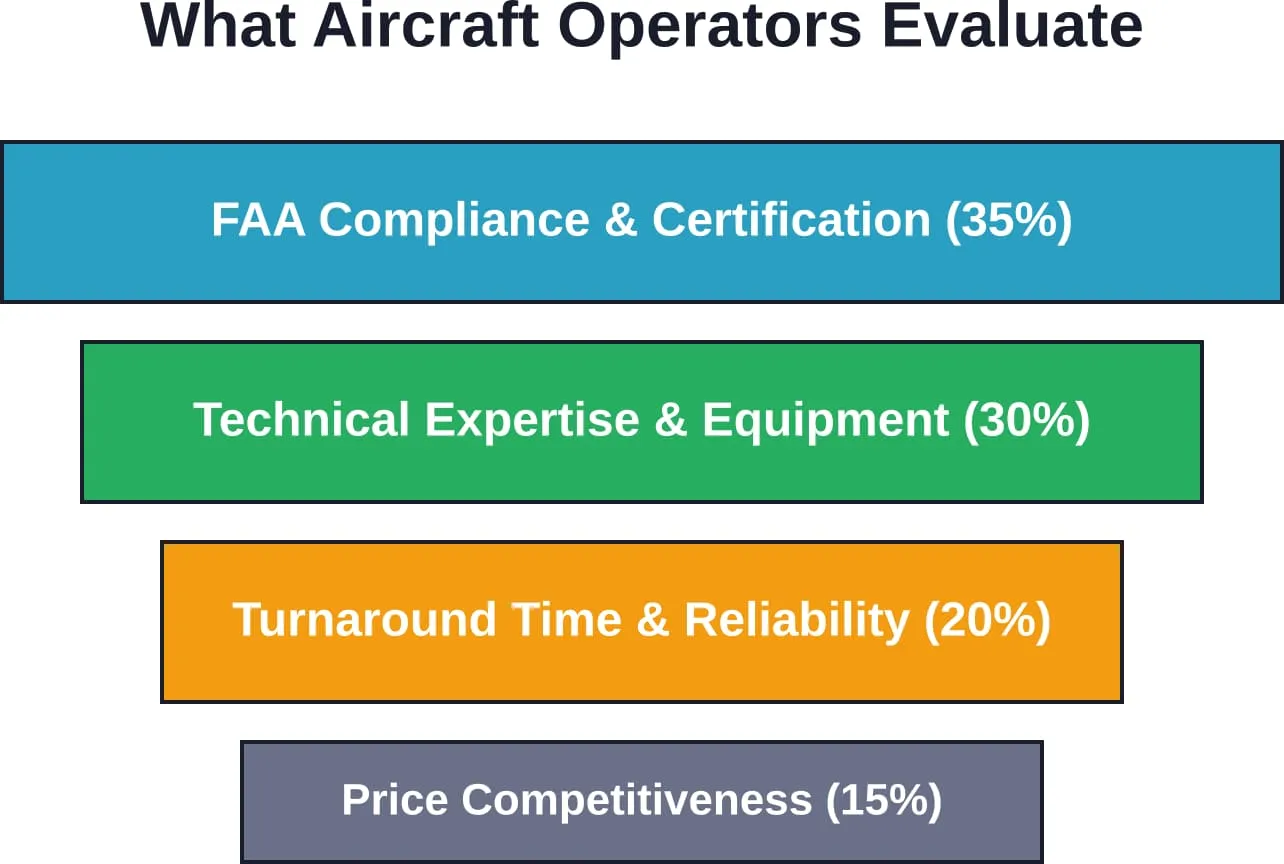
Safety is non-negotiable in aviation. One maintenance error can ground an entire fleet or worse. That’s why aircraft operators don’t choose repair stations based on the lowest bid alone.
They want documented expertise, FAA compliance history, specialized capabilities, and references from similar operations. Marketing materials that skip over these fundamentals won’t convert—no matter how polished the website design.
Boost Aircraft Repair Marketing With Lengreo
Aircraft repair businesses need marketing that clearly explains services, certifications, locations, and contact paths. Lengreo aligns website pages, SEO, paid ads, content, lead generation, appointment setting, and tracking into one organized system, helping attract more qualified clients and track campaign performance.
Need More Service Inquiries?
Lengreo can help with:
- improving service, certification, and contact pages
- setting up SEO and paid campaigns
- tracking calls, forms, and lead sources
- supporting content and lead generation workflows
👉 Contact Lengreo to discuss your marketing setup.
Digital Marketing for Aircraft Repair Services
Digital channels matter, but not the way consumer marketing agencies think. Aircraft operators aren’t scrolling TikTok for MRO recommendations. They’re researching capabilities, checking certifications, and reading technical documentation.
Search Engine Optimization for MROs
When a fleet manager searches “Citation jet avionics repair near Dallas” or “Part 145 repair station King Air maintenance,” your business needs to appear. That requires technical SEO focused on service-specific and aircraft-specific keywords.
Most repair stations have terrible websites—outdated designs, no mobile optimization, buried certification information. Fixing these basics provides immediate competitive advantage.
Key SEO elements for aircraft repair shops include detailed service pages for each aircraft type, capability certificates and ratings prominently displayed, case studies demonstrating complex repairs, and location-specific landing pages for regional searches.
Content Marketing That Demonstrates Expertise
Publishing technical content establishes authority. Not generic blog posts about “the importance of maintenance”—actual useful information that aircraft operators and mechanics search for.
According to authoritative sources, aircraft maintenance efficiency optimization remains a critical industry focus. Creating content around specific maintenance challenges positions repair stations as problem-solvers, not just vendors.
Effective content topics include troubleshooting guides for common aircraft issues, regulatory updates affecting specific aircraft types, maintenance interval optimization strategies, new repair techniques and technologies, and cost comparison analyses for different service approaches.
| Content Type | Ideal Length | Update Frequency | Primary Audience |
|---|---|---|---|
| Technical Guides | 1,500-2,500 words | Quarterly | A&P Mechanics |
| Service Capabilities | 800-1,200 words | As certifications change | Fleet Managers |
| Case Studies | 1,000-1,500 words | Monthly | Aircraft Owners |
| Industry News | 400-600 words | Weekly | All audiences |
| Video Walkthroughs | 5-10 minutes | Monthly | Procurement Teams |
Relationship-Based Marketing Strategies
The aviation industry runs on relationships. Personal connections often determine which repair station gets called for an AOG situation. Digital marketing matters, but face-to-face interaction still drives the majority of high-value contracts.
Industry Event Participation
Aircraft operators attend specific trade shows, conferences, and association meetings. Being present at these events—with booth space, speaking opportunities, or sponsorships—puts repair stations in front of decision-makers.
Key aviation events for MRO marketing include NBAA Business Aviation Convention, Aviation Week MRO Americas, regional aircraft owner associations, and type-specific aircraft groups like the Cessna Owner Organization or Piper Owner Society.
Real talk: don’t just show up with brochures. Demonstrate capability through technical presentations, live maintenance demonstrations where feasible, or panel participation on industry challenges.
Building a Referral Network
Aircraft mechanics, avionics shops, parts suppliers, and FBOs all influence where aircraft go for maintenance. Developing strategic relationships with these adjacent businesses creates a steady referral stream.
Referral partnerships work best with complementary service providers—shops that don’t compete directly but serve the same customer base. An avionics-only shop might refer structural repair work. A mobile maintenance provider might refer hangar-required jobs.
Demonstrating Compliance and Capability
Marketing materials must clearly communicate certifications, ratings, and capabilities. Aircraft operators need this information to prequalify vendors before making contact.
Showcasing FAA Certifications
Part 145 repair station certificates, ratings for specific work categories, and other FAA approvals should be prominent on every marketing channel—website, brochures, proposals, and email signatures.
According to FAA regulations under 14 CFR Part 145, repair stations must maintain specific certifications for the maintenance, inspection, and alteration work they perform. Displaying these certificates demonstrates compliance and capability simultaneously.
But wait. Don’t just list certificate numbers. Explain what they mean. “Part 145 Repair Station Certificate with Class 1, 2, and 3 ratings” means nothing to many aircraft owners. Translate it: “FAA-certified for complete airframe, powerplant, and propeller maintenance on all single and multi-engine piston aircraft.”
Equipment and Technology Capabilities
Specialized equipment distinguishes capable repair stations from basic maintenance shops. Marketing should highlight advanced diagnostic tools, specific test equipment, hangar capabilities, and technology investments.
The National Business Aviation Association notes that predictive maintenance technology increasingly informs aircraft servicing decisions. Repair stations that invest in trend analysis capabilities and data-driven maintenance planning can market this technological edge.
Targeted Communication Channels
Different aircraft operator segments respond to different marketing approaches. A corporate flight department evaluates vendors differently than an individual aircraft owner or a charter operator.
Email Marketing for MROs
Email remains highly effective for B2B aviation marketing. Regular newsletters keep repair stations top-of-mind when maintenance needs arise.
Effective aviation email content includes service reminders tied to annual inspection cycles, regulatory updates affecting fleet operations, maintenance tips that prevent larger problems, case studies demonstrating problem-solving, and special capacity availability for seasonal scheduling.
Segmentation matters. Don’t send the same message to turboprop operators and jet operators. Different aircraft types have different maintenance intervals, common issues, and decision factors.
Social Media for Aviation Businesses
LinkedIn works far better than Instagram for aircraft repair marketing. The audience is professional, the platform supports detailed content, and decision-makers are actually present.
Industry reports suggest that aviation professionals increasingly use LinkedIn for vendor research and industry networking. Regular posting about completed projects, new certifications, hiring announcements, and technical insights builds visibility.
Facebook groups dedicated to specific aircraft types also provide marketing opportunities. Many type clubs maintain active groups where owners discuss maintenance issues and recommend service providers.
| Platform | Best Content Types | Posting Frequency | Primary Value |
|---|---|---|---|
| Case studies, technical articles, company news | 2-3 times weekly | Professional credibility | |
| Facebook Groups | Maintenance tips, Q&A responses, photos | 4-5 times weekly | Community engagement |
| YouTube | Repair walkthroughs, facility tours, testimonials | 1-2 times monthly | Visual demonstration |
| Newsletters, maintenance reminders, offers | Bi-weekly | Direct communication |
Addressing the Technician Shortage
The aviation maintenance industry faces a significant workforce shortage. The FAA conferred 6,929 new mechanic certificates in 2021, a 33% jump from 2020, according to Embry-Riddle research. But that’s still far below industry needs.
Repair stations that market their workplace culture, career development programs, and compensation packages can attract talent in a competitive environment. Employment growth projections of 5% through 2024-34 for aircraft and avionics equipment mechanics and technicians according to the Bureau of Labor Statistics suggest continued demand, with aerospace engineers showing 6% growth through 2033.
Recruitment Marketing
Marketing for customers differs from marketing for employees, but both are essential. Shops need full bays and full tool rooms.
Effective technician recruitment strategies include partnerships with A&P schools for new graduate pipeline, apprenticeship programs marketed to career changers, competitive wage advertising, work-life balance messaging, and relocation assistance promotion.
According to industry sources, women remain significantly underrepresented in aviation maintenance technician roles. Repair stations that actively recruit from underrepresented groups tap a larger talent pool while building more diverse teams.
Measuring Marketing Effectiveness
Aviation marketing operates on longer timelines than consumer marketing. A lead generated today might not convert for six months. Measuring effectiveness requires patience and appropriate metrics.
Key Performance Indicators for MRO Marketing
Track metrics that actually correlate with business results. Vanity metrics like social media followers don’t pay bills. Focus on qualified lead generation rate, cost per lead by channel, lead-to-customer conversion rate, customer acquisition cost, and average customer lifetime value.
Real talk: if marketing generates 20 inquiries but only 2 are qualified leads for appropriate services, that’s a targeting problem. Better to reach 50 highly qualified prospects than 500 random contacts.
Common Marketing Mistakes to Avoid
Aircraft repair shops make predictable marketing errors. Learning from these mistakes saves time and budget.
- Generic messaging that could apply to any service business wastes opportunity. “Quality service at competitive prices” says nothing. “Part 145 certified for Cessna Citation 500-series with PMA parts inventory and 7-day average turnaround” speaks directly to qualified prospects.
- Inconsistent branding confuses potential customers. If the website shows modern equipment but the brochures are from 2015, that disconnect raises questions about current capabilities.
- Neglecting existing customers for new business acquisition creates churn. A monthly touchpoint with past customers—even just a maintenance reminder or relevant article—keeps the relationship active for future needs.
- Ignoring mobile optimization means losing prospects. Fleet managers research vendors on tablets during downtime. If the website doesn’t work on mobile devices, they’ll move to a competitor.
Future Trends in Aviation Maintenance Marketing
The maintenance sector continues evolving. Marketing strategies need to evolve alongside industry changes.
- AI and predictive maintenance increasingly influence how operators approach servicing decisions. Recent analysis from aviation education institutions notes that AI tools are reshaping aircraft maintenance approaches. Repair stations that adopt and market these technologies position themselves as forward-thinking providers.
- Video content becomes more important as bandwidth increases and attention spans decrease. Shop tours, technician profiles, and time-lapse repair videos provide engaging content that text alone can’t match.
- The aging aircraft fleet creates specialized opportunities. Many military and commercial aircraft exceed their original design life. Marketing specialized capabilities for older aircraft types reaches underserved market segments.
Conclusion
Marketing aircraft repair services requires understanding a specialized audience, demonstrating technical capability, and building trust over time. Generic marketing tactics don’t translate effectively to an industry where safety, compliance, and expertise matter more than price.
The most successful repair stations combine digital presence optimization with relationship-based marketing, industry event participation, and consistent communication that keeps them top-of-mind when maintenance needs arise.
Start with the fundamentals: a professional website showcasing certifications, search optimization for service-specific keywords, and systematic customer communication. Then expand into content marketing that demonstrates expertise, strategic partnerships that generate referrals, and targeted outreach to underserved aircraft segments.
The aviation maintenance industry faces significant growth. Boeing’s projection of 710,000 new technicians needed globally over the next 20 years, combined with employment growth projections of 5% through 2024-34 for aircraft and avionics equipment mechanics and technicians according to the Bureau of Labor Statistics, signals expanding opportunity for well-marketed repair stations.
Ready to elevate your aircraft repair marketing? Focus on what makes your shop uniquely qualified, communicate that value clearly to the right audience, and maintain consistent presence across channels where aircraft operators actually look for service providers.