Quick Summary: Entertainment marketing in 2026 requires a multi-channel approach centered on social platforms, audience participation, and creator partnerships. With cable and satellite TV subscriptions declining in recent years and social video platforms dominating attention, successful strategies now prioritize short-form content, interactive experiences, and data-driven audience intelligence to cut through subscription fatigue and capture fragmented audiences.
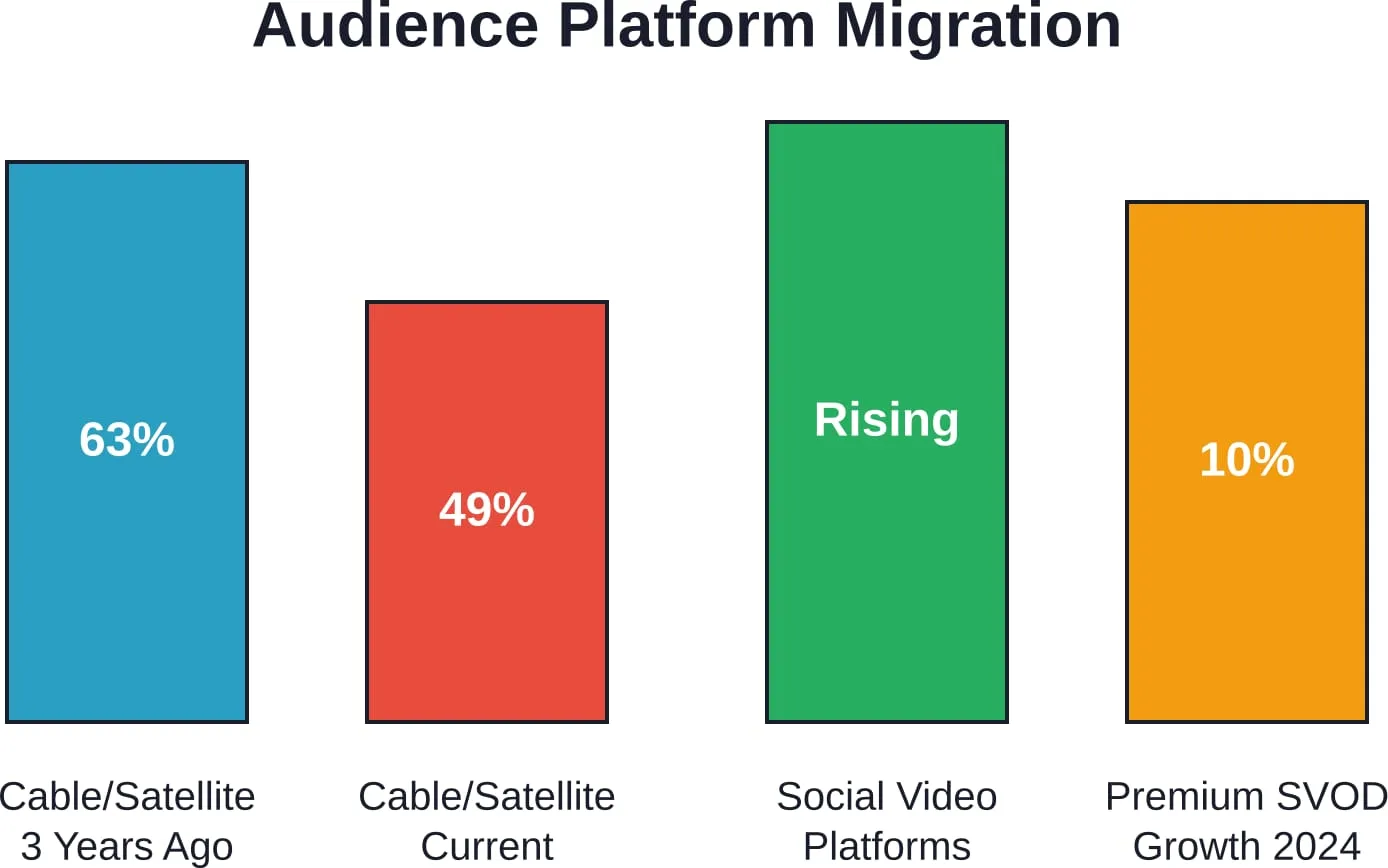
The entertainment landscape has shifted dramatically. Traditional advertising isn’t cutting it anymore. According to Deloitte data, cable and satellite TV subscriptions have declined in recent years, while social video platforms are becoming the dominant force in media consumption.
So what actually works? Real talk: the entertainment industry faces unique marketing challenges. Timing matters enormously—building hype in the narrow window before launch can make or break a project. Audiences are fragmented across platforms. And with the median US household annual income in the United States at about $80,000, subscription fatigue is real.
Here’s the thing though—entertainment marketing still thrives when strategies align with how audiences actually consume content today.
Understanding the Current Entertainment Marketing Landscape
The economics of digital entertainment are being reshaped by independent creators, global social platforms, and tech giants. Studios and streamers face competition not just from each other, but from hyperscale social video platforms that have fundamentally changed content consumption patterns.
Gen Z represents a significant demographic segment of the US population, and they’re consuming entertainment differently than any previous generation. Most content creators make less than $50,000 per year, yet more than 50% of their revenue comes from brand partnerships—a signal that authentic creator collaborations drive value.
Premium streaming subscription growth has slowed in the US market, showing market saturation. Meanwhile, evolving definitions of quality and cross-platform audience intelligence are changing competitive dynamics across the media landscape.
Drive Entertainment Marketing With Lengreo
Entertainment businesses need marketing that clearly presents shows, releases, events, and ticketing or streaming options. Lengreo integrates website development, SEO, paid ads, content, lead generation, appointment setting, and tracking into a single connected system to make campaigns measurable and effective.
Need a Clearer Way to Reach Audiences?
Lengreo can help with:
- refining event, show, and ticketing pages
- setting up SEO and paid campaigns
- tracking calls, forms, and lead sources
- supporting content and lead generation workflows
👉 Contact Lengreo to discuss your marketing setup.
Social Media Strategy for Entertainment Marketing
Social platforms aren’t just promotional channels anymore—they’re where entertainment happens. Some entertainment professionals highlight iPTV and on-demand video technologies as growth areas, recognizing the dominance of social video.
The most effective social media strategies for entertainment businesses go beyond posting trailers. Interactive campaigns that encourage audience participation consistently outperform passive content. Think polls, quizzes, behind-the-scenes footage that makes viewers feel like insiders.
Platform-Specific Tactics
Each platform demands different content approaches. Short-form video dominates across TikTok and Instagram Reels, where quick entertainment snippets can go viral. Facebook still drives event promotion and community building. LinkedIn matters for B2B entertainment services and industry positioning.
But here’s what matters most: timing and consistency. Posting schedules should align with release dates, building momentum in the weeks leading up to launch. One viral moment can drive more awareness than months of steady posting—but steady posting creates the conditions for viral moments.
Creator Partnerships and Influencer Collaborations
Working with content creators offers direct access to engaged audiences. Since more than 50% of creator revenue comes from brand partnerships, entertainment properties that structure mutually beneficial collaborations can tap into established communities.
The key? Authenticity. Audiences spot forced partnerships immediately. Successful collaborations give creators genuine creative freedom to present entertainment properties in ways that resonate with their specific audience.
Most creators make less than $50,000 per year, so even modest budgets can secure partnerships with micro-influencers who have highly engaged niche audiences. These targeted collaborations often deliver better ROI than celebrity endorsements.
Interactive and Experiential Marketing Ideas
Making marketing materials interactive transforms passive viewers into active participants. QR codes on posters can unlock exclusive content. Virtual experiences let audiences explore story worlds before launch. Quizzes and games build anticipation while collecting valuable audience data.
Physical experiential marketing still works, especially for major releases. Pop-up installations, themed events, and location-based activations create shareable moments that amplify across social media.
Auctioning props used in productions taps into fandom economics. Devoted fans drive lasting business value, and giving them opportunities to own pieces of stories they love deepens emotional connections while generating revenue and publicity.
Digital Advertising for Entertainment
Pre-roll video advertising reaches audiences in entertainment-consumption mode. When someone is already watching content, a compelling video ad for similar entertainment captures attention effectively. Targeting capabilities let campaigns reach specific demographics, interests, and viewing behaviors.
Programmatic advertising enables real-time optimization. Testing different creative versions, audience segments, and placements identifies what drives ticket sales or subscriptions. Google Ads and Facebook advertising remain core channels, but connected TV advertising is growing rapidly as viewing shifts to streaming platforms.
The challenge? Ad fatigue. Overexposure to the same creative burns out campaigns quickly. Successful digital advertising strategies rotate multiple creative executions and cap frequency to maintain effectiveness.
Content Marketing and Storytelling
Creating compelling content around entertainment properties helps extend reach beyond traditional advertising. Behind-the-scenes documentaries, cast interviews, creator diaries, and story-world expansions give fans more reasons to engage.
Leverage User-Generated Content
User-generated content campaigns turn audiences into marketers. Memes, fan theories, reaction videos, and social challenges create organic buzz that paid advertising cannot replicate. The most successful launches spark cultural conversations that reach far beyond the core audience.
Optimize Website Strategy
A visually compelling, functional sub-site for major releases serves as a central hub for marketing efforts. It should showcase trailers, integrate social feeds, offer exclusive content for subscribers, and make purchasing or subscribing as frictionless as possible.
Data-Driven Audience Intelligence
Cross-platform audience intelligence is reshaping competitive dynamics. Understanding not just demographics but psychographics—what audiences value, what motivates them, how they discover and consume content—enables precision targeting.
Streaming platforms have access to detailed viewing data. Studios can analyze consumption patterns to understand audience preferences and tailor marketing accordingly. Analysis of tastes, personalities, and lifestyles helps better reach audiences through targeted messaging.
Testing and optimization separate good campaigns from great ones. A/B testing headlines, creative concepts, landing pages, and calls-to-action identifies what resonates. Data-informed approaches emphasize delivering relevant content where audiences already gather rather than forcing them to new channels.
Traditional Tactics That Still Work
Press junkets, when executed smartly, still generate valuable media coverage. The key is making them newsworthy—exclusive reveals, unique access, compelling talent interactions that give journalists stories worth covering.
IMDB optimization matters. Industry professionals and enthusiasts use IMDB extensively. Complete, accurate listings with compelling imagery, trailers, and descriptions ensure discoverability. IMDB advertising reaches highly targeted entertainment audiences actively researching what to watch.
Many viewers cite watching live news and sports as reasons for maintaining pay TV subscriptions. Entertainment properties tied to live events or news cycles can leverage traditional TV advertising more effectively than pure on-demand content.
| Marketing Tactic | Best For | Key Advantage | Main Challenge |
|---|---|---|---|
| Social Media Campaigns | All entertainment types | Direct audience engagement | Platform algorithm changes |
| Creator Partnerships | Youth-targeted content | Authentic reach | Finding right matches |
| Interactive Experiences | Major releases | Memorable engagement | Resource intensive |
| Digital Advertising | Broad awareness | Precise targeting | Ad fatigue |
| Press & PR | Prestige projects | Credibility building | Media competition |
Measuring Entertainment Marketing Success
Metrics depend on your campaign objectives. Tracking the right numbers ensures your marketing efforts are aligned with your goals.
Key Metrics by Campaign Type
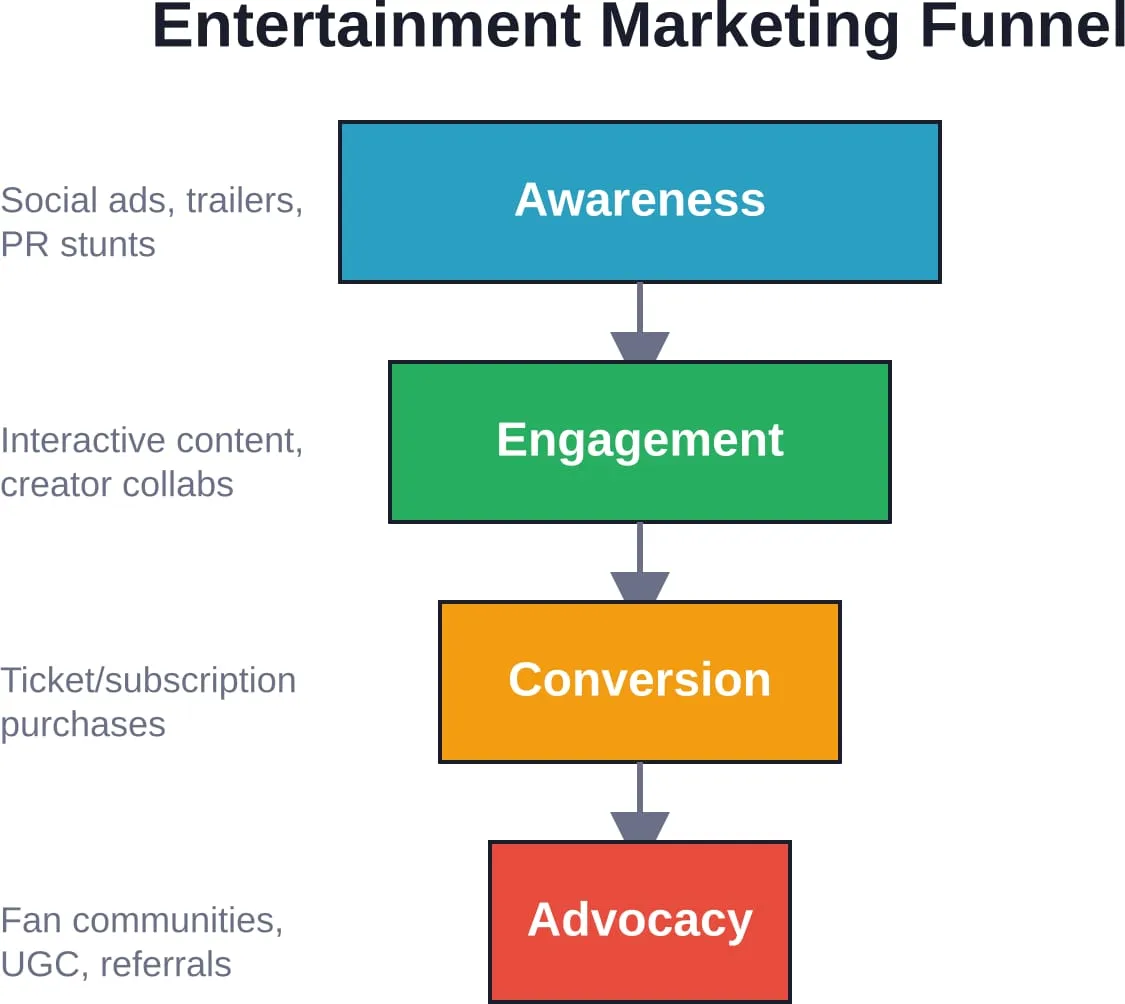
- Awareness Campaigns: Track reach, impressions, and social mentions to gauge visibility.
- Engagement Campaigns: Measure interactions, time spent on content, shares, comments, and likes.
- Conversion Campaigns: Focus on tangible results such as ticket sales, subscriptions, or viewership numbers.
Consider Multi-Touch Attribution
Customer journeys often span multiple touchpoints. A fan might:
- See a social ad
- Watch a YouTube review
- Discuss with friends
- Finally subscribe or purchase
Sophisticated measurement approaches track the journey across all channels, rather than crediting only the last interaction.
Measure Long-Term Brand Value
- Track lifetime value of engaged fans who attend premieres, buy merchandise, and evangelize to friends.
- Understand that devoted fans often contribute significantly more than one-time viewers, offering long-term returns across multiple releases.
This approach ensures marketing decisions are guided by both immediate conversions and sustained fan engagement.
Looking Ahead: Entertainment Marketing Evolution
AI efficiency is changing competitive dynamics in the media landscape. Automated content creation, personalized targeting, and predictive analytics enable more sophisticated campaigns with smaller teams. But the core principle remains: authentic connections with audiences drive success.
The entertainment industry in 2026 demands marketing strategies that respect how audiences actually consume content—across platforms, often simultaneously, with high expectations for quality and authenticity. Cookie-cutter campaigns don’t cut through the noise.
What separates effective entertainment marketing from wasted budgets? Deep audience understanding, creative risk-taking, multi-channel coordination, and relentless optimization based on performance data. The entertainment properties that thrive build devoted communities, not just passive viewers.
Ready to level up your entertainment marketing? Start by auditing where your audience actually spends time, test interactive campaigns that invite participation, and measure what matters. The landscape is competitive, but strategic marketing still makes the difference between breakout success and obscurity.