


Quick Summary: Wedding photographers can grow their business through a strategic mix of free and paid marketing approaches—including SEO-optimized blogs, social media engagement, venue partnerships, Google My Business optimization, and targeted paid advertising. Multi-channel marketing generates 45% more client inquiries than single-method promotion, while professional photographers investing in online marketing often see significant revenue increases within their first year.
Building a thriving wedding photography business takes more than capturing beautiful moments. The technical skills behind the lens matter, but so does getting your work in front of couples actively planning their weddings.
And here’s the thing—marketing doesn’t mean choosing one silver-bullet strategy and hoping for the best.
Research shows that photographers who implement multi-channel marketing approaches see 45% more client inquiries than those relying on a single promotional method. That means combining free organic tactics with strategic paid investments creates the strongest foundation for consistent bookings.
This guide walks through fifteen proven marketing ideas that wedding photographers actually use to attract clients, build their brand, and generate revenue. Some require time investment rather than budget. Others involve paid advertising with measurable returns.
The goal? Give wedding photographers a complete menu of options—then pick the paths that align with available resources and business goals.
The Multi-Path Reality of Photography Marketing
There’s no single “best” marketing strategy that works for every wedding photographer. Business models differ. Local markets vary. Budget constraints shape decisions.
What works brilliantly for a photographer in Austin might flop for someone in Portland. A strategy that delivers five bookings one year might need adjustments the next as platforms change algorithms or couples shift how they search for vendors.
That’s why successful wedding photographers typically run 3-5 marketing channels simultaneously—not dozens, which spreads effort too thin, but enough to ensure one slow channel doesn’t kill the business.
Professional photographers investing in online marketing often see significant revenue increases within their first year, according to industry analysis. But that growth comes from strategic combinations, not random experimentation.
Showcase Wedding Photography With Lengreo
Wedding photographers need marketing that clearly presents portfolios, services, packages, and contact options. Lengreo connects website development, SEO, paid ads, content, lead generation, appointment setting, and tracking into one cohesive system.
This makes it easier for couples to understand offerings and for teams to measure which campaigns drive real bookings.
Need More Booking Inquiries?
Lengreo can help with:
- improving portfolio, service, and contact pages
- setting up SEO and paid campaigns
- tracking forms, calls, and inquiry sources
- supporting content and lead generation workflows
👉 Contact Lengreo to discuss your marketing setup.
Free Marketing Strategies That Build Long-Term Growth
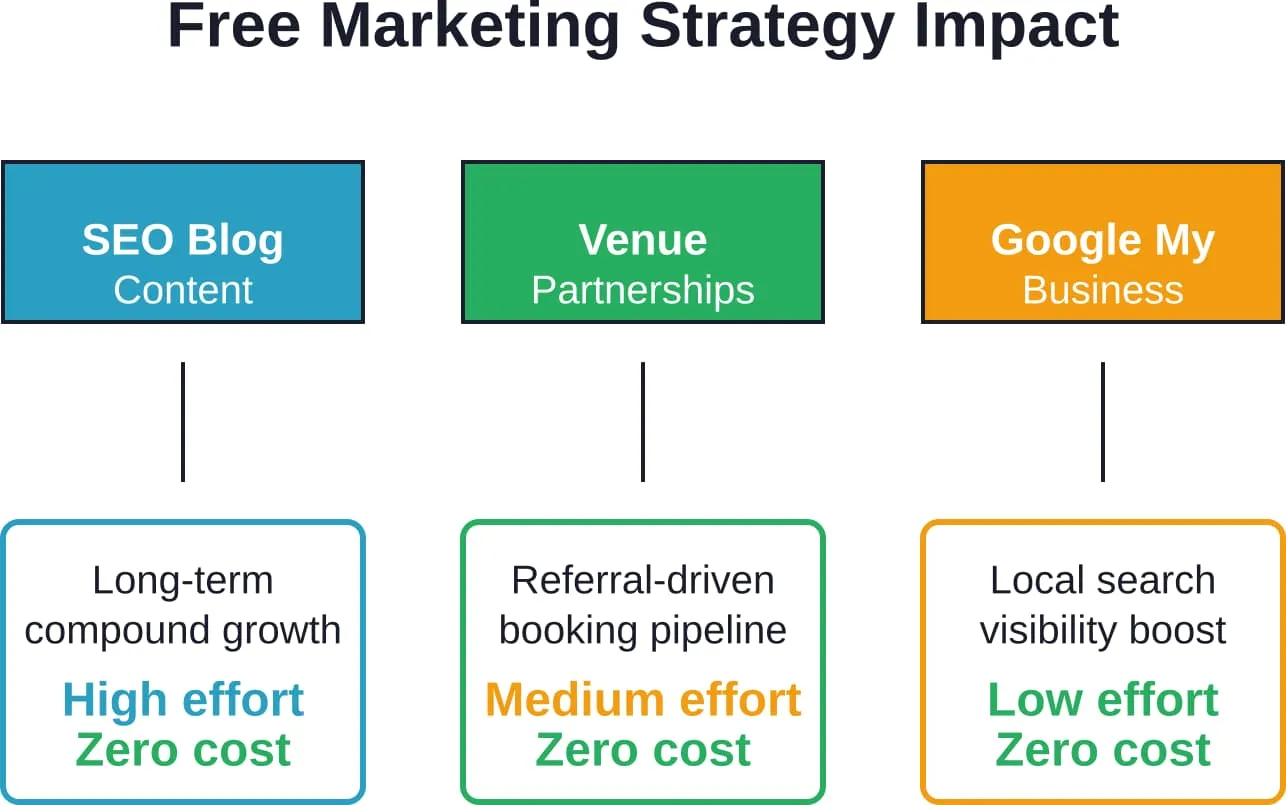
Budget-conscious photographers or those just starting out need marketing approaches that trade time for money. These tactics require consistent effort but deliver compounding returns without ongoing ad spend.
SEO-Optimized Blog Content
Search engine optimization remains one of the highest-ROI marketing investments for wedding photographers. When couples Google “wedding photographer [city name]” or “best venues for outdoor weddings,” showing up on page one drives qualified traffic.
The strategy centers on creating valuable blog content targeting location-specific and wedding-planning keywords. Instead of generic posts about “10 posing tips,” write articles like:
- Complete photo timeline for [Venue Name] weddings
- Best ceremony lighting times at [Popular Local Park]
- Why [City] courthouse weddings photograph beautifully
- Seasonal color palette ideas for [Region] weddings
Each post should include 15-20 high-quality images from real weddings, detailed venue information, and practical planning advice couples actually search for. The photography showcases work while the written content captures search traffic.
Blog posts also create natural opportunities for internal linking across the website, strengthening overall SEO performance and keeping visitors engaged longer.
Strategic Venue Partnerships
Wedding venues see hundreds of couples annually. A strong relationship with venue coordinators can generate steady referrals without advertising costs.
But generic “can I be on your preferred vendor list?” outreach rarely works. Venue managers receive dozens of identical requests monthly.
The approach that builds genuine partnerships: create content that promotes the venue while showcasing photography work. Write detailed blog posts reviewing the venue’s best ceremony locations, reception lighting, getting-ready spaces, and seasonal considerations. Include a gallery of 20-30 stunning images from weddings shot there.
Then share that content with the venue coordinator. Most venues eagerly share content that makes their property look incredible—giving the blog post social media promotion and sometimes a spot on the venue’s own website.
This creates a win-win relationship. The venue gets marketing content. The photographer gets exposure to engaged couples researching that venue plus strengthened referral relationships with coordinators who remember useful partners.
Google My Business Optimization
Local search dominates how couples find wedding vendors. When someone searches “wedding photographer near me” or includes a city name, Google My Business listings appear prominently in results.
Optimized profiles receive significantly more clicks than incomplete ones for local photographers. Yet many photographers create a basic listing and never touch it again.
Complete optimization includes:
- Accurate business name, address, phone number (NAP consistency matters for ranking)
- Primary and secondary business categories selected
- Complete business description with relevant keywords
- Website URL and booking link
- Business hours including availability information
- Regular photo uploads (at least 3-5 new images monthly)
- Active review collection and responses
- Weekly Google Posts with recent work and availability
The listing becomes a dynamic marketing asset rather than static directory information. Fresh content signals activity to Google’s algorithm while giving potential clients reasons to choose one photographer over competitors in the same search results.
Social Media Engagement (Beyond Just Posting)
Every wedding photographer maintains Instagram and Facebook accounts. But most treat social media as a one-way broadcast channel—post pretty pictures, hope someone books.
The photographers who generate actual inquiries from social platforms focus on engagement over follower count. That means:
- Commenting genuinely on posts from local venues, planners, florists, and other vendors
- Sharing (not just posting) content from recent weddings and tagging all vendors involved
- Responding to every comment and direct message within 24 hours
- Creating Instagram Stories showing behind-the-scenes work, not just final images
- Using location tags and local hashtags on every post
- Engaging with posts from newly engaged couples in the area
Research suggests people share videos at high rates compared to other content forms, with many consumers making purchase decisions based on brand videos. Short-form video content—Instagram Reels, TikTok clips, YouTube Shorts—performs particularly well for wedding content since the medium naturally suits showcasing weddings.
Real engagement builds community visibility. When a venue coordinator sees thoughtful comments on their posts regularly, that photographer stays top-of-mind for referrals. When a planning company’s content gets shared by a photographer, reciprocal promotion often follows.
Email Marketing to Past Clients and Leads
Email remains one of the highest-ROI marketing channels available. Email marketing is recognized as one of the highest-ROI marketing channels for photographers.
But most wedding photographers stop communicating with clients after delivering the final gallery. That’s a missed opportunity.
Past clients generate referrals, anniversary session bookings, and family photography opportunities. Couples who inquired but didn’t book might become clients for future life events or refer friends getting engaged.
A simple email strategy includes:
- Monthly newsletter to all past clients and leads with recent work, availability updates, and photography tips
- Seasonal campaigns promoting mini-sessions or special offerings
- Anniversary emails to past wedding clients with referral incentives
- Automated follow-up sequences for new inquiries who don’t book immediately
The key? Provide value beyond self-promotion. Share actual wedding planning advice, vendor recommendations, or local venue updates that help recipients even if they never book again.
Paid Advertising Options That Scale Quickly
Free marketing builds sustainable foundations. Paid advertising accelerates growth when budget allows. These strategies deliver faster results but require ongoing investment.
Facebook and Instagram Ads
Social media advertising offers unprecedented targeting capabilities for wedding photographers. The platform allows narrowing audiences by:
- Relationship status (engaged)
- Geographic location (specific cities or radius)
- Age range (typical wedding planning demographics)
- Interests (wedding planning, venues, bridal content)
- Behaviors (recently engaged, anniversary approaching)
The hyper-targeting means ad spend reaches people actively planning weddings in the service area rather than random social media users.
Real talk: results vary dramatically based on ad creative, targeting choices, and market saturation. One photographer might spend $50 monthly and generate three qualified inquiries. Another invests $200 and gets no bookings.
Testing matters. The photographers seeing success run small test campaigns ($50-100) trying different audience combinations, ad images, and messaging before scaling spend on what performs.
Google Ads for High-Intent Searches
When couples actively search “wedding photographer [city]” they’re in buying mode. Google Ads places photographers at the top of those high-intent search results.
The strategy works best when tightly focused:
- Bid on 10-20 highest-intent keywords (location-specific terms, not generic “wedding photography”)
- Set geographic radius to actual service area (typically 20-40 miles)
- Create dedicated landing pages for ad traffic, not just the homepage
- Track conversions meticulously to calculate actual cost-per-lead
Google Ads typically costs more per click than social advertising but delivers more qualified traffic since searchers actively look for photography services rather than scrolling social feeds.
Wedding Industry Directories
Platforms like The Knot and WeddingWire dominate how many couples discover vendors. These directories attract millions of engaged couples annually actively planning weddings.
Premium advertising on major wedding platforms represents a significant investment.
That price creates a barrier for newer photographers but delivers access to massive engaged audiences. The platforms also provide lead management tools, portfolio hosting, and review collection systems.
Smaller regional directories often offer more affordable options than major platforms with less competition and more targeted local exposure.
Before committing to expensive directory advertising, consider the local market. In cities where most couples use these platforms for vendor research, the investment makes sense. In markets where referrals and organic search dominate, money might be better spent elsewhere.
| Advertising Method | Typical Monthly Cost | Best For | Key Advantage |
|---|---|---|---|
| Facebook/Instagram Ads | $100-$500 | Building awareness, reaching engaged couples | Precise demographic targeting |
| Google Ads | $200-$800 | Capturing high-intent searches | Reaches active searchers |
| The Knot/WeddingWire | $250-$400+ | Markets with heavy platform usage | Massive engaged audience |
| Regional Directories | $25-$100 | Local market penetration | Lower competition, targeted geography |
Bridal Show Booth Presence
In-person bridal shows let couples meet photographers face-to-face, view printed portfolios, and build personal connections that digital marketing can’t replicate.
Booth costs vary widely—$200 for small local shows, $1,500+ for major regional bridal expos. Add expenses for booth design, printed materials, promotional giveaways, and time investment.
The return depends heavily on show quality and follow-up execution. A well-attended show might generate 30-50 qualified leads. But without systematic follow-up (email sequences, phone calls, special offers for show attendees), most leads evaporate.
Photographers seeing ROI from bridal shows typically:
- Choose shows carefully based on attendee demographics matching target clients
- Create memorable booth experiences beyond just hanging photos
- Collect contact information through contests or giveaways
- Follow up within 48 hours with personalized outreach
- Offer show-exclusive incentives with expiration dates creating urgency
Building Your Personal Brand
Marketing tactics drive visibility. But personal branding determines which photographers couples choose when comparing similar options at similar prices.
Personal marketing means creating a distinct identity that attracts ideal clients while naturally filtering mismatched ones. It’s the difference between “I’m a wedding photographer” and “I specialize in intimate outdoor ceremonies for adventurous couples who value storytelling over traditional poses.”
Define Your Unique Position
The wedding photography market overflows with talented professionals. Trying to appeal to everyone means blending into an indistinguishable crowd.
Photographers who stand out answer these questions clearly:
- What wedding style aligns naturally with personal artistic vision? (documentary storytelling, editorial fashion-inspired, dark and moody, light and airy, cinematic)
- Which couples make the ideal clients? (personality traits, values, priorities, budget level)
- What experience beyond just photos sets the service apart? (planning assistance, flexible timeline, adventurous locations, multicultural expertise)
- What values drive the business? (sustainability, inclusivity, efficiency, artistry, authenticity)
These answers shape everything—website copy, portfolio curation, marketing messages, pricing structure, and which marketing channels to prioritize.
A photographer positioned for luxury estate weddings markets differently than one targeting budget-conscious couples having backyard celebrations. Neither approach is wrong, but mixing messages confuses potential clients and dilutes brand strength.
Consistent Visual Identity
Brand recognition requires visual consistency across all touchpoints—website, social media, email templates, printed materials, even file delivery systems.
That doesn’t mean every wedding needs identical editing. It means the brand presentation maintains consistent color palettes, fonts, logo usage, and overall aesthetic.
When couples see an Instagram post, then visit the website, then receive an email inquiry response, cohesive branding builds trust and professionalism. Disjointed presentation raises subconscious concerns about reliability.
Authentic Voice and Storytelling
Generic photography marketing sounds like everyone else: “I’m passionate about capturing your special day…” “Your love story deserves beautiful memories…” “Packages starting at [price].”
The photographers who connect with ideal clients write and speak in authentic voices reflecting actual personality. Funny photographers can use humor in marketing. Introverted photographers can emphasize quiet observation skills. Detail-obsessed photographers can showcase meticulous planning abilities.
Storytelling marketing focuses on client experiences and specific wedding moments rather than technical camera skills. Instead of “I use professional full-frame cameras and prime lenses,” tell stories: “When Sarah’s grandmother saw her in the wedding dress for the first time, I caught three generations sharing one quiet moment before the ceremony chaos began.”
Couples don’t care about gear specifications. They care whether a photographer will notice and capture meaningful moments at their wedding.
Content Marketing Beyond Basic Blogging
Blog posts drive SEO value. But content marketing extends into additional formats that reach couples where they already spend time.
YouTube Wedding Films and Education
Video content dominates how younger demographics consume information. YouTube attracts couples researching wedding planning topics and seeking inspiration.
Wedding photographers can create two content types on YouTube:
- Highlight films from real weddings showcase work while providing inspiration. These videos should tell complete stories (3-5 minutes), not just pretty montages. Include venue names, vendor credits, and location information in descriptions for SEO value.
- Educational wedding planning content positions photographers as experts while capturing search traffic. Topics like “how to plan your wedding photo timeline,” “what to look for in a wedding photographer,” or “best ceremony lighting at [local venue]” attract engaged couples actively researching.
Pinterest Strategy
Pinterest functions as a visual search engine where couples actively build wedding inspiration boards. Millions of users search wedding-related terms monthly.
Photographers who optimize for Pinterest create vertical pins (2:3 ratio) from portfolio images with descriptive text overlays and keyword-rich descriptions. Each pin links back to relevant blog posts or portfolio pages.
The platform rewards fresh content, so consistent pinning (3-5 pins daily) performs better than sporadic activity. But tools like Tailwind automate scheduling, reducing time investment.
Podcast Guest Appearances
Wedding planning podcasts need expert guests. Photography topics—timeline planning, vendor selection, shot list creation, engagement session tips—fit naturally into podcast content.
Guest appearances provide exposure to engaged audiences already consuming wedding content. Most podcasts let guests share website links in show notes, driving referral traffic.
Finding opportunities: search “wedding planning podcast” plus city/region names, reach out to hosts with specific topic ideas rather than generic “I’d love to be a guest” messages.
Networking and Vendor Relationships
The wedding industry thrives on interconnected vendor relationships. Planners recommend photographers. Venues suggest preferred vendors. Florists share contacts with couples.
Building genuine professional relationships with complementary vendors creates referral networks more powerful than most paid advertising.
Styled Shoots for Portfolio Building
Styled shoots bring together multiple vendors (photographers, planners, florists, stationers, venues, models) to create editorial wedding content.
Everyone contributes services and gets portfolio images plus networking opportunities. The resulting photos get published in wedding blogs and magazines, earning backlinks and exposure for all participants.
For newer photographers, styled shoots fill portfolios with high-quality editorial work before booking full client weddings. For established photographers, they showcase creativity and build relationships with luxury vendors.
Vendor Networking Events
Most markets host regular wedding vendor meetups, networking groups, or industry organizations. These events build relationships that generate referrals.
The photographers who see real results from networking approach it genuinely—building actual friendships with other vendors rather than treating every interaction as a sales opportunity.
Measurement and Marketing Optimization
Marketing without measurement wastes resources. Smart photographers track what actually drives bookings, then double down on effective channels while cutting underperformers.
Track Every Inquiry Source
When new inquiries arrive, ask one simple question: “How did you find me?” Track responses in a spreadsheet or CRM system.
Categories to track:
- Google search (organic)
- Social media (specify platform)
- Vendor referral (specify which vendor)
- Past client referral
- Wedding directory (specify which one)
- Paid advertising (specify campaign)
- Other/unknown
After six months, patterns emerge. Maybe 40% of inquiries come from Google search, 25% from vendor referrals, 20% from Instagram, 10% from wedding directories, and 5% from other sources.
That data guides strategy. If vendor referrals generate 25% of inquiries but require zero budget, investing more time in relationship-building makes sense. If a $300/month directory generates only 5% of leads, canceling might free budget for better-performing channels.
Calculate Actual Cost Per Booking
Total inquiries matter less than actual bookings. A marketing channel generating 20 inquiries monthly sounds great—unless none convert to paying clients.
Track not just inquiry sources but which sources convert to bookings. Calculate cost per booking by dividing total marketing spend by bookings generated.
Example: a photographer spends $3,000 annually on wedding directory advertising and books three weddings from it. Cost per booking: $1,000. If average wedding packages are $3,000, that’s a 3:1 return—acceptable. If packages are $1,500, the math doesn’t work.
Meanwhile, Google My Business optimization cost zero and generated five bookings. The strategy becomes clear: invest more time in free channels that convert while reducing spend on expensive ones with poor ROI.
Common Marketing Mistakes to Avoid
Wedding photographers often waste resources on ineffective marketing because competitors do the same things. Avoiding these pitfalls saves time and money.
Spreading Too Thin Across Channels
The temptation: try everything simultaneously. Blog daily, post on five social platforms, run ads everywhere, attend every networking event, exhibit at all bridal shows.
The reality: mediocre execution across dozens of channels performs worse than excellent execution on three core strategies.
Better approach? Pick 3-4 marketing channels that align with available time and budget. Master those before expanding.
Copying Competitor Strategies Blindly
Just because another photographer runs Facebook ads or invests heavily in The Knot doesn’t mean those strategies suit different business models.
A luxury photographer charging $8,000+ per wedding can afford $5,000 annual directory fees if it books one additional client. A photographer charging $2,000 per wedding needs five additional bookings to break even—much harder to achieve.
Evaluate marketing investments against actual business numbers, not competitor activity.
Neglecting Follow-Up Systems
Marketing drives inquiries. But inquiries mean nothing without systematic follow-up converting them to consultations and bookings.
Many photographers lose potential clients simply by responding slowly (24+ hours), sending generic canned responses, or failing to follow up when couples don’t immediately book.
Simple follow-up improvements:
- Respond to all inquiries within 2-3 hours during business hours
- Send personalized responses referencing specific details from their inquiry
- Follow up 3-4 times over two weeks if couples don’t respond initially
- Create email templates that sound personal while saving time
- Set calendar reminders for follow-up rather than relying on memory
Taking Action on Wedding Photography Marketing
The wedding photography market rewards strategic, consistent marketing over random acts of promotion. Couples hire photographers they discover through search results, social media, vendor referrals, or directory listings—but only when marketing makes that discovery possible.
Start by choosing 3-4 marketing channels that align with available budget and time. For most photographers, that foundation includes SEO blog content, Google My Business optimization, strategic social media engagement, and one paid channel matching market conditions.
Then commit to 90-day execution. Marketing produces compounding returns over months, not overnight transformations. The photographers who succeed implement systems consistently for quarters and years, measuring results, optimizing what works, and cutting what doesn’t.
Remember that multi-channel approaches generate 45% more inquiries than single-method promotion. But “multi-channel” means 3-5 well-executed strategies, not scattershot activity everywhere.
The wedding photography business sitting on the other side of effective marketing? More inquiries from ideal clients, higher conversion rates, premium pricing power, and sustainable growth not dependent on any single referral source or platform algorithm.
Time to stop wondering which marketing strategies might work and start implementing the ones that already do.