


Quick Summary: Garden centers can boost sales through year-round social media engagement, experiential in-store events, strategic email campaigns, and community partnerships. The most effective strategies combine digital marketing with hands-on customer experiences, maintain visibility during off-seasons, and leverage user-generated content to build authentic connections with local gardening enthusiasts.
The garden center industry faces unique marketing challenges. Seasonal fluctuations, local competition, and the rise of big-box retailers make it tough to stand out. But here’s the thing—small and mid-sized garden centers have advantages that corporate chains can’t replicate: authentic expertise, community roots, and the ability to create memorable experiences.
What works in 2026 isn’t what worked five years ago. The marketing landscape has shifted. Digital presence matters more than ever, but it needs to complement—not replace—the in-person experience that makes garden centers special.
This guide covers actionable marketing ideas that garden centers are using right now to attract customers, build loyalty, and increase sales throughout the year.
The Current Garden Center Market Landscape
Garden centers operate in a competitive environment. Big-box stores offer convenience and low prices. Online retailers provide endless selection. So what brings customers through the door?
Expertise. Experience. Community connection.
According to USDA data, small-scale and innovative producers—including nurseries and garden centers—increasingly succeed by focusing on local markets and direct customer relationships. The Marketing Assistance for Specialty Crops program covers fruits, vegetables, tree nuts, nursery crops, Christmas trees, and floriculture, recognizing these as commercially viable specialty segments.
The challenge is communicating that value before customers ever visit. That’s where strategic marketing comes in.
Boost Garden Center Marketing With Lengreo
Garden centers benefit when all marketing channels work together. Lengreo helps connect website development, SEO, paid ads, content, lead generation, and tracking into a single system, making it easier for customers to find products, seasonal offers, and workshops.
A structured marketing setup ensures campaigns and site pages support each other, reducing guesswork.
Need a Clearer Way to Reach Garden Customers?
Lengreo can help with:
- improving product, seasonal offer, and contact pages
- setting up local SEO and paid traffic campaigns
- tracking calls, forms, and leads from multiple channels
- supporting content creation and lead generation workflows
👉 Contact Lengreo to discuss your marketing setup.
Year-Round Social Media Strategies
Winter doesn’t mean going dark. Going quiet during the off-season leads to decreased visibility and fading customer interest just when garden centers need momentum heading into spring.
With a significant majority of U.S. adults using at least one social media platform, maintaining an active digital presence is essential.
Instagram Stories for Real-Time Engagement
Instagram stories last just 24 hours, but that temporary nature creates urgency. Garden centers use them to showcase new arrivals, share quick care tips, and build anticipation for upcoming events.
The key is consistency. Daily stories keep the garden center top-of-mind even when customers aren’t actively shopping. Behind-the-scenes content—staff potting plants, unloading deliveries, preparing seasonal displays—creates authentic connections that polished feed posts can’t match.
Using a combination of feed posts and stories engages more followers. Feed posts provide evergreen content; stories drive immediate action.
Content That Actually Gets Shared
Educational content performs better than pure promotion. Plant care guides, seasonal checklists, and problem-solving videos get saved and shared.
Community discussions on platforms like Facebook reveal what content resonates. Users consistently mention posting photos of plants, sharing gardening tips, and highlighting seasonal inventory as effective tactics.
Real talk: the goal isn’t just likes. It’s building trust so when someone needs a tomato plant or advice on fighting aphids, the garden center is the first place they think of.
User-Generated Content and Community Building
Customers posting photos of their gardens, using plants purchased from the center, creates authentic marketing that money can’t buy. Encourage it by creating a branded hashtag and featuring customer posts on the garden center’s own feed.
This approach turns satisfied customers into brand ambassadors. Their networks see real results, not advertising.
Experiential In-Store Marketing
Garden centers aren’t just retail spaces—they’re destinations. Creating experiences that customers can’t get online transforms browsers into buyers and one-time shoppers into regulars.
Workshops and Educational Events
Hands-on workshops drive foot traffic and position the garden center as the local expert. Topics that work: container gardening, pest management, seasonal planting, pruning techniques, composting basics.
Community discussions mention small events with 10-20 attendees as manageable and effective. Some garden centers offer gift certificates to attendees—something like a $10 voucher encourages immediate purchases while the customer is already on-site.
The USDA’s urban agriculture initiatives emphasize technical assistance and education for producers, but garden centers can apply similar principles for their customer base—providing knowledge that helps customers succeed increases loyalty.
Seasonal Displays That Tell Stories
Themed displays do more than showcase products. They inspire. A “backyard pollinator garden” display shows complementary plants together, demonstrates design principles, and makes it easy for customers to visualize—and purchase—complete solutions rather than individual plants.
Retailers typically mark prices up significantly from wholesale costs, often by 50-100% or more, so selling packages and combinations increases transaction value significantly.
Create Instagram-Worthy Moments
Physical spaces designed for photos generate free marketing. A stunning vertical garden wall, a charming garden vignette, or a seasonal photo backdrop encourages customers to share their visit on social media.
Every share exposes the garden center to new potential customers in the local area.
Email Marketing That Actually Gets Opened
Email isn’t dead—it’s just crowded. Garden centers that succeed with email focus on value, not volume.
Seasonal Reminder Campaigns
Timely reminders tied to gardening tasks work. “Time to plant fall bulbs” or “Protect your perennials before the first frost” emails provide useful information while driving traffic during specific windows.
Segment the list. Vegetable gardeners need different information than ornamental plant enthusiasts. Customers who bought fruit trees should receive orchard care tips.
Exclusive Subscriber Benefits
Early access to new inventory, subscriber-only workshops, or special shopping hours for email list members creates incentive to subscribe and stay subscribed.
The key: make the benefits tangible and exclusive. “Join our email list” doesn’t motivate anyone. “Get first access to heirloom tomato plants before we sell out” does.
Community Partnerships and Local Marketing
Garden centers thrive on local connections. Strategic partnerships amplify reach within the community without massive advertising budgets.
Cross-Promotions with Complementary Businesses
Partner with local coffee shops, farm-to-table restaurants, farmers markets, or home improvement stores. Cross-promote through flyers, social media shout-outs, or joint events.
A garden center might team up with a local bakery for a “Garden and Graze” event, or collaborate with a hardware store for a spring home improvement open house.
Schools and Community Gardens
Donating plants or materials to school gardens and community projects builds goodwill and visibility. Staff volunteering time for educational programs positions the garden center as a community pillar, not just a business.
The USDA emphasizes partnerships in urban agriculture initiatives, noting that projects providing collaboration with multiple partners receive preference in grant funding. Garden centers can apply the same collaborative approach at the local level.
Master Gardener Programs
Connecting with local Master Gardener programs creates mutual benefits. Host their meetings, sponsor educational materials, or invite them to lead workshops. They gain a venue; the garden center gains credibility and access to engaged gardeners.
Loyalty Programs That Drive Repeat Business
Acquiring new customers costs more than retaining existing ones. Loyalty programs turn occasional shoppers into regulars.
Points-Based Rewards
Simple points systems work: earn points on purchases, redeem for discounts or free products. The mechanics matter less than the perception of value.
Track purchases digitally—modern POS systems make this straightforward. Customers provide contact information to join, giving the garden center permission to market directly.
Tiered Membership Programs
Create levels: basic members get standard discounts, premium members get early access and deeper discounts, VIP members get private shopping events and exclusive products.
This structure encourages customers to increase spending to reach the next tier.
Birthday and Anniversary Perks
Small gestures create outsized goodwill. A birthday discount or a gift on the anniversary of their first purchase shows customers they’re valued as individuals, not transactions.
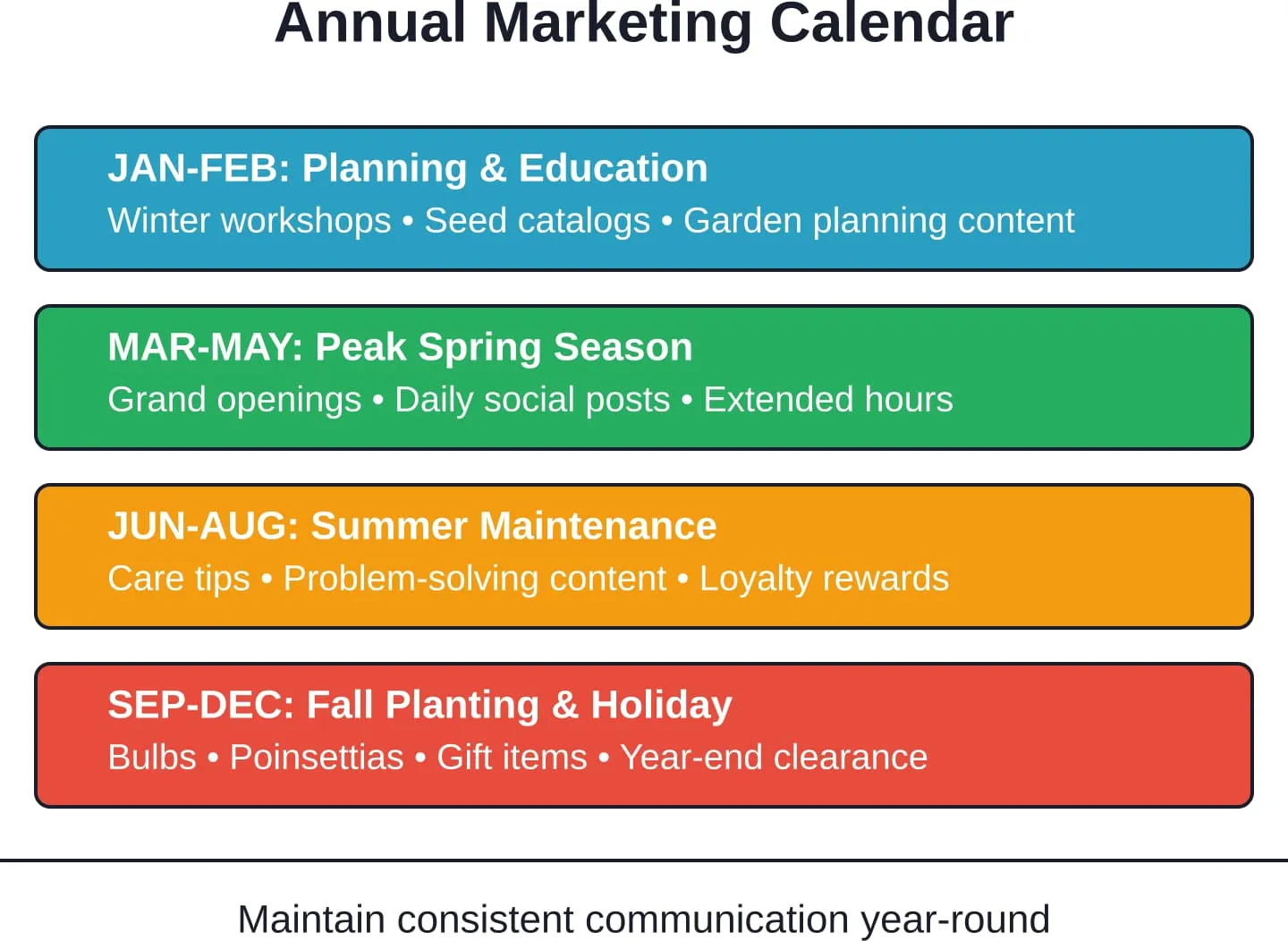
Seasonal Marketing Strategies
Garden centers operate on pronounced seasonal cycles. Smart marketing acknowledges this reality and plans accordingly.
Spring: Maximum Visibility
Spring is peak season. Marketing during this period should be aggressive: daily social media posts, email campaigns, local advertising, extended hours, special events.
Don’t just promote products—educate. Spring is when novice gardeners need the most help. Position the garden center as the place that ensures their success.
Summer: Problem-Solving Focus
Summer marketing shifts to maintenance and troubleshooting. Heat stress, pests, watering issues—these are the concerns occupying customers’ minds.
Content addressing these problems drives traffic during what might otherwise be a slower period.
Fall: Second Planting Season
Many gardeners don’t realize fall is ideal for planting perennials, trees, and shrubs. Educational marketing explaining why fall planting succeeds captures sales that would otherwise be lost.
Bulbs, mums, and pansies round out fall inventory. Halloween and harvest themes create merchandising opportunities.
Winter: Planning and Preparation
Winter seems like downtime, but it’s crucial for next year’s success. Marketing focus shifts to planning: seed catalogs, garden design consultations, tool and supply sales, gift items, houseplants.
Workshops on topics like seed starting, pruning, or garden planning keep customers engaged and thinking about the garden center during months when they’re not actively gardening outdoors.
| Season | Primary Focus | Marketing Channels | Content Themes |
|---|---|---|---|
| Spring | Maximum sales push | All channels, heavy social | New arrivals, planting guides, events |
| Summer | Maintenance support | Email, targeted social | Care tips, problem solving, water conservation |
| Fall | Second planting season | Email campaigns, local ads | Fall planting benefits, bulbs, mums, trees |
| Winter | Engagement & planning | Workshops, content marketing | Garden planning, seeds, houseplants, gifts |
Google My Business and Local SEO
When someone searches “garden center near me,” showing up matters. Local SEO isn’t optional.
Optimize Google Business Profile
Complete every section: hours, services, attributes, description, photos. Post updates regularly—Google rewards active profiles with better visibility.
Encourage reviews. Respond to every review, positive or negative. High review counts and ratings directly impact local search rankings.
Location-Specific Content
Create content addressing local gardening conditions. “Best tomato varieties for [city] gardens” or “When to plant spring bulbs in [region]” content ranks well for local searches and provides genuine value.
Consistent NAP Citations
Name, address, and phone number must be identical across every online listing: website, Google, Facebook, Yelp, local directories. Inconsistencies confuse search engines and hurt rankings.
Direct Mail Still Works
Digital marketing dominates conversations, but direct mail to local addresses still generates response, especially from older demographics who make up a significant portion of gardening enthusiasts.
Postcards announcing spring opening, seasonal sales, or special events reach people who might not see digital marketing. Track response with unique discount codes to measure ROI.
Video Marketing for Garden Centers
Video outperforms static content on nearly every platform. Garden centers have natural video opportunities.
Quick Care Tips
Sixty-second videos demonstrating a single technique—how to deadhead petunias, when to harvest basil, how to divide hostas—provide value in easily digestible formats perfect for social media.
Plant Tours and New Arrival Showcases
Walking through the greenhouse highlighting what’s new, what’s blooming, or what’s on sale creates urgency and excitement. These videos require minimal production—smartphone quality is fine if the content is good.
Behind-the-Scenes Content
Show how plants arrive, how staff cares for inventory, how displays are created. Transparency builds trust and differentiates the garden center from impersonal big-box stores.
Measuring Marketing Effectiveness
Marketing without measurement wastes money. Track what matters.
Key Metrics for Garden Centers
Foot traffic, transaction count, average transaction value, email open rates, social media engagement, website traffic, conversion rates from specific campaigns.
Use unique discount codes for different marketing channels to identify what’s driving sales. “SPRING2026” for email campaigns, “FACEBOOK10” for social media ads, “NEIGHBOR” for direct mail.
Customer Acquisition Cost
Calculate how much each new customer costs to acquire through different channels. This reveals which marketing investments deliver the best return.
Some channels cost more but bring higher-value customers. Others bring volume at lower quality. Both can be valuable if used strategically.
Low-Budget Marketing Tactics
Not every garden center has a massive marketing budget. These tactics deliver results without breaking the bank.
Leverage Staff Expertise
Staff knowledge is a competitive advantage. Feature employees in social media posts answering common questions. This humanizes the brand and showcases expertise.
Collaborate with Influencers and Bloggers
Local gardening bloggers and micro-influencers often work for product exchange rather than cash. They provide authentic content to engaged audiences.
Choose partners whose values align with the garden center and whose audience matches the target demographic.
Referral Programs
Word-of-mouth remains powerful. Formalize it with a referral program: existing customers get a discount when they bring new customers who make a purchase.
This turns satisfied customers into active promoters.
Technology and Tools for Garden Center Marketing
The right tools make marketing more efficient and effective.
Point of Sale Systems with Marketing Features
Modern POS systems do more than process transactions. They track customer purchase history, manage loyalty programs, send automated emails, and provide analytics that inform marketing decisions.
Integration matters. A POS that connects with email marketing, social media management, and inventory systems saves time and provides better data.
Email Marketing Platforms
Platforms like Mailchimp, Constant Contact, or Klaviyo automate campaigns, segment audiences, and track performance. Most offer free tiers for smaller lists.
Social Media Scheduling Tools
Consistent posting requires planning. Tools like Buffer, Hootsuite, or Later allow batch-creating content and scheduling posts in advance, making it feasible to maintain daily presence without daily effort.
Common Marketing Mistakes to Avoid
Even well-intentioned marketing can backfire. Watch for these pitfalls.
Inconsistent Branding
Logo, colors, tone, messaging—all should be consistent across channels. Inconsistency creates confusion and weakens brand recognition.
Neglecting Existing Customers
Focusing exclusively on new customer acquisition while ignoring existing customers leaves money on the table. Retention is cheaper and often more profitable than acquisition.
Over-Promoting, Under-Educating
Constant sales pitches annoy people. The ratio should favor education and value over promotion. An 80/20 rule works: 80% helpful content, 20% promotional.
Ignoring Mobile Users
Most social media and web browsing happens on mobile devices. Marketing materials, websites, and emails must work perfectly on smartphones or they’ll be ignored.
Not Tracking Results
Marketing based on assumptions rather than data wastes resources. If something isn’t tracked, it can’t be optimized.
Conclusion: Growing Garden Center Success Through Strategic Marketing
Marketing a garden center in 2026 requires balancing digital innovation with the authentic, community-focused experiences that make independent retailers special. The garden centers that thrive combine consistent social media engagement, educational content, experiential events, and strategic local partnerships.
Start with foundations: optimize the Google Business Profile, establish consistent social media presence, and build an email list. Then layer in events, partnerships, and paid advertising as resources allow.
The competitive advantages of independent garden centers—expertise, service, community connection—only matter if customers know about them. That’s what strategic marketing accomplishes.
Track results. Adjust based on data. Stay consistent even when immediate returns aren’t obvious. Marketing compounds over time.
Ready to grow your garden center’s visibility and sales? Start with one strategy from this guide—implement it consistently for 90 days—then add another. Small, sustained efforts create significant results.