Quick Summary: Marketing ideas for selling cars combine digital strategies and transparent practices to reach modern buyers. Effective approaches include social media content (especially short videos on platforms like TikTok), email campaigns, SEO-optimized websites, and honest advertising that complies with FTC regulations. Successful dealerships focus on building trust through customer reviews, educational content, and community engagement while avoiding deceptive pricing tactics.
The automotive marketplace has shifted dramatically. Buyers start their journey online long before setting foot in a dealership, and their expectations have changed.
According to the National Automobile Dealers Association, 45% of Americans are willing to buy their next vehicle through social media. That’s not a fringe behavior anymore—it’s mainstream.
But here’s the thing: throwing money at ads won’t cut it. Modern car marketing requires a strategic mix of digital presence, transparent communication, and genuine relationship-building. The Federal Trade Commission has also been cracking down on deceptive dealership advertising, warning 97 auto dealership groups about misleading pricing practices as recently as March 2026.
So what works? Let’s explore the marketing ideas that actually move inventory.
Understanding the Modern Car Buyer’s Journey
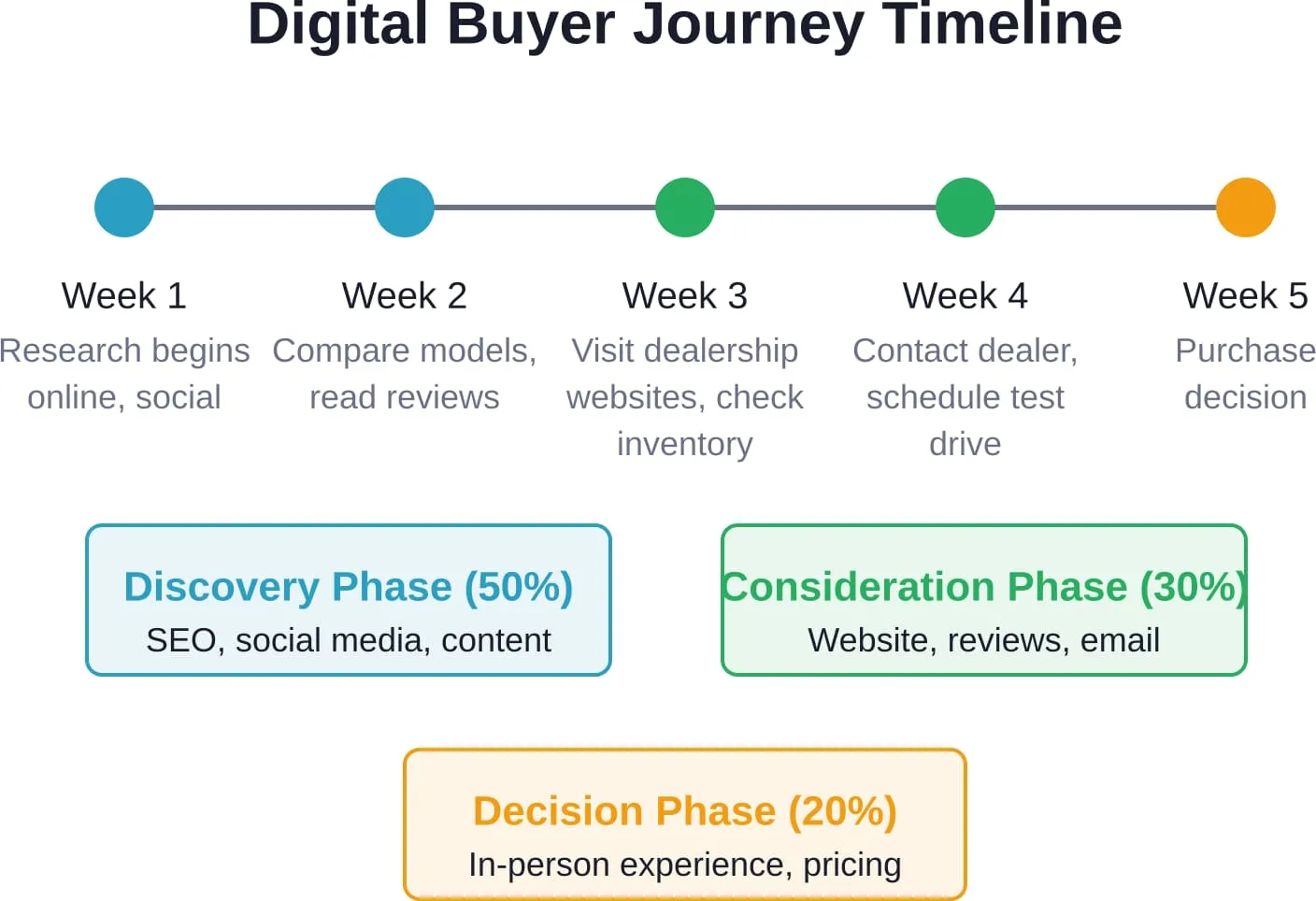
Car buyers today complete about 50% of their purchase journey online before contacting a dealership. They research models, compare prices, read reviews, and narrow choices—all from their phones.
This shift means dealerships can’t rely solely on foot traffic. The battle for attention happens in digital spaces first.
And those who embrace digital tools see real results. NADA research shows that buyers who complete more of their journey online save an average of 45 minutes at the dealership. They arrive informed, ready to move forward, and less likely to walk away.
The question isn’t whether digital marketing matters. It’s which strategies deliver the best return.
Organize Car Sales Marketing With Lengreo
Selling cars online works better when listings, offers, financing details, and contact steps are easy to find. Lengreo helps bring website structure, paid campaigns, search visibility, content, and tracking into one practical marketing system.
Need More Vehicle Inquiries?
Lengreo can help with:
- improving listing, offer, and contact pages
- setting up SEO and paid campaigns
- tracking calls, forms, and lead sources
- supporting content and demand generation
👉 Contact Lengreo to discuss your marketing setup.
Social Media Marketing Ideas That Build Trust
Social platforms have become the new showroom floor. TikTok’s automotive leadership made this clear at NADA Show 2026: shoppers discover vehicles, compare options, and make buying decisions on social media before submitting a lead.
Here’s what works:
Short-Form Video Content
Quick videos—30 to 90 seconds—perform exceptionally well. Feature walkarounds of new inventory, highlight specific features, or show before-and-after details of service work.
Keep production simple. Authenticity beats polish. A salesperson explaining why a particular SUV works well for families will outperform a heavily edited commercial spot.
How-To Tutorials and Educational Posts
Educational content builds credibility. Create short tutorials on topics like understanding financing terms, checking tire tread depth, or pairing a phone to a vehicle’s Bluetooth system.
These posts position the dealership as helpful rather than purely transactional. Buyers remember that when it’s time to purchase.
Employee Spotlights and Humanizing Content
People buy from people. Showcase staff members—not just salespeople, but service technicians, finance managers, and detailers.
Short interviews about why they love cars or what they drive personally make the dealership feel approachable. It breaks down the stereotypical “pushy car dealer” image.
Customer Success Stories and Reviews
Real testimonials carry weight. When a customer picks up their new car, ask to snap a photo. Tag them on social media (with permission) so their network sees it.
Community discussions suggest this simple tactic extends reach organically. Friends of buyers become warm leads.
Contests and Giveaways
Engagement-focused campaigns can expand reach quickly. Run a simple contest: “Tag a friend who needs a new car” or “Share your best road trip memory.”
Prizes don’t need to be expensive. Free oil changes, detail services, or branded merchandise work. The goal is visibility and engagement, not giving away cars.
Email Marketing Strategies for Dealerships
Email remains one of the highest-ROI marketing channels. Dealerships with segmented email lists can nurture leads, re-engage past customers, and drive service appointments.
Effective email campaigns follow the 60-30-10 model: 60% original content (dealership news, new inventory, tips), 30% third-party content (automotive industry news, vehicle reviews), and 10% promotional offers.
Segmentation Matters
Not every recipient should get the same message. Segment lists by customer type: recent buyers, service customers, past leads who didn’t purchase, trade-in prospects.
A recent buyer doesn’t need ads for new cars—but they do want service reminders and loyalty perks. A cold lead from six months ago might respond to a specific incentive or new model arrival.
Timing and Frequency
Too many emails annoy people. Too few and they forget about the dealership. Two to four emails per month hits the sweet spot for most audiences.
Send service reminders based on mileage or time since last visit. Send inventory updates when new models matching a lead’s preferences arrive. Timing relevance boosts open rates significantly.
Website Optimization and SEO for Car Sales
A dealership’s website is its digital storefront. If it loads slowly, looks outdated, or buries key information, potential buyers leave.
Speed and Mobile Responsiveness
Most car shoppers browse on mobile devices. Sites must load in under three seconds and display cleanly on small screens.
Large image files slow everything down. Compress photos of inventory without sacrificing quality. Use lazy loading so images only load as users scroll.
Clear Inventory Listings
Every vehicle listing should include multiple high-quality photos, detailed specs, pricing (if possible—more on that below), and clear calls to action like “Schedule Test Drive” or “Get Pre-Approved.”
For used cars, speed matters. Set a goal to photograph and list new inventory within 48 to 72 hours of acquisition. Every day a car sits unlisted is a day of depreciation and holding costs.
Local SEO and Google Business Profile
When someone searches “car dealership near me,” the dealership needs to appear. Claim and optimize the Google Business Profile with accurate hours, photos, and prompt responses to reviews.
Encourage satisfied customers to leave Google reviews. Respond to every review—positive and negative—professionally and promptly.
Transparent Pricing and FTC Compliance
Here’s where many dealerships stumble: advertising practices.
The Federal Trade Commission has been vocal about deceptive advertising in the auto industry. In March 2026, the FTC warned 97 dealership groups about misleading pricing tactics.
Common violations include:
- Advertising prices that require unrealistic trade-ins or down payments
- Promoting lease deals without disclosing all required terms (like “$0 due at signing” when fees actually apply)
- Bait-and-switch tactics where advertised vehicles aren’t actually available
- Hidden fees added at the point of sale
Transparent pricing isn’t just legally required—it builds trust. Research indicates that 68% of consumers noted being prequalified for financing would make them more likely to purchase. Clear, honest pricing reduces friction.
Dealerships that publish real, out-the-door pricing (or at least transparent base prices) stand out. Buyers appreciate knowing what to expect before they arrive.
| Advertising Practice | Risk Level | Better Alternative |
|---|---|---|
| “$199/month lease” (without full disclosure) | High – FTC violation | Include all terms: down payment, length, mileage |
| “Manager’s Special – This Weekend Only!” (every weekend) | Medium – Consumer distrust | Genuine limited-time offers with clear end dates |
| Advertised vehicle “just sold” when customer arrives | High – Bait and switch | Update inventory in real-time; remove sold vehicles |
| “Plus taxes and fees” (hidden fees added later) | Medium – Damages trust | Transparent breakdown of all fees upfront |
Video Marketing Beyond Social Media
Video isn’t just for TikTok and Instagram. Embedding videos on the dealership website improves engagement and SEO.
Inventory Walkaround Videos
A one-minute walkaround video of a specific vehicle helps remote buyers make decisions. Point out features, show the interior, start the engine.
These don’t need professional production. A smartphone with good lighting works fine. The goal is information, not cinematography.
Customer Testimonial Videos
Video testimonials feel more authentic than text reviews. When a happy customer picks up their car, ask if they’d be willing to share their experience on camera for 30 seconds.
Most people say yes, especially if they had a great experience. These clips are gold for landing pages and social media.
Behind-the-Scenes Content
Show what happens in the service department, how vehicles are prepped, or how trade-ins are evaluated. Transparency demystifies the process and builds confidence.
Community Engagement and Local Partnerships
Car dealerships are inherently local businesses. Strong community ties translate to customer loyalty.
Sponsor Local Events
Youth sports leagues, charity runs, school fundraisers—these sponsorships put the dealership’s name in front of local families in positive contexts.
The ROI isn’t always immediate, but brand recognition compounds over time. When someone in the community needs a car, they think of the dealership that supports their kid’s soccer team.
Host Events at the Dealership
Car shows, customer appreciation days, or charity drives bring people to the lot in low-pressure environments. Attendees browse inventory casually, meet staff, and form positive associations.
These events also generate social media content. Post photos, tag attendees, and highlight the community connection.
Partner with Local Businesses
Cross-promotions with complementary businesses extend reach. Partner with a local coffee shop: customers who buy a car get free coffee for a month. The coffee shop promotes the dealership; the dealership sends customers to the coffee shop.
Both businesses benefit from shared audiences.
Leveraging Customer Reviews and Reputation Management
Online reviews shape purchasing decisions. A dealership with 4.5+ stars and hundreds of reviews has a massive advantage over one with 3 stars and a dozen reviews.
Proactive Review Requests
Don’t wait for customers to leave reviews organically. Ask them directly—ideally right after a positive interaction.
Send a follow-up email or text a day after delivery: “We hope you’re loving your new car! Would you mind sharing your experience on Google?”
Make it easy. Include a direct link to the review page.
Responding to Negative Reviews
Negative reviews happen. How the dealership responds matters more than the review itself.
Acknowledge the issue, apologize for the poor experience, and offer to make it right. Provide a direct contact (name and phone number) so the customer can follow up offline.
Potential customers read these exchanges. Professional, empathetic responses to criticism demonstrate integrity.
Paid Advertising Strategies That Work
Organic reach is valuable, but paid advertising amplifies results when done strategically.
Google Ads and Local Search
Search ads targeting high-intent keywords—”used trucks for sale near me,” “Toyota dealership [city name]”—capture buyers actively looking.
Focus on local geographic targeting. No point paying for clicks from people 500 miles away.
Facebook and Instagram Ads
Social ads excel at targeting specific demographics and interests. Promote specific vehicles, financing offers, or service specials to segmented audiences.
Retargeting ads work particularly well: show ads to people who visited the website but didn’t submit a lead. Remind them of the vehicles they viewed.
Setting Realistic Budgets
Advertising budgets vary wildly depending on market size and competition. Start small, track performance, and scale what works.
Measure cost-per-lead and cost-per-sale, not just clicks or impressions. The goal is sold cars, not website traffic alone.
| Ad Platform | Best For | Key Metric to Watch |
|---|---|---|
| Google Search Ads | High-intent buyers actively searching | Cost per lead, conversion rate |
| Facebook/Instagram Ads | Brand awareness, retargeting, specific demographics | Engagement rate, cost per lead |
| YouTube Pre-Roll | Video content reach, brand storytelling | View-through rate, brand recall |
| Display/Banner Ads | Retargeting previous site visitors | Click-through rate, return visits |
Financing and Trade-In Marketing
Financing and trade-in values influence buying decisions as much as the vehicle itself.
Pre-Qualification Tools
Embed financing pre-qualification tools on the website. Buyers can see estimated monthly payments and get pre-approved before visiting.
This reduces anxiety. Shoppers know what they can afford and feel more confident moving forward. Research indicates that 68% of consumers noted being prequalified for financing would make them more likely to purchase.
Trade-In Value Estimators
Online trade-in appraisal tools capture leads while providing value. A shopper enters their vehicle info and gets an instant estimate.
Even if they don’t trade in immediately, the dealership has their contact information and knows they’re considering a new vehicle.
Transparent Financing Communication
Avoid jargon. Explain APR, terms, and total cost clearly. Buyers distrust dealerships partly because financing feels opaque.
Transparent communication breaks down that barrier. Use plain language and visual aids (charts showing total cost over the loan term, for example).
Measuring Marketing Performance
What gets measured gets improved. Dealerships need clear metrics to know what’s working.
Key Performance Indicators (KPIs)
Track these metrics consistently:
- Website traffic and sources – Where are visitors coming from? Organic search, social media, paid ads?
- Lead conversion rate – What percentage of website visitors submit a lead form or call?
- Cost per lead – How much does each lead cost across different channels?
- Lead-to-sale conversion – What percentage of leads turn into actual sales?
- Customer acquisition cost (CAC) – Total marketing spend divided by number of cars sold.
Attribution and Multi-Touch Tracking
Buyers rarely convert on the first interaction. They might see a Facebook ad, visit the website twice, read reviews, then call.
Multi-touch attribution tracks all these interactions. Understanding the full customer journey reveals which channels deserve more budget.
Testing and Iteration
Marketing isn’t set-it-and-forget-it. Run A/B tests on ad copy, landing pages, and email subject lines.
Even small improvements—a 2% increase in conversion rate—compound significantly over time.
Common Marketing Mistakes to Avoid
Even well-intentioned marketing efforts can backfire. Here are pitfalls to dodge:
Inconsistent Branding
The dealership’s voice, visual identity, and messaging should be consistent across all platforms. Inconsistency confuses potential customers and dilutes brand recognition.
Ignoring Mobile Users
Most traffic comes from mobile devices. If the website, emails, or ads don’t work smoothly on phones, conversions plummet.
Neglecting Follow-Up
Generating leads is only half the battle. Slow or inconsistent follow-up kills deals. Respond to inquiries within minutes, not hours.
Automated responses help: “Thanks for your interest! Someone will contact you within 15 minutes.” Then actually follow through.
Overpromising in Ads
Exaggerated claims erode trust. If an ad promises “lowest prices guaranteed” but prices aren’t actually competitive, customers feel deceived.
Honest marketing builds longer-term loyalty than hype.
Adapting to Industry Trends in 2026
The automotive industry continues evolving. Staying ahead of trends matters.
Electric Vehicle (EV) Marketing
EV adoption is growing. Dealerships selling electric or hybrid models need educational content addressing range anxiety, charging infrastructure, and cost savings.
Create content answering common EV questions. Buyers want reassurance before switching from gas.
AI and Automation Tools
AI tools streamline repetitive tasks—chatbots answer common questions, automated emails nurture leads, and predictive analytics identify hot prospects.
But automation should enhance, not replace, human interaction. Buyers still want to talk to real people for major purchases.
Data Privacy and Transparency
Consumers are increasingly aware of data privacy. Be transparent about how customer data is used. Provide easy opt-outs for marketing emails.
Respecting privacy builds trust and ensures compliance with regulations.
Taking Action on Your Car Marketing Strategy
Marketing ideas for selling cars aren’t revolutionary—but consistent execution is rare.
Start with the fundamentals: a fast, mobile-friendly website with transparent pricing. Build a social media presence with regular, authentic content. Implement email segmentation and follow-up systems. Track performance religiously and adjust based on data.
The dealerships that win in 2026 aren’t necessarily the ones with the biggest budgets. They’re the ones that understand modern buyer behavior, respect customer intelligence, and build trust through transparency.
Car buyers have more information and options than ever. Marketing that educates, engages, and respects them will always outperform tactics that feel pushy or deceptive.
Which strategy will your dealership implement first?