


Quick Summary: Effective marketing for retirement communities in 2026 requires a multi-channel approach combining digital strategies like authentic website content and social media with traditional methods such as community events and referral partnerships. With 61.2 million Americans aged 65+ and the median U.S. age reaching 39.4, retirement communities must showcase vibrant lifestyles, resident stories, and transparent care options while building trust through local partnerships and educational outreach.
The landscape for senior living has shifted dramatically. America’s median age hit 39.1 in 2024, and the population aged 65 and over reached 61.2 million in 2024, up 13% from 54.2 million in 2020. That’s not a slow trend. It’s a wave.
But here’s the challenge: 75% of adults 50 and older want to stay in their current homes, and 73% want to remain in their communities. Moving into a retirement community represents a massive life decision, often resisted until circumstances demand it.
So how do retirement communities break through that resistance? How do they attract residents when most people begin their search sitting in front of a computer, not taking an in-person tour?
The answer lies in smart, authentic marketing that meets prospective residents where they are—both physically and emotionally. Let’s explore what actually works.
Understanding Your Target Audience in 2026
Before diving into tactics, get clear on who you’re speaking to. The demographics tell an important story.
According to U.S. Census Bureau data, median age rose in 329 of the nation’s 387 metro areas (85%) from April 2020 to July 2024. The oldest communities? Wildwood-The Villages in Florida hit a median age of 68.1, with 57% of residents aged 65 or older.
But your audience isn’t monolithic. Roughly 70% of residents in assisted living communities are women, and 30% are men. Over half are aged 85 and above, while 31% fall in the 75-84 age bracket. More than 50% manage high blood pressure, and 40% live with Alzheimer’s or other dementias.
These aren’t just statistics. They’re people with concerns, fears, and hopes. Adult children often drive the decision-making process, researching options while balancing careers and family obligations.
The Two-Audience Reality
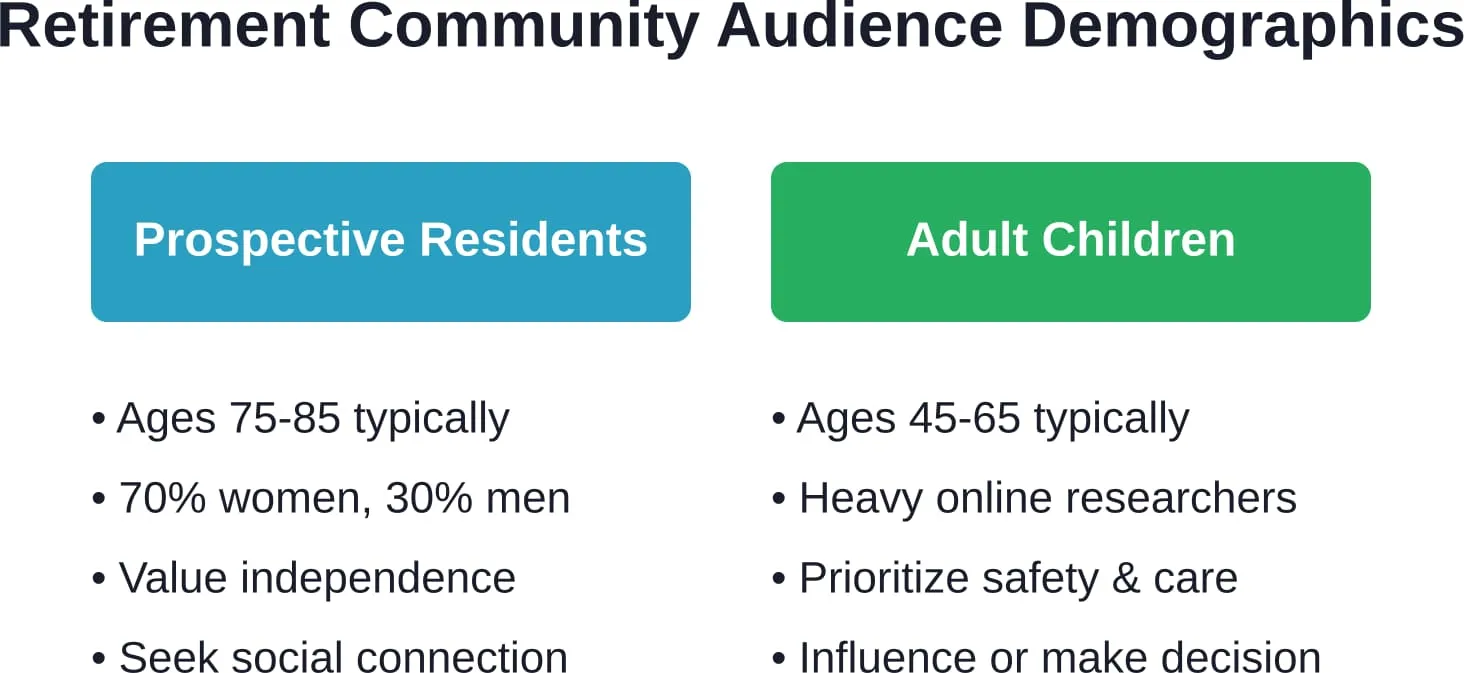
Most retirement community marketing needs to speak to two distinct groups simultaneously:
- The prospective resident—typically 75-85, values independence, fears losing autonomy, wants social connection
- The adult child—typically 45-65, researches extensively online, prioritizes safety and care quality, makes or heavily influences the final decision
Your messaging must resonate with both. That’s not easy, but it’s necessary.
Build Retirement Community Marketing With Lengreo
Lengreo helps retirement communities connect the main parts of their marketing: website development, SEO, paid ads, content, tracking, lead generation, appointment setting, and demand generation. That means the website, campaigns, and inquiry paths can work together instead of being handled as separate pieces.
For retirement communities, this can support clearer pages for living options, care levels, tours, amenities, locations, and contact steps, while also making it easier to track where family inquiries come from.
Need Marketing That Supports Real Inquiries?
Lengreo can help with:
- improving website structure and key service pages
- setting up SEO and paid traffic campaigns
- tracking calls, forms, and inquiry sources
- supporting lead generation and appointment setting
👉 Contact Lengreo to discuss your marketing setup.
Digital Marketing Strategies That Actually Generate Leads
Digital isn’t optional anymore. It’s where the journey begins for most families.
Build a Website That Converts
Your website is your hardest-working salesperson. But it can’t be a brochure—it needs to answer questions, address concerns, and make contact effortless.
What works:
- Virtual tours that feel real. High-quality video walkthroughs of apartments, dining areas, and common spaces. Not corporate promotional videos—authentic glimpses into daily life.
- Transparent pricing information. Families appreciate honesty. Even if you can’t list exact prices, provide ranges or explain what factors influence cost.
- Resident and family testimonials. Real stories from real people. Video testimonials perform especially well because they’re harder to fake.
- Clear calls to action. Schedule a tour, download a guide, request pricing—make the next step obvious on every page.
Here’s what most communities get wrong: they bury the important information. Pricing shouldn’t require three clicks and a phone call. Care levels shouldn’t be vague. Prospective residents are digitally savvy—44% of adults 50-plus expect to move at some point, and they’re doing their homework.
Content Marketing That Positions You as the Local Expert
Blog posts, guides, and resources do more than fill your website. They build trust and capture search traffic from families researching senior living options.
Strong content topics include:
- How to know when it’s time for assisted living
- Understanding memory care: what families should know
- Financial planning for senior living costs
- Comparing independent living vs assisted living
- Local resources for seniors in [your city]
The key? Don’t make every piece a sales pitch. Provide genuine value. Answer the questions families are Googling at 11 PM when they’re worried about Mom living alone.
One approach that works: interview your residents about their best memories. If you collect 12 resident stories, you’ve cut your blog content planning by 25% while creating the most authentic content possible.
Social Media With Substance
Prospective residents and their families are on Facebook. That’s just reality. But they’re also increasingly on platforms you might not expect.
Facebook remains the primary platform for reaching adults 50-plus. Share:
- Photos from community events
- Resident spotlights and achievements
- Educational content about aging and health
- Behind-the-scenes glimpses of staff and daily life
But don’t ignore Instagram and even LinkedIn. Adult children researching options for parents use these platforms daily. Visual storytelling on Instagram can showcase your community’s vibrancy. LinkedIn can help you build referral relationships with healthcare professionals.
The mistake most communities make? Posting inconsistently or only sharing promotional content. Social media requires regular engagement—aim for 3-5 posts weekly, and actually respond to comments and messages.
Online Reviews and Reputation Management
Before touring your community, families will Google you. What they find matters enormously.
Actively solicit reviews from satisfied residents and families on Google, Facebook, and senior living-specific sites like Caring.com and SeniorAdvisor.com. Respond to every review—positive and negative—professionally and promptly.
Negative reviews happen. How you handle them reveals your character. A thoughtful, empathetic response to a critical review can actually build trust.
Traditional Marketing Tactics That Still Deliver Results
Digital dominates, but traditional methods remain effective—especially for reaching seniors directly.
Community Events That Drive Awareness
Events serve dual purposes: they introduce prospects to your community in a low-pressure setting, and they demonstrate your community’s vibrant culture.
Effective event ideas:
- Educational seminars. Host talks on estate planning, Medicare navigation, or aging-in-place modifications. Position yourself as a resource, not just a sales organization.
- Social gatherings. Holiday parties, concerts, or game nights open to the community. Let prospects experience your atmosphere firsthand.
- Health and wellness events. Partner with local healthcare providers for health screenings, fitness demonstrations, or nutrition workshops.
- Intergenerational programs. Events with local schools or youth organizations show your community’s connection to the broader area.
The key to event marketing? Follow up relentlessly. Every attendee should receive a personal thank-you and an invitation to tour within 48 hours.
Local Print and Direct Mail
Don’t write off print entirely. Local newspapers, community newsletters, and church bulletins still reach seniors effectively. Adults 50-plus respond to traditional advertising—print, direct mail, and even radio—at higher rates than younger demographics.
For direct mail, personalization matters. Generic postcards get tossed. But a targeted piece addressing specific concerns—”Is it time to consider memory care for your loved one?”—with a clear offer can generate responses.
Referral Partnerships That Compound
Build relationships with the professionals families consult during transitions:
- Hospital discharge planners
- Geriatric care managers
- Estate attorneys and financial planners
- Primary care physicians and specialists
- Home health agencies
- Religious leaders and counselors
These referral sources need to understand your community, trust your care, and remember you when families need help. Regular check-ins, facility tours for partners, and updates about your services keep you top of mind.
Treat every referral as something you’re paying for—because you are, whether through marketing costs or relationship-building time. The cost per lead matters, whether it’s advertising spend or opportunity cost.
Sales Tactics That Convert Prospects Into Residents
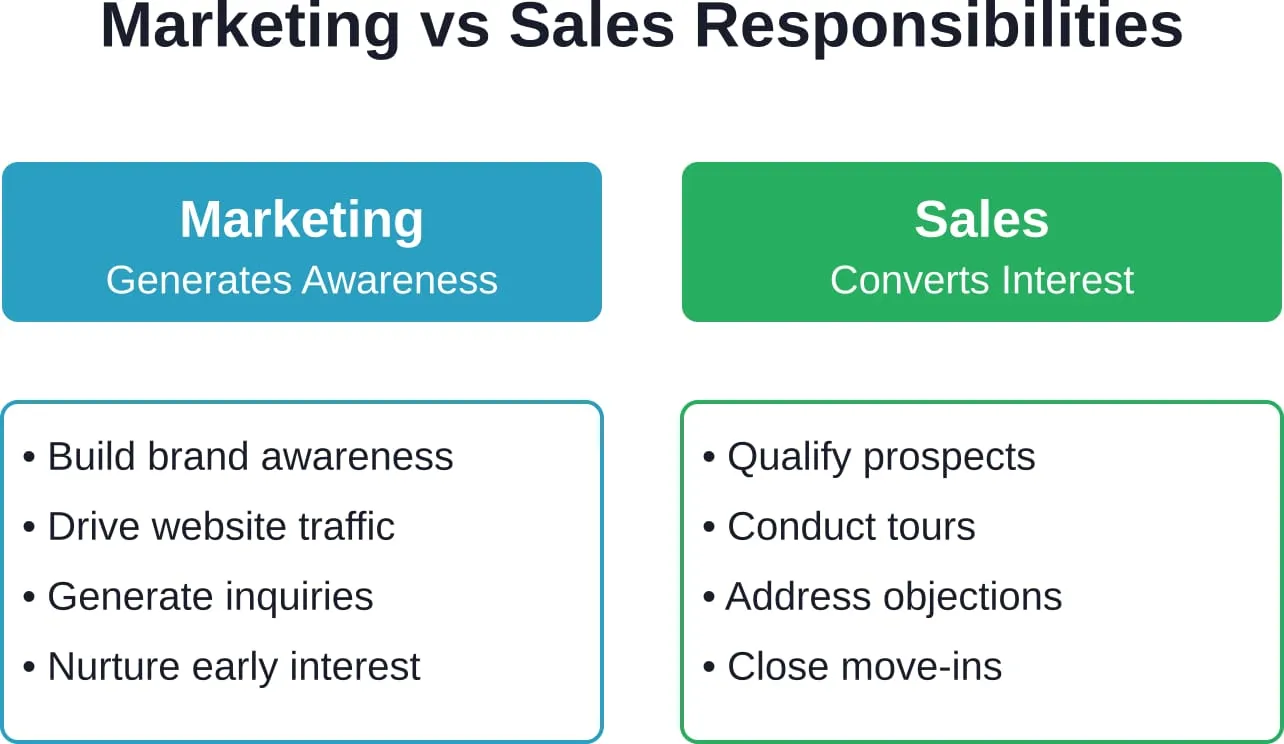
Marketing generates interest. Sales converts it. The two must work together seamlessly.
Speed Matters More Than You Think
When a prospect submits an inquiry, the clock starts ticking. Research across industries shows response time directly correlates with conversion rates. Aim to respond within 15 minutes during business hours.
That first contact should accomplish three things: thank them for their interest, ask a few qualifying questions, and schedule a tour or next conversation.
The Tour Experience
Tours sell communities. But not all tours are created equal.
Effective tours are personalized. Before someone arrives, learn about their situation. Are they looking for themselves or a parent? What’s driving the search—health concerns, social isolation, safety fears? What matters most to them—activities, dining, medical support?
During the tour:
- Let them experience the community. Stop in common areas, introduce residents, let them see real life unfolding.
- Address concerns directly. Don’t dodge questions about costs or care transitions.
- Tell stories, not specifications. “This is our dining room with three meal options daily” is fine. “Mrs. Johnson hosts a monthly cooking club here where residents share family recipes” is memorable.
- Create emotional connection. Help them envision their life—or their parent’s life—in your community.
Follow-Up That Persists Without Pestering
Most prospects won’t decide during their first visit. The sales cycle for senior living can stretch weeks or months.
Create a structured follow-up system: thank-you note or email within 24 hours, check-in call within a week, periodic updates about community events or relevant content. Provide value with each touch—share an article about transitioning to senior living, invite them to an upcoming event, update them on apartment availability.
Track every interaction in a CRM. Know where each prospect stands, what concerns remain, and when to follow up next.
Marketing Budget Allocation for Retirement Communities
How should retirement communities distribute marketing spend? While specific percentages vary based on market conditions and community size, general patterns emerge from industry practice.
| Marketing Category | Typical Budget Allocation | Primary Purpose |
|---|---|---|
| Digital Marketing | 30-40% | Website, SEO, paid search, social media advertising |
| Content & Website | 20-30% | Content creation, site optimization, virtual tours |
| Traditional Advertising | 15-20% | Print, direct mail, local media |
| Events & Community Outreach | 10-15% | Educational seminars, social events, sponsorships |
| Referral Development | 5-10% | Partner events, relationship building, materials |
| Marketing Technology | 5-10% | CRM, analytics, automation tools |
The shift toward digital continues, but balanced investment across channels typically yields the best results. Track cost per lead and cost per move-in by channel to refine allocation over time.
Measuring What Matters
Marketing without measurement is guesswork. Track the metrics that actually impact your bottom line.
Key Performance Indicators to Monitor
- Occupancy rate. The ultimate measure of marketing and sales effectiveness.
- Leads by source. Which channels generate the most inquiries? Which generate the highest-quality leads?
- Cost per lead. How much are you spending to generate each inquiry?
- Tour conversion rate. What percentage of prospects who tour eventually move in?
- Average sales cycle length. How long from first contact to move-in?
- Website metrics. Traffic, bounce rate, time on site, conversion rate on key pages.
- Social media engagement. Not just follower counts, but meaningful interactions.
Most importantly, track the entire journey. A lead from a Facebook ad might tour after reading three blog posts and attending one event. Attribution is messy, but understanding the path to conversion helps you allocate resources wisely.
Common Marketing Mistakes to Avoid
Learning from others’ errors saves time and money.
- Focusing only on features, not benefits. Prospects don’t care that you have 24-hour nursing staff (feature). They care that they’ll feel safe knowing help is always available (benefit).
- Neglecting online reviews. Ignoring negative reviews or failing to solicit positive ones damages reputation in an era when families research exhaustively online.
- Inconsistent messaging across channels. Your website, social media, print materials, and staff should tell a cohesive story about who you are and what makes you different.
- Treating every prospect identically. Someone seeking memory care for a spouse with Alzheimer’s has different needs than a healthy 75-year-old considering downsizing.
- Forgetting about current residents. Happy residents and families become your best marketers through referrals and reviews. Internal marketing—keeping residents engaged and satisfied—feeds external marketing success.
The Role of Staff in Marketing Success
Marketing isn’t just the marketing department’s job. Every staff member is part of the brand experience.
Organizations with impressive retention records—like Chelsea Jewish Lifecare with 25% of employees staying 10-plus years—benefit from institutional knowledge and genuine staff-resident relationships that prospects notice during tours.
Engaged, long-tenured staff members tell authentic stories about the community. They remember residents’ grandchildren’s names. They know the history behind traditions. This authenticity cannot be manufactured through marketing materials alone.
Invest in staff development, recognition, and retention. It pays marketing dividends beyond the operational benefits.
Adapting to Market Changes
The aging-in-place preference presents both challenge and opportunity. According to AARP research, while 75% of adults want to remain in their current homes, 64% are currently happy with community resources but 50% don’t think those resources will meet their needs as they age.
Smart retirement communities address this tension directly in marketing:
- Position the community as a proactive choice, not a last resort
- Emphasize lifestyle enhancement, not just care provision
- Showcase active, engaged residents living fully
- Highlight the continuum of care that allows aging in place within your community
The centenarian population grew 50% between 2010 and 2020, accounting for 2 out of every 10,000 people in the U.S. Longevity is increasing. Marketing that celebrates long, vibrant lives rather than emphasizing decline resonates more powerfully.
Looking Ahead
The demographic trends are undeniable. With 85% of metro areas experiencing rising median ages and the 65-plus population growing 13% in just four years, demand for retirement communities will continue expanding.
But supply is growing too. Competition is intensifying. The communities that thrive will be those that market authentically, convert efficiently, and deliver on their promises consistently.
Marketing retirement communities in 2026 requires balancing digital sophistication with human connection, data-driven decision-making with emotional storytelling, and broad awareness-building with personalized follow-up.
The tactics outlined here work. But they work best when integrated into a coherent strategy aligned with your community’s unique strengths and your market’s specific needs.
Start by auditing your current efforts. Where are leads coming from? What’s converting? What’s not? Then prioritize the gaps with the biggest potential impact.
The families searching for senior living options right now are overwhelmed, often anxious, and hungry for guidance from a trusted source. Position your community as that source through helpful, honest, human-centered marketing.
That’s how you fill apartments. That’s how you build a waitlist. And that’s how you create a community that serves its residents well while thriving as a business.