

Quick Summary: Museums can boost attendance and engagement in 2026 through strategic marketing that combines social media storytelling, experiential events, data-driven audience segmentation, and community partnerships. Successful campaigns focus on showcasing visitor wellbeing value, creating shareable moments, and making cultural experiences accessible across digital and physical platforms.
Marketing a museum isn’t what it used to be. Visitor expectations have shifted, digital platforms dominate discovery, and competition for attention spans has never been fiercer. Museums that thrive in 2026 don’t just open their doors and wait—they actively engage, experiment, and evolve.
The good news? Museums offer something unique that no streaming service or social feed can replicate: tangible, meaningful experiences. According to research from the American Alliance of Museums, museum visitors reported wellbeing experiences, with specific values assigned to different types of experiences. That’s a compelling story to tell.
So how do museums cut through the noise and connect with audiences who have endless entertainment options? Here’s what actually works.
Understanding the Value Museums Deliver
Before diving into tactics, it’s worth understanding what museums are really selling. It’s not just artifacts or exhibitions—it’s transformation.
Research from the American Alliance of Museums assigns specific monetary values to different types of wellbeing experiences gained during museum visits. These research findings recognize that visitors gain intellectual, social, and personal benefits from their time in museums.
These aren’t abstract concepts. They represent real emotional and cognitive benefits: curiosity satisfied, connections made, stress relieved, perspectives shifted. Marketing campaigns that communicate these outcomes—not just exhibit details—resonate deeper.
Build Museum Marketing With Lengreo
Museums need clear ways to promote exhibitions, events, memberships, school visits, and donor programs online. Lengreo helps connect the website, SEO, paid ads, content, tracking, and lead generation so marketing is easier to manage and measure.
Need a Clear Way to Reach Visitors?
Lengreo can help with:
- improving exhibition, event, and membership pages
- setting up SEO and paid traffic campaigns
- tracking ticket, form, and inquiry activity
- supporting content and outreach campaigns
👉 Contact Lengreo to discuss your marketing setup.
Social Media Strategies That Build Engagement
Social platforms remain essential for museum marketing, but generic posts about opening hours won’t move the needle. Storytelling works.
The Black Country Living Museum in the UK exploded on TikTok by leaning into behind-the-scenes content, historical recreations, and quirky staff personalities. They didn’t wait for permission to be less formal—they met audiences where those audiences already spend time.
What Makes Museum Social Media Work
Compelling museum social content shares common characteristics. It gives audiences access to little-known stories, showcases emotional moments visitors experience, creates shareable visual moments, and invites participation rather than passive consumption.
Rather than broadcasting exhibit information, effective accounts engage in conversations. They respond to comments, share user-generated content, and build community around shared interests.
Platform-Specific Tactics
Different platforms serve different purposes. Instagram and TikTok excel at visual storytelling and reaching younger demographics. Facebook remains valuable for event promotion and building local community ties. LinkedIn connects with corporate sponsors and professional networks.
The key is choosing platforms where target audiences actually spend time, not trying to maintain a presence everywhere. Better to excel on two platforms than post mediocre content across six.
Create Events That Build Community
Events transform passive visitors into active participants and advocates. They create reasons to visit beyond permanent collections and generate social media content organically.
The Tiqets partnership with Sofar Sounds demonstrates this beautifully—bringing intimate live music performances into museum spaces after hours. The concept works because it layers two experiences: cultural exploration plus live entertainment. Attendees come for the music, discover the museum, and share the unique setting with their networks.
Event Ideas That Drive Attendance
Pay-what-you-wish evenings lower barriers to entry and attract price-sensitive visitors who might become members later. Evening hours with special programming appeal to working professionals who can’t visit during the day. Meet-the-curator talks and artist conversations add depth for engaged audiences.
Family-focused events during school breaks create multigenerational visits. Themed parties around exhibitions generate buzz and social sharing. Partnership events with complementary organizations expand reach into new networks.
| Event Type | Primary Audience | Marketing Channel | Key Benefit |
|---|---|---|---|
| After-Hours Socials | Young Professionals | Instagram, TikTok | Social sharing, new visitors |
| Family Workshops | Parents with Children | Facebook, Email | Membership conversion |
| Curator Talks | Art Enthusiasts | Email, Website | Engagement depth |
| Community Partnerships | Local Residents | Local Press, Social | Audience expansion |
| Student Discount Nights | College Students | Campus Partnerships | Habit formation |
Segment and Personalize Messaging
Generic blast emails get ignored. Segmented campaigns based on visitor interests and behaviors get opened, clicked, and acted upon.
Museums collect rich data: what exhibitions people attend, which events they register for, how often they visit, whether they bring children. That data enables personalized communication that feels relevant rather than spammy.
Someone who attended a textile exhibition might appreciate a heads-up about an upcoming fashion history talk. Families who visit during spring break want to know about summer camps. Members nearing renewal need different messaging than first-time visitors.
Building Effective Segments
Start simple. Frequency segments divide audiences into first-time visitors, occasional attendees, and regulars. Interest segments group people by exhibition types or programs they’ve attended. Demographic segments consider age ranges, family status, and geographic proximity.
Behavioral triggers create timely opportunities: welcome series for new members, re-engagement campaigns for lapsed visitors, birthday offers to celebrate personal milestones.
Make Digital Experiences Compelling
The museum website needs to match the quality of physical exhibitions. Slow load times, confusing navigation, or outdated designs undermine credibility before visitors ever walk through the door.
High-quality photography matters enormously. Images should capture the emotional experience of visiting, not just catalog objects. Show people engaging, faces lighting up, children discovering. Demonstrate the atmosphere and energy.
Essential Digital Features
Clear visit planning tools answer basic questions fast: hours, admission prices, directions, accessibility information. Online ticketing reduces friction—visitors can commit to a date and skip entry lines.
Virtual exhibitions extend reach beyond local audiences and provide value to those who can’t visit in person. Behind-the-scenes content feeds curiosity and builds anticipation for in-person visits.
Email capture mechanisms throughout the site build marketing lists. Exit-intent popups offering exclusive content or discount codes can recover abandoning visitors.
Membership Marketing That Converts
Membership dues represent a significant portion of revenue for membership-based organizations. Marketing memberships requires clearly communicating value propositions and making enrollment frictionless.
Clarify Member Benefits
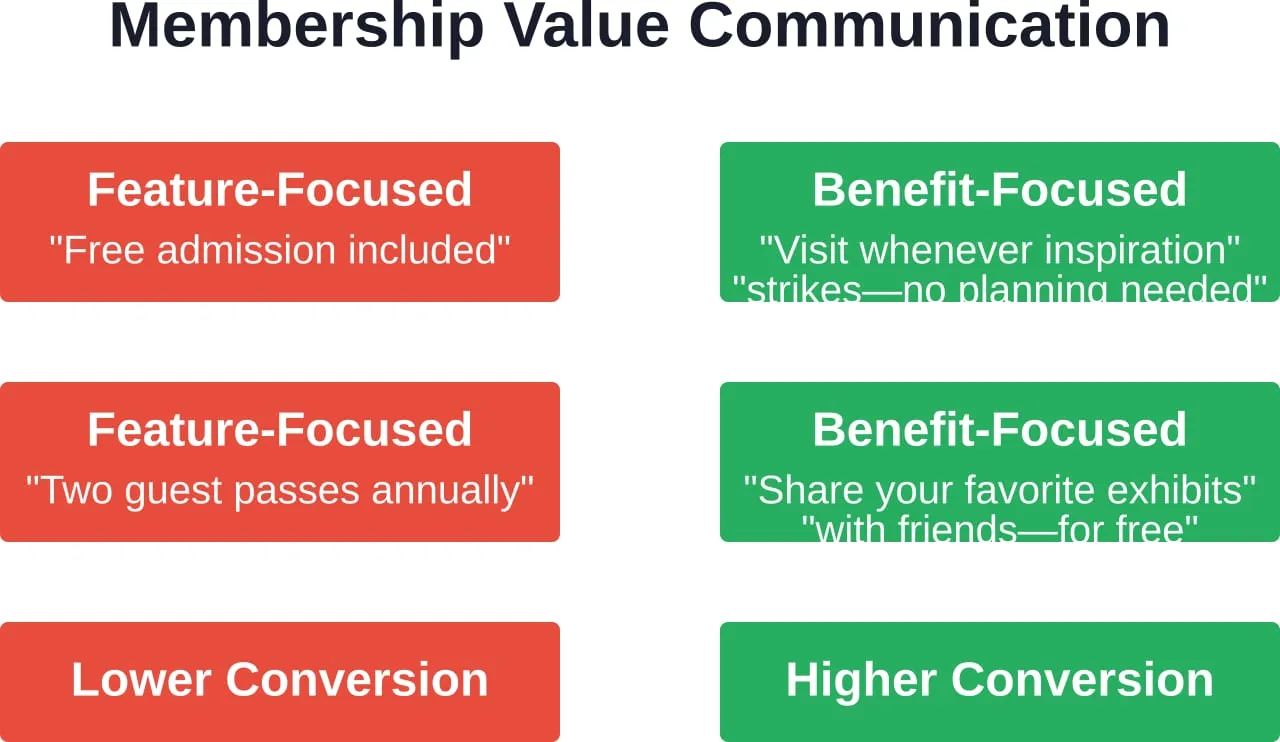
Don’t assume people understand membership value. Spell out concrete benefits: free admission, guest passes, member-only events, discounts, early access to tickets, exclusive previews.
Translate features into outcomes. Free admission means spontaneous visits without planning. Guest passes mean sharing experiences with friends. Early access means guaranteed spots for popular events.
Position membership not as a donation (though it supports the mission) but as excellent value for regular visitors. Calculate the break-even point: “Visit just three times and membership pays for itself.”
Streamline Enrollment and Renewal
Friction kills conversions. Every extra click, confusing form field, or unclear payment option loses potential members.
Online enrollment should take under two minutes. Mobile-optimized forms matter—many people decide to join while browsing on phones. Multiple payment options accommodate different preferences.
Auto-renewal removes the burden of remembering to renew manually. Frame it as a convenience, include clear opt-out instructions, and send advance notices before charging.
Renewal campaigns should start 60 days before expiration with gentle reminders emphasizing what members would miss. Lapsed member campaigns offer limited-time incentives to rejoin.
Leverage Partnership Marketing
Partnerships multiply reach by tapping into established audiences. The right collaborations feel natural and create value for all parties.
Local businesses near the museum can cross-promote: museums offer discount codes to restaurant customers, restaurants include museum flyers with checks. Tourism boards bundle museum admission into city passes, exposing institutions to travelers who might not otherwise visit.
Corporate partnerships generate sponsorship revenue while providing companies with cultural engagement opportunities for employees. Universities connect museums with student groups and academic programs.
Cross-Industry Collaborations
Some of the most creative campaigns come from unexpected pairings. Museums have successfully partnered with gaming companies to reach digital-native audiences, fashion brands for style-focused exhibitions, and music festivals for cultural programming.
The key is finding alignment—shared audiences or complementary brand values—not just slapping logos together.
Use Data to Build Diverse Audiences
Many museums aim to expand beyond their traditional visitor base but struggle with where to start. Data provides direction.
Research from visitor studies shows varying completion rates for participant recruitment and visit completion. Understanding participation patterns helps optimize outreach efforts and resource allocation.
Research-Driven Audience Development
Effective audience research identifies barriers preventing different groups from visiting. Price sensitivity, cultural perceptions, accessibility concerns, and awareness gaps all require different solutions.
Testing outreach strategies with data allows museums to invest in tactics that actually work. Research indicates that reminder emails can help boost participant engagement in museum visit studies.
Community partnerships with organizations that already serve target demographics provide credibility and distribution channels. Religious institutions, community centers, and cultural organizations can introduce museums to new audiences more effectively than advertising.
Provocative Campaigns That Generate Buzz
Sometimes the best marketing is simply creating something people can’t ignore.
Art Basel Miami Beach understood this when Maurizio Cattelan’s “Comedian”—a banana duct-taped to a wall—became the sensation of 2019. Priced between $120,000 and $150,000, the piece generated massive media coverage and social conversation.
Provocative doesn’t mean offensive. It means thought-provoking, conversation-starting, share-worthy. It means taking creative risks.
The Whitney Museum excels at experiential exhibitions that demand participation, not passive observation. Visitors become part of the art, creating inherently shareable moments.
When to Be Bold
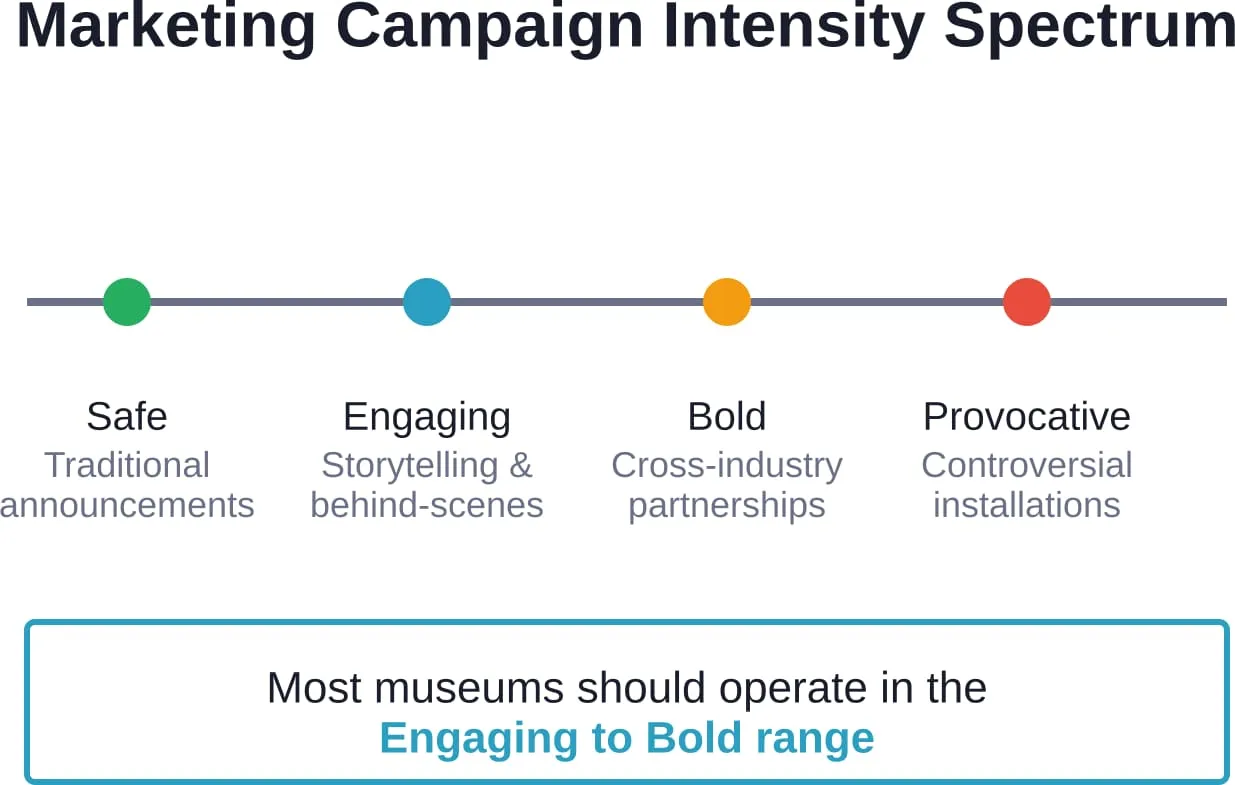
Not every campaign needs to push boundaries, but safe, predictable marketing rarely breaks through. Institutions with strong brand equity and engaged communities have more room to experiment.
Test bold concepts on smaller scales first. Limited-time installations, special events, or digital campaigns allow experimentation without risking core programming.
Email Marketing Best Practices
Email remains one of the highest-ROI marketing channels when done well. The challenge is standing out in crowded inboxes.
Subject lines determine whether messages get opened. Testing shows that questions, urgency, and personalization outperform generic announcements. “Behind the scenes: How we restore 200-year-old paintings” beats “April Newsletter.”
Visual hierarchy guides readers to key information quickly. Featured exhibition details, event registration buttons, and member benefits should be immediately scannable.
Mobile optimization is non-negotiable—the majority of emails get opened on phones. Single-column layouts, large touch-friendly buttons, and concise copy work best.
Email Frequency and Cadence
There’s no universal perfect frequency. Testing with specific audiences reveals preferences. Many museums find success with weekly updates during high seasons and bi-weekly during quieter periods.
Segmentation allows different cadences for different groups. Highly engaged members might appreciate weekly insider updates while casual visitors prefer monthly highlights.
Consistency matters more than frequency. Establishing a predictable schedule builds habits—subscribers know when to expect communications and watch for them.
Measuring What Matters
Marketing without measurement is guesswork. But tracking the right metrics makes the difference between data and insight.
Vanity metrics like social media follower counts or website traffic feel good but don’t necessarily correlate with mission impact. More meaningful measures include ticket purchases attributed to campaigns, membership conversions, email engagement rates, and visitor satisfaction scores.
| Metric | What It Measures | Why It Matters |
|---|---|---|
| Conversion Rate | Visitors who take desired action | Shows campaign effectiveness |
| Email Open Rate | Subject line and sender appeal | Indicates audience interest |
| Member Retention | Percentage who renew annually | Reflects value delivery |
| Average Visit Duration | Engagement with exhibitions | Measures experience quality |
| Social Share Rate | Content shareability | Shows word-of-mouth potential |
Attribution Challenges
Visitors rarely follow linear paths to purchase. Someone might discover a museum on Instagram, visit the website weeks later, receive an email reminder, and finally buy tickets. Which channel gets credit?
Multi-touch attribution models acknowledge that multiple interactions contribute to conversions. First-touch models credit initial discovery. Last-touch models credit the final push before purchase.
The solution isn’t perfect attribution—it’s understanding general patterns and testing changes systematically. If social spending increases and ticket sales rise consistently, that suggests correlation even without perfect tracking.
Building Long-Term Audience Relationships
Transactions matter, but relationships sustain institutions. One-time visitors generate revenue. Repeat visitors become advocates, members, donors, and volunteers.
Relationship building starts with first impressions. Welcome emails for new members, follow-up messages after first visits, and personalized recommendations based on interests demonstrate attention and care.
Recognition programs acknowledge loyalty. Highlighting long-time members, featuring regular visitors in social content, or offering special previews to engaged audiences reinforces positive behavior.
Two-way communication transforms audiences from passive recipients into active participants. Surveys asking for input, social conversations responding to comments, and community events inviting collaboration all deepen connections.
Adapting to Changing Visitor Expectations
What worked in 2020 doesn’t necessarily work in 2026. Visitor expectations evolve with technology, cultural shifts, and competitive alternatives.
Flexibility matters more than rigid annual plans. Museums that monitor emerging platforms, test new formats, and respond to feedback adapt successfully. Those that cling to outdated approaches lose relevance.
That said, not every trend deserves adoption. Evaluate new opportunities against mission alignment, resource requirements, and audience preferences. Being strategic beats being reactive.
Moving Forward
Museum marketing in 2026 requires balancing tradition with innovation, data with creativity, digital with physical. The institutions that succeed don’t just preserve culture—they actively cultivate communities around it.
Start with audience understanding. Who currently visits, who should visit but doesn’t, and what barriers prevent connection? Build strategies around those insights rather than generic best practices.
Test systematically. Try new platforms, experiment with messaging, pilot partnership models. Measure results, learn from failures, double down on successes.
Remember that marketing serves the mission. The goal isn’t just higher attendance numbers—it’s creating meaningful experiences that deliver intellectual, social, and personal wellbeing. When campaigns communicate that authentic value proposition, audiences respond.
The museums generating the most buzz aren’t necessarily the largest or best-funded. They’re the ones willing to be creative, take calculated risks, and put audience engagement at the center of everything they do.
What will your next campaign create?