


Quick Summary: Effective marketing for rehabilitation centers combines digital strategies like SEO and content creation with community partnerships and patient-centered messaging. Success requires balancing empathy with visibility, using tools like social media, referral programs, and quality website optimization to reach individuals seeking help. The goal is building trust while meeting people where they are in their recovery journey.
The demand for rehabilitation services has never been higher. According to SAMHSA data, millions of Americans meet criteria for substance use disorder annually. Millions of Americans age 18 and older experience mental illness.
With numbers like these, rehab centers face a unique challenge. People desperately need help, yet reaching them requires sensitivity, strategic thinking, and a deep understanding of how individuals search for treatment in 2026.
The competition is fierce. According to FindTreatment.gov, thousands of treatment facilities operate across the United States. Standing out means developing marketing ideas for rehab centers that balance compassion with effectiveness, meeting potential clients exactly where they are in their journey.
Understanding Your Audience’s Unique Journey
Marketing a rehab center isn’t like promoting other healthcare services. The decision to seek treatment comes during moments of crisis, fear, and vulnerability. Family members searching on behalf of loved ones carry their own emotional weight.
Young adults age 18-25 show high prevalence rates for substance use disorder. This demographic grew up digital-first, meaning your online presence directly influences whether they’ll consider your center.
But here’s the thing—people don’t just search for “rehab centers near me” anymore. They look for specific treatment approaches, insurance compatibility, success rates, and authentic stories from people who’ve been through recovery. Your marketing needs to answer these unspoken questions before they’re even asked.
Set Up Rehabilitation Center Marketing With Lengreo
Rehabilitation centers need marketing that explains services clearly and helps people or families find the right contact path without confusion. Lengreo works on the full setup behind that process, including website structure, SEO, paid ads, content, tracking, and lead generation.
Need Marketing That Supports Real Inquiries?
Lengreo can help with:
- improving service, treatment, and location pages
- setting up SEO and paid campaigns
- tracking calls, forms, and lead sources
- supporting content and demand generation
👉 Contact Lengreo to discuss your marketing setup.
Search Engine Optimization: The Foundation
Most people turn to the internet to research health-related topics, and rehab services are no exception. SEO isn’t optional anymore—it’s the difference between being found and being invisible.
Local SEO matters especially for rehabilitation centers. When someone searches “drug rehab near me” or “addiction treatment in [city],” Google decides which facilities appear based on optimization factors like Google Business Profile completeness, local citations, and review quantity and quality.
Start with keyword research specific to your services. Are you a dual-diagnosis facility? Do you specialize in alcohol versus drug treatment? Do you offer outpatient versus inpatient care? Each specialization requires its own content strategy.
Technical SEO Basics
Website speed matters. Mobile optimization isn’t negotiable—most searches for addiction treatment happen on smartphones during crisis moments. Site structure should make it effortless for someone in distress to find phone numbers, insurance information, and next steps.
The Substance Abuse and Mental Health Services Administration provides resources through its Strategic Prevention Framework, emphasizing the importance of understanding complex behavioral health problems within their environmental contexts. Apply this same thinking to your website structure: understand the complex emotional context of your visitors and design accordingly.
Content Marketing That Builds Trust
Content marketing for rehab centers walks a fine line. It must be informative without being exploitative, hopeful without making unrealistic promises, and accessible without oversimplifying addiction’s complexity.
Create content that answers real questions. What does detox actually feel like? How long does treatment typically last? What happens after the 30-day program ends? These aren’t just SEO keywords—they’re genuine concerns keeping people from making the call.
| Content Type | Purpose | Frequency |
|---|---|---|
| Educational blog posts | Build authority, answer questions, improve SEO | 2-4 per month |
| Recovery stories | Provide hope, demonstrate success, create connection | 1-2 per month |
| Treatment approach guides | Explain methodologies, differentiate services | Quarterly |
| Family resources | Support loved ones, expand reach | Monthly |
| Insurance and admissions info | Remove barriers, answer practical concerns | Update as needed |
Video content performs exceptionally well for treatment centers. Virtual facility tours reduce anxiety about the unknown. Staff introductions humanize the treatment team. Alumni testimonials (with proper consent and HIPAA compliance) provide powerful social proof.
Social Media Strategy With Boundaries
Social media for rehab centers requires careful navigation. Privacy concerns are paramount—never share patient information without explicit written consent, and even then, consider the long-term implications.
Focus social media efforts on education and destigmatization. Share statistics about Americans experiencing serious mental illness to normalize treatment-seeking behavior. Post recovery quotes, mental health tips, and addiction science updates.
Facebook and Instagram work well for reaching family members who often initiate treatment searches. LinkedIn helps with professional referrals and community partnerships. TikTok reaches younger demographics, though content must be carefully calibrated to avoid trivializing serious health conditions.
Real talk: social media won’t directly fill beds. But it builds brand awareness, establishes expertise, and creates touchpoints for people who aren’t ready to reach out yet.
Building Referral Networks
According to SAMHSA’s emphasis on faith and community engagement, millions of Americans turn to faith communities as trusted sources of support. These partnerships represent untapped marketing opportunities for many rehabilitation centers.
Develop relationships with:
- Primary care physicians and psychiatrists
- Hospital emergency departments
- Mental health clinics
- Faith-based organizations and clergy
- Court systems and probation officers
- Employee assistance programs
- Sober living facilities
- Alumni from your own programs
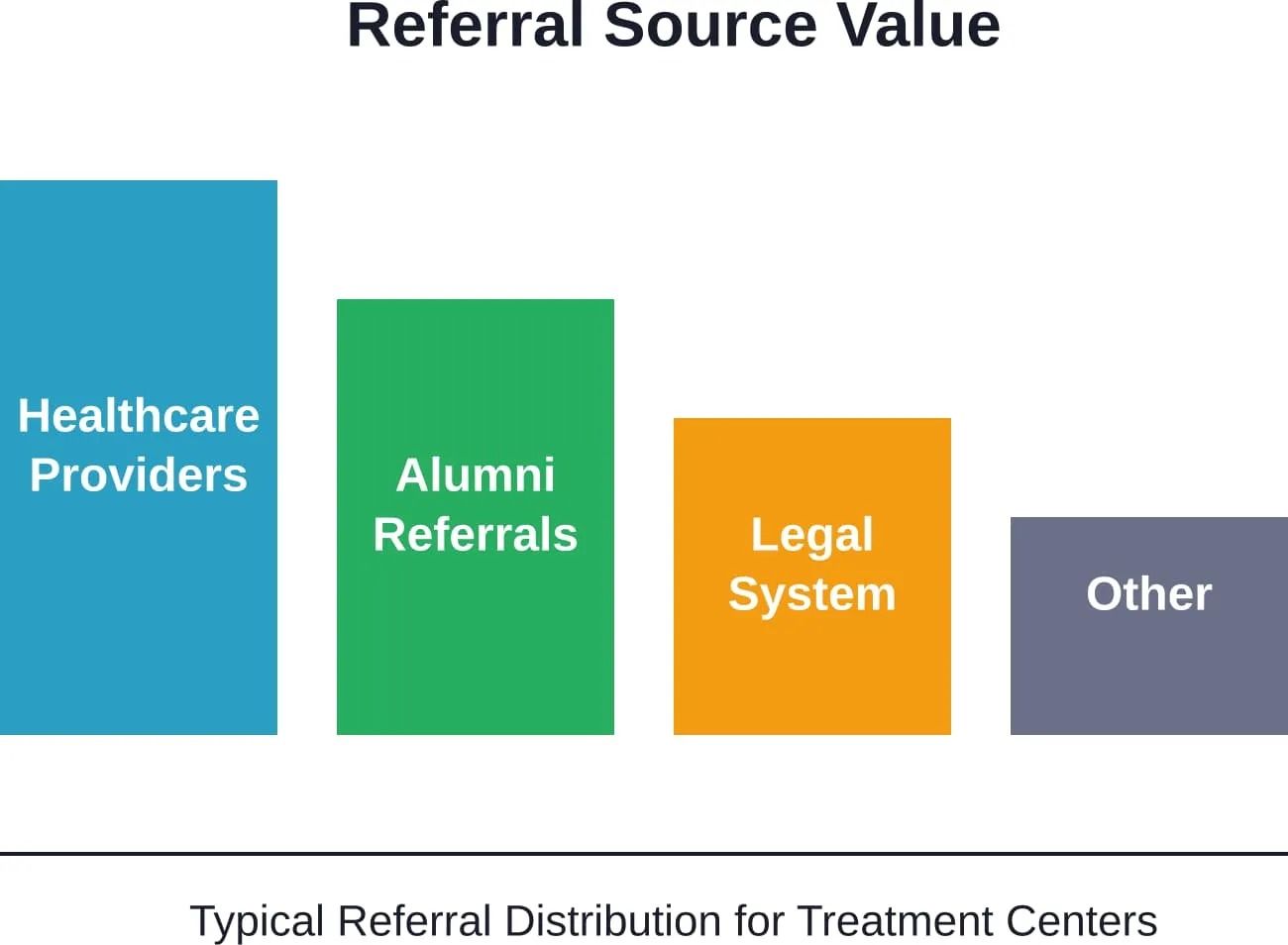
Each referral source needs tailored communication. Physicians want clinical outcomes data. Courts need compliance reporting capabilities. Faith leaders care about holistic, spiritually-integrated approaches. Alumni need simple tools to share—business cards, brochures, and referral incentives that comply with anti-kickback statutes.
Paid Advertising Considerations
Google Ads for addiction treatment comes with strict policies. Google prohibits ads for addiction services in many categories and requires LegitScript certification for substance abuse treatment advertising. The application process takes time and costs money, but certification opens access to paid search.
When running paid ads:
- Never make unrealistic promises about success rates
- Clearly state whether you accept insurance
- Include location information prominently
- Use ad extensions for phone numbers and site links
- Create separate campaigns for different service lines
Facebook and Instagram ads face fewer restrictions but require sensitivity. Avoid targeting based on health conditions (it’s prohibited anyway). Instead, target based on interests in mental health awareness, wellness, and recovery-adjacent topics.
Retargeting works for rehab marketing but use it sparingly. Someone who visited your site once during a crisis moment doesn’t want ads following them around the internet indefinitely. Set short retargeting windows—7 to 14 days maximum.
Website Essentials That Convert
The website serves as the hub for all marketing efforts. It must load fast, work flawlessly on mobile, and make contacting the center effortless.
Essential pages include:
- Clear homepage with prominent phone number and contact form
- Detailed treatment approach pages
- Insurance and payment information
- Staff credentials and bios
- Facility photos and virtual tour
- Admissions process explanation
- FAQ addressing common concerns
- Blog with educational content
- Crisis resources and helpline numbers
Every page should have clear calls to action. “Call now,” “Verify insurance,” “Start admissions,” “Chat with us”—make the next step obvious and easy.
Chat functionality (live or chatbot) provides immediate support during crisis moments when someone might not be ready to make a phone call. Response time matters enormously. Someone researching treatment at 2 AM needs options beyond “call back during business hours.”
Email Marketing and Nurture Campaigns
Not everyone who contacts a rehab center is ready for immediate admission. Some are researching options for family members. Others are building courage to take the first step.
Email nurture campaigns keep your center top-of-mind while providing genuine value. Share educational content about addiction science, recovery stories, family support resources, and treatment options.
Segment email lists based on where someone is in their journey. Someone who downloaded a guide about helping an addicted family member needs different content than someone who started but didn’t complete the admissions form.
Keep emails conversational and hope-focused. Subject lines matter—avoid anything that sounds like spam or feels manipulative. Test send times, as behavioral patterns for this audience may differ from typical email marketing benchmarks.
Accreditation and Quality Signals
Marketing effectiveness depends partly on credibility signals. CARF International accreditation demonstrates that a provider’s business and service practices meet international standards of quality. Since 1966, the CARF accreditation seal has been recognized as a hallmark of quality in human services.
Display accreditations prominently on websites and marketing materials. These include CARF, The Joint Commission, state licensure, and any specialty certifications. They’re not just credentials—they’re trust signals that differentiate quality providers from the hundreds of unaccredited facilities.
Online reviews function as modern credibility signals. Encourage satisfied alumni (with proper consent) and their families to share experiences on Google, Healthgrades, and Psychology Today. Respond professionally to all reviews, even negative ones, demonstrating commitment to quality and patient satisfaction.
Community Engagement and Events
Physical presence in the community builds relationships that digital marketing can’t replicate. Host or sponsor:
- Recovery celebration events
- Educational workshops on addiction and mental health
- Support group meetings
- Community health fairs
- Professional training for first responders
The Family Engagement & Resource Fair model used by organizations like Hidalgo County Health Council demonstrates how community events equip families with tools to address substance use. Running from 9:45 AM to 2:30 PM, free to the public, such events build goodwill and awareness simultaneously.
These events create content opportunities. Photos, testimonials, and partnership announcements provide material for social media, email campaigns, and blog posts—multiplying the marketing value of each community interaction.
Measuring Marketing Effectiveness
What gets measured gets improved. Track these metrics:
| Metric | What It Tells You | Target |
|---|---|---|
| Website traffic | Overall visibility and interest | Month-over-month growth |
| Conversion rate | How well site turns visitors into contacts | 3-5% for treatment centers |
| Cost per admission | Marketing efficiency | Varies by market and services |
| Phone call volume | Direct response to campaigns | Consistent or increasing |
| Referral source tracking | Which partnerships work best | Diversified sources |
| Keyword rankings | SEO effectiveness | Page 1 for primary terms |
Use call tracking numbers for different marketing channels. This reveals whether paid search, organic search, social media, or referral partnerships drive the most admissions. Adjust budget allocation based on actual performance data, not assumptions.
Patient relationship management software helps track the journey from first contact to admission to alumni status. This data reveals bottlenecks in the admissions process and opportunities to improve conversion rates.
Ethical Considerations in Rehab Marketing
The addiction treatment industry has faced criticism for aggressive and sometimes deceptive marketing practices. Standing out means adhering to higher ethical standards, not racing to the bottom.
Never:
- Pay for patient referrals (violates anti-kickback laws)
- Make guarantees about treatment success rates
- Use scare tactics or exploit fear
- Mislead about credentials or accreditations
- Advertise services you don’t actually provide
- Share patient information without proper consent
SAMHSA’s strategic priorities emphasize evidence-based treatment for mental health, substance use disorder, and co-occurring disorders. Marketing should reflect this commitment to proven approaches rather than trendy but unsupported interventions.
CMS guidelines for Medicare marketing, while specific to Medicare services, offer a framework for ethical healthcare marketing: clarity, truthfulness, and putting patient needs first. Apply these principles universally.
Conclusion
Marketing ideas for rehab centers must balance business needs with genuine compassion for people in crisis. The strategies that work best—SEO, content marketing, referral partnerships, community engagement, and ethical advertising—all share a common thread: they put the needs of people seeking help ahead of the facility’s desire for admissions.
With millions of Americans meeting criteria for substance use disorder and millions experiencing mental illness, the need for quality treatment has never been greater. Effective marketing ensures that people in crisis can find your center when they’re ready to take that courageous first step toward recovery.
Start with the basics—optimize your website, claim your Google Business Profile, create helpful content, and build genuine community relationships. Layer in paid advertising once fundamentals are solid. Track everything, adjust based on data, and always prioritize ethics over expedience.
The best marketing for a rehabilitation center is providing excellent care that turns patients into advocates. Everything else supports that fundamental truth.