


Quick Summary: Real estate marketing in 2026 requires a multi-channel approach combining digital innovation with traditional relationship-building. According to NAR data, 89% of buyers and sellers work with agents, making professional marketing more critical than ever. Top strategies include virtual tours, hyper-local content, data-driven client education, strategic social media, and personalized email campaigns—all designed to build trust and showcase market expertise.
The real estate landscape has shifted dramatically. Inventory rose 4.6% year-over-year in April 2026, with over one million active listings now on the market. Mortgage rates climbed to 6.46% by late March, fundamentally changing buyer behavior and seller expectations.
For agents, this means one thing: standard marketing won’t cut it anymore.
Here’s the reality—buyers and sellers want agents more than ever. NAR research shows that 89% of transactions in 2023 involved a real estate professional, up from 86% the previous year. Meanwhile, FSBO sales dropped to just 7%. But not all agents are created equal in the eyes of consumers.
What separates top performers from struggling agents? Marketing. Specifically, marketing that educates, builds trust, and demonstrates genuine market expertise.
This guide covers 33 actionable real estate marketing ideas that work in today’s market. No fluff, no outdated tactics—just strategies backed by current data and real-world results.
Why Real Estate Marketing Matters More Than Ever
Market conditions in 2026 present unique challenges. The U.S. median listing price hit $425,000 in April 2026, down 1.4% year-over-year. That slight decline signals a shift toward a more balanced market after years of seller dominance.
Buyers are pickier. Homes now sit on the market for a median of 63 days (as of October 2025). That’s longer than the frenzy of previous years, which means listings need stronger marketing to capture attention and generate offers.
Sellers face reality checks too. With inventory climbing for 24 consecutive months through October 2025, competition among listings has intensified. Properties that aren’t marketed effectively simply languish.
Your marketing doesn’t just sell properties. It builds the reputation that generates referrals and repeat clients for years to come.
Turn Real Estate Marketing Into Qualified Conversations
Marketing ideas for real estate should help turn visibility, listings, and outreach into actual conversations with the right prospects. Lengreo can help real estate-related businesses make their marketing more organized, from search visibility to lead follow-up.
Lengreo can support real estate campaigns through:
- B2B lead generation
- SEO and content marketing
- PPC campaigns for relevant traffic
- Prospect research
- LinkedIn and email outreach
- Appointment setting with qualified leads
Contact Lengreo to turn real estate marketing into a clearer lead generation process.
Understanding Seasonal Market Dynamics
Smart marketing aligns with natural market rhythms. These patterns matter for campaign planning. Spring marketing should emphasize urgency and competition—multiple buyers chasing limited inventory. Fall and winter messaging shifts toward opportunity and value as the market cools.
Regional differences compound these trends. Meanwhile, affordability hubs in the Midwest and Northeast continue attracting value-conscious buyers.
Tailor your marketing to these local dynamics rather than following generic national trends.
Digital Marketing Strategies That Drive Results
1. Immersive Virtual Tours and 3D Walkthroughs
Virtual tours aren’t optional anymore—they’re expected. Buyers want to explore properties remotely before committing to in-person visits, especially for out-of-town relocations or investment properties.
The technology has evolved beyond simple photo slideshows. Modern 3D walkthroughs let viewers navigate spaces naturally, examining room dimensions and flow patterns. Matterport and similar platforms create digital twins of properties that feel remarkably lifelike.
These tools benefit sellers too. Properties with high-quality virtual tours attract more serious inquiries and fewer unqualified showings. That saves everyone time and reduces the disruption of constant open houses.
2. Hyper-Local Content Marketing
Generic property descriptions bore buyers. What they actually want is context—neighborhood insights, school information, commute times, local amenities, and community character.
Create content that positions you as the neighborhood expert. Write blog posts about local market trends, new businesses opening, school district changes, and community events. Film walking tours of popular neighborhoods. Interview local business owners.
This content serves double duty. It attracts organic search traffic from people researching the area, and it demonstrates depth of knowledge that builds client confidence.
3. Data-Driven Market Reports
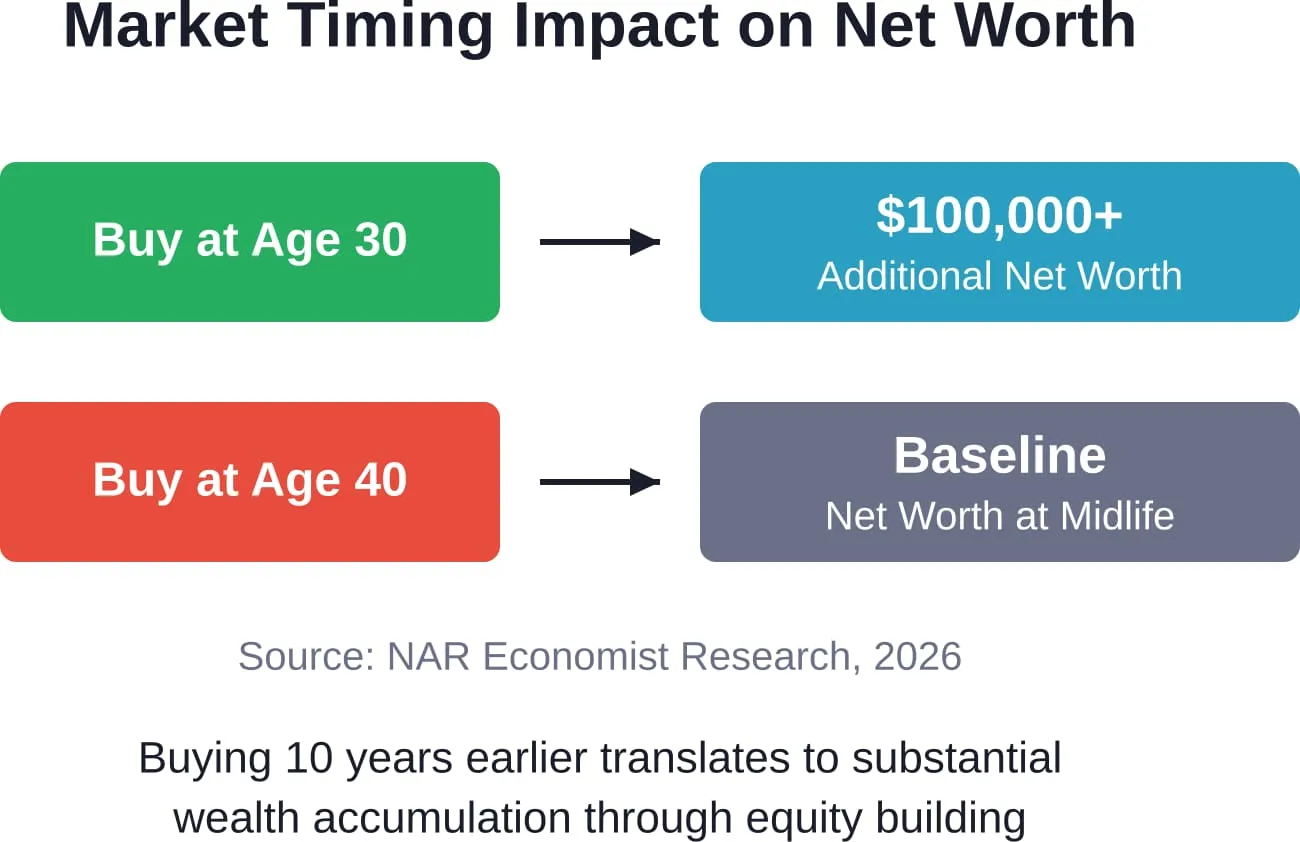
According to NAR’s research on using data to build trust, economists emphasize how timing impacts homeownership wealth building. Households that buy a first home around age 30 instead of waiting until closer to 40 accumulate more than $100,000 of additional net worth.
Share insights like these. Create monthly market reports breaking down local inventory levels, price trends, days on market, and buyer activity. Explain what the data means for people considering buying or selling.
Use simple visuals—charts showing price trajectories, inventory graphs, or affordability indexes. Make complex information digestible.
When clients see you consistently providing valuable market intelligence, you become their trusted advisor—not just a transaction facilitator.
4. Strategic Social Media Presence
Social media isn’t about posting everything everywhere. It’s about choosing platforms where your ideal clients spend time and delivering content that resonates.
Facebook still dominates for real estate. It’s where older, more financially established buyers and sellers congregate. Share listings, market updates, client testimonials, and community news.
Instagram works for visual storytelling. Showcase property photography, behind-the-scenes content from showings, neighborhood highlights, and quick market tips. Stories and Reels generate particularly strong engagement.
LinkedIn serves luxury and commercial markets. Position yourself as an industry thought leader by sharing market analysis, industry news commentary, and professional insights.
Don’t spread yourself too thin. Master one or two platforms before expanding to others.
5. Video Marketing at Scale
Video dominates online engagement, but most agents either avoid it or do it poorly. That creates opportunity for those willing to invest effort.
Start simple. Record property walkthroughs on your smartphone, narrating key features and benefits. No fancy editing required—authenticity beats production value.
Expand to educational content. Film quick market updates, buyer tips, seller advice, and neighborhood tours. Keep videos short—under two minutes for social media, three to five minutes for YouTube.
Consistency matters more than perfection. Weekly video content builds audience familiarity and trust far more effectively than occasional high-production pieces.
6. Email Marketing That Actually Gets Read
Email remains one of the highest-ROI marketing channels. The key is sending content people want rather than spam they delete.
Segment your list. Past clients want different content than active buyers or potential sellers. Tailor messaging accordingly.
Provide value first. Share market updates, home maintenance tips, local event calendars, and seasonal advice. Sales pitches should be secondary to useful information.
Personalize beyond “Dear [First Name].” Reference their specific neighborhood, property type, or previous interactions. Show you remember them as individuals.
Send consistently but not excessively. Monthly newsletters work well for most audiences. Active buyers might appreciate weekly updates during their search.
Traditional Marketing Strategies With Modern Twists
7. Reimagined Open Houses
Open houses are the first touchpoint in just 3% of home buying processes, according to NAR surveys. That doesn’t mean they’re useless—it means they need a strategic purpose beyond hoping random visitors fall in love with a property.
Use open houses for lead generation and networking. Capture visitor information for follow-up. Ask what they’re looking for—many attendees are serious buyers checking out the competition or neighbors curious about market values.
Make the experience memorable. Offer neighborhood information packets, local vendor recommendations, and market reports. Partner with local businesses for refreshments that showcase community character.
Promote aggressively online. Stream live tours on social media during the event. Create urgency by emphasizing limited showing opportunities.
8. Professional Photography and Staging
Listing photos are often the first impression—and sometimes the only chance to generate showings. Amateur iPhone shots won’t compete against professionally photographed properties.
Invest in quality photography for every listing. Professional photographers understand lighting, angles, and composition that make spaces look their best.
Staging matters too. Furnished rooms photograph better and help buyers visualize living in the space. Even basic staging—decluttering, depersonalizing, and arranging furniture to maximize flow—significantly impacts perceived value.
Consider drone photography for properties with notable exteriors, locations, or land. Aerial shots provide perspective impossible from ground level.
9. Direct Mail That Doesn’t Feel Like Junk
Digital marketing gets attention, but physical mail still cuts through inbox noise. The trick is making it valuable rather than promotional.
Send neighborhood-specific market reports showing recent sales, current listings, and price trends. Homeowners want to know their property values—satisfy that curiosity while demonstrating expertise.
Use “just sold” postcards strategically. Don’t just announce sales—explain what made them successful and offer free home valuations to recipients.
Personal notes to past clients stand out. Handwritten cards for birthdays, home anniversaries, or holidays maintain relationships that generate referrals.
10. Strategic Print Advertising
Print advertising has become more expensive but also less crowded. Local magazines, community newspapers, and niche publications still reach specific demographics effectively.
Focus on publications that align with your target market. Luxury lifestyle magazines for high-end properties, local community papers for neighborhood expertise, trade publications for commercial or investment properties.
Make ads educational rather than purely promotional. Share a market insight, highlight a neighborhood trend, or offer a specific resource alongside your contact information.
Relationship and Referral Marketing
11. Building a Referral System
Remember that a lot of sellers choose agents based on friend or family recommendations. Referrals convert at higher rates and cost less to acquire than other lead sources.
But referrals don’t happen automatically. Build systems to encourage them.
Ask directly. After successful closings, explicitly request referrals and explain exactly who makes a good fit for your services.
Make referring easy. Provide share-able content, simple contact methods, and clear processes for friends or family members your past clients send your way.
Recognize and reward referrers. Thank-you gifts, handwritten notes, and staying top-of-mind through periodic check-ins show appreciation that encourages continued referrals.
12. Past Client Nurture Campaigns
That 28% of sellers who return to previous agents? They’re gold. It costs far less to stay connected with past clients than constantly chasing new ones.
Create systematic touchpoints. Send quarterly market updates, holiday cards, home maintenance reminders, and local event notifications.
Provide ongoing value. Share renovation tips, property tax appeal guidance, homeowner insurance reviews, and refinancing opportunities when rates drop.
Remember important dates. Home purchase anniversaries, birthdays, and property milestones offer natural connection points.
13. Strategic Partnership Marketing
Real estate touches many other services—mortgage lending, home inspection, insurance, moving, renovation, and more. Build partnerships that create mutual referral networks.
Identify complementary professionals who serve your target market with similar quality standards. Meet regularly to discuss client needs and referral opportunities.
Create co-marketing opportunities. Joint first-time buyer seminars with mortgage brokers, home maintenance workshops with contractors, or moving planning guides with moving companies.
Provide value to partners beyond referrals. Share market insights that help them serve their clients better. Strong partnerships are reciprocal, not transactional.
14. Community Involvement and Local Sponsorships
Visible community involvement builds brand recognition and positions you as genuinely invested in the area—not just someone extracting commissions.
Sponsor local sports teams, school events, charity fundraisers, or community festivals. Choose causes that align with your values and target demographic.
Participate actively, not just financially. Volunteer at events, serve on community boards, or organize neighborhood improvement projects.
Document and share your involvement. Social media posts, email updates, and local publicity extend the impact beyond attendees.
Content Marketing and Thought Leadership
15. Comprehensive Neighborhood Guides
Buyers don’t just purchase properties—they buy into lifestyles and communities. Detailed neighborhood guides demonstrate local expertise while providing genuine value.
Cover what matters to buyers. School ratings and boundaries, commute times to major employers, parks and recreation, shopping and dining, crime statistics, and demographic information.
Include insider knowledge. Hidden gem restaurants, local traditions, upcoming developments, neighborhood Facebook groups, and community quirks that statistics miss.
Make guides discoverable. Publish on your website optimized for neighborhood-specific searches, distribute as downloadable PDFs, and reference in listing descriptions.
16. First-Time Buyer Education
First-time buyers represent a massive market segment—and they need substantial guidance navigating unfamiliar processes.
Create comprehensive educational resources. Explain mortgage pre-approval, down payment requirements, closing costs, inspection contingencies, and timeline expectations.
Host first-time buyer seminars, either in-person or virtual. Partner with lenders to cover financing alongside the purchase process.
Develop email courses that walk prospects through the journey step-by-step. Automated sequences build trust while qualifying serious buyers.
17. Seller Preparation Content
Sellers face different education needs—maximizing value, preparing homes for market, understanding pricing strategy, and navigating negotiations.
Produce content addressing common seller questions. Home improvement ROI, staging impact, pricing psychology, showing management, and offer evaluation.
Create property-specific preparation checklists. Detailed room-by-room guidance helps overwhelmed sellers tackle preparation systematically.
Explain your marketing approach. Sellers want to know how you’ll position their property, what promotional channels you’ll use, and what results to expect.
18. Market Trend Analysis and Commentary
Position yourself as a market expert by consistently analyzing and explaining trends affecting your local area.
Monitor leading indicators. Inventory levels, new listings, days on market, price adjustments, mortgage rate movements, and economic data.
Translate data into actionable insights. What do rising inventory levels mean for sellers? How do rate increases impact buyer purchasing power? When do seasonal patterns suggest listing or buying?
Share timely commentary. React quickly to major market shifts, policy changes, or local developments that impact real estate.
19. Long-Form Blog Content
Comprehensive blog posts attract organic search traffic, establish expertise, and provide share-able resources that extend your reach.
Target specific long-tail keywords. “Best neighborhoods for young families in [City],” “How to buy a home with student loan debt,” or “Investment property analysis in [Market].”
Write thorough, genuinely helpful content. Answer questions completely rather than teasing information to capture leads.
Update regularly. Refresh old posts with current data and new insights to maintain search rankings and accuracy.
Specialized Marketing Tactics
20. Niche Market Positioning
Generalist agents compete on price and personality. Specialists compete on expertise and results.
Identify your differentiation. Luxury properties, first-time buyers, investors, specific neighborhoods, property types, or demographic groups.
Deepen expertise in your niche. Understand the unique considerations, common challenges, and key success factors better than generalists.
Market specifically to your niche. Create content, partnerships, and promotional strategies laser-focused on your specialty rather than trying to appeal to everyone.
21. Investment Property Marketing
Investment buyers evaluate properties differently than residential purchasers. They want numbers, projections, and return analysis.
Provide detailed financial information. Cap rates, cash-on-cash returns, occupancy history, expense ratios, and market rent comparisons.
Understand investor motivations. Cash flow, appreciation potential, tax benefits, portfolio diversification, or 1031 exchange requirements.
Build relationships with investment-focused buyers. They purchase repeatedly and refer other investors when you deliver strong deals and analysis.
22. Luxury Property Presentation
Luxury marketing requires elevated presentation and targeted distribution to qualified buyers.
Invest in exceptional marketing materials. Professional video production, high-end photography, property websites, printed brochures, and virtual staging.
Distribute through luxury channels. Premium listing platforms, luxury lifestyle publications, international buyer networks, and exclusive broker networks.
Host sophisticated events. Private showings, broker open houses with catering, and exclusive previews for qualified buyers.
23. FSBO Conversion Strategies
Only 7% of sellers attempt FSBO, but that still represents opportunity. Many eventually list with agents after struggling independently.
Provide helpful resources without pushing. Offer free pricing analyses, marketing checklists, or legal guidance that demonstrates value.
Explain the agent’s advantage clearly. Time savings, marketing reach, negotiation expertise, legal protection, and typical price premiums achieved.
Stay in touch respectfully. Many FSBO sellers list after weeks or months of frustration. Periodic check-ins position you as the obvious choice.
24. Expired and Withdrawn Listings
Properties that failed to sell often re-list with new agents. If you can diagnose why they didn’t sell and present solutions, sellers listen.
Research thoroughly before contacting. Understand original pricing, marketing approach, condition issues, and market competition.
Lead with insights, not criticism. Explain market conditions, positioning problems, or pricing challenges without badmouthing the previous agent.
Present a clear differentiated strategy. Show specifically what you’ll do differently and why it will produce better results.
Technology and Automation
25. CRM Systems for Lead Management
Managing leads manually becomes impossible at scale. Customer relationship management systems organize contacts, automate follow-up, and prevent opportunities from slipping through cracks.
Choose a real estate-specific CRM that understands industry workflows. Transaction stages, automated drip campaigns, listing alerts, and anniversary reminders.
Commit to consistent data entry. Systems only work when information stays current and complete.
Use automation strategically. Automated emails for lead nurturing, birthday messages, or market updates save time while maintaining touch.
26. Chatbots and Instant Response Systems
Speed matters in lead capture. Research consistently shows that contacting leads within five minutes dramatically improves conversion versus delayed response.
Implement website chatbots that answer common questions, capture contact information, and alert you to serious inquiries requiring immediate follow-up.
Set up automated text responses acknowledging inquiries instantly, even if detailed answers come later.
Use scheduling tools that let leads book consultation calls directly rather than playing phone tag.
27. Social Media Advertising
Organic social reach has declined across platforms. Paid advertising fills the gap, delivering content to specific target audiences.
Facebook and Instagram ads excel for real estate. Target by location, age, income, homeownership status, and life events like engagements or job changes.
Start with modest budgets while learning. Test different audiences, creative approaches, and offers before scaling spending.
Track conversions carefully. Measure cost per lead and lead-to-close ratios to calculate actual ROI rather than vanity metrics like impressions.
28. Google Ads and Local Search
Buyers actively searching online represent hot leads. Appearing when they search for “homes for sale in [neighborhood]” or “real estate agent near me” captures high-intent traffic.
Invest in Google Ads targeting location-specific keywords. “Homes for sale,” “real estate agent,” and neighborhood names combined drive qualified traffic.
Optimize your Google Business Profile. Complete information, regular posts, review collection, and local search optimization improve organic visibility.
Focus on local SEO. Neighborhood-specific content, local backlinks, and consistent NAP (name, address, phone) information across directories boost rankings.
29. Marketing Automation Workflows
Sophisticated marketing automation delivers personalized experiences at scale impossible manually.
Build segmented drip campaigns. New leads get educational content establishing expertise. Active buyers receive listing alerts and market updates. Past clients get periodic check-ins and referral requests.
Trigger behaviors based on engagement. Open rates, link clicks, and website visits indicate interest levels that inform follow-up priority.
Personalize dynamically. Insert recipient-specific information like neighborhood, property type preferences, or past interactions automatically.
Personal Branding and Differentiation
30. Authentic Personal Brand Development
Commoditized agents compete on commission rates. Differentiated agents compete on unique value propositions.
Define what makes you different. Specific expertise, service approach, personality, background, or values that resonate with ideal clients.
Communicate your brand consistently. Visual identity, messaging tone, content themes, and client interactions should reinforce your positioning.
Stay authentic. Forced or fake personal brands backfire. Build on genuine strengths and interests.
31. Client Testimonials and Social Proof
Prospective clients trust peer experiences more than agent promises. Systematic testimonial collection builds credibility.
Request testimonials from every satisfied client. Make it easy by providing a simple form or template if helpful.
Capture video testimonials when possible. Seeing and hearing real clients creates stronger impact than text alone.
Feature testimonials prominently. Website, social media, email signatures, and marketing materials should showcase client satisfaction.
32. Professional Development and Credentials
Ongoing education and specialized credentials demonstrate commitment to excellence while building expertise.
Pursue relevant designations. Certified Residential Specialist (CRS), Accredited Buyer’s Representative (ABR), or niche certifications that align with your market focus.
Share learning and insights. Blog posts or social content explaining new knowledge positions you as constantly improving.
Highlight credentials in marketing. Email signatures, business cards, website bios, and listing presentations should feature relevant education.
33. Consistent Multi-Channel Presence
Marketing effectiveness compounds through consistent multi-channel presence rather than sporadic single-channel efforts.
Develop a content calendar coordinating activities across channels. Blog posts promote on social media, drive email content, and inform video topics.
Repurpose content efficiently. Long-form blog content becomes multiple social posts, email newsletter sections, and video script foundations.
Show up consistently. Regular presence builds familiarity and trust that sporadic campaigns never achieve.
Measuring Marketing Effectiveness
Marketing without measurement wastes resources on ineffective tactics while missing opportunities to scale what works.
Track lead sources religiously. Ask every new contact how they found you and record responses systematically.
Calculate cost per lead by channel. Divide total investment by leads generated to compare efficiency across tactics.
Monitor conversion metrics. Lead-to-appointment, appointment-to-client, and ultimate close ratios reveal quality differences between sources.
Assess lifetime value. Leads from referrals might convert slower but generate higher-value transactions and future referrals compared to paid advertising leads.
| Marketing Channel | Time Investment | Financial Investment | Lead Quality | Best For |
|---|---|---|---|---|
| Social Media Organic | High | Low | Medium | Brand building, community engagement |
| Social Media Paid | Medium | Medium-High | Medium | Targeted reach, listing promotion |
| Email Marketing | Medium | Low | High | Nurturing, past client engagement |
| Content Marketing/SEO | High | Low-Medium | High | Long-term authority, organic traffic |
| Video Marketing | High | Low-Medium | Medium-High | Property showcasing, education |
| Google Ads | Low-Medium | Medium-High | High | High-intent buyer capture |
| Direct Mail | Low | Medium-High | Medium | Geographic farming, seller prospecting |
| Referral Programs | Medium | Low | Very High | Relationship-based growth |
| Open Houses | High | Low-Medium | Low-Medium | Networking, buyer lead generation |
Adjust strategy based on results. Double down on channels delivering strong ROI. Reduce or eliminate underperforming tactics.
But give strategies adequate time to prove themselves. Most marketing channels require 90-180 days of consistent effort before yielding meaningful results.
Common Marketing Mistakes to Avoid
Understanding what doesn’t work prevents wasted effort and budget.
Inconsistency
Sporadic marketing generates sporadic results. One month of social media posts followed by silence confuses audiences and wastes previous momentum.
Commit to sustainable consistency rather than unsustainable bursts. Better to post twice weekly forever than daily for three weeks then disappear.
Generic Messaging
“Experienced real estate professional ready to help with your buying or selling needs” says nothing distinctive. Everyone claims experience and willingness to help.
Specific positioning attracts ideal clients while repelling poor fits. That’s good—working with aligned clients produces better results and referrals.
Neglecting Past Clients
Agents constantly chasing new leads while ignoring past clients miss the highest-ROI opportunity. That 28% repeat business and referral majority represents easier sales than cold prospecting.
Stay in touch systematically. Past clients forget you exist faster than expected without periodic reminders.
Ignoring Local Market Dynamics
National marketing advice often misses local market realities. Luxury condo marketing differs from suburban family homes. Seller’s markets require different messaging than buyer’s markets.
Adapt strategies to local conditions, competitive landscape, and demographic composition rather than blindly copying generic tactics.
All Promotion, No Value
Constant self-promotion without providing useful information positions you as a taker rather than giver. People disengage.
Lead with education, entertainment, and insights. Sales pitches should be subtle or occasional within primarily valuable content.
Failure to Test and Adapt
Marketing that worked last year might not work today. Platforms change algorithms, buyer behavior shifts, and competition evolves.
Test new approaches regularly. Try different content formats, headlines, offers, and channels. Measure results and adapt accordingly.
Creating Your Marketing Plan
Thirty-three strategies might feel overwhelming. Don’t try implementing everything simultaneously:
- Start with a realistic assessment: What time and budget can you consistently dedicate to marketing? What skills do you already possess versus those requiring learning or outsourcing?
- Choose three to five initial tactics that align with your needs: Master those before expanding.
- Build systems and templates: Email templates, social media content calendars, and automated workflows make consistent execution manageable.
- Schedule marketing time like appointments: Block dedicated time for content creation, social media, outreach, and follow-up rather than hoping to find time.
- Review and adjust quarterly: Assess what’s working, what’s not, and where opportunities exist for improvement or expansion.
Taking Action on Your Real Estate Marketing
The 2026 market presents challenges but also significant opportunities. Inventory has grown for two consecutive years, creating more options for buyers while increasing competition among sellers. Mortgage rates around 6.46% have stabilized buyer expectations. Home prices show modest changes rather than dramatic swings.
This balanced market rewards agents who market intelligently. Properties need strategic positioning to stand out. Buyers need education and guidance navigating expanded choices. Sellers need realistic expectations and strong promotional approaches.
The agents who thrive aren’t necessarily those with the largest budgets. They’re the ones who consistently execute integrated marketing strategies that demonstrate expertise, build trust, and maintain relationships.
Start with the fundamentals. Master CRM systems for organized follow-up. Build content that educates your target market. Show up consistently on chosen platforms. Nurture past clients systematically. Ask for referrals explicitly.
Then layer in advanced tactics. Virtual tours that showcase properties compellingly. Hyper-local content that positions you as the neighborhood expert. Video marketing that builds personality and connection. Strategic advertising that reaches qualified prospects efficiently.
Remember that marketing compounds over time. A single blog post might generate modest traffic. A year of consistent posting builds authority and search rankings. One client testimonial helps. Dozens create overwhelming social proof.
The best time to start building your marketing foundation was years ago. The second best time is today. Pick three strategies from this guide that align with your strengths and market. Block time weekly to execute consistently. Measure results monthly and adjust quarterly.
Marketing isn’t an expense—it’s an investment in business growth and long-term sustainability. The agents dominating their markets in 2026 aren’t lucky. They’re strategic, consistent, and committed to continuous improvement.
Your next client is searching for an agent right now. Your marketing determines whether they find you or your competition.