


Quick Summary: Medical clinics can boost patient acquisition and retention through a strategic mix of digital marketing (SEO-optimized websites, local search, social media, online reviews), patient-centric initiatives (referral programs, email campaigns), and compliance-conscious advertising. Combining authoritative online presence with community engagement and data-driven tactics creates sustainable growth while maintaining ethical standards.
The healthcare landscape has shifted dramatically. Patients research providers online before booking appointments, read reviews as religiously as they check symptoms, and expect seamless digital experiences. Medical clinics that rely on walk-in traffic alone leave significant growth on the table.
Marketing for medical practices isn’t optional anymore. It’s survival. But healthcare marketing differs from typical consumer promotion—compliance regulations, ethical considerations, and patient trust create unique constraints.
This guide walks through actionable marketing ideas medical clinics can implement right now. Some cost nothing but time. Others require modest investment. All respect the regulatory framework that governs healthcare advertising.
Why Medical Clinic Marketing Demands a Strategic Approach
Healthcare markets are increasingly competitive. New players enter constantly—urgent care centers, telehealth platforms, retail clinics. According to industry analyses, these shifts accelerate faster than ever, pulling patients away from traditional primary care networks.
Patients won’t choose a clinic by default anymore. They comparison-shop. They investigate credentials. They read what other patients say about wait times, staff courtesy, and outcomes.
Medical marketing faces constraints other industries don’t. The Federal Trade Commission requires health-related advertising claims to be truthful, not misleading, and supported by science. Physicians can advertise through any commercial channel—newspapers, radio, television, direct mail, online platforms—but the content must not deceive patients.
The American Medical Association emphasizes truth in advertising: healthcare providers must clearly state their level of training, education, and licensing in all marketing materials. Patients deserve this transparency in face-to-face encounters and when reading advertisements.
These rules shape every marketing tactic discussed below. Compliance isn’t a burden—it’s the foundation of patient trust.
Build a High-Performance Website as Your Digital Foundation
A medical clinic’s website serves as the first impression for most prospective patients. It needs to accomplish several tasks simultaneously: establish credibility, answer common questions, showcase services, and convert visitors into booked appointments.
Core Website Elements
Start with clarity. Visitors should understand within five seconds what services the clinic offers and why they should book. Navigation must be intuitive—Services, About, Insurance, Contact, Book Appointment.
Provider bios matter enormously. Include high-quality photos, detailed credentials (medical school, residency, board certifications), specialties, and personal touches that humanize physicians. Patients connect with doctors they feel they know.
Insurance and payment information deserves its own prominent page. Patients need to know whether their plan is accepted before they call. List accepted insurance providers clearly. Mention self-pay options and payment plans if available.
Mobile optimization isn’t optional. More than half of healthcare searches happen on smartphones. The website must load quickly, display properly on small screens, and make it easy to tap phone numbers or book appointments.
Conversion-Focused Design
Every page should include clear calls to action. “Book Appointment,” “Call Now,” and “New Patient Registration” buttons must stand out visually and appear multiple times throughout the site.
Online scheduling functionality removes friction. Patients can book at midnight when they remember, rather than calling during business hours and forgetting. Integration with practice management systems automates the workflow.
Trust signals reinforce credibility. Display professional affiliations, board certifications, awards, and accreditations prominently. If the clinic has been serving the community for decades, say so.
Dominate Local Search Results
When someone searches “family doctor near me” or “urgent care [city name],” appearing at the top of results is worth more than any billboard. Local SEO positions the clinic in front of patients actively seeking care.
Google Business Profile Optimization
Claim and fully complete the clinic’s Google Business Profile. This free listing appears in Google Maps and local search results. Fill out every field: accurate address, phone number, website, hours, services offered.
Categories matter. Select the most specific primary category (Family Practice, Urgent Care Clinic, Pediatric Clinic) and add relevant secondary categories. Google uses these to determine which searches trigger the listing.
Photos drive engagement. Upload exterior and interior shots, staff photos, waiting room images, and exam room pictures (without patients, respecting HIPAA). Listings with photos receive significantly more clicks than those without.
Post regular updates through the Google Business Profile. Share health tips, announce new services, highlight staff members, promote flu shot availability. Fresh content signals active management.
Local SEO Technical Essentials
Ensure Name, Address, and Phone (NAP) consistency across the web. The exact same format must appear on the website, Google Business Profile, healthcare directories, social media, and anywhere else the clinic is listed. Inconsistencies confuse search engines and hurt rankings.
Build local citations by listing the practice on healthcare directories: Healthgrades, Vitals, WebMD, Zocdoc, and insurance provider directories. Each listing is another opportunity to appear in search results.
Location pages work powerfully for multi-location practices. Create separate, substantial pages for each clinic location with unique content, directions, parking information, and local staff bios.
Leverage Patient Reviews and Reputation Management
Online reviews influence healthcare decisions as much as personal recommendations. Patients trust peer experiences. According to industry research, 72% of customers share a positive experience with at least six people, and friend or family recommendations carry enormous weight.
Actively Request Reviews
Don’t wait for patients to leave reviews spontaneously. Implement a systematic request process. After successful appointments, send automated follow-up emails or texts with direct links to Google, Healthgrades, or Facebook review pages.
Make it easy. Provide one-click access to the review platform. Include simple instructions. The less effort required, the higher the response rate.
Staff can request reviews verbally during checkout. Train front desk personnel to say, “If you had a good experience today, we’d really appreciate it if you’d share a quick review online.”
Respond to All Reviews
Publicly respond to every review—positive and negative. Thank patients for positive feedback. Address concerns in negative reviews professionally, without disclosing any medical information.
Negative reviews handled well can actually enhance reputation. Prospective patients see the clinic takes feedback seriously and works to improve. Never respond defensively or argue.
For serious complaints, take the conversation offline. Provide a direct phone number or email and invite the patient to discuss the issue privately.
Content Marketing That Establishes Authority
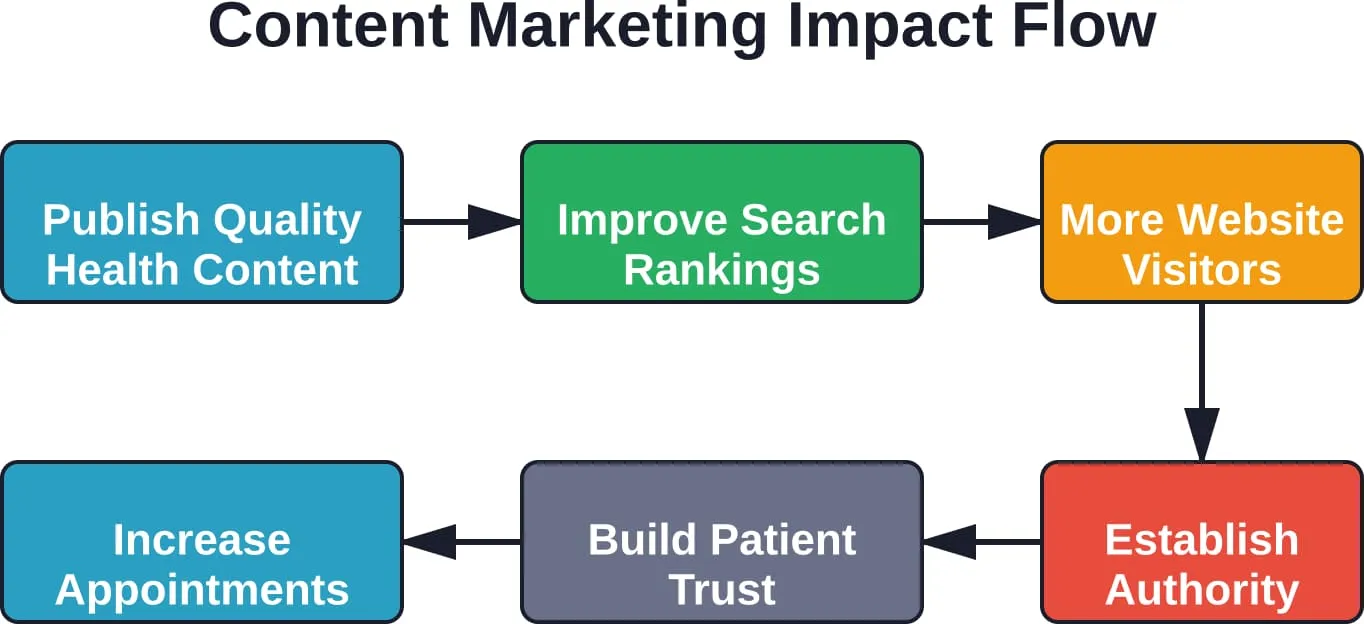
Publishing valuable health content positions the clinic as a trusted information source while improving search rankings. Patients increasingly research symptoms and conditions online before booking appointments.
Blog Strategy
Create blog posts that answer common patient questions. “When Should You Go to Urgent Care vs. Emergency Room?” or “Understanding Your Child’s Fever: When to Worry” provide real value while naturally incorporating search keywords.
Focus on conditions the clinic treats. An orthopedic clinic should write about sports injuries, arthritis management, and post-surgery recovery. A dermatology practice covers acne treatment, skin cancer screening, and anti-aging options.
Publish consistently. Monthly posts minimum, weekly is better. Search engines favor websites that regularly add fresh content. Consistency also builds audience expectation.
Optimize every post for search. Include target keywords in the title, first paragraph, headings, and naturally throughout. Add alt text to images. Link to other relevant posts and service pages on the site.
Video Content
Video humanizes providers and explains complex topics effectively. Create short clips introducing each physician, virtual office tours, explanations of common procedures, and patient testimonials (with proper consent).
Publish videos on YouTube with thorough descriptions and links back to the website. Embed videos on relevant website pages. Video keeps visitors engaged longer, which search engines interpret as quality content.
Simple smartphone videos work fine. Production quality matters less than authenticity and useful information. Patients want genuine connection, not Hollywood polish.
Social Media Presence Done Right
Social media allows direct communication with current and prospective patients. It humanizes the practice, shares valuable information, and builds community connections.
Platform Selection
Don’t try to be everywhere. Focus energy on platforms where target patients actually spend time. For most medical clinics, Facebook remains the primary platform—it skews toward older demographics who use more healthcare services.
Instagram works well for specialties with visual appeal: dermatology, cosmetic procedures, pediatrics (with proper consent for any photos). The platform’s younger audience makes it ideal for practices targeting millennials and Gen Z.
LinkedIn suits B2B medical marketing—building referral relationships with other providers, recruiting staff, and establishing thought leadership among peers.
Content Mix
Educational posts provide value while demonstrating expertise. Share health tips, disease prevention information, explanations of common conditions, and seasonal health reminders (flu shots, tick prevention, heat safety).
Behind-the-scenes content builds connection. Introduce staff members, show team meetings or training sessions, celebrate work anniversaries, and share community involvement.
Patient stories (with explicit written consent) provide powerful social proof. Before-and-after photos work for appropriate specialties. Written testimonials paired with stock images offer alternatives when photos aren’t suitable.
Avoid overly promotional content. The 80/20 rule applies: 80% valuable, educational, or entertaining content; 20% direct promotion of services or appointment requests.
Engagement and Community Management
Respond promptly to comments and messages. Social media users expect quick replies. Designate staff to monitor accounts during business hours and respond to inquiries.
Never provide medical advice on social media. Politely redirect specific health questions: “That’s a great question to discuss with your provider. Please call the office to schedule an appointment so we can address your concerns properly.”
Join local community groups and participate authentically. Don’t spam with promotional posts. Contribute valuable information when health topics arise naturally.
Email Marketing for Patient Retention and Reactivation
Email remains one of the highest-ROI marketing channels. It maintains relationships with existing patients, encourages preventive care, and reactivates lapsed patients.
Build a Quality Email List
Collect email addresses during patient registration and at every visit. Explain that the practice uses email to send appointment reminders, health tips, and clinic updates.
Website opt-in forms capture prospective patient emails. Offer something valuable in exchange: a free health guide, symptom checker, or seasonal wellness checklist.
Ensure compliance with email marketing regulations. Include clear unsubscribe options in every message. Honor opt-out requests immediately.
Email Campaign Types
Monthly newsletters maintain top-of-mind awareness. Include health articles, staff spotlights, clinic news, and seasonal health reminders. Keep content valuable rather than purely promotional.
Preventive care reminders drive appointments. Email patients due for annual physicals, routine screenings, vaccinations, or chronic condition follow-ups. Automation tools trigger these based on patient records.
Reactivation campaigns target patients who haven’t visited in a year or more. A friendly “We miss you” message with an easy booking option brings back lapsed patients.
Seasonal campaigns promote flu shots, back-to-school physicals, sports physicals, allergy management, or other time-sensitive services.
Patient Referral Programs That Actually Work
Word-of-mouth referrals remain the most trusted source of healthcare recommendations. Structured referral programs encourage satisfied patients to spread the word.
Make Referrals Easy
Provide referral cards patients can give to friends and family. Simple business-card-sized cards with practice information and a “referred by” field make sharing effortless.
Digital referral options work too. Email signatures and patient portal messages can include “Refer a Friend” links that make online referrals simple.
Incentive Structures
Small thank-you gifts acknowledge patients who refer others. A handwritten note, coffee gift card, or small clinic-branded item shows appreciation without appearing to buy referrals.
Be cautious with incentives. Some states regulate patient referral incentives in healthcare. Consult legal counsel to ensure any referral program complies with applicable laws and medical ethics guidelines.
The American Medical Association’s ethical guidelines permit advertising but emphasize that communications must not be deceptive. This applies to referral programs—they must be transparent and honest.
Strategic Paid Advertising for Medical Clinics
Organic marketing builds long-term presence, but paid advertising delivers faster results when done strategically and compliantly.
Google Ads for Healthcare
Search ads capture high-intent patients actively looking for care. When someone searches “pediatrician accepting new patients [city],” appearing at the top drives appointments.
Location targeting ensures ads only show to people within the clinic’s service area. Set radius targeting around clinic locations or target specific zip codes.
Ad copy must comply with healthcare advertising regulations. Make truthful claims. Support any benefit statements with scientific evidence. Clearly state credentials and licensing as required by the AMA’s truth in advertising standards.
Landing pages should match ad content precisely. If the ad promotes same-day appointments, the landing page must feature same-day booking prominently. Message consistency improves conversion rates.
Facebook and Instagram Ads
Social media ads work well for awareness and specific service promotion. Precise demographic and interest targeting reaches ideal patient personas.
Visual ads featuring actual clinic staff (with permission) perform better than stock photos. Authenticity resonates in healthcare advertising.
Retargeting campaigns remind website visitors to book appointments. Someone who visited the website but didn’t schedule sees ads encouraging them to complete the action.
The Federal Trade Commission’s health products compliance guidance, published December 20, 2022, requires supporting advertising claims with solid proof. This is especially critical for health-related products and services. Any claim about benefits or safety must be truthful, not misleading, and backed by science.
Community Engagement and Local Marketing
Strong community presence builds trust and generates referrals through real-world relationships.
Health Screenings and Wellness Events
Offer free health screenings at community events, schools, or workplaces. Blood pressure checks, glucose testing, or skin cancer screenings provide value while introducing the clinic to potential patients.
Wellness seminars position providers as experts. Host talks on diabetes management, heart health, weight loss, or other relevant topics at libraries, community centers, or businesses.
Local Partnership Development
Build relationships with schools, daycare centers, gyms, and employers. Become the preferred provider for sports physicals, pre-employment exams, or wellness programs.
Partner with complementary healthcare providers. Physical therapists, nutritionists, and mental health counselors can cross-refer patients when their services complement rather than compete.
Traditional Media
Local newspaper health columns establish authority. Write or be interviewed about seasonal health topics, new treatments, or community health concerns.
Local radio health segments work similarly. Brief call-in shows or regular health tips during morning commute times reach potential patients.
Targeted direct mail still works for certain demographics and purposes. New resident mailings introduce the practice to people actively seeking local providers.
Healthcare Directory Listings and Professional Profiles
Patients research providers on multiple platforms before making decisions. Comprehensive presence across healthcare directories increases visibility and credibility.
Essential Directories
Claim and optimize profiles on major healthcare platforms: Healthgrades, Vitals, WebMD Physician Directory, Zocdoc, RateMDs, and Yelp. Each represents another channel where patients discover providers.
Insurance provider directories matter enormously. Patients often start by searching their insurer’s provider network. Ensure listings are accurate and complete in all accepted insurance directories.
Specialty-specific directories increase relevance. Dermatologists should list on DermOne, pediatricians on KidsDoc, and so forth. These niche platforms attract highly targeted audiences.
Profile Optimization
Complete every profile field thoroughly. Include education, training, certifications, hospital affiliations, languages spoken, conditions treated, and procedures performed.
Professional photos matter. The same headshot should appear consistently across all platforms for brand recognition.
Accurate office hours, accepted insurance, and contact information prevent frustrated patients. Outdated information damages reputation.
Strategic Partnerships with Referring Physicians
For specialist practices, physician referrals remain the primary patient source. Building and maintaining strong referral relationships drives sustainable growth.
Relationship Building
Face-to-face visits with referring providers maintain relationships. Schedule brief office drop-ins to introduce yourself, update them on services, and make yourself accessible.
Provide excellent communication. Send timely consultation notes after seeing referred patients. Detail findings, treatment plans, and recommendations. Referring physicians appreciate thorough, prompt feedback.
Make referrals easy. Provide simple referral forms, clear contact information, and responsive scheduling. The smoother the process, the more likely physicians will refer to your practice.
Educational Outreach
Lunch-and-learn presentations at referring physician offices demonstrate expertise. Present on your specialty area, new treatments, or when to refer patients.
Referral guides simplify decision-making. A one-page sheet listing conditions you treat, urgency indicators for when to refer, and contact information becomes a desk reference.
Patient Experience as Marketing Strategy
Every patient interaction is a marketing opportunity. Exceptional experiences generate organic word-of-mouth and positive reviews.
Eliminate Friction Points
Long wait times frustrate patients more than any other factor. Optimize scheduling to minimize waiting. Text updates when the doctor runs behind show respect for patients’ time.
Simplify administrative processes. Online paperwork completion before visits saves time. Clear billing and transparent pricing prevent unpleasant surprises.
Staff courtesy matters enormously. Train everyone who interacts with patients—front desk, medical assistants, billing—in customer service excellence. Patients remember how they were treated.
Unexpected Delight
Small touches create memorable experiences. Comfortable waiting areas with good coffee, charging stations, and current magazines show care. Follow-up calls after procedures demonstrate concern.
Birthday cards or wellness reminder postcards maintain connection between visits. Patients appreciate practices that remember them as individuals.
Connect Your Medical Clinic With Qualified Prospects
Marketing ideas for medical clinics should help patients or business contacts understand the service and take the next step. Lengreo can help clinics and healthcare-related businesses make their marketing more targeted, trackable, and connected to follow-up.
For medical clinic campaigns, Lengreo can support:
- SEO for online visibility
- Content marketing
- PPC campaign management
- B2B lead generation
- LinkedIn and email outreach
- Appointment setting with qualified prospects
👉Reach out to Lengreo to create a clearer lead generation process for your medical clinic.
Analytics and Performance Tracking
Marketing without measurement wastes resources. Track key metrics to understand what works and optimize accordingly.
Website Analytics
Google Analytics reveals which marketing channels drive website traffic, which pages visitors view, and where they drop off. This data guides optimization decisions.
Track conversion events: appointment booking form submissions, phone calls from the website, new patient registration downloads. Measure not just traffic, but actions.
Identify top-performing content. Which blog posts attract the most visitors? Which service pages convert best? Double down on what works.
Patient Acquisition Tracking
Ask every new patient how they found the practice. Simple intake forms with a “How did you hear about us?” fields reveal which marketing channels produce results.
Phone tracking numbers for different marketing channels attribute calls to specific campaigns. Use unique numbers on Google Ads, Facebook ads, and printed materials.
Calculate cost per patient acquisition for paid channels. Divide total campaign spend by new patients acquired. This guides budget allocation.
Return on Investment
Track lifetime patient value. New patients generate revenue not just from the first visit, but from years of ongoing care. Understanding lifetime value justifies higher acquisition costs.
Compare marketing investment to practice growth. Revenue increases should exceed marketing costs, ideally by a multiple of three to five times or more.
Compliance and Ethical Considerations in Healthcare Marketing
Medical marketing operates within a regulatory framework that protects patients from deceptive practices.
Federal Trade Commission Standards
The FTC requires health-related advertising claims to be truthful and supported by scientific evidence. Claims about treatment effectiveness, product benefits, or safety outcomes need substantiation.
The FTC’s health products compliance guidance, published December 20, 2022, emphasizes that companies must support advertising claims with solid proof. This applies especially to businesses marketing health-related products and services.
Testimonials must reflect typical patient experiences or include disclaimers. An individual’s exceptional result shouldn’t imply that all patients will achieve similar outcomes.
HIPAA Compliance
Patient privacy laws constrain marketing communications. Never use patient information for marketing without explicit written authorization.
Before-and-after photos, video testimonials, or case studies require signed consent forms specifically authorizing use for marketing purposes.
Email marketing to patients about appointment reminders or health services related to their care is generally permitted. Using patient lists for unrelated product promotion requires consent.
Professional Standards
The American Medical Association maintains ethical guidelines for physician advertising. There are no restrictions on advertising by physicians except those justified to protect the public from deceptive practices.
Physicians may publicize themselves through any commercial channel—newspapers, magazines, telephone directories, radio, television, direct mail, online platforms—provided the communication is not misleading.
The AMA’s Truth in Advertising Campaign emphasizes that healthcare providers must clearly and honestly state their level of training, education, and licensing in all marketing materials and patient encounters.
| Marketing Tactic | Time to Results | Investment Level | Best For |
|---|---|---|---|
| Google Business Profile optimization | 1-3 months | Low (mostly time) | All clinic types |
| Patient referral program | Immediate | Low | Established practices |
| Content marketing / blogging | 3-6 months | Medium (time or outsourced) | All clinic types |
| Google Ads | Immediate | Medium to High | Competitive markets, new clinics |
| Social media presence | 3-6 months | Low to Medium | Consumer-facing specialties |
| Email marketing campaigns | 1-2 months | Low | Patient retention focus |
| Healthcare directory listings | 1-2 months | Low | All clinic types |
| Community events and screenings | 3-6 months | Medium | Primary care, local clinics |
Integration and Mergers as Growth Strategy
Some medical groups pursue growth through acquisition rather than patient-by-patient marketing. The Medical Group Management Association has documented successful merger strategies.
One case study involved a medical group with more than 30 years in business, operating seven geographically close locations with ten physicians and five physician assistants. Rather than hiring new practitioners and building patient populations from scratch—which can take up to a year—they acquired existing practices with established patient bases.
Building a patient population can take up to a year versus acquiring an existing patient base. In the first year alone, this can save more than $1,400,000 according to one medical group case study. While integration requires infrastructure investment, the acquired patient revenue immediately offsets costs.
The merger synergy alignment process emphasizes that only 20% to 30% of M&A create significant value. Success requires careful integration of culture, business processes, and operations—not just financial combination.
Emerging Marketing Technologies and Trends
Healthcare marketing continues evolving with technology and patient expectations.
Telemedicine Integration
Virtual care capabilities became marketing differentiators. Promote telehealth availability prominently. Patients value convenient access to care from home.
Market telemedicine for appropriate use cases: follow-up visits, medication management, minor illness consultations. Set clear expectations about what can and cannot be handled virtually.
Patient Portal Engagement
Patient portals that allow appointment scheduling, prescription refills, test result viewing, and secure messaging reduce administrative burden while improving patient satisfaction.
Market portal features as convenience benefits. Emphasize 24/7 access and control over healthcare management.
Artificial Intelligence and Chatbots
AI-powered chatbots on websites answer common questions, help schedule appointments, and provide symptom guidance (with appropriate disclaimers). They improve user experience while reducing staff workload.
Implement chatbots carefully. They should clearly identify as automated systems and seamlessly hand off to human staff when needed.
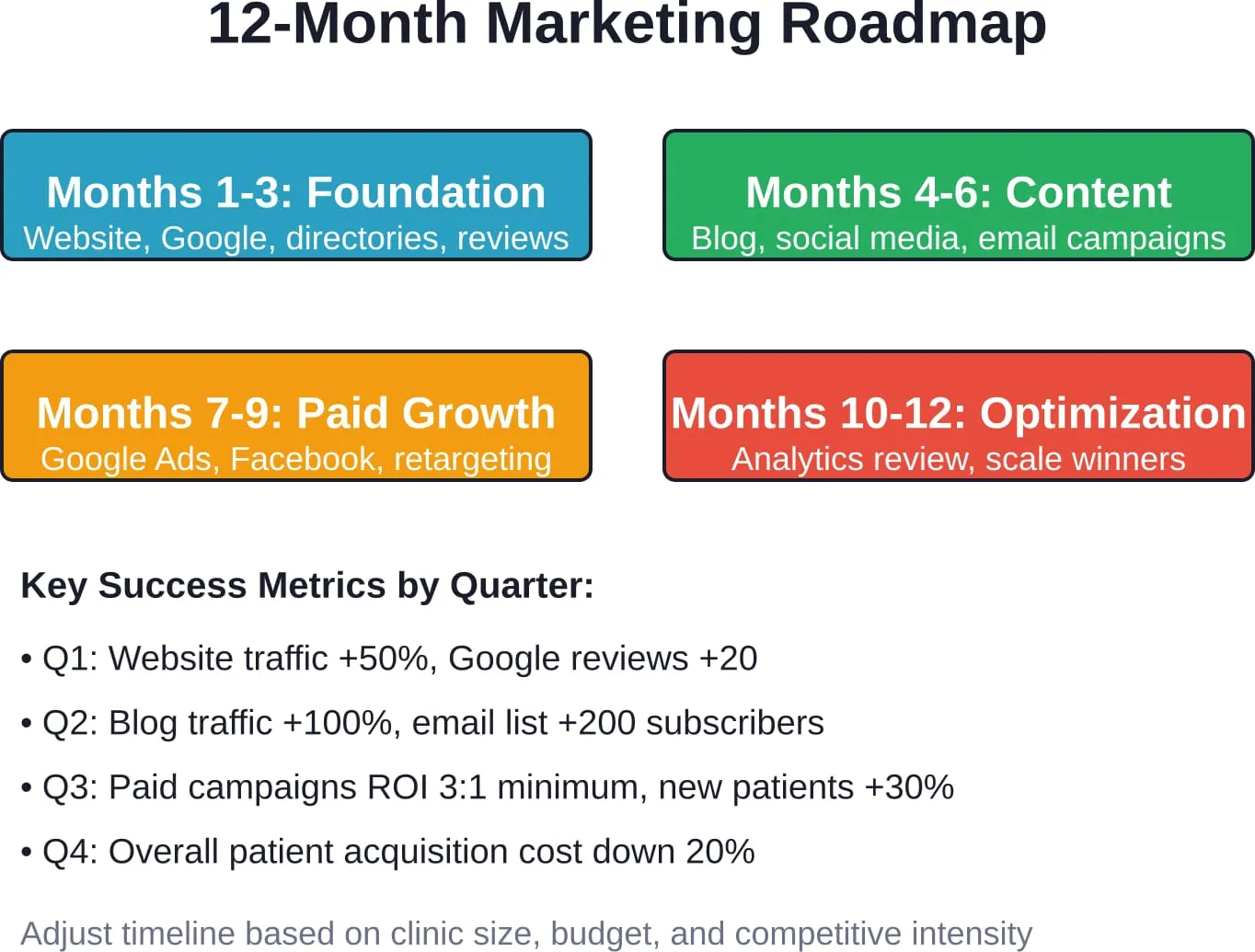
Building a Comprehensive Marketing Plan
Effective medical clinic marketing combines multiple tactics into a cohesive strategy.
Start with Foundation Elements
Before launching campaigns, ensure basics are solid: professional website, complete Google Business Profile, claimed directory listings, and consistent NAP information across the web.
These foundational elements cost little but deliver sustained value. Build the base before adding advanced tactics.
Layer on Patient Engagement
Once foundations exist, add patient-focused initiatives: email marketing, referral programs, review generation, and social media engagement. These maintain relationships and leverage existing patient satisfaction.
Add Paid Acquisition Strategically
When organic efforts gain traction, supplement with paid advertising to accelerate growth. Start with modest budgets, test campaigns, and scale what works.
Measure, Optimize, Repeat
Monthly review of analytics reveals what’s working. Double down on successful tactics. Eliminate or adjust underperforming efforts. Marketing is iterative—continuous improvement over time yields best results.
Conclusion: Building Sustainable Medical Practice Growth
Medical clinic marketing has evolved far beyond yellow pages listings and waiting room pamphlets. Digital transformation changed how patients discover, evaluate, and choose healthcare providers.
But at its core, healthcare marketing still centers on the same fundamental principle that always mattered: trust. Patients need to trust a provider’s competence, credentials, and care quality before scheduling appointments.
The marketing tactics outlined here—from website optimization to community engagement, from content creation to paid advertising—all serve to build that trust at scale. They make the clinic visible where patients search, demonstrate expertise through valuable content, and showcase satisfied patient experiences through reviews and testimonials.
Start with foundational elements that cost little but deliver sustained value. Google Business Profile optimization, website improvements, and directory listings create baseline online presence. Layer patient engagement tactics that leverage existing satisfaction. Add paid acquisition strategically when organic efforts gain traction.
Most importantly, measure everything. Marketing without analytics is guesswork. Track which channels drive appointments, calculate patient acquisition costs, and continuously optimize based on data rather than assumptions.
The competitive healthcare landscape rewards clinics that invest in strategic marketing while maintaining the ethical standards and compliance requirements that protect patients. Clinics that build comprehensive marketing strategies today position themselves for sustainable growth tomorrow.
Ready to transform your medical practice’s marketing? Start with one tactic from this guide this week. Optimize your Google Business Profile, request reviews from three satisfied patients, or publish your first blog post. Small consistent actions compound into significant results over time.