


Quick Summary: Successful accounting firm marketing in 2026 requires a multi-channel approach combining SEO-optimized content, thought leadership, strategic social media presence, and relationship-building tactics. The most effective strategies focus on niche specialization, leveraging digital tools like AI for personalization, and building trust through consistent value delivery rather than traditional advertising.
Relying solely on referrals won’t cut it anymore. Not when automation is reshaping the accounting industry and client expectations have fundamentally changed. Today’s accounting clients don’t just want someone to crunch numbers—they expect quick responses, transparent pricing, and personalized service that demonstrates real understanding of their specific challenges.
Nearly all accountants have integrated AI automation into their client services, according to recent industry surveys. The competitive landscape has shifted from local to global, and credentials alone no longer guarantee growth. Accounting firms that treat marketing as a strategic capability rather than an afterthought are the ones capturing market share.
Competition isn’t just fierce—it’s fundamentally different. The firms winning new clients have moved beyond yellow pages and chamber mixers. They’ve built sophisticated marketing systems that combine digital visibility, thought leadership, and relationship nurturing. Here’s what actually works.
Why Marketing Matters More Than Ever for Accounting Firms
The accounting industry has experienced significant consolidation. According to AICPA data, through December 2017, mergers and acquisitions involving the top 500 CPA firms totaled 154 for the year, compared with 125 for 2016. Nearly one-third of firms with revenue between $5 million and $10 million acquired another firm during this period.
This consolidation creates pressure from both directions. Larger firms bring sophisticated marketing capabilities and brand recognition. Smaller boutique firms compete on specialization and personalized service. The middle ground is shrinking.
But here’s the thing—size doesn’t determine marketing success. Firms that define a clear position, identify their ideal client, and consistently demonstrate expertise through multiple channels can compete effectively regardless of size. The key is treating marketing as a core strategic function, not a side project someone handles between tax seasons.
On average, about 15% of staff and 5% of clients leave a firm each year. These baseline numbers can spike dramatically during transitions like mergers or partner retirements. Strategic marketing helps stabilize both metrics by strengthening relationships and communicating value consistently.
Define Your Niche and Ideal Client Profile
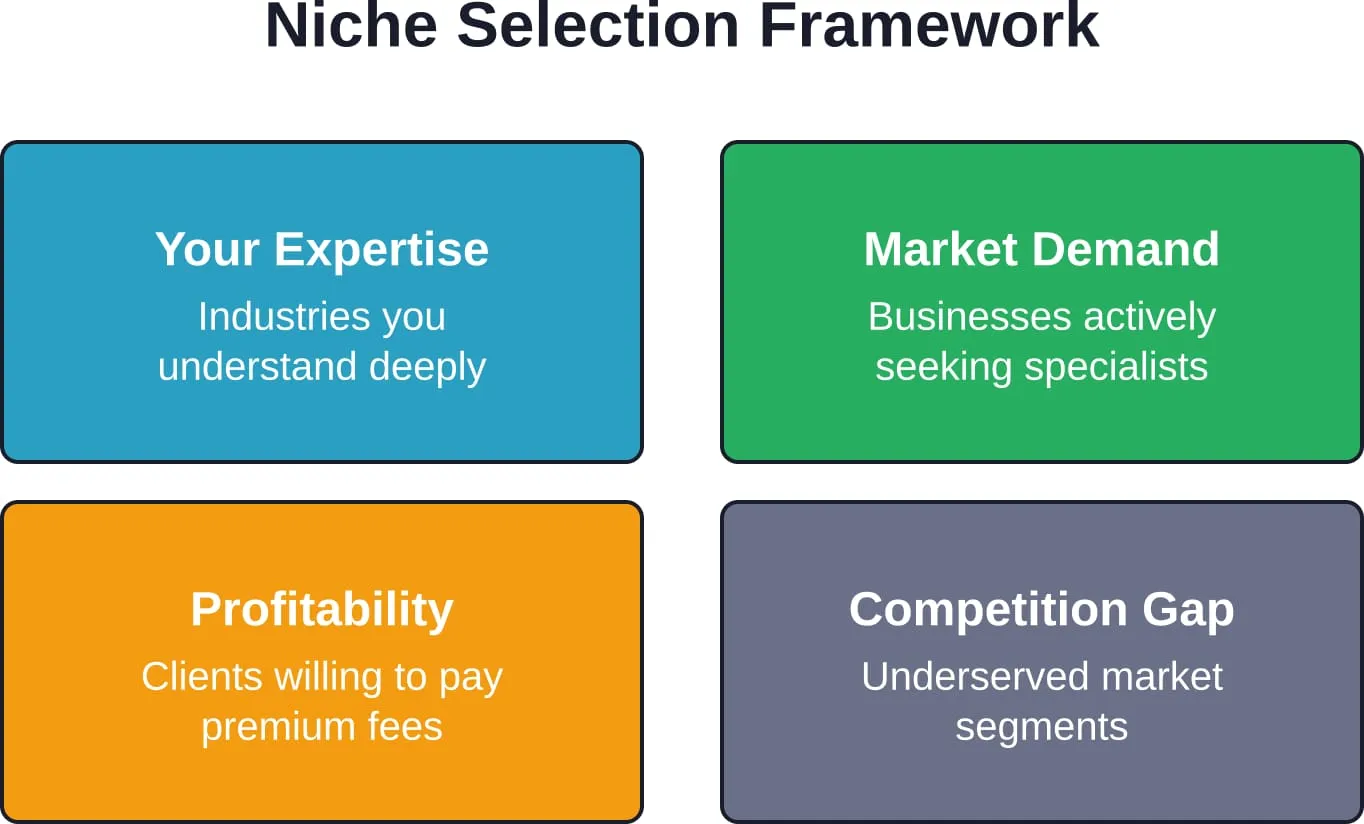
The most successful accounting firm marketing starts with ruthless focus. Trying to serve everyone means competing on price with every other generalist firm. That’s a race to the bottom.
Niche specialization allows firms to develop deep expertise, command premium pricing, and create marketing messages that resonate powerfully with a specific audience. Instead of generic “tax services,” think “tax optimization for e-commerce sellers navigating multi-state nexus” or “CFO services for healthcare practices preparing for private equity transactions.”
Start by analyzing current client data. Which clients are most profitable? Which engagements energize the team? Which industries or business models do you understand better than most accountants? The answers point toward viable niches.
Once the niche is clear, build a detailed ideal client profile. What revenue range? What growth stage? What pain points keep them up at night? What professional associations do they join? Where do they search for information? This profile guides every marketing decision that follows.
Build a High-Performance Website That Converts
Over 80% of prospective clients will visit an accounting firm’s website before making contact. The quality of that website is also a top reason prospects rule out a firm—often before they even pick up the phone.
This isn’t about flashy design. It’s about clarity, credibility, and conversion optimization. Prospects arrive with specific questions: Can this firm help someone like me? Do they understand my industry? What will it cost? How do I get started?
The homepage should answer these questions within seconds. Clear value proposition. Specific service offerings. Industry specializations. Trust signals like credentials, association memberships, and client results. And an obvious next step—whether that’s scheduling a consultation, downloading a resource, or requesting a proposal.
Essential Website Elements
Every accounting firm website needs these foundational components:
- Service pages optimized for search: Detailed pages for each core service, written for humans but structured for search engines, including location-specific variations for local SEO
- Industry expertise pages: Dedicated pages demonstrating deep knowledge of target niches, featuring industry-specific challenges and solutions
- Resources and thought leadership: Blog posts, guides, calculators, and tools that demonstrate expertise while attracting organic search traffic
- Clear conversion paths: Multiple opportunities to take the next step, with forms that ask only essential information
- Trust indicators: Client testimonials, case studies, professional credentials, security certifications, and association logos
- Mobile optimization: Seamless experience across devices, with click-to-call functionality and mobile-friendly forms
Website performance matters too. Pages that load slowly lose prospects. Security is non-negotiable—an accounting firm website without HTTPS encryption signals carelessness with sensitive data. And accessibility ensures the site works for everyone, while simultaneously improving search rankings.
Master SEO to Capture High-Intent Prospects
Search engine optimization remains one of the highest-ROI marketing investments for accounting firms. When someone searches “CPA for dental practices in Chicago,” they’re not browsing—they’re actively looking to hire. Ranking for those searches puts the firm in front of prospects at the exact moment they’re ready to engage.
SEO for accounting firms operates on three levels: local, service-based, and topical authority.
Local SEO
For firms serving specific geographic markets, local SEO is foundational. Google Business Profile optimization is the starting point—complete profile, accurate NAP (name, address, phone) information, regular posts, and active review collection. Local citations across directories reinforce geographic relevance.
Location pages work when the firm has physical presence or serves distinct markets. “Tax preparation in Austin” is a viable target. Creating dozens of city pages with thin, duplicate content is not—Google penalizes that approach.
Service-Based SEO
Service pages target specific offerings prospects search for: “small business bookkeeping,” “estate tax planning,” “nonprofit audit services,” “QuickBooks consulting.” Each page should provide comprehensive information about the service, explain who it’s for, outline the process, and address common questions.
The key is matching search intent. Someone searching “how much does a business tax return cost” wants pricing information, not a detailed explanation of Schedule C. Provide the answer they’re seeking, then guide them toward the next step.
Topical Authority Through Content
Consistent publishing of helpful, detailed content on topics relevant to target clients builds topical authority. Google increasingly ranks sites that demonstrate comprehensive expertise on a subject cluster.
This means going deep rather than wide. Instead of random blog posts on any accounting topic, create interconnected content that thoroughly covers the tax, financial, and operational challenges facing a specific industry or business type. Internal linking between related articles signals the depth of coverage.
Create Content That Demonstrates Expertise
Content marketing for accounting firms isn’t about churning out generic blog posts. It’s about creating resources that solve real problems for ideal clients while establishing the firm’s expertise.
According to Forrester’s 2021 Content Preferences Survey, 82% of B2B buyers think it’s important for vendors to have a unique point of view. For professional services like accounting, where expertise is the core product, thought leadership is essential.
Effective content takes multiple forms:
| Content Type | Purpose | Best For |
|---|---|---|
| Blog articles | Address specific questions, rank for long-tail keywords, demonstrate expertise | SEO, consistent touchpoints, accessible expertise |
| Comprehensive guides | Provide deep value, generate leads through gated downloads | Lead generation, establishing authority |
| Case studies | Show results, build credibility, help prospects envision outcomes | Bottom-of-funnel conversion, industry specialization proof |
| Video content | Build personal connection, explain complex topics visually | Social media, email engagement, YouTube SEO |
| Calculators and tools | Provide immediate utility, capture contact information | Lead generation, demonstrating technical capability |
| Webinars | Deep-dive education, real-time engagement, showcase expertise | Relationship building, complex topics, event marketing |
The content strategy should map to the buyer’s journey. Early-stage prospects need educational content that helps them understand their problem and potential solutions. Mid-stage prospects want to evaluate approaches and compare options. Late-stage prospects need proof the firm can deliver results.
Consistency matters more than volume. Publishing one excellent, well-researched article monthly beats flooding channels with superficial content. Quality signals expertise. Thin content signals the opposite.
Leverage LinkedIn for B2B Relationship Building
For accounting firms targeting business clients, LinkedIn outperforms every other social platform. It’s where decision-makers actively engage with professional content, where executives research service providers, and where industry conversations happen.
Effective LinkedIn marketing for accounting firms operates on multiple levels. Personal profiles of partners and senior team members become thought leadership platforms. The firm’s company page serves as a hub for content and credibility. And strategic engagement builds relationships before prospects are ready to buy.
Personal Branding on LinkedIn
Partners should maintain active, professional LinkedIn presences. Regular posts sharing insights, commenting on industry developments, and answering questions in the feed. Not salesy—genuinely helpful.
The goal is visibility and credibility. When a prospect researches the firm, they’ll check partner profiles. Active, knowledgeable presences reinforce expertise. Dormant profiles or pure self-promotion undermine it.
Company Page Strategy
The company LinkedIn page should showcase firm culture, share content, highlight team expertise, and celebrate client wins. Regular posting keeps the firm visible in followers’ feeds. Employee advocacy—team members sharing and engaging with company posts—multiplies reach.
LinkedIn’s publishing platform allows longer-form articles that can drive significant visibility. Well-timed posts on timely topics (tax deadline strategies, regulatory changes, year-end planning) can reach thousands of prospects organically.
Strategic Outreach and Engagement
LinkedIn’s search and filtering capabilities enable targeted outreach to ideal prospects. Connection requests should be personalized and reference common ground—shared groups, mutual connections, or specific content the prospect has posted.
The goal isn’t immediate sales. It’s starting conversations, providing value, and building relationships. Most businesses aren’t looking to switch accountants this month. When they are ready, top-of-mind awareness and established credibility matter enormously.
Harness Email Marketing for Nurture and Retention
Email remains one of the highest-ROI marketing channels available. For accounting firms, it serves two critical functions: nurturing prospects who aren’t ready to engage yet, and deepening relationships with existing clients.
The key is segmentation and relevance. Blasting generic newsletters to the entire database generates unsubscribes. Targeted messages based on recipient characteristics and behavior drive engagement.
Prospect Nurture Sequences
When someone downloads a guide, attends a webinar, or requests information, they’ve raised their hand as interested—but probably not ready to hire. A nurture sequence provides ongoing value while keeping the firm top of mind.
Effective sequences might include: educational content relevant to the prospect’s interests, case studies showing results for similar clients, answers to common objections, invitations to low-commitment next steps like consultations or assessments.
The cadence matters. Too frequent feels pushy. Too infrequent allows prospects to forget. Every two weeks is often the sweet spot, adjusted based on engagement data.
Client Communication
Regular email communication with existing clients strengthens relationships and drives additional service revenue. Monthly or quarterly newsletters sharing tax updates, planning tips, and firm news maintain visibility between engagements.
Segmented communications work better. Tax clients need different information than audit clients. Industry-specific updates feel more relevant than generic accounting news. Personalization based on client data increases engagement significantly.
Email is also the ideal channel for event promotion, referral requests, review solicitation, and cross-selling additional services. The key is providing value first, asking second.
Develop Thought Leadership Through Speaking and Writing
Speaking at industry conferences, contributing to professional publications, and participating in relevant podcasts builds credibility far beyond what advertising can achieve. These platforms position firm members as recognized experts, creating powerful trust signals.
Start local. Chamber of commerce events, industry association meetings, and business networking groups all need speakers. Offering to present on timely topics (year-end tax planning, cash flow management, preparing for audits) provides value while showcasing expertise.
As comfort and credibility grow, pursue larger opportunities. Industry conferences. Trade publication guest columns. Podcast interviews. Each appearance reaches new audiences and generates content that can be repurposed across marketing channels.
The preparation pays multiple dividends. A conference presentation becomes a webinar recording, a blog post, a lead magnet guide, social media content, and email newsletter material. One hour of speaking generates weeks of marketing assets.
Optimize Google Business Profile for Local Visibility
For accounting firms serving specific geographic markets, Google Business Profile (formerly Google My Business) is critical infrastructure. When someone searches “CPA near me” or “tax preparation in [city],” Google displays local map results prominently.
Profile optimization starts with complete, accurate information. Business name, address, phone number, website, hours, and service areas all need to be current. Categories should be specific (Tax Preparation Service, Certified Public Accountant, Bookkeeping Service) rather than generic.
Regular posts keep the profile active and visible. Share blog content, announce deadlines, highlight team expertise, celebrate client wins. Photos humanize the firm—team members, office space, community involvement.
Reviews are the most influential element. Positive reviews improve rankings and influence prospect decisions. Actively requesting reviews from satisfied clients (while following professional ethics guidelines) builds the review portfolio. Responding to all reviews—positive and negative—demonstrates engagement and professionalism.
Leverage AI for Personalization and Efficiency
Business buyers are increasingly using generative AI at every stage of the buying process, according to Forrester research. This changes how accounting firms need to approach content and marketing technology.
AI tools can personalize email content based on recipient characteristics, optimize send times for maximum engagement, and score leads based on behavior patterns. Chatbots handle initial website inquiries, qualifying prospects and scheduling consultations without human intervention.
Content creation benefits from AI assistance too. While AI shouldn’t write entire thought leadership pieces (authenticity matters), it can help with research, outline generation, and draft creation that human experts then refine and personalize.
Generative AI integration in B2B marketing remains limited, with many organizations still in early adoption phases according to Forrester research. Firms that effectively integrate AI capabilities gain significant efficiency advantages, allowing small marketing teams to execute at the level of much larger operations.
The key is augmentation rather than replacement. AI handles routine tasks, data analysis, and initial drafts. Human expertise provides strategic direction, quality control, and the personal touch that builds relationships.
Build Strategic Referral Networks
Referrals remain among the highest-quality lead sources for accounting firms. Prospects referred by trusted sources arrive pre-qualified and pre-sold on the firm’s credibility.
But waiting for referrals is passive. Strategic referral network development is active.
Client Referrals
Satisfied clients are willing to refer—if asked. Many firms never systematically request referrals. A simple ask after successful engagements, coupled with making referrals easy (clear description of ideal clients, simple introduction process), generates consistent leads.
Referral incentive programs can work but require care. Some professional ethics rules restrict incentives, and clumsy programs can feel transactional. Recognition and appreciation often work better than cash rewards.
Professional Networks
Complementary professional service providers—attorneys, financial advisors, commercial bankers, insurance agents, business consultants—serve the same clients but don’t compete for the same work. These make ideal referral partners.
Building these relationships requires giving before receiving. Refer business to trusted partners. Collaborate on client education events. Share insights and resources. The relationships that generate consistent referrals are built on reciprocal value over time.
Alumni Networks
Former team members who move to industry roles become potential clients and referral sources. Maintaining positive relationships with alumni creates an extended network of people who understand the firm’s capabilities and culture.
CPA firms’ marketing strategies recognize the important role of alumni networks in providing both direct business and ongoing referrals.
Create Educational Workshops and Webinars
Educational events position the firm as a knowledge resource while creating opportunities to build relationships with multiple prospects simultaneously. A well-executed workshop or webinar can generate more qualified leads than weeks of cold outreach.
Topics should address pressing concerns for ideal clients. “Year-end tax strategies for real estate investors.” “Financial planning for medical practice transitions.” “Navigating R&D tax credits for software companies.” Specific, valuable, timely.
In-person workshops work well for local markets and relationship-building. They require more logistics but create stronger connections. Virtual webinars scale better, reaching prospects regardless of location, though engagement is typically lower.
The post-event follow-up matters as much as the event itself. Attendees have demonstrated interest. Prompt, personalized follow-up with additional resources and consultation offers converts interest into engagements.
Get Accounting Firm Prospects With Lengreo
Marketing ideas for accounting firms should help attract clients who are already looking for professional financial, tax, audit, or advisory support. Lengreo can help make that process more structured, from first visibility to a qualified business conversation.
For accounting-focused campaigns, Lengreo can support:
- SEO for stronger search visibility
- Content marketing for service-related traffic
- PPC campaigns for relevant demand
- B2B lead generation and prospect research
- LinkedIn outreach and email outreach
- Appointment setting for qualified calls
👉Reach out to Lengreo to connect your accounting firm with more relevant prospects.
Measure What Matters and Optimize Continuously
Marketing without measurement is guesswork. Accounting firms need clear metrics tied to business outcomes, not vanity metrics that feel good but don’t predict revenue.
Website analytics should track not just visitors but behavior: which pages do prospects visit? How long do they stay? What content do they download? Where do they drop off? These patterns reveal what’s working and what needs improvement.
Lead source tracking answers the critical question: where do the best clients come from? Not just where leads originate, but which sources produce clients who stay longer, engage more services, and refer others. This data guides resource allocation.
According to the Journal of Accountancy article ‘Using data to optimize marketing and sales strategies,’ understanding customer acquisition cost (CAC) and customer lifetime value (LTV) is pivotal for strategic business planning. If LTV significantly exceeds CAC, marketing investment should increase. If they’re too close, efficiency needs improvement or pricing needs adjustment.
Key Metrics for Accounting Firm Marketing
| Metric Category | Specific Metrics | Why It Matters |
|---|---|---|
| Website Performance | Organic traffic, conversion rate, time on site, pages per session | Indicates content relevance and user experience quality |
| Lead Generation | Lead volume by source, lead-to-consultation rate, cost per lead | Shows marketing efficiency and channel effectiveness |
| Client Acquisition | New clients by source, customer acquisition cost, sales cycle length | Reveals which efforts drive actual business growth |
| Client Value | Average engagement value, lifetime value, retention rate, service expansion rate | Measures long-term marketing ROI and relationship quality |
| Content Engagement | Email open rates, content downloads, social engagement, video completion rates | Indicates message resonance and audience interest |
Regular review and adjustment based on data keeps marketing strategy aligned with results. What worked last year might not work this year. Markets shift. Competition adapts. Continuous optimization is essential.
Navigate Ethics and Compliance in Marketing
Accounting firm marketing operates within professional ethics constraints that don’t apply to most businesses. State boards of accountancy regulate advertising, client solicitation, and testimonial use. Professional standards prohibit certain claims and compensation arrangements.
Understanding these rules protects both the firm and individual CPAs’ licenses. Most ethics violations in marketing aren’t intentional—they’re the result of well-meaning but uninformed tactics.
Common issues include:
- Testimonials and endorsements (some jurisdictions restrict how these can be used)
- Referral fees and commissions (often prohibited or heavily restricted)
- False or misleading advertising (broadly defined to include unsubstantiated claims)
- Confidentiality in case studies and examples (client permission required, with specific consent requirements).
When buying or selling a practice, ethical considerations become even more complex. Client confidentiality, independence rules, and consent requirements all come into play during transitions.
Working with marketing professionals who understand accounting industry regulations helps avoid problems. When in doubt, check with the state board or professional liability insurance carrier before launching campaigns using new approaches.
Plan for Sustainability During Practice Transitions
Marketing strategy needs to account for firm succession and transition planning. During practice transitions, maintaining client relationships and consistent service becomes critical infrastructure for success.
During mergers or acquisitions, client retention becomes critical. On average, about 15% of staff and 5% of clients leave a firm each year. These numbers can spike dramatically during transitions. Maintaining existing client and employee policies during transitions minimizes disruption. Clients who were allowed 30-day payment terms don’t appreciate suddenly requiring 50% retainers. Consistency builds stability.
Communication strategy during transitions matters enormously. Clients need reassurance that service quality will continue, that their trusted contacts remain involved, and that the change benefits them. Proactive, transparent communication prevents rumors and anxiety.
Marketing also plays a role in attracting acquisition candidates or merger partners. Firms with strong brands, documented systems, and diverse client bases are more attractive partners and command better terms.
Looking Ahead: Marketing Trends for 2026 and Beyond
The pace of change continues to accelerate. At the AICPA ENGAGE conference, AICPA President and CEO Barry Melancon noted that futurists have predicted an “almost incomprehensible” increase in the pace of change and technological development. Accounting firms need marketing strategies that adapt to these shifts.
Several trends are reshaping the landscape:
- AI integration becoming standard: Both in how clients research services and how firms execute marketing. Firms that don’t adapt risk invisibility as AI-powered search changes how information is discovered.
- Millennial and Gen Z buyers influencing decisions: In a recent Forrester survey, 30% of Millennial and Gen Z buyers reported that they include 10 or more external influencers in their buying processes, and these demographics now influence how companies make decisions. They expect different communication styles and research patterns.
- Hyper-specialization increasing: As AI handles routine tasks, human expertise focuses on complex, specialized situations. Marketing needs to reflect this specialized positioning.
- Video and multimedia becoming expected: Text-only content feels incomplete. Prospects expect video explanations, visual data, and interactive tools.
- Social proof and peer influence growing: Journalists, podcasters, and niche influencers now shape how B2B buyers make decisions. Traditional advertising influence continues declining.
Firms that future-proof their marketing by building adaptable systems, maintaining technology currency, and focusing on genuine expertise and relationship-building will thrive regardless of specific channel shifts.
Conclusion: Marketing as Strategic Capability
The accounting firms experiencing sustained growth don’t treat marketing as an occasional activity or an expense to minimize. They’ve built it into their strategic foundation—a systematic capability that consistently generates qualified prospects, nurtures relationships, and reinforces their market position.
This doesn’t require massive budgets or large teams. It requires clarity about who the firm serves, consistency in delivering value, and commitment to the fundamentals: an optimized website, regular content creation, active relationship building, and measurement-driven improvement.
Start with the highest-leverage activities. For most firms, that’s defining the niche clearly, optimizing the website for search and conversion, and establishing a consistent content rhythm. These foundations enable everything else.
The competitive landscape will continue intensifying. Technology will keep changing how clients find and evaluate service providers. But the core dynamics remain constant—people hire accountants they trust, who demonstrate relevant expertise, and who make the relationship valuable. Marketing that reinforces these fundamentals wins.
Ready to elevate the firm’s marketing strategy? Start by auditing current efforts against the frameworks outlined here. Identify the biggest gaps. Prioritize the highest-ROI opportunities. Then commit to consistent execution. The firms that treat marketing as strategic capability rather than tactical necessity are the ones building sustainable competitive advantage.