


Quick Summary: Website development for housebuilders requires strategic design that balances aesthetics with lead generation, mobile optimization, and fast load times. A high-performing site serves as your most powerful sales tool, converting visitors into qualified buyers through intuitive navigation, trust signals, and seamless inventory management. Whether building new or optimizing existing sites, housebuilders benefit from platforms specifically designed for the residential construction industry.
The construction landscape has shifted dramatically. Homebuyers start their journey online, not at model homes. For housebuilders, the website isn’t a digital brochure anymore—it’s the frontline sales representative working around the clock.
But here’s the problem: many builders approach website development as a one-time project rather than an ongoing asset. The result? Sites that look impressive at launch but fail to generate qualified leads or adapt to changing market conditions.
This guide cuts through the noise. What follows is a practical examination of website development tailored specifically for residential construction companies, from budget-conscious builders to large-scale developers managing multiple communities.
The Current State of Digital Adoption in Housebuilding
Despite growing digital transformation across industries, the residential construction sector lags behind in technology adoption. According to NAHB data from July 2025, about 20% of builders use AI to generate advertising and marketing materials, while 11% leverage AI to analyze markets and plan future projects, though early signs suggest change on the horizon.
This conservative approach extends to website development. Many builders still rely on outdated platforms or generic templates that weren’t designed for inventory management, floor plan displays, or lot availability tracking.
The gap represents both a challenge and an opportunity. Builders who invest strategically in their web presence gain measurable advantages in visibility and lead quality over competitors stuck with static sites.
Understanding Website Development Costs for Housebuilders
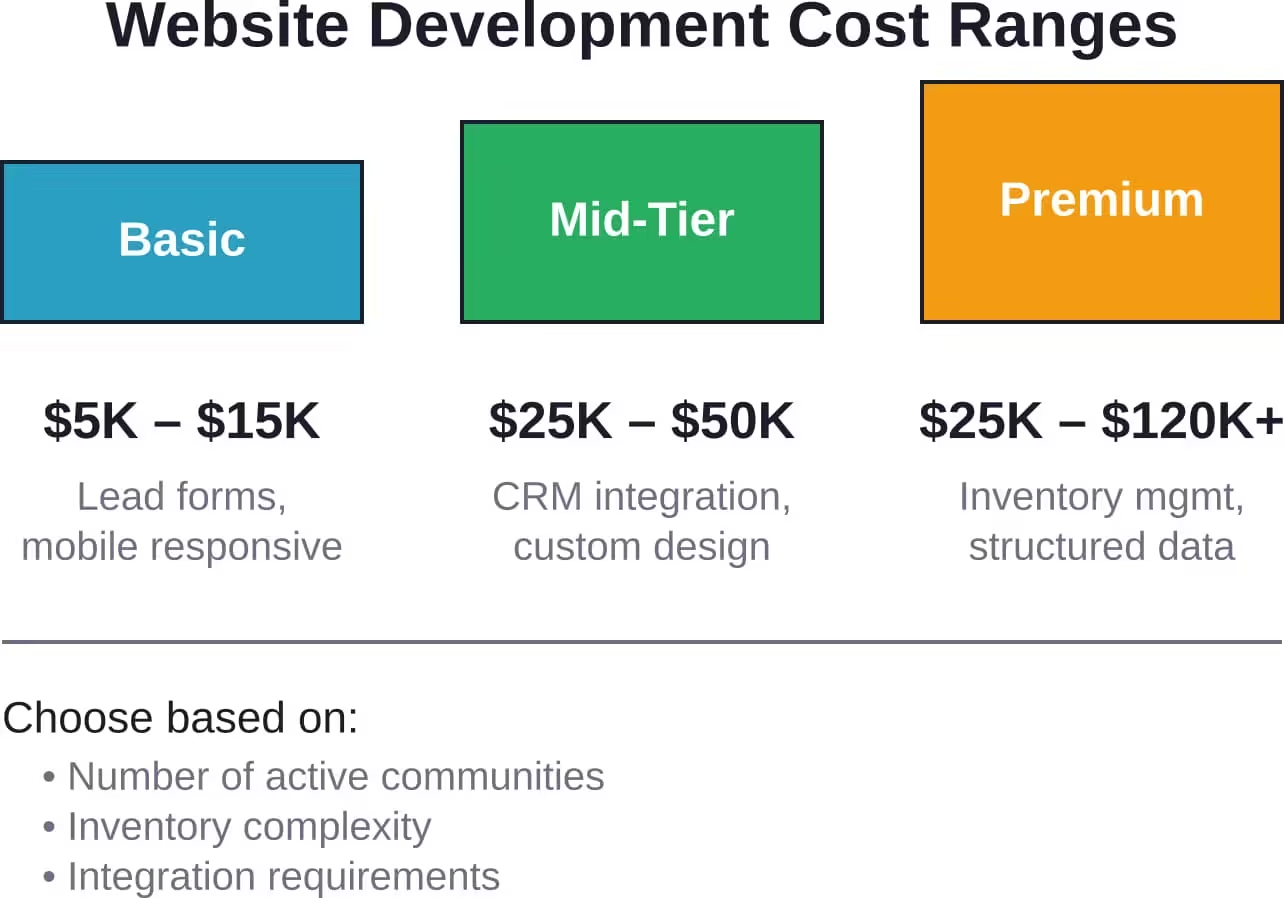
Pricing varies dramatically based on scope, customization, and platform choice. A basic website with lead generation forms and mobile optimization typically costs between $5,000 to $15,000, though specific pricing varies by provider, suitable for smaller builders with limited inventory.
Mid-tier solutions typically range from $25,000 to $50,000 or higher depending on complexity and integrations, offering more sophisticated design, CRM integration, and basic inventory management. At the high end, custom platforms built specifically for housebuilders range from $25,000 to $120,000+, particularly those offering structured data management for communities, floor plans, and available homes.
The investment shouldn’t be viewed in isolation. A well-designed website that converts even 1-2% more visitors into qualified leads quickly justifies higher upfront costs through increased sales volume.
Critical Elements That Convert Visitors Into Buyers
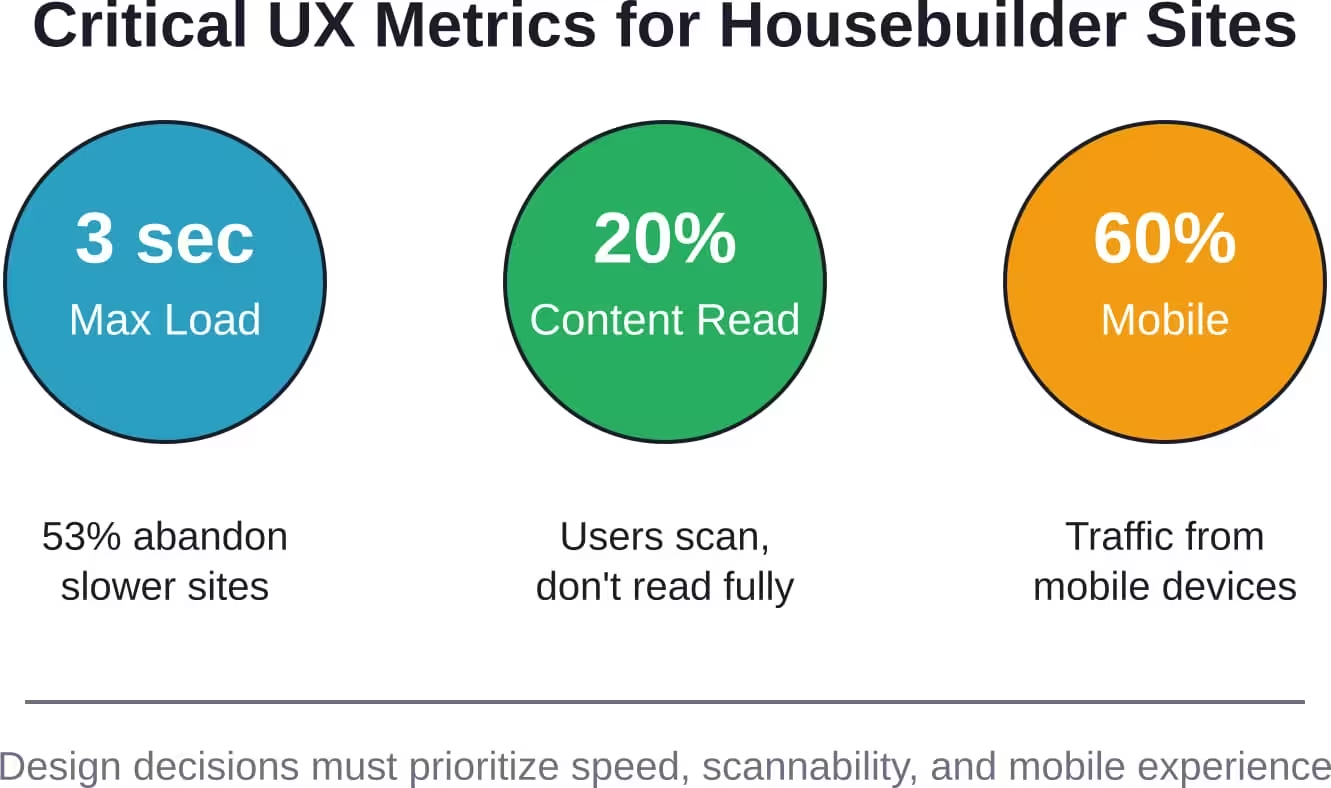
Conversion optimization separates functional websites from revenue-generating assets. According to a study by Google cited in industry sources, 53% of mobile users abandon a site if it takes longer than three seconds to load. Speed isn’t optional—it’s fundamental.
Beyond performance, several elements consistently drive conversions for housebuilder websites.
Mobile Optimization
With the majority of website traffic now originating from mobile devices, with many builder websites reporting 50-70% mobile traffic, responsive design is non-negotiable. But mobile optimization extends beyond making content fit smaller screens.
Touch-friendly navigation, streamlined forms, and click-to-call buttons significantly improve mobile user experience. Floor plan galleries must be easily browsable with swipe gestures rather than requiring precise taps on tiny arrows.
Trust Signals and Social Proof
Trust signals play a critical role in buyer decisions, with many studies showing that the majority of consumers rely on social proof and credibility indicators when evaluating purchases. For housebuilders, these signals include customer testimonials with photos, before-after project galleries, industry certifications, insurance documentation, and years of local presence.
Video testimonials carry particular weight. Hearing satisfied homeowners describe their experience builds credibility faster than written reviews alone.
Strategic Call-to-Action Placement
Every page should guide visitors toward a clear next step—scheduling a model home tour, downloading a floor plan, or requesting a consultation. The mistake many builders make is burying contact opportunities at the bottom of pages.
Sticky headers with persistent contact buttons, strategic mid-content CTAs, and exit-intent popups all contribute to higher conversion rates when implemented thoughtfully.
User Experience Design Principles for Housebuilders
User experience directly impacts conversion rates. Research from Forrester shows that well-designed UX can boost conversion rates by up to 200%.
So what constitutes good UX for housebuilder websites specifically?
Intuitive Information Architecture
Homebuyers typically seek specific information: available floor plans, pricing, location details, included features, and construction timelines. Site structure should reflect this search behavior.
Clear navigation paths reduce friction. Visitors shouldn’t need to hunt through multiple menu levels to find what community you’re currently building in or what homes are move-in ready.
Content Scannability
On average, users read about 20% of your content per page, according to web writing best practices research. They scan for keywords and relevant information rather than reading linearly. Design must accommodate this behavior.
Subheadings, bullet points, bold text for key details, and short paragraphs all improve scannability. Dense blocks of text create cognitive load that drives visitors away.
Page Load Speed
Beyond the three-second threshold for mobile users, page speed impacts organic search rankings. Google prioritizes fast-loading sites, and The vast majority of search traffic goes to first-page rankings, with studies showing that high-ranking positions receive significantly more clicks than lower positions.
Image optimization, efficient code, content delivery networks, and minimizing third-party scripts all contribute to faster load times. The technical investment pays dividends in both user satisfaction and SEO performance.
Platform Choices: Custom vs. Builder-Specific Solutions
Housebuilders face a fundamental decision: build on a general CMS platform or invest in industry-specific software.
General platforms like WordPress offer flexibility and lower costs. Thousands of developers understand the ecosystem, making future updates easier. But these systems require significant customization to handle inventory management, floor plan displays, and lot tracking.
Builder-specific platforms arrive purpose-built for residential construction. They manage communities, floor plans, and available inventory as structured data rather than static pages. This architecture benefits SEO by creating searchable, filterable content that general platforms struggle to match.
The tradeoff? Higher costs and potential vendor lock-in. Switching platforms later means rebuilding from scratch rather than migrating content.
| Consideration | General CMS Platform | Builder-Specific Platform |
|---|---|---|
| Initial Cost | $5,000 – $25,000 | $25,000 – $120,000+ |
| Inventory Management | Requires custom development | Built-in, structured data |
| Developer Availability | High (large ecosystem) | Limited (vendor-dependent) |
| SEO for Homes/Plans | Manual optimization needed | Automated from structured data |
| Future Portability | Content easily migrated | Potential vendor lock-in |
| Best For | Small builders, limited inventory | Multi-community builders, large inventory |
Neither option is universally superior. The right choice depends on business size, inventory complexity, and long-term growth plans.
Launch a Website Increasing Buyer Inquiries
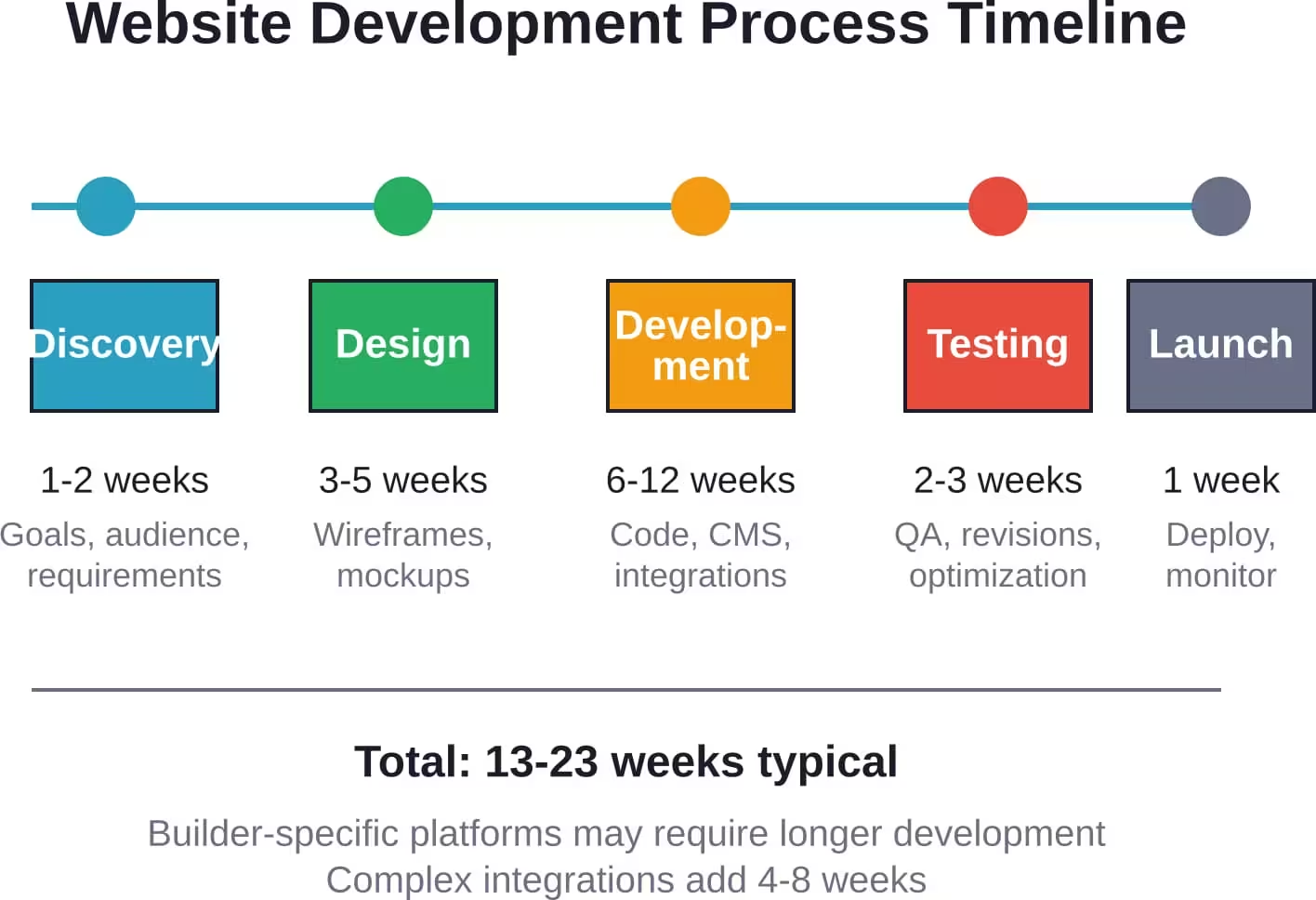
As communities, floor plans, and available inventory grow, many housebuilder websites become difficult to update and harder for buyers to navigate, especially on mobile devices. Lengreo develops websites through a structured process that includes research, prototyping, front-end and back-end implementation, QA, and post-launch support. Their approach helps businesses build flexible websites that can adapt as listings, projects, and operational requirements continue expanding over time.
Looking for a Team That Can Support Your Business Long-Term?
Working with Lengreo includes:
- Flexible website functionality for growing property listings
- Development aligned with your operational needs and budget
- Ongoing collaboration throughout development stages
- Maintenance support after launch
Talk to Lengreo about building a housebuilder website designed for long-term website management and growth.
SEO Strategies That Drive Organic Traffic
Search engine optimization remains the most cost-effective long-term strategy for generating qualified leads. Paid advertising stops delivering the moment budgets run dry. Organic rankings continue working indefinitely.
For housebuilders, local SEO carries particular weight. Homebuyers search for builders in specific markets—”new homes in [city]” or “custom builder [county].”
On-Page Optimization Fundamentals
Each community, floor plan, and available home should have a dedicated page optimized for relevant search terms. Title tags, meta descriptions, header tags, and image alt text all contribute to ranking potential.
Structured data markup helps search engines understand inventory. Schema.org vocabulary for real estate listings enables rich snippets in search results, improving click-through rates.
Content Marketing for Builders
Educational content attracts homebuyers early in their journey. Blog posts addressing common questions—financing options, construction timelines, customization possibilities—establish authority and capture search traffic.
The content should provide genuine value rather than thinly veiled sales pitches. Homebuyers can distinguish between helpful resources and promotional fluff.
Technical SEO Considerations
Site architecture affects crawlability. XML sitemaps, robots.txt files, canonical tags, and proper redirect management all influence how search engines index content.
For builders managing multiple communities, proper site structure prevents duplicate content issues. Each location needs unique, substantive content rather than templated pages with minor variations.
Ongoing Optimization vs. Complete Redesigns
The phrase “we need a new website” strikes fear into marketing budgets for good reason. Complete redesigns consume months of effort, run over budget, and often deliver underwhelming results.
Here’s the alternative approach: continuous optimization.
Rather than waiting years to overhaul everything at once, successful builders implement incremental improvements based on data. Heat mapping reveals where users click. Analytics show which pages convert and which don’t. A/B testing validates design changes before full implementation.
This iterative approach costs less, reduces risk, and delivers measurable improvements faster than waiting for the perfect redesign that never quite materializes.
That said, some situations genuinely warrant full rebuilds. Sites built on obsolete technology, those with fundamental structural problems, or platforms no longer supported by their original developers can’t be patched indefinitely.
Lead Generation and CRM Integration
Websites generate leads. But leads only convert into sales when properly managed through the sales pipeline.
Tight integration between website forms and CRM systems ensures no inquiry falls through cracks. Automated notifications alert sales teams immediately when prospects request information. Lead scoring prioritizes follow-up based on engagement signals.
Basic setups capture name, email, and phone number. More sophisticated implementations track which floor plans prospects viewed, which communities they explored, and how many times they’ve visited before requesting contact.
This behavioral data enables personalized follow-up. A prospect who viewed only three-bedroom plans in a specific community receives different outreach than someone who browsed multiple communities without pattern.
Accessibility Considerations
Web accessibility benefits everyone, not just users with disabilities. Features like alt text for images, keyboard-friendly navigation, and proper contrast ratios improve usability across the board while also enhancing SEO.
Compliance with WCAG (Web Content Accessibility Guidelines) reduces legal risk. More importantly, it expands the potential customer base by ensuring all homebuyers can navigate the site regardless of ability.
Simple improvements—descriptive link text instead of “click here,” proper heading hierarchy, transcripts for videos—make substantial differences without requiring complete redesigns.
Analytics and Performance Measurement
Website investment demands measurable returns. Analytics platforms track the metrics that matter: traffic sources, conversion rates, bounce rates, time on page, and path to conversion.
But raw data means nothing without context and interpretation. A high bounce rate on a floor plan page might indicate poor design—or it might mean the plan doesn’t match visitor needs, triggering immediate exits.
Goal tracking within analytics platforms connects website actions to business outcomes. How many model home tour requests came from organic search versus paid ads? Which landing pages generate the highest-quality leads?
Regular reporting keeps teams aligned on performance and identifies optimization opportunities before they become critical problems.
The Role of Professional Photography and Visual Content
Homebuyers make emotional decisions backed by rational justification. High-quality photography triggers the emotional response that initiates the buying process.
Professional photos of completed homes, communities, and interiors significantly enhance engagement compared to amateur images. Professional photography costs vary widely based on scope and location—returns value through higher engagement and conversion rates.
Virtual tours and 3D walkthroughs have gained traction, particularly for floor plan visualization before construction completes. These tools help remote buyers evaluate options without requiring site visits for every consideration.
Drone photography showcases community settings, nearby amenities, and lot positions in ways ground-level photos can’t match. For builders in scenic locations or master-planned communities, aerial perspectives provide compelling visual differentiation.
Maintenance and Security Responsibilities
Websites require ongoing maintenance regardless of platform choice. Software updates, security patches, plugin compatibility, and content updates all demand attention.
Neglected sites accumulate vulnerabilities. Outdated software versions become targets for automated attacks. One compromised plugin can expose customer data or damage search rankings through malware injections.
Website maintenance and ongoing support typically involves monthly costs for software updates, security monitoring, and content management, with pricing varying by provider and complexity. This covers software updates, security monitoring, backup management, and minor content updates.
The alternative—handling maintenance in-house—requires dedicated technical resources. For many builders, outsourcing proves more cost-effective than building internal capacity.
Competitive Differentiation Through Content
Every housebuilder website showcases homes, floor plans, and communities. The content that differentiates comes from a unique perspective and genuine value.
Educational resources about the building process, financing options, local market insights, and home maintenance tips position builders as trusted advisors rather than transactional vendors.
Behind-the-scenes content humanizes the brand. Introducing team members, explaining quality standards, documenting construction milestones—these elements build emotional connections that generic property listings can’t achieve.
The content strategy should align with buyer journey stages. Early-stage researchers need different information than buyers ready to select lot locations and finalize floor plans.
Moving Forward With Strategic Website Development
Website development for housebuilders isn’t a one-size-fits-all proposition. The right approach depends on business size, market position, inventory complexity, and growth objectives.
What remains consistent across successful implementations: treating the website as a dynamic sales asset rather than static marketing collateral. Sites that generate qualified leads, support the sales process, and adapt to changing market conditions deliver measurable returns that justify ongoing investment.
Start by honestly assessing current performance. Where do visitors drop off? Which pages convert and which don’t? What functionality exists in competitor sites but not yours?
The answers reveal whether incremental optimization suffices or whether fundamental rebuilding makes sense. Either way, data-driven decisions outperform assumptions about what buyers want.
For builders just beginning their digital transformation, focus on fundamentals first: mobile optimization, fast load times, clear navigation, and trust signals. These elements form the foundation that more sophisticated features build upon.
For established builders considering platform changes or major redesigns, thoroughly evaluate the business case. Will inventory management capabilities justify switching costs? Does structured data architecture provide enough SEO benefit to warrant higher investment?
The residential construction market continues evolving. Buyer expectations rise as technology advances. Websites that meet today’s standards will fall behind tomorrow’s without continuous improvement and adaptation.
The builders who thrive aren’t necessarily those with the largest marketing budgets. They’re the ones who strategically invest in digital assets that work continuously, converting browsers into buyers while competitors sleep.
Ready to evaluate where website development fits in the broader marketing strategy? Start with analytics review, competitive analysis, and honest assessment of current performance against business objectives. The data tells the story—and reveals the path forward.