

Quick Summary: Government website development requires compliance with Section 508 accessibility standards, adherence to federal security protocols like FedRAMP, and implementation of the U.S. Web Design System (USWDS). Federal agencies must ensure digital accessibility for individuals with disabilities while meeting stringent security requirements that differ significantly from private sector web development.
Building websites for government agencies isn’t the same as commercial web development. The stakes are higher, the regulations stricter, and the consequences of non-compliance can derail entire projects.
Federal, state, and local agencies face a unique set of requirements that private sector developers rarely encounter. From mandatory accessibility standards to federal security protocols, government web development operates under a different rulebook entirely.
Here’s what actually matters when developing websites for government entities in 2026.
Section 508: The Non-Negotiable Accessibility Standard
Section 508 of the Rehabilitation Act of 1973 requires federal agencies to make their electronic information and communication technology accessible to people with disabilities. This isn’t optional—it’s law.
The Rehabilitation Act established several related sections that shape government digital accessibility. Section 501 prohibits federal employers from discriminating against qualified individuals with disabilities. According to 29 C.F.R. § 1614.203(d)(7), the federal government’s goal is that 12% of the workforce consist of people with disabilities and 2% consist of people with targeted disabilities. Section 503 extends these requirements to federal contractors.
But Section 508 is where web developers need to focus.
What Section 508 Actually Requires
The updated Section 508 standards published by the U.S. Access Board in January 2017 align closely with Web Content Accessibility Guidelines (WCAG). Developers must ensure that federal websites and digital products meet specific technical requirements.
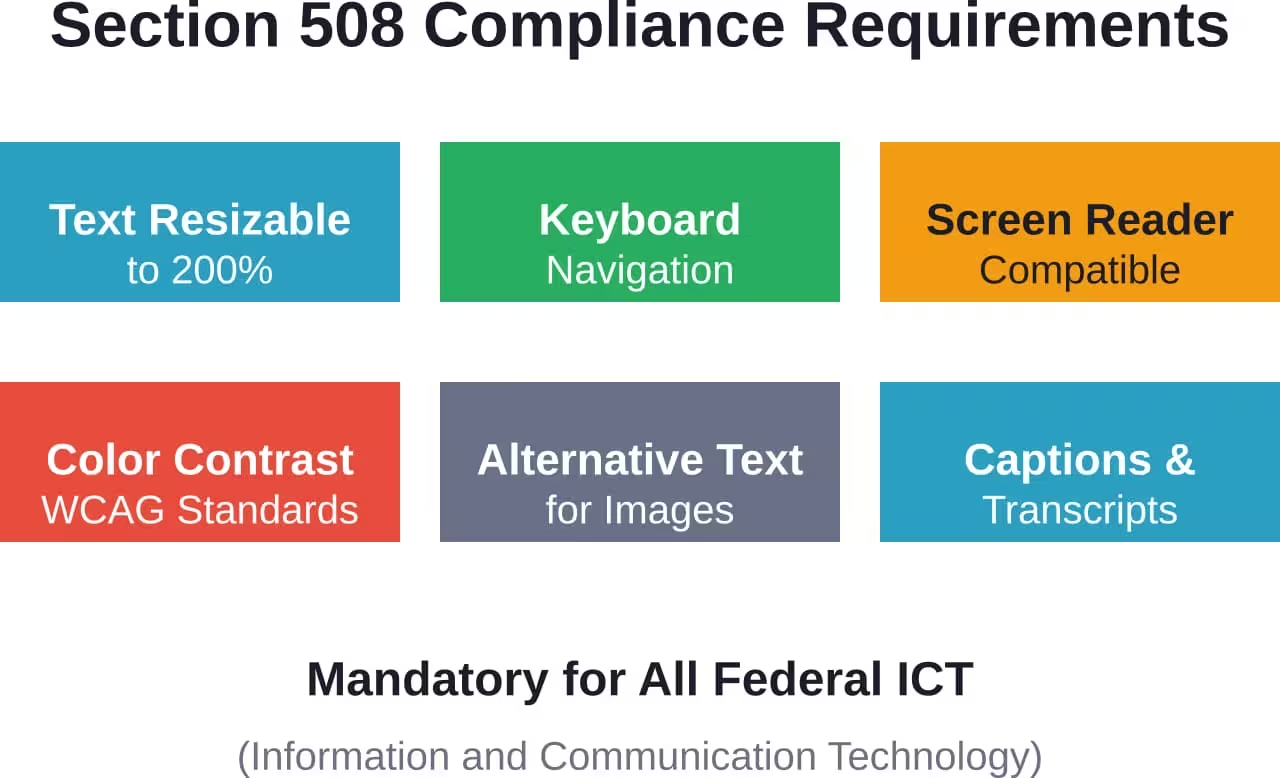
Text must be resizable up to 200% without assistive technology and without loss of content or functionality. That’s WCAG 1.4.4, and it’s mandatory for government sites.
Templates and reusable components provide consistency, but they must be built with accessibility baked in from the start. Color contrast ratios, keyboard navigation, screen reader compatibility—these aren’t enhancement features. They’re baseline requirements.
FedRAMP: Security That Can’t Be Ignored
The Federal Risk and Authorization Management Program (FedRAMP) provides standardized security assessment for cloud services used by government agencies. If a government website uses cloud hosting or cloud-based services, FedRAMP authorization becomes relevant.
FedRAMP baselines are built on NIST security controls, with Rev5 updates addressing modern threat landscapes. Cloud service providers must obtain and maintain FedRAMP authorization for services within the program’s scope as defined by OMB M-24-15.
Now, this is where it gets interesting. FedRAMP authorization isn’t a one-time checkbox. It requires continuous monitoring, quarterly progress reporting, and ongoing compliance verification.
Impact Levels and Baseline Requirements
FedRAMP categorizes systems by impact level—Low, Moderate, and High—based on the sensitivity of the data processed. Each level has corresponding security control baselines that dictate everything from access management to system monitoring.
Development teams working on government websites need to understand which baseline applies to their project before writing a single line of code. The security requirements shape architecture decisions, hosting choices, and development workflows.
The U.S. Web Design System (USWDS)
USWDS makes it easier to build accessible, mobile-friendly government websites. It’s a design system specifically created for federal government use, providing components, patterns, design tokens, and utilities.
The system recently introduced USWDS 3.0, bringing updated components and improved accessibility guidance. Federal agencies implementing new websites should start with USWDS rather than building custom design systems from scratch.
Real talk: USWDS isn’t just about making government sites look similar. It’s about reducing development time while ensuring compliance with accessibility and usability standards.
| Component | Purpose | Accessibility Benefit |
|---|---|---|
| Design Tokens | Consistent colors, spacing, typography | WCAG-compliant contrast ratios built in |
| Patterns | Common UX solutions | Tested for inclusive user experiences |
| Components | Reusable interface elements | Screen reader compatibility guaranteed |
| Utilities | CSS helpers for rapid development | Maintains accessibility standards |
How Government Web Development Differs from Private Sector
Government website design operates under constraints that private sector developers rarely face. Procurement processes, security clearances, and compliance documentation add layers of complexity that extend timelines and require specialized expertise.
The collaborative approach matters more in government projects. Stakeholders include not just the client agency but also oversight bodies, accessibility reviewers, and security auditors. Each group has legitimate concerns that must be addressed.
Procurement and Contract Requirements
Federal contracts for web development fall under specific NAICS codes. Custom software development and web development typically fall under code 541511, where federal spending exceeds $5 billion annually according to industry analyses.
Smaller contracts often appear under different codes, and developers need System for Award Management (SAM) registration to compete for federal work. This isn’t a quick process—expect several weeks for initial registration and verification.
State and Local Government Considerations
Local government websites face similar accessibility requirements but often operate with smaller budgets and limited technical staff. Municipal websites need to serve diverse citizen populations with varying levels of digital literacy.
The importance of mobile-friendly design can’t be overstated. Citizens accessing government services increasingly do so from smartphones, and local government sites must function seamlessly across devices.
Content management systems for public sector websites need flexibility without sacrificing security. Municipal users updating departmental information shouldn’t require advanced technical knowledge, but the CMS must prevent unauthorized changes and maintain audit trails.
Selecting the Right Development Approach
Government agencies choosing between custom development and platform-based solutions should evaluate long-term maintenance requirements, not just initial costs. A cheaper upfront solution that requires expensive specialists for routine updates rarely saves money.
Service tiers for government website solutions typically range from basic hosting with limited support to complete management including content updates, security monitoring, and compliance reporting. Agencies need to honestly assess their internal capacity before selecting a tier.
But wait. The development approach must also consider citizen engagement goals. A website is more than a digital information repository—it’s often the primary interaction point between government and constituents.
Choose a Development Partner You Can Rely On
Government website projects often involve strict requirements, multiple stakeholders, long approval cycles, and ongoing updates after launch. That makes reliability, communication, and long-term support just as important as the development itself. Lengreo works with organizations that need a structured and transparent website development process from planning to launch. Their team combines website development with business analysis, QA, and ongoing support, helping clients build websites that remain manageable and scalable over time.
Keep Your Project Clear and On Schedule
Lengreo focuses on:
- Clear communication throughout the project
- Commitment to timelines and budget requirements
- Structured development and QA processes
- Flexible development based on project requirements
Talk to Lengreo if your organization is planning a government website launch or redesign.
Moving Forward with Government Web Development
Government website development demands a different mindset than commercial projects. Compliance isn’t optional, accessibility isn’t an enhancement, and security requirements shape every architectural decision.
Developers entering this space should invest time understanding Section 508 standards, familiarize themselves with USWDS components, and learn the procurement processes that govern government contracts. The learning curve is steep, but the work serves millions of citizens who depend on accessible, secure government digital services.
Start by reviewing the official Section508.gov guidance, exploring USWDS documentation, and examining successful government website implementations. The resources exist—the question is whether development teams will invest the time to use them properly.