


Quick Summary: Building an engaging website for teens requires mobile-first design, fast loading speeds, interactive features, and authentic content that respects their digital sophistication. Research shows 90% of U.S. teens use YouTube, while 63% use TikTok and 61% use Instagram, making social integration essential. Successful teen-targeted sites prioritize visual appeal, easy navigation, privacy compliance, and avoid patronizing language while incorporating elements like customization options and community features.
Designing websites for teenagers isn’t just about slapping on bright colors and calling it a day. This demographic is digitally native, impatient, and brutally honest about what they like. Get it wrong, and they’ll bounce faster than you can say “engagement metrics.”
The challenge? Teens perform worse than adults on many web tasks despite being overconfident in their abilities. Research involving 100 users between ages 13 and 17 across three rounds of research (38 teens in the original study, 46 teens in the second study, and 16 in the most recent study) revealed that lower reading levels, impatience, and undeveloped research skills significantly reduce task success rates. The solution requires understanding what makes teens tick online and building experiences that match their expectations.
Understanding the Teen Digital Landscape
Before diving into design specifics, let’s establish who we’re designing for. According to research from Pew Research Center, 90% of U.S. teens ages 13-17 use YouTube, with nine-in-ten reporting use of the platform. TikTok follows with 63%, Instagram with 61%, and Snapchat with 55%.
Compare that to 2022 when 95% of teens used YouTube, with Facebook usage declining significantly over time to 32% in 2024. The platforms have shifted, but the underlying behaviors remain consistent: teens want visual content, social features, and instant gratification.
Here’s what matters: teens are on their phones constantly. Roughly four-in-ten U.S. teens report being online almost constantly (40%), representing a significant portion of daily internet users. Any website targeting this audience that isn’t mobile-optimized is dead on arrival.
Build a Website Teens Will Spend Time On
Teen audiences notice bad website experiences quickly. Slow pages, cluttered layouts, and confusing navigation usually mean they leave before engaging with the content at all. Lengreo develops websites for organizations that need a more reliable and structured approach to launching online platforms. Their team combines website development with digital marketing strategy, helping clients build websites that are easier to maintain, expand, and adapt over time.
Turn to a Team That Does More Than Launch the Website
Lengreo helps clients through:
- Early-stage planning and business analysis
- Iterative prototyping and design reviews
- Front-end and back-end website implementation
- Long-term website performance and security support
Contact Lengreo if you want a teen-focused website built with long-term usability and support in mind.
Mobile-First Design Is Non-Negotiable
When designing for teens, mobile isn’t an afterthought—it’s the primary experience. Responsive design that actually works on smaller screens is mandatory.
What does this mean practically? Navigation must be thumb-friendly. Buttons need adequate spacing for touch targets. Text must be readable without zooming. Forms should be minimal and use appropriate input types.
Teens won’t tolerate clunky mobile experiences. They’ve grown up with polished apps and will judge websites against those standards. If scrolling feels janky or tapping elements is frustrating, they’re gone.
Speed Matters More Than You Think
Patience isn’t a virtue teens possess in abundance when it comes to loading times. Slow websites get abandoned immediately.
Fast-loading pages are essential. Optimize images aggressively. Minimize JavaScript bloat. Use lazy loading for content below the fold. Every second of delay increases bounce rates exponentially with this audience.
Research on teen usability consistently shows that speed is a critical factor in task completion. When pages lag, teens give up rather than wait. They assume something is broken and move on.
Visual Design That Resonates
Teens respond to high-quality graphics and modern aesthetics. But here’s the thing—”modern” doesn’t mean cluttered or overly complicated.
Clean layouts with intentional use of whitespace work better than busy designs. Use contemporary color schemes, but ensure sufficient contrast for readability. Typography should be legible with font sizes that don’t require squinting on mobile devices.
Authentic imagery beats stock photos every time. Teens can spot generic stock photography instantly and find it off-putting. User-generated content or genuine photography that reflects real experiences performs better.
| Design Element | What Works | What Doesn’t |
|---|---|---|
| Colors | Bold, contemporary palettes with good contrast | Overly bright neons or muddy combinations |
| Typography | Clean sans-serifs, readable sizes (16px+ body) | Decorative fonts, small text, poor hierarchy |
| Images | Authentic photos, user content, high quality | Generic stock photos, low resolution, staged |
| Layout | Clean, organized, intentional whitespace | Cluttered, text-heavy, no visual hierarchy |
Make It Interactive
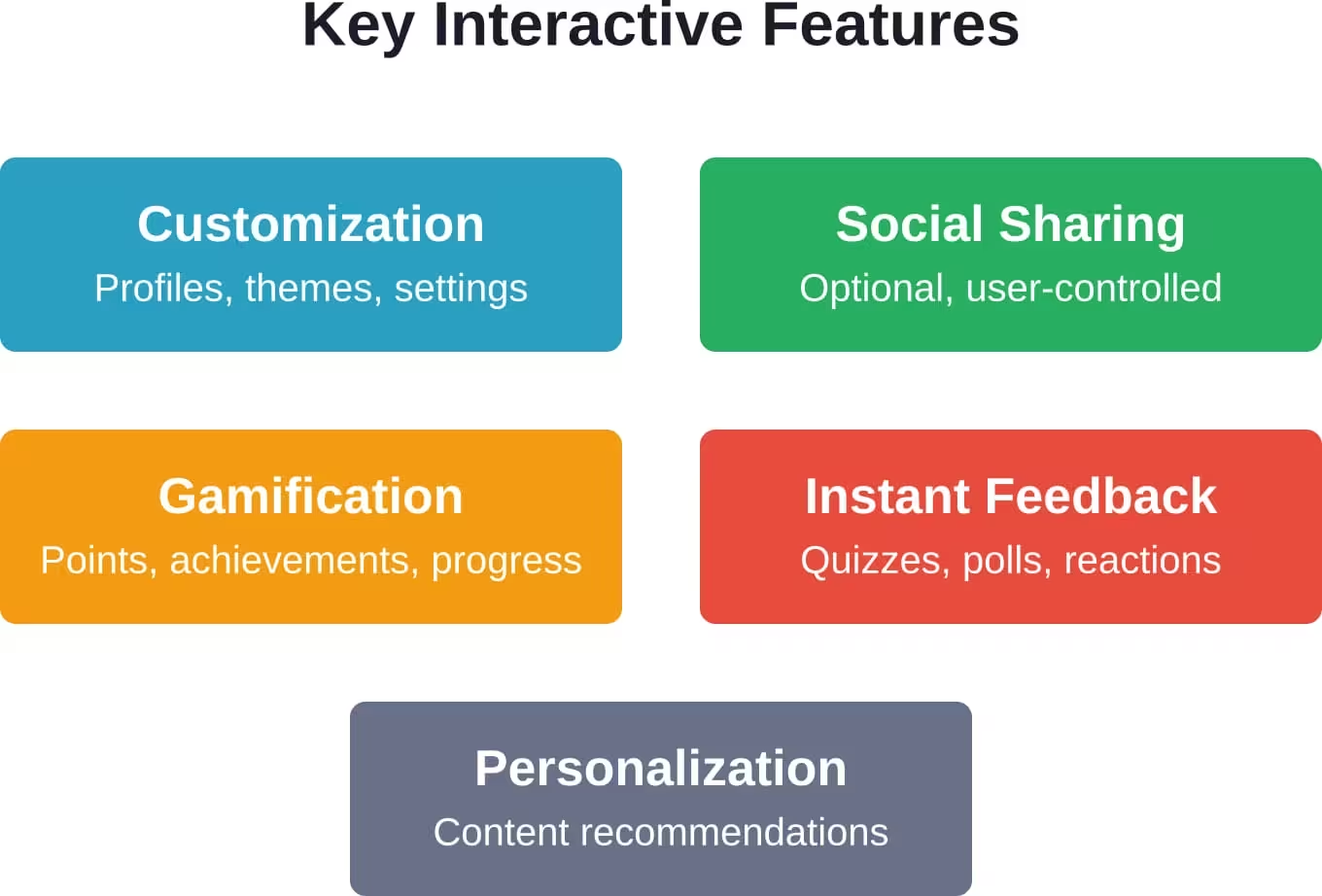
Static content doesn’t cut it. Teens expect to interact, customize, and participate—not just consume passively.
Consider features like wish lists, favorites, customization options, and sharing capabilities. Gamification elements can boost engagement when done thoughtfully. Quizzes, polls, and interactive tools that provide immediate feedback work well.
Social features matter enormously. But—and this is crucial—let teens control the social aspects. Don’t force sharing or make social participation mandatory. Give them the tools and let them decide how to use them.
Content Quality and Tone
- Don’t talk down to teens: They can smell condescension from a mile away and will reject content that treats them like children.
- Present content professionally and clearly: Lower reading levels don’t mean dumbed-down—they mean accessible. Use shorter paragraphs, clear headings, and straightforward language without being patronizing.
- Authenticity is everything: Marketing speak and corporate jargon don’t work. Conversational tone beats formal writing, but maintains credibility. Teens want to be taken seriously even as they consume entertaining content.
- Interesting content matters more than slick presentation: Give teens something worth their time—information they can’t get elsewhere, tools that solve real problems, or entertainment that genuinely resonates.
Navigation and Information Architecture
Complex navigation systems confuse teens and hurt task completion. Keep menus simple and logical.
Primary navigation should be immediately visible and consistent across pages. Use clear labels—avoid clever wordplay that obscures meaning. Teens prefer straightforward “About” and “Contact” over creative alternatives that require interpretation.
Search functionality should be prominent and actually work well. When teens can’t find something quickly through browsing, they’ll search. If search fails them, they leave.
Breadcrumbs and clear page hierarchy help teens understand where they are within the site structure. This is especially important on mobile where context is harder to maintain.
Privacy and Compliance Considerations
Legal compliance isn’t optional. The Children’s Online Privacy Protection Rule (COPPA) imposes requirements on operators of websites directed to children under 13 years of age.
For sites targeting teens 13-17, while COPPA doesn’t directly apply, privacy best practices remain critical. Be transparent about data collection. Make privacy policies accessible and understandable—not buried in legal jargon.
According to research from Pew Research Center, parents increasingly worry about teen mental health and social media. While 24% of parents think social media hurts teen mental health, 8% believe it helps. Building trust with both teens and their parents requires clear privacy protections and responsible data handling.
Parental concerns about their teen’s usage patterns are real. For example, among parents of a TikTok user, about half (50%) of parents living in households earning $75,000 or more a year say their teen spends too much time on the app, dropping to 36% among those in households earning less than $75,000 annually. Transparent policies and controls can address these concerns.
Testing and Iteration
Usability testing with teens reveals issues adults miss. According to Nielsen Norman Group research on usability testing with minors, sessions should run no longer than 60–90 minutes, as children can get tired quickly and lose motivation if working for too long.
Recruit actual teens for testing—don’t rely on adult assumptions about what teens want. Their feedback will surprise you. What seems obvious to designers often confuses real users.
Look for patterns in task completion rates, navigation paths, and points of friction. Teens might claim everything is fine even when struggling, so observe behavior rather than just listening to verbal feedback.
Iterate based on real usage data. Analytics showing where teens drop off, which features get ignored, and what content keeps them engaged should drive continuous improvement.
Common Mistakes to Avoid
Several design approaches consistently fail with teen audiences:
- Forcing account creation before allowing any interaction kills conversion
- Auto-playing audio or video annoys rather than engages
- Pop-ups and interstitials disrupt the experience and drive users away
- Complicated checkout or form processes lead to abandonment
- Ignoring accessibility means excluding users with disabilities
Equally problematic: trying too hard to be “cool” or using slang that feels forced. Teens detect inauthenticity instantly. Better to be straightforward and useful than awkwardly trendy.
Measuring Success
Define clear metrics for teen engagement beyond basic traffic numbers. Time on site, pages per session, return visitor rates, and social sharing all indicate whether the site resonates.
Track task completion rates for key user journeys. If teens consistently fail to complete desired actions, the design isn’t working regardless of how polished it looks.
Monitor feedback channels—comments, social media mentions, support requests. Teens will tell you what’s broken if you’re listening. Community discussions often reveal pain points that analytics miss.
| Metric | What It Indicates | Target Range |
|---|---|---|
| Bounce Rate | Initial impression and relevance | Below 60% |
| Time on Page | Content engagement | 90+ seconds |
| Task Completion | Usability effectiveness | Above 70% |
| Return Visitors | Long-term value and stickiness | 30%+ |
Future-Proofing for Teen Audiences
Teen digital behaviors evolve rapidly. Platforms that dominate today might be abandoned tomorrow. For example, Facebook usage among teens has declined significantly, from higher percentages in earlier years to 32% of U.S. teens ages 13-17 in 2024.
Build flexibility into the technical foundation. Adopting modular design systems makes updating visual styles easier without rebuilding everything. API-first architectures enable integrating new platforms as they emerge.
Stay informed about emerging technologies teens adopt. As of 2025, 64% of teens use AI chatbots according to Pew Research Center data, with about three in ten (30%) doing so daily. Understanding these shifts helps anticipate what features will matter next.
But don’t chase every trend. Focus on foundational principles—speed, mobile optimization, authenticity, user control—that remain constant even as specific platforms and features change.
Conclusion
Building websites that engage teen audiences requires understanding their digital sophistication while respecting their developmental stage. Mobile-first design, fast loading speeds, authentic content, and interactive features form the foundation.
Avoid talking down to teens, but make content accessible. Give them control over social features rather than forcing participation. Test with actual teen users and iterate based on real behavior, not assumptions.
The teen digital landscape shifts constantly, but core principles remain: speed, authenticity, user control, and mobile optimization. Sites that master these fundamentals while staying flexible enough to adapt will successfully engage this demanding but rewarding audience.
Ready to build a teen-focused website that actually works? Start with mobile optimization, prioritize speed, and test with real users. The investment in understanding this audience pays dividends in engagement, loyalty, and long-term success.