


Quick Summary: Website development for aesthetic practices requires specialized design that balances medical credibility with visual appeal, incorporates compliance with healthcare regulations, and optimizes for patient conversion. A successful aesthetic practice website combines strategic SEO, mobile-first design, clear calls-to-action, and before-and-after galleries while maintaining HIPAA compliance and building trust through professional branding.
The digital storefront matters more than ever. For aesthetic practices, that means a website isn’t just a nice-to-have anymore—it’s the first impression potential patients form before they ever walk through the door.
But here’s the thing: building a website for an aesthetic practice isn’t the same as creating one for a restaurant or retail shop. Medical aesthetics sits at the intersection of healthcare and beauty, which means the site needs to inspire confidence while showcasing transformation. And it has to comply with healthcare regulations while still looking stunning.
Sound complicated? It can be. That’s why understanding the core elements of aesthetic practice website development makes the difference between a site that converts and one that sends visitors straight to competitors.
Why Aesthetic Practices Need Specialized Website Development
Generic website templates fall short for medical aesthetics. The industry demands a unique blend of credibility, visual storytelling, and regulatory compliance that off-the-shelf solutions rarely deliver.
Aesthetic procedures—whether Botox injections, dermal fillers, laser treatments, or body contouring—involve medical devices that may be regulated by the FDA depending on their intended use and impact on body structure or function. According to the FDA, aesthetic devices require careful consideration of risks and benefits, which means practice websites must present information accurately without making unsupported claims.
Beyond regulatory concerns, aesthetic practices face specific marketing challenges. Patients researching procedures often feel vulnerable. They’re making decisions about changing their appearance, which carries emotional weight. The website needs to address these concerns while highlighting expertise and results.
The Trust Factor
Recent 2025-2026 clinical trials integrated into AAD reports show that AI-driven diagnostic tools now achieve over 88% accuracy in identifying common dermatological condition. For pediatric atopic dermatitis, accuracy reached 75%, and for shingles, 62.5%. But for conditions like dermatitis herpetiformis? Zero percent accuracy.
What does this mean for aesthetic practice websites? Patients are actively seeking reliable information online, and they’re not always finding it. A well-developed website that provides evidence-based content fills this gap and positions the practice as a trustworthy authority.
Build a Clear Aesthetic Practice Website With Lengreo
Lengreo builds and improves websites, then connects them with SEO, paid ads, tracking, and lead generation. For aesthetic practices, this means a website that explains treatments, specialists, pricing, locations, results pages, and appointment options in a clear way.
The focus is to help people understand available services before they book. Lengreo can help organize treatment pages, improve traffic setup, and make the appointment path easier to follow.
Need a Website That Helps Clients Book?
Lengreo can help with:
- building or redesigning your website
- improving SEO and paid traffic setup
- setting up tracking and website structure
- refining treatment, result, and appointment pages
👉 Contact Lengreo to discuss your website and setup.
Essential Elements of Aesthetic Practice Website Design
Not every element carries equal weight. Some features are absolutely critical for conversion, while others are nice additions that can come later.
Visual Hierarchy and Medical Credibility
The design needs to walk a tightrope. Too clinical, and it feels cold. Too spa-like, and it undermines medical credibility. The best aesthetic practice websites achieve balance through strategic use of color, typography, and imagery.
High-quality before-and-after galleries remain the cornerstone of aesthetic practice websites. These images do the heavy lifting when it comes to demonstrating results. But they must be presented ethically, with proper consent, and without misleading editing or filters.
Mobile-First Architecture
Most patients research aesthetic procedures on smartphones. Industry analyses indicate mobile traffic dominates healthcare searches, which means responsive design isn’t optional—it’s foundational.
Mobile-first development ensures fast load times, easy navigation with thumbs, and readable text without zooming. Contact forms need to be simple enough to complete on a small screen, and click-to-call buttons should be prominent.
Search Engine Optimization for Aesthetic Practices
Beautiful design means nothing if potential patients can’t find the website. SEO for aesthetic practices requires understanding both local search dynamics and procedure-specific keywords.
Local SEO Fundamentals
Aesthetic practices serve geographic areas. Someone in Chicago isn’t booking a consultation in Miami. That makes local SEO absolutely critical.
Google Business Profile optimization, local citations, and location-specific content pages form the foundation. Each service page should include geographic modifiers naturally—”Botox in Downtown Seattle” or “Body Contouring Services in North Austin.”
Procedure-Specific Content Strategy
Generic service pages don’t rank well anymore. Detailed, procedure-specific content does. That means individual pages for laser hair removal, microneedling, chemical peels, dermal fillers, and each distinct treatment offered.
These pages need to answer common patient questions: What happens during the procedure? How long does recovery take? What results can patients expect? How much does it cost?
Speaking of costs—transparent pricing information builds trust. While exact pricing may vary by patient needs, providing ranges helps qualified leads self-select and reduces tire-kicker consultations.
Compliance and Legal Considerations
Healthcare websites operate under different rules than commercial sites. HIPAA compliance, accurate medical claims, and proper disclaimers aren’t optional.
HIPAA Compliance Basics
Any website that collects patient information needs HIPAA-compliant forms and secure data transmission. Contact forms should use SSL encryption, and patient portals require robust authentication.
Before-and-after photos need written patient consent. Testimonials must be genuine and unaltered. These aren’t just best practices—they’re legal requirements.
Advertising Claims and FDA Regulations
The Federal Trade Commission provides clear guidance: health-related product claims must be truthful, not misleading, and supported by science. For aesthetic practices, this means avoiding superlative claims about results unless they can be substantiated.
Phrases like “guaranteed results” or “permanent solution” often cross the line. Better approach: show real results through properly consented photography and explain realistic expectations through educational content.
| Claim Type | Risk Level | Better Alternative |
|---|---|---|
| “Guaranteed wrinkle removal” | High | “Reduce visible wrinkles with FDA-cleared treatments” |
| “Permanent fat loss” | High | “Long-lasting fat reduction in treated areas” |
| “No downtime whatsoever” | Medium | “Minimal downtime for most patients” |
| “Best results in the city” | Medium | “Board-certified expertise with proven results” |
User Experience and Conversion Optimization
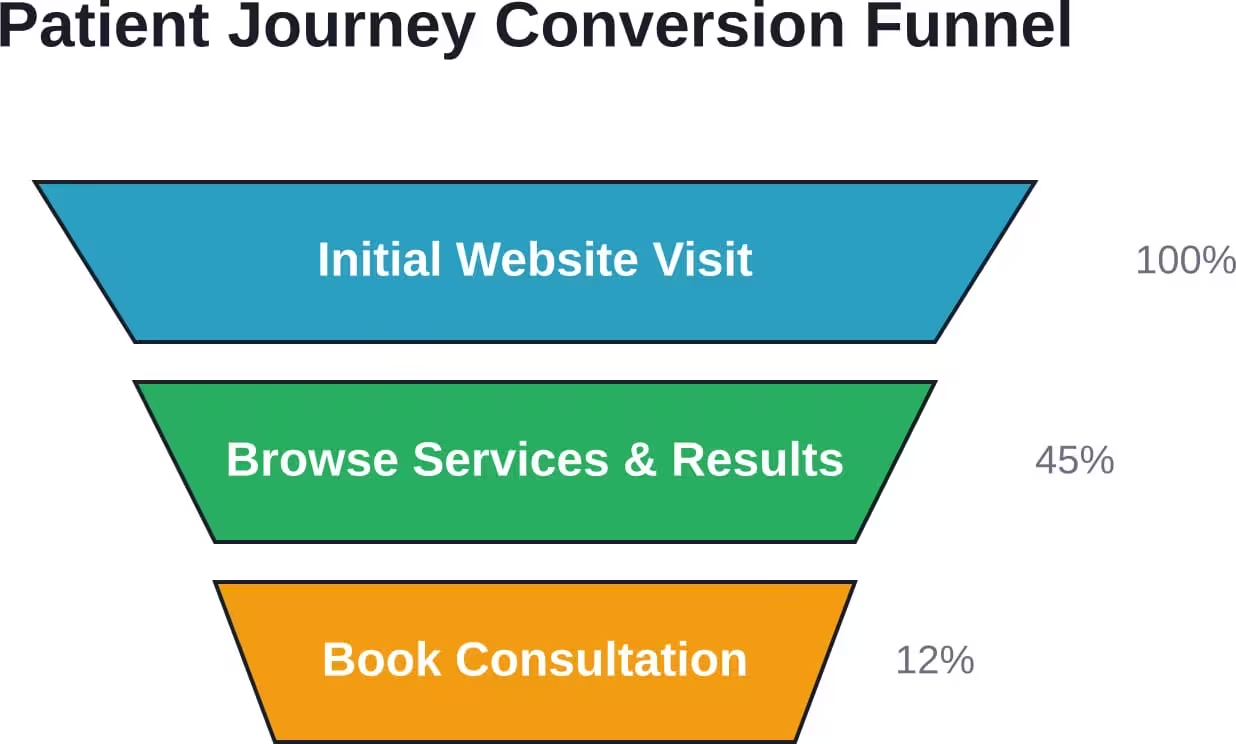
Getting visitors to the site is step one. Converting them to booked consultations is where revenue happens.
Streamlined Consultation Booking
Every page should make it easy to book a consultation. Multiple calls-to-action throughout the site, online scheduling integration, and minimal friction in the booking process all contribute to higher conversion rates.
Some practices find success with tiered booking options: virtual consultations for out-of-town patients, in-person consultations for those ready to commit, and “contact us for more information” for those still researching.
Social Proof Integration
Patient testimonials, Google reviews, and social media integration provide the social proof that hesitant prospects need. Video testimonials carry even more weight than written ones.
Real-time review feeds from Google and other platforms demonstrate authenticity. Static testimonials from years ago don’t carry the same credibility as recent, verified reviews.
Content Management and Maintenance
Launching the website is just the beginning. Ongoing content updates keep the site relevant in search results and demonstrate the practice stays current with industry developments.
Blog Content Strategy
Regular blog posts addressing common patient questions improve SEO and establish expertise. Topics might include seasonal skincare tips, new treatment modalities, procedure preparation guides, and post-treatment care instructions.
The key is consistency. Monthly posts work better than sporadic bursts of activity followed by months of silence.
Technology Updates and Security
Healthcare websites are prime targets for cyberattacks. Regular security updates, SSL certificates, and malware scanning aren’t optional extras—they’re essential protections for patient data.
Platform updates, plugin compatibility, and broken link fixes all require ongoing attention. Many practices find that working with specialized medical website developers ensures these technical requirements don’t fall through the cracks.
Investment Considerations and Pricing Models
Website development costs vary widely. According to specialized aesthetic website developers, custom design projects typically start from $1,000–$5,000 for template-based builds to $10,000–$50,000+ and beyond for fully bespoke development.
What drives the price difference? Customization level, feature complexity, content creation needs, and ongoing maintenance packages all factor in.
| Development Approach | Best For | Typical Timeline |
|---|---|---|
| Template-based customization | New practices with limited budgets | 2-4 weeks |
| Semi-custom design | Established practices wanting differentiation | 6-8 weeks |
| Fully custom development | Multi-location practices, competitive markets | 12-16 weeks |
Check official developer websites for current pricing, as costs change based on market conditions and technology updates.
Common Pitfalls to Avoid
Even well-intentioned practices make mistakes when developing websites. Here’s what to watch for.
Copying Competitor Designs
Tempting as it might be to replicate a competitor’s successful site, this strategy backfires. Search engines penalize duplicate content, and patients notice when multiple practices use identical templates.
Differentiation matters. The website should reflect the unique personality and approach of the practice, not serve as a cookie-cutter clone of every other aesthetic practice in town.
Neglecting Speed Optimization
High-resolution before-and-after images can slow page load times to a crawl. Image compression, lazy loading, and content delivery networks solve this problem without sacrificing visual quality.
Search engines factor page speed into rankings. Patients abandon slow-loading sites. Speed optimization isn’t a technical nicety—it directly impacts revenue.
Ignoring Analytics and Testing
Without analytics, there’s no way to know what’s working. Conversion tracking, heat mapping, and A/B testing provide the data needed to continuously improve performance.
Which service pages get the most traffic? Where do visitors drop off? What calls-to-action generate the most consultations? Analytics answer these questions.
Building Your Digital Foundation
Website development for aesthetic practices isn’t a one-size-fits-all proposition. The right approach balances medical credibility with visual appeal, compliance requirements with conversion optimization, and upfront investment with long-term value.
Start with clear goals. What does success look like? More consultation bookings? Attracting higher-value procedures? Expanding geographic reach? Different objectives require different development approaches.
Work with developers who understand medical aesthetics specifically. Generic web agencies often miss critical compliance requirements or fail to optimize for procedure-specific conversion patterns. Specialized experience matters.
And remember—the website is never truly finished. Technology evolves, patient expectations shift, and search algorithms change. The most successful aesthetic practice websites treat development as an ongoing process, not a one-time project.
Ready to build a website that converts visitors into patients? Start by auditing what competitors in your market are doing, identifying gaps in their approach, and defining what makes your practice uniquely valuable. That differentiation becomes the foundation for a website that doesn’t just look good—it drives real practice growth.