


Quick Summary: Professional website development for med spas requires a strategic blend of aesthetic design, fast-loading pages, mobile optimization, and conversion-focused features. An effective med spa website serves as a digital storefront that builds trust, showcases services and results, and converts visitors into booked consultations through clear calls-to-action, online booking systems, and SEO-optimized content.
The aesthetic medicine industry has experienced significant growth, with millions of cosmetic procedures performed annually in the United States.
For med spa owners, this growth creates both opportunity and competition. Your website isn’t just a digital brochure anymore. It’s your primary patient acquisition tool, working around the clock to educate potential clients, build credibility, and convert browsers into booked appointments.
But here’s the thing: most med spa websites fail at this basic job.
They’re either beautifully designed with zero focus on conversions, or they’re optimized for search engines but feel cold and clinical. The med spas that dominate their local markets? They’ve cracked the code on balancing aesthetic appeal with strategic development that drives measurable results.
What Makes Med Spa Website Development Different
Developing a website for a medical spa isn’t the same as building one for a restaurant or retail shop. The services offered require FDA-cleared devices and trained professionals. According to the FDA, aesthetic devices are regulated based on their intended use and whether they impact the structure or function of the body. Dermal fillers, laser treatments, and other cosmetic procedures all carry specific safety considerations that patients need to understand.
This regulatory landscape means your website must walk a careful line. Professional enough to establish medical credibility. Informative enough to educate patients about procedures like dermal fillers, which the FDA notes may need to be repeated over time as materials are naturally absorbed by the body. And approachable enough that someone researching Botox at 11 PM feels comfortable enough to book a consultation.
Your development strategy needs to account for several unique factors:
- Visual proof through before-and-after galleries that load quickly
- Educational content about procedures, risks, and recovery times
- Trust signals including provider credentials, certifications, and affiliations
- HIPAA-compliant contact forms and consultation requests
- Integration with booking systems and patient management software
- Mobile optimization for users researching on smartphones
The aesthetic medicine field continues to evolve. Organizations like the American Society for Laser Medicine and Surgery (ASLMS) promote excellence in patient care by advancing biomedical applications of lasers and energy-based devices. Your website should position your practice as current with these advances.
Build a Clear Med Spa Website With Lengreo
Lengreo builds and improves websites, then connects them with SEO, paid ads, tracking, and lead generation. For med spas, this means a website that explains treatments, specialists, pricing, locations, before-and-after pages, and appointment options clearly.
The focus is to make the site useful for people researching services before they book. Lengreo can help organize service pages, improve traffic setup, and make appointment requests easier to complete.
Need a Website That Helps Clients Book?
Lengreo can help with:
- building or redesigning your website
- improving SEO and paid traffic setup
- setting up tracking and website structure
- refining treatment, location, and appointment pages
👉 Contact Lengreo to discuss your website and setup.
Core Components of High-Converting Med Spa Websites
Data shows the first five seconds of page-load time impact conversion rates the most. A site’s conversion rate drops by approximately 6.1% with each additional second of load time. Google has utilized Page Experience signals, including Core Web Vitals, as primary ranking factors since 2021.
So what separates websites that convert from those that don’t?
Speed and Performance Architecture
If a site loads in 5 seconds, it is faster than approximately 25% of the web. At 2.9 seconds, it is faster than approximately 50% of the web. For med spas competing in markets where patients compare multiple providers before booking, every fraction of a second matters.
Technical development priorities include:
- Image optimization without sacrificing the visual quality patients expect
- Content delivery networks (CDNs) for faster asset loading
- Lazy loading for below-the-fold images and galleries
- Minified CSS and JavaScript files
- Efficient hosting infrastructure with adequate server resources
Many practices make the mistake of stuffing their homepage with massive, unoptimized images. Yes, aesthetic appeal matters for a med spa. But a beautiful site that takes 8 seconds to load will hemorrhage potential patients before they ever see your services.
Mobile-First Responsive Design
Most potential patients will discover your practice on a mobile device. They’re scrolling Instagram, searching Google during lunch breaks, or comparing options while watching TV.
Mobile-first development means designing for small screens first, then scaling up. Touch-friendly buttons sized for thumbs. Tap-to-call phone numbers. Streamlined navigation that doesn’t require hunting through nested menus. Forms that don’t make users pinch and zoom to complete.
And this isn’t optional. Google’s mobile-first indexing means the search engine primarily uses the mobile version of your site for ranking and indexing. A desktop-only focus will tank your search visibility.
Strategic Conversion Architecture
Every page on your site should guide visitors toward one of three actions: booking a consultation, calling your office, or learning more about a specific service.
Conversion-focused development includes:
| Element | Purpose | Implementation |
|---|---|---|
| Clear CTAs | Guide user action | Above-the-fold placement, contrasting colors, action-oriented copy |
| Online Booking | Reduce friction | Integrated scheduling, minimal form fields, instant confirmation |
| Click-to-Call | Mobile conversions | Sticky header phone numbers, tap-to-call functionality |
| Lead Capture | Email marketing | Exit-intent popups, content upgrades, consultation forms |
| Social Proof | Build trust | Reviews, testimonials, before-after galleries, credentials |
Real talk: most med spa websites bury their contact information. Visitors shouldn’t have to hunt for ways to reach out. Phone number and booking button in the header. Contact forms that actually work. Clear next steps on every service page.
Essential Pages Every Med Spa Website Needs
Not all pages carry equal weight. Some are critical for conversions and search visibility. Others are nice-to-have but won’t move the needle much.
Homepage That Converts
Your homepage has one job: communicate who you serve and why they should choose you, then guide them to the next step. That’s it.
Skip the generic “Welcome to our practice” fluff. Lead with a clear value proposition. “Beverly Hills’ Premier Med Spa for Natural-Looking Results” tells visitors more than three paragraphs of mission statement copy.
Include above the fold: your unique selling proposition, a hero image showing your space or results, your primary call-to-action, and trust elements like years in business or provider credentials.
Service Pages That Educate and Sell
Each major service category deserves its own detailed page. Botox and fillers. Laser treatments. Body contouring. Chemical peels. These aren’t just SEO plays—though they do help you rank for service-specific searches.
Strong service pages answer the questions potential patients are actually asking. What does the procedure involve? How long does it take? What’s the recovery like? How much does it cost? What results can someone realistically expect?
Medical research on aesthetic dermatologic treatments emphasizes the importance of setting realistic expectations. Service pages should educate thoroughly while maintaining an approachable tone.
Before-and-After Gallery
This is where development and design intersect. Potential patients want proof. They need to see your work. But galleries can become massive performance bottlenecks if not implemented properly.
Technical considerations include lazy loading images, creating optimized thumbnails, implementing a lightbox for full-size viewing, organizing by procedure type, and ensuring mobile-friendly navigation.
From a compliance perspective, make sure all photos include proper consent and avoid making claims that could run afoul of FDA regulations or Federal Trade Commission guidelines around advertising for aesthetic services.
About and Team Pages
Patients aren’t just buying a service. They’re choosing who will inject substances into their face or use devices on their skin. Your team pages need to establish credibility without feeling sterile.
Include professional headshots, relevant credentials and certifications, training background, professional affiliations, and personal touches that humanize providers.
Affiliations with recognized organizations like the American Society for Laser Medicine and Surgery demonstrate commitment to staying current with evolving techniques and safety standards.
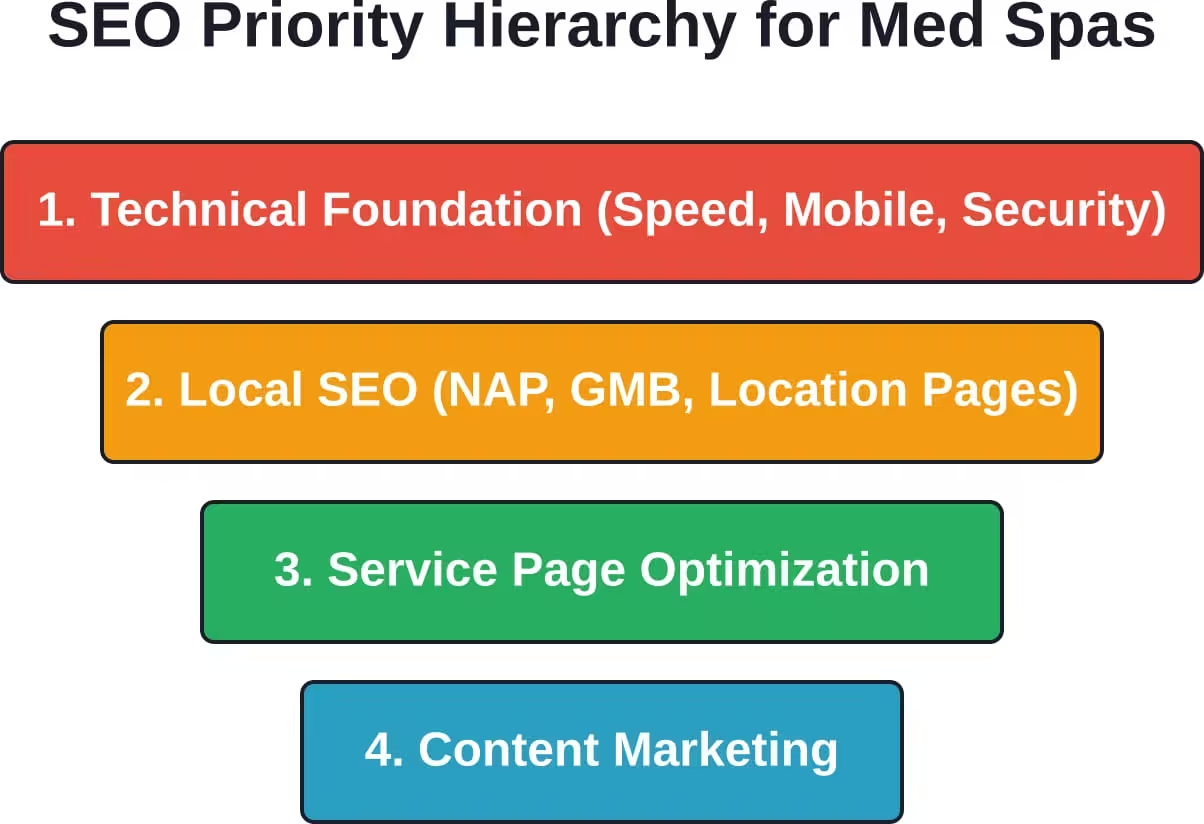
Technical SEO for Med Spa Websites
Beautiful design and fast loading times mean nothing if potential patients can’t find your site. Search engine optimization makes your practice visible when people search for services you offer.
Local SEO Optimization
Most med spa clients come from a specific geographic area. Your development needs to account for local search optimization from the ground up.
Critical local SEO elements:
- Consistent NAP (Name, Address, Phone) across all pages
- Embedded Google Maps on contact page
- Location-specific service pages for multi-location practices
- Schema markup for local business information
- City and neighborhood references in content
Google Business Profile integration helps, but the on-site technical foundation matters just as much. Search engines need clear signals about where your practice is located and which areas it serves.
Content Architecture for Long-Term Growth
The practice that publishes helpful content consistently will dominate search results over time. But that requires a content management system configured properly from day one.
Development considerations include a blog section with proper categorization, related post suggestions to keep visitors engaged, social sharing functionality, and the ability to add new pages without developer assistance.
Many practices launch with a basic five-page website and then realize six months later they can’t easily add content. Build for growth from the start.
Technical Performance Factors
| Factor | Impact on SEO | Target Benchmark |
|---|---|---|
| Page Speed | Direct ranking factor | Under 3 seconds load time |
| Mobile Usability | Mobile-first indexing | 100% responsive, no horizontal scroll |
| HTTPS Security | Ranking signal + trust | SSL certificate on all pages |
| Core Web Vitals | User experience metrics | LCP under 2.5s, INP under 200ms |
| XML Sitemap | Crawl efficiency | Auto-generated and submitted |
Google Search Console will tell you exactly where your site falls short on these metrics. But fixing them after launch is harder than building them in correctly from the beginning.
Integration and Third-Party Tools
Modern med spa websites don’t exist in isolation. They need to connect with booking systems, patient management software, email marketing platforms, and analytics tools.
Online Booking Systems
The easier it is to book, the more appointments get scheduled. Online booking eliminates phone tag and allows patients to schedule during evening hours when your office is closed.
Popular platforms in the aesthetic space include solutions designed specifically for med spas. The key is choosing a system that integrates smoothly with your website rather than redirecting to an entirely separate domain.
Development priorities: embedded booking widget rather than external links, real-time availability display, automated confirmation emails, and calendar sync with practice management software.
Analytics and Tracking
You can’t optimize what you don’t measure. Proper analytics implementation from launch day provides the data needed to improve conversion rates over time.
Essential tracking includes Google Analytics for traffic and behavior, goal tracking for form submissions and bookings, heat mapping to see where users click and scroll, and call tracking to measure phone conversions.
Many practices assume they know which pages drive the most consultations. The data often tells a different story. Maybe the blog post about under-eye filler converts better than the main fillers page. That insight only comes from proper tracking.
Email Marketing Integration
A website visitor who doesn’t book immediately isn’t a lost opportunity—if you capture their email. Email marketing remains one of the highest-ROI channels for med spas.
Website development should accommodate newsletter signup forms, lead magnets and content upgrades, automated welcome sequences, and integration with email service providers.
Compliance and Legal Considerations
Med spa marketing sits at the intersection of healthcare regulation and consumer protection law. Website development needs to account for several legal requirements.
HIPAA Compliance
Any forms collecting patient information need proper security measures. This includes SSL encryption for data transmission, secure form processing, and privacy policy disclosure.
Using basic contact forms without encryption or proper security measures can create compliance issues and erode patient trust.
Advertising Regulations
The Federal Trade Commission has taken action against aesthetic service providers for deceptive marketing practices. This includes fake reviews, unsubstantiated claims about product effectiveness, and misleading before-and-after photos.
Website content should avoid absolute promises about results, include clear disclaimers where appropriate, represent actual patient results in galleries, and comply with FDA guidance on device and product claims.
The FDA regulates aesthetic devices based on their intended use. Marketing language on your website should align with approved indications rather than making off-label claims.
Platform Selection: Custom vs. Templates
One of the first development decisions is whether to build custom or use a content management system with templates.
WordPress and Healthcare Themes
WordPress powers a significant percentage of websites globally. For med spas, it offers flexibility, extensive plugin ecosystem, easy content updates, and reasonable cost.
Healthcare-specific themes provide a starting point, but customization is critical. A site that looks identical to fifty other med spas won’t differentiate your practice.
Custom Development
Fully custom development provides complete control over design and functionality. The tradeoffs: higher upfront cost, longer development timeline, and ongoing maintenance needs.
Custom makes sense for larger practices with specific requirements that templates can’t accommodate or when brand differentiation is a competitive advantage worth the investment.
Hosted Website Builders
Platforms designed for small businesses offer simplicity and lower costs. However, they often limit customization, create scaling challenges as practices grow, and may have SEO limitations.
For a single-location practice just starting out, these can work. Most established med spas eventually outgrow them.
Ongoing Maintenance and Updates
Launching the website is just the beginning. Sites require regular maintenance to stay secure, fast, and effective.
Security Updates
Content management systems, plugins, and themes all require periodic security patches. Neglecting updates creates vulnerabilities that can lead to site hacks, malware infections, and blacklisting by Google.
Maintenance plans should include weekly security scans, plugin and theme updates, core CMS updates, and regular backups.
Content Refresh Cycles
Stale content hurts both user experience and search rankings. Service pages should be reviewed quarterly. Before-and-after galleries need fresh additions. Blog content requires regular publishing.
Some practices launch with great content and then let it sit unchanged for years. Search engines favor sites that demonstrate ongoing relevance through content updates.
Performance Monitoring
Page speed degrades over time as images accumulate, plugins multiply, and databases grow. Monthly performance audits catch issues before they impact conversions.
Tools like Google PageSpeed Insights, GTmetrix, and Lighthouse provide detailed performance reports and specific recommendations for improvement.
Common Med Spa Website Mistakes to Avoid
Learning from others’ mistakes is cheaper than making them yourself.
Image-Heavy Homepages
Yes, aesthetics matter for a med spa. But loading twelve unoptimized full-screen images on the homepage destroys performance. Visual appeal and fast loading aren’t mutually exclusive—they just require proper optimization.
Hidden Pricing
Many practices hide all pricing, forcing potential patients to call or come in for consultation just to learn basic cost information. While some services require custom pricing, providing general ranges where appropriate reduces friction and qualifies leads better.
Complicated Navigation
Menus with dropdowns five levels deep make finding information frustrating. Keep main navigation to five to seven items maximum. Use clear, descriptive labels rather than clever branding terms.
Missing Mobile Optimization
Sites that look great on desktop but break on mobile are shockingly common. Test every page on actual phones and tablets, not just browser resize tools.
No Clear Next Steps
Every page should tell visitors what to do next. Service pages without booking buttons or contact forms leave conversions on the table.
Measuring Website Success
How do you know if your website is actually working? Track metrics that tie to business results.
Key Performance Indicators
| Metric | What It Measures | Target Range |
|---|---|---|
| Conversion Rate | Visitors who book or contact | 2-5% for healthcare |
| Average Session | Engagement level | 2-4 minutes |
| Bounce Rate | Single-page visits | 40-60% |
| Pages per Session | Content exploration | 3-5 pages |
| Mobile Traffic | Device usage | 60-70% |
But metrics only matter if they inform action. Reviewing analytics monthly and making incremental improvements based on data separates growing practices from stagnant ones.
A/B Testing for Continuous Improvement
Small changes can produce significant results. Testing different headlines, button colors, form lengths, and page layouts reveals what resonates with your specific audience.
Start with high-traffic pages. Test one variable at a time. Let tests run long enough to reach statistical significance. Then implement winners and move to the next test.
Taking Action on Your Med Spa Website
The aesthetic medicine market continues to grow. That growth creates both opportunity and competition for med spa practices looking to establish their digital presence.
Your website determines whether potential patients choose your practice or a competitor’s. Speed, mobile optimization, clear service information, trust signals, and straightforward booking processes separate converting sites from digital brochures.
Start by auditing your current site against the benchmarks covered here. Load time under three seconds? Mobile-friendly navigation? Clear calls-to-action on every page? If not, those become immediate priorities.
For practices without websites or with severely outdated ones, the investment in professional development pays dividends through increased consultation requests and better-qualified leads. The right website doesn’t just display information—it actively grows your practice.
Whether building from scratch or redesigning an existing site, focusing on user experience, technical performance, and conversion optimization creates a digital asset that works as hard as your clinical team.