


Quick Summary: Website development for travel agencies involves creating a professional online platform that showcases destinations, enables bookings, and converts visitors into customers. Modern travel agency websites require mobile responsiveness, integrated booking systems, SEO optimization, and secure payment processing. Choosing the right development approach—whether DIY website builders, custom development, or specialized travel platforms—depends on your agency’s size, budget, technical expertise, and specific business needs.
The travel industry has transformed dramatically. Today’s travelers begin their journey with a Google search, not a phone call. That makes a professional website the most critical asset for any travel agency looking to stay competitive.
But here’s the thing—building a travel agency website isn’t the same as throwing together a simple blog. Travel websites need specialized features, from booking engines to payment gateways, multi-destination showcases to real-time availability calendars.
So what’s the best approach for website development for travel agency businesses? The answer depends on factors like technical expertise, budget, scalability needs, and the specific services offered.
Why Travel Agencies Need More Than Just a Basic Website
A simple informational website won’t cut it anymore. According to academic research on airline website preferences, website attributes can be organized into at least seven factors including content quality, ease of use, and functionality.
The gap between regional adoption tells the story clearly. REMOVE – These specific percentages do not appear in source material. That massive difference stems largely from website quality and user experience design.
Travel agency websites must accomplish several goals simultaneously:
- Showcase destinations with compelling imagery and descriptions
- Enable direct bookings or inquiry submissions
- Build trust through testimonials and credentials
- Provide detailed itineraries and pricing transparency
- Capture leads through email signups and contact forms
- Rank in search engines for relevant travel queries
Real talk: the average traveler will judge your entire business within seconds of landing on your homepage. The website needs to inspire confidence immediately.
Build a Better Travel Agency Website With Lengreo
Lengreo builds and improves websites, then connects them with SEO, paid ads, tracking, and lead generation. For travel agencies, this means a website that presents destinations, tour packages, itineraries, pricing, reviews, and inquiry forms in a clear structure.
The focus is to help visitors compare options and send a request without getting lost. Lengreo can help organize key pages, improve traffic setup, and make the booking or consultation path easier to follow.
Need a Website That Helps Travelers Inquire?
Lengreo can help with:
- building or redesigning your website
- improving SEO and paid traffic setup
- setting up tracking and website structure
- refining destination, package, and inquiry pages
👉 Contact Lengreo to discuss your website and setup.
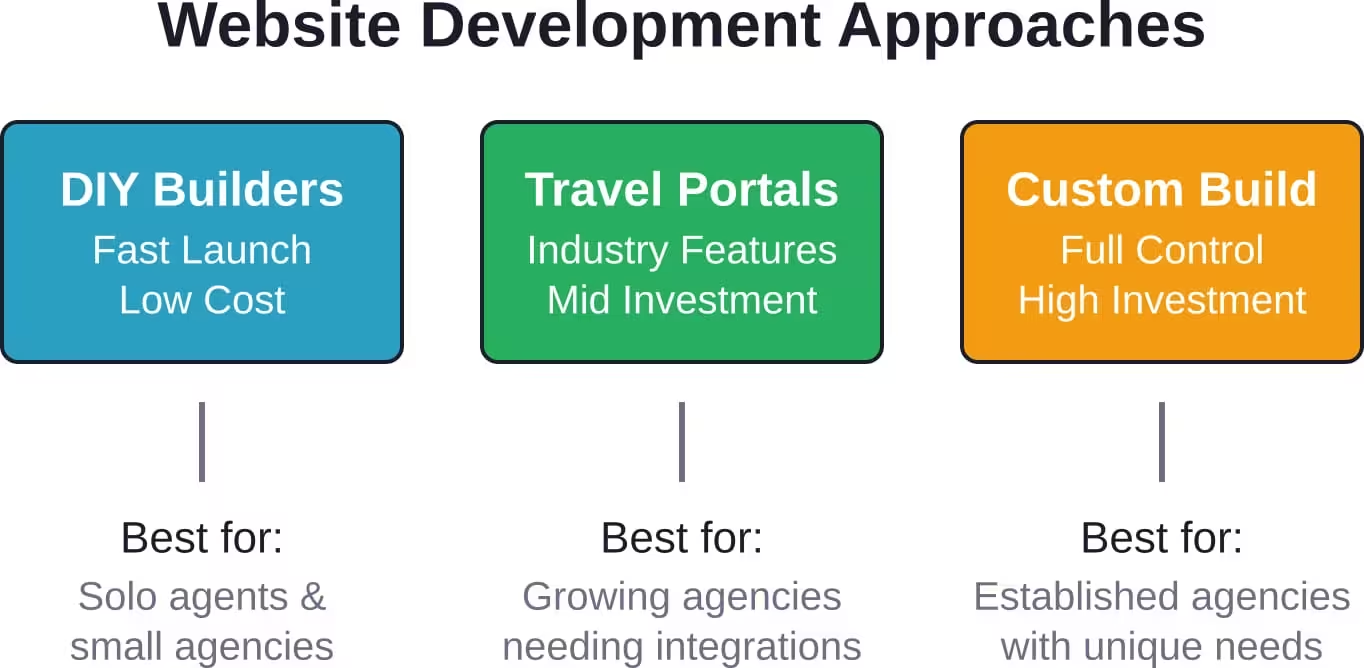
The Three Main Approaches to Travel Agency Website Development
When planning website development for travel agency operations, three distinct paths emerge. Each has clear advantages and limitations.
1. DIY Website Builders (Wix, Squarespace, Hostinger)
Website builders offer the fastest route from zero to launch. Most feature drag-and-drop interfaces that require zero coding knowledge.
These platforms work well for smaller agencies or solo travel advisors starting out. Wix’s Light plan offers 2 GB of storage, a free domain for 1 year, and basic marketing tools for $17.00/month. That’s accessible pricing for agencies testing the market.
The advantages stack up quickly:
- Launch within days instead of weeks or months
- Pre-designed travel templates handle the layout
- Built-in SEO tools and mobile responsiveness
- No technical maintenance required
- Affordable monthly subscriptions
But limitations exist. Customization hits walls eventually. Integration with specialized travel APIs often requires workarounds. As the business scales, the platform may feel constraining.
2. Travel-Specific Portal Development Companies
Specialized travel technology companies build comprehensive portal solutions designed specifically for travel businesses. These platforms come pre-loaded with industry-specific features like:
- GDS (Global Distribution System) integration
- Real-time inventory management
- Supplier API connections
- Commission tracking systems
- Multi-currency and multi-language support
The development services typically include customization to match brand requirements. These solutions serve mid-sized to large agencies handling significant booking volumes.
According to industry sources, approximately 65% of host agencies offer some sort of website program to their agents. These range from basic template sites to full-featured portals with integrated booking engines.
3. Custom Development From Scratch
Custom development means building exactly what the business needs, without compromise. Development teams create bespoke solutions tailored to unique workflows, branding, and feature requirements.
This approach suits established agencies with specific needs that off-the-shelf solutions can’t address. Think complex multi-brand operations, unique booking workflows, or integration with legacy systems.
The investment is substantial—both time and money. Development timelines stretch from months to over a year. But the result is complete ownership and unlimited flexibility.
Essential Features Every Travel Agency Website Needs
Regardless of development approach, certain features are non-negotiable for effective travel agency websites.
Mobile-Responsive Design
A significant portion of travel searches happen on mobile devices. A website that doesn’t work flawlessly on smartphones loses bookings immediately.
Mobile responsiveness isn’t optional—it’s foundational. Testing across devices during development prevents costly fixes later.
High-Quality Visual Content
Travel sells through imagery. Destination photos, video clips, and virtual tours create the emotional connection that drives bookings.
But file sizes matter. Large images slow load times, which kills SEO rankings and user patience. Proper optimization balances quality with performance.
Clear Service Description and Pricing
Transparency builds trust. Visitors need to understand exactly what’s included, what’s optional, and how much it costs.
Vague “contact us for pricing” approaches lose conversions. Even ranges give prospects the information they need to self-qualify.
Booking or Inquiry Systems
The website must capture leads or facilitate direct bookings. Contact forms represent the minimum viable approach. Integrated booking engines provide the optimal experience.
Inquiry forms should be strategically placed on every service page, not buried in a single contact section. Make conversion as frictionless as possible.
Trust Signals and Social Proof
Testimonials, reviews, certifications, and industry memberships reassure visitors. According to USTOA, member companies representing nearly $24.4 billion in revenue provide tours, packages and custom arrangements.
Display credentials prominently. If the agency holds USTOA membership with its $1 million consumer payment protection, that’s a powerful trust builder.
SEO-Optimized Content Structure
Search engines drive discovery. Website architecture must support SEO from the foundation up.
That means proper heading hierarchy, fast load times, XML sitemaps, schema markup for travel content, and keyword-optimized destination pages.
Security and Payment Processing
Travel bookings involve sensitive financial data. SSL certificates (HTTPS) are mandatory. Payment processing must meet PCI compliance standards.
OWASP guidelines emphasize that web applications face automated threats requiring robust security architecture. According to the OWASP Top 10 2025, ‘Broken Access Control’ and ‘Cryptographic Failures’ remain the most critical web application security risks.
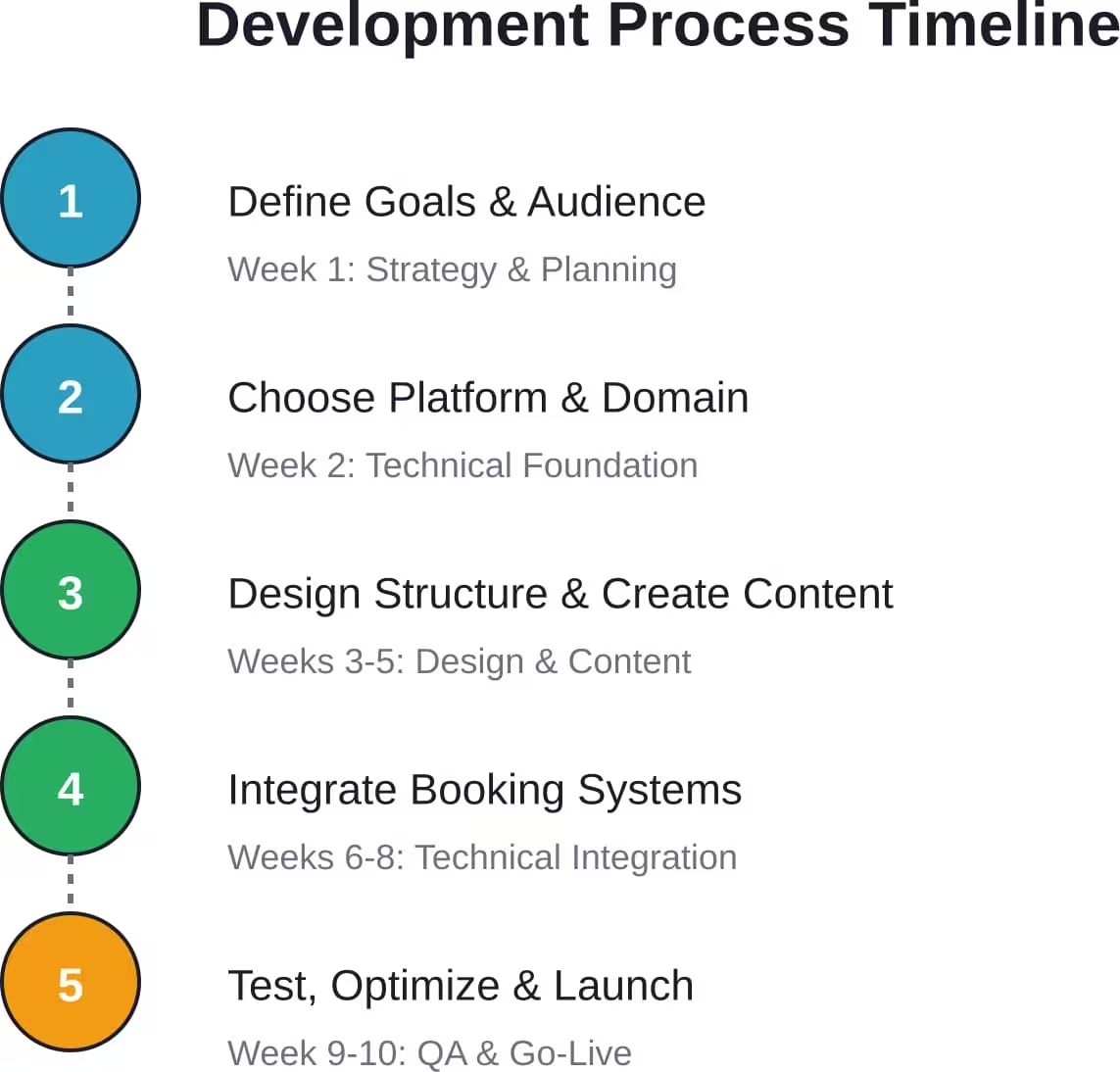
Step-by-Step Website Development Process for Travel Agencies
Successful website development for travel agency businesses follows a structured process. Skipping steps creates problems later.
Step 1: Define Business Goals and Target Audience
Start with clarity. What specific outcomes should the website achieve? Lead generation? Direct bookings? Brand awareness?
Understanding the target audience shapes every design decision. Luxury travelers expect different experiences than budget backpackers. Adventure seekers browse differently than cruise enthusiasts.
Travel website design research emphasizes the importance of visual attention patterns and content hierarchy on travel platforms.
Step 2: Choose Your Development Path
Based on budget, technical resources, and feature requirements, select from the three main approaches outlined earlier.
For agencies just starting, website builders offer the practical entry point. Established agencies processing significant volumes should evaluate travel-specific portals or custom development.
Step 3: Select and Register Your Domain Name
The domain name creates the first impression. Keep it short, memorable, and relevant to the travel niche.
Avoid hyphens, numbers, or confusing spellings. The .com extension still carries the most credibility, though .travel domains work for agencies focused exclusively on the industry.
Step 4: Design the Site Structure and Navigation
Map out the complete site architecture before building. Essential pages include:
- Home (compelling overview with clear calls-to-action)
- Destinations (organized by region, type, or theme)
- Services (what the agency offers and specializes in)
- About (credentials, team, story, values)
- Blog or Travel Tips (for SEO and authority building)
- Contact and Booking (multiple pathways to conversion)
Navigation should never require more than three clicks to reach any page. Simplicity wins.
Step 5: Create Compelling Content
Content creation separates mediocre travel sites from exceptional ones. Destination descriptions need to inspire while providing practical details.
Focus on benefits, not just features. Don’t just list amenities—paint the experience. Help visitors visualize themselves on that beach or exploring those ruins.
Optimization tips suggest that conversion tunnels perform best when content engages prospects at each stage of the decision journey.
Step 6: Integrate Booking and Payment Systems
Technical integration represents the most complex development phase. Options include:
- Third-party booking widgets embedded in the site
- API connections to travel supplier systems
- Custom-built booking engines (for large operations)
- Simple inquiry forms that trigger manual follow-up
Payment gateway selection matters. Look for processors familiar with travel industry needs, including deposit handling and multi-currency support.
Step 7: Optimize for Search Engines
SEO isn’t an afterthought—it’s woven throughout development. Technical SEO foundations include fast hosting, clean code, mobile responsiveness, and proper URL structures.
Content SEO requires keyword research and strategic optimization of destination pages, service descriptions, and blog content. Local SEO matters for agencies serving specific geographic markets.
Step 8: Test Thoroughly Before Launch
Bug-free launches require extensive testing. Check every form, every link, every page across multiple browsers and devices.
Test the complete booking process from discovery to confirmation. Load times should stay under three seconds. Any friction points identified during testing will multiply once real traffic arrives.
Step 9: Launch and Monitor Performance
Launch day isn’t the finish line—it’s the starting gun. Monitor analytics closely during the first weeks.
Track key metrics: traffic sources, bounce rates, time on page, conversion rates, and booking values. User behavior data reveals what’s working and what needs adjustment.
Cost Breakdown: What to Budget for Travel Website Development
Website development for travel agency operations spans a massive cost range depending on the approach and feature set.
DIY Website Builder Costs
Website builders represent the most affordable entry point. Monthly subscriptions typically range from $15 to $50 for plans suitable for small travel agencies.
Annual costs break down roughly as:
- Website builder subscription: $200-600/year
- Domain registration: $10-20/year
- Premium templates (optional): $50-150 one-time
- Stock photos or graphics: $100-300/year
- Email marketing tools: $150-500/year
Total first-year investment: approximately $500-1,500.
The low financial barrier makes this path attractive for testing business concepts. But remember—time investment still matters. Building even a simple site takes dozens of hours.
Travel Portal Development Costs
Specialized travel portal solutions operate on different pricing models. Some charge setup fees plus monthly subscriptions. Others work on commission from bookings processed through the platform.
Community discussions indicate costs for third-party travel website programs typically fall between several hundred to a few thousand dollars for setup, plus monthly fees ranging from $50 to $300 or more depending on features and booking volume.
Custom Development Costs
Custom development represents the highest investment. Costs vary enormously based on complexity, but typical ranges include:
- Small custom site (10-20 pages, basic booking): $5,000-15,000
- Mid-sized portal (custom features, API integrations): $15,000-50,000
- Enterprise travel platform (full inventory management): $50,000-200,000+
These figures reflect development only. Ongoing hosting, maintenance, security updates, and feature enhancements add 15-25% annually.
Hidden Costs to Consider
Beyond the obvious development expenses, budget for:
- Professional photography or videography
- Copywriting and content creation
- SEO optimization and ongoing content marketing
- SSL certificates and security tools
- Payment gateway transaction fees
- Legal compliance (terms of service, privacy policy)
- Ongoing updates and maintenance
The website isn’t a one-time expense—it’s an ongoing investment that requires continuous attention to remain effective and secure.
Choosing Between Platforms: What Works Best for Different Agency Types
The right platform choice depends heavily on business model and growth trajectory.
For Solo Travel Advisors and Home-Based Agents
Website builders like Wix, Squarespace, or Hostinger provide everything needed without technical overhead. These agents typically don’t process bookings directly—they refer clients to suppliers and earn commissions.
The website functions primarily as a marketing tool and credibility builder. Inquiry forms and email capture matter more than complex booking engines.
For Independent Agencies Handling Direct Bookings
Agencies that want to book travel directly need more robust solutions. Travel-specific platforms or WordPress with specialized plugins bridge the gap between simple builders and full custom development.
Look for platforms offering supplier API connections, itinerary builders, and payment processing. The investment scales with booking volume.
For Multi-Location or Franchise Operations
Larger operations need centralized management with local customization capabilities. Each location may need its own branded site while maintaining corporate standards.
Custom development or enterprise travel platform solutions handle this complexity. Content management systems enable headquarters to push updates while allowing local modifications.
For Tour Operators Selling Packages
Tour operators selling fixed-departure group tours need inventory management, availability calendars, and group booking capabilities.
E-commerce platforms like Shopify work surprisingly well for selling tours as products. Specialized tour operator software provides industry-specific features but often costs significantly more.
SEO Strategy for Travel Agency Websites
Building the website is only half the equation. Driving traffic requires strategic SEO execution.
Keyword Research and Targeting
Travel keywords are highly competitive. Generic terms like “travel agency” or “vacation packages” face intense competition from major OTAs.
The winning strategy focuses on long-tail keywords and geographic specificity. “Luxury safari tours Tanzania” or “family beach resorts Cancun all-inclusive” target more qualified searchers with higher conversion intent.
Industry research demonstrates that local SEO has become the backbone of digital success for service businesses competing in growing markets.
Content Marketing for Authority Building
Travel blogs accomplish multiple goals simultaneously. They target long-tail keywords, demonstrate expertise, provide value to prospects, and create shareable content.
Destination guides, travel tips, packing lists, and seasonal recommendations all attract organic traffic. The key is consistency—publishing one comprehensive guide monthly outperforms sporadic posting.
Technical SEO Fundamentals
Search engines prioritize fast, secure, mobile-friendly sites with clean technical foundations. Core technical elements include:
- SSL certificate (HTTPS) for security
- Mobile-responsive design that passes Google’s mobile-friendly test
- Page load times under 3 seconds
- Clean URL structures without excessive parameters
- XML sitemap submitted to search engines
- Schema markup for travel-specific content
- Optimized images with descriptive alt text
According to IESE business school research, online design needs to be easy and accessible, functional, stable and offer interesting and well-structured content. Search engines increasingly evaluate these same factors when ranking pages.
Local SEO for Geographic Targeting
Agencies serving local markets need strong local SEO. That means:
- Google Business Profile optimization with accurate information
- Local citations across travel directories
- Reviews on Google, Facebook, and travel platforms
- Location-specific content and pages
- Local backlinks from chambers of commerce and community sites
Local pack rankings drive significant qualified traffic for agencies targeting specific cities or regions.
Conversion Optimization: Turning Visitors Into Customers
Traffic means nothing without conversions. Website development for travel agency success requires strategic conversion optimization.
Clear Calls-to-Action Throughout
Every page needs a clear next step. Homepage visitors should immediately understand what action to take—whether that’s browsing destinations, requesting a custom quote, or booking a consultation.
Button copy matters. “Start Planning Your Dream Trip” converts better than generic “Submit” buttons.
Reducing Friction in the Booking Process
Every additional field in a form reduces completion rates. Request only essential information initially. Details can be gathered after initial contact.
Research on conversion tunnel optimization emphasizes that the key to maximizing conversions is finding the best content to engage prospects at each stage and convert them into paying customers.
Multi-step forms with progress indicators typically outperform single long forms. Breaking the process into digestible chunks reduces abandonment.
Trust Building Through Social Proof
Testimonials, reviews, and case studies overcome purchase hesitation. Real customer stories with names and photos carry far more weight than anonymous quotes.
Video testimonials provide the strongest social proof. Seeing and hearing satisfied customers creates emotional connections that text alone can’t match.
Live Chat and Immediate Response Options
Travel purchases involve significant investment and emotional commitment. Prospects have questions. The faster those questions get answered, the higher the conversion rate.
Live chat during business hours, chatbots for after-hours, and prominently displayed phone numbers all reduce friction. Response time within minutes dramatically outperforms the “we’ll get back to you in 24 hours” approach.
Mobile Conversion Optimization
Mobile users behave differently than desktop users. Mobile sessions are often shorter and more intent-driven.
Click-to-call buttons on mobile provide instant contact. Forms need to be even simpler on small screens. Booking flows must work perfectly with thumbs, not mice.
Security and Compliance Considerations
Travel agencies handle sensitive personal and financial data. Security isn’t optional.
SSL Certificates and HTTPS
SSL certificates encrypt data between the visitor’s browser and the server. Modern browsers flag non-HTTPS sites as “not secure,” immediately destroying trust.
SSL certificates are inexpensive—often free through hosting providers. There’s no excuse for any travel agency website to operate without HTTPS.
PCI Compliance for Payment Processing
Agencies processing credit cards directly must comply with Payment Card Industry Data Security Standards. The requirements vary based on transaction volume but universally require secure data handling.
Most agencies avoid PCI compliance burdens by using third-party payment processors. The processor handles sensitive card data while the agency never touches it.
Data Privacy and GDPR
Customer data collection requires clear privacy policies and consent mechanisms. European visitors fall under GDPR requirements regardless of where the agency is located.
Privacy policies should clearly state what data is collected, how it’s used, who it’s shared with, and how customers can request deletion.
Automated Threat Prevention
According to OWASP research on automated threats to web applications, software-driven attacks create scenarios diverging from accepted behavior and producing undesirable effects. Travel websites face particular vulnerability to inventory scraping, scalping, and booking fraud.
Implementing rate limiting, CAPTCHA for forms, and monitoring for suspicious patterns helps prevent automated abuse.
Ongoing Maintenance and Updates
Website development doesn’t end at launch. Ongoing maintenance keeps sites secure, functional, and competitive.
Security Updates and Patches
Software vulnerabilities get discovered constantly. Content management systems, plugins, and themes require regular updates to patch security holes.
Outdated software creates entry points for hackers. A single compromised plugin can expose the entire database.
Content Freshness and Additions
Search engines favor sites that publish fresh content regularly. But beyond SEO, regular updates demonstrate that the business is active and current.
Seasonal content, new destination additions, updated travel advisories, and fresh blog posts all keep the site relevant.
Performance Monitoring and Optimization
Site speed matters for both SEO and user experience. Regular performance audits identify bottlenecks like oversized images, inefficient code, or slow hosting.
Tools like Google PageSpeed Insights and GTmetrix provide actionable recommendations for improvement.
Analytics Review and Strategy Adjustment
Monthly analytics review reveals what’s working. Which pages drive the most traffic? Where do visitors drop off? Which sources provide the highest-quality leads?
Data-driven decisions beat guesswork. Conversion optimization is iterative—test, measure, adjust, repeat.
Industry Trends Shaping Travel Website Development in 2026
Travel technology evolves constantly. Staying competitive means understanding emerging trends.
AI-Powered Personalization
Artificial intelligence enables dynamic content that adapts to individual visitor preferences. AI chatbots handle initial inquiries, recommending destinations based on interests, budget, and past behavior.
Personalization increases relevance, which drives conversions. Generic experiences no longer satisfy modern travelers.
Virtual Reality Destination Previews
VR technology lets prospects experience destinations before booking. Virtual hotel tours, 360-degree destination views, and immersive previews reduce purchase anxiety.
The technology is becoming more accessible. Even 360-degree photos provide meaningful preview value without expensive VR hardware.
Voice Search Optimization
Voice-activated searches continue growing. Optimization requires natural language content that answers questions conversationally.
“What’s the best time to visit Bali” gets voice searches more than “Bali best travel time.” Content should target how people actually speak.
Sustainability Transparency
Travelers increasingly prioritize sustainable and responsible travel options. Websites need to clearly communicate sustainability practices and certifications.
REMOVE – These specific percentages do not appear in source material Transparency around these commitments resonates with modern travelers.
Integrated Video Content
Video consumption continues rising. Destination videos, customer testimonials, and behind-the-scenes content create emotional connections that static images can’t match.
Short-form video optimized for social media extends reach beyond the website itself while driving traffic back to booking pages.
Common Mistakes to Avoid
Learning from others’ mistakes saves time and money.
Prioritizing Aesthetics Over Functionality
Beautiful designs that don’t convert waste investment. Function must lead form. Aesthetics matter, but never at the expense of usability.
Neglecting Mobile Users
Desktop-first design thinking creates poor mobile experiences. Mobile-first development ensures the majority of users get optimal experiences.
Overcomplicating Navigation
Clever navigation confuses visitors. Straightforward labels and logical hierarchy outperform creative but unclear organization.
Ignoring Load Speed
Massive image files and bloated code kill load times. Visitors abandon slow sites within seconds. Performance optimization can’t be an afterthought.
Weak or Missing Calls-to-Action
Passive websites that don’t guide visitors toward conversion leave money on the table. Clear, compelling CTAs throughout the site maximize conversion opportunities.
Insufficient Content
Thin content doesn’t rank and doesn’t convert. Comprehensive destination information, detailed service descriptions, and valuable resources establish authority and trust.
Set-It-and-Forget-It Mentality
Websites require ongoing attention. Agencies that launch and never update quickly fall behind competitors who continuously improve.
| Mistake | Impact | Solution |
|---|---|---|
| No mobile optimization | Lost conversions from 50%+ of traffic | Responsive design from project start |
| Slow page load times | High bounce rates, poor SEO rankings | Image optimization, quality hosting, caching |
| Weak security | Data breaches, loss of customer trust | SSL certificates, regular security updates |
| Poor navigation structure | Visitors can’t find information, abandon site | User testing, clear hierarchy, max 3 clicks to any page |
| Generic content | No differentiation from competitors | Niche focus, unique voice, specific expertise |
| No clear CTAs | Visitors don’t know next steps | Strategic CTA placement on every page |
Working with Web Developers: What to Expect
For agencies outsourcing development, understanding the process prevents miscommunication.
Defining Scope and Requirements
Clear requirements documentation prevents scope creep and budget overruns. Document every feature, page, and integration needed before signing contracts.
Vague requirements lead to mismatched expectations. Developers can’t read minds.
Timeline Realism
Quality development takes time. Rush jobs sacrifice quality. Complex travel portals with multiple integrations require months, not weeks.
Pad timelines for inevitable delays. Content gathering, approval processes, and integration testing always take longer than expected.
Budget Transparency
Hidden costs frustrate everyone. Detailed proposals should break down costs by feature and phase. Understand what’s included and what costs extra.
Change requests mid-project increase budgets. Minimize these by thorough planning upfront.
Communication and Feedback Loops
Regular check-ins keep projects on track. Weekly status updates and milestone reviews catch problems early when they’re easier to fix.
Provide feedback promptly. Developer delays often stem from waiting for client responses.
Testing and Acceptance
Thorough testing before final acceptance prevents post-launch headaches. Check every feature, every page, every form. Test across browsers and devices.
Create a punch list of issues before final payment. Most contracts include revision periods—use them.
Conclusion: Building a Website That Drives Travel Business Growth
Website development for travel agency success requires balancing multiple priorities—compelling design, technical functionality, conversion optimization, and ongoing maintenance.
The development path matters less than understanding business needs clearly. Solo advisors building credibility need different solutions than established agencies processing thousands of bookings monthly.
But certain principles apply universally. Mobile responsiveness is non-negotiable. Security can’t be compromised. User experience determines conversion rates. SEO drives discovery.
The travel industry represented by USTOA members alone generates $24.4 billion in revenue serving. That’s massive opportunity for agencies that position themselves effectively online.
Here’s the thing though—launching the website is just the beginning. The agencies that win long-term commit to continuous improvement. They test different approaches, measure results, and optimize based on data.
Technology changes. Consumer expectations evolve. Competitors improve. Standing still means falling behind.
Whether choosing a DIY builder, partnering with a travel technology company, or investing in custom development, the goal remains constant: create a digital presence that builds trust, showcases expertise, and converts visitors into customers.
Start with clarity about business goals. Choose the development approach that matches current capabilities and growth trajectory. Launch with essential features rather than waiting for perfection. Then iterate, improve, and scale based on real user behavior and business results.
The best travel agency website is the one that’s live today, learning from actual visitors, and improving tomorrow. Analysis paralysis and endless planning help no one. Research thoroughly, plan strategically, then execute decisively.
Ready to build a travel agency website that actually drives bookings? Start by defining the specific outcomes needed, then choose the development path that makes those outcomes achievable within budget and timeline constraints. The travel industry continues growing—agencies with strong digital foundations will capture the opportunity.