

Quick Summary: Website development for construction companies requires a strategic approach combining professional design, mobile responsiveness, portfolio showcases, and lead-generation tools. Construction businesses need websites that build trust, demonstrate expertise, and convert visitors into clients through clear service descriptions, project galleries, and easy contact methods. Effective construction websites integrate SEO optimization, fast loading speeds, and industry-specific features that address the unique needs of contractors, builders, and specialty trades.
The construction industry is experiencing a digital transformation that’s reshaping how contractors, builders, and specialty trades attract and convert clients. With the global construction market reaching $13 trillion, according to McKinsey research from 2024, the competition for project opportunities has never been fiercer.
Here’s the thing though—most construction companies still rely on referrals and word-of-mouth. That worked in 1995. But today’s clients research contractors online before making contact. Studies suggest that website design significantly influences credibility judgments, though specific percentages vary by research.
Construction website development isn’t about flashy animations or complicated navigation. It’s about showcasing work quality, building trust, and making it dead simple for potential clients to request quotes.
Why Construction Companies Need Professional Websites
The construction sector faces unique digital challenges. Research indicates that a significant portion of construction businesses operate at only a basic level of digital maturity. In the UK alone, construction businesses support 3.1 million jobs—representing approximately 9% of total employment—yet many still lack effective online presence.
Sound familiar? Traditional marketing methods aren’t cutting it anymore.
Professional websites serve three critical functions for construction businesses:
- Establishing credibility with prospective clients who vet contractors online
- Showcasing completed projects through high-quality visual portfolios
- Generating qualified leads through contact forms and quote requests
- Differentiating services from competitors in crowded markets
- Providing 24/7 access to service information and company details
Real talk: potential clients won’t trust a construction company that can’t even build its own website properly. The site quality signals operational competence.
Essential Features for Construction Websites
Not all website features deliver equal value. Construction sites need specific elements that address industry buying patterns and client concerns.
Project Portfolio and Gallery
Visual proof matters more than any marketing copy. Before-and-after photos, completed project galleries, and detailed case studies demonstrate capabilities far better than service descriptions alone.
Effective portfolio sections include:
- High-resolution photos organized by project type or service category
- Project details including scope, timeline, and challenges overcome
- Video walkthroughs for complex or high-value projects
- Client testimonials paired with specific project examples
The portfolio serves as the digital equivalent of driving past completed job sites. It needs to be prominent, easy to navigate, and constantly updated.
Clear Service Descriptions
Generic service lists don’t convert visitors into leads. Construction websites need detailed service pages that explain what’s included, typical project timelines, and the process clients can expect.
| Construction Business Type | Essential Website Features |
|---|---|
| General Contractor | Project gallery, service area map, quote request form, client reviews |
| Home Renovation | Before-and-after photos, design consultation booking, cost estimators |
| Specialty Trades | Certification badges, emergency contact, detailed service breakdowns |
| Commercial Construction | Commercial portfolio, RFP submission portal, safety certifications |
Each service page should address common client questions and concerns specific to that work type. Roofing companies need to explain warranty terms. Remodeling contractors should outline the permitting process.
Lead Generation Tools
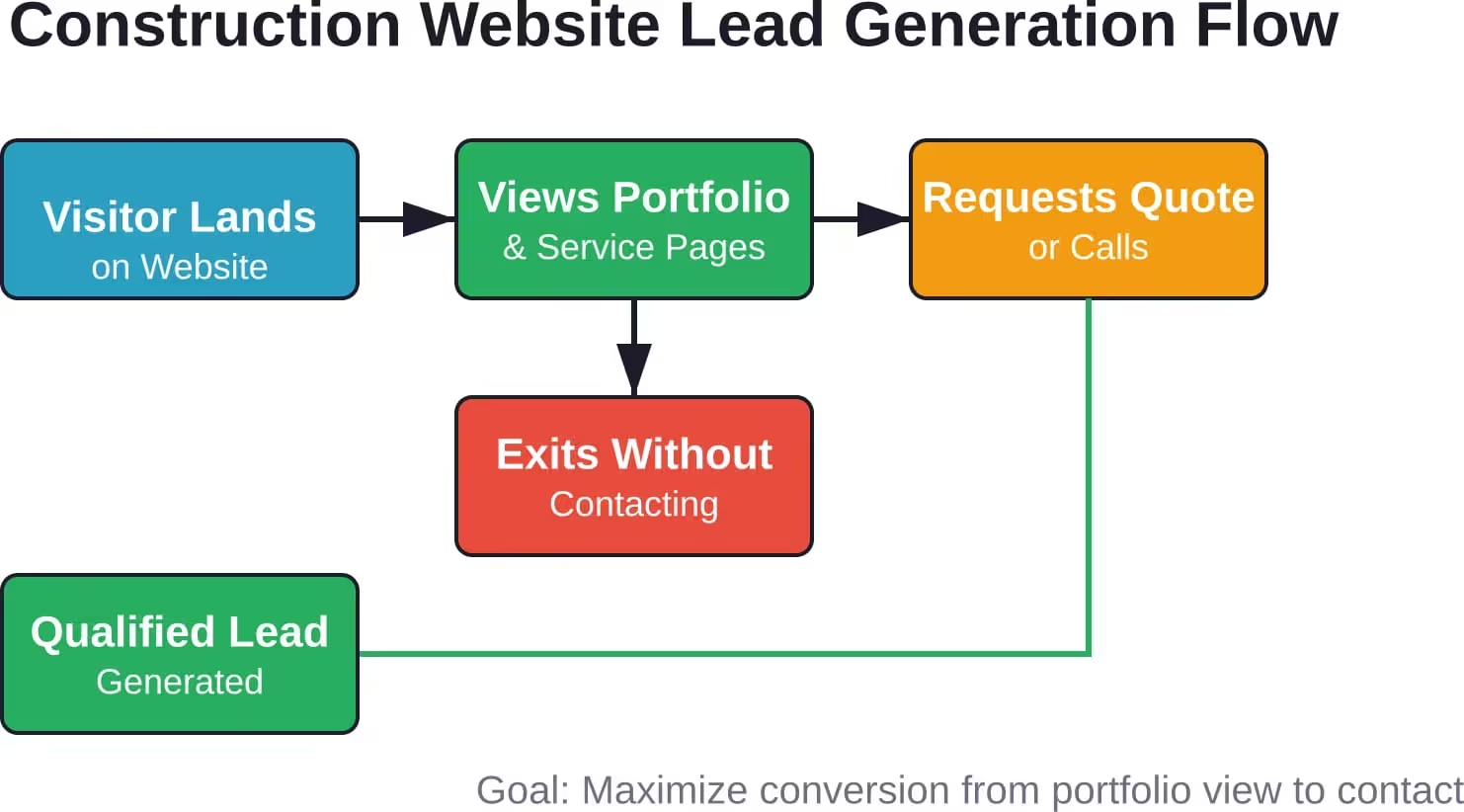
The primary goal of any construction website is converting visitors into qualified leads. Multiple contact opportunities throughout the site increase conversion rates.
Effective lead generation elements include:
- Quote request forms with project detail fields
- Click-to-call buttons prominently displayed on mobile devices
- Service area maps showing coverage zones
- Project cost calculators for common service types
- Consultation scheduling tools integrated with calendars
But here’s what matters most: make contact ridiculously easy. Every page should have clear calls to action. Phone numbers should be clickable on mobile. Forms should request only essential information—long forms kill conversion rates.
Design Principles for Construction Websites
Construction website design should reflect the industry’s core values: reliability, professionalism, and attention to detail. Cluttered layouts and confusing navigation undermine credibility.
Mobile Responsiveness
Most construction website visitors browse on mobile devices—often while actively searching for contractors to solve immediate problems. Sites that don’t function properly on smartphones lose leads instantly.
Mobile optimization requirements include:
- Touch-friendly navigation menus and buttons
- Click-to-call phone numbers prominently displayed
- Fast-loading images optimized for mobile networks
- Forms that work seamlessly on small screens
- Readable text without zooming required
Google prioritizes mobile-friendly sites in search rankings. But more importantly, frustrated mobile users simply call the next contractor on the search results.
Professional Visual Design
Clean, professional design builds trust immediately. Construction websites don’t need cutting-edge design trends—they need clarity, professionalism, and intuitive organization.
Key design elements include:
- High-quality photography showcasing actual project work
- Consistent branding with company colors and logo
- Clear visual hierarchy directing attention to important elements
- Ample white space preventing overwhelming layouts
- Professional typography that’s easy to read
Amateur-looking websites signal amateur work quality. Investment in professional design pays dividends through increased conversion rates and higher-value project inquiries.
Trust-Building Elements
Construction projects represent significant financial investments. Websites need to overcome natural client skepticism and build confidence in the company’s capabilities.
Trust signals include:
- Client testimonials with real names and locations
- Industry certifications and license numbers
- Professional association memberships
- Insurance and bonding documentation
- Years in business and company history
- Awards and recognition received
Real reviews matter more than polished marketing copy. Consider integrating Google reviews directly into the website to show authentic, unfiltered feedback.
Technical Considerations and Digital Integration
Behind every effective construction website sits solid technical infrastructure. Performance issues, security vulnerabilities, and integration limitations undermine even the best design.
Website Performance and Speed
Slow-loading websites lose visitors before content even displays. Studies indicate that mobile users frequently abandon sites with slow loading times, typically within a few seconds.
Construction websites face particular speed challenges due to image-heavy portfolios. Optimization strategies include:
- Compressing images without sacrificing visual quality
- Implementing lazy loading for portfolio galleries
- Using content delivery networks for faster asset delivery
- Minimizing unnecessary scripts and plugins
- Choosing quality hosting with adequate resources
Site speed affects both user experience and search engine rankings. It’s a foundational element that can’t be overlooked.
Digital Technology Adoption in Construction
The construction industry lags behind other sectors in digital maturity. Research indicates that a significant portion of construction professionals have not yet adopted Building Information Modeling (BIM) and Digital Twin technology.
Among construction professionals studied, varying maturity levels exist for BIM and Digital Twin adoption, with some operating at basic CAD-based levels and others at pre-Digital Twin stages.
Now, this is where it gets interesting. The digital maturity gap creates opportunities for forward-thinking construction companies. Websites that integrate project management tools, client portals, and digital documentation systems differentiate businesses from competitors still relying on manual processes.

Search Engine Optimization
Beautiful websites don’t generate leads if nobody finds them. SEO ensures construction companies appear in search results when potential clients look for services.
Construction-specific SEO strategies include:
- Optimizing for local search with service area pages
- Using industry-specific keywords in content and metadata
- Creating project-focused blog content answering client questions
- Building citations in construction directories and associations
- Encouraging and responding to online reviews
- Implementing schema markup for local business information
Local SEO matters particularly for construction businesses serving specific geographic regions. Service area pages targeting neighborhoods or cities help capture high-intent searches like “residential contractor near me” or “commercial builder in [city]”.
Building vs. Hiring for Website Development
Construction companies face a fundamental choice: build websites in-house using website builders or hire professional developers.
Website Builder Platforms
Modern website builders enable non-technical users to create functional sites without coding knowledge. Platforms offer construction-specific templates and drag-and-drop editors.
Advantages of website builders:
- Lower upfront costs compared to custom development
- Quick deployment—sites can launch within days
- No technical skills required for basic updates
- Templates designed specifically for construction businesses
- Built-in hosting and security included
Limitations include restricted customization options, potential scalability constraints, and ongoing subscription costs. Website builders work well for small contractors with straightforward needs but may not support complex requirements.
Professional Web Development Services
Custom development provides maximum flexibility and capability. Professional developers create unique designs tailored precisely to business needs and brand identity.
Benefits of professional development:
- Completely customized design and functionality
- Advanced features and integrations
- Better long-term scalability and performance
- Stronger SEO foundation and optimization
- Ongoing support and maintenance
Higher costs represent the primary barrier. Custom websites require larger budgets and longer development timelines. But for established construction companies handling high-value projects, professional development delivers better ROI through improved conversion rates and brand positioning.
| Approach | Best For | Typical Timeline | Key Advantage |
|---|---|---|---|
| Website Builder | Small contractors, specialty trades | 1-2 weeks | Quick launch, low cost |
| Template Customization | Mid-size contractors | 3-6 weeks | Balance of speed and customization |
| Custom Development | Established firms, commercial contractors | 8-12 weeks | Complete control, advanced features |
Get Your Website Delivered Exactly As Planned
Choosing professional development is only the first step. The real challenge is making sure the project is delivered as expected – without scope changes, missed deadlines, or unclear results. Lengreo approaches website development as a structured process with defined stages and clear expectations. Each project is planned in advance, so the final website matches the agreed requirements instead of shifting during development.
Keep Your Website Project On Schedule and Within Scope
Lengreo focuses on keeping development controlled and predictable:
- Project planned around defined requirements before development starts
- Structured stages from research and design to implementation
- Development using JavaScript and WordPress
- Quality assurance before launch to ensure everything works as expected
- Post-launch support for final adjustments
👉Contact Lengreo to discuss your website project and get it delivered as agreed.
Maintaining and Updating Construction Websites
Website launch is just the beginning. Ongoing maintenance and content updates keep sites relevant, secure, and effective.
Content Updates and Portfolio Management
Stale websites with outdated portfolios signal inactive businesses. Regular content updates demonstrate ongoing work and industry engagement.
Essential update practices include:
- Adding new projects to portfolios as they complete
- Publishing blog content addressing common client questions
- Updating service pages with current offerings and capabilities
- Refreshing testimonials with recent client feedback
- Announcing awards, certifications, or company news
Monthly content additions help SEO rankings while keeping the site fresh for repeat visitors. Even small updates signal an active, growing business.
Technical Maintenance and Security
Website security and performance require ongoing attention. Neglected sites become vulnerable to attacks, performance degradation, and compatibility issues.
Critical maintenance tasks include:
- Installing security patches and software updates
- Monitoring site performance and uptime
- Backing up website files and databases
- Testing forms and lead generation tools
- Checking mobile compatibility across devices
- Reviewing and fixing broken links
Many construction companies outsource maintenance to web developers or agencies. Monthly maintenance packages typically cost less than dealing with security breaches or site failures during peak lead generation periods.
Measuring Website Performance and ROI
Data-driven optimization separates effective websites from digital brochures. Analytics reveal what’s working, what’s failing, and where improvements deliver the highest returns.
Key Performance Metrics
Construction companies should track specific metrics aligned with business goals. Vanity metrics like total visitors matter less than conversion-focused measurements.
Essential metrics include:
- Quote requests and contact form submissions
- Phone calls from click-to-call buttons
- Email inquiries generated through the site
- Time spent on portfolio and service pages
- Mobile versus desktop conversion rates
- Bounce rates on key landing pages
Connect website leads to project closings when possible. Understanding which web traffic sources generate the highest-value clients helps optimize marketing spend.
Continuous Improvement
The most effective construction websites evolve based on performance data and user feedback. Small iterative improvements compound over time.
Optimization opportunities include:
- A/B testing different call-to-action button text and placement
- Refining form fields to reduce abandonment
- Expanding high-performing content topics
- Improving pages with high bounce rates
- Enhancing mobile experience based on user behavior
Quarterly reviews of analytics data help identify trends and opportunities. But wait—don’t obsess over minor fluctuations. Focus on long-term patterns and meaningful conversion improvements.
Conclusion
Website development for construction companies represents a strategic investment in digital presence and lead generation. The construction industry’s relatively low digital maturity creates opportunities for technology-forward businesses to differentiate through superior online experiences.
Effective construction websites combine professional design, comprehensive portfolios, trust-building elements, and conversion-optimized lead generation tools. Whether building with DIY platforms or hiring professional developers, the goal remains constant: attract qualified leads, demonstrate expertise, and convert visitors into clients.
The digital transformation reshaping the $13+ trillion global construction industry shows no signs of slowing. Companies that invest in professional web presence position themselves to capture market share from competitors still relying solely on traditional marketing methods.
Start by assessing current website performance—or launch a new site if none exists. Prioritize mobile responsiveness, portfolio quality, and clear calls to action. Track performance metrics and iterate based on data. The construction companies winning the most valuable projects are those that build both physical structures and digital credibility.
Ready to transform digital presence? Begin with a clear strategy, invest in quality development or platforms, and commit to ongoing optimization. Construction expertise built the physical world—now it’s time to build effective digital presence.