

Quick Summary: Professional website development for electricians combines lead-generation design, mobile optimization, and local SEO to attract homeowners and businesses searching for electrical services. An effective electrician website showcases licenses and certifications, displays emergency contact options prominently, and builds trust through customer reviews and project portfolios. Most electrical contractors see ROI within 3-6 months when their site integrates online booking, Google Business Profile optimization, and clear calls-to-action.
Electrical contractors face a fundamental challenge in 2026: potential customers search online first, and if your website doesn’t answer their questions immediately, they’ll call your competitor instead.
The electrical services industry has transformed dramatically. Homeowners no longer flip through phone books or rely solely on word-of-mouth referrals. They search “emergency electrician near me” at 10 PM when the lights go out, or they search “commercial electrical contractors” weeks before breaking ground on a new building.
Your website serves as your digital storefront, first impression, and primary sales tool rolled into one. But here’s the thing—most electrician websites fail at their core job: converting visitors into paying customers.
This guide examines what separates high-performing electrical contractor websites from the ones that drain marketing budgets without generating leads. Real talk: building an effective electrician website requires more than throwing up a few photos and listing services.
Why Electricians Need Professional Website Development
The electrical contracting business operates differently than it did five years ago. Customers expect instant answers, transparent pricing, and proof of credentials before they ever pick up the phone.
A professional website establishes credibility immediately. When potential clients land on a well-designed electrical services site, they see a legitimate business that invests in its presentation. That perception matters—especially when customers are inviting contractors into their homes or trusting them with commercial projects worth thousands of dollars.
Community discussions reveal that many electricians initially resist investing in website development, viewing it as an unnecessary expense. That perspective shifts quickly once contractors realize their competitors are capturing leads they’re missing entirely.
Lead generation represents the primary return on investment. An optimized electrician website works around the clock, capturing emergency calls at 2 AM and collecting contact information from commercial prospects researching contractors during business planning phases.
The Local Search Advantage
Local SEO determines whether your electrical business appears when customers search for services in your service area. Google prioritizes businesses with complete, optimized websites that demonstrate relevance to local searches.
Electrical contractors who optimize their websites for local searches typically dominate the map pack—those three businesses Google highlights at the top of search results. Getting into that coveted position requires proper website structure, location-specific content, and technical optimization.
Service areas need clear definition throughout the site. A website that explicitly mentions the cities and neighborhoods an electrical contractor serves will outrank generic competitors every time.
Compliance and Safety Credentials
Electrical work requires adherence to strict safety standards and regulations. According to OSHA, electrical hazards are addressed in specific standards for recordkeeping, general industry, maritime, and construction, including 29 CFR 1926 Subpart K for construction industry electrical standards and 29 CFR 1910.331-335 for electrical training and work practices.
Professional electrician websites prominently display relevant licenses, insurance certifications, and safety compliance documentation. This transparency builds trust and demonstrates that the contractor operates within regulatory frameworks.
The National Electrical Code (NEC), specifically NFPA 70, serves as the benchmark standard for electrical design, inspection, and installation of systems in residential, commercial, and industrial occupancies. Electricians who reference their NEC compliance and ongoing training on their websites position themselves as knowledgeable professionals rather than unlicensed handymen.
Essential Features Every Electrician Website Needs
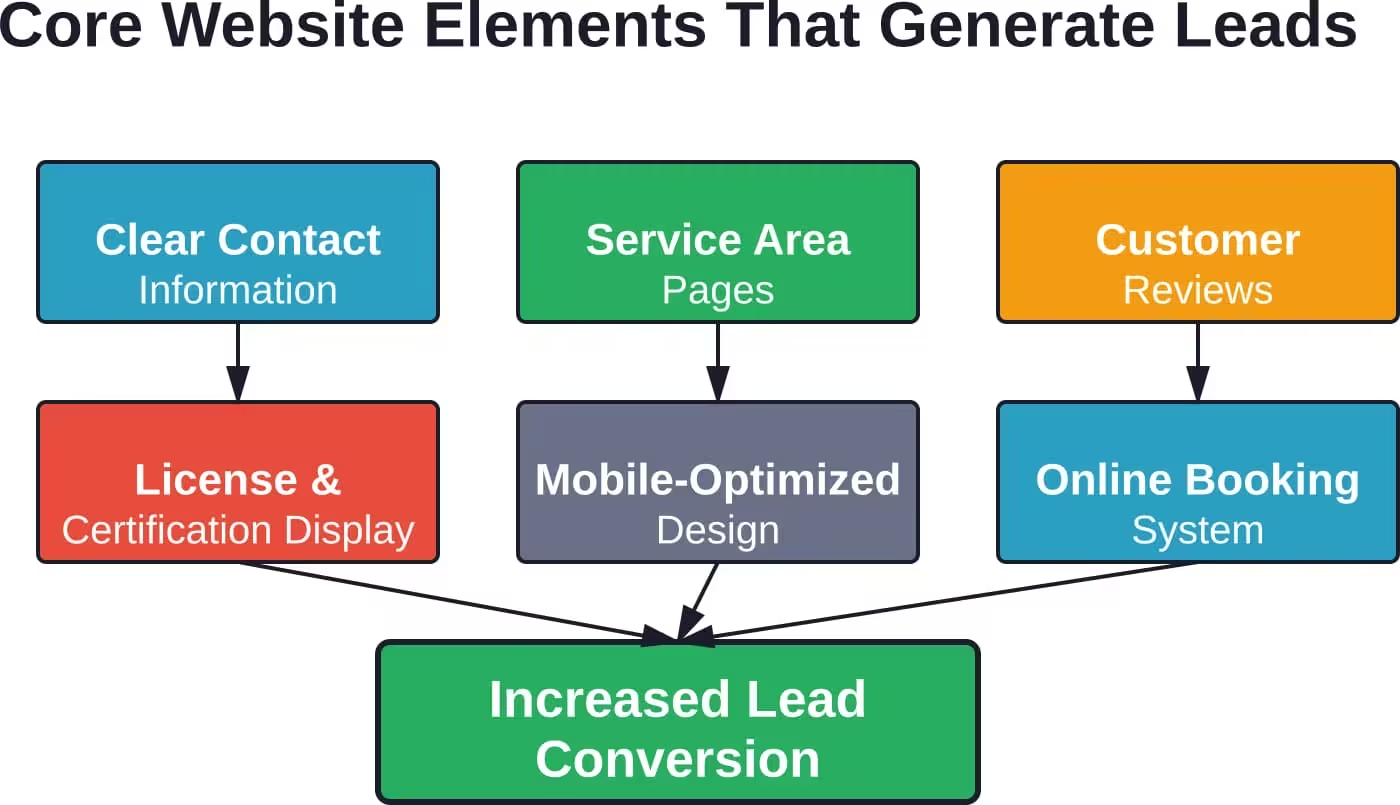
Effective electrician websites share common elements that drive conversions. These features aren’t optional extras—they represent the foundation of a website that actually generates business.
Prominent Phone Numbers and Click-to-Call Functionality
Emergency electrical issues don’t wait for business hours. Websites must display phone numbers prominently in the header, footer, and throughout service pages.
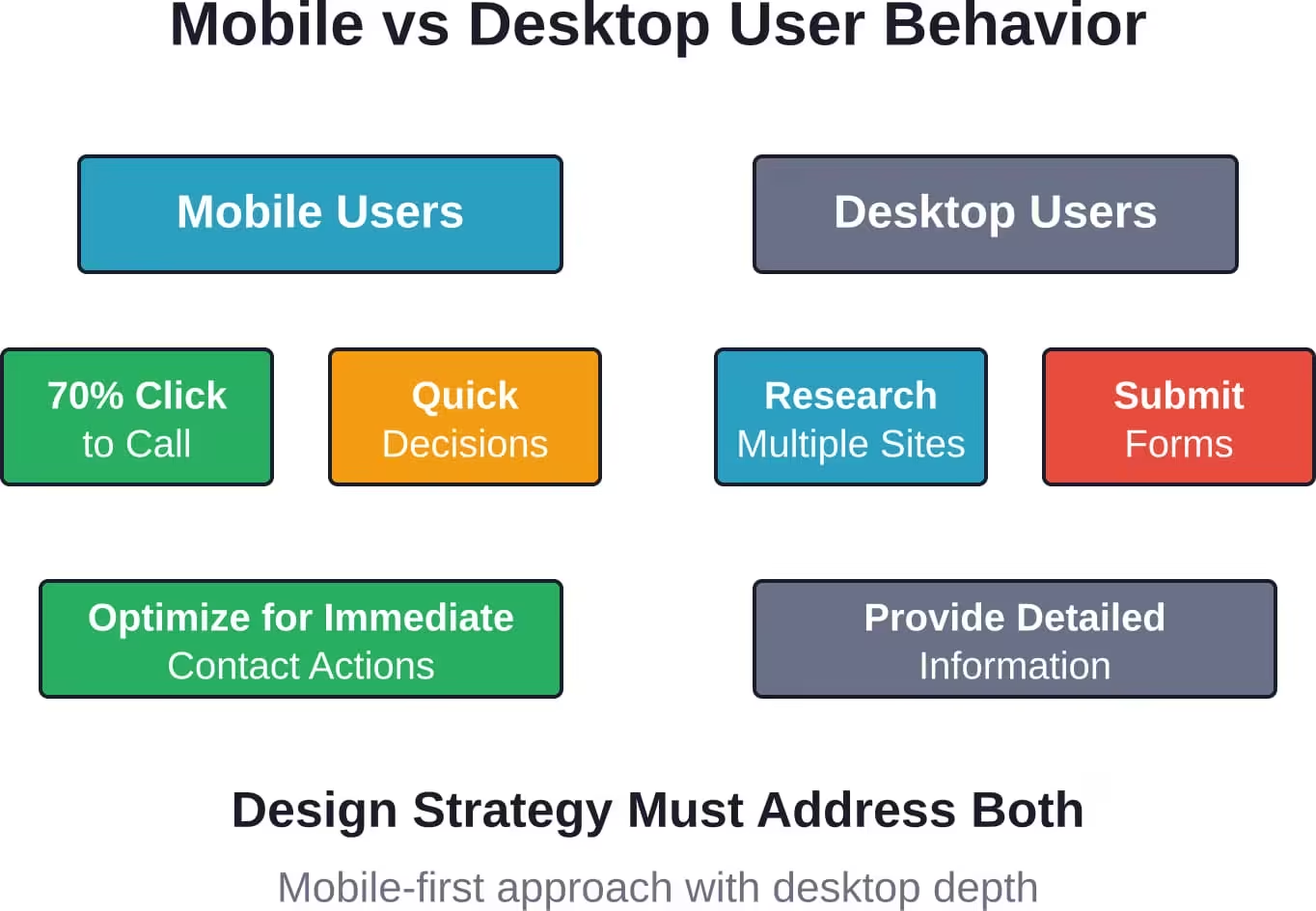
Mobile devices now account for the majority of local service searches. Click-to-call buttons eliminate friction—potential customers tap the number and connect immediately without copying and pasting or switching apps.
Many electrical contractors report that a significant portion of their website leads come through direct phone calls rather than contact forms. That pattern underscores why phone number visibility matters more than aesthetic minimalism.
Service-Specific Landing Pages
Generic “services” pages underperform compared to dedicated pages for each electrical service offering. A residential electrician might create separate pages for panel upgrades, whole-house rewiring, ceiling fan installation, and electrical inspections.
Each service page should address the specific problem, explain the solution, outline the process, and include a call-to-action. This structure helps with SEO (each page can rank for different search terms) and improves conversion rates by speaking directly to what the customer needs.
Commercial electrical contractors benefit from even more detailed service pages covering areas like industrial electrical installation, commercial generator systems, data center power infrastructure, and electrical code compliance consulting.
Photo Galleries and Project Portfolios
Before-and-after photos demonstrate capability and build confidence. Potential customers want to see that an electrical contractor has successfully completed projects similar to theirs.
High-quality photos of completed work, organized by project type, help visitors visualize the results they can expect. Electrical panel installations, commercial lighting projects, and electrical room buildouts all make compelling portfolio content.
But here’s what separates good portfolios from great ones: context. Including brief descriptions of each project—the challenge, the solution, and the outcome—transforms a simple photo gallery into proof of expertise.
Customer Reviews and Testimonials
Trust drives hiring decisions in the electrical services industry. Customer reviews provide social proof that a contractor delivers quality work, shows up on time, and charges fair prices.
Displaying reviews directly on the website (rather than just linking to Google or Yelp) keeps visitors engaged without sending them away to third-party sites. Many electrical contractors integrate review widgets that automatically pull in fresh testimonials from multiple platforms.
Community discussions indicate that many consumers read reviews before contacting a local service provider. Websites that showcase authentic customer feedback convert browsers into callers more consistently than those relying solely on self-promotion.
License and Insurance Documentation
Legitimate electrical contractors hold proper licenses, maintain liability insurance, and often carry additional certifications. Displaying this information prominently addresses visitor concerns before they arise.
Creating a dedicated “About Us” or “Why Choose Us” section that includes license numbers, insurance coverage details, and professional affiliations (like Independent Electrical Contractors membership or NFPA involvement) positions the business as trustworthy and compliant.
OSHA standards govern electrical contractor safety practices, and contractors who reference their commitment to workplace safety and regulatory compliance differentiate themselves from less professional competitors.
Mobile Optimization for Electrical Service Websites
Mobile traffic dominates local service searches. When someone’s electrical panel sparks or a business loses power, they grab their phone first.
Websites that don’t display properly on mobile devices lose these high-intent customers immediately. Mobile optimization isn’t about shrinking desktop content to fit smaller screens—it requires rethinking layout, navigation, and interaction design for touch interfaces.
Page load speed matters enormously on mobile networks. Oversized images, bloated code, and excessive scripts cause slow loading that drives visitors away before content even appears. Electrical contractors need websites built with performance as a priority, not an afterthought.
Simplified Navigation and Clear Calls-to-Action
Mobile screens offer limited space for complex navigation menus. Effective electrician websites use streamlined menus that highlight the most important pages: services, service areas, contact, and emergency options.
Calls-to-action need to stand out clearly on mobile screens. Large, finger-friendly buttons that say “Call Now,” “Request Emergency Service,” or “Get Free Quote” should appear above the fold and at natural decision points throughout the site.
Forms present particular challenges on mobile devices. Long contact forms with dozens of fields frustrate mobile users. Effective electrician websites minimize required fields to name, phone number, and brief service description—enough to start a conversation without demanding extensive typing on a small keyboard.
Local SEO Strategies for Electrical Contractors
Local search optimization determines whether an electrical business appears when potential customers search for services in their area. Google’s local search algorithm evaluates hundreds of factors, but several core strategies deliver the most significant impact.
Google Business Profile Optimization
Google Business Profile (formerly Google My Business) represents the single most important local SEO asset for electrical contractors. A completely optimized profile includes accurate business information, service area definition, regular posts, customer photos, and consistent review generation.
The profile category matters. Primary categories like “Electrician,” “Electrical Contractor,” or “Commercial Electrical Contractor” determine which searches trigger the business listing. Additional categories can include “Lighting Contractor,” “Electrical Installation Service,” or “Electrical Repair Service” depending on specialization.
Regular posting on the Google Business Profile signals active management and provides opportunities to showcase recent projects, announce special services, or share safety tips. These posts appear in the knowledge panel when customers search for the business or related services.
Location-Specific Content Development
Creating dedicated pages for each service area helps electrical contractors dominate local searches. A contractor serving multiple cities might develop pages titled “Electrician in [City Name]” that include location-specific information, local landmarks, and testimonials from customers in that area.
This strategy works because Google attempts to match search intent with geographically relevant results. A search for “commercial electrician Dallas” should return contractors who explicitly serve Dallas, not just any electrical business within 50 miles.
Content depth matters more than keyword stuffing. Each location page should provide genuine value—describing local electrical code considerations, discussing common electrical issues in that area’s housing stock, or addressing region-specific concerns like hurricane preparedness for coastal electrical contractors.
Citation Building and NAP Consistency
Citations—mentions of the business name, address, and phone number (NAP) across the web—reinforce legitimacy and local relevance. Consistent NAP information across directories, review sites, and local business listings strengthens local SEO performance.
Major citation sources for electrical contractors include general directories (Yelp, Yellow Pages), professional trade directories (HomeAdvisor, Angi), and local chambers of commerce. Inconsistencies in business name formatting or phone numbers can confuse search engines and weaken local rankings.
Website Development Platform Options for Electricians
Electrical contractors face numerous options when choosing how to build their websites. Each platform offers different tradeoffs between cost, customization, ease of use, and functionality.
DIY Website Builders vs. Professional Development
Do-it-yourself website builders appeal to budget-conscious electrical contractors who want direct control over their site. Platforms market themselves as easy solutions that don’t require technical expertise.
The reality proves more complicated. While drag-and-drop builders simplify basic page creation, achieving professional results requires design skill, understanding of user experience principles, and knowledge of SEO best practices. Many electrical contractors invest dozens of hours creating websites that ultimately underperform because they lack these specialized skills.
Professional development costs more upfront but typically delivers better results. Web developers experienced in creating electrician websites understand industry-specific requirements, conversion optimization, and technical SEO implementation. They build sites that generate leads rather than just existing online.
Cost considerations extend beyond initial development. Affordable DIY platforms often cost $10-40 monthly, while professional development might range from a few thousand to tens of thousands depending on complexity. However, a professional site that generates an extra two jobs monthly typically pays for itself quickly.
Essential Platform Features for Electrical Contractors
Regardless of platform choice, certain capabilities remain non-negotiable for effective electrician websites. Mobile responsiveness tops the list—the site must function flawlessly on all device sizes.
Built-in SEO tools or compatibility with SEO plugins enable ongoing optimization. Electrical contractors need the ability to edit page titles, meta descriptions, header tags, and URL structures without developer assistance.
Integration with scheduling and booking systems adds substantial value. Online booking reduces phone tag and captures leads when office staff aren’t available to answer calls. Some platforms offer native booking functionality while others integrate with third-party scheduling tools.
Contact form builders should include spam protection, automatic email notifications, and the ability to route different inquiries to appropriate team members. Emergency service requests need immediate attention, while quote requests for commercial projects can follow standard business workflows.
| Platform Type | Best For | Typical Cost | Key Benefits |
|---|---|---|---|
| DIY Website Builders | Solo electricians with limited budgets | $12-40/month | Direct control, lower initial cost, quick setup |
| Professional WordPress Development | Growing electrical businesses | $3,000-8,000 initial | Full customization, SEO optimization, scalability |
| Electrical Industry-Specific Platforms | Contractors wanting integrated management | $100-500/month | Industry features, CRM integration, all-in-one solution |
| Custom Development | Large commercial contractors | $10,000+ initial | Unique functionality, complete control, enterprise features |
Get a Website Built Without Wasting Time on DIY Mistakes
DIY platforms promise quick results, but in practice, many electricians spend weeks building something that still doesn’t perform. The issue is rarely the platform itself – it’s the gap between basic setup and a website that actually works as a business tool. Lengreo approaches website development with a clear, step-by-step process. Instead of leaving everything to trial and error, they plan the structure, design, and development upfront, so the website is built with defined requirements from the start.
Set Up a Website You Need Through a Clear, Structured Process
Lengreo focuses on delivering websites through a predictable workflow that avoids rework and delays:
- Discovery, business analysis, and research before development starts
- Prototyping and design with iterative reviews
- Front-end and back-end development in defined stages
- Quality assurance before launch
- Post-launch support for final adjustments
Contact Lengreo to discuss your website project and get it built the right way from the start.
Converting Website Visitors into Electrical Service Customers
Traffic means nothing without conversions. The most beautifully designed electrician website fails if visitors leave without calling, booking, or requesting quotes.
Strategic Call-to-Action Placement
Calls-to-action guide visitors toward desired actions. Effective electrician websites place CTAs at multiple decision points throughout the user journey rather than burying contact options at the bottom of pages.
Different visitors arrive with different levels of urgency. Someone with an electrical emergency needs an immediate “Call Now for Emergency Service” button. A homeowner planning a kitchen remodel might prefer a “Schedule Free Consultation” option. Commercial facility managers researching electrical contractors benefit from a “Download Capabilities Brochure” CTA that captures their information for follow-up.
Color, size, and positioning affect CTA performance. Buttons should stand out visually through contrasting colors while maintaining professional appearance. Placement above the fold ensures visibility without scrolling, and repeating CTAs throughout longer pages provides multiple opportunities for engagement.
Trust Signals and Risk Reversal
Customers hesitate when they perceive risk. Electrical work involves safety concerns, significant costs, and allowing strangers into homes or businesses. Websites that address these concerns proactively convert more effectively.
License and insurance information provides foundational trust. Displaying professional affiliations, manufacturer certifications, and awards adds credibility. Safety statistics—like “15 years without a workplace incident”—demonstrate operational excellence.
Guarantees and warranties reduce perceived risk. Offering satisfaction guarantees, warranty protection on installations, or free service call diagnostics removes barriers to initial contact. These commitments signal confidence in service quality.
Live Chat and After-Hours Response
Electrical emergencies don’t respect business hours. Websites that offer 24/7 response options through live chat, chatbots, or emergency hotlines capture leads that competitors miss.
Live chat functionality allows website visitors to ask questions and get immediate responses during business hours. This real-time engagement converts fence-sitters who need one more piece of information before deciding to hire.
After-hours solutions range from simple voicemail systems to sophisticated answering services to AI-powered chatbots that qualify leads and route urgent requests appropriately. The sophistication level matters less than availability—providing some response mechanism beats radio silence.
Content Marketing for Electrical Contractor Websites
Regular content publication serves multiple purposes: improving SEO through fresh content, establishing expertise, and providing value that builds relationships with potential customers before they need services.
Educational Blog Content
Electrician blogs that answer common customer questions attract organic search traffic and demonstrate knowledge. Topics might include “How to Know When to Upgrade Your Electrical Panel,” “Understanding Dedicated Circuits for Appliances,” or “Commercial Building Electrical Code Requirements.”
These articles shouldn’t read like sales pitches. The goal involves providing genuine value that builds trust and positions the electrical contractor as a helpful expert. When readers eventually need electrical services, they remember the contractor who educated them.
Long-form comprehensive guides tend to perform better in search results than short superficial posts. Depth signals expertise and gives search engines more content to evaluate and rank for various related queries.
Video Content Integration
Video content engages visitors differently than text. Short videos explaining common electrical issues, demonstrating the difference between amateur and professional work, or showing day-in-the-life footage of electrical projects build connections.
Videos don’t need Hollywood production quality. Smartphone footage with good lighting and clear audio suffices. Authenticity often matters more than polish—customers want to see real electricians doing real work, not actors in stock footage.
Embedding videos directly on the website (rather than just linking to YouTube) keeps visitors engaged on-site longer, which tends to improve conversion rates. Video galleries showcasing completed projects provide visual proof of capability that resonates with visual learners.
Case Studies and Project Showcases
Detailed project case studies tell stories that resonate with potential customers facing similar challenges. A commercial electrical contractor might document a manufacturing facility’s electrical infrastructure upgrade, explaining the initial problems, proposed solutions, implementation process, and final results.
These narratives work especially well for complex commercial projects where decision-makers need confidence that a contractor can handle sophisticated work. Including technical details, timelines, and client testimonials transforms simple project descriptions into persuasive content.
Measuring Website Performance and ROI
Data-driven optimization separates high-performing electrician websites from stagnant ones. Tracking the right metrics reveals what’s working and where improvements will generate the biggest returns.
Key Performance Indicators for Electrician Websites
Different metrics matter for different business goals. Lead generation-focused electrical contractors should track phone calls, form submissions, and chat conversations initiated from the website. E-commerce-enabled contractors selling products or service packages track conversion rates and average order values.
Traffic metrics provide context. Organic search traffic indicates SEO performance, while direct traffic suggests brand recognition and repeat visitors. Referral traffic from directories and review sites shows the effectiveness of citation building efforts.
Bounce rate and time-on-site reveal engagement quality. High bounce rates on service pages suggest content doesn’t match visitor expectations or calls-to-action aren’t compelling. Low time-on-site might indicate confusing navigation or slow loading speeds.
Call Tracking Implementation
Phone calls represent the highest-value conversions for most electrical contractors, but they’re difficult to attribute to specific marketing channels without proper tracking. Call tracking systems assign unique phone numbers to different marketing sources—website, Google ads, Facebook, direct mail—enabling precise ROI calculation.
Dynamic number insertion takes this further by displaying different tracking numbers based on how visitors reached the website. This granular tracking reveals which pages, keywords, or campaigns generate the most phone leads.
Conversion Rate Optimization Testing
Small changes to website elements can produce significant conversion rate improvements. Testing different call-to-action button colors, form lengths, headline variations, or layout structures identifies what resonates with the specific audience.
Systematic testing beats guesswork. Rather than making random changes and hoping for improvement, structured A/B testing compares two versions of a page to determine which performs better. Over time, incremental improvements compound into substantially better performance.
Common Website Development Mistakes Electricians Make
Understanding frequent pitfalls helps electrical contractors avoid wasting money and time on ineffective websites.
Choosing Pretty Over Functional
Design aesthetics matter, but not at the expense of functionality. Websites with beautiful imagery but buried contact information, confusing navigation, or missing service descriptions look impressive but don’t generate business.
The primary goal remains conversion, not winning design awards. Every design decision should support the ultimate objective: getting potential customers to make contact. Visual appeal that enhances trust and professionalism serves this goal; visual complexity that confuses or distracts undermines it.
Neglecting Mobile Experience
Some electrical contractors still approach website development desktop-first and treat mobile as an afterthought. This backwards approach guarantees poor performance since most local service searches now originate on mobile devices.
Mobile-first design thinking considers the mobile experience from the beginning, ensuring core functionality works flawlessly on small screens. Desktop versions can then expand on this foundation rather than mobile versions trying to retrofit desktop designs into tiny viewports.
Ignoring Local SEO Fundamentals
Building a website without proper local SEO setup wastes the opportunity to capture organic search traffic. Electrical contractors who skip Google Business Profile optimization, location-specific content, and citation building severely limit their site’s visibility.
SEO isn’t an optional add-on—it’s foundational to website effectiveness for local service businesses. Paying for website development without SEO implementation is like buying a vehicle without an engine.
Setting Up Then Abandoning the Site
Website development isn’t a one-time project; it’s an ongoing process. Electrical contractors who launch websites then never update content, add new projects, or refresh testimonials watch performance stagnate while competitors with actively maintained sites steadily improve their rankings and conversions.
Regular updates signal to search engines that the site remains current and relevant. Outdated content creates the impression of an inactive business, undermining trust even if the electrical contractor is busier than ever.
Integration with Business Management Systems
Modern electrical contractor websites don’t exist in isolation—they integrate with broader business management ecosystems that streamline operations and improve customer experience.
CRM and Lead Management Integration
Customer Relationship Management systems track interactions with leads and customers throughout the relationship lifecycle. When websites integrate with CRMs, form submissions and chat conversations automatically create contact records, schedule follow-ups, and trigger automated communications.
This integration prevents leads from falling through the cracks. Manual data entry between website submissions and business systems creates opportunities for errors and delays. Automated transfers ensure immediate response and systematic follow-up.
Scheduling and Dispatch Software
Online scheduling capabilities let customers book appointments directly through the website without phone calls. For electrical contractors handling residential service calls, this functionality reduces administrative overhead while improving customer convenience.
Integration with dispatch software takes this further by automatically scheduling jobs, assigning technicians, and sending confirmation details to customers. This seamless workflow eliminates double-entry and reduces coordination complexity.
Payment Processing and Invoicing
Online payment capabilities improve cash flow by making it easy for customers to pay invoices immediately upon completion. Some electrical contractors integrate payment processing directly into their websites, while others use links to secure payment portals.
Automated invoicing systems can generate and send invoices upon job completion, include payment links, and track payment status. These integrations transform the website from a marketing tool into a complete business operations platform.
Moving Forward with Your Electrical Business Website
Website development represents one of the most impactful investments electrical contractors can make in business growth. The online landscape evolves constantly, but fundamental principles remain consistent: provide value, build trust, eliminate friction, and make it easy for customers to take the next step.
Electrical contractors who approach website development strategically—prioritizing lead generation, optimizing for local search, and maintaining active presence—consistently outperform competitors with neglected or poorly planned sites. The technical nature of electrical work demands that contractors present themselves as knowledgeable, trustworthy professionals, and websites serve as the primary medium for that positioning.
Starting with a clear understanding of business goals guides appropriate platform selection and feature prioritization. A solo residential electrician needs different functionality than a commercial contractor managing large industrial projects. Recognizing these distinctions prevents overspending on unnecessary features while ensuring essential capabilities receive adequate investment.
Professional assistance accelerates results for most electrical contractors. Web developers experienced in creating service business websites understand conversion optimization, local SEO, and industry-specific requirements that electricians might overlook. The expertise gap between DIY attempts and professional development often shows immediately in lead generation performance.
But technology alone doesn’t guarantee success. The best website in the world fails if the electrical business behind it doesn’t deliver quality service, respond promptly to inquiries, and maintain professional operations. The website amplifies business quality—it can’t create quality that doesn’t exist.
Starting website development doesn’t require perfection. Launch with solid fundamentals—clear services, contact information, license documentation, and mobile optimization—then iterate based on performance data. Continuous improvement beats delayed perfection every time.
Ready to transform your electrical contracting business with a website that actually generates leads? The electrical services market grows increasingly competitive, and contractors with strong online presence capture disproportionate market share. Start with a comprehensive assessment of current online visibility, then prioritize the improvements that will deliver the most significant impact for your specific business model and market position.