


Quick Summary: Website development for NDIS businesses requires accessible, compliant design that builds trust with participants and support coordinators. A professional NDIS website must meet WCAG 2.1 accessibility standards, include clear service information, and feature strong calls-to-action that convert enquiries. With 21.4% of Australians living with a disability in 2022 and the NDIS cost $42 billion in 2023-24, a well-designed website is essential for providers to stand out and grow their client base.
The NDIS landscape has transformed dramatically. With over 21.4% of Australians living with a disability in 2022, the demand for quality disability services has never been higher. But here’s the thing—having great services means nothing if participants can’t find or trust the provider online.
A professional website isn’t just a digital business card anymore. It’s the primary touchpoint where families, support coordinators, and participants make decisions about care. The difference between a website that converts and one that drives visitors away often comes down to three factors: accessibility, trust-building, and clear communication.
The NDIS sector faces unique challenges. Providers must balance regulatory compliance with user experience, ensure accessibility for people with diverse abilities, and compete in an increasingly crowded market. Website development for NDIS businesses requires a specialized approach that most standard web design agencies simply don’t understand.
Why NDIS Providers Need Specialized Website Development
Generic website templates don’t cut it for disability service providers. The audience includes people with visual impairments using screen readers, individuals with cognitive disabilities needing simplified navigation, and families researching services on behalf of loved ones.
The Department of Social Services tests its website with people with disabilities to ensure it meets expectations. That same standard applies to NDIS providers. Websites must be designed with inclusion at the core, not as an afterthought.
Real talk: support coordinators often make recommendations based on what they see online. A poorly designed website signals poor service quality, whether that’s fair or not. First impressions matter, and the website is almost always the first interaction potential clients have with a provider.
The Business Case for Professional Development
Digital accessibility implementation can boost customer engagement, according to industry research. That translates directly to more enquiries and conversions. But beyond engagement metrics, accessibility is increasingly becoming a compliance issue.
Australia’s Disability Discrimination Act sets clear expectations for digital accessibility. While enforcement has been inconsistent, the direction is clear—accessible websites will become mandatory, not optional. Providers who invest now avoid costly redesigns later.
The NDIS market is also becoming more competitive. With the sector cost $42 billion in 2023-24, it’s one of the fastest-growing areas of federal spending. More providers are entering the market, which means differentiation matters more than ever.
Essential Features of NDIS Provider Websites
Not every website needs the same features, but NDIS provider sites have non-negotiable requirements that generic business websites don’t face.
Accessibility Compliance
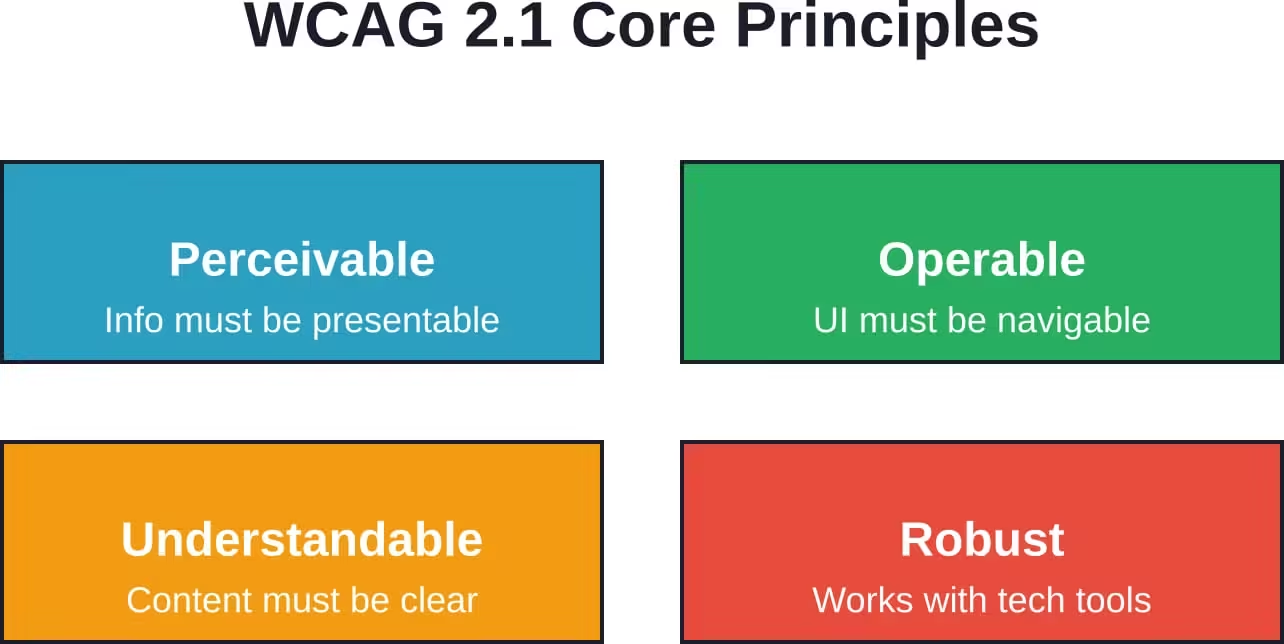
WCAG 2.1 standards provide the framework for accessible web design. These guidelines ensure people using assistive technologies can navigate, understand, and interact with website content effectively.
Key accessibility requirements include:
- Alt text for all images describing content and function
- Keyboard navigation without requiring a mouse
- Sufficient color contrast for text readability
- Captions and transcripts for video and audio content
- Clear heading hierarchy for screen reader navigation
- Forms with proper labels and error messaging
Testing with actual users who have disabilities reveals issues that automated tools miss. The Department of Social Services follows this approach, and NDIS providers should adopt the same practice.
Trust-Building Elements
Support coordinators and families need confidence before making contact. Websites must demonstrate credibility through specific elements that address common concerns.
NDIS registration details should be prominently displayed. Registration number, approved service categories, and operational areas all belong on the homepage or a dedicated credentials page. This transparency immediately establishes legitimacy.
Testimonials carry weight, but only when they feel authentic. Generic praise doesn’t work. Specific stories about how services improved a participant’s life, complete with first names and circumstances, build genuine trust. Video testimonials add another layer of credibility.
Staff qualifications matter to families evaluating providers. Team pages should include relevant certifications, experience levels, and specializations. Photos humanize the team and help participants feel more comfortable reaching out.
Service Information Architecture
Visitors need to understand what services are available, who they’re designed for, and how to access them. This sounds straightforward but gets complicated quickly.
Service pages should be organized by participant need, not internal business structure. Families don’t care about how the business is organized—they want to know if the provider can help with specific support needs.
Each service page needs clear descriptions avoiding jargon, eligibility criteria, the process for getting started, what participants can expect, and pricing information where applicable. NDIS funding structures are confusing enough without websites adding more opacity.
Technical Requirements for NDIS Websites
Behind the visible design sits the technical infrastructure that makes or breaks website performance.
Mobile Responsiveness
Mobile traffic dominates web usage. Families research providers on phones during breaks at work. Participants browse services while commuting. Support coordinators check websites on tablets during meetings.
Responsive design ensures the website adapts seamlessly to any screen size. Navigation menus collapse into mobile-friendly formats. Text remains readable without zooming. Contact forms work just as well on phones as desktops.
But wait—there’s more to mobile optimization than just responsive design. Page load speed matters even more on mobile networks. Images need proper compression. Unnecessary scripts slow everything down. Testing on actual mobile devices reveals issues desktop testing misses.
Performance and Speed
Slow websites lose visitors before they even see the content. Every second of load time increases bounce rates. For NDIS providers, that means lost opportunities to connect with participants who need services.
Technical optimization includes image compression without quality loss, efficient code without bloat, content delivery networks for faster asset loading, and browser caching to speed up repeat visits.
Real-time analytics track how performance impacts user behavior. Providers can see exactly where visitors drop off and make targeted improvements based on actual data rather than guesses.
Security and Privacy
NDIS providers handle sensitive information. Websites must protect participant privacy through secure contact forms, SSL certificates for encrypted connections, privacy policies explaining data handling, and compliance with Australian privacy legislation.
Forms collecting personal information need explicit consent mechanisms. Participants should understand exactly how their information will be used and stored. This transparency builds trust while meeting legal requirements.
Content Strategy for NDIS Provider Websites
Technical excellence means nothing without content that resonates with the target audience. Content strategy determines what information appears where and how it’s presented.
Homepage Priorities
The homepage has one job: help visitors quickly understand what the provider offers and take the next step. Everything else is secondary.
Effective homepages include a clear value proposition in the first screen, prominent display of NDIS registration status, overview of core services with links to details, trust indicators like testimonials or accreditations, and obvious contact options including phone and form.
The value proposition needs specificity. “Quality disability services” says nothing. “Specialist support for young adults with autism transitioning to independent living” tells visitors exactly who the provider serves and how.
Service Page Content
Service pages convert browsers into enquiries. Each page should answer the key questions families and support coordinators ask.
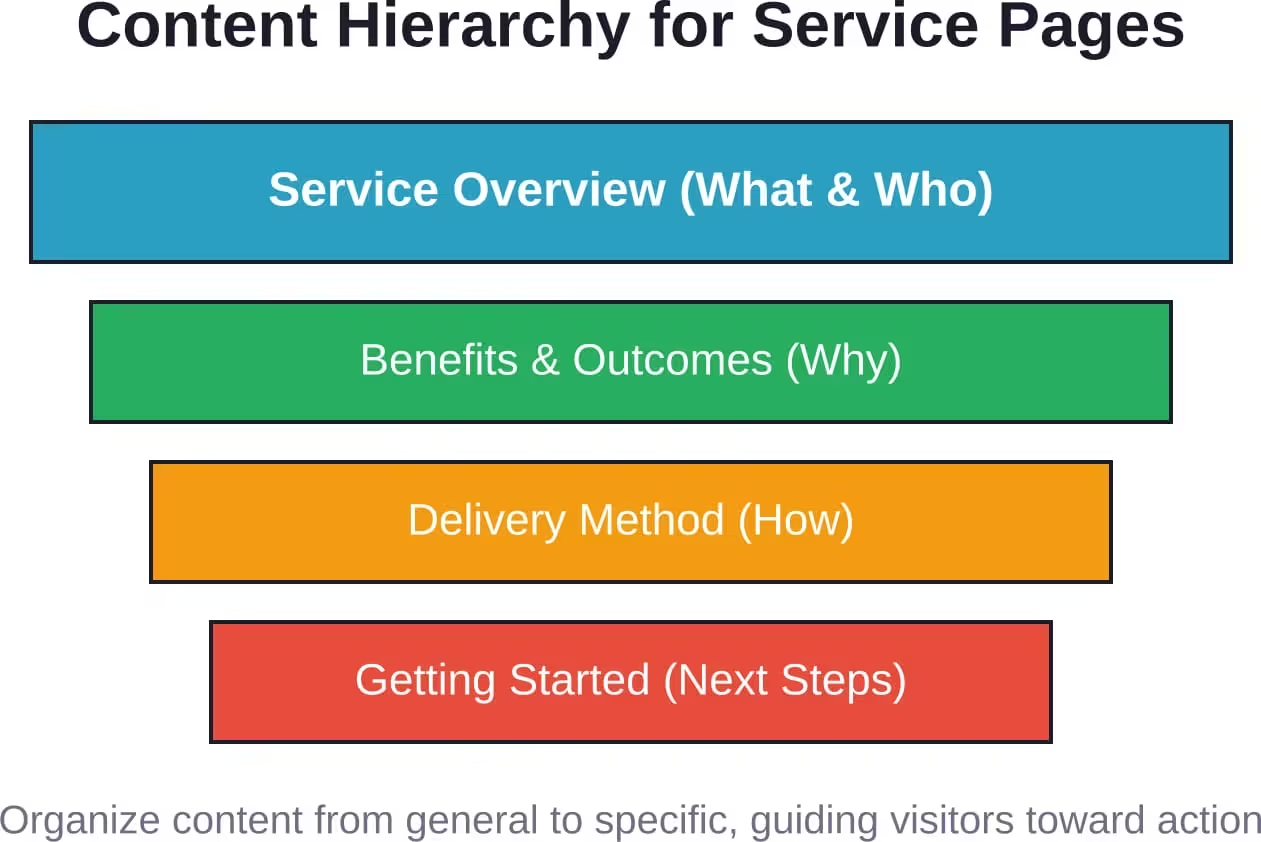
Strong service pages explain what the service involves in plain language, who it’s designed to help, what outcomes participants can expect, how the service is delivered, and what the next steps are to access it.
Avoid medical jargon and NDIS acronyms without explanation. The Disability Services and Inclusion Code of Conduct mandates clear communication. Providers should assume visitors are unfamiliar with disability sector terminology.
Location and Service Area Content
NDIS participants search for providers by location. Websites need clear information about service areas to avoid wasting everyone’s time.
Location pages should specify suburbs, regions, or postcodes covered. If the provider offers in-home services, mobile services, or center-based services in different areas, that distinction matters.
Local SEO benefits from location-specific content. Pages targeting different regions help providers rank for searches like “NDIS provider [suburb name]” or “disability services [region]”.
SEO for NDIS Provider Websites
The best website in the world generates zero enquiries if nobody finds it. SEO ensures providers appear when families and support coordinators search for services.
Keyword Research for NDIS
Generic disability services keywords face massive competition. NDIS-specific terms combined with service types and locations offer better opportunities.
Effective keyword strategies target service-specific terms like “NDIS supported independent living” or “NDIS plan management services”, location-based searches combining services with suburbs or regions, and participants need phrases such as “autism support services” or “disability employment assistance”.
Support coordinators search differently than families. They use more specific NDIS terminology and often search for providers offering particular support categories. Content should address both audiences.
On-Page Optimization
Every page needs optimization for its target keywords. That includes title tags incorporating primary keywords, meta descriptions that encourage clicks, heading tags using keyword variations naturally, and URL structures that are clear and descriptive.
Content length matters for SEO, but only when the content provides value. Long pages stuffed with keywords perform worse than shorter pages that directly answer visitor questions.
Internal linking between related service pages helps both SEO and user experience. Visitors exploring therapy services might also need respite care information. Strategic links keep them engaged longer.
Local SEO Tactics
Google Business Profile setup is non-negotiable for NDIS providers. This free tool dramatically improves local search visibility.
Providers should ensure consistent name, address, and phone details across all online listings, regular posts updating services and news, response to reviews demonstrating engagement, and photos showing facilities and team members.
Local citations on disability service directories and NDIS provider databases build authority. The more consistent references search engines find, the more confident they become about the provider’s legitimacy.
Conversion Optimization for NDIS Websites
Traffic without conversions wastes the entire investment in website development. Conversion optimization turns visitors into enquiries.
Clear Calls-to-Action
Every page needs obvious next steps. Visitors shouldn’t have to hunt for contact information or guess how to proceed.
Effective calls-to-action include phone numbers in the header on every page, contact forms on service pages and homepage, prominent booking options for consultations, and downloadable resources capturing email addresses.
The language matters too. “Contact us” is generic and uninspiring. “Book your free consultation” or “Speak with our team today” provides clearer direction and motivation.
Forms That Convert
Contact forms need careful design. Too many fields create friction. Too few fields mean providers lack context for responding appropriately.
Optimal forms request name, phone or email, service interest, and optional message for additional details. Anything more should be saved for follow-up conversations.
Accessibility applies to forms too. Labels must be properly coded for screen readers. Error messages need clarity. Confirmation messages let people know their submission succeeded.
Trust Signals Throughout the Journey
Visitors need reassurance at every stage. Trust signals reduce anxiety about reaching out.
Security badges near forms indicate data protection. Privacy policy links show transparency. Accreditation logos from relevant disability sector organizations add credibility. Recent testimonials demonstrate current satisfied clients.
| Trust Element | Where to Display | Why It Matters |
|---|---|---|
| NDIS Registration Number | Header/Footer, Homepage | Proves legitimate provider status |
| Staff Qualifications | About/Team Pages | Demonstrates expertise and experience |
| Client Testimonials | Homepage, Service Pages | Provides social proof of quality |
| Insurance & Compliance | Footer, Credentials Page | Addresses safety concerns |
| Contact Information | Every Page Header/Footer | Makes provider accessible and real |
Common Website Development Mistakes NDIS Providers Make
Even well-intentioned providers stumble into preventable errors that undermine their online presence.
Ignoring Accessibility from the Start
Retrofitting accessibility into an existing website costs significantly more than building it in from the beginning. Many providers launch websites, then realize they’re not compliant.
The Digital Inclusion Standard sets requirements for government digital experiences. While not directly applicable to private NDIS providers, the principles apply—inclusive design benefits everyone and should be foundational.
Vague Service Descriptions
Generic content helps nobody. “We provide quality care” could describe any provider in Australia. Specificity differentiates.
Families want to know exact services offered, typical schedules, staff-to-participant ratios, specialized training, and what makes this provider different from competitors.
Neglecting Mobile Experience
Desktop-only testing misses how most visitors actually experience the website. Forms that work perfectly on desktop might be unusable on phones.
Regular testing on actual mobile devices catches issues analytics alone don’t reveal. Button sizes, touch targets, and form field usability all behave differently on mobile.
Weak Local SEO
National keywords face insurmountable competition. Local keywords offer realistic opportunities for smaller providers to rank well.
Providers serving specific regions should optimize heavily for those areas. A Sydney Northern Beaches provider competing for “NDIS provider Australia” wastes effort. “NDIS provider Northern Beaches” targets reachable rankings.
Working with NDIS Website Developers
Choosing the right development partner determines whether the website becomes an asset or a liability.
What to Look for in a Developer
Not all web developers understand NDIS requirements. Specialized agencies that have built multiple NDIS provider websites bring valuable sector knowledge.
Key qualifications include demonstrated accessibility expertise with WCAG compliance, portfolio of existing NDIS provider websites, understanding of disability sector regulations, and experience with local SEO for service-based businesses.
Pricing varies widely. Industry ranges typically fall between $2,000 for basic packages to $10,000+ for comprehensive custom development. Pricing should include hosting, security, and ongoing support—not just initial build costs.
Questions to Ask Potential Developers
Before committing to a developer, providers should clarify several critical points.
Important questions include how accessibility will be tested and verified, what content the provider must supply versus what’s included, what the timeline looks like from kickoff to launch, whether ongoing maintenance is included or additional, and how the content management system works for future updates.
References from other NDIS providers offer the best insight. Speaking with past clients reveals how the developer handles communication, deadlines, and post-launch support.
DIY vs Professional Development
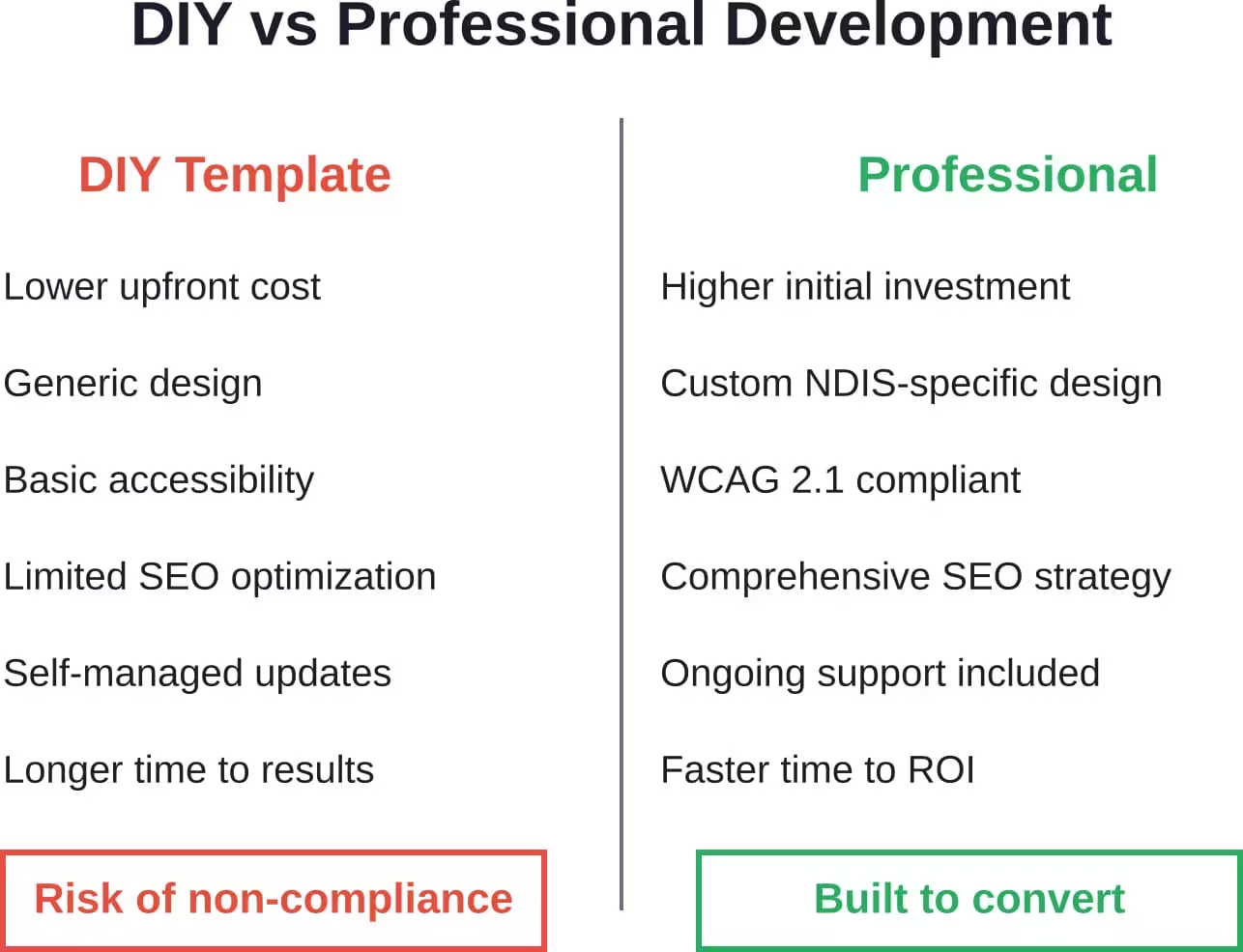
Website builders make DIY development tempting. Template-based platforms offer cheap initial costs.
But here’s the thing—generic templates rarely meet NDIS accessibility requirements out of the box. Customizing templates to be fully compliant requires technical knowledge most providers don’t have.
Professional development costs more upfront but delivers a website that actually works for the target audience. The difference in conversion rates typically justifies the investment within months.
Get an NDIS Website Built the Right Way From the Start
Template-based websites often fail when requirements become more demanding. When structure, accessibility, and ongoing usability matter, quick setups usually lead to rework and additional costs later. Lengreo approaches website development through a structured process that helps avoid gaps in planning and keeps the project aligned with your requirements. Instead of relying on shortcuts, they focus on building websites that are properly developed, tested, and ready to support real use.
Turn to a Structured Development Approach to Avoid Extra Expenses
Lengreo structures each website project to keep delivery predictable and under control:
- Discovery and business analysis to define requirements
- Iterative design process with ongoing reviews
- Development delivered in stages for better control
- Quality assurance before launch
- Short-term support after launch for final adjustments
👉 Talk to Lengreo to plan your NDIS website and avoid costly rebuilds later.
Maintaining and Updating NDIS Websites
Launch day isn’t the finish line—it’s the starting point. Websites need ongoing attention to remain effective.
Content Updates
Stale content signals inactive businesses. Regular updates show providers are engaged and current.
Updates should include new services as they’re added, staff changes on team pages, updated testimonials reflecting recent experiences, blog posts addressing common questions, and policy changes affecting participants.
Content management systems let providers make updates without developer assistance. Training during website launch ensures staff can handle routine updates independently.
Technical Maintenance
Behind-the-scenes technical maintenance prevents security vulnerabilities and performance degradation.
Regular maintenance includes software updates for content management systems, security patches as they’re released, backup verification ensuring data recovery capability, and performance monitoring catching slowdowns early.
Many developers offer maintenance packages bundling these services. For providers without technical staff, maintenance packages are worth the investment.
Performance Analysis
Analytics reveal what’s working and what needs improvement. Regular review of website performance guides strategic updates.
Key metrics include traffic sources showing where visitors come from, popular pages indicating what content resonates, conversion rates measuring how effectively the site turns visitors into enquiries, and bounce rates highlighting pages that aren’t meeting visitor needs.
Data-driven improvements outperform guesswork. If analytics show visitors leaving service pages without converting, something on those pages needs fixing.
Future-Proofing NDIS Provider Websites
The NDIS landscape continues evolving. Recent changes to assessment processes and eligibility criteria affect how providers communicate services.
NDIS eligibility now focuses more on functional capacity rather than diagnostic labels, according to recent announcements. Providers may need to adjust service descriptions to align with these changes.
The Digital Work and Study Service represents another evolution in disability employment support. Providers offering employment services should monitor how these changes affect their website content and service descriptions.
Website platforms should support future growth. As providers add services, expand regions, or pivot their focus, the website architecture should accommodate changes without requiring complete rebuilds.
Conclusion
Website development for NDIS businesses requires balancing multiple priorities—accessibility compliance, trust-building design, conversion optimization, and search visibility. Generic approaches don’t address the unique needs of disability service providers and the diverse audiences they serve.
The investment in professional website development pays dividends through increased enquiries, stronger relationships with support coordinators, and better participant outcomes. With 21.4% of Australians living with a disability and the NDIS sector continuing to grow, providers need digital presence that matches the quality of their services.
Accessibility isn’t optional—it’s a fundamental requirement that benefits everyone while ensuring compliance with evolving standards. The Department of Social Services demonstrates this commitment by testing with people with disability, and NDIS providers should adopt the same standard.
Whether launching a new provider website or updating an existing one, the focus should remain on creating an inclusive, trustworthy, and effective digital experience. The right website doesn’t just showcase services—it connects participants with the support they need to live their best lives.
Ready to build a website that grows your NDIS business? Start by auditing current online presence, identifying gaps in accessibility and conversion, and partnering with developers who understand the NDIS sector. The families and participants searching for quality providers deserve to find what they need—and providers deserve websites that showcase their commitment to excellence.