

Quick Summary: Building a professional website for a Pilates studio involves selecting the right platform (like Squarespace or WordPress), integrating booking systems, showcasing class offerings and instructor credentials, and ensuring mobile responsiveness. Industry reports suggest typical development costs range from $1,500 to $5,000 when working with professional designers, though DIY solutions can reduce costs significantly.
A Pilates studio without a strong online presence is basically invisible. Potential clients search online before booking their first session, and if the website doesn’t load properly on mobile or lacks clear booking options, they’ll move on to the next studio.
The challenge isn’t just building any website—it’s creating one that converts visitors into paying members. That means balancing professional design, seamless functionality, and clear messaging about what makes the studio unique.
Here’s what studio owners need to know about developing a website that actually brings in clients.
Understanding Website Development Costs for Pilates Studios
Budget planning comes first. A professional web designer to build a Pilates website on a platform like Squarespace or WordPress and integrate it with scheduling software can cost around $5,000, though this can vary based on complexity and customization needs.
For studios with tighter budgets, analyses indicate costs can range from $1,500 to $5,000 depending on the designer’s experience and the website’s scope. According to available data, professional developers often invest 40+ hours into a comprehensive studio website.
Think of this investment differently: a website functions as a 24/7 marketing assistant who never takes a day off. That context makes the pricing more reasonable.
| Development Approach | Typical Cost Range | Time Investment | Best For |
|---|---|---|---|
| DIY Website Builder | $144-$800/year | 20-40 hours | New studios, limited budget |
| Semi-Custom Design | $1,500-$3,000 | 30-50 hours | Growing studios, 1-2 instructors |
| Professional Custom Build | $3,500-$5,000+ | 40-80 hours | Established studios, multiple locations |
| Enterprise Solution | $7,000+ | 100+ hours | Multi-location franchises |
Essential Features Every Pilates Studio Website Needs
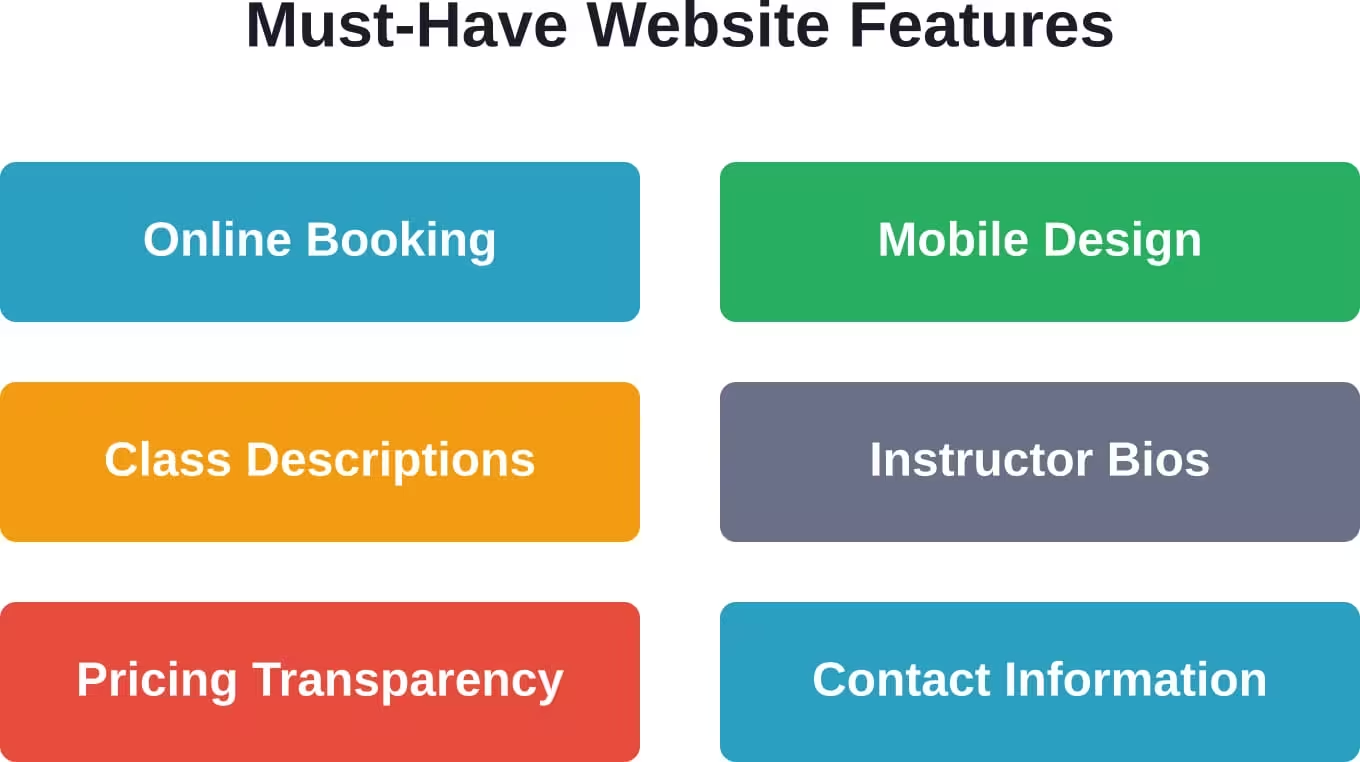
Functionality determines whether visitors book classes or bounce. These features aren’t optional—they’re foundational.
Online Booking Integration
Manual booking through phone calls or emails creates friction. Integrated scheduling software lets clients reserve spots at 2 AM if they want, without waiting for business hours.
The booking system should sync with the website seamlessly. Clients shouldn’t need to create accounts on external platforms or navigate through three different pages to reserve a mat class.
Mobile-Responsive Design
According to the latest data (Pew Research Center / DemandSage 2025-2026), about 84-93% of U.S. adults use at least one social media platform or online video service like YouTube. Studio websites need to render perfectly on smartphones and tablets, not just desktop computers.
Test the site on multiple devices before launch. Buttons should be large enough to tap accurately, text should be readable without zooming, and navigation should work with thumbs, not just mouse pointers.
Clear Service Descriptions
Prospective clients often don’t understand the difference between Reformer Pilates, Mat Pilates, or specialty classes. The website needs to explain offerings in plain language, without assuming visitors already know the terminology.
Each class type deserves its own page with descriptions, benefits, typical duration, and difficulty level. Include what clients should bring and what equipment the studio provides.
Choosing the Right Website Platform
Platform selection shapes everything from design flexibility to maintenance requirements. The wrong choice creates headaches; the right one makes updates straightforward.
Squarespace for Pilates Studios
Squarespace dominates the fitness website space for good reason. The templates look professional out of the box, and customization doesn’t require coding knowledge.
The platform handles hosting, security updates, and basic SEO automatically. For studio owners who’d rather focus on teaching than troubleshooting server issues, this hands-off approach works well.
WordPress for Custom Solutions
WordPress offers more flexibility than Squarespace but demands more technical knowledge. The learning curve is steeper, and the platform requires regular plugin updates and security monitoring.
But that complexity brings power. Studios with specific functionality needs—custom membership tiers, specialized booking workflows, or integration with unusual business systems—can build almost anything with WordPress.
Hosting costs run separately from the platform, and technical maintenance becomes an ongoing responsibility. Factor that into the decision.
Specialized Studio Platforms
Some platforms cater specifically to fitness studios, combining website hosting with scheduling, payment processing, and member management in one ecosystem.
These all-in-one solutions simplify operations but can limit design customization. The trade-off is less creative control in exchange for streamlined business management.
Build a Pilates Studio Website Beyond Template Limitations
A lot of Pilates websites start on basic builders and quickly run into limitations as the studio grows. What looks fine at launch often doesn’t support real booking flow, service structure, or long-term updates. Lengreo approaches website development as a structured project, not a quick setup. They work through research, design, and development to make sure the site is stable, adaptable, and aligned with your requirements and project goals, rather than locked into preset limitations.
Take Full Control Over How Your Website Works and Scales
Lengreo focuses on building websites that remain flexible and usable as your studio evolves:
- Development using JavaScript or WordPress depending on project needs
- Flexible setup that supports both simple and more complex website structures
- Efficient development process with clear stages from planning to launch
- Cost-conscious approach without unnecessary features
- Structure designed for easy updates and long-term performance
👉 Get a consultation with Lengreo to build a studio website that gives you more control than template-based platforms.
Nailing Brand Messaging and Visual Design
Technical functionality matters, but brand presentation determines whether visitors trust the studio enough to book.
Define the Studio’s Unique Position
What makes this studio different from the three others within five miles? The website needs to communicate that distinction immediately, ideally in the homepage hero section.
Is it specialized training for injury rehabilitation? A welcoming environment for beginners who feel intimidated by fitness culture? Advanced techniques for experienced practitioners? Don’t try to be everything to everyone.
Photography That Represents Real Classes
Stock photos of impossibly flexible models in pristine studios don’t build trust. Real photos of actual instructors teaching real clients in the actual space create authenticity.
Invest in professional photography that shows the studio’s personality. Capture candid moments during classes, not just posed shots. Show diverse body types and ages if the studio serves diverse clientele.
Color Palette and Typography Consistency
Visual consistency across every page reinforces brand recognition. Pick two or three primary colors and stick with them. Choose readable fonts for body text—decorative scripts work for logos but fail for paragraphs.
The design should reflect the studio’s atmosphere. A high-energy athletic Pilates studio might use bold colors and modern sans-serif fonts. A restorative, mindfulness-focused studio might choose softer palettes and more organic typography.
Content Strategy That Converts Visitors
Design attracts attention, but content drives action. The right words in the right places guide visitors toward booking.
Homepage Clarity
The homepage should answer three questions within five seconds: What does this studio offer? Who is it for? What should I do next?
A clear headline, concise subheadline, and prominent call-to-action button accomplish this. Burying essential information below three paragraphs of philosophy about Joseph Pilates loses visitors.
Instructor Credentials and Bios
Clients want to know who’ll be teaching them. Instructor pages should highlight relevant certifications, teaching experience, and specializations.
But credentials alone feel sterile. Include personality—why did this instructor choose Pilates? What do they love about teaching? A few sentences of genuine voice build connection.
Testimonials and Social Proof
Community discussions consistently emphasize the importance of social proof in fitness studio marketing. Real client testimonials with names and photos carry more weight than anonymous quotes.
Showcase results when possible. Did someone recover from back pain? Build strength for hiking? Feel more confident? Specific outcomes resonate more than generic praise.
Transparent Pricing
Hiding prices frustrates potential clients. List class packages, membership tiers, and drop-in rates clearly. Studios sometimes worry about competitors seeing pricing, but accessibility for clients matters more.
Explain what each option includes. A $150 monthly membership means nothing without context—unlimited classes? Two per week? Access to all equipment or mat only?
Technical Optimization for Search and Performance
Beautiful design won’t help if search engines can’t find the site or pages load slowly.
Local SEO Fundamentals
Pilates studios serve local markets. The website needs to rank for searches like “Pilates studio near me” or “Reformer Pilates in [city name].”
Include location information throughout the site—in page titles, headers, body content, and meta descriptions. Create a dedicated contact page with the full address, phone number, and embedded map.
Claim the Google Business Profile listing and ensure the NAP (name, address, phone) matches exactly across the website, Google, and any directory listings.
Page Speed Optimization
Slow-loading pages kill conversions. Compress images before uploading them to the site. A 5MB photo from a professional camera will work fine at 300KB for web display.
Choose a reliable hosting provider. Cheap shared hosting might save money initially but costs more in lost bookings when the site crashes or loads sluggishly.
Accessibility Considerations
Websites should work for everyone, including people using screen readers or keyboard navigation. Use proper heading hierarchy, provide alt text for images, and ensure sufficient color contrast for text.
According to recent updates to ADA requirements, web accessibility for businesses open to the public continues to gain importance. Building with accessibility in mind from the start prevents costly retrofitting later.
Moving Forward with Gym Website Development
The fitness industry’s $59.62 billion annual economic activity flows increasingly through digital channels. Facilities treating websites as afterthoughts cede market share to competitors who’ve invested in conversion-focused development.
Start by auditing current web presence honestly. Does the existing site capture leads? Can members book classes without calling? Is cancellation as easy as signup? Those gaps represent immediate revenue opportunities.
For facilities without websites or those running on outdated platforms, the choice between DIY builders, specialized fitness platforms, and custom development depends on budget, technical capability, and business scale. But doing nothing is no longer viable.
The facilities thriving in 2026 treat website development as core infrastructure, not a marketing expense. Their digital presence works around the clock capturing leads, processing signups, and growing revenue while competitors still rely on walk-in traffic and phone calls.
Ready to transform a gym’s digital presence? Evaluate the development approaches outlined above, choose the path that fits a facility’s needs and budget, and start building a website that works as hard as the trainers do.
Common Website Development Mistakes to Avoid
Understanding what doesn’t work saves time and money.
Auto-Playing Music or Videos
Nothing makes visitors close a tab faster than unexpected audio. Background music or auto-playing video testimonials create annoyance, not engagement.
Overcomplicated Navigation
Keep the main menu simple. Seven or fewer top-level items. Visitors shouldn’t need a site map to find class schedules or pricing.
Missing Contact Information
The phone number and address should appear in the website footer on every page, not just the contact page. Make it effortless for people to reach out.
Neglecting Mobile Testing
Viewing the site on a desktop during development doesn’t guarantee it works on smartphones. Test every page on actual mobile devices before launch.
Forgetting About Maintenance
Websites aren’t set-it-and-forget-it. Class schedules change, instructors come and go, pricing updates. Plan for regular content updates and technical maintenance.
Integrating Booking and Payment Systems
Friction in the booking process directly impacts revenue. Seamless integration between the website and scheduling software removes barriers.
Popular options include Mindbody, Pike13, and WellnessLiving. Each offers varying feature sets, pricing structures, and integration complexity. Research which aligns best with studio size and business model.
The booking interface should live directly on the website, not redirect to an external platform. Embedded scheduling maintains brand consistency and reduces drop-off.
Payment processing needs to feel secure. Display trust badges, use SSL certificates, and choose reputable payment gateways. Clients hesitate to enter credit card information on sites that look questionable.
Measuring Website Performance
Track what works and what doesn’t. Install analytics from day one to understand visitor behavior.
Monitor which pages get the most traffic, where visitors spend time, and where they exit without booking. High bounce rates on the pricing page might indicate confusion about value. Heavy traffic on instructor bios suggests that content resonates.
Set up conversion tracking for bookings. Knowing which traffic sources lead to actual sign-ups helps focus marketing efforts effectively.
Real talk: the first version of the website won’t be perfect. Launch with a solid foundation, gather data, and iterate based on real user behavior.
Moving Forward with Website Development
Building an effective website for a Pilates studio isn’t about having the flashiest design or most advanced features. It’s about creating a clear, functional platform that helps potential clients understand offerings, trust the studio, and book their first class without friction.
Start with core functionality—mobile responsiveness, integrated booking, clear service descriptions, and transparent pricing. Perfect the fundamentals before adding complexity.
The website represents the studio’s digital storefront. In a market where potential clients research options online before ever walking through the door, that online presence directly impacts growth and sustainability.
Whether choosing DIY development or hiring professionals, prioritize the client experience. A website that makes booking easy, answers common questions, and genuinely represents the studio’s personality will outperform a technically perfect site that feels generic or confusing.
Ready to build a website that brings in clients? Start by defining budget, clarifying brand messaging, and selecting a platform that matches technical comfort level. The investment in a solid online presence pays dividends through every new client who discovers and chooses the studio.